Indium Phosphide (InP) Wafers, Size: 3”, Thickness: 600± 25 μm, Orientation: 100, Single Side Polished, EPI-Ready, Dopant: Iron (N Type)

Price range: $822.00 through $3,936.00
Select options This product has multiple variants. The options may be chosen on the product page
Indium Phosphide (InP) Wafers Size: 3”, Thickness: 600± 25 μm, Orientation: 100 Technical Properties: Size (inch)  3” Thickness (μm)  600±

Indium Phosphide (InP) Wafers, Size: 3”, Thickness: 600± 25 μm, Orientation: 111 , Single Side Polished, EPI-Ready, Dopant: Iron (N Type)

Price range: $822.00 through $3,936.00
Select options This product has multiple variants. The options may be chosen on the product page
Indium Phosphide (InP) Wafers Size: 3”, Thickness: 600± 25 μm, Orientation: 111 Technical Properties: Size (inch)  3” Thickness (μm)  600±

Vanadium (V) Micron Powder Purity: 99.9 %, Size: 100 mesh

Price range: $264.00 through $3,934.00
Select options This product has multiple variants. The options may be chosen on the product page
 25 grams/235 €  100 grams/595 € 500 grams/2140 € 1000 grams/3490 €

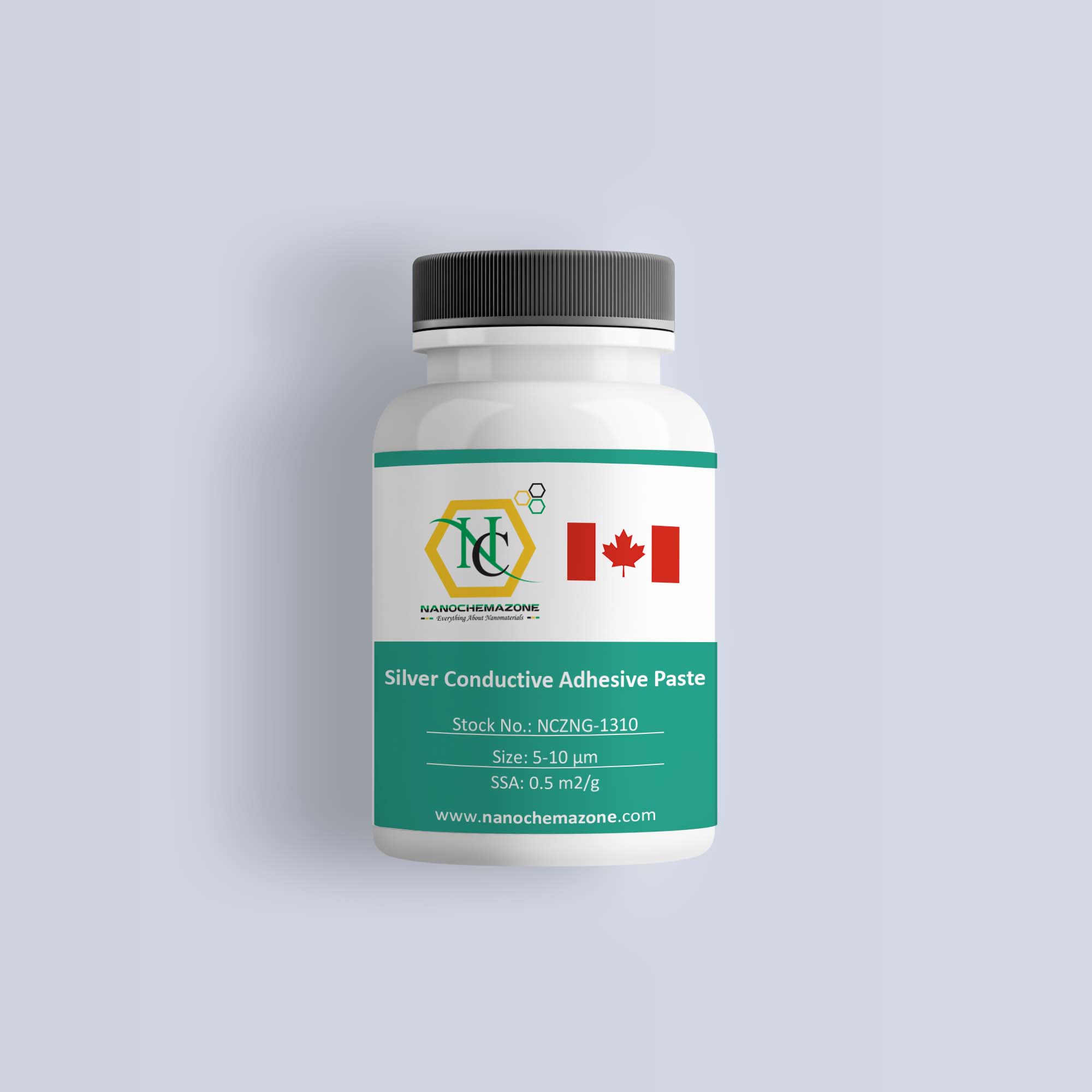
Silver Conductive Adhesive Paste

Price range: $192.00 through $3,915.00
Select options This product has multiple variants. The options may be chosen on the product page

Applications:

- Silver Conductive Adhesive Paste is mainly used as the conductive. - Silver Conductive Adhesive Paste is used for the backside of solar cell. - Silver Conductive Adhesive Paste is used  for inner electrode. - Silver Conductive Adhesive Paste also has good properties in damp-heat resistance and chemical. - Silver Conductive Adhesive Paste is widely used in home supplies.

Silver Conductive Adhesive Paste

Price range: $192.00 through $3,915.00
Select options This product has multiple variants. The options may be chosen on the product page

Applications:

- Silver Conductive Adhesive Paste is mainly used as the conductive. - Silver Conductive Adhesive Paste is used for the backside of solar cell. - Silver Conductive Adhesive Paste is used  for inner electrode. - Silver Conductive Adhesive Paste also has good properties in damp-heat resistance and chemical. - Silver Conductive Adhesive Paste is widely used in home supplies.

Scandium (Sc) Micron Powder, Purity: 99.5 %, Size: 325 mesh

Price range: $141.00 through $3,874.00
Select options This product has multiple variants. The options may be chosen on the product page

Applications:

Scandium is one of the transition metals. It is oxidized in air giving yellow or pinkish color. Scandium is found in over 800 mineral species. It can be found in concentrated amounts in the minerals euxenite, gadolinite and thortveitite. Scandium is mainly applied in aluminum scandium alloys. Its light weight makes it suitable for minor aerospace industry components. 

Aluminum Nitride (AlN) Powder, 99.9% (3N) Purity, -325 Mesh

Price range: $389.00 through $3,868.00
Select options This product has multiple variants. The options may be chosen on the product page
Product Aluminum Nitride (AlN) Powder, 99.9% (3N) Purity, -325 Mesh
CAS No. 24304-00-5
Appearance White to light gray
Purity ≥99%,  ≥99.9%,  ≥95%(Other purities are also available)
APS 1–5µm (Size Can be customized),  Ask for other available size range.
Ingredient AlN
Molecular Weight 40.99 g/mol
Melting Point 2,200 °C
Boiling Point N/A
Density 3.26 g/cm³
Product Codes NCZ-283I

Silicon Carbide Wafer (SiC-4H) – 4H, Size: 3”, Thickness: 350 μm, Research Grade, 4H Area: 95%

Price range: $860.00 through $3,837.00
Select options This product has multiple variants. The options may be chosen on the product page
1 piece/780 € 5 pieces/3480 €               Please contact us for quotes on larger quantities !!!

Silicon Carbide Wafer (SiC-4H) - 4H

Size: 3'', Thickness: 350 μm, 4H Area: 95%

Technical Properties:

Quality  Research Grade
Size (inch)  3”
Thickness (μm)  350
Ra  ≤0.3
4H area  95%
Orientation  4°±0.5°
Resistivity   0.015-0.03
TTV  ≤15
Bow  ≤10
Warp  ≤35
OF Length  22.0±2.0
IF Length  11.0±1.5

Fields of Application for Silicon Carbide (SiC-4H)- 4H Wafer

Silicon carbide (SiC) is a rare compound of silicon and carbon which is synthetically produced. Silicon carbide (SiC) wafer has great electrical properties and excellent thermal properties. Silicon carbide (SiC) wafer has low thermal expansion. Silicon carbide (SiC) wafer has superior hardness properties. Silicon carbide (SiC) wafer performs well at high temperatures. Also, silicon carbide (SiC) wafer has high resistance to corrosion, erosion and oxidation. In addition to, silicon carbide (SiC) wafer is also more shiny than either diamonds or cubic zirconia. While Silicon carbide (SiC-4H) - 4H wafer has superior electronic properties, silicon carbide (SiC-6H) – 6H wafer is most easily prepared and best studied.
  • Silicon carbide (SiC) wafer is used for hybrid and electric vehicles.
  • Silicon carbide (SiC) wafer is used for green energy generation.
  • Silicon carbide (SiC) wafer is used for LEDs.
  • Silicon carbide (SiC) wafer is used for many other emerging markets.

(-COOH) Functionalized Short Length Single Walled Carbon Nanotubes, Purity: > 92%

Price range: $215.00 through $3,837.00
Select options This product has multiple variants. The options may be chosen on the product page

Applications:

Single Walled Carbon Nanotubes have a variety of potential applications in different fields. These applications include medicine, mechanics, electric-electronics, chemicals, energy and others. It can be applied in, 1-drug delivery, 2-biosensors, 3-CNT composites, 4-catalysis, 5-nanoprobes, 6-hydrogen storage, 7-lithium batteries, 8-gas-discharge tubes, 9-flat panel displays, 10-supercapacitors, 11-transistors, 12-solar cells, 13-photoluminescence, 14-templates

Indium Phosphide (InP) Wafers, Size: 4”, Thickness: 625± 25 μm, Orientation: 100, Single Side Polished, Testing Grade

Price range: $828.00 through $3,816.00
Select options This product has multiple variants. The options may be chosen on the product page
Indium Phosphide (InP) Wafers Size: 4”, Thickness: 625± 25 μm, Orientation: 100 Technical Properties: Size (inch)  4” Thickness (μm)  625±

Indium Phosphide (InP) Wafers, Size: 4”, Thickness: 625± 25 μm, Orientation: 111, Single Side Polished, Testing Grade

Price range: $828.00 through $3,816.00
Select options This product has multiple variants. The options may be chosen on the product page
Indium Phosphide (InP) Wafers Size: 4”, Thickness: 625± 25 μm, Orientation: 111 Technical Properties: Size (inch) 4” Thickness (μm) 625±

Gallium Antimonide (GaSb) Wafers, Size: 3”, Thickness: 625± 25 μm, Orientation: 100, Testing Grade

Price range: $813.00 through $3,801.00
Select options This product has multiple variants. The options may be chosen on the product page
Gallium Antimonide (GaSb) Wafers Size: 3”, Thickness: 625± 25 μm, Orientation: 111 Technical Properties: Quality  Testing Grade Size (inch)  3” Thickness

Gallium Antimonide (GaSb) Wafers, Size: 3”, Thickness: 625± 25 μm, Orientation: 111, Testing Grade

Price range: $813.00 through $3,801.00
Select options This product has multiple variants. The options may be chosen on the product page
Gallium Antimonide (GaSb) Wafers Size: 3”, Thickness: 625± 25 μm, Orientation: 111 Technical Properties: Quality  Testing Grade Size (inch)  3” Thickness

Prime CZ-Si Wafer, Size: 8”, Orientation: (100), Boron Doped, Resistivity: 1000-10000 (ohm.cm), 1-Side Polished, Thickness: 725 ± 25 μm

Price range: $182.00 through $3,795.00
Select options This product has multiple variants. The options may be chosen on the product page
1 piece/163 € 5 pieces/710 € 25 pieces/3390 € Please contact us for quotes on larger quantities !!!

Prime CZ-Si Wafer

Size: 8”, Orientation: (100), Boron Doped, 1-Side Polished, Thickness: 725 ± 25 μm

Technical Properties:

Quality Prime
Materials CZ-Si
Size (inch) 8”
Orientation (100)
Coating  
Thickness (μm) 725 ± 25 μm
Doping Boron
Resistivity (ohm.cm) 1000-10000
Polished One Side
Silicon is one of the most common elements on earths crust. Main usage of Silicon wafers is electronics and technology. Silicon wafers have very flat and mirror like surfaces. It is produced by Czochralski method to obtain the highest purity. Depending on the usage area, silicon wafers can be doped with different materials to tailor its purity accordingly. The amount and type of dopants highly affect the electronic properties. Galium, indium, boron and nitrogen are some of the dopants that can be used in production process. Silicon wafers are used in semiconductors, microchips, integrated circuits, smartphones, computers etc. Silicon is the key platform for semiconductor gadgets. A wafer is just but a thin slice of the semiconductor material that acts as a substratum for microelectronic devices fitted in and above the wafer.

(-COOH) Functionalized Graphitized Multi Walled Carbon Nanotubes, Purity: > 99.99%, Outside Diameter: 8-18 nm

Price range: $66.00 through $3,781.00
Select options This product has multiple variants. The options may be chosen on the product page

Applications:

Multi Walled Carbon Nanotubes have a variety of potential applications in different fields. These applications include medicine, mechanics, electric-electronics, chemicals, energy and others. It can be applied in, 1-drug delivery, 2-biosensors, 3-CNT composites, 4-catalysis, 5-nanoprobes, 6-hydrogen storage, 7-lithium batteries, 8-gas-discharge tubes, 9-flat panel displays, 10-supercapacitors, 11-transistors, 12-solar cells, 13-photoluminescence, 14-templates

Impending Self-Help Transfer Nickel Graphene Foam, Thickness: 1±0.1 mm, Size: 5×5 cm

Price range: $788.00 through $3,771.00
Select options This product has multiple variants. The options may be chosen on the product page
Please contact us for quotes for larger quantities !   Impending self-help transfer nickel graphene foam is produced by etching the nickel of nickel graphene foam in etching liquid and being transferred to impending substrate. Graphene foam, can be gently released in deionized water and transferred directly to any base. This product is widely used for producing sensors, super capacitors and as the electrode materials of lithium battery to improve the battery capacity.

Gallium Arsenide (GaAs) Wafers, Size: 4”, Thickness: 625±25 μm, Single Side Polished, EPI-ready

Price range: $198.45 through $3,768.00
Select options This product has multiple variants. The options may be chosen on the product page
Gallium Arsenide (GaAs) Wafer Size: 4”, Thickness: 625±25 μm, Single Side Polished Technical Properties: Quality  GaAs Materials  GaAs Size (inch)

Gallium Arsenide (GaAs) Wafers, Size: 4”, Thickness: 350± 25 μm, Single Side Polished, EPI-ready, Mobility: 1000-3000

Price range: $198.45 through $3,768.00
Select options This product has multiple variants. The options may be chosen on the product page
Gallium Arsenide (GaAs) Wafer Size: 4”, Thickness: 350± 25 μm, Mobility: 1000-3000 Technical Properties: Quality  GaAs Materials  GaAs Size (inch)  4”

Spherical TC4 Titanium Based Micron Powder for 3d Printers, Ti6Al4V, 10-25 µm, Spherical

Price range: $82.00 through $3,745.00
Select options This product has multiple variants. The options may be chosen on the product page

Application areas:

  • 3D Printing: Titanium is the strongest and the lightest material for 3d printing at the same time. It is used in the process called Direct Metal Laser Sintering (DMLS)
  • High tech fields: Space exploration, aeronautics, and medical field
  • Petrochemical
  • Shipbuilding
  • Automotive
  • Pharmaceutical
  • Manufacturing prostheses
  • Direct metal deposition
  • Binder jetting 3d printer technologies
  • Powder bed fusion
The most outstanding usages of 3D metal printing involve powder beds, streams of gas-propelled powder jets or wire for feedstock, lasers and electron beams as the energy sources, and precision automation equipment for digitally directing the energy source, the feedstock, or both along the material/energy deposition pathways. The composition of titanium alloy TC4 material is Ti-6Al-4V, and has good comprehensive mechanical and mechanical properties.

(-OH) Functionalized Short Length Multi Walled Carbon Nanotubes, Purity: > 96%, Outside Diameter: 8-18 nm

Price range: $61.00 through $3,744.00
Select options This product has multiple variants. The options may be chosen on the product page

Applications:

Multi Walled Carbon Nanotubes have a variety of potential applications in different fields. These applications include medicine, mechanics, electric-electronics, chemicals, energy and others. It can be applied in, 1-drug delivery, 2-biosensors, 3-CNT composites, 4-catalysis, 5-nanoprobes, 6-hydrogen storage, 7-lithium batteries, 8-gas-discharge tubes, 9-flat panel displays, 10-supercapacitors, 11-transistors, 12-solar cells, 13-photoluminescence, 14-templates

(-COOH) Functionalized Multi Walled Carbon Nanotubes, Purity: > 96%, Outside Diameter: 8-18 nm

Price range: $61.00 through $3,741.00
Select options This product has multiple variants. The options may be chosen on the product page

(-COOH) Functionalized Multi Walled Carbon Nanotubes

Purity: > 96%,  Outside Diameter: 8-18 nm

Multi walled carbon nanotubes (MWCNTs, MWNTs) are a particular form of carbon nanotubes in which several single walled carbon nanotubes are embedded inside one another. MWCNTs exhibit exceptional electrical, mechanical and thermal properties such as the electrical conductivity, mechanical strength and thermal conductivity. These impressive properties contribute to gain an important place in a wide range of applications such as batteries, solar cells, transistors, nano-electronics, flat panel display, energy storage and many more. We are glad to provide Multi Walled Carbon Nanotubes with lowest prices and highest quality.

(-COOH) Functionalized Short Length Single Walled Carbon Nanotubes, Purity: > 92%

Price range: $210.00 through $3,730.00
Select options This product has multiple variants. The options may be chosen on the product page

Applications:

Single Walled Carbon Nanotubes have a variety of potential applications in different fields. These applications include medicine, mechanics, electric-electronics, chemicals, energy and others. It can be applied in, 1-drug delivery, 2-biosensors, 3-CNT composites, 4-catalysis, 5-nanoprobes, 6-hydrogen storage, 7-lithium batteries, 8-gas-discharge tubes, 9-flat panel displays, 10-supercapacitors, 11-transistors, 12-solar cells, 13-photoluminescence, 14-templates

Silver (Ag) Nanopowder/Nanoparticles Water Dispersion, Size: 15 nm, Tawny Color, 55.000 ppm

Price range: $298.00 through $3,720.00
Select options This product has multiple variants. The options may be chosen on the product page
25 mL/298 € 50 mL/435 € 100 mL/727 € 500 mL/2610 € 1000 mL/3720 €        Please contact us for quotes on larger

Silver (Ag) Nanopowder/Nanoparticles Water Dispersion, Size: 15 nm, Tawny Color, 55.000 ppm

Price range: $298.00 through $3,720.00
Select options This product has multiple variants. The options may be chosen on the product page
Silver (Ag) Nanopowder/Nanoparticles Water Dispersion Size: 15 nm, Tawny Color, 55.000 ppm

Ultrasonic Homogenizer

$3,700.00

Applications of Ultrasonic Homogenizer

Ultrasonic homogenizers have a wide range of applications, including disintegrating cells and biological tissues, DNA protein extraction, RNA hydrolysis, and protein microencapsulation in biology. In chemistry, they are used to accelerate and increase reactions output. They are also used for Earth and sediments treatments in the environment field, as well as quality control, R&D, sample gas removal, dissolution and homogenization, emulsion, and dispersion in general analysis. Additionally, ultrasonic homogenizers can be used in an anti-noise cabin to insulate high noises emitted by ultrasound effects. Our ultrasonic homogenizer packing includes a host, ultrasonic probe, power cord, cable, fuse, operating user manual, sound box, and lifting platform. Choose Nanografi for reliable and high-quality ultrasonic homogenizer solutions tailored to your specific needs.

Ultrasonic Homogenizer Packing List

  1. Host: 1
  2. Ultrasonic Probe: 1
  3. Power Cord: 1
  4. Cable: 1
  5. Fuse: 3
  6. Operating User Manual: 1
  7. Sound Box: 1
  8. Lifting Platform: 1

Vanadium (V) Micron Powder Purity: 99.9%, Size: 325 mesh

Price range: $219.00 through $3,697.00
Select options This product has multiple variants. The options may be chosen on the product page
25 grams/195 € 100 grams/545 € 500 grams/1985 € 1000 grams/3280 €  

Silicon Carbide Wafer (SiC-4H) – 4H, Size: 4”, Thickness: 350 μm, Testing Grade, 4H Area: 95%

Price range: $750.00 through $3,690.00
Select options This product has multiple variants. The options may be chosen on the product page
Silicon Carbide Wafer (SiC-4H)- 4H Size: 4”, Thickness: 350 μm, 4H Area: 95% Technical Properties: Quality  Testing Grade Size (inch)  4” Thickness

Terbium (Tb) Micron Powder, Purity: 99.5 %, Size: 325 mesh

Price range: $60.00 through $3,688.00
Select options This product has multiple variants. The options may be chosen on the product page

Applications:

Terbium is not found free in nature. It can be found in cerite, gadolinite, and monazite. It is moderately stable in air and oxidizes slowly. Its compounds are brightly fluorescent. Terbium is used as a dopant element in different materials that are used in solid state devices. It is used in alloys and as a component of Terfenol-D (Terbium Dysprosium and Iron) which is used in many electronics. It is also used as crystal stabilizer in fuel cells.

Scandium (Sc) Micron Powder, Purity: 99.9 %, Particle Size: 200 mesh

Price range: $135.00 through $3,687.00
Select options This product has multiple variants. The options may be chosen on the product page

Applications:

Scandium is one of the transition metals. Scandium is oxidized in air giving yellow or pinkish color. Scandium is found in over 800 mineral species. It can be found in concentrated amounts in the minerals euxenite, gadolinite and thortveitite.Scandium is mainly applied in aluminum scandium alloys. Scandium's light weight makes Scandium  suitable for minor aerospace industry components. 

Impending Self-Help Transfer Nickel Graphene Foam, Thickness: 1±0.1 mm, Size: 5×5 cm

Price range: $765.00 through $3,658.00
Select options This product has multiple variants. The options may be chosen on the product page
1 piece/ 765 € 5 pieces/ 3658 €  Contact us for tailored quotes on larger quantities & experience exceptional solutions from our experts.

Spherical TC4 Titanium Based Micron Powder for 3d Printers, Ti6Al4V, 15-35 µm, Spherical

Price range: $74.00 through $3,650.00
Select options This product has multiple variants. The options may be chosen on the product page

Application areas:

  • 3D Printing: Titanium is the strongest and the lightest material for 3d printing at the same time. It is used in the process called Direct Metal Laser Sintering (DMLS)
  • High tech fields: Space exploration, aeronautics, and medical field
  • Petrochemical
  • Shipbuilding
  • Automotive
  • Pharmaceutical
  • Manufacturing prostheses
  • Direct metal deposition
  • Binder jetting 3d printer technologies
  • Powder bed fusion
The most outstanding usages of 3D metal printing involve powder beds, streams of gas-propelled powder jets or wire for feedstock, lasers and electron beams as the energy sources, and precision automation equipment for digitally directing the energy source, the feedstock, or both along the material/energy deposition pathways. The composition of titanium alloy TC4 material is Ti-6Al-4V, and has good comprehensive mechanical and mechanical properties

Indium Phosphide (InP) Wafers, Size: 3”, Thickness: 600± 25 μm, Orientation: 100, Single Side Polished, EPI-Ready, Dopant: Iron (N Type)

Price range: $760.00 through $3,641.00
Select options This product has multiple variants. The options may be chosen on the product page
1 piece/685  5 pieces/3280                       Please contact us for quotes on larger quantities !!!

Indium Phosphide (InP) Wafers

Size: 3'', Thickness: 600± 25 μm, Orientation: 100

Technical Properties:

Size (inch)  3”
Thickness (μm)  600± 25
Dopant  Iron ( N type )
Polished  Single Side
Mobility (1.5-3.5)E3
Orientation  100
EPD  ≤5000
Growth method  VGF
OF Length  22±2
IF Length   11±1
Resistivity  1E7 Ohmcm

Fields of Application for Indium Phosphide (InP)

Indium phosphide (InP) is a binary semiconductor composed of indium and phosphorus. Indium phosphide (InP) has started to be developed at the beginning of 1980s. Indium phosphide (InP) which used in a high power and high frequency electronics, has superior electron velocity. Indium phosphide (InP) has a direct bandgap by contrast with many semiconductors. This makes indium phosphide (InP) useful for optoelectronics and laser diodes. Indium phosphide (InP) is a crucial material for production of laser signals, determination and conversion of those signals back to electronic form. Indium Phopshide (InP) is a binary semiconductor composed of Indium (In) and Phosphorus (P), belonging to a group of materials commonly known as III-V Semiconductors. InP is used in high power and high-frequency electronics and boasts a superior electron velocity in comparison to more common semiconductors such as Silicon and Gallium Arsenide. Indium Phosphide has a face-centred cubic crystal structure almost identical to that of GaAs and most of the lll-V semiconductors. InP wafers must be prepared prior to device fabrication, all III-V wafers must be lapped to remove surface damage that occurs during the slicing process. Wafers are then Chemically Mechanically Polished/Plaranrized (CMP) for the final material removal stage allowing for the attainment of super-flat mirror like surfaces with a remaining roughness on an atomic scale. The wafer is then ready for device fabrication.
  • Indium phosphide (InP) is used in modulators.
  • Indium phosphide (InP) is used in photo-detectors.
  • Indium phosphide (InP) is used in LEDs.
  • Indium phosphide (InP) is used in fiber communications components.
  • Indium phosphide (InP) is used in semiconductor optical amplifiers.

Indium Phosphide (InP) Wafers, Size: 3”, Thickness: 600± 25 μm, Orientation: 111 , Single Side Polished, EPI-Ready, Dopant: Iron (N Type)

Price range: $760.00 through $3,641.00
Select options This product has multiple variants. The options may be chosen on the product page
1 piece/685  5 pieces/3280                            Please contact us for quotes on larger quantities !!!

Indium Phosphide (InP) Wafers

Size: 3'', Thickness: 600± 25 μm, Orientation: 111

Technical Properties:

Size (inch)  3”
Thickness (μm)  600± 25
Dopant  Iron (N type)
Polished  Single Side
Mobility (1.5-3.5)E3
Orientation  111
EPD  ≤5000
Growth method  VGF
OF Length  22±2
IF Length   11±1
Resistivity  1E7 Ohmcm

Fields of Application for Indium Phosphide (InP)

Indium phosphide (InP) is a binary semiconductor composed of indium and phosphorus. Indium phosphide (InP) has started to be developed at the beginning of 1980s. Indium phosphide (InP) which used in a high power and high frequency electronics, has superior electron velocity. Indium phosphide (InP) has a direct bandgap by contrast with many semiconductors. This makes indium phosphide (InP) useful for optoelectronics and laser diodes. Indium phosphide (InP) is a crucial material for production of laser signals, determination and conversion of those signals back to electronic form. Indium Phopshide (InP) is a binary semiconductor composed of Indium (In) and Phosphorus (P), belonging to a group of materials commonly known as III-V Semiconductors. InP is used in high power and high-frequency electronics and boasts a superior electron velocity in comparison to more common semiconductors such as Silicon and Gallium Arsenide.
  • Indium phosphide (InP) is used in modulators.
  • Indium phosphide (InP) is used in photo-detectors.
  • Indium phosphide (InP) is used in LEDs.
  • Indium phosphide (InP) is used in fiber communications components.
  • Indium phosphide (InP) is used in semiconductor optical amplifiers.

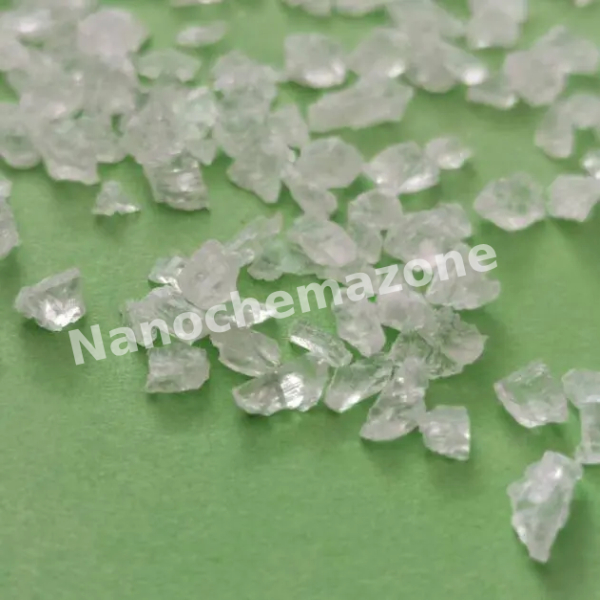
Lithium Fluoride (LiF) 99.999% 5N Granules

Price range: $333.00 through $3,622.00
Select options This product has multiple variants. The options may be chosen on the product page
Product Lithium Fluoride (LiF) 99.999% 5N Granules
CAS No. 7789-24-4
Appearance White crystalline granules
Purity ≥99%,  ≥99.9%,  ≥95%(Other purities are also available)
APS 1-5mm (Size Can be customized),  Ask for other available size range.
Ingredient LiF
Molecular Weight 25.94 g/mol
Melting Point 845 °C
Boiling Point 1,676 °C
Density 2.64 g/cm³
Product Codes NCZ-445I

Silicon on Insulator (SOI) Wafers, Size: 4”, Thickness: 725 μm, P type (Boron doped)

Price range: $760.00 through $3,617.00
Select options This product has multiple variants. The options may be chosen on the product page
1 piece/690 € 5 pieces/3280 €                           Please ask for stock status before placing an order on wafer products   Please contact us for quotes on larger quantities !!!

Silicon on Insulator (SOI) Wafers

Size: 4'', Thickness: 750 μm, P type (Boron doped)

Technical Properties:

Size (inch)  4”
Thickness (μm)  725
Resistivity   1-100 ohm.cm
Grade  Prime
Dopant  P type (Boron doped )
Orientation  100
Device Thickness  300 nm
Device Resistivity   1-100 ohm.cm
Device Type  P type (Boron doped )
Device Orientation  100
BOX Thickness  500 nm

Fields of Application for Silicon on Insulator (SOI) Wafer

Silicon on insulator (SOI) wafer is obtained with the addition of insulating layer. Silicon on insulator (SOI) wafer is placed between silicon substrate and an upper layer of silicon. The fundamental aim of using silicon on insulator (SOI) wafer is to increase the performance of the conventional silicon wafer by decreasing electrical losses. In case of reducing power and heat while increasing the speed performance of a device silicon on insulator (SOI) wafer is helpful. Best insulation depends on the application aims, for instance silicon dioxide is the most common insulator in microelectronics since it has ability to reduce short-channel effects. Silicon on insulator (SOI) wafer has reduced temperature dependency due to no doping and better yield due to high density. Silicon on insulator wafers helps to reduce the heat and increase the speed. Are the most common wafers for integrated circuit production. Mainly used where traditional silicon wafers are ineffective. High density of SOI wafers increases the utilization of such products. SOI wafers are commonly used in silicon photonics. The silicon layer on insulator can be used to fabricate optical waveguides and other optical devices, either passive or active (e.g. through suitable implantations). The buried insulator enables propagation of infrared light in the silicon layer on the basis of total internal reflection. The top surface of the waveguides can be either left uncovered and exposed to air (e.g. for sensing applications), or covered with a cladding, typically made of silica.
  • Silicon on insulator (SOI) wafer is used in silicon photonics.
  • Silicon on insulator (SOI) wafer is used in microelectronic devices.
  • Silicon on insulator (SOI) wafer is used for radio frequency (RF).

Gallium Arsenide (GaAs) Wafers, Size: 2”, Thickness: 350± 25 μm, Orientation: 100, Single Side Polished, EPI-ready

Price range: $189.00 through $3,588.00
Select options This product has multiple variants. The options may be chosen on the product page
Gallium Arsenide (GaAs) Wafer Size: 2”, Thickness: 350±25 μm, Orientation: 100 Technical Properties: Quality  GaAs Materials  GaAs Size (inch)  2”

Gallium Arsenide (GaAs) Wafers, Size: 2”, Thickness: 350±25 μm, Single Side Polished, EPI-ready, Mobility: 1000-3000

Price range: $189.00 through $3,588.00
Select options This product has multiple variants. The options may be chosen on the product page
Gallium Arsenide (GaAs) Wafer Size: 2”, Thickness: 350±25 μm, Mobility: 1000-3000 Technical Properties: Quality  GaAs Materials  GaAs Size (inch)  2” Thickness

Gallium Arsenide (GaAs) Wafers, Size: 2”, Thickness: 350±25 μm, Double Side Polished, EPI-ready

Price range: $189.00 through $3,588.00
Select options This product has multiple variants. The options may be chosen on the product page
Gallium Arsenide (GaAs) Wafer Size: 2”, Thickness: 350±25 μm, Double Side Polished Technical Properties: Quality  GaAs Materials  GaAs Size (inch)

Gallium Arsenide (GaAs) Wafers, Size: 4”, Thickness: 350±25 μm, Single Side Polished, EPI-ready

Price range: $189.00 through $3,588.00
Select options This product has multiple variants. The options may be chosen on the product page
Gallium Arsenide (GaAs) Wafer Size: 4”, Thickness: 350±25 μm, Single Side Polished Technical Properties: Quality  GaAs Materials  GaAs Size (inch)

Indium Arsenide (InAs) Wafers, Size: 2”, Thickness: 500± 25 μm, Orientation: 100, EPI-Ready

Price range: $784.00 through $3,585.00
Select options This product has multiple variants. The options may be chosen on the product page
Indium Arsenide (InAs) Wafers Size: 2”, Thickness: 500± 25 μm, Orientation: 100 Technical Properties: Quality  EPI-Ready Size (inch)  2” Thickness

Silicon Carbide Wafer (SiC-4H) – 4H, Size: 2”, Thickness: 350 μm, Production Grade, 4H Area: 1

Price range: $813.00 through $3,571.00
Select options This product has multiple variants. The options may be chosen on the product page
Silicon Carbide Wafer (SiC-4H) – 4H Size: 2”, Thickness: 350 μm, 4H Area: 1 Technical Properties: Quality  Production Grade Size (inch)  2”
Spherical TC4 Titanium Based Micron Powder for 3d Printers, Ti6Al4V, 25-50 µm, Spherical

Price range: $68.00 through $3,555.00
Select options This product has multiple variants. The options may be chosen on the product page

Application areas:

  • 3D Printing: Titanium is the strongest and the lightest material for 3d printing at the same time. It is used in the process called Direct Metal Laser Sintering (DMLS)
  • High tech fields: Space exploration, aeronautics, and medical field
  • Petrochemical
  • Shipbuilding
  • Automotive
  • Pharmaceutical
  • Manufacturing prostheses
  • Direct metal deposition
  • Binder jetting 3d printer technologies
  • Powder bed fusion
The most outstanding usages of 3D metal printing involve powder beds, streams of gas-propelled powder jets or wire for feedstock, lasers and electron beams as the energy sources, and precision automation equipment for digitally directing the energy source, the feedstock, or both along the material/energy deposition pathways. The composition of titanium alloy TC4 material is Ti-6Al-4V, and has good comprehensive mechanical and mechanical properties.

Pneumatic Cylindrical Battery Sealing Machine

$3,550.00
FEATURES
  • Pneumatic sealing machine mostly used for the sample of lab battery materials’ research, which to make cylindrical battery
  • Standard 18650 cylindrical battery sealing mould (1 set, 2 sealing). You can also choose other cylindrical battery sealing mould
  • Totally operated by pneumatic. Without any electricity. Very easy to use
  • Two steps for sealing which make better sealing
  • Precise design of the mold ensures accurate and reliable sealing. Solid steel structure design makes a steady and safe use
  • Good looking appearance, simple maintenance, small size, easy operater and accurate molding
  • Gas supply by compressed air or Inert gas cylinder. External connection of the compressed gas make sure the balance of the atmosphere in the glove box
  • Precise design of the mold ensures accurate and reliable sealing. Solid steel structure design makes a steady and safe use

Indium Phosphide (InP) Wafers, Size: 4”, Thickness: 625± 25 μm, Orientation: 100, Single Side Polished, Testing Grade

Price range: $766.00 through $3,530.00
Select options This product has multiple variants. The options may be chosen on the product page
1 piece/690  5 pieces/3180                           Please contact us for quotes on larger quantities !!!

Indium Phosphide (InP) Wafers

Size: 4'', Thickness: 625± 25 μm, Orientation: 100

Technical Properties:

Size (inch)  4”
Thickness (μm)  625± 25
Dopant  Sulphur (N type)
Polished  Single Side
Mobility (1.5-3.5)E3
Orientation  100
EPD  ≤5000
Growth method  VGF
OF Length  32.5±2
IF Length   18±1

Fields of Application for Indium Phosphide (InP)

Indium phosphide (InP) is a binary semiconductor composed of indium and phosphorus. Indium phosphide (InP) has started to be developed at the beginning of 1980s. Indium phosphide (InP) which used in a high power and high frequency electronics, has superior electron velocity. Indium phosphide (InP) has a direct bandgap by contrast with many semiconductors. This makes indium phosphide (InP) useful for optoelectronics and laser diodes. Indium phosphide (InP) is a crucial material for production of laser signals, determination and conversion of those signals back to electronic form. Indium Phopshide (InP) is a binary semiconductor composed of Indium (In) and Phosphorus (P), belonging to a group of materials commonly known as III-V Semiconductors. InP is used in high power and high-frequency electronics and boasts a superior electron velocity in comparison to more common semiconductors such as Silicon and Gallium Arsenide. Indium Phosphide has a face-centred cubic crystal structure almost identical to that of GaAs and most of the lll-V semiconductors. InP wafers must be prepared prior to device fabrication, all III-V wafers must be lapped to remove surface damage that occurs during the slicing process. Wafers are then Chemically Mechanically Polished/Plaranrized (CMP) for the final material removal stage allowing for the attainment of super-flat mirror like surfaces with a remaining roughness on an atomic scale. The wafer is then ready for device fabrication.
  • Indium phosphide (InP) is used in modulators.
  • Indium phosphide (InP) is used in photo-detectors.
  • Indium phosphide (InP) is used in LEDs.
  • Indium phosphide (InP) is used in fiber communications components.
  • Indium phosphide (InP) is used in semiconductor optical amplifiers.

Indium Phosphide (InP) Wafers, Size: 4”, Thickness: 625± 25 μm, Orientation: 111, Single Side Polished, Testing Grade

Price range: $766.00 through $3,530.00
Select options This product has multiple variants. The options may be chosen on the product page
1 piece/690  5 pieces/3180                          Please contact us for quotes on larger quantities !!!

Indium Phosphide (InP) Wafers

Size: 4'', Thickness: 625± 25 μm, Orientation: 111

Technical Properties:

Size (inch)  4”
Thickness (μm)  625± 25
Dopant  Sulphur (N type)
Polished  Single Side
Mobility (1.5-3.5)E3
Orientation  111
EPD  ≤5000
Growth method  VGF
OF Length  32.5±2
IF Length   18±1

Fields of Application for Indium Phosphide (InP)

Indium phosphide (InP) is a binary semiconductor composed of indium and phosphorus. Indium phosphide (InP) has started to be developed at the beginning of 1980s. Indium phosphide (InP) which used in a high power and high frequency electronics, has superior electron velocity. Indium phosphide (InP) has a direct bandgap by contrast with many semiconductors. This makes indium phosphide (InP) useful for optoelectronics and laser diodes. Indium phosphide (InP) is a crucial material for production of laser signals, determination and conversion of those signals back to electronic form. Indium Phopshide (InP) is a binary semiconductor composed of Indium (In) and Phosphorus (P), belonging to a group of materials commonly known as III-V Semiconductors. InP is used in high power and high-frequency electronics and boasts a superior electron velocity in comparison to more common semiconductors such as Silicon and Gallium Arsenide. Indium Phosphide has a face-centred cubic crystal structure almost identical to that of GaAs and most of the lll-V semiconductors. InP wafers must be prepared prior to device fabrication, all III-V wafers must be lapped to remove surface damage that occurs during the slicing process. Wafers are then Chemically Mechanically Polished/Plaranrized (CMP) for the final material removal stage allowing for the attainment of super-flat mirror like surfaces with a remaining roughness on an atomic scale. The wafer is then ready for device fabrication.
  • Indium phosphide (InP) is used in modulators.
  • Indium phosphide (InP) is used in photo-detectors.
  • Indium phosphide (InP) is used in LEDs.
  • Indium phosphide (InP) is used in fiber communications components.
  • Indium phosphide (InP) is used in semiconductor optical amplifiers.

Gallium Arsenide (GaAs) Wafers, Size: 4”, Thickness: 640±25 μm, Single Side Polished, EPI-ready, Dopant: Silicon (N-type)

Price range: $165.00 through $3,450.00
Select options This product has multiple variants. The options may be chosen on the product page
Gallium Arsenide (GaAs) Wafer Size: 4”, Single Side Polished, Thickness: 640± 25 μm, EPI-ready, Dopant: Silicon (N-type) Technical Properties: Quality

Prime CZ-Si Wafer, Size: 8”, Orientation: (100), Boron Doped, Resistivity: 1-100 (ohm.cm), 1-Side Polished, Thickness: 725 ± 25 μm

Price range: $163.00 through $3,390.00
Select options This product has multiple variants. The options may be chosen on the product page
Prime CZ-Si Wafer Size: 8”, Orientation: (100), Boron Doped, 1-Side Polished, Thickness: 725 ± 25 μm Technical Properties: Quality Prime

Cerium (Ce) Micron Powder, Purity: 99.5 %, Size: 325 mesh

Price range: $54.00 through $3,376.00
Select options This product has multiple variants. The options may be chosen on the product page
1 gram/48 € 5 grams/194 € 25 grams/870 € 100 grams/2980 €
Please contact us for quotes on larger quantities !!!

Cerium (Ce) Micron Powder

Purity: 99.5 %, Size: 325 mesh

Technical Properties:

PURITY

 99.5 %

PARTICLE SIZE

325 mesh

MELTING POINT 

799 °C

BOILING POINT 

3426 °C

DENSITY

6.657 gm/cc

FORM  

Powder

ELECTRIC RESISTIVITY

75.0 microhm-cm @ 25 °C


Applications:

Cerium is the most abundant element of the rare earth elements. It is found in minerals sallanite, rhabdophane, hydroxylbastnasite, bastnasite, monazite, synchysite, and zircon. It is ductile and it oxidizes very quickly at room temperature. Cerium nanoparticles are graded as highly flammable and harmful. Cerium powder is applied as polishing agent in glass polishing. It is very efficient glass polishing agents. It is used for precision optical polishing because of its strong oxidizing properties. It is also used to remove ultrafine diesel particle emissions like carbon. It is used in steel manufacturing to remove unwanted trace elements such as lead and antimony and to remove free oxygen and sulfur. Cerium powder has also applications in fuel cells functions for example it is used in the electrolyte of solid oxide fuel cells. 

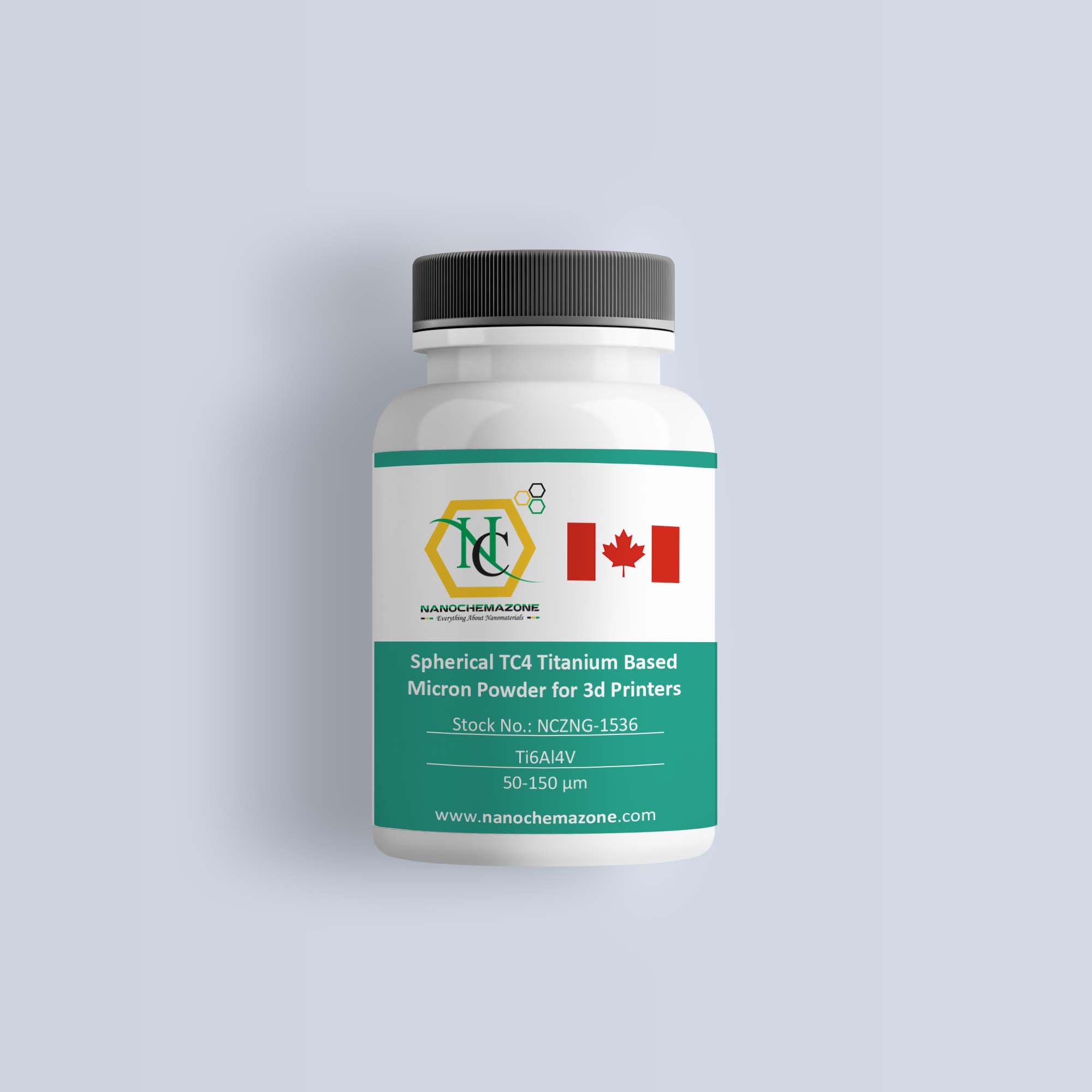
Spherical TC4 Titanium Based Micron Powder for 3d Printers, Ti6Al4V, 50-150 µm, Spherical

Price range: $62.00 through $3,355.00
Select options This product has multiple variants. The options may be chosen on the product page

Application areas:

  • 3D Printing: Titanium is the strongest and the lightest material for 3d printing at the same time. It is used in the process called Direct Metal Laser Sintering (DMLS)
  • High tech fields: Space exploration, aeronautics, and medical field
  • Petrochemical
  • Shipbuilding
  • Automotive
  • Pharmaceutical
  • Manufacturing prostheses
  • Direct metal deposition
  • Binder jetting 3d printer technologies
  • Powder bed fusion
The most outstanding usages of 3D metal printing involve powder beds, streams of gas-propelled powder jets or wire for feedstock, lasers and electron beams as the energy sources, and precision automation equipment for digitally directing the energy source, the feedstock, or both along the material/energy deposition pathways. The composition of titanium alloy TC4 material is Ti-6Al-4V, and has good comprehensive mechanical and mechanical properties.

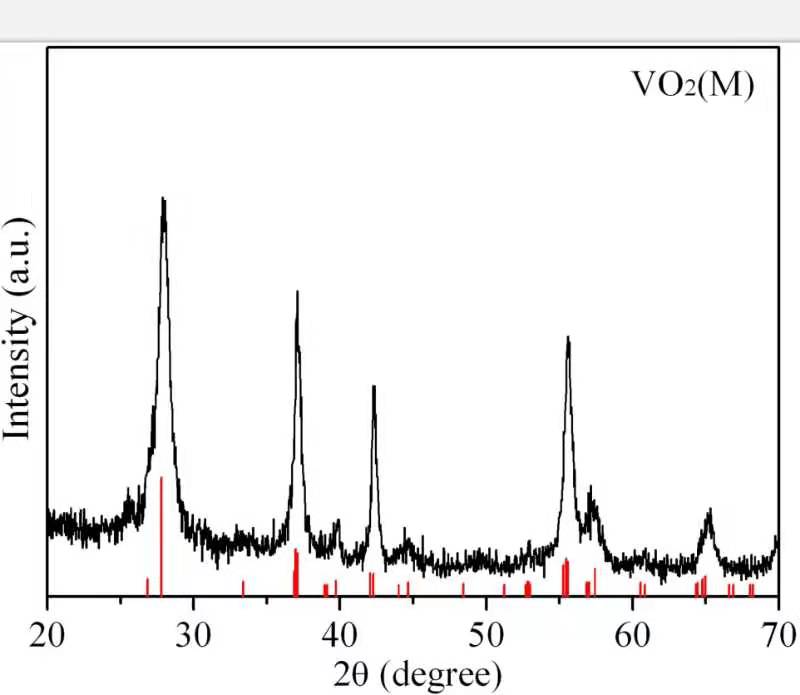
Vanadium Oxide (VO2) Nanopowder/Nanoparticles, Purity: 99.5+%, Size: 30-60 nm

Price range: $560.00 through $3,330.00
Select options This product has multiple variants. The options may be chosen on the product page
5 grams/495 € 25 grams/1380 €                      
100 grams/2940 €                    
Please contact us for quotes on larger quantities !!!

Vanadium Oxide (VO2) Nanopowder/Nanoparticles

Purity: 99.9+%, Size: 30-60 nm

Appearance Black Powder
Purity >99.90 %
Particle Size 30-60 nm
Al <0.05%
Fe <0.05%
Bi <0.05%
Zn <0.01%
Ti <0.01%
Ca <0.01%
Na <0.01%
Pb <0.0002%
Sn <0.0002%
    48e5f88cf63f9e9c9f58adb9ec44fd98.png     7d72df9b5c490cc252e9993995ede6ab.jpg

Terbium (Tb) Micron Powder Purity: 99.5 %, Size: 325 mesh

Price range: $51.00 through $3,325.00
Select options This product has multiple variants. The options may be chosen on the product page
1 gram/48 € 5 grams/218 € 25 grams/870 € 100 grams/2950 €

Gallium Arsenide (GaAs) Wafers, Size: 4”, Thickness: 350±25 μm, Single Side Polished, EPI-ready

Price range: $175.00 through $3,319.00
Select options This product has multiple variants. The options may be chosen on the product page
1 piece/158  5 pieces/749  25 pieces/2990  Please contact us for quotes on larger quantities !!!

Gallium Arsenide (GaAs) Wafer

Size: 4”, Thickness: 350±25 μm, Single Side Polished

Technical Properties:

Quality  GaAs
Materials  GaAs
Size (inch)  2”
Thickness (μm)  350± 25
Polished  Single Side
Dopant  Silicon (N Type)
Orientation  (100)15 deg off toward <111>A±0.5
Resistivity   (1.2—9.9) E-3
Mobility  1000-3000
EPD  ≤3000
Growth method  VGF
OF Length  32±1
IF Length   18±1

Fields of Application for Gallium Arsenide (GaAs)

Gallium arsenide (GaAs) is a compound of the elements gallium and arsenic. Gallium arsenide (GaAs) is a semiconductor compound. Gallium arsenide (GaAs)  has a high electron velocity and high saturated electron mobility. This makes gallium arsenide (GaAs) components are useful in fast electronic switching applications and at ultra-high radio frequencies. In 1907, the British discovered infrared emmission from gallium arsenide. This was called electroluminescence. Also, gallium arsenide (GaAs) was used as a solar cells in space for the Venera 3 mission in 1965, which is the first known operational use of gallium arsenide (GaAs). Vertical gradient freeze is the most common method to produce GaAs wafers. Mainly used for circuits, electronics and solar cell applications. Carbon, silicon, tellurium and zinc are some of the dopants that are used to modify the characteristics and electrical properties of gallium arsenide wafers. Wafer flatness and surface purity are ensured by highest quality standards. Boron concentration of gallium arsenide wafers highly depend on the production method. Gallium arsenide wafers with adequate electrical resistancy prevent high current induction in the circuit. Mobility of GaAs wafers can be tailored with different doping levels.
  • Gallium arsenide (GaAs) is used in laser diodes.
  • Gallium arsenide (GaAs) is used in solar cells.
  • Gallium arsenide (GaAs) is used in optical windows.
  • Gallium arsenide (GaAs) is used in monolithic microwave integrated circuits.
  • Gallium arsenide (GaAs) is used in microwave frequency integrated circuits.
  • Gallium arsenide (GaAs) is used in infrared light-emitting diodes.
  • Gallium arsenide (GaAs) is useful in barometers.
  • Gallium arsenide (GaAs) is useful in pharmaceuticals and nuclear medicine tests.
  • Gallium arsenide (GaAs) is useful in high temperature thermometers.

Gallium Arsenide (GaAs) Wafers, Size: 4”, Thickness: 625±25 μm, Single Side Polished, EPI-ready

Price range: $175.00 through $3,319.00
Select options This product has multiple variants. The options may be chosen on the product page
1 piece/158  5 pieces/749  25 pieces/2990    Please ask for stock status before placing an order on wafer products   Please contact us for quotes on larger quantities !!!

Gallium Arsenide (GaAs) Wafer

Size: 4”, Thickness: 625±25 μm, Single Side Polished

Technical Properties:

Quality  GaAs
Materials  GaAs
Size (inch)  4”
Thickness (μm)  625± 25
Polished  Single Side
Dopant  Silicon (N Type)
Orientation  (100)
Resistivity   (1.2—9.9) E-3
Mobility  1000-3000
EPD  ≤3000
Growth method  VGF
OF Length  32±1
IF Length   18±1

Fields of Application for Gallium Arsenide (GaAs)

Gallium arsenide (GaAs) is a compound of the elements gallium and arsenic. Gallium arsenide (GaAs) is a semiconductor compound. Gallium arsenide (GaAs)  has a high electron velocity and high saturated electron mobility. This makes gallium arsenide (GaAs) components are useful in fast electronic switching applications and at ultra-high radio frequencies. In 1907, the British discovered infrared emmission from gallium arsenide. This was called electroluminescence. Also, gallium arsenide (GaAs) was used as a solar cells in space for the Venera 3 mission in 1965, which is the first known operational use of gallium arsenide (GaAs). Vertical gradient freeze is the most common method to produce GaAs wafers. Mainly used for circuits, electronics and solar cell applications. Carbon, silicon, tellurium and zinc are some of the dopants that are used to modify the characteristics and electrical properties of gallium arsenide wafers. Wafer flatness and surface purity are ensured by highest quality standards. Boron concentration of gallium arsenide wafers highly depend on the production method. Gallium arsenide wafers with adequate electrical resistancy prevent high current induction in the circuit. Mobility of GaAs wafers can be tailored with different doping levels.
  • Gallium arsenide (GaAs) is used in laser diodes.
  • Gallium arsenide (GaAs) is used in solar cells.
  • Gallium arsenide (GaAs) is used in optical windows.
  • Gallium arsenide (GaAs) is used in monolithic microwave integrated circuits.
  • Gallium arsenide (GaAs) is used in microwave frequency integrated circuits.
  • Gallium arsenide (GaAs) is used in infrared light-emitting diodes.
  • Gallium arsenide (GaAs) is useful in barometers.
  • Gallium arsenide (GaAs) is useful in pharmaceuticals and nuclear medicine tests.
  • Gallium arsenide (GaAs) is useful in high temperature thermometers.

Gallium Arsenide (GaAs) Wafers, Size: 4”, Thickness: 350± 25 μm, Single Side Polished, EPI-ready, Mobility: 1000-3000

Price range: $175.00 through $3,319.00
Select options This product has multiple variants. The options may be chosen on the product page
1 piece/158  5 pieces/749  25 pieces/2990  Please contact us for quotes on larger quantities !!!

Gallium Arsenide (GaAs) Wafer

Size: 4”, Thickness: 350± 25 μm, Mobility: 1000-3000

Technical Properties:

Quality  GaAs
Materials  GaAs
Size (inch)  4”
Thickness (μm)  350± 25
Polished  Single Side
Dopant  Silicon (N Type)
Orientation  (100)2deg off toward <011>±0.5
Resistivity   (1.2—9.9) E-3
Mobility  1000-3000
EPD  ≤3000
Growth method  VGF
OF Length  32±1
IF Length   18±1

Fields of Application for Gallium Arsenide (GaAs)

Gallium arsenide (GaAs) is a compound of the elements gallium and arsenic. Gallium arsenide (GaAs) is a semiconductor compound. Gallium arsenide (GaAs)  has a high electron velocity and high saturated electron mobility. This makes gallium arsenide (GaAs) components are useful in fast electronic switching applications and at ultra-high radio frequencies. In 1907, the British discovered infrared emmission from gallium arsenide. This was called electroluminescence. Also, gallium arsenide (GaAs) was used as a solar cells in space for the Venera 3 mission in 1965, which is the first known operational use of gallium arsenide (GaAs). Vertical gradient freeze is the most common method to produce GaAs wafers. Mainly used for circuits, electronics and solar cell applications. Carbon, silicon, tellurium and zinc are some of the dopants that are used to modify the characteristics and electrical properties of gallium arsenide wafers. Wafer flatness and surface purity are ensured by highest quality standards. Boron concentration of gallium arsenide wafers highly depend on the production method. Gallium arsenide wafers with adequate electrical resistancy prevent high current induction in the circuit. Mobility of GaAs wafers can be tailored with different doping levels.
  • Gallium arsenide (GaAs) is used in laser diodes.
  • Gallium arsenide (GaAs) is used in solar cells.
  • Gallium arsenide (GaAs) is used in optical windows.
  • Gallium arsenide (GaAs) is used in monolithic microwave integrated circuits.
  • Gallium arsenide (GaAs) is used in microwave frequency integrated circuits.
  • Gallium arsenide (GaAs) is used in infrared light-emitting diodes.
  • Gallium arsenide (GaAs) is useful in barometers.
  • Gallium arsenide (GaAs) is useful in pharmaceuticals and nuclear medicine tests.
  • Gallium arsenide (GaAs) is useful in high temperature thermometers.

Gallium Arsenide (GaAs) Wafers, Size: 2”, Thickness: 350± 25 μm, Orientation: 100, Single Side Polished, EPI-ready

Price range: $175.00 through $3,319.00
Select options This product has multiple variants. The options may be chosen on the product page
1 piece/158  5 pieces/749  25 pieces/2990  Please contact us for quotes on larger quantities !!!

Gallium Arsenide (GaAs) Wafer

Size: 2”, Thickness: 350±25 μm, Orientation: 100

Technical Properties:

Quality  GaAs
Materials  GaAs
Size (inch)  2”
Thickness (μm)  350± 25
Polished  Single Side
Dopant  Silicon (N type)
Orientation  (100)
Resistivity   (1.2—9.9) E-3
Mobility  1000-3000
EPD  ≤3000
Growth method  VGF
OF Length  17±1
IF Length   7±1

Fields of Application for Gallium Arsenide (GaAs)

Gallium arsenide (GaAs) is a compound of the elements gallium and arsenic. Gallium arsenide (GaAs) is a semiconductor compound. Gallium arsenide (GaAs)  has a high electron velocity and high saturated electron mobility. This makes gallium arsenide (GaAs) components are useful in fast electronic switching applications and at ultra-high radio frequencies. In 1907, the British discovered infrared emmission from gallium arsenide. This was called electroluminescence. Also, gallium arsenide (GaAs) was used as a solar cells in space for the Venera 3 mission in 1965, which is the first known operational use of gallium arsenide (GaAs). Vertical gradient freeze is the most common method to produce GaAs wafers. Mainly used for circuits, electronics and solar cell applications. Carbon, silicon, tellurium and zinc are some of the dopants that are used to modify the characteristics and electrical properties of gallium arsenide wafers. Wafer flatness and surface purity are ensured by highest quality standards. Boron concentration of gallium arsenide wafers highly depend on the production method. Gallium arsenide wafers with adequate electrical resistancy prevent high current induction in the circuit. Mobility of GaAs wafers can be tailored with different doping levels.
  • Gallium arsenide (GaAs) is used in laser diodes.
  • Gallium arsenide (GaAs) is used in solar cells.
  • Gallium arsenide (GaAs) is used in optical windows.
  • Gallium arsenide (GaAs) is used in monolithic microwave integrated circuits.
  • Gallium arsenide (GaAs) is used in microwave frequency integrated circuits.
  • Gallium arsenide (GaAs) is used in infrared light-emitting diodes.
  • Gallium arsenide (GaAs) is useful in barometers.
  • Gallium arsenide (GaAs) is useful in pharmaceuticals and nuclear medicine tests.
  • Gallium arsenide (GaAs) is useful in high temperature thermometers.

Gallium Arsenide (GaAs) Wafers, Size: 2”, Thickness: 350±25 μm, Single Side Polished, EPI-ready, Mobility: 1000-3000

Price range: $175.00 through $3,319.00
Select options This product has multiple variants. The options may be chosen on the product page
1 piece/158  5 pieces/749  25 pieces/2990  Please contact us for quotes on larger quantities !!!

Gallium Arsenide (GaAs) Wafer

Size: 2”, Thickness: 350±25 μm, Mobility: 1000-3000

Technical Properties:

Quality  GaAs
Materials  GaAs
Size (inch)  2”
Thickness (μm)  350± 25
Polished  Single Side
Dopant  Silicon (N type)
Orientation  (100)2 deg off toward <111>A±0.5
Resistivity   (1.2—9.9) E-3
Mobility  1000-3000
EPD  ≤3000
Growth method  VGF
OF Length  17±1
IF Length   7±1

Fields of Application for Gallium Arsenide (GaAs)

Gallium arsenide (GaAs) is a compound of the elements gallium and arsenic. Gallium arsenide (GaAs) is a semiconductor compound. Gallium arsenide (GaAs)  has a high electron velocity and high saturated electron mobility. This makes gallium arsenide (GaAs) components are useful in fast electronic switching applications and at ultra-high radio frequencies. In 1907, the British discovered infrared emmission from gallium arsenide. This was called electroluminescence. Also, gallium arsenide (GaAs) was used as a solar cells in space for the Venera 3 mission in 1965, which is the first known operational use of gallium arsenide (GaAs). Vertical gradient freeze is the most common method to produce GaAs wafers. Mainly used for circuits, electronics and solar cell applications. Carbon, silicon, tellurium and zinc are some of the dopants that are used to modify the characteristics and electrical properties of gallium arsenide wafers. Wafer flatness and surface purity are ensured by highest quality standards. Boron concentration of gallium arsenide wafers highly depend on the production method. Gallium arsenide wafers with adequate electrical resistancy prevent high current induction in the circuit. Mobility of GaAs wafers can be tailored with different doping levels.
  • Gallium arsenide (GaAs) is used in laser diodes.
  • Gallium arsenide (GaAs) is used in solar cells.
  • Gallium arsenide (GaAs) is used in optical windows.
  • Gallium arsenide (GaAs) is used in monolithic microwave integrated circuits.
  • Gallium arsenide (GaAs) is used in microwave frequency integrated circuits.
  • Gallium arsenide (GaAs) is used in infrared light-emitting diodes.
  • Gallium arsenide (GaAs) is useful in barometers.
  • Gallium arsenide (GaAs) is useful in pharmaceuticals and nuclear medicine tests.
  • Gallium arsenide (GaAs) is useful in high temperature thermometers.

Gallium Arsenide (GaAs) Wafers, Size: 2”, Thickness: 350±25 μm, Double Side Polished, EPI-ready

Price range: $175.00 through $3,319.00
Select options This product has multiple variants. The options may be chosen on the product page
1 piece/158  5 pieces/749  25 pieces/2990  Please contact us for quotes on larger quantities !!!

Gallium Arsenide (GaAs) Wafer

Size: 2”, Thickness: 350±25 μm, Double Side Polished

Technical Properties:

Quality  GaAs
Materials  GaAs
Size (inch)  2”
Thickness (μm)  350± 25
Polished  Double Side
Dopant  None
Orientation  (100)
Resistivity   1 E8
Mobility  2000
EPD  ≤5000
Growth method  VGF
OF Length  17±1
IF Length   7±1

Fields of Application for Gallium Arsenide (GaAs)

Gallium arsenide (GaAs) is a compound of the elements gallium and arsenic. Gallium arsenide (GaAs) is a semiconductor compound. Gallium arsenide (GaAs)  has a high electron velocity and high saturated electron mobility. This makes gallium arsenide (GaAs) components are useful in fast electronic switching applications and at ultra-high radio frequencies. In 1907, the British discovered infrared emmission from gallium arsenide. This was called electroluminescence. Also, gallium arsenide (GaAs) was used as a solar cells in space for the Venera 3 mission in 1965, which is the first known operational use of gallium arsenide (GaAs). Vertical gradient freeze is the most common method to produce GaAs wafers. Mainly used for circuits, electronics and solar cell applications. Carbon, silicon, tellurium and zinc are some of the dopants that are used to modify the characteristics and electrical properties of gallium arsenide wafers. Wafer flatness and surface purity are ensured by highest quality standards. Boron concentration of gallium arsenide wafers highly depend on the production method. Gallium arsenide wafers with adequate electrical resistancy prevent high current induction in the circuit. Mobility of GaAs wafers can be tailored with different doping levels.
  • Gallium arsenide (GaAs) is used in laser diodes.
  • Gallium arsenide (GaAs) is used in solar cells.
  • Gallium arsenide (GaAs) is used in optical windows.
  • Gallium arsenide (GaAs) is used in monolithic microwave integrated circuits.
  • Gallium arsenide (GaAs) is used in microwave frequency integrated circuits.
  • Gallium arsenide (GaAs) is used in infrared light-emitting diodes.
  • Gallium arsenide (GaAs) is useful in barometers.
  • Gallium arsenide (GaAs) is useful in pharmaceuticals and nuclear medicine tests.
  • Gallium arsenide (GaAs) is useful in high temperature thermometers.

Gallium Arsenide (GaAs) Wafers, Size: 2”, Thickness: 350±25 μm, Single Side Polished, EPI-ready, Dopant: Zinc (P Type)

Price range: $175.00 through $3,319.00
Select options This product has multiple variants. The options may be chosen on the product page
1 piece/158  5 pieces/749  25 pieces/2990  Please contact us for quotes on larger quantities !!!

Gallium Arsenide (GaAs) Wafer

Size: 2”, Thickness: 350±25 μm, Dopant: Zinc (P Type)

Technical Properties:

Quality  GaAs
Materials  GaAs
Size (inch)  2”
Thickness (μm)  350± 25
Polished  Single Side
Dopant  Zinc (P Type)
Orientation  (100)15 deg off toward<111A>
Resistivity   (1.2—9.9) E-3
Mobility  1000-3000
EPD  ≤3000
Growth method  VGF
OF Length  17±1
IF Length   7±1

Fields of Application for Gallium Arsenide (GaAs)

Gallium arsenide (GaAs) is a compound of the elements gallium and arsenic. Gallium arsenide (GaAs) is a semiconductor compound. Gallium arsenide (GaAs)  has a high electron velocity and high saturated electron mobility. This makes gallium arsenide (GaAs) components are useful in fast electronic switching applications and at ultra-high radio frequencies. In 1907, the British discovered infrared emmission from gallium arsenide. This was called electroluminescence. Also, gallium arsenide (GaAs) was used as a solar cells in space for the Venera 3 mission in 1965, which is the first known operational use of gallium arsenide (GaAs). Vertical gradient freeze is the most common method to produce GaAs wafers. Mainly used for circuits, electronics and solar cell applications. Carbon, silicon, tellurium and zinc are some of the dopants that are used to modify the characteristics and electrical properties of gallium arsenide wafers. Wafer flatness and surface purity are ensured by highest quality standards. Boron concentration of gallium arsenide wafers highly depend on the production method. Gallium arsenide wafers with adequate electrical resistancy prevent high current induction in the circuit. Mobility of GaAs wafers can be tailored with different doping levels.
  • Gallium arsenide (GaAs) is used in laser diodes.
  • Gallium arsenide (GaAs) is used in solar cells.
  • Gallium arsenide (GaAs) is used in optical windows.
  • Gallium arsenide (GaAs) is used in monolithic microwave integrated circuits.
  • Gallium arsenide (GaAs) is used in microwave frequency integrated circuits.
  • Gallium arsenide (GaAs) is used in infrared light-emitting diodes.
  • Gallium arsenide (GaAs) is useful in barometers.
  • Gallium arsenide (GaAs) is useful in pharmaceuticals and nuclear medicine tests.
  • Gallium arsenide (GaAs) is useful in high temperature thermometers.

Nickel Chromium (Ni-Cr) Alloy Nanopowder/Nanoparticles, Purity: 99.95%, Size: < 90 nm

Price range: $97.00 through $3,318.00
Select options This product has multiple variants. The options may be chosen on the product page
1 gram/86 € 5 grams/325 € 25 grams/980 € 100 grams/2924 €                     
Please contact us for quotes on larger quantities !!!

Nickel Chromium (Ni-Cr) Alloy Nanopowder/Nanoparticles

Purity: 99.95%, Size: < 90 nm

Technical Properties:

Alloy Ratio (Ni-Cr) 80-20
Average Particle Size (nm) < 90 nm

Properties, Storage and Cautions:

Ni-Cr alloy nanoparticles are highly reactive, therefore it should be handled with care and rapid moves, vibrations should be avoided. The powder should be kept away from sunlight, any kind of heating, moisture and impacts. Coagulation of the particles is a serious problem, so, the powder should be sealed under vacuum and should be kept in cool and dry conditions. Air contact should be avoided.

Applications:

Ni-Cr alloy is generally used in electrical heaters, explosives, ignition systems, internal support for clay sculptures etc…

Nickel Chromium (Ni-Cr) Alloy Nanopowder/Nanoparticles, Purity: 99.95%, Size: < 90 nm

Price range: $97.00 through $3,309.00
Select options This product has multiple variants. The options may be chosen on the product page

Nickel Chromium (Ni-Cr) Alloy Nanopowder/Nanoparticles

Purity: 99.95%, Size: < 90 nm

Technical Properties:

Alloy Ratio (Ni-Cr) 80-20
Average Particle Size (nm) < 90 nm

Properties, Storage and Cautions:

Ni-Cr alloy nanoparticles are highly reactive, therefore it should be handled with care and rapid moves, vibrations should be avoided. The powder should be kept away from sunlight, any kind of heating, moisture and impacts. Coagulation of the particles is a serious problem, so, the powder should be sealed under vacuum and should be kept in cool and dry conditions. Air contact should be avoided.