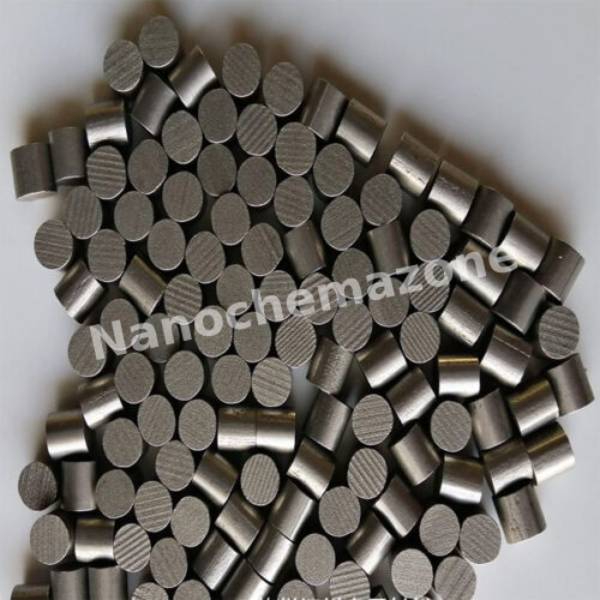
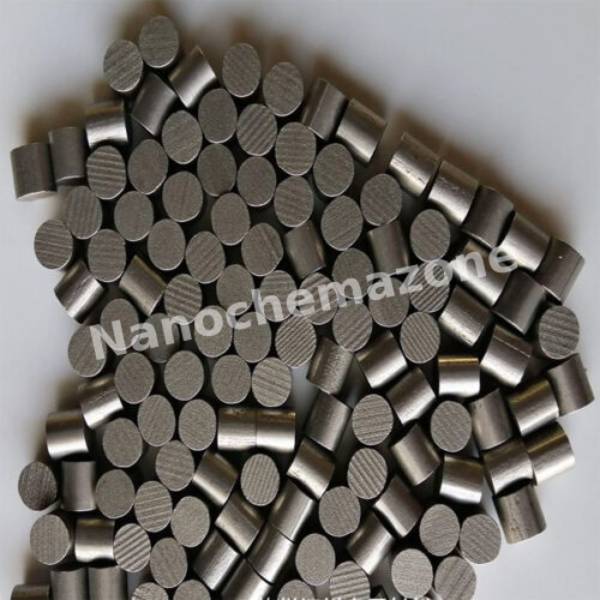
Lanthanum Nickel Oxide (LaNiO3) Sputtering Targets, indium, Purity: 99.9%, Size: 1”, Thickness: 0.125”

$1,230.00

Applications of Sputtering Targets;

  • Sputtering targets is used for film deposition. The deposition made by sputter targets is a method of depositing thin films by sputtering that involves eroding material from a "target" source onto a "substrate" such as  a silicon wafer.
  • Semiconductor sputtering targets is used to etch the target. Sputter etching is chosen in cases where a high degree of etching anisotropy is needed and selectivity is not a concern.
  • Sputter targets is also used for analysis by etching away the target material.
One of the example occurs in secondary ion spectroscopy (SIMS), where the target sample is sputtered at a constant rate. As the target is sputtered, the concentration and identity of sputtered atoms are measured using mass spectrometry. By helping of the sputtering target, the composition of the target material can be determined and even extremely low concentrations of impurities are detected. Sputtering target has also application area in space. Sputtering is one of the forms of space weathering, a process that changes the physical and chemical properties of airless bodies, such as asteroids and the Moon. Lanthanum nickel oxide with the chemical formula of LaNiO3 is an important perovskite-type oxide with metallic conductivity. Lanthanum nickel oxide is a ternary compound with unique chemical and physical properties. It shows an extended range of oxygen-deficient compositions, an uncommon intrinsic n-type metallic conductance, a perovskite crystal structure and thermal and chemical stability. These characteristics make LNO a technologically important perovskite oxide electrode in many potential applications such as ferroelectric thin film capacitors, solid oxide fuel cells, nonvolatile ferroelectric random access memories and multilayer actuators. Furthermore, LNO films have potential to be used as oxygen pressure and ethanol active sensing layers. Also, the reduced La–Ni mixed oxides are reported to be good catalyst precursors to synthesized organic compounds and to grow large amounts of regular diameter distribution controlled carbon nanotubes. Different chemical and physical thin film deposition techniques have been used to prepare LNO on various substrates. Chemical methods such as chemical vapor deposition, metallo-organic chemical vapor deposition and chemical solution deposition have been used to prepare LNO films. Physical methods such as sputtering, pulsed laser deposition and mist plasma evaporation have also been reported. Wet chemical solution deposition techniques provide simple and versatile alternative methods for thin film preparation.

Lanthanum Manganate (LaMnO3) Sputtering Targets, Purity: 99.9%, Size: 2”, Thickness: 0.250”

$1,230.00

Applications of Sputtering Targets;

  • Sputtering targets is used for film deposition. The deposition made by sputter targets is a method of depositing thin films by sputtering that involves eroding material from a "target" source onto a "substrate" such as  a silicon wafer.
  • Semiconductor sputtering targets is used to etch the target. Sputter etching is chosen in cases where a high degree of etching anisotropy is needed and selectivity is not a concern.
  • Sputter targets is also used for analysis by etching away the target material.
One of the example occurs in secondary ion spectroscopy (SIMS), where the target sample is sputtered at a constant rate. As the target is sputtered, the concentration and identity of sputtered atoms are measured using mass spectrometry. By helping of the sputtering target, the composition of the target material can be determined and even extremely low concentrations of impurities are detected. Sputtering target has also application area in space. Sputtering is one of the forms of space weathering, a process that changes the physical and chemical properties of airless bodies, such as asteroids and the Moon.

Lanthanum Manganate (LaMnO3) Sputtering Targets, Purity: 99.9%, Size: 8”, Thickness: 0.125”

$1,230.00
Select options This product has multiple variants. The options may be chosen on the product page

Applications of Sputtering Targets;

  • Sputtering targets is used for film deposition. The deposition made by sputter targets is a method of depositing thin films by sputtering that involves eroding material from a "target" source onto a "substrate" such as  a silicon wafer.
  • Semiconductor sputtering targets is used to etch the target. Sputter etching is chosen in cases where a high degree of etching anisotropy is needed and selectivity is not a concern.
  • Sputter targets is also used for analysis by etching away the target material.
One of the example occurs in secondary ion spectroscopy (SIMS), where the target sample is sputtered at a constant rate. As the target is sputtered, the concentration and identity of sputtered atoms are measured using mass spectrometry. By helping of the sputtering target, the composition of the target material can be determined and even extremely low concentrations of impurities are detected. Sputtering target has also application area in space. Sputtering is one of the forms of space weathering, a process that changes the physical and chemical properties of airless bodies, such as asteroids and the Moon.

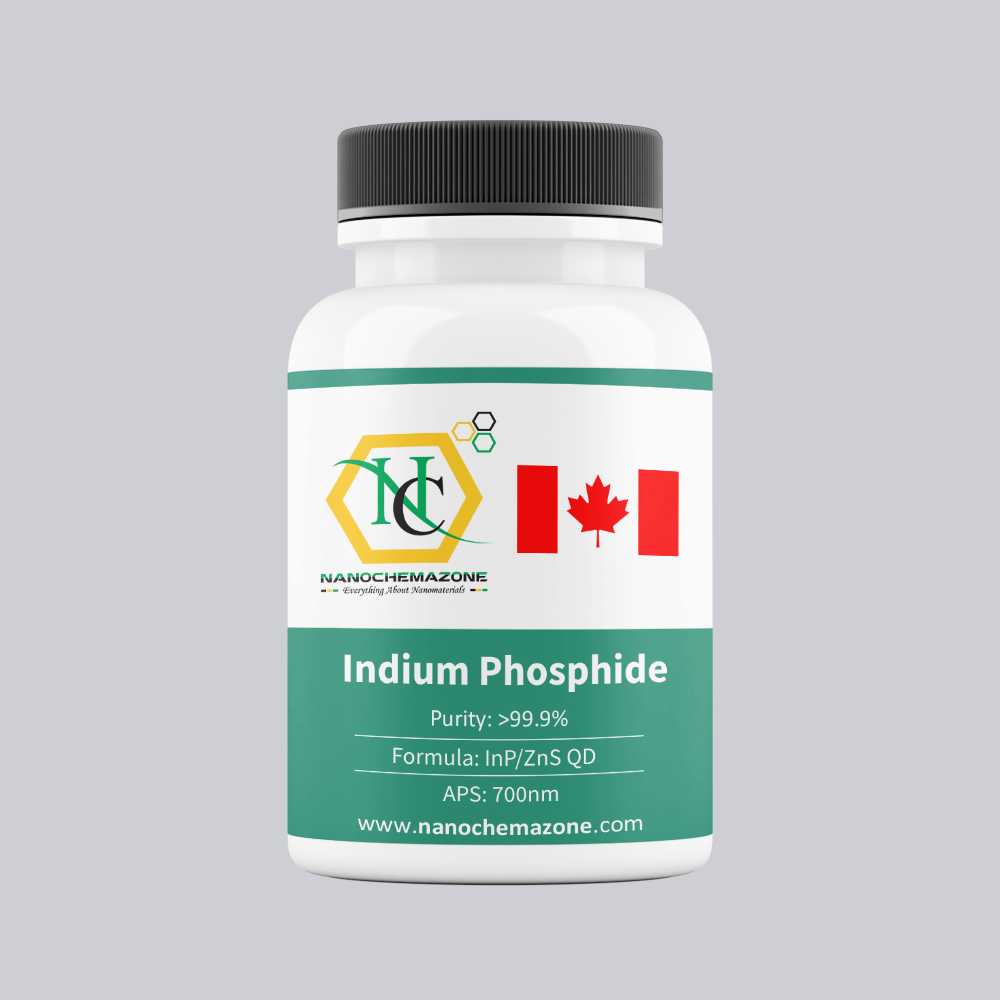
Indium Phosphide Quantum Dots (InP/ZnS QD) 700 nm

Price range: $530.00 through $1,230.00
Select options This product has multiple variants. The options may be chosen on the product page
APPLICATIONS InPQDs are employed in because of their electrical and optical characteristics in:
  • Light emitting diodes (LEDs),
  • Biomedical applications like bioimaging,
  • Electronic devices,
  • Solar cells.

Lanthanum Titanate (LaTiO3) Sputtering Targets, Purity: 99.9%, Size: 8”, Thickness: 0.125”

$1,229.00

Product 

Lanthanum Titanate (LaTiO3) Sputtering Targets, Purity: 99.9%, Size: 8'', Thickness: 0.125''

CAS No.

 12201-04-6

Appearance

Powder

Purity

≥99%,  ≥99.9%,  ≥95%

(Other purities are also available)

APS

<5 µm (Size Can be customized), Ask for other available size ranges.

Ingredient

N/A

Molecular Weight

234.80 g/mol

Melting Point

~1,770 °C (estimated; varies by stoichiometry)

Boiling Point

N/A

Density

~6.52 g/cm³

Product Codes

NCZ-2080K

Multi Walled Carbon Nanotubes Isopropanol Dispersion, 4 wt%, Purity: > 95%, OD: 18-35 nm, Length: 8-18 µm

Price range: $277.00 through $1,229.00
Select options This product has multiple variants. The options may be chosen on the product page
15 ml/252 € 30 ml/420 € 60 ml/725 € 120 ml/1115 €
Please contact us for quotes on larger quantities !!!

Multi Walled Carbon Nanotubes Isopropanol Dispersion

4 wt%, Purity: > 95+ %, OD: 18-35 nm, Length: 8-18 µm

Technical Properties:

Purity > 95+ %
Color black
Average Outside Diameter (nm) 18-35
Average Inside Diameter (nm) 5.0-10.0
Length (μm) 8-18
Tap Density (g/cm3) 0.30
True Density (g/cm3) 2.4
Specific Surface Area (m2/g) 120
Ash < 1.5 wt%
Electrical Conductivity (S/cm) > 98
Manufacturing Method CVD

Applications:

MWCNTs have a variety of potential applications in different fields. These applications include midicine, mechanical, electric, chemical, energy and others. It can be applied in, 1-drug dilevery, 2-biosensors, 3-CNT composites, 4-catalysis, 5-nanoprobes, 6-hydrogen storage, 7-lithium battaries, 8-gas-discharge tubes, 9-flat panel display, 10-supercapacitor, 11-transistors, 12-solar cells, 13-photoluminescence, 14-template  

Stainless Steel Three-Electrode Split Test Cell

$1,228.00
Select options This product has multiple variants. The options may be chosen on the product page

Application:

Stainless steel Three-Electrode Split Test Cell for R&D, Hi-Voltage Battery - 15 mm Diameter Cell

Indium Tin Oxide/ITO (In203:Sn02) Sputtering Targets, Purity: 99.99%, Size: 6”, Thickness: 0.250”

$1,225.00

Applications of Sputtering Targets;

Film deposition is accomplished using sputtering targets. A technique for sputtering thin films is called "deposition made by sputter targets," which entails eroding material from a "target" source onto a "substrate" like a silicon wafer. Etching of the target is done using semiconductor sputtering targets. When selectivity is not an issue and a high degree of etching anisotropy is required, sputter etching is the method of choice. By removing the target material through etching, sputter targets are also utilized for invest1,225igation. In secondary ion spectroscopy (SIMS), one example is when the target material is sputtered at a steady pace. Mass spectrometry is used to quantify the concentration and identity of spewed atoms as the target is sputtered.

The target material's composition may be ascertained and even very low concentrations of contaminants can be found with the aid of the sputtering target.

There is also an application area for sputtering targets in space. One type of space weathering that alters the chemical and physical characteristics of airless worlds like the Moon and asteroids is sputtering.

Aluminum Nickel Composite Strip for Battery Tab, Width: 4 mm, Thickness: 0.1 mm, 1Roll: 1 kg

Price range: $360.00 through $1,225.00
Select options This product has multiple variants. The options may be chosen on the product page

Applications:

Aluminum Nickel Composite Strip for Battery Tab is mainly used for welding aluminum casing parts of lithium ion batteries.

Carbon Quantum Dots (CQD) 630 nm

Price range: $690.00 through $1,225.00
Select options This product has multiple variants. The options may be chosen on the product page
APPLICATIONS Carbon quantum dots are employed in the following because of their optical, electrical, and biological characteristics:
  • Bioimaging,
  • Photovoltaics,
  • Photocatalysis,
  • Drug delivery,
  • Sensors,
  • Optronics.

Bismuth Ferrite (BiFeO3) Sputtering Targets, Purity: 99.9%, Size: 3”, Thickness: 0.250”

$1,224.00

Product 

Bismuth Ferrite (BiFeO3) Sputtering Targets, Purity: 99.9%, Size: 3'', Thickness: 0.250''

CAS No.

 12010‑42‑3

Appearance

Powder

Purity

≥99%,  ≥99.9%,  ≥95%

(Other purities are also available)

APS

 0.5–2 µm (Size Can be customized), Ask for other available size ranges.

Ingredient

N/A

Molecular Weight

~312.82 g/mol

Melting Point

 ~1255 °C (bulk material)

Boiling Point

N/A

Density

~8.22 g/cm³

Product Codes

NCZ-2426K

Bismuth Ferrite (BiFeO3) Sputtering Targets, Purity: 99.9%, Size: 5”, Thickness: 0.125”

$1,224.00

Product 

Bismuth Ferrite (BiFeO3) Sputtering Targets, Purity: 99.9%, Size: 5'', Thickness: 0.125''

CAS No.

 12010‑42‑3

Appearance

Powder

Purity

≥99%,  ≥99.9%,  ≥95%

(Other purities are also available)

APS

 0.5–2 µm (Size Can be customized), Ask for other available size ranges.

Ingredient

N/A

Molecular Weight

~312.82 g/mol

Melting Point

 ~1255 °C (bulk material)

Boiling Point

N/A

Density

~8.22 g/cm³

Product Codes

NCZ-2423K

Lanthanum Strontium Manganate (La0.7Sr0.3MnO3) Sputtering Targets, Purity: 99.9%, Size: 4”, Thickness: 0.250”

$1,223.00

Applications of Sputtering Targets;

  • Sputtering targets is used for film deposition. The deposition made by sputter targets is a method of depositing thin films by sputtering that involves eroding material from a "target" source onto a "substrate" such as  a silicon wafer.
  • Semiconductor sputtering targets is used to etch the target. Sputter etching is chosen in cases where a high degree of etching anisotropy is needed and selectivity is not a concern.
  • Sputter targets is also used for analysis by etching away the target material.
One of the example occurs in secondary ion spectroscopy (SIMS), where the target sample is sputtered at a constant rate. As the target is sputtered, the concentration and identity of sputtered atoms are measured using mass spectrometry. By helping of the sputtering target, the composition of the target material can be determined and even extremely low concentrations of impurities are detected. Sputtering target has also application area in space. Sputtering is one of the forms of space weathering, a process that changes the physical and chemical properties of airless bodies, such as asteroids and the Moon.

Lanthanum Nickel Oxide (LaNiO3) Sputtering Targets, Purity: 99.9%, Size: 5”, Thickness: 0.250”

$1,222.00

Product 

Lanthanum Nickel Oxide (LaNiO3) Sputtering Targets, Purity: 99.9%, Size: 5'', Thickness: 0.250''

CAS No.

12031‑18‑4

Appearance

Powder

Purity

≥99%,  ≥99.9%,  ≥95%

(Other purities are also available)

APS

 ~1–5 µm (Size Can be customized), Ask for other available size ranges.

Ingredient

N/A

Molecular Weight

 ~245.6 g/mol

Melting Point

Decomposes at ~1300–1500 °C

Boiling Point

N/A

Density

 ~6.5–7.0 g/cm³

Product Codes

NCZ-2118K

Lanthanum Titanate (LaTiO3) Sputtering Targets, Purity: 99.9%, Size: 8”, Thickness: 0.250”

$1,222.00

Product 

Lanthanum Titanate (LaTiO3) Sputtering Targets, Purity: 99.9%, Size: 8'', Thickness: 0.250''

CAS No.

7439‑92‑1

Appearance

Powder

Purity

≥99%,  ≥99.9%,  ≥95%

(Other purities are also available)

APS

 N/A (Size Can be customized), Ask for other available size ranges.

Ingredient

N/A

Molecular Weight

 207.2 g/mol

Melting Point

~327.5 °C

Boiling Point

~1,740 °C

Density

 ~11.34 g/cm³

Product Codes

NCZ-2079K

Cobalt (Co) Nanopowder/Nanoparticles, Purity: 99.5%, Size: 100 nm

Price range: $221.00 through $1,220.00
Select options This product has multiple variants. The options may be chosen on the product page
100 grams/195 €                     
500 grams/666 €                    
1000 grams/1074 € Please contact us for quotes on larger quantities !!!

Cobalt (Co) Nanopowder/Nanoparticles

Purity: 99.5%, Size: 100 nm

Cobalt is a chemical element with the atomic number 27. Cobalt is found in chemically combined form. The cobalt is hard and solid with grayish color. Cobalt has a high boiling and melting points. At room temperature and standard pressure cobalt can barely be oxidized. But if cobalt is heated, a cobalt oxide is formed. The oxide from cobalt can be used in many useful applications and the material acquires various colors depending on Cobalts oxidation state.

Praseodymium (Pr) Sputtering Targets, Purity: 99.9%, Size: 8”, Thickness: 0.250”

$1,219.00

Product 

Praseodymium (Pr) Sputtering Targets, Purity: 99.9%, Size: 8'', Thickness: 0.250''

CAS No.

7440-10-0

Appearance

Powder

Purity

≥99%,  ≥99.9%,  ≥95%

(Other purities are also available)

APS

N/A (Size Can be customized), Ask for other available size ranges.

Ingredient

N/A

Molecular Weight

 140.91 g/mol

Melting Point

931 °C

Boiling Point

 3520 °C

Density

 6.77 g/cm³

Product Codes

NCZ-1784K

Cobalt (Co) Nanopowder/Nanoparticles, Purity: 99.5%, Size: 100 nm

Price range: $221.00 through $1,219.00
Select options This product has multiple variants. The options may be chosen on the product page

Cobalt (Co) Nanopowder/Nanoparticles

Purity: 99.5%, Size: 100 nm

Cobalt is a chemical element with the atomic number 27. Cobalt is found in chemically combined form. The cobalt is hard and solid with grayish color. Cobalt has a high boiling and melting points. At room temperature and standard pressure cobalt can barely be oxidized. But if cobalt is heated, a cobalt oxide is formed. The oxide from cobalt can be used in many useful applications and the material acquires various colors depending on Cobalts oxidation state.

Calcium Manganate (CaMnO3) Sputtering Targets, indium, Purity: 99.9%, Size: 3”, Thickness: 0.125”

$1,215.00

Applications of Sputtering Targets;

Film deposition is accomplished using sputtering targets. A technique for sputtering thin films is called "deposition made by sputter targets," which entails eroding material from a "target" source onto a "substrate" like a silicon wafer. Etching of the target is done using semiconductor sputtering targets. When selectivity is not an issue and a high degree of etching anisotropy is required, sputter etching is the method of choice. By removing the target material through etching, sputter targets are also utilized for investigation. In secondary ion spectroscopy (SIMS), one example is when the target material is sputtered at a steady pace. Mass spectrometry is used to quantify the concentration and identity of spewed atoms as the target is sputtered.

The target material's composition may be ascertained and even very low concentrations of contaminants can be found with the aid of the sputtering target.

There is also an application area for sputtering targets in space. One type of space weathering that alters the chemical and physical characteristics of airless worlds like the Moon and asteroids is sputtering.

Aluminum Nitride (AlN) Sputtering Targets, Purity: 99.8%, Size:4”, Thickness: 0.250”

$1,213.00

Applications of Sputtering Targets;

Film deposition is accomplished using sputtering targets. A technique for sputtering thin films is called "deposition made by sputter targets," which entails eroding material from a "target" source onto a "substrate" like a silicon wafer. Etching of the target is done using semiconductor sputtering targets. When selectivity is not an issue and a high degree of etching anisotropy is required, sputter etching is the method of choice. By removing the target material through etching, sputter targets are also utilized for investigation. In secondary ion spectroscopy (SIMS), one example is when the target material is sputtered at a steady pace. Mass spectrometry is used to quantify the concentration and identity of spewed atoms as the target is sputtered. With the sputtering target's assistance, the

It is possible to identify the target material and even detect incredibly tiny impurity amounts.

There is also an application area for sputtering targets in space. One type of space weathering that alters the chemical and physical characteristics of airless worlds like the Moon and asteroids is sputtering.

The chemical compound aluminum nitride has the formula AlN.The combination of mechanical, chemical, and physical properties of aluminum nitride is exceptional. Superior aluminum nitride films have found application in a wide range of sensors and devices, including optoelectronic and optical ones. High refractive index (~2.0), low absorption, and a broad band gap (~6.2 eV) are important characteristics for optical and optoelectronic applications.

Aluminum Nitride (AlN) Sputtering Targets, Purity: 99.8%, Size:4”, Thickness: 0.250”

$1,213.00

Applications of Sputtering Targets;

  • Sputtering targets is used for film deposition. The deposition made by sputter targets is a method of depositing thin films by sputtering that involves eroding material from a "target" source onto a "substrate" such as  a silicon wafer.
  • Semiconductor sputtering targets is used to etch the target. Sputter etching is chosen in cases where a high degree of etching anisotropy is needed and selectivity is not a concern.
  • Sputter targets is also used for analysis by etching away the target material.
One of the example occurs in secondary ion spectroscopy (SIMS), where the target sample is sputtered at a constant rate. As the target is sputtered, the concentration and identity of sputtered atoms are measured using mass spectrometry. By helping of the sputtering target, the composition of the target material can be determined and even extremely low concentrations of impurities are detected. Sputtering target has also application area in space. Sputtering is one of the forms of space weathering, a process that changes the physical and chemical properties of airless bodies, such as asteroids and the Moon. Aluminum nitride is a chemical compound with the formula of AlN.Aluminum nitride has excellent combination of physical, chemical, and mechanical properties. High-quality films of aluminum nitride have been used in various devices and sensors including the optical and optoelectronic devices. As far as the optical and optoelectronic applications are concerned, wide band gap (~6.2 eV) along with high-refractive index (~2.0) and low-absorption coefficient (<10−3) makes AlN a very attractive material for these applications. In addition to this, thermal and chemical stability of AlN films make it suitable for applications in difficult environment. Today, AlN films/coatings have been grown by several methods which include pulsed laser deposition, reactive molecular beam epitaxy, vacuum arc/cathodic arc deposition, DC/RF reactive sputtering, ion beam sputtering, metal-organic chemical vapor deposition (MOCVD), and miscellaneous other techniques. Due to simplicity, reproducibility, ease of scaling up, and lower cost, magnetron sputtering is one of the common methods for growing AlN films for various applications. Properties of AlN films depend upon the crystal structure, crystal orientation, microstructure, and chemical composition, which in turn depend upon the deposition conditions such as sputtering power, pulse frequency, duty cycle, growth temperature, nitrogen/argon flow ratio, and sputtering gas pressure. AlN sputtering targets give good result with the method of reactive DC magnetron sputtering system.

Titanium Nitride (TiN) Sputtering Targets, indium, Purity: 99.5%, Size: 3”, Thickness: 0.125”

$1,206.00

Product 

Titanium Nitride (TiN) Sputtering Targets, indium, Purity: 99.5%, Size: 3'', Thickness: 0.125''

CAS No.

25583-20-4

Appearance

Powder

Purity

≥99%,  ≥99.9%,  ≥95%

(Other purities are also available)

APS

N/A  (Size Can be customized), Ask for other available size ranges.

Ingredient

N/A

Molecular Weight

61.88 g/mol

Melting Point

 ~2950 °C

Boiling Point

~4300 °C

Density

5.22 g/cm³

Product Codes

NCZ-1597K

Magnetic Graphene Aerogel, Content of Fe3O4: 50%, Diameter: 2±0.4 cm

Price range: $259.00 through $1,204.00
Select options This product has multiple variants. The options may be chosen on the product page
1 piece/ 259 € 5 pieces/ 1204 €  Contact us for tailored quotes on larger quantities & experience exceptional solutions from our experts.

Bismuth Ferrite (BiFeO3) Sputtering Targets, Purity: 99.9%, Size: 6”, Thickness: 0.250”

$1,200.00

Applications of Sputtering Targets;

Film deposition is accomplished using sputtering targets. A technique for sputtering thin films is called "deposition made by sputter targets," which entails eroding material from a "target" source onto a "substrate" like a silicon wafer. Etching of the target is done using semiconductor sputtering targets. When selectivity is not an issue and a high degree of etching anisotropy is required, sputter etching is the method of choice. By removing the target material through etching, sputter targets are also utilized for investigation. In secondary ion spectroscopy (SIMS), one example is when the target material is sputtered at a steady pace. Mass spectrometry is used to quantify the concentration and identity of spewed atoms as the target is sputtered. With the sputtering target's assistance, the

There is also an application area for sputtering targets in space. One type of space weathering that alters the chemical and physical characteristics of airless worlds like the Moon and asteroids is sputtering.

One of the most promising multiferroic materials is bismuth ferrite, an inorganic chemical compound with a perovskite structure and the chemical formula BiFeO3. In order to create a one-phase material called bismuth ferrite (BiFeO3), a bismuth ferrite sputtering target is often manufactured by high temperature sinttering or recrystallizing the mixture of the oxide compound of Bi and Fe. For targets that are sputtering bismuth ferrite, indium bonding is advised.

Barium Zirconate (BaZrO3) Sputtering Targets, Purity: 99.99%, Size: 4”, Thickness: 0.125”

$1,200.00

Applications of Sputtering Targets;

Film deposition is accomplished using sputtering targets. A technique for sputtering thin films is called "deposition made by sputter targets," which entails eroding material from a "target" source onto a "substrate" like a silicon wafer. Etching of the target is done using semiconductor sputtering targets. When selectivity is not an issue and a high degree of etching anisotropy is required, sputter etching is the method of choice. By removing the target material through etching, sputter targets are also utilized for investigation. In secondary ion spectroscopy (SIMS), one example is when the target material is sputtered at a steady pace. When the target shatters,

Mass spectrometry measures the concentration and identity of sputtered atoms. The target material's composition may be ascertained and even very low concentrations of contaminants can be found with the aid of the sputtering target.

There is also an application area for sputtering targets in space. One type of space weathering that alters the chemical and physical characteristics of airless worlds like the Moon and asteroids is sputtering.

The chemical compound barium zirconate has the formula BaZrO3. An electroceramic, or class of ceramic materials, includes barium zirconate.

Lanthanum Manganate (LaMnO3) Sputtering Targets, Purity: 99.9%, Size: 4”, Thickness: 0.125”

$1,200.00

Applications of Sputtering Targets;

  • Sputtering targets is used for film deposition. The deposition made by sputter targets is a method of depositing thin films by sputtering that involves eroding material from a "target" source onto a "substrate" such as  a silicon wafer.
  • Semiconductor sputtering targets is used to etch the target. Sputter etching is chosen in cases where a high degree of etching anisotropy is needed and selectivity is not a concern.
  • Sputter targets is also used for analysis by etching away the target material.
One of the example occurs in secondary ion spectroscopy (SIMS), where the target sample is sputtered at a constant rate. As the target is sputtered, the concentration and identity of sputtered atoms are measured using mass spectrometry. By helping of the sputtering target, the composition of the target material can be determined and even extremely low concentrations of impurities are detected. Sputtering target has also application area in space. Sputtering is one of the forms of space weathering, a process that changes the physical and chemical properties of airless bodies, such as asteroids and the Moon.

Multi Walled Carbon Nanotubes N-Methyl-2-Pyrrolidinone Dispersion, 4 wt%, Purity: > 96%, OD: 4-13 nm, Length: 45 µm

Price range: $299.00 through $1,200.00
Select options This product has multiple variants. The options may be chosen on the product page

Applications:

MWCNTs have numerous potential uses in various industries. Medical, mechanical, electric, chemical, energy, and other uses are among these. It can be used in the delivery of one medication, biosensors, CNT composites, catalysts, nanoprobes, hydrogen storage, nanomaterials for catalysis, eight gas discharge tubes, seven lithium batteries, nine-panel flat display, 11 transistors, 10 supercapacitors, twelve solar cells Photoluminescence 13 and template 14

Tungsten Oxide (WO3) Sputtering Targets, Purity: 99.9%, Size: 2”, Thickness: 0.125”

$1,199.00

Product 

Tungsten Oxide (WO3) Sputtering Targets, Purity: 99.9%, Size: 2'', Thickness: 0.125''

CAS No.

1314-35-8

Appearance

Powder

Purity

≥99%,  ≥99.9%,  ≥95%

(Other purities are also available)

APS

N/A  (Size Can be customized), Ask for other available size ranges.

Ingredient

N/A

Molecular Weight

231.84 g/mol

Melting Point

1,473 °C

Boiling Point

1,700–1,850 °C

Density

7.16 g/cm³

Product Codes

NCZ-1572K

Magnetic Graphene Aerogel, Content of Fe3O4: 65%, Diameter: 2±0.4 cm

Price range: $258.50 through $1,199.00
Select options This product has multiple variants. The options may be chosen on the product page
1 piece/ 258.50 € 5 pieces/ 1199 €  Contact us for tailored quotes on larger quantities & experience exceptional solutions from our experts.

Lanthanum Titanate (LaTiO3) Sputtering Targets, Purity: 99.9%, Size: 3”, Thickness: 0.250”

$1,198.00

Product 

Lanthanum Titanate (LaTiO3) Sputtering Targets, Purity: 99.9%, Size: 3'', Thickness: 0.250''

CAS No.

 12201-04-6

Appearance

Powder

Purity

≥99%,  ≥99.9%,  ≥95%

(Other purities are also available)

APS

<5 µm (Size Can be customized), Ask for other available size ranges.

Ingredient

N/A

Molecular Weight

~234.77 g/mol

Melting Point

~1,770 °C (ceramic decomposes)

Boiling Point

N/A

Density

 ~6.25 g/cm³

Product Codes

NCZ-2089K

Chromium Oxide (Cr2O3) Sputtering Targets, Purity: 99.8%, Size: 4”, Thickness: 0.125”

$1,198.00

Applications of Sputtering Targets;

Film deposition is accomplished using sputtering targets. A technique for sputtering thin films is called "deposition made by sputter targets," which entails eroding material from a "target" source onto a "substrate" like a silicon wafer. Etching of the target is done using semiconductor sputtering targets. When selectivity is not an issue and a high degree of etching anisotropy is required, sputter etching is the method of choice. By removing the target material through etching, sputter targets are also utilized for investigation. In secondary ion spectroscopy (SIMS), one example is when the target material is sputtered at a steady pace. Mass spectrometry is used to quantify the concentration and identity of spewed atoms as the target is sputtered.

The target material's composition may be ascertained and even very low concentrations of contaminants can be found with the aid of the sputtering target.

There is also an application area for sputtering targets in space. One type of space weathering that alters the chemical and physical characteristics of airless worlds like the Moon and asteroids is sputtering.

The inorganic chemical with the formula Cr2O3 is chromium oxide. Applications for chromium oxide sputtering targets are numerous. Instead, let's examine a few instances that make advantage of chromium oxide sputtering targets. Low friction coefficients and high hardness values are displayed by Cr2O3 thin films. Because of these characteristics, chromium oxide is a strong contender to take the place of Al2O3 or transition metal nitrides in some applications.

Lead Zirconium Titanate/PZT (O5PbTiZr) Sputtering Targets, Purity: 99.9%, Size: 5”, Thickness: 0.125”

$1,197.00

Applications of Sputtering Targets;

Film deposition is accomplished using sputtering targets. A technique for sputtering thin films is called "deposition made by sputter targets," which entails eroding material from a "target" source onto a "substrate" like a silicon wafer. Etching of the target is done using semiconductor sputtering targets. When selectivity is not an issue and a high degree of etching anisotropy is required, sputter etching is the method of choice. By removing the target material through etching, sputter targets are also utilized for investigation. In secondary ion spectroscopy (SIMS), one example is when the target material is sputtered at a steady pace. Mass spectrometry is used to quantify the concentration and identity of spewed atoms as the target is sputtered.

The target material's composition may be ascertained and even very low concentrations of contaminants can be found with the aid of the sputtering target.

There is also an application area for sputtering targets in space. One type of space weathering that alters the chemical and physical characteristics of airless worlds like the Moon and asteroids is sputtering.

An inorganic substance is lead zirconium titanate. This ceramic perovskite material has a strong piezoelectric effect, which means that when an electric field is applied, the compound changes shape. Lead zirconium titanate is employed in a number of practical applications such as ultrasonic transducers and piezoelectric resonators.

Iron Oxide (Fe3O4) Sputtering Targets, Purity: 99.9%, Size: 7”, Thickness: 0.250”

$1,196.00

Product 

Iron Oxide (Fe3O4) Sputtering Targets, Purity: 99.9%, Size: 7'', Thickness: 0.250''

CAS No.

1317‑61‑9

Appearance

Powder

Purity

≥99%,  ≥99.9%,  ≥95%

(Other purities are also available)

APS

 N/A (Size Can be customized), Ask for other available size ranges.

Ingredient

N/A

Molecular Weight

 231.6 g/mol

Melting Point

~1,597 °C

Boiling Point

 ~2,623 °C (material may decompose before boiling)

Density

 ~5.17 g/cm³ (sintered target)

Product Codes

NCZ-2164K

Diamond Nanoparticles / nanidiamond 95% 10-20 nm

Price range: $80.00 through $1,195.00
Select options This product has multiple variants. The options may be chosen on the product page
$80/5g
$345/25g
$1195/100g

Product 

Diamond Nanoparticles / nanidiamond 95% 10-20 nm

CAS No.

7782-40-3

Appearance

Fine powder

Purity

≥99%,  ≥99.9%,  ≥95%

(Other purities are also available)

APS

10-20 nm (Size Can be customized), Ask for other available size ranges.

Ingredient

AlN

Molecular Weight

12.01 g/mol

Melting Point

3,550 °C

Boiling Point

N/A

Density

3.51 g/cm³

Product Codes

NCZ-1024K

Lanthanum Nickel Oxide (LaNiO3) Sputtering Targets, Purity: 99.9%, Size: 3”, Thickness: 0.125”

$1,194.00

Applications of Sputtering Targets;

  • Sputtering targets is used for film deposition. The deposition made by sputter targets is a method of depositing thin films by sputtering that involves eroding material from a "target" source onto a "substrate" such as  a silicon wafer.
  • Semiconductor sputtering targets is used to etch the target. Sputter etching is chosen in cases where a high degree of etching anisotropy is needed and selectivity is not a concern.
  • Sputter targets is also used for analysis by etching away the target material.
One of the example occurs in secondary ion spectroscopy (SIMS), where the target sample is sputtered at a constant rate. As the target is sputtered, the concentration and identity of sputtered atoms are measured using mass spectrometry. By helping of the sputtering target, the composition of the target material can be determined and even extremely low concentrations of impurities are detected. Sputtering target has also application area in space. Sputtering is one of the forms of space weathering, a process that changes the physical and chemical properties of airless bodies, such as asteroids and the Moon. Lanthanum nickel oxide with the chemical formula of LaNiO3 is an important perovskite-type oxide with metallic conductivity. Lanthanum nickel oxide is a ternary compound with unique chemical and physical properties. It shows an extended range of oxygen-deficient compositions, an uncommon intrinsic n-type metallic conductance, a perovskite crystal structure and thermal and chemical stability. These characteristics make LNO a technologically important perovskite oxide electrode in many potential applications such as ferroelectric thin film capacitors, solid oxide fuel cells, nonvolatile ferroelectric random access memories and multilayer actuators. Furthermore, LNO films have potential to be used as oxygen pressure and ethanol active sensing layers. Also, the reduced La–Ni mixed oxides are reported to be good catalyst precursors to synthesized organic compounds and to grow large amounts of regular diameter distribution controlled carbon nanotubes. Different chemical and physical thin film deposition techniques have been used to prepare LNO on various substrates. Chemical methods such as chemical vapor deposition, metallo-organic chemical vapor deposition and chemical solution deposition have been used to prepare LNO films. Physical methods such as sputtering, pulsed laser deposition and mist plasma evaporation have also been reported. Wet chemical solution deposition techniques provide simple and versatile alternative methods for thin film preparation.

Lanthanum Nickel Oxide (LaNiO3) Sputtering Targets, indium, Purity: 99.9%, Size: 2”, Thickness: 0.125”

$1,194.00

Applications of Sputtering Targets;

  • Sputtering targets is used for film deposition. The deposition made by sputter targets is a method of depositing thin films by sputtering that involves eroding material from a "target" source onto a "substrate" such as  a silicon wafer.
  • Semiconductor sputtering targets is used to etch the target. Sputter etching is chosen in cases where a high degree of etching anisotropy is needed and selectivity is not a concern.
  • Sputter targets is also used for analysis by etching away the target material.
One of the example occurs in secondary ion spectroscopy (SIMS), where the target sample is sputtered at a constant rate. As the target is sputtered, the concentration and identity of sputtered atoms are measured using mass spectrometry. By helping of the sputtering target, the composition of the target material can be determined and even extremely low concentrations of impurities are detected. Sputtering target has also application area in space. Sputtering is one of the forms of space weathering, a process that changes the physical and chemical properties of airless bodies, such as asteroids and the Moon. Lanthanum nickel oxide with the chemical formula of LaNiO3 is an important perovskite-type oxide with metallic conductivity. Lanthanum nickel oxide is a ternary compound with unique chemical and physical properties. It shows an extended range of oxygen-deficient compositions, an uncommon intrinsic n-type metallic conductance, a perovskite crystal structure and thermal and chemical stability. These characteristics make LNO a technologically important perovskite oxide electrode in many potential applications such as ferroelectric thin film capacitors, solid oxide fuel cells, nonvolatile ferroelectric random access memories and multilayer actuators. Furthermore, LNO films have potential to be used as oxygen pressure and ethanol active sensing layers. Also, the reduced La–Ni mixed oxides are reported to be good catalyst precursors to synthesized organic compounds and to grow large amounts of regular diameter distribution controlled carbon nanotubes. Different chemical and physical thin film deposition techniques have been used to prepare LNO on various substrates. Chemical methods such as chemical vapor deposition, metallo-organic chemical vapor deposition and chemical solution deposition have been used to prepare LNO films. Physical methods such as sputtering, pulsed laser deposition and mist plasma evaporation have also been reported. Wet chemical solution deposition techniques provide simple and versatile alternative methods for thin film preparation.

Magnesium Oxide (MgO) Sputtering Targets, Purity: 99.95%, Size: 8”, Thickness: 0.250”

$1,192.00

Applications of Sputtering Targets;

Film deposition is accomplished using sputtering targets. A technique for sputtering thin films is called "deposition made by sputter targets," which entails eroding material from a "target" source onto a "substrate" like a silicon wafer. Etching of the target is done using semiconductor sputtering targets. When selectivity is not an issue and a high degree of etching anisotropy is required, sputter etching is the method of choice. By removing the target material through etching, sputter targets are also utilized for investigation. In secondary ion spectroscopy (SIMS), one example is when the target material is sputtered at a steady pace. Mass spectrometry is used to quantify the concentration and identity of spewed atoms as the target is sputtered.

By helping of the sputtering target, the composition of the target material may be evaluated and even extremely tiny amounts of contaminants are recognized.

There is also an application area for sputtering targets in space. One type of space weathering that alters the chemical and physical characteristics of airless worlds like the Moon and asteroids is sputtering.

Multi Walled Carbon Nanotubes Isopropanol Dispersion, 4wt%, Purity: > 96%, OD: 4-12 nm, Length: 55 µm

Price range: $277.00 through $1,191.00
Select options This product has multiple variants. The options may be chosen on the product page
15 ml/252 € 30 ml/420 € 60 ml/706 € 120 ml/1080 €   
Please contact us for quotes on larger quantities !!!

Multi Walled Carbon Nanotubes Isopropanol Dispersion

4 wt%, Purity: > 96+ %, OD: 4-12 nm, Length: 55 µm

Technical Properties:

Purity > 96+ %
Color black
Average Outside Diameter (nm) 4-12
Average Inside Diameter (nm) 3.0-5.0
Length (µm) 55
Tap Density (g/cm3) 0.30
True Density (g/cm3) 2.4
Specific Surface Area (m2/g) 240
Ash < 1.5 wt%
Electrical Conductivity (S/cm) > 98
Manufacturing Method CVD

Applications:

MWCNTs have a variety of potential applications in different fields. These applications include medicine, mechanical, electric, chemical, energy and others. It can be applied in, 1-drug delivery, 2-biosensors, 3-CNT composites, 4-catalysis, 5-nanoprobes, 6-hydrogen storage, 7-lithium batteries, 8-gas-discharge tubes, 9-flat panel display, 10-supercapacitor, 11-transistors, 12-solar cells, 13-photoluminescence, 14-template

Multi Walled Carbon Nanotubes N-butanol Dispersion, 4 wt%, Purity: > 96%, OD: 18-28 nm, Length: 8-18 µm

Price range: $273.00 through $1,191.00
Select options This product has multiple variants. The options may be chosen on the product page
15 ml/248 € 30 ml/415 € 60 ml/712 € 120 ml/1080 € Please contact us for quotes on larger quantities !!!

Multi Walled Carbon Nanotubes N-butanol Dispersion

4 wt%, Purity: > 96+ %, OD: 18-28 nm, Length: 8-18 µm

Technical Properties:

Purity > 96+ %
Color black
Average Outside Diameter (nm) 18-28
Average Inside Diameter (nm) 5.0-10.0
Length (μm) 8-18
Tap Density (g/cm3) 0.30
True Density (g/cm3) 2.4
Specific Surface Area (m2/g) 120
Ash < 1.5 wt%
Electrical Conductivity (S/cm) > 98
Manufacturing Method CVD

Applications:

MWCNTs have a variety of potential applications in different fields. These applications include midicine, mechanical, electric, chemical, energy and others. It can be applied in, 1-drug dilevery, 2-biosensors, 3-CNT composites, 4-catalysis, 5-nanoprobes, 6-hydrogen storage, 7-lithium battaries, 8-gas-discharge tubes, 9-flat panel display, 10-supercapacitor, 11-transistors, 12-solar cells, 13-photoluminescence, 14-template  

Bismuth Ferrite (BiFeO3) Sputtering Targets, Purity: 99.9%, Size: 7”, Thickness: 0.125”

$1,190.00

Applications of Sputtering Targets;

Film deposition is accomplished using sputtering targets. A technique for sputtering thin films is called "deposition made by sputter targets," which entails eroding material from a "target" source onto a "substrate" like a silicon wafer. Etching of the target is done using semiconductor sputtering targets. When selectivity is not an issue and a high degree of etching anisotropy is required, sputter etching is the method of choice. By removing the target material through etching, sputter targets are also utilized for investigation.

In secondary ion spectroscopy (SIMS), one example is when the target material is sputtered at a steady pace. Mass spectrometry is used to quantify the concentration and identity of spewed atoms as the target is sputtered. The target material's composition may be ascertained and even very low concentrations of contaminants can be found with the aid of the sputtering target.

There is also an application area for sputtering targets in space. One type of space weathering that alters the chemical and physical characteristics of airless worlds like the Moon and asteroids is sputtering. One of the most promising multiferroic materials is bismuth ferrite, an inorganic chemical compound with a perovskite structure and the chemical formula BiFeO3. In order to create a one-phase material called bismuth ferrite (BiFeO3), a bismuth ferrite sputtering target is often manufactured by high temperature sinttering or recrystallizing the mixture of the oxide compound of Bi and Fe. For targets that are sputtering bismuth ferrite, indium bonding is advised.

Bismuth Ferrite (BiFeO3) Sputtering Targets, Purity: 99.9%, Size: 7”, Thickness: 0.125”

$1,190.00

Applications of Sputtering Targets;

Film deposition is accomplished using sputtering targets. A technique for sputtering thin films is called "deposition made by sputter targets," which entails eroding material from a "target" source onto a "substrate" like a silicon wafer. Etching of the target is done using semiconductor sputtering targets. When selectivity is not an issue and a high degree of etching anisotropy is required, sputter etching is the method of choice. By removing the target material through etching, sputter targets are also utilized for investigation. In secondary ion spectroscopy (SIMS), one example is when the target material is sputtered at a steady pace. Mass spectrometry is used to quantify the concentration and identity of spewed atoms as the target is sputtered. With the sputtering target's assistance, the

Using mass spectrometry, the identification and concentration of spewed atoms are determined. The target material's composition may be ascertained and even very low concentrations of contaminants can be found with the aid of the sputtering target.

There is also an application area for sputtering targets in space. One type of space weathering that alters the chemical and physical characteristics of airless worlds like the Moon and asteroids is sputtering.

One of the most promising inorganic chemical compounds is bismuth ferrite, or BiFeO3, an inorganic compound having a perovskite structure.

5N (99.999%) Bismuth (Bi) Pieces Evaporation Materials

Price range: $131.00 through $1,189.00
Select options This product has multiple variants. The options may be chosen on the product page
Product 5N (99.999%) Bismuth (Bi) Pieces Evaporation Materials
CAS No. 7440-69-9
Appearance Silvery-white to pinkish metallic solid
Purity ≥99%,  ≥99.9%,  ≥95%(Other purities are also available)
APS N/A
Ingredient Bi
Molecular Weight 08.98 g/mol
Melting Point 271.4 °C
Boiling Point 1,564 °C
Density 9.78 g/cm³
Product Codes NCZ-195I

5N (99.999%) Bismuth (Bi) Pieces Evaporation Materials

Price range: $131.00 through $1,189.00
Select options This product has multiple variants. The options may be chosen on the product page
Product 5N (99.999%) Bismuth (Bi) Pieces Evaporation Materials
CAS No. 7440-69-9
Appearance Lustrous Reddish White, Metallic 
Purity ≥99%,  ≥99.9%,  ≥95%(Other purities are also available)
APS 3–6mm (Size Can be customized),  Ask for other available size range.
Ingredient Bi
Molecular Weight 144.24 g/mol
Melting Point 271°C
Boiling Point 1564°C
Density 9.8 g/cm³
Product Codes NCZ-112E

Boron (B) Micron Powder, Purity: 99.95+%, Size: 1-2 µm

Price range: $70.00 through $1,189.00
Select options This product has multiple variants. The options may be chosen on the product page
25 grams/62 € 100 grams/168 € 500 grams/720 € 1000 grams/1050 €
Please contact us for quotes on larger quantities !!!

Boron (B) Micron Powder

Purity: 99.95+%, Size: 1-2 µm

Technical Properties:

Bulk Density (g/cm3) 1,7
Color brown-black
Crystal Structure rhombohedral/hexagonal
Hardness 9,5 (Mohs Scale)
Tmelting (oC) 2400
Tboiling (oC) 2700
Average Particle Size (µm) 1,0-2,0
Elemental Analysis B Al Mn Fe Ca Cr Others
99.95 0.11 0.045 0.015 0.01 0.01 0.01
 

Barium Titanate (BaTiO3) Sputtering Targets, Purity: 99.99%, Size: 5”, Thickness: 0.125”

$1,188.00

Product 

Barium Titanate (BaTiO3) Sputtering Targets, Purity: 99.99%, Size: 5'', Thickness: 0.125''

CAS No.

 12047‑27‑7

Appearance

Powder

Purity

≥99%,  ≥99.9%,  ≥95%

(Other purities are also available)

APS

1 – 5 µm (Size Can be customized), Ask for other available size ranges.

Ingredient

N/A

Molecular Weight

~233.19 g/mol

Melting Point

~1625 °C

Boiling Point

N/A

Density

 ~6.02 g/cm³

Product Codes

NCZ-2458K

Barium Titanate (BaTiO3) Sputtering Targets, Purity: 99.99%, Size: 5”, Thickness: 0.250”

$1,188.00

Product 

Barium Titanate (BaTiO3) Sputtering Targets, Purity: 99.99%, Size: 5'', Thickness: 0.250''

CAS No.

 12047‑27‑7

Appearance

Powder

Purity

≥99%,  ≥99.9%,  ≥95%

(Other purities are also available)

APS

1 – 5 µm (Size Can be customized), Ask for other available size ranges.

Ingredient

N/A

Molecular Weight

~233.19 g/mol

Melting Point

~1625 °C

Boiling Point

N/A

Density

 ~6.02 g/cm³

Product Codes

NCZ-2457K

Cerium Oxide (CeO2) Sputtering Targets, Purity: 99.99%, Size: 4”, Thickness: 0.250”

$1,188.00

Applications of Sputtering Targets;

Film deposition is accomplished using sputtering targets. A technique for sputtering thin films is called "deposition made by sputter targets," which entails eroding material from a "target" source onto a "substrate" like a silicon wafer. Etching of the target is done using semiconductor sputtering targets. When selectivity is not an issue and a high degree of etching anisotropy is required, sputter etching is the method of choice. By removing the target material through etching, sputter targets are also utilized for investigation. In secondary ion spectroscopy (SIMS), one example is when the target material is sputtered at a steady pace. Mass spectrometry is used to quantify the concentration and identity of spewed atoms as the target is sputtered.

The target material's composition may be ascertained and even very low concentrations of contaminants can be found with the aid of the sputtering target.

There is also an application area for sputtering targets in space. One type of space weathering that alters the chemical and physical characteristics of airless worlds like the Moon and asteroids is sputtering.

The most prevalent rare-earth element in the crust of the earth is cerium, a metal that belongs to the lanthanide series. Cerium oxide's high refractive index and dielectric constant make it suitable for a wide range of optical and electrical applications. Additionally, cerium oxide can be used for corrosion protection coatings rather than coatings based on chromate.

Multi Walled Carbon Nanotubes N-butanol Dispersion, 4 wt%, Purity: > 96%, OD: 18-28 nm, Length: 8-18 µm

Price range: $273.00 through $1,188.00
Select options This product has multiple variants. The options may be chosen on the product page
Multi Walled Carbon Nanotubes N-butanol Dispersion 4 wt%, Purity: > 96+ %, OD: 18-28 nm, Length: 8-18 µm Technical Properties: Purity

Borosilicate Wafer, Size: 6”, 2-Side polished, Thickness: 700 ± 20 μm

Price range: $81.00 through $1,188.00
Select options This product has multiple variants. The options may be chosen on the product page
Boroslicate Wafer Size: 6”, 2-Side polished, Thickness: 700 ± 20 μm Technical Properties: Materials Borosilicate Size (inch) 6” Orientation Coating

Borosilicate Wafer, Size: 6”, 1-Side polished, Thickness: 700 ± 25 μm

Price range: $79.00 through $1,188.00
Select options This product has multiple variants. The options may be chosen on the product page
Boroslicate Wafer Size: 6”, 1-Side polished, Thickness: 700 ± 25 μm Technical Properties: Materials Borosilicate Size (inch) 6” Orientation Coating

3N5 (99.95%) Tungsten (W) Pellets Evaporation Materials

Price range: $260.00 through $1,185.00
Select options This product has multiple variants. The options may be chosen on the product page
Product  3N5 (99.95%) Tungsten (W) Pellets Evaporation Materials
CAS No. 7440-33-7
Appearance Grayish White, Lustrous, Metallic 
Purity ≥99%,  ≥99.9%,  ≥95%(Other purities are also available)
APS 3–6mm (Size Can be customized),  Ask for other available size range.
Ingredient W
Molecular Weight 175.34 g/mol
Melting Point 3,410°C
Boiling Point N/A
Density 19.25 g/cm³
Product Codes NCZ-107E

Strong Graphene Aerogel, Diameter: 2±0.4 cm, Height: 2±0.4 cm

Price range: $295.00 through $1,185.00
Select options This product has multiple variants. The options may be chosen on the product page
1 piece/ 295 € 5 pieces/ 1185 € Contact us for tailored quotes on larger quantities & experience exceptional solutions from our

Boron (B) Sputtering Targets, indium, Purity: 99.9%, Size: 4”, Thickness: 0.125”

$1,184.00

Product 

Boron (B) Sputtering Targets, indium, Purity: 99.9%, Size: 4'', Thickness: 0.125''

CAS No.

7440-42-8

Appearance

Powder

Purity

≥99%,  ≥99.9%,  ≥95%

(Other purities are also available)

APS

 N/A (Size Can be customized), Ask for other available size ranges.

Ingredient

N/A

Molecular Weight

 10.81 g/mol

Melting Point

~2076 °C

Boiling Point

 ~3927 °C

Density

 ~2.34 g/cm³

Product Codes

NCZ-2387K

Antimony Telluride (Sb2Te3) Sputtering Targets, Purity: 99.999%, Size: 3”, Thickness: 0.250”

$1,183.00

Product 

Antimony Telluride (Sb2Te3) Sputtering Targets, Purity: 99.999%, Size: 3'', Thickness: 0.250''

CAS No.

12068-69-8

Appearance

Powder

Purity

≥99%,  ≥99.9%,  ≥95%

(Other purities are also available)

APS

N/A (Size Can be customized), Ask for other available size ranges.

Ingredient

N/A

Molecular Weight

626.32 g/mol

Melting Point

620 °C

Boiling Point

N/A

Density

6.50 g/cm³

Product Codes

NCZ-2496K

Lithium Fluoride (LiF) Sputtering Target

Price range: $478.00 through $1,182.00
Select options This product has multiple variants. The options may be chosen on the product page

Product 

Lithium Fluoride (LiF) Sputtering Target

CAS No.

7789‑24‑4

Appearance

Powder

Purity

≥99%,  ≥99.9%,  ≥95%

(Other purities are also available)

APS

 NA (Size Can be customized), Ask for other available size ranges.

Ingredient

N/A

Molecular Weight

 25.94 g/mol

Melting Point

~845 °C

Boiling Point

~1,676 °C

Density

≈ 2.63–2.64 g/cm³

Product Codes

NCZ-1387K

Calcium (Ca) Sputtering Target

Price range: $478.00 through $1,182.00
Select options This product has multiple variants. The options may be chosen on the product page

Product 

Calcium (Ca) Sputtering Target

CAS No.

7440-70-2

Appearance

Powder

Purity

≥99%,  ≥99.9%,  ≥95%

(Other purities are also available)

APS

 NA (Size Can be customized), Ask for other available size ranges.

Ingredient

N/A

Molecular Weight

40.08 g/mol

Melting Point

 842 °C

Boiling Point

1,484 °C

Density

1.55 g/cm³

Product Codes

NCZ-1349K

Boron (B) Sputtering Target

Price range: $478.00 through $1,182.00
Select options This product has multiple variants. The options may be chosen on the product page

Product 

Boron (B) Sputtering Target

CAS No.

7440-42-8

Appearance

Powder

Purity

≥99%,  ≥99.9%,  ≥95%

(Other purities are also available)

APS

 NA (Size Can be customized), Ask for other available size ranges.

Ingredient

N/A

Molecular Weight

10.81 g/mol

Melting Point

~2,076 °C

Boiling Point

~4,000 °C

Density

~2.34 g/cm³

Product Codes

NCZ-1348K

Barium (Ba) Sputtering Target

Price range: $478.00 through $1,182.00
Select options This product has multiple variants. The options may be chosen on the product page

Product 

Barium (Ba) Sputtering Target

CAS No.

7440-39-3

Appearance

Powder

Purity

≥99%,  ≥99.9%,  ≥95%

(Other purities are also available)

APS

 NA (Size Can be customized), Ask for other available size ranges.

Ingredient

N/A

Molecular Weight

137.33 g/mol

Melting Point

727 °C

Boiling Point

1,840 °C

Density

3.62 g/cm³

Product Codes

NCZ-1346K

Lead Zirconium Titanate/PZT (O5PbTiZr) Sputtering Targets, Purity: 99.9%, Size: 3”, Thickness: 0.250”

$1,182.00

Applications of Sputtering Targets;

Film deposition is accomplished using sputtering targets. A technique for sputtering thin films is called "deposition made by sputter targets," which entails eroding material from a "target" source onto a "substrate" like a silicon wafer. Etching of the target is done using semiconductor sputtering targets. When selectivity is not an issue and a high degree of etching anisotropy is required, sputter etching is the method of choice. By removing the target material through etching, sputter targets are also utilized for investigation. In secondary ion spectroscopy (SIMS), one example is when the target material is sputtered at a steady pace. Mass spectrometry is used to quantify the concentration and identity of spewed atoms as the target is sputtered.

By helping of the sputtering target, the composition of the target material may be evaluated and even extremely tiny amounts of contaminants are recognized.

There is also an application area for sputtering targets in space. One type of space weathering that alters the chemical and physical characteristics of airless worlds like the Moon and asteroids is sputtering.

An inorganic substance is lead zirconium titanate. This ceramic perovskite material has a strong piezoelectric effect, which means that when an electric field is applied, the compound changes shape. Lead zirconium titanate is employed in a number of practical applications such as ultrasonic transducers and piezoelectric resonators.

Iron (II,III) Oxide (Fe3O4) Nanopowder/Nanoparticles Water Dispersion, Size: 13-18 nm, 22 wt%

Price range: $68.00 through $1,182.00
Select options This product has multiple variants. The options may be chosen on the product page
Iron (II,III) Oxide (Fe3O4) Nanopowder/Nanoparticles Water Dispersion Size: 13-18 nm, 22 wt% Iron Oxide Water Dispersion has excellent properties like high