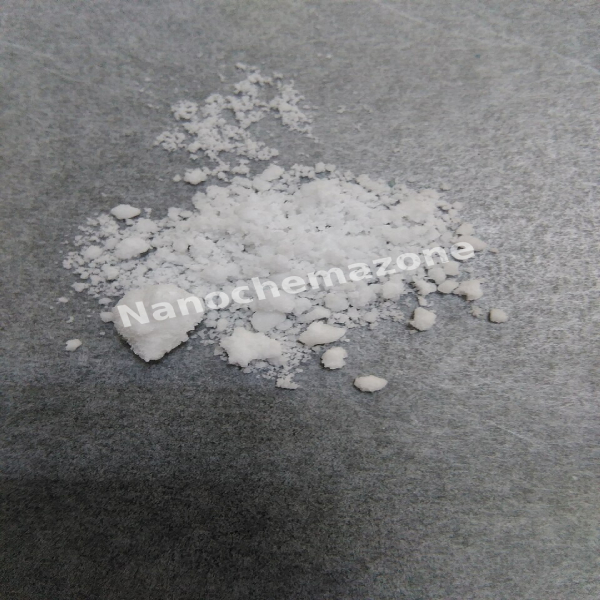
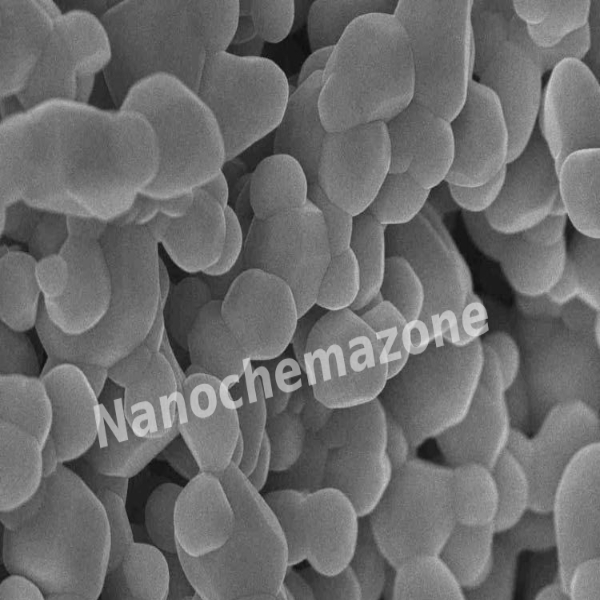
Boron (B) Sputtering Targets, Purity: 99.9%, Size: 2”, Thickness: 0.125”

$273.00

Applications of Sputtering Targets;

Film deposition is accomplished using sputtering targets. A technique for sputtering thin films is called "deposition made by sputter targets," which entails eroding material from a "target" source onto a "substrate" like a silicon wafer. Etching of the target is done using semiconductor sputtering targets. When selectivity is not an issue and a high degree of etching anisotropy is required, sputter etching is the method of choice. By removing the target material through etching, sputter targets are also utilized for investigation. In secondary ion spectroscopy (SIMS), one example is when the target material is sputtered at a steady pace. Mass spectrometry is used to quantify the concentration and identity of spewed atoms as the target is sputtered.

The target material's composition may be ascertained and even very low concentrations of contaminants can be found with the aid of the sputtering target.

There is also an application area for sputtering targets in space. One type of space weathering that alters the chemical and physical characteristics of airless worlds like the Moon and asteroids is sputtering.

Boron (B) Sputtering Targets, Purity: 99.9%, Size: 2”, Thickness: 0.125”

$273.00

Applications of Sputtering Targets;

Film deposition is accomplished using sputtering targets. A technique for sputtering thin films is called "deposition made by sputter targets," which entails eroding material from a "target" source onto a "substrate" like a silicon wafer. Etching of the target is done using semiconductor sputtering targets. When selectivity is not an issue and a high degree of etching anisotropy is required, sputter etching is the method of choice. By removing the target material through etching, sputter targets are also utilized for investigation. In secondary ion spectroscopy (SIMS), one example is when the target material is sputtered at a steady pace. Mass spectrometry is used to quantify the concentration and identity of spewed atoms as the target is sputtered.

The target material's composition may be ascertained and even very low concentrations of contaminants can be found with the aid of the sputtering target.

There is also an application area for sputtering targets in space. One type of space weathering that alters the chemical and physical characteristics of airless worlds like the Moon and asteroids is sputtering.

Praseodymium (Pr) Sputtering Targets, Purity: 99.9%, Size: 4”, Thickness: 0.125”

$273.00

Applications of Sputtering Targets;

  • Sputtering targets is used for film deposition. The deposition made by sputter targets is a method of depositing thin films by sputtering that involves eroding material from a "target" source onto a "substrate" such as  a silicon wafer.
  • Semiconductor sputtering targets is used to etch the target. Sputter etching is chosen in cases where a high degree of etching anisotropy is needed and selectivity is not a concern.
  • Sputter targets is also used for analysis by etching away the target material.
One of the example occurs in secondary ion spectroscopy (SIMS), where the target sample is sputtered at a constant rate. As the target is sputtered, the concentration and identity of sputtered atoms are measured using mass spectrometry. By helping of the sputtering target, the composition of the target material can be determined and even extremely low concentrations of impurities are detected. Sputtering target has also application area in space. Sputtering is one of the forms of space weathering, a process that changes the physical and chemical properties of airless bodies, such as asteroids and the Moon.

Silicon Nitride (Si3N4) Sputtering Targets, Purity: 99.9%, Size: 1”, Thickness: 0.125”, White to Gray

$272.00

Product 

Silicon Nitride (Si3N4) Sputtering Targets, Purity: 99.9%, Size: 1'', Thickness: 0.125'', White to Gray

CAS No.

 12033-89-5

Appearance

Powder

Purity

≥99%,  ≥99.9%,  ≥95%

(Other purities are also available)

APS

N/A  (Size Can be customized), Ask for other available size ranges.

Ingredient

N/A

Molecular Weight

 140.28 g/mol

Melting Point

 ~1900 °C

Boiling Point

N/A

Density

~3.2 g/cm³

Product Codes

NCZ-1704K

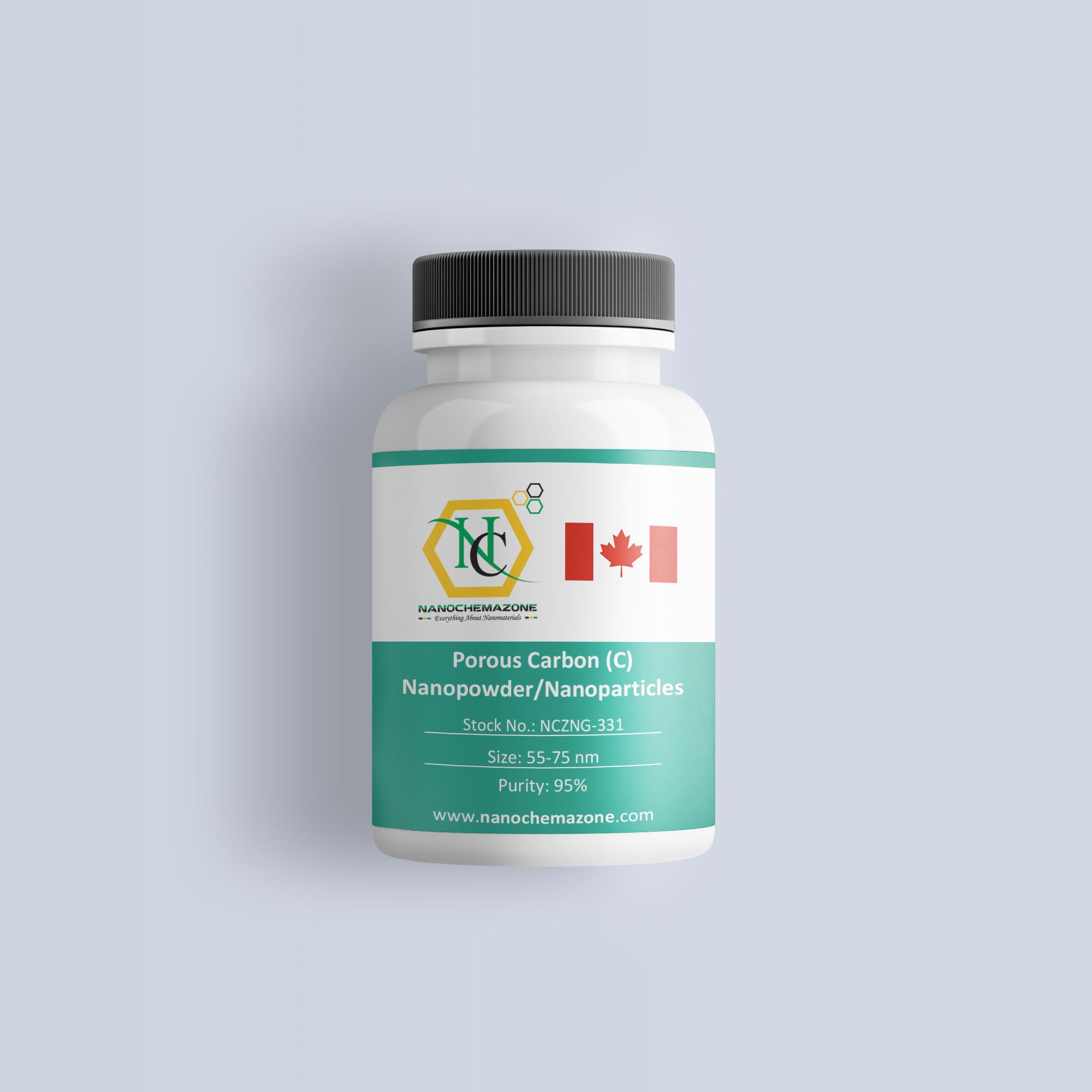
Porous Carbon (C) Nanopowder/Nanoparticles, Purity: 95%, Size: 55-75 nm, (Plant)

Price range: $28.00 through $272.00
Select options This product has multiple variants. The options may be chosen on the product page

Porous Carbon (C) Nanopowder/Nanoparticles

Purity: 95%, Size: 55-75 nm, (Plant)

Technical Properties:

True Density (g/cm3) 0,41
Bulk Density (g/cm3) 0,32
Color black
pH 7,5-10,5
Ash/H2O Content (%) <1,8/<4,5
Shape spherical
Average Particle Size (nm) 55-75
Specific Surface Area (m2/g) 1400
Resistivity  (Ω.cm) 0,2
Pore Size (nm)/Pore Volume (cm3/g) 3-45/1,2-1,4

Applications:

Porous Carbon nanopowder (a.k.a. activated coal) has very high surface area which makes it super reactive, therefore it should be handled with care and rapid moves, vibrations should be avoided. Nanopowder should be kept away from sunlight, any kind of heating, moisture and impacts. Coagulation of the particles is a serious problem, so, nanopowder should be sealed under vacuum and should be kept in cool and dry conditions. This nanopowder is all natural, produced from plants and has very high surface area. It can be easily dispersed in various solvents. With its attracting properties, it can be used in food storage, cosmetics and health-care products, medicine and applications that need high adsorption and chemical reactivity.

Cerium Oxide Nanopowder/ Nanoparticles (CeO2, 100~1000nm)

Price range: $97.00 through $271.00
Select options This product has multiple variants. The options may be chosen on the product page
$97/100g
$185/500g
$271/kg

Product 

Cerium Oxide Nanopowder/ Nanoparticles (CeO2, 100~1000nm)

CAS No.

1306-38-3

Appearance

Powder

Purity

≥99%,  ≥99.9%,  ≥95%

(Other purities are also available)

APS

100~1000nm (Size Can be customized), Ask for other available size ranges.

Ingredient

N/A

Molecular Weight

172.11 g/mol

Melting Point

 ~2,400 °C

Boiling Point

~3,500 °C

Density

~7.13 g/cm³

Product Codes

NCZ-1118K

Natamycin(95%) (523557)

$270.00
Select options This product has multiple variants. The options may be chosen on the product page
Natamycin(95%) (523557)
  • Natamycin (pimaricin) is a polyene macrolide antibiotic produced by submerged aerobic fermentation of Streptomycesnatalensis and related species. Fermentation is conducted for several days, and the antibiotic is isolated either by broth extraction or by extraction of the mycelium. The activity of natamycin against yeasts and moulds, but not bacteria, makes it convenient for use in foods that undergo a ripening period after processing. Its low solubility in water and most organic solvents makes it suitable for the surface treatment of foods.
    ITEM DESCRIPTION
    Product Name 95% Natamycin
    Strain Streptomycesnatalensis
    Appearance White to creamy-white powder and odorless
    EU No. E235
    Molecular Formula C33H47NO13
    CAS 7681-93-8
    Solubility Practically insoluble in water; slightly soluble in methanol; soluble in acetic acid and in dimethylformamide
    Stability pH 3-9 Natamycin is relatively stable
    Moisture 8.0% Max.
    Assay(On dried basis) More than 95.0%
    Sulphated ash Not more than 0.5%
    Heavy Metals Not more than 10mg/Kg
    Specific rotation +250° - +295°
    Usage The additive may be applied in cheese, meat food as a preservative
    pH pH=5.5-7.5, 1% aqueous solution
    Total colony count Mesophillic aerobic not more than 100 CFU/g
    Coliforms 25g Negative
    Listeria monocytogenes 25g Negative
    Storage Natamycin is stable under room temperature. Sunlight, oxidant or heavy metal will hurt the activity of it. To be stored in dry, shady and cool place(below 20°C) with sealed packing
    Shelf life 24 months
  • Its medical use is now confined to topical treatment of corneal fungal infections and the prevention of such infections in users of contact lens. Natamycin is used topically in veterinary medicine to treat mycotic infections, such as ringworm in cattle and horses. Previously, it was used topically against fungal infections of the skin and mucous membranes in humans.
 
Product Codes- NCZ-2789K

Aluminum (Al) Sputtering Targets, Purity: 99.999%, Size: 6”, Thickness: 0.250”

$270.00

Product 

Aluminum (Al) Sputtering Targets, Purity: 99.999%, Size: 6'', Thickness: 0.250''

CAS No.

 7429-90-5

Appearance

Powder

Purity

≥99%,  ≥99.9%,  ≥95%

(Other purities are also available)

APS

N/A (Size Can be customized), Ask for other available size ranges.

Ingredient

N/A

Molecular Weight

 26.98 g/mol

Melting Point

 660.3 °C

Boiling Point

 2519 °C

Density

 2.70 g/cm³

Product Codes

NCZ-2566K

Copper (Cu) Sputtering Targets, Purity: 99.999%, Size: 6”, Thickness: 0.250”

$270.00

Applications of Sputtering Targets;

Film deposition is accomplished using sputtering targets. A technique for sputtering thin films is called "deposition made by sputter targets," which entails eroding material from a "target" source onto a "substrate" like a silicon wafer. Etching of the target is done using semiconductor sputtering targets. When selectivity is not an issue and a high degree of etching anisotropy is required, sputter etching is the method of choice. By removing the target material through etching, sputter targets are also utilized for investigation. In secondary ion spectroscopy (SIMS), one example is when the target material is sputtered at a steady pace. Mass spectrometry is used to quantify the concentration and identity of spewed atoms as the target is sputtered.

The target material's composition may be ascertained and even very low concentrations of contaminants can be found with the aid of the sputtering target.

There is also an application area for sputtering targets in space. One type of space weathering that alters the chemical and physical characteristics of airless worlds like the Moon and asteroids is sputtering.

Silicon Dioxide (SiO2) Sputtering Targets, Fused Quartz, Purity: 99.995%, Size: 6”, Thickness: 0.125”

$269.00

Product 

Silicon Dioxide (SiO2) Sputtering Targets, Fused Quartz, Purity: 99.995%, Size: 6'', Thickness: 0.125''

CAS No.

7631-86-9

Appearance

Powder

Purity

≥99%,  ≥99.9%,  ≥95%

(Other purities are also available)

APS

N/A  (Size Can be customized), Ask for other available size ranges.

Ingredient

N/A

Molecular Weight

60.08 g/mol

Melting Point

~1710°C

Boiling Point

 ~2,950 °C

Density

~2.20 g/cm³

Product Codes

NCZ-1712K

Aligned Multi Walled Carbon Nanotubes, Purity: > 96%, Outside Diameter: 8-18 nm, Length 25-95 µm

Price range: $49.00 through $269.00
Select options This product has multiple variants. The options may be chosen on the product page

Applications:

Aligned MWCNTs are made by gathering CNTs in bundles. They are arrayed in the same direction and aligned close to each other parallel to the direction of the bundle axis. Aligned MWCNTs  have excellent electrical conductivity and good dispersibility. Multi Walled Carbon Nanotubes  have a variety of potential applications in different fields. These applications include medicine, mechanics, electric-electronics, chemicals, energy and others. It can be applied in, drug delivery, biosensors, CNT composites, catalysis, nanoprobes, hydrogen storage, lithium batteries, gas-discharge tubes, flat panel displays, supercapacitors, transistors, solar cells, photoluminescence, templates.

Cobalt (Co) Nanopowder/Nanoparticles, Purity: 99.85%, Size: 28 nm, Partially Passivated

Price range: $11.00 through $269.00
Select options This product has multiple variants. The options may be chosen on the product page

Cobalt (Co) Nanopowder/Nanoparticles

Purity: 99.85%, Size: 28 nm, Partially Passivated

Technical Properties:

Bulk Density (g/cm3) 0,1-0,3
True Density (g/cm3) 8,9
Color black
Shape spherical
Tmelting (oC) 1495
Tboiling (oC) 2927
Average Particle Size (nm) 28
Specific Surface Area (m2/g) 35-55
Elemental Analysis Co O C Ni Fe Others
99.1 0,8 ≤0.03 ≤0.01 ≤0.01 ≤0.01

Properties, Storage and Cautions:

Cobalt nanopowder is highly reactive and flammable, therefore it should be handled with care and rapid moves, vibrations should be avoided. Powder should be kept away from sunlight, any kind of heating, moisture and impacts. Coagulation of the particles is a serious problem, so, Co powder should be sealed under vacuum and should be kept in cool and dry conditions. Air contact should be avoided. This product is PARTIALLY PASSIVATED for safe shipping purpose, gives no performance effect.

Applications:

Co powder has electromagnetic wave absorbtion ability and it is a magnetic material. Therefore, it can be applied to EMI shielding, magnetic inks and magnetic storage media. It can also be used in MRI chemical reagents.

Activated carbon for supercapacitor(Aqueous electrolyte) (161817)

$268.00
Select options This product has multiple variants. The options may be chosen on the product page
Activated carbon for supercapacitor(Aqueous electrolyte) (161817) Product introduction The product is prepared by a series of process including carbonization, activation and purification based on biomass as the carbon precursor, which can be widely used in these filed including supercapacitors, lead-carbon batteries and hydrogen storage. It has some advantages such as high specific surface area, abundant pore volume, high bulk density, low ash and metallic iron content, which shows high energy and power density, as well as long cycle life as the electrode material for supercapacitors. Technical parameters
Items Results
Shape near-spherical
Average size D50 (μm) 11.2
Water content (%) 0.1
Ash content (%) 0.06
Specific surface area (m2/g) 1850
Pore volume (cm3/g) 0.6
pH value 6-7
Tap density (g/ml) 0.48
Iron Content (ppm) 7
Organic capacitance (F/g) 120
Inorganic capacitance (F/g) 240
Product Codes- NCZ-2757K

Copper (Cu) Sputtering Targets, Purity: 99.99%, Size: 8”, Thickness: 0.125”

$268.00

Applications of Sputtering Targets;

Film deposition is accomplished using sputtering targets. A technique for sputtering thin films is called "deposition made by sputter targets," which entails eroding material from a "target" source onto a "substrate" like a silicon wafer. Etching of the target is done using semiconductor sputtering targets. When selectivity is not an issue and a high degree of etching anisotropy is required, sputter etching is the method of choice. By removing the target material through etching, sputter targets are also utilized for investigation. In secondary ion spectroscopy (SIMS), one example is when the target material is sputtered at a steady pace. Mass spectrometry is used to quantify the concentration and identity of spewed atoms as the target is sputtered.

The target material's composition may be ascertained and even very low concentrations of contaminants can be found with the aid of the sputtering target.

There is also an application area for sputtering targets in space. One type of space weathering that alters the chemical and physical characteristics of airless worlds like the Moon and asteroids is sputtering.

Iron Sputtering Target Fe

Price range: $74.00 through $267.00
Select options This product has multiple variants. The options may be chosen on the product page
Product Iron Sputtering Target Fe
CAS No. 7439-89-6
Appearance Grayish metallic
Purity ≥99%,  ≥99.9%,  ≥95%(Other purities are also available)
APS N/A
Ingredient Fe
Molecular Weight N/A
Melting Point 1535.0 °C 
Boiling Point 2750.0 °C
Density N/A
Product Codes NCZ-122H
 

Indium Zinc Oxide/IZO (InZnO) Sputtering Targets, Purity: 99.99%, Size: 1”, Thickness: 0.250”

$267.00

Applications of Sputtering Targets;

Film deposition is accomplished using sputtering targets. A technique for sputtering thin films is called "deposition made by sputter targets," which entails eroding material from a "target" source onto a "substrate" like a silicon wafer. Etching of the target is done using semiconductor sputtering targets. When selectivity is not an issue and a high degree of etching anisotropy is required, sputter etching is the method of choice. By removing the target material through etching, sputter targets are also utilized for investigation. In secondary ion spectroscopy (SIMS), one example is when the target material is sputtered at a steady pace. Mass spectrometry is used to quantify the concentration and identity of spewed atoms as the target is sputtered.

Even very low quantities of contaminants can be detected with the aid of the sputtering target, allowing for the determination of the target material's composition.

Applications for sputtering targets are also found in space. One type of space weathering is sputtering, which modifies the chemical and physical characteristics of airless worlds like the Moon and asteroids.

Chromium (Cr) Micron Powder, Purity: 99.98 %, Size: 10 µm

Price range: $27.00 through $266.00
Select options This product has multiple variants. The options may be chosen on the product page
25 grams/24 €  100 grams/54 €   500 grams/165 €  1000 grams/235 €  Please contact us for quotes on larger quantities !!!

Chromium (Cr) Micron Powder

Purity: 99.98 %, Size: 10 µm

Technical Properties:

PURITY

99.98 %

PARTICLE SIZE

10 µm

CAS

7440-47-3

DENSITY

7.19 g/cm³

BOILING POINT

2475 °C

MELTING POINT

1875 °C

COEFF. OF EXPANSION @ 20ºC

6.2 x 10 ⁻⁶

MOHS HARDNESS @ 20ºC

9

ELECTRIC RESISTIVITY

12.9 microhm-cm

CRYSTAL STRUCTURE

Cubic, Body Centered

FORM  

Powder

APPLICATIONS

Aerospace, Alloys, Nuclear, Plasma Spray


Activated Carbon Micron Powder, Size: 1500 µm

Price range: $26.00 through $266.00
Select options This product has multiple variants. The options may be chosen on the product page
25 grams/23 € 100 grams/37 € 500 grams/86 € 1000 grams/126 € 5 kg/235 € Please contact us for quotes on larger quantities !!!

Activated Carbon Micron Powder

Size: 1500 µm

Titanium diboride(TiB2, 99.5%, 2.6μm) (222827)

Titanium diboride(TiB2, 99.5%, 2.6μm) (222827)
   

Test Items

Results

TiB2 (%)

99.79

Ti (%)

68.52

B (%)

31.03

D50 (µm)

2.6

Product Codes- NCZ-2693K

250 ml Monolayer Graphene Oxide Water Dispersion 4 mg/ml

$265.00
Product 250 ml Monolayer Graphene Oxide Water Dispersion 4 mg/ml
CAS No. 7782-42-5
Appearance White Liquid
Purity ≥99%,  ≥99.9%,  ≥95%(Other purities are also available)
APS 0.5–5µm (Size Can be customized),  Ask for other available size range.
Ingredient CₓHᵧO
Molecular Weight N/A
Melting Point N/A
Boiling Point N/A
Density N/A
Product Codes NCZ-148I

Molybdenum Sputtering Target Mo

Price range: $126.00 through $265.00
Select options This product has multiple variants. The options may be chosen on the product page
Product Molybdenum Sputtering Target Mo
CAS No. N/A
Appearance Grey, Metallic
Purity ≥99%,  ≥99.9%,  ≥95%(Other purities are also available)
APS N/A
Ingredient Mo
Molecular Weight 95.96 g/mol
Melting Point 2,617 °C
Boiling Point N/A
Density N/A
Product Codes NCZ-129H
 

Tungsten Titanium (TiW) Sputtering Targets, Purity: 99.99%, Size: 2”, Thickness: 0.125”

$265.00

Applications of Sputtering Targets;

Film deposition is accomplished using sputtering targets. A technique for sputtering thin films is called "deposition made by sputter targets," which entails eroding material from a "target" source onto a "substrate" like a silicon wafer. Etching of the target is done using semiconductor sputtering targets. When selectivity is not an issue and a high degree of etching anisotropy is required, sputter etching is the method of choice. By removing the target material through etching, sputter targets are also utilized for investigation. In secondary ion spectroscopy (SIMS), one example is when the target material is sputtered at a steady pace. Mass spectrometry is used to quantify the concentration and identity of spewed atoms as the target is sputtered.

The target material's composition may be ascertained and even very low concentrations of contaminants can be found with the aid of the sputtering target.

There is also an application area for sputtering targets in space. One type of space weathering that alters the chemical and physical characteristics of airless worlds like the Moon and asteroids is sputtering.

Silicon (Si) Sputtering Targets, P-type, Purity: 99.999%, Size: 3”, Thickness: 0.250”

$265.00

Applications of Sputtering Targets;

Film deposition is accomplished using sputtering targets. A technique for sputtering thin films is called "deposition made by sputter targets," which entails eroding material from a "target" source onto a "substrate" like a silicon wafer. Etching of the target is done using semiconductor sputtering targets. When selectivity is not an issue and a high degree of etching anisotropy is required, sputter etching is the method of choice. By removing the target material through etching, sputter targets are also utilized for investigation. In secondary ion spectroscopy (SIMS), one example is when the target material is sputtered at a steady pace. Mass spectrometry is used to quantify the concentration and identity of spewed atoms as the target is sputtered.

The target material's composition may be ascertained and even very low concentrations of contaminants can be found with the aid of the sputtering target.

There is also an application area for sputtering targets in space. One type of space weathering that alters the chemical and physical characteristics of airless worlds like the Moon and asteroids is sputtering.

Silicon Nitride (Si3N4) Sputtering Targets, Purity: 99.5%, Size: 1”, Thickness: 0.250”, Dark Gray to Black

$265.00

Applications of Sputtering Targets;

Film deposition is accomplished using sputtering targets. A technique for sputtering thin films is called "deposition made by sputter targets," which entails eroding material from a "target" source onto a "substrate" like a silicon wafer. Etching of the target is done using semiconductor sputtering targets. When selectivity is not an issue and a high degree of etching anisotropy is required, sputter etching is the method of choice. By removing the target material through etching, sputter targets are also utilized for investigation. In secondary ion spectroscopy (SIMS), one example is when the target material is sputtered at a steady pace. Mass spectrometry is used to quantify the concentration and identity of spewed atoms as the target is sputtered.

The target material's composition may be ascertained and even very low concentrations of contaminants can be found with the aid of the sputtering target.

There is also an application area for sputtering targets in space. One type of space weathering that alters the chemical and physical characteristics of airless worlds like the Moon and asteroids is sputtering.

Nickel Vanadium (NiV) Sputtering Targets, Purity: 99.95%, Size: 3”, Thickness: 0.125”

$265.00

Applications of Sputtering Targets;

Film deposition is accomplished using sputtering targets. A technique for sputtering thin films is called "deposition made by sputter targets," which entails eroding material from a "target" source onto a "substrate" like a silicon wafer. Etching of the target is done using semiconductor sputtering targets. When selectivity is not an issue and a high degree of etching anisotropy is required, sputter etching is the method of choice. By removing the target material through etching, sputter targets are also utilized for investigation. In secondary ion spectroscopy (SIMS), one example is when the target material is sputtered at a steady pace. Mass spectrometry is used to quantify the concentration and identity of spewed atoms as the target is sputtered.

The target material's composition may be ascertained and even very low concentrations of contaminants can be found with the aid of the sputtering target.

There is also an application area for sputtering targets in space. One type of space weathering that alters the chemical and physical characteristics of airless worlds like the Moon and asteroids is sputtering.

Thulium Chloride Hexahydrate (TmCl3 · 6H2O) 99.95% 3N5

$264.00
Select options This product has multiple variants. The options may be chosen on the product page
Product Thulium Chloride Hexahydrate (TmCl3 · 6H2O) 99.95% 3N5
CAS No. 13461-29-7
Appearance Light pink to pale violet crystalline
Purity ≥99%,  ≥99.9%,  ≥95%(Other purities are also available)
APS 5–50µm (Size Can be customized),  Ask for other available size range.
Ingredient TmCl3·6H2O
Molecular Weight 354.26 g/mol
Melting Point N/A
Boiling Point N/A
Density 1.98 g/cm³
Product Codes NCZ-556I
 

High Purity Antimony (III) Oxide (Sb2O3) Powder 99.995% 4N5

$264.00
Select options This product has multiple variants. The options may be chosen on the product page
Product High Purity Antimony (III) Oxide (Sb2O3) Powder 99.995% 4N5
CAS No. 1309-64-4
Appearance White crystalline
Purity ≥99%,  ≥99.9%,  ≥95%(Other purities are also available)
APS N/A
Ingredient Sb2O3
Molecular Weight 291.52 g/mol
Melting Point N/A
Boiling Point N/A
Density 5.2–5.7 g/cm³
Product Codes NCZ-405I

Gadolinium Chloride Hexahydrate (GdCl3 · 6H2O) 99.9% 3N

$264.00
Select options This product has multiple variants. The options may be chosen on the product page
Product Gadolinium Chloride Hexahydrate (GdCl3 · 6H2O) 99.9% 3N
CAS No. 13450-84-5
Appearance White crystalline
Purity ≥99%,  ≥99.9%,  ≥95%(Other purities are also available)
APS 40–60µm (Size Can be customized),  Ask for other available size range.
Ingredient GdCl3·6H2O
Molecular Weight 371.7 g/mol
Melting Point 609 °C
Boiling Point 1,580 °C
Density 7.07 g/cm³
Product Codes NCZ-350I

Aqueous Dispersion of PEDOT:PSS Conductive Polymer (Clevios PH 1000) for Solar Cell and Electronics

Price range: $95.00 through $264.00
Select options This product has multiple variants. The options may be chosen on the product page
Product Aqueous Dispersion of PEDOT:PSS Conductive Polymer (Clevios PH 1000) for Solar Cell and Electronics
CAS No. 155090-83-8
Appearance Dark blue aqueous liquid
Purity ≥99%,  ≥99.9%,  ≥95%(Other purities are also available)
APS 30nm (Size Can be customized),  Ask for other available size range.
Ingredient (C8H7SO3Na)m​
Molecular Weight N/A
Melting Point N/A
Boiling Point N/A
Density 1.0–1.1 g/cm³
Product Codes NCZ-291I
 

50nm Zinc Oxide ZnO Nanoparticles Water Dispersion

Price range: $209.00 through $264.00
Select options This product has multiple variants. The options may be chosen on the product page
Product 50nm Zinc Oxide ZnO Nanoparticles Water Dispersion
CAS No. 1314-13-2
Appearance Milky white liquid
Purity ≥99%,  ≥99.9%,  ≥95%(Other purities are also available)
APS 50nm (Size Can be customized),  Ask for other available size range.
Ingredient ZnO
Molecular Weight 81.38 g/mol
Melting Point N/A
Boiling Point N/A
Density 5.61 g/cm³
Product Codes NCZ-190I
 

30nm Zinc Oxide ZnO Nanoparticles Water Dispersion

Price range: $209.00 through $264.00
Select options This product has multiple variants. The options may be chosen on the product page
Product 30nm Zinc Oxide ZnO Nanoparticles Water Dispersion
CAS No. 1314-13-2
Appearance Light Yellow
Purity ≥99%,  ≥99.9%,  ≥95%(Other purities are also available)
APS 30nm (Size Can be customized), Ask for other available size range.
Ingredient ZnO
Molecular Weight 81.38 g/mol
Melting Point 1,975°C
Boiling Point 2,360°C
Density 5.61 g/cm³
Product Codes NCZ-156I

3N5 (99.95%) Magnesium Fluoride (MgF2) Pieces (1-3 mm) Evaporation Materials

Price range: $143.00 through $264.00
Select options This product has multiple variants. The options may be chosen on the product page
Product 3N5 (99.95%) Magnesium Fluoride (MgF2) Pieces (1-3 mm) Evaporation Materials
CAS No. 7783-40-6
Appearance White, Crystalline Solid 
Purity ≥99%,  ≥99.9%,  ≥95%(Other purities are also available)
APS 1-3mm (Size Can be customized),  Ask for other available size range.
Ingredient MgF2
Molecular Weight 62.30 g/mol
Melting Point N/A
Boiling Point N/A
Density 3.15 g/cm³
Product Codes NCZ-124E
 

Indium (In) Sputtering Targets, Purity: 99.999%, Size: 1”, Thickness: 0.250”

$264.00

Applications of Sputtering Targets;

Film deposition is accomplished using sputtering targets. A technique for sputtering thin films is called "deposition made by sputter targets," which entails eroding material from a "target" source onto a "substrate" like a silicon wafer. Etching of the target is done using semiconductor sputtering targets. When selectivity is not an issue and a high degree of etching anisotropy is required, sputter etching is the method of choice. By removing the target material through etching, sputter targets are also utilized for investigation. In secondary ion spectroscopy (SIMS), one example is when the target material is sputtered at a steady pace. Mass spectrometry is used to quantify the concentration and identity of spewed atoms as the target is sputtered.

The target material's composition may be ascertained and even very low concentrations of contaminants can be found with the aid of the sputtering target.

There is also an application area for sputtering targets in space. One type of space weathering that alters the chemical and physical characteristics of airless worlds like the Moon and asteroids is sputtering.

Zinc Oxide (ZnO) Nanopowder/Nanoparticles Water Dispersion, Size: 25-35 nm, 22 wt%

Price range: $40.00 through $264.00
Select options This product has multiple variants. The options may be chosen on the product page
Zinc Oxide (ZnO) Nanopowder/Nanoparticles Water Dispersion Size: 25-35 nm, 22 wt%

Anhydrous Sodium Tungstate (Na2WO4), >99%

Price range: $165.00 through $263.00
Select options This product has multiple variants. The options may be chosen on the product page
Product Anhydrous Sodium Tungstate (Na2WO4), >99%
CAS No. 13472-45-2
Appearance White crystalline
Purity ≥99%,  ≥99.9%,  ≥95%(Other purities are also available)
APS N/A
Ingredient Na₂WO₄
Molecular Weight 293.83 g/mol
Melting Point 698 °C
Boiling Point N/A
Density 4.18 g/cm³
Product Codes NCZ-288I

Tungsten (W) Sputtering Targets, Purity: 99.95%, Size: 3”, Thickness: 0.125”

$261.00

Product 

Tungsten (W) Sputtering Targets, Purity: 99.95%, Size: 3'', Thickness: 0.125''

CAS No.

7440-33-7

Appearance

Powder

Purity

≥99%,  ≥99.9%,  ≥95%

(Other purities are also available)

APS

N/A  (Size Can be customized), Ask for other available size ranges.

Ingredient

N/A

Molecular Weight

 183.84 g/mol

Melting Point

3422 °C

Boiling Point

 5555 °C

Density

19.25 g/cm³

Product Codes

NCZ-1591K

Silicon (Si) Sputtering Targets, P-type, Purity: 99.999%, Size: 3”, Thickness: 0.125”

$261.00

Applications of Sputtering Targets;

Film deposition is accomplished using sputtering targets. A technique for sputtering thin films is called "deposition made by sputter targets," which entails eroding material from a "target" source onto a "substrate" like a silicon wafer. Etching of the target is done using semiconductor sputtering targets. When selectivity is not an issue and a high degree of etching anisotropy is required, sputter etching is the method of choice. By removing the target material through etching, sputter targets are also utilized for investigation. In secondary ion spectroscopy (SIMS), one example is when the target material is sputtered at a steady pace. Mass spectrometry is used to quantify the concentration and identity of spewed atoms as the target is sputtered.

The target material's composition may be ascertained and even very low concentrations of contaminants can be found with the aid of the sputtering target.

There is also an application area for sputtering targets in space. One type of space weathering that alters the chemical and physical characteristics of airless worlds like the Moon and asteroids is sputtering.

Lithium Titanate (Li2TiO3) Sputtering Targets, Purity: 99.95%, Size: 2”, Thickness: 0.125”

$261.00

Applications of Sputtering Targets;

Film deposition is accomplished using sputtering targets. A technique for sputtering thin films is called "deposition made by sputter targets," which entails eroding material from a "target" source onto a "substrate" like a silicon wafer. Etching of the target is done using semiconductor sputtering targets. When selectivity is not an issue and a high degree of etching anisotropy is required, sputter etching is the method of choice. By removing the target material through etching, sputter targets are also utilized for investigation. In secondary ion spectroscopy (SIMS), one example is when the target material is sputtered at a steady pace. Mass spectrometry is used to quantify the concentration and identity of spewed atoms as the target is sputtered.

By helping of the sputtering target, the composition of the target material may be evaluated and even extremely tiny amounts of contaminants are recognized.

There is also an application area for sputtering targets in space. One type of space weathering that alters the chemical and physical characteristics of airless worlds like the Moon and asteroids is sputtering.

Aluminum (Al) Sputtering Targets, Purity: 99.999%, Size: 8”, Thickness: 0.250”

$261.00

Applications of Sputtering Targets;

  • Sputtering targets is used for film deposition. The deposition made by sputter targets is a method of depositing thin films by sputtering that involves eroding material from a "target" source onto a "substrate" such as  a silicon wafer.
  • Semiconductor sputtering targets is used to etch the target. Sputter etching is chosen in cases where a high degree of etching anisotropy is needed and selectivity is not a concern.
  • Sputter targets is also used for analysis by etching away the target material.
One of the example occurs in secondary ion spectroscopy (SIMS), where the target sample is sputtered at a constant rate. As the target is sputtered, the concentration and identity of sputtered atoms are measured using mass spectrometry. By helping of the sputtering target, the composition of the target material can be determined and even extremely low concentrations of impurities are detected. Sputtering target has also application area in space. Sputtering is one of the forms of space weathering, a process that changes the physical and chemical properties of airless bodies, such as asteroids and the Moon. Aluminum which has the chemical symbol of Al, is a silvery white, soft, ductile metal that is the third most abundant element. Aluminum is notable due to for its light weight, strength, durability and for its ability to resist corrosion. Aluminum forms an extremely thin but very strong layer of oxide film. Aluminum has also high thermal and electrical conductivity. Aluminum sputtering targets have a particularly fine-grained microstructure. This property of Aluminum sputtering targets ensures that you benefit from uniform erosion and a low susceptibility to particle formation throughout the sputtering process.

Antimony Oxide (Sb2O3) Nanopowder/Nanoparticles, Purity: 99.97%, Size: 75-210 nm

Price range: $29.00 through $261.00
Select options This product has multiple variants. The options may be chosen on the product page
5 grams/26 € 
25 grams/40 € 100 grams/67 €
500 grams/135 €  1000 grams/230 € 
                      
Please contact us for quotes on larger quantities !!!

Antimony Oxide (Sb2O3) Nanopowder/Nanoparticles

Purity: 99.97%, Size: 75-210 nm

Applications:

Antimony oxide nanoparticle is used in optical materials with high refractive index. It is used as doped material for electronic industry. It has other applications such as ceramics, sensors, catalysts, fillers, and flame retardants.

Silicon (Si) Sputtering Targets, P-type, indium, Purity: 99.999%, Size: 1”, Thickness: 0.250”

$260.00

Product 

Silicon (Si) Sputtering Targets, P-type, indium, Purity: 99.999%, Size: 1'', Thickness: 0.250''

CAS No.

7440-21-3

Appearance

Powder

Purity

≥99%,  ≥99.9%,  ≥95%

(Other purities are also available)

APS

N/A  (Size Can be customized), Ask for other available size ranges.

Ingredient

N/A

Molecular Weight

28.0855 g/mol

Melting Point

 1,414 °C

Boiling Point

3,265 °C

Density

 2.33 g/cm³

Product Codes

NCZ-1741K

Bismuth (Bi) Sputtering Targets, Purity: 99.999%, Size: 2”, Thickness: 0.250”

$260.00

Applications of Sputtering Targets;

Film deposition is accomplished using sputtering targets. A technique for sputtering thin films is called "deposition made by sputter targets," which entails eroding material from a "target" source onto a "substrate" like a silicon wafer. Etching of the target is done using semiconductor sputtering targets. When selectivity is not an issue and a high degree of etching anisotropy is required, sputter etching is the method of choice. By removing the target material through etching, sputter targets are also utilized for investigation. In secondary ion spectroscopy (SIMS), one example is when the target material is sputtered at a steady pace. Mass spectrometry is used to quantify the concentration and identity of spewed atoms as the target is sputtered. With the sputtering target's assistance, the

It is possible to identify the target material and even detect incredibly tiny impurity amounts.

There is also an application area for sputtering targets in space. One type of space weathering that alters the chemical and physical characteristics of airless worlds like the Moon and asteroids is sputtering.

The metal bismuth is silvery with a hint of pink and is fragile. Both in air and water, it is stable. Despite having poor thermal and electrical qualities, bismuth is used to create fusible alloys, a class of materials with low melting points that can be used in a variety of applications, such as thermal fuses and solders. Because pure bismuth exhibits a strong absorption of gamma rays, it can be used as a window or filter for these at the same time allowing neutrons to flow through.

Thermoset Carbon Paste (140℃, <20 ohm/sqr/25µm), 10-12 µm

Price range: $165.00 through $260.00
Select options This product has multiple variants. The options may be chosen on the product page

 Applications:

  • Printed electronics,
  • Sensors and biosensor,
  • PV cells,
  • Membrane keyboards,
  • Energy storage devices,
  • Aautomative electronics.

Thermoset Carbon Paste (140 ℃, 100 ohm/sqr/25µm), 15-20 µm

Price range: $165.00 through $260.00
Select options This product has multiple variants. The options may be chosen on the product page

Applications:

  • Printed electronics,
  • Sensors and biosensor,
  • PV cells,
  • Membrane keyboards,
  • Energy storage devices,
  • Automative electronics

Chromium (Cr) Micron Powder, Purity: 99.9 %, Size: 100 mesh

Price range: $15.00 through $260.00
Select options This product has multiple variants. The options may be chosen on the product page
25 grams/14 €  100 grams/48 €   500 grams/156 €  1000 grams/230 €  Please contact us for quotes on larger quantities !!!

Chromium (Cr) Micron Powder

Purity: 99.9 %, Size: 100 mesh

Technical Properties:

PURITY

99.9 %

PARTICLE SIZE

100 Mesh

CAS

7440-47-3

DENSITY

7.19 g/cm³

BOILING POINT

2475 °C

MELTING POINT

1875 °C

COEFF. OF EXPANSION @ 20ºC

6.2 x 10 ⁻⁶

MOHS HARDNESS @ 20ºC

9

ELECTRIC RESISTIVITY

12.9 microhm-cm

CRYSTAL STRUCTURE

Cubic, Body Centered

FORM  

Powder

APPLICATIONS

Alloys, Catalyst, Customer Manufacturing, Industrial- general


Tungsten (W) Nanopowder/Nanoparticles, Purity: 99.955+%, Size: 35-55 nm, Metal Basis

$259.92
Select options This product has multiple variants. The options may be chosen on the product page
Tungsten (W) Nanopowder/Nanoparticles Purity: 99.955+%, Size: 35-55 nm, Metal Basis Technical Properties: True Density (g/cm3) 19,3 Bulk Density (g/cm3) 3,8

Magnesium (Mg) Sputtering Targets, Purity: 99.98%, Size: 4”, Thickness: 0.125”

$259.00

Product 

Magnesium (Mg) Sputtering Targets, Purity: 99.98%, Size: 4'', Thickness: 0.125''

CAS No.

7439-95-4

Appearance

Powder

Purity

≥99%,  ≥99.9%,  ≥95%

(Other purities are also available)

APS

 N/A (Size Can be customized), Ask for other available size ranges.

Ingredient

N/A

Molecular Weight

 24.305 g/mol

Melting Point

 650 °C

Boiling Point

 1,090 °C

Density

1.738 g/cm³

Product Codes

NCZ-1994K

Manganese (Mn) Sputtering Targets, Purity: 99.95%, Size: 1”, Thickness: 0.125”

$259.00

Product 

Manganese (Mn) Sputtering Targets, Purity: 99.95%, Size: 1'', Thickness: 0.125''

CAS No.

 7439-96-5

Appearance

Powder

Purity

≥99%,  ≥99.9%,  ≥95%

(Other purities are also available)

APS

 N/A (Size Can be customized), Ask for other available size ranges.

Ingredient

N/A

Molecular Weight

54.93804 g/mol

Melting Point

 1,246 °C

Boiling Point

 2,061 °C

Density

 7.21 g/cm³

Product Codes

NCZ-1954K

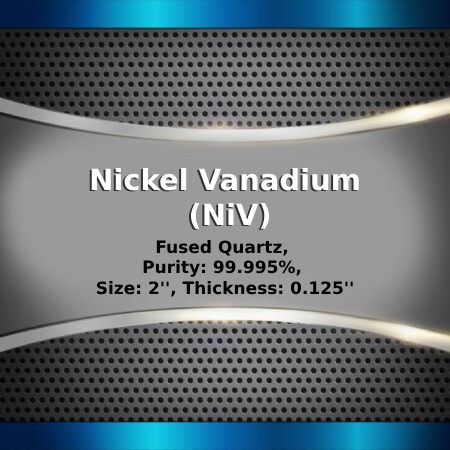
Nickel Vanadium (NiV) Sputtering Targets, Purity: 99.95%, Size: 2”, Thickness: 0.125”

$259.00

Product 

Nickel Vanadium (NiV) Sputtering Targets, Purity: 99.95%, Size: 2'', Thickness: 0.125''

CAS No.

11137-91-4

Appearance

Powder

Purity

≥99%,  ≥99.9%,  ≥95%

(Other purities are also available)

APS

N/A (Size Can be customized), Ask for other available size ranges.

Ingredient

N/A

Molecular Weight

~57.9 g/mol

Melting Point

~1,350–1,450 °C

Boiling Point

N/A

Density

 ~8.5 g/cm³

Product Codes

NCZ-1828K

Titanium Dioxide (TiO2) Nanopowder/Nanoparticles Dispersion in Water, Anatase, Size: 25-45 nm, 16 wt%

Price range: $84.00 through $259.00
Select options This product has multiple variants. The options may be chosen on the product page
100 ml/ € 84 500 ml/ € 154 1000 ml/ € 259              
Please contact us for quotes on larger quantities !!!

Titanium Dioxide (TiO2) Nanopowder/Nanoparticles Dispersion in Water

Anatase, Size: 25-45 nm, 16 wt%

Bismuth (Bi) Sputtering Targets, Purity: 99.999%, Size: 1”, Thickness: 0.125”

$258.00

Product 

Bismuth (Bi) Sputtering Targets, Purity: 99.999%, Size: 1'', Thickness: 0.125''

CAS No.

7440‑69‑9

Appearance

Powder

Purity

≥99%,  ≥99.9%,  ≥95%

(Other purities are also available)

APS

1 – 5 µm (Size Can be customized), Ask for other available size ranges.

Ingredient

N/A

Molecular Weight

~208.98 g/mol

Melting Point

 271.4 °C

Boiling Point

~1560 °C

Density

 ~9.78–9.80 g/cm³

Product Codes

NCZ-2440K

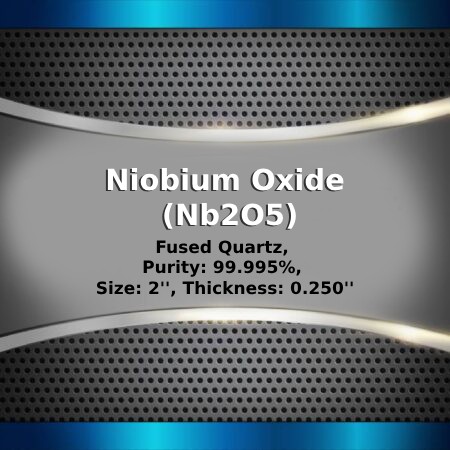
Niobium Oxide (Nb2O5) Sputtering Targets, Purity: 99.5%, Size: 2”, Thickness: 0.250”

$258.00

Product 

Niobium Oxide (Nb2O5) Sputtering Targets, Purity: 99.5%, Size: 2'', Thickness: 0.250''

CAS No.

1313-96-8

Appearance

Powder

Purity

≥99%,  ≥99.9%,  ≥95%

(Other purities are also available)

APS

N/A (Size Can be customized), Ask for other available size ranges.

Ingredient

N/A

Molecular Weight

 265.81 g/mol

Melting Point

~1512 °C

Boiling Point

N/A

Density

 4.6 – 4.9 g/cm³

Product Codes

NCZ-1809K

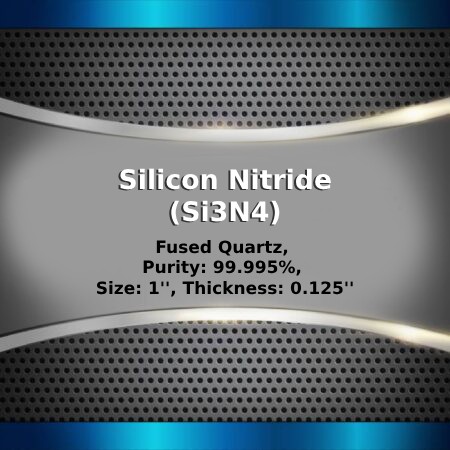
Silicon Nitride (Si3N4) Sputtering Targets, Purity: 99.5%, Size: 1”, Thickness: 0.125”, Dark Gray to Black

$258.00

Product 

Silicon Nitride (Si3N4) Sputtering Targets, Purity: 99.5%, Size: 1'', Thickness: 0.125'', Dark Gray to Black

CAS No.

 12033-89-5

Appearance

Powder

Purity

≥99%,  ≥99.9%,  ≥95%

(Other purities are also available)

APS

N/A  (Size Can be customized), Ask for other available size ranges.

Ingredient

N/A

Molecular Weight

 140.28 g/mol

Melting Point

 ~1900 °C

Boiling Point

N/A

Density

~3.2 g/cm³

Product Codes

NCZ-1705K

Activated Carbon Micron Powder, Size: 2000 µm

Price range: $24.00 through $258.00
Select options This product has multiple variants. The options may be chosen on the product page
25 grams/22 € 100 grams/35 € 500 grams/83 € 1000 grams/119 € 5 kg/228 € Please contact us for quotes on larger quantities !!!

Activated Carbon Micron Powder

Size: 2000 µm

Tin (Sn) Sputtering Targets, Purity: 99.99%, Size: 3”, Thickness: 0.125”

$257.00

Product 

Tin (Sn) Sputtering Targets, Purity: 99.99%, Size: 3'', Thickness: 0.125''

CAS No.

7440-31-5

Appearance

Powder

Purity

≥99%,  ≥99.9%,  ≥95%

(Other purities are also available)

APS

N/A  (Size Can be customized), Ask for other available size ranges.

Ingredient

N/A

Molecular Weight

118.71 g/mol

Melting Point

231.93 °C

Boiling Point

2602 °C

Density

~7.31 g/cm³

Product Codes

NCZ-1641K

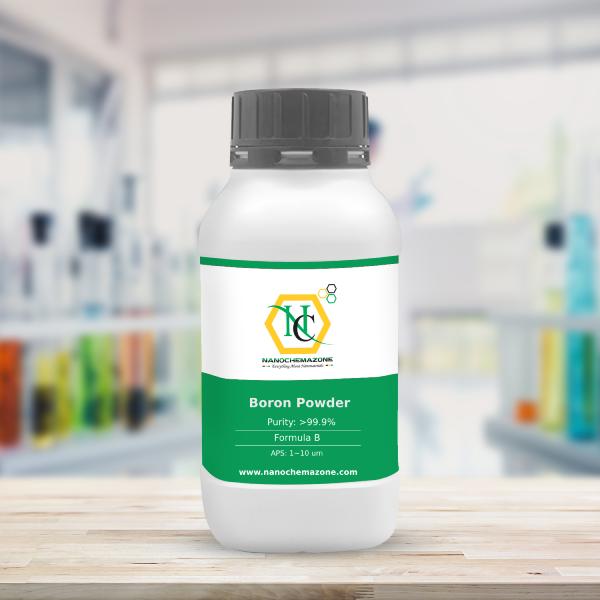
Boron powder (B, 99.9%, 1~10 um)

Price range: $80.00 through $257.00
Select options This product has multiple variants. The options may be chosen on the product page
$80/5g
$257/25g

Product 

Boron powder (B, 99.9%, 1~10 um)

CAS No.

7440-42-8

Appearance

Powder

Purity

≥99%,  ≥99.9%,  ≥95%

(Other purities are also available)

APS

-325 mesh (Size Can be customized), Ask for other available size ranges.

Ingredient

AlN

Molecular Weight

10.81 g/mol

Melting Point

2076°C

Boiling Point

2808 °C

Density

19.32 g/cm³

Product Codes

NCZ-1019K

Zinc Sulfide (ZnS) Sputtering Targets, Purity: 99.99%, Size: 1”, Thickness: 0.125”

$256.00

Product 

Zinc Sulfide (ZnS) Sputtering Targets, Purity: 99.99%, Size: 1'', Thickness: 0.125''

CAS No.

1314-98-3

Appearance

Powder

Purity

≥99%,  ≥99.9%,  ≥95%

(Other purities are also available)

APS

 (ZnS) (Size Can be customized), Ask for other available size ranges.

Ingredient

N/A

Molecular Weight

97.45 g/mol

Melting Point

~1700 °C

Boiling Point

N/A

Density

 4.09 g/cm³

Product Codes

NCZ-1509K

Aluminum (Al) Sputtering Targets, Purity: 99.999%, Size: 8”, Thickness: 0.125”

$256.00

 Applications of Sputtering Targets;

  • Sputtering targets is used for film deposition. The deposition made by sputter targets is a method of depositing thin films by sputtering that involves eroding material from a "target" source onto a "substrate" such as  a silicon wafer.
  • Semiconductor sputtering targets is used to etch the target. Sputter etching is chosen in cases where a high degree of etching anisotropy is needed and selectivity is not a concern.
  • Sputter targets is also used for analysis by etching away the target material.
One of the example occurs in secondary ion spectroscopy (SIMS), where the target sample is sputtered at a constant rate. As the target is sputtered, the concentration and identity of sputtered atoms are measured using mass spectrometry. By helping of the sputtering target, the composition of the target material can be determined and even extremely low concentrations of impurities are detected. Sputtering target has also application area in space. Sputtering is one of the forms of space weathering, a process that changes the physical and chemical properties of airless bodies, such as asteroids and the Moon. Aluminum which has the chemical symbol of Al, is a silvery white, soft, ductile metal that is the third most abundant element. Aluminum is notable due to for its light weight, strength, durability and for its ability to resist corrosion. Aluminum forms an extremely thin but very strong layer of oxide film. Aluminum has also high thermal and electrical conductivity. Aluminum sputtering targets have a particularly fine-grained microstructure. This property of Aluminum sputtering targets ensures that you benefit from uniform erosion and a low susceptibility to particle formation throughout the sputtering process.

Carbon (C) (Graphite) Sputtering Targets, Purity: 99.999%, Size: 4”, Thickness: 0.250”

$255.00

Product 

Carbon (C) (Graphite) Sputtering Targets, Purity: 99.999%, Size: 4'', Thickness: 0.250''

CAS No.

 7782‑42‑5

Appearance

Powder

Purity

≥99%,  ≥99.9%,  ≥95%

(Other purities are also available)

APS

 N/A (Size Can be customized), Ask for other available size ranges.

Ingredient

N/A

Molecular Weight

12.01 g/mol

Melting Point

~3,652 °C (no liquid phase)

Boiling Point

 ~4,200 °C

Density

 ~2.25 g/cm³

Product Codes

NCZ-2349K

250 mL Monolayer Graphene Oxide Water Dispersion 2 mg/ml

$255.00
Product 250 mL Monolayer Graphene Oxide Water Dispersion 2 mg/ml
CAS No. 7782-42-5
Appearance Light to dark brown
Purity ≥99%,  ≥99.9%,  ≥95%(Other purities are also available)
APS 0.5–5µm (Size Can be customized),  Ask for other available size range.
Ingredient C₈H₂O₃
Molecular Weight N/A
Melting Point N/A
Boiling Point N/A
Density N/A
Product Codes NCZ-149I