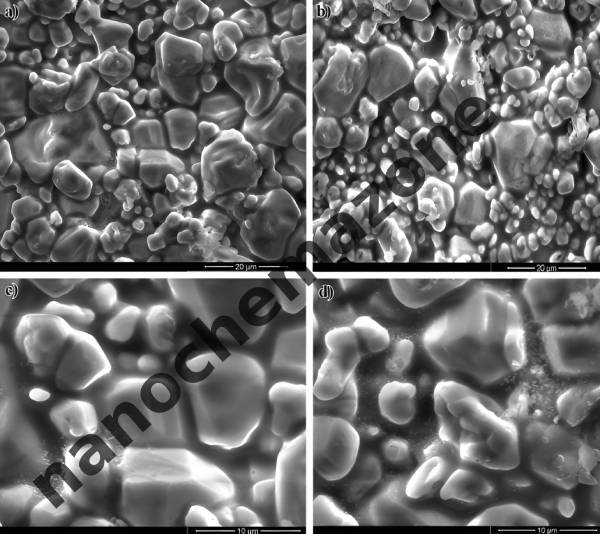
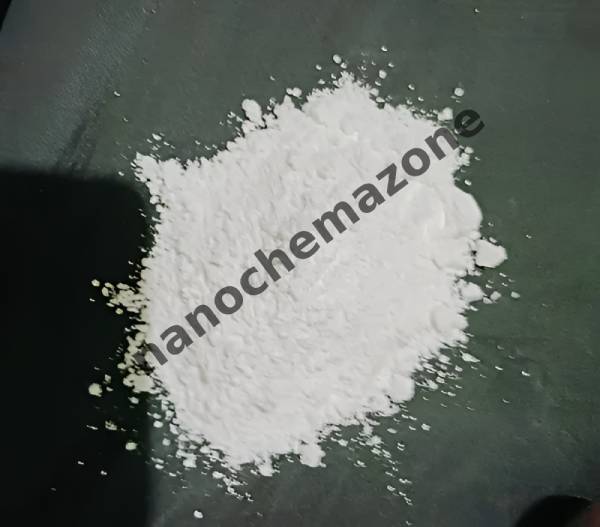
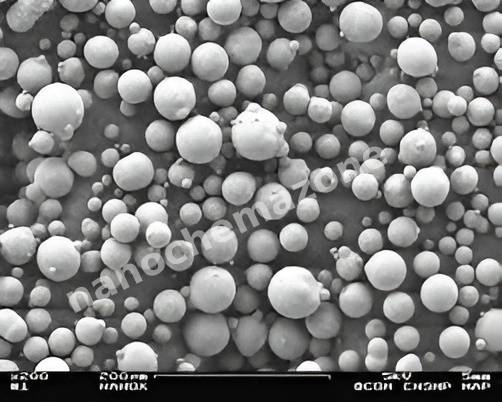
Tantalum (Ta) Nanopowder/Nanoparticles, High Purity: 99.995%, Size: 45-75 nm

Price range: $164.58 through $483.52
Select options This product has multiple variants. The options may be chosen on the product page
Tantalum (Ta) Nanopowder/Nanoparticles High Purity: 99.995%, Size: 45-75 nm Technical Properties: True Density (g/cm3) 16,7 Color black Shape spherical Tmelting (oC)

Hafnium Oxide (HfO2) Nanopowder/Nanoparticles, High Purity: 99.99%, Size: 55-75 nm

Price range: $29.00 through $483.00
Select options This product has multiple variants. The options may be chosen on the product page
1 gram/26 € 5 grams/60 € 25 grams/119 € 100 grams/425 €                  
Please contact us for quotes on larger quantities !!!

Hafnium Oxide (HfO2) Nanopowder/Nanoparticles

High Purity: 99.99%, Size: 55-75 nm

Applications:

Hafnium oxide nanoparticles have applications in electronics, and optical devices. It has high dielectric constant and high thermal stability. It is applied in optical coatings, future integrated circuits, and as a dielectric in DRAM capacitors. It is also used as a refractory material.

Tristrontium silicate(Sr3SiO5) (203677)

$482.00
Select options This product has multiple variants. The options may be chosen on the product page

Product 

Tristrontium silicate(Sr3SiO5) (203677)

CAS No.

12712‑63‑9

Appearance

Powder

Purity

≥99%,  ≥99.9%,  ≥95%

(Other purities are also available)

APS

  <30um (Size Can be customized), Ask for other available size ranges.

Ingredient

N/A

Molecular Weight

N/A

Melting Point

N/A

Boiling Point

N/A

Density

~4.74 g/cm³ (as tristrontium silicate is termed Sr₃[SiO₄]O

Product Codes

NCZ-2608K

Tricalcium silicate(Ca3SiO5) (203982)

$482.00
Select options This product has multiple variants. The options may be chosen on the product page

Product 

Tricalcium silicate(Ca3SiO5) (203982)

CAS No.

12168‑85‑3 — tricalcium silicate (also known as C₃S or alite)

Appearance

Powder

Purity

≥99%,  ≥99.9%,  ≥95%

(Other purities are also available)

APS

  <10um (Size Can be customized), Ask for other available size ranges.

Ingredient

N/A

Molecular Weight

~228.3 g/mol

Melting Point

~2150 °C — high-temperature data from CRC sources

Boiling Point

N/A

Density

 ~3.14 g/cm³

Product Codes

NCZ-2607K

Dicalcium silicate(Ca2SiO4) (205982)

$482.00
Select options This product has multiple variants. The options may be chosen on the product page

Product 

Dicalcium silicate(Ca2SiO4) (205982)

CAS No.

10034‑77‑2

Appearance

Powder

Purity

≥99%,  ≥99.9%,  ≥95%

(Other purities are also available)

APS

  <10um (Size Can be customized), Ask for other available size ranges.

Ingredient

N/A

Molecular Weight

~172.24 g/mol

Melting Point

~1540 °C (note: some sources mention up to 2130 °C for certain polymorphs)

Boiling Point

N/A

Density

 ~2.9 g/cm³

Product Codes

NCZ-2606K

Silicon (Si) Sputtering Targets, N-type, Purity: 99.999%, Size: 6”, Thickness: 0.125”

$482.00

Product 

Silicon (Si) Sputtering Targets, N-type, Purity: 99.999%, Size: 6'', Thickness: 0.125''

CAS No.

7440-21-3

Appearance

Powder

Purity

≥99%,  ≥99.9%,  ≥95%

(Other purities are also available)

APS

N/A  (Size Can be customized), Ask for other available size ranges.

Ingredient

N/A

Molecular Weight

28.0855 g/mol

Melting Point

 1,414 °C

Boiling Point

3,265 °C

Density

 2.33 g/cm³

Product Codes

NCZ-1757K

Lithium Nickel Cobalt Aluminum Oxide (NCA) (LiNi0.8Co0.15Al0.05O2) Powder for High Power Li-ion Battery Cathode Application

Price range: $94.00 through $482.00
Select options This product has multiple variants. The options may be chosen on the product page
Product Information Product Name Lithium Nickel Cobalt Aluminum Oxide (NCA) (LiNi0.8Co0.15Al0.05O2) Powder for High Power Li-ion Battery Cathode Application Product

Lithium Nickel Cobalt Aluminum Oxide (NCA) (LiNi0.8Co0.15Al0.05O2) Powder for High Power Li-ion Battery Cathode Application

Price range: $94.00 through $482.00
Select options This product has multiple variants. The options may be chosen on the product page
Product Information Product Name Lithium Nickel Cobalt Aluminum Oxide (NCA) (LiNi0.8Co0.15Al0.05O2) Powder for High Power Li-ion Battery Cathode Application Product

Molybdenum Oxide (MoO3) Sputtering Targets, Purity: 99.9%, Size: 3”, Thickness: 0.250”

$481.00

Product 

Molybdenum Oxide (MoO3) Sputtering Targets, Purity: 99.9%, Size: 3'', Thickness: 0.250''

CAS No.

1313-27-5

Appearance

Powder

Purity

≥99%,  ≥99.9%,  ≥95%

(Other purities are also available)

APS

 N/A (Size Can be customized), Ask for other available size ranges.

Ingredient

N/A

Molecular Weight

 143.94 g/mol

Melting Point

 ~795°C

Boiling Point

 ~1155°C

Density

 ~4.7 g/cm³

Product Codes

NCZ-1900K

Zinc Oxide (ZnO) Sputtering Targets, Purity: 99.9%, Size: 3”, Thickness: 0.125”

$481.00

Applications of Sputtering Targets;

Film deposition is accomplished using sputtering targets. A technique for sputtering thin films is called "deposition made by sputter targets," which entails eroding material from a "target" source onto a "substrate" like a silicon wafer. Etching of the target is done using semiconductor sputtering targets. When selectivity is not an issue and a high degree of etching anisotropy is required, sputter etching is the method of choice. By removing the target material through etching, sputter targets are also utilized for investigation. In secondary ion spectroscopy (SIMS), one example is when the target material is sputtered at a steady pace. Mass spectrometry is used to quantify the concentration and identity of spewed atoms as the target is sputtered.

The target material's composition may be ascertained and even very low concentrations of contaminants can be found with the aid of the sputtering target.

There is also an application area for sputtering targets in space. One type of space weathering that alters the chemical and physical characteristics of airless worlds like the Moon and asteroids is sputtering.

Molybdenum Disulfide (MoS2) Sputtering Targets, Purity: 99.9%, Size: 2”, Thickness: 0.250”

$481.00

Applications of Sputtering Targets;

Film deposition is accomplished using sputtering targets. A technique for sputtering thin films is called "deposition made by sputter targets," which entails eroding material from a "target" source onto a "substrate" like a silicon wafer. Etching of the target is done using semiconductor sputtering targets. When selectivity is not an issue and a high degree of etching anisotropy is required, sputter etching is the method of choice. By removing the target material through etching, sputter targets are also utilized for investigation. In secondary ion spectroscopy (SIMS), one example is when the target material is sputtered at a steady pace. Mass spectrometry is used to quantify the concentration and identity of spewed atoms as the target is sputtered.

By helping of the sputtering target, the composition of the target material may be evaluated and even extremely tiny amounts of contaminants are recognized.

There is also an application area for sputtering targets in space. One type of space weathering that alters the chemical and physical characteristics of airless worlds like the Moon and asteroids is sputtering.

Boron Nitride (BN) Sputtering Targets, Purity: 99.5%, Size: 3”, Thickness: 0.125”

$481.00

Applications of Sputtering Targets;

Film deposition is accomplished using sputtering targets. A technique for sputtering thin films is called "deposition made by sputter targets," which entails eroding material from a "target" source onto a "substrate" like a silicon wafer. Etching of the target is done using semiconductor sputtering targets. When selectivity is not an issue and a high degree of etching anisotropy is required, sputter etching is the method of choice. By removing the target material through etching, sputter targets are also utilized for investigation. In secondary ion spectroscopy (SIMS), one example is when the target material is sputtered at a steady pace. Mass spectrometry is used to quantify the concentration and identity of spewed atoms as the target is sputtered.

The target material's composition may be ascertained and even very low concentrations of contaminants can be found with the aid of the sputtering target.

There is also an application area for sputtering targets in space. One type of space weathering that alters the chemical and physical characteristics of airless worlds like the Moon and asteroids is sputtering.

Yttrium Oxide (Y2O3) Nanopowder/Nanoparticles, High Purity: 99.99%, Size: 18-38 nm

Price range: $36.00 through $481.00
Select options This product has multiple variants. The options may be chosen on the product page
5 grams/32 € 25 grams/68 € 100 grams/125 € 500 grams/245 € 1000 grams/425 €
Please contact us for quotes on larger quantities !!!

Yttrium Oxide (Y2O3) Nanopowder/Nanoparticles

High Purity: 99.99%, Size: 18-38 nm

Technical Properties:

Purity (%) 99.99
Morphology spherical
Average Particle Size (nm) 18.0-38.0
Color white
Specific Surface Area (m2/g) 25.0-55.0
Bulk Density (g/cm3) 0,3
True Density (g/cm3) 5,1

Applications:

Yttrium oxide nanoparticles have applications in inorganic synthesis, material science, and in different electronic devices. In inorganic synthesis yttrium oxide is an important starting point for inorganic compound. It is used in making plasma and flat panel displays. It is also used in making fluorescent lamps, ultra-fast sensors, and photoelectric sensors. Yttrium oxide nanoparticle is used as additive in steel , iron, and non-ferrous alloys. It is also used as additive in coatings for high temperature applications.  

Copper Tin (Cu-Sn) Alloy Nanopowder/Nanoparticles, Size: 35-95 nm, Sn:Cu/1:9

Price range: $261.06 through $480.12
Select options This product has multiple variants. The options may be chosen on the product page
Copper Tin (Cu-Sn) Alloy Nanopowder/Nanoparticles Size: 35-95 nm, Sn:Cu/1:9 Technical Properties: Alloy Ratio (Sn-Cu) 10,0-90,0 Average Particle Size (nm) 35-95

Copper Tin (Cu-Sn) Alloy Nanopowder/Nanoparticles, Size: 35-95 nm, Sn:Cu/92:8

Price range: $261.06 through $480.12
Select options This product has multiple variants. The options may be chosen on the product page
Copper Tin (Cu-Sn) Alloy Nanopowder/Nanoparticles Size:  35-95 nm, Sn:Cu/92:8 Technical Properties: Alloy Ratio (Sn-Cu) 92-8 Average Particle Size (nm) 35-95

Yttrium (III) Nitrate Hexahydrate Y(NO3)3 · 6H2O 99.999% 5N

Price range: $275.00 through $480.00
Select options This product has multiple variants. The options may be chosen on the product page
Product Yttrium (III) Nitrate Hexahydrate Y(NO3)3 · 6H2O 99.999% 5N
CAS No. 13494-98-9
Appearance White to colorless crystalline
Purity ≥99%,  ≥99.9%,  ≥95%(Other purities are also available)
APS 50–200µm (Size Can be customized),  Ask for other available size range.
Ingredient Y(NO3)3·6H2O
Molecular Weight 383.01 g/mol
Melting Point 80 °C
Boiling Point N/A
Density N/A
Product Codes NCZ-601I
 

Lanthanum (III) Chloride Heptahydrate (LaCl3 · 7H2O) 99.99% 4N 500g

$480.00
Product Lanthanum (III) Chloride Heptahydrate (LaCl3 · 7H2O) 99.99% 4N 500g
CAS No. 10099-58-8
Appearance White crystalline powder or flaky crystals
Purity ≥99%,  ≥99.9%,  ≥95%(Other purifies are also available)
APS 100nm (Size Can be customized),  Ask for other available size range.
Ingredient LaCl3·7H2O
Molecular Weight N/A
Melting Point N/A
Boiling Point N/A
Density N/A
Product Codes NCZ-433I
 

Indium Tin Oxide (ITO, 95:5wt%) Blue Nanopowder 99.99% (4N), 100g

$480.00
Product Indium Tin Oxide (ITO, 95:5wt%) Blue Nanopowder 99.99% (4N), 100g
CAS No. 1312-43-2
Appearance Blue
Purity ≥99%,  ≥99.9%,  ≥95%(Other purities are also available)
APS 20–50nm (Size Can be customized),  Ask for other available size range.
Ingredient In2−xSnxO
Molecular Weight 272–275 g/mol
Melting Point N/A
Boiling Point N/A
Density 7.14 g/cm³
Product Codes NCZ-427I
 

Hydroxy Graphene Quantum Dots Solution, 1mg/mL

Price range: $319.00 through $480.00
Select options This product has multiple variants. The options may be chosen on the product page
Product Hydroxy Graphene Quantum Dots Solution, 1mg/mL
CAS No. N/A
Appearance Clear to light yellow or brown
Purity ≥99%,  ≥99.9%,  ≥95%(Other purities are also available)
APS 10nm (Size Can be customized),  Ask for other available size range.
Ingredient CₓHᵧO_z
Molecular Weight N/A
Melting Point N/A
Boiling Point N/A
Density N/A
Product Codes NCZ-421I

High Purified (>95 wt%) Large Surface Area Single-walled Carbon Nanotubes (Floating Catalyst Method), 1g

$480.00
Product High Purified (>95 wt%) Large Surface Area Single-walled Carbon Nanotubes (Floating Catalyst Method), 1g
CAS No. 308068-56-6
Appearance Black
Purity ≥99%,  ≥99.9%,  ≥95%(Other purities are also available)
APS 1–2 nm (Size Can be customized),  Ask for other available size range.
Ingredient C
Molecular Weight N/A
Melting Point N/A
Boiling Point N/A
Density 1.3–1.4 g/cm³
Product Codes NCZ-383I

Aluminum doped Zinc Oxide (AZO) Nanopowder 99.9% (3N), 100g

$480.00
Product Aluminum doped Zinc Oxide (AZO) Nanopowder 99.9% (3N), 100g
CAS No. 1314-13-2
Appearance Fine white
Purity ≥99%,  ≥99.9%,  ≥95%(Other purities are also available)
APS 20–80nm (Size Can be customized),  Ask for other available size range.
Ingredient (Zn₁₋ₓAlₓ)O
Molecular Weight 81.38 g/mol
Melting Point N/A
Boiling Point N/A
Density 5.6 g/cm³
Product Codes NCZ-278I
 

Titanium Nanoparticles/Nanopowder PVP Coated ( Ti, 99.9%, 40~60nm)

$480.00
Select options This product has multiple variants. The options may be chosen on the product page
$480/100g

Product 

Titanium Nanoparticles/Nanopowder PVP Coated ( Ti, 99.9%, 40~60nm)

CAS No.

7440-32-6

Appearance

Powder

Purity

≥99%,  ≥99.9%,  ≥95%

(Other purities are also available)

APS

40~60nm (Size Can be customized), Ask for other available size ranges.

Ingredient

N/A

Molecular Weight

47.87 g/mol

Melting Point

1,668 °C

Boiling Point

3,287 °C

Density

4.51 g/cm³

Product Codes

NCZ-1079K

Tin (Sn) Sputtering Targets, Purity: 99.99%, Size: 4”, Thickness: 0.125”

$480.00

Applications of Sputtering Targets;

Film deposition is accomplished using sputtering targets. A technique for sputtering thin films is called "deposition made by sputter targets," which entails eroding material from a "target" source onto a "substrate" like a silicon wafer. Etching of the target is done using semiconductor sputtering targets. When selectivity is not an issue and a high degree of etching anisotropy is required, sputter etching is the method of choice. By removing the target material through etching, sputter targets are also utilized for investigation. In secondary ion spectroscopy (SIMS), one example is when the target material is sputtered at a steady pace. Mass spectrometry is used to quantify the concentration and identity of spewed atoms as the target is sputtered.

The target material's composition may be ascertained and even very low concentrations of contaminants can be found with the aid of the sputtering target.

There is also an application area for sputtering targets in space. One type of space weathering that alters the chemical and physical characteristics of airless worlds like the Moon and asteroids is sputtering.

Cobalt Iron Boron (Co-Fe-B) Sputtering Targets, Purity: 99.9%, Size: 2”, Thickness: 0.125”

$480.00

Applications of Sputtering Targets;

Film deposition is accomplished using sputtering targets. A technique for sputtering thin films is called "deposition made by sputter targets," which entails eroding material from a "target" source onto a "substrate" like a silicon wafer.

Etching of the target is done using semiconductor sputtering targets. When selectivity is not an issue and a high degree of etching anisotropy is required, sputter etching is the method of choice. By removing the target material through etching, sputter targets are also utilized for investigation. In secondary ion spectroscopy (SIMS), one example is when the target material is sputtered at a steady pace. Mass spectrometry is used to quantify the concentration and identity of spewed atoms as the target is sputtered.

The target material's composition may be ascertained and even very low concentrations of contaminants can be found with the aid of the sputtering target.

There is also an application area for sputtering targets in space. One type of space weathering that alters the chemical and physical characteristics of airless worlds like the Moon and asteroids is sputtering.

An alloy consisting of cobalt, iron, and boron can be utilized as a sputtering target. Let's examine the possible uses for cobalt, iron, and boron alloys.

Copper Tin (Cu-Sn) Alloy Nanopowder/Nanoparticles, Size: 35-95 nm, Sn:Cu/1:9

Price range: $261.00 through $480.00
Select options This product has multiple variants. The options may be chosen on the product page
25 grams/230 € 100 grams/338 €
500 grams/423 € 
                      
Please contact us for quotes on larger quantities !!! 

Copper Tin (Cu-Sn) Alloy Nanopowder/Nanoparticles

Size: 35-95 nm, Sn:Cu/1:9

Technical Properties:

Alloy Ratio (Sn-Cu) 10,0-90,0
Average Particle Size (nm) 35-95

Properties, Storage and Cautions:

Sn-Cu alloy nanoparticles are highly reactive, therefore it should be handled with care and rapid moves, vibrations should be avoided. The powder should be kept away from sunlight, any kind of heating, moisture and impacts. Coagulation of the particles is a serious problem, so, the powder should be sealed under vacuum and should be kept in cool and dry conditions. Air contact should be avoided.

Applications:

Sn-Cu alloy (bronze) is a very old and well known material. It is generally used in bearings, electrical contacts, ship propellers, sculptures, musical instruments and so on…

Copper Tin (Cu-Sn) Alloy Nanopowder/Nanoparticles, Size: 35-95 nm, Sn:Cu/92:8

Price range: $261.00 through $480.00
Select options This product has multiple variants. The options may be chosen on the product page
25 grams/230 € 100 grams/338 €
500 grams/423 € 
                      
Please contact us for quotes on larger quantities !!! 

Copper Tin (Cu-Sn) Alloy Nanopowder/Nanoparticles

Size:  35-95 nm, Sn:Cu/92:8

Technical Properties:

Alloy Ratio (Sn-Cu) 92-8
Average Particle Size (nm) 35-95

Properties, Storage and Cautions:

Sn-Cu alloy nanoparticles are highly reactive, therefore it should be handled with care and rapid moves, vibrations should be avoided. The powder should be kept away from sunlight, any kind of heating, moisture and impacts. Coagulation of the particles is a serious problem, so, the powder should be sealed under vacuum and should be kept in cool and dry conditions. Air contact should be avoided.

Applications:

Sn-Cu alloy (bronze) is a very old and well known material. It is generally used in bearings, electrical contacts, ship propellers, sculptures, musical instruments and so on…

Copper Tin (Cu-Sn) Alloy Nanopowder/Nanoparticles, Size: 35-95 nm, Sn:Cu/92:8

Price range: $261.00 through $480.00
Select options This product has multiple variants. The options may be chosen on the product page

Copper Tin (Cu-Sn) Alloy Nanopowder/Nanoparticles

Size:  35-95 nm, Sn:Cu/92:8

Technical Properties:

Alloy Ratio (Sn-Cu) 92-8
Average Particle Size (nm) 35-95

Properties, Storage and Cautions:

Sn-Cu alloy nanoparticles are highly reactive, therefore it should be handled with care and rapid moves, vibrations should be avoided. The powder should be kept away from sunlight, any kind of heating, moisture and impacts. Coagulation of the particles is a serious problem, so, the powder should be sealed under vacuum and should be kept in cool and dry conditions. Air contact should be avoided.

Lithium Phosphate (Li3PO4) Sputtering Targets, Purity: 99.95%, Size: 2”, Thickness: 0.250”

$479.00

Applications of Sputtering Targets;

Film deposition is accomplished using sputtering targets. A technique for sputtering thin films is called "deposition made by sputter targets," which entails eroding material from a "target" source onto a "substrate" like a silicon wafer. Etching of the target is done using semiconductor sputtering targets. When selectivity is not an issue and a high degree of etching anisotropy is required, sputter etching is the method of choice. By removing the target material through etching, sputter targets are also utilized for investigation. In secondary ion spectroscopy (SIMS), one example is when the target material is sputtered at a steady pace. Mass spectrometry is used to quantify the concentration and identity of spewed atoms as the target is sputtered.

By helping of the sputtering target, the composition of the target material may be evaluated and even extremely tiny amounts of contaminants are recognized.

There is also an application area for sputtering targets in space. One type of space weathering that alters the chemical and physical characteristics of airless worlds like the Moon and asteroids is sputtering.

Industrial Grade Multi Walled Carbon Nanotubes, Purity: > 92%, Outside Diameter: 7-16 nm

Price range: $46.00 through $479.00
Select options This product has multiple variants. The options may be chosen on the product page

Applications:

Multi Walled Carbon Nanotubes have a variety of potential applications in different fields. These applications include medicine, mechanics, electric-electronics, chemicals, energy and others. It can be applied in, 1-drug delivery, 2-biosensors, 3-CNT composites, 4-catalysis, 5-nanoprobes, 6-hydrogen storage, 7-lithium batteries, 8-gas-discharge tubes, 9-flat panel displays, 10-supercapacitors, 11-transistors, 12-solar cells, 13-photoluminescence, 14-templates

Copper Tin (Cu-Sn) Alloy Nanopowder/Nanoparticles, Size: 35-95 nm, Sn:Cu/1:9

Price range: $260.00 through $479.00
Select options This product has multiple variants. The options may be chosen on the product page

Copper Tin (Cu-Sn) Alloy Nanopowder/Nanoparticles

Size: 35-95 nm, Sn:Cu/1:9

Technical Properties:

Alloy Ratio (Sn-Cu) 10,0-90,0
Average Particle Size (nm) 35-95

Properties, Storage and Cautions:

Sn-Cu alloy nanoparticles are highly reactive, therefore it should be handled with care and rapid moves, vibrations should be avoided. The powder should be kept away from sunlight, any kind of heating, moisture and impacts. Coagulation of the particles is a serious problem, so, the powder should be sealed under vacuum and should be kept in cool and dry conditions. Air contact should be avoided.

Applications:

Sn-Cu alloy (bronze) is a very old and well known material. It is generally used in bearings, electrical contacts, ship propellers, sculptures, musical instruments and so on…

Copper Tin (Cu-Sn) Alloy Nanopowder/Nanoparticles, Size: 35-95 nm, Sn:Cu/92:8

Price range: $260.00 through $479.00
Select options This product has multiple variants. The options may be chosen on the product page

Copper Tin (Cu-Sn) Alloy Nanopowder/Nanoparticles

Size:  35-95 nm, Sn:Cu/92:8

Technical Properties:

Alloy Ratio (Sn-Cu) 92-8
Average Particle Size (nm) 35-95

Properties, Storage and Cautions:

Sn-Cu alloy nanoparticles are highly reactive, therefore it should be handled with care and rapid moves, vibrations should be avoided. The powder should be kept away from sunlight, any kind of heating, moisture and impacts. Coagulation of the particles is a serious problem, so, the powder should be sealed under vacuum and should be kept in cool and dry conditions. Air contact should be avoided.

Applications:

Sn-Cu alloy (bronze) is a very old and well known material. It is generally used in bearings, electrical contacts, ship propellers, sculptures, musical instruments and so on…

Carbon Nanotube-Mica Prepared by Electrostatic Adsorption, CNTs: 15 wt%; Mica: 85 wt%

Price range: $93.00 through $478.00
Select options This product has multiple variants. The options may be chosen on the product page

Applications:

Mica is a layered structure of potassium aluminum silicate, the surface of Mica is negatively charged. Carbon nanotubes are treated with cationic surfactant (Cetyl trimethyl ammonium bromide). Carbon Nanotube-Mica self assemble by electrostatic adsorption forming uniform and stable complex. It is easy to disperse and has good static conductive properties. It also show excellent mechanical and corrosion resistance properties. It can be used in petrochemical industry, coal industry and many coating.

Calcium Manganate (CaMnO3) Sputtering Targets, Purity: 99.9%, Size: 4”, Thickness: 0.250”

$476.00

Product 

Calcium Manganate (CaMnO3) Sputtering Targets, Purity: 99.9%, Size: 4'', Thickness: 0.250''

CAS No.

12058-85-6

Appearance

Powder

Purity

≥99%,  ≥99.9%,  ≥95%

(Other purities are also available)

APS

 N/A (Size Can be customized), Ask for other available size ranges.

Ingredient

N/A

Molecular Weight

157.87 g/mol

Melting Point

 Approx. 1400 °C (decomposes)

Boiling Point

N/A

Density

 ~4.7 g/cm³

Product Codes

NCZ-2356K

Titanium Boride (TiB2) Sputtering Targets, Purity: 99.5%, Size: 2”, Thickness: 0.125”

$476.00

Product 

Titanium Boride (TiB2) Sputtering Targets, Purity: 99.5%, Size: 2'', Thickness: 0.125''

CAS No.

 12045-63-5

Appearance

Powder

Purity

≥99%,  ≥99.9%,  ≥95%

(Other purities are also available)

APS

N/A  (Size Can be customized), Ask for other available size ranges.

Ingredient

N/A

Molecular Weight

69.49 g/mol

Melting Point

 ~3225 °C

Boiling Point

N/A

Density

 4.52 g/cm³

Product Codes

NCZ-1620K

Tungsten Titanium (TiW) Sputtering Targets, Purity: 99.99%, Size: 6”, Thickness: 0.250”

$476.00

Product 

Tungsten Titanium (TiW) Sputtering Targets, Purity: 99.99%, Size: 6'', Thickness: 0.250''

CAS No.

58397-70-9

Appearance

Powder

Purity

≥99%,  ≥99.9%,  ≥95%

(Other purities are also available)

APS

N/A  (Size Can be customized), Ask for other available size ranges.

Ingredient

N/A

Molecular Weight

~231.71 g/mol

Melting Point

~2,700–3,200 °C

Boiling Point

~4,500–5,000 °C

Density

~14.5–17.0 g/cm³

Product Codes

NCZ-1553K

Titanium Dioxide (TiO2) Sputtering Targets, Purity: 99.9%, Size: 3”, Thickness: 0.125”, Grey to Black

$476.00

Applications of Sputtering Targets;

Film deposition is accomplished using sputtering targets. A technique for sputtering thin films is called "deposition made by sputter targets," which entails eroding material from a "target" source onto a "substrate" like a silicon wafer. Etching of the target is done using semiconductor sputtering targets. When selectivity is not an issue and a high degree of etching anisotropy is required, sputter etching is the method of choice. By removing the target material through etching, sputter targets are also utilized for investigation. In secondary ion spectroscopy (SIMS), one example is when the target material is sputtered at a steady pace. Mass spectrometry is used to quantify the concentration and identity of spewed atoms as the target is sputtered.

The target material's composition may be ascertained and even very low concentrations of contaminants can be found with the aid of the sputtering target.

There is also an application area for sputtering targets in space. One type of space weathering that alters the chemical and physical characteristics of airless worlds like the Moon and asteroids is sputtering.

Silver (Ag) Nanopowder/Nanoparticles, Purity: > 99.995% , Size: 45-75 nm, w/~0.25% PVP

Price range: $27.24 through $475.58
Select options This product has multiple variants. The options may be chosen on the product page
Silver (Ag) Nanopowder/Nanoparticles Purity: > 99.995%, Size: 45-75 nm, w/~0.25% PVP Technical Properties:   True Density (g/cm3) 10,6 Color black Shape spherical

High Purity Short MWNTs 98+%, 30~50nm

Price range: $85.00 through $475.00
Select options This product has multiple variants. The options may be chosen on the product page
$85/5g
$210/25g
$475/100g

Product 

High Purity Short MWNTs 98+%, 30~50nm

CAS No.

 7727-54-0

Appearance

Powder

Purity

≥99%,  ≥99.9%,  ≥95%

(Other purities are also available)

APS

30~50nm (Size Can be customized), Ask for other available size ranges.

Ingredient

N/A

Molecular Weight

228.20 g/mol

Melting Point

120 °C

Boiling Point

N/A

Density

 1.98 g/cm³

Product Codes

NCZ-1244K

Zinc Oxide Nano-dispersion in aromatic

$475.00
Select options This product has multiple variants. The options may be chosen on the product page
$475/500g

Product 

Zinc Oxide Nano-dispersion in aromatic

CAS No.

1314-13-2

Appearance

Powder

Purity

≥99%,  ≥99.9%,  ≥95%

(Other purities are also available)

APS

10–50 nm(Size Can be customized), Ask for other available size ranges.

Ingredient

N/A

Molecular Weight

81.38 g/mol

Melting Point

~1,975 °C

Boiling Point

~2,360 °C

Density

 ~5.61 g/cm³

Product Codes

NCZ-1219K

Ytterbium Fluoride (YbF3, 99.9%,~5um)

$475.00
Select options This product has multiple variants. The options may be chosen on the product page
$475/500g

Product 

Ytterbium Fluoride (YbF3, 99.9%,~5um)

CAS No.

13760-80-0

Appearance

Powder

Purity

≥99%,  ≥99.9%,  ≥95%

(Other purities are also available)

APS

~5um (Size Can be customized), Ask for other available size ranges.

Ingredient

N/A

Molecular Weight

230.04 g/mol

Melting Point

~1,150 °C

Boiling Point

~2,200 °C

Density

~8.2 g/cm³

Product Codes

NCZ-1213K

Praseodymium Oxide Nanopowder/ Nanoparticles Pr6O11, 99.9%, ~100nm

Price range: $80.00 through $475.00
Select options This product has multiple variants. The options may be chosen on the product page
$80/25g $215/100g $475/500g
Product Praseodymium Oxide Nanopowder/ Nanoparticles Pr6O11, 99.9%, ~100nm
CAS No. 12037-29-5
Appearance Dark brown or black powder
Purity ≥99%,  ≥99.9%,  ≥95%(Other purities are also available)
APS 100nm (Size Can be customized),  Ask for other available size range.
Ingredient Pr6O11
Molecular Weight 1021.44 g/mol
Melting Point 2183°C
Boiling Point 3760 °C
Density 6.5 g/cm³
Product Codes NCZ-118R
 

Titanium Oxide Nanoparticles/ Nanopowder (TiO2) anatase, 5nm

Price range: $74.00 through $475.00
Select options This product has multiple variants. The options may be chosen on the product page
$74/25g $145/100g
$475/500g

Product 

Titanium Oxide Nanoparticles/ Nanopowder (TiO2) anatase, 5nm

CAS No.

1317‑70‑0 / 13463‑67‑7

Appearance

Powder

Purity

≥99%,  ≥99.9%,  ≥95%

(Other purities are also available)

APS

 5nm (Size Can be customized), Ask for other available size ranges.

Ingredient

N/A

Molecular Weight

79.87 g/mol

Melting Point

1,550–1,843 °C

Boiling Point

~1,840–2,970 °C

Density

~14.3–14.7 g/cm³

Product Codes

NCZ-1195K

Doped Tin Oxide Nanoparticles/ Nanopowder Dispersion in Water(DTO)

$475.00
Select options This product has multiple variants. The options may be chosen on the product page
$475/500g

Product 

Doped Tin Oxide Nanoparticles/ Nanopowder Dispersion in Water(DTO)

CAS No.

18282-10-5

Appearance

Powder

Purity

≥99%,  ≥99.9%,  ≥95%

(Other purities are also available)

APS

10~15nm (Size Can be customized), Ask for other available size ranges.

Ingredient

N/A

Molecular Weight

~150–165 g/mol

Melting Point

~1630 °C

Boiling Point

N/A

Density

 6.9–7.1 g/cm³

Product Codes

NCZ-1189K

Doped Tin Oxide Nanoparticles/ Nanopowder Dispersion in Alcohols(DTO)

$475.00
Select options This product has multiple variants. The options may be chosen on the product page
$475/500g

Product 

Doped Tin Oxide Nanoparticles/ Nanopowder Dispersion in Alcohols(DTO)

CAS No.

18282-10-5

Appearance

Powder

Purity

≥99%,  ≥99.9%,  ≥95%

(Other purities are also available)

APS

10~15nm (Size Can be customized), Ask for other available size ranges.

Ingredient

N/A

Molecular Weight

~150–165 g/mol

Melting Point

~1630 °C

Boiling Point

N/A

Density

 6.9–7.1 g/cm³

Product Codes

NCZ-1188K

Doped Tin Oxide Nanoparticles/ Nanopowder Dispersion in Aromatic(DTO)

$475.00
Select options This product has multiple variants. The options may be chosen on the product page
$475/500g

Product 

Doped Tin Oxide Nanoparticles/ Nanopowder Dispersion in Aromatic(DTO)

CAS No.

18282-10-5

Appearance

Powder

Purity

≥99%,  ≥99.9%,  ≥95%

(Other purities are also available)

APS

10~15nm (Size Can be customized), Ask for other available size ranges.

Ingredient

N/A

Molecular Weight

 ~160–165 g/mol

Melting Point

~1630 °C

Boiling Point

N/A

Density

 6.95 g/cm³

Product Codes

NCZ-1186K

Antimony Tin Oxide Nanoparticles/ Nanopowder Dispersion in water

$475.00
Select options This product has multiple variants. The options may be chosen on the product page
$475/500g

Product 

Antimony Tin Oxide Nanoparticles/ Nanopowder Dispersion in water

CAS No.

1332-09-8

Appearance

Powder

Purity

≥99%,  ≥99.9%,  ≥95%

(Other purities are also available)

APS

<20nm (Size Can be customized), Ask for other available size ranges.

Ingredient

N/A

Molecular Weight

Melting Point

~1,100 – 1,300 °C

Boiling Point

N/A

Density

~6.5–7.2 g/cm³

Product Codes

NCZ-1186K

Antimony Tin Oxide Nanoparticles/ Nanopowder Dispersion in Alcohols

$475.00
Select options This product has multiple variants. The options may be chosen on the product page
$475/500g

Product 

Antimony Tin Oxide Nanoparticles/ Nanopowder Dispersion in Alcohols

CAS No.

1332-09-8

Appearance

Powder

Purity

≥99%,  ≥99.9%,  ≥95%

(Other purities are also available)

APS

<20nm (Size Can be customized), Ask for other available size ranges.

Ingredient

N/A

Molecular Weight

~150–170 g/mol

Melting Point

~1,100 – 1,300 °C

Boiling Point

N/A

Density

~6.5–7.2 g/cm³

Product Codes

NCZ-1184K

Antimony Tin Oxide Nanoparticles/ Nanopowder Dispersion in aromatic 20%

$475.00
Select options This product has multiple variants. The options may be chosen on the product page
$475/500g

Product 

Antimony Tin Oxide Nanoparticles/ Nanopowder Dispersion in aromatic 20%

CAS No.

1332-09-8

Appearance

Powder

Purity

≥99%,  ≥99.9%,  ≥95%

(Other purities are also available)

APS

<20nm (Size Can be customized), Ask for other available size ranges.

Ingredient

N/A

Molecular Weight

~150–170 g/mol

Melting Point

~1,100 – 1,300 °C

Boiling Point

N/A

Density

~6.5–7.2 g/cm³

Product Codes

NCZ-1182K

Praseodymium Oxide Nanopowder/ Nanoparticles Pr6O11, 99.9%, ~100nm

Price range: $80.00 through $475.00
Select options This product has multiple variants. The options may be chosen on the product page
$80/25g
$215/100g
$475/500g

Product 

Praseodymium Oxide Nanopowder/ Nanoparticles Pr6O11, 99.9%, ~100nm

CAS No.

12037-29-5

Appearance

Powder

Purity

≥99%,  ≥99.9%,  ≥95%

(Other purities are also available)

APS

~100nm (Size Can be customized), Ask for other available size ranges.

Ingredient

N/A

Molecular Weight

1021.44 g/mol

Melting Point

~2,180 °C

Boiling Point

~3,760 °C (approx., decomposes)

Density

~6.5 – 6.9 g/cm³

Product Codes

NCZ-1162K

Ruthenium Nanopowder/Nanoparticles (Ru, 99.9%, ~20nm)

Price range: $275.00 through $475.00
Select options This product has multiple variants. The options may be chosen on the product page
$275/0.5g
$475/1g

Product 

Ruthenium Nanopowder/Nanoparticles (Ru, 99.9%, ~20nm)

CAS No.

7440-18-8

Appearance

Powder

Purity

≥99%,  ≥99.9%,  ≥95%

(Other purities are also available)

APS

 ~20nm (Size Can be customized), Ask for other available size ranges.

Ingredient

N/A

Molecular Weight

101.07 g/mol

Melting Point

2,334 °C

Boiling Point

4,150 °C

Density

12.45 g/cm³

Product Codes

NCZ-1064K

Zinc Oxide (ZnO) Sputtering Targets, Purity: 99.9%, Size: 2”, Thickness: 0.125”

$475.00

Applications of Sputtering Targets;

Film deposition is accomplished using sputtering targets. A technique for sputtering thin films is called "deposition made by sputter targets," which entails eroding material from a "target" source onto a "substrate" like a silicon wafer. Etching of the target is done using semiconductor sputtering targets. When selectivity is not an issue and a high degree of etching anisotropy is required, sputter etching is the method of choice. By removing the target material through etching, sputter targets are also utilized for investigation. In secondary ion spectroscopy (SIMS), one example is when the target material is sputtered at a steady pace. Mass spectrometry is used to quantify the concentration and identity of spewed atoms as the target is sputtered.

The target material's composition may be ascertained and even very low concentrations of contaminants can be found with the aid of the sputtering target.

There is also an application area for sputtering targets in space. One type of space weathering that alters the chemical and physical characteristics of airless worlds like the Moon and asteroids is sputtering.

Silicon (Si) Sputtering Targets, P-type, Purity: 99.999%, Size: 6”, Thickness: 0.125”

$475.00

Applications of Sputtering Targets;

Film deposition is accomplished using sputtering targets. A technique for sputtering thin films is called "deposition made by sputter targets," which entails eroding material from a "target" source onto a "substrate" like a silicon wafer. Etching of the target is done using semiconductor sputtering targets. When selectivity is not an issue and a high degree of etching anisotropy is required, sputter etching is the method of choice. By removing the target material through etching, sputter targets are also utilized for investigation. In secondary ion spectroscopy (SIMS), one example is when the target material is sputtered at a steady pace. Mass spectrometry is used to quantify the concentration and identity of spewed atoms as the target is sputtered.

The target material's composition may be ascertained and even very low concentrations of contaminants can be found with the aid of the sputtering target.

There is also an application area for sputtering targets in space. One type of space weathering that alters the chemical and physical characteristics of airless worlds like the Moon and asteroids is sputtering.

Silicon (Si) Sputtering Targets, P-type, indium, Purity: 99.999%, Size: 2”, Thickness: 0.125”

$475.00

Applications of Sputtering Targets;

Film deposition is accomplished using sputtering targets. A technique for sputtering thin films is called "deposition made by sputter targets," which entails eroding material from a "target" source onto a "substrate" like a silicon wafer. Etching of the target is done using semiconductor sputtering targets. When selectivity is not an issue and a high degree of etching anisotropy is required, sputter etching is the method of choice. By removing the target material through etching, sputter targets are also utilized for investigation. In secondary ion spectroscopy (SIMS), one example is when the target material is sputtered at a steady pace. Mass spectrometry is used to quantify the concentration and identity of spewed atoms as the target is sputtered.

The target material's composition may be ascertained and even very low concentrations of contaminants can be found with the aid of the sputtering target.

There is also an application area for sputtering targets in space. One type of space weathering that alters the chemical and physical characteristics of airless worlds like the Moon and asteroids is sputtering.

Molybdenum Oxide (MoO3) Sputtering Targets, Purity: 99.9%, Size: 4”, Thickness: 0.125”

$475.00

Applications of Sputtering Targets;

Film deposition is accomplished using sputtering targets. A technique for sputtering thin films is called "deposition made by sputter targets," which entails eroding material from a "target" source onto a "substrate" like a silicon wafer. Etching of the target is done using semiconductor sputtering targets. When selectivity is not an issue and a high degree of etching anisotropy is required, sputter etching is the method of choice. By removing the target material through etching, sputter targets are also utilized for investigation. In secondary ion spectroscopy (SIMS), one example is when the target material is sputtered at a steady pace. Mass spectrometry is used to quantify the concentration and identity of spewed atoms as the target is sputtered.

By helping of the sputtering target, the composition of the target material may be evaluated and even extremely tiny amounts of contaminants are recognized.

There is also an application area for sputtering targets in space. One type of space weathering that alters the chemical and physical characteristics of airless worlds like the Moon and asteroids is sputtering.

Molybdenum Disilicide (MoSi2) Sputtering Targets, Purity: 99.95%, Size: 4”, Thickness: 0.125”

$475.00

Applications of Sputtering Targets;

Film deposition is accomplished using sputtering targets. A technique for sputtering thin films is called "deposition made by sputter targets," which entails eroding material from a "target" source onto a "substrate" like a silicon wafer. Etching of the target is done using semiconductor sputtering targets. When selectivity is not an issue and a high degree of etching anisotropy is required, sputter etching is the method of choice. By removing the target material through etching, sputter targets are also utilized for investigation. In secondary ion spectroscopy (SIMS), one example is when the target material is sputtered at a steady pace. Mass spectrometry is used to quantify the concentration and identity of spewed atoms as the target is sputtered.

By helping of the sputtering target, the composition of the target material may be evaluated and even extremely tiny amounts of contaminants are recognized.

There is also an application area for sputtering targets in space. One type of space weathering that alters the chemical and physical characteristics of airless worlds like the Moon and asteroids is sputtering.

Manganese (Mn) Sputtering Targets, Purity: 99.95%, Size: 4”, Thickness: 0.125”

$475.00

Applications of Sputtering Targets;

Film deposition is accomplished using sputtering targets. A technique for sputtering thin films is called "deposition made by sputter targets," which entails eroding material from a "target" source onto a "substrate" like a silicon wafer. Etching of the target is done using semiconductor sputtering targets. When selectivity is not an issue and a high degree of etching anisotropy is required, sputter etching is the method of choice. By removing the target material through etching, sputter targets are also utilized for investigation. In secondary ion spectroscopy (SIMS), one example is when the target material is sputtered at a steady pace. Mass spectrometry is used to quantify the concentration and identity of spewed atoms as the target is sputtered.

By helping of the sputtering target, the composition of the target material may be evaluated and even extremely tiny amounts of contaminants are recognized.

There is also an application area for sputtering targets in space. One type of space weathering that alters the chemical and physical characteristics of airless worlds like the Moon and asteroids is sputtering.

Manganese (Mn) Sputtering Targets, Purity: 99.95%, Size: 4”, Thickness: 0.250”

$475.00

Applications of Sputtering Targets;

Film deposition is accomplished using sputtering targets. A technique for sputtering thin films is called "deposition made by sputter targets," which entails eroding material from a "target" source onto a "substrate" like a silicon wafer. Etching of the target is done using semiconductor sputtering targets. When selectivity is not an issue and a high degree of etching anisotropy is required, sputter etching is the method of choice. By removing the target material through etching, sputter targets are also utilized for investigation. In secondary ion spectroscopy (SIMS), one example is when the target material is sputtered at a steady pace. Mass spectrometry is used to quantify the concentration and identity of spewed atoms as the target is sputtered.

The target material's composition may be ascertained and even very low concentrations of contaminants can be found with the aid of the sputtering target.

There is also an application area for sputtering targets in space. One type of space weathering that alters the chemical and physical characteristics of airless worlds like the Moon and asteroids is sputtering.

Lanthanum Calcium Manganate (La0.7Ca0.3MnO3) Sputtering Targets, Purity: 99.9%, Size: 1”, Thickness: 0.125”

$475.00

Applications of Sputtering Targets;

Film deposition is accomplished using sputtering targets. A technique for sputtering thin films is called "deposition made by sputter targets," which entails eroding material from a "target" source onto a "substrate" like a silicon wafer. Etching of the target is done using semiconductor sputtering targets. When selectivity is not an issue and a high degree of etching anisotropy is required, sputter etching is the method of choice. By removing the target material through etching, sputter targets are also utilized for investigation. In secondary ion spectroscopy (SIMS), one example is when the target material is sputtered at a steady pace. Mass spectrometry is used to quantify the concentration and identity of spewed atoms as the target is sputtered.

The target material's composition may be ascertained and even very low concentrations of contaminants can be found with the aid of the sputtering target.

There is also an application area for sputtering targets in space. One type of space weathering that alters the chemical and physical characteristics of airless worlds like the Moon and asteroids is sputtering.

Lanthanum Calcium Manganate (La0.7Ca0.3MnO3) Sputtering Targets, Purity: 99.9%, Size: 1”, Thickness: 0.125”

$475.00
Select options This product has multiple variants. The options may be chosen on the product page

Applications of Sputtering Targets;

  • Sputtering targets is used for film deposition. The deposition made by sputter targets is a method of depositing thin films by sputtering that involves eroding material from a "target" source onto a "substrate" such as  a silicon wafer.
  • Semiconductor sputtering targets is used to etch the target. Sputter etching is chosen in cases where a high degree of etching anisotropy is needed and selectivity is not a concern.
  • Sputter targets is also used for analysis by etching away the target material.
One of the example occurs in secondary ion spectroscopy (SIMS), where the target sample is sputtered at a constant rate. As the target is sputtered, the concentration and identity of sputtered atoms are measured using mass spectrometry. By helping of the sputtering target, the composition of the target material can be determined and even extremely low concentrations of impurities are detected. Sputtering target has also application area in space. Sputtering is one of the forms of space weathering, a process that changes the physical and chemical properties of airless bodies, such as asteroids and the Moon.

Silicon Nitride (Si3N4) Sputtering Targets, Purity: 99.9%, Size: 2”, Thickness: 0.250”, White to Gray

$474.00

Applications of Sputtering Targets;

Film deposition is accomplished using sputtering targets. A technique for sputtering thin films is called "deposition made by sputter targets," which entails eroding material from a "target" source onto a "substrate" like a silicon wafer. Etching of the target is done using semiconductor sputtering targets. When selectivity is not an issue and a high degree of etching anisotropy is required, sputter etching is the method of choice. By removing the target material through etching, sputter targets are also utilized for investigation. In secondary ion spectroscopy (SIMS), one example is when the target material is sputtered at a steady pace. Mass spectrometry is used to quantify the concentration and identity of spewed atoms as the target is sputtered.

The target material's composition may be ascertained and even very low concentrations of contaminants can be found with the aid of the sputtering target.

There is also an application area for sputtering targets in space. One type of space weathering that alters the chemical and physical characteristics of airless worlds like the Moon and asteroids is sputtering.