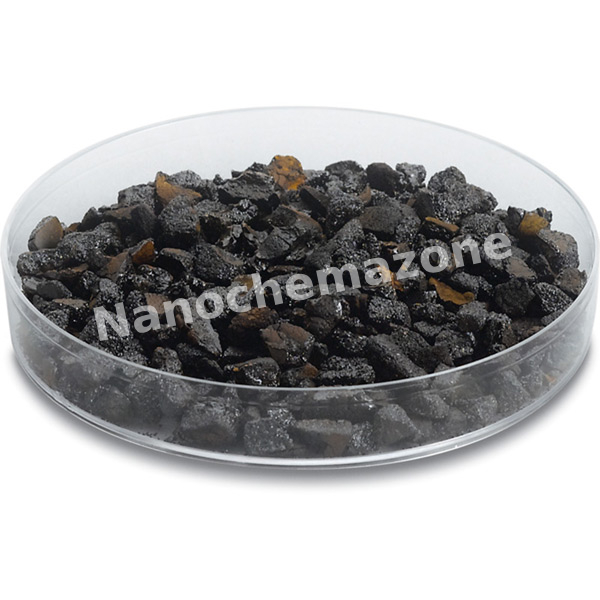
Titanium Dioxide (TiO2) Sputtering Targets, Purity: 99.9%, Size: 4”, Thickness: 0.125”, Grey to Black

$610.00

Product 

Titanium Dioxide (TiO2) Sputtering Targets, Purity: 99.9%, Size: 4'', Thickness: 0.125'', Grey to Black

CAS No.

13463‑67‑7

Appearance

Powder

Purity

≥99%,  ≥99.9%,  ≥95%

(Other purities are also available)

APS

TiO₂ (black granules) (Size Can be customized), Ask for other available size ranges.

Ingredient

N/A

Molecular Weight

79.94 g/mol

Melting Point

~1,843 °C

Boiling Point

~2,972 °C

Density

~4.23 g/cm³

Product Codes

NCZ-1433K

Yttrium (Y) Sputtering Targets, Purity: 99.9%, Size: 3”, Thickness: 0.250”

$610.00

Applications of Sputtering Targets;

  • Sputtering targets is used for film deposition. The deposition made by sputter targets is a method of depositing thin films by sputtering that involves eroding material from a "target" source onto a "substrate" such as  a silicon wafer.
  • Semiconductor sputtering targets is used to etch the target. Sputter etching is chosen in cases where a high degree of etching anisotropy is needed and selectivity is not a concern.
  • Sputter targets is also used for analysis by etching away the target material.
One of the example occurs in secondary ion spectroscopy (SIMS), where the target sample is sputtered at a constant rate. As the target is sputtered, the concentration and identity of sputtered atoms are measured using mass spectrometry. By helping of the sputtering target, the composition of the target material can be determined and even extremely low concentrations of impurities are detected. Sputtering target has also application area in space. Sputtering is one of the forms of space weathering, a process that changes the physical and chemical properties of airless bodies, such as asteroids and the Moon.

Copper (Cu) Sputtering Targets, Purity: 99.999%, Size: 7”, Thickness: 0.250”

$609.00

Applications of Sputtering Targets;

Film deposition is accomplished using sputtering targets. A technique for sputtering thin films is called "deposition made by sputter targets," which entails eroding material from a "target" source onto a "substrate" like a silicon wafer. Etching of the target is done using semiconductor sputtering targets. When selectivity is not an issue and a high degree of etching anisotropy is required, sputter etching is the method of choice. By removing the target material through etching, sputter targets are also utilized for investigation. In secondary ion spectroscopy (SIMS), one example is when the target material is sputtered at a steady pace. Mass spectrometry is used to quantify the concentration and identity of spewed atoms as the target is sputtered.

The target material's composition may be ascertained and even very low concentrations of contaminants can be found with the aid of the sputtering target.

There is also an application area for sputtering targets in space. One type of space weathering that alters the chemical and physical characteristics of airless worlds like the Moon and asteroids is sputtering.

Carbon Nanotube-TiO2 Prepared by Electrostatic Adsorption, CNTs: 25 wt%, TiO2-rutile: 75 wt%

Price range: $129.00 through $609.00
Select options This product has multiple variants. The options may be chosen on the product page
Carbon Nanotube-TiO2 Prepared by Electrostatic Adsorption CNTs: 25 wt%, TiO2-rutile: 75 wt% Technical Properties: Carbon Nanotubes Purity > 95 wt%

Short Length Multi Walled Carbon Nanotubes, Purity: > 96%, Outside Diameter: 4-16 nm

Price range: $46.00 through $609.00
Select options This product has multiple variants. The options may be chosen on the product page

Applications: Multi-walled carbon nanotubes have a wide range of potential applications in a variety of fields. These applications include medicine, mechanics, electric-electronics, chemicals, energy, and others. It can be used in 1-drug delivery, 2-biosensors, 3-CNT composites, and 4-catalysis, 5-nanoprobes, 6-hydrogen storage 7-lithium batteries, 8 gas discharge tubes 9 flat panel displays, 10-supercapacitors, 11-transistors ,12-solar cells,   13-photoluminescence, 14-templates

Magnesium Oxide (MgO) Sputtering Targets, Purity: 99.95%, Size: 5”, Thickness: 0.125”

$608.00

Product 

Magnesium Oxide (MgO) Sputtering Targets, Purity: 99.95%, Size: 5'', Thickness: 0.125''

CAS No.

1309-48-4

Appearance

Powder

Purity

≥99%,  ≥99.9%,  ≥95%

(Other purities are also available)

APS

 N/A (Size Can be customized), Ask for other available size ranges.

Ingredient

N/A

Molecular Weight

40.30 g/mol

Melting Point

 ~2852 °C

Boiling Point

~3600 °C

Density

 ~3.58 g/cm³

Product Codes

NCZ-1968K

Cobalt (Co) Micron Powder, Purity: 99.99%, Size: 1 µm

Price range: $32.00 through $608.00
Select options This product has multiple variants. The options may be chosen on the product page
5 grams/29 € 25 grams/55 € 100 grams/160 € 500 grams/360 € 1000 grams/540 €   
Please contact us for quotes on larger quantities !!!

Cobalt (Co) Micron Powder

Purity: 99.99%, Size: 1 µm

Tungsten Carbide (WC) Nanopowder/Nanoparticles, Purity: 99.96%, Size: 25-95 nm

Price range: $106.00 through $608.00
Select options This product has multiple variants. The options may be chosen on the product page
5 grams/94 € 
25 grams/182 € 100 grams/536 €                       
Please contact us for quotes on larger quantities !!!

Tungsten Carbide (WC) Nanopowder/Nanoparticles

Purity: 99.96%, Size: 25-95 nm

Storage Condition:

Tungsten carbide nanoparticles should be sealed in vacuum and stored in cool and dry room. It should not be exposure to air and avoid stress.

Applications:

Tungsten carbide nanoparticles is a hard material, corrosion resistant, and waer resistant material. It is used in cutting tools, mining tolls, and chipless forming tools. It is also used in coatings such as corrosion-resistant coatings, wear-resistance coatings, and erosion-resistant coatings. In order to enhance hardness, strength, and wear resistance tungsten carbide nanoparticles is used in nano-compsites. It is used in producing super fine horniness alloy and high capability nano-crystalline. It is also used as in catalysis as petrochemical cracking catalyst.

Chromium Oxide (Cr2O3) Sputtering Targets, Purity: 99.8%-99.9%, Size: 3”, Thickness: 0.125”

$607.00

Product 

Chromium Oxide (Cr2O3) Sputtering Targets, Purity: 99.8%-99.9%, Size: 3'', Thickness: 0.125''

CAS No.

1308-38-9

Appearance

Powder

Purity

≥99%,  ≥99.9%,  ≥95%

(Other purities are also available)

APS

 N/A (Size Can be customized), Ask for other available size ranges.

Ingredient

N/A

Molecular Weight

 151.99 g/mol

Melting Point

2,435 °C

Boiling Point

 ~3,000 °C (approximate; may decompose before boiling)

Density

5.21 g/cm³

Product Codes

NCZ-2302K

Neodymium Nitrate Hexahydrate (Nd(NO3)3 · 6H2O) 99.5% 2N5

$607.00
Select options This product has multiple variants. The options may be chosen on the product page
Product Neodymium Nitrate Hexahydrate (Nd(NO3)3 · 6H2O) 99.5% 2N5
CAS No. 10361-12-7
Appearance Colorless to pale pink crystalline
Purity ≥99%,  ≥99.9%,  ≥95%(Other purities are also available)
APS 1–10µm (Size Can be customized),  Ask for other available size range.
Ingredient Nd(NO3)3·6H2O
Molecular Weight 438.24 g/mol
Melting Point N/A
Boiling Point N/A
Density 2.3 g/cm³
Product Codes NCZ-473I

Yttrium (Y) Sputtering Targets, Purity: 99.9%, Size: 3”, Thickness: 0.125”

$607.00

Product 

Yttrium (Y) Sputtering Targets, Purity: 99.9%, Size: 3'', Thickness: 0.125''

CAS No.

7440-65-5

Appearance

Powder

Purity

≥99%,  ≥99.9%,  ≥95%

(Other purities are also available)

APS

N/A  (Size Can be customized), Ask for other available size ranges.

Ingredient

N/A

Molecular Weight

88.91 g/mol

Melting Point

1522 °C

Boiling Point

3338 °C

Density

4.47 g/cm³

Product Codes

NCZ-1519K

4N (99.99%) Tin (Sn) Pellets Evaporation Materials

Price range: $169.00 through $607.00
Select options This product has multiple variants. The options may be chosen on the product page
Product 4N (99.99%) Tin (Sn) Pellets Evaporation Materials
CAS No. 7440-31-5
Appearance Silvery Lustrous Gray, Metallic 
Purity ≥99%,  ≥99.9%,  ≥95%(Other purities are also available)
APS 1–10mm (Size Can be customized),  Ask for other available size range.
Ingredient Sn
Molecular Weight 118.71 g/mol
Melting Point 232°C
Boiling Point 1564°C
Density 7.28 g/cm³
Product Codes NCZ-113E

Molybdenum Oxide (MoO3) Sputtering Targets, indium, Purity: 99.9%, Size: 2”, Thickness: 0.125”

$607.00

Applications of Sputtering Targets;

Film deposition is accomplished using sputtering targets. A technique for sputtering thin films is called "deposition made by sputter targets," which entails eroding material from a "target" source onto a "substrate" like a silicon wafer. Etching of the target is done using semiconductor sputtering targets. When selectivity is not an issue and a high degree of etching anisotropy is required, sputter etching is the method of choice. By removing the target material through etching, sputter targets are also utilized for investigation. In secondary ion spectroscopy (SIMS), one example is when the target material is sputtered at a steady pace. Mass spectrometry is used to quantify the concentration and identity of spewed atoms as the target is sputtered.

By helping of the sputtering target, the composition of the target material may be evaluated and even extremely tiny amounts of contaminants are recognized.

There is also an application area for sputtering targets in space. One type of space weathering that alters the chemical and physical characteristics of airless worlds like the Moon and asteroids is sputtering.

Titanium Boride (TiB2) Sputtering Targets, Purity: 99.5%, Size: 3”, Thickness: 0.125”

$606.00

Applications of Sputtering Targets;

Film deposition is accomplished using sputtering targets. A technique for sputtering thin films is called "deposition made by sputter targets," which entails eroding material from a "target" source onto a "substrate" like a silicon wafer. Etching of the target is done using semiconductor sputtering targets. When selectivity is not an issue and a high degree of etching anisotropy is required, sputter etching is the method of choice. By removing the target material through etching, sputter targets are also utilized for investigation. In secondary ion spectroscopy (SIMS), one example is when the target material is sputtered at a steady pace. Mass spectrometry is used to quantify the concentration and identity of spewed atoms as the target is sputtered.

The target material's composition may be ascertained and even very low concentrations of contaminants can be found with the aid of the sputtering target.

There is also an application area for sputtering targets in space. One type of space weathering that alters the chemical and physical characteristics of airless worlds like the Moon and asteroids is sputtering.

High Purity (>95%) Carboxylic Multi-walled Carbon Nanotube

Price range: $513.00 through $605.00
Select options This product has multiple variants. The options may be chosen on the product page
Product High Purity (>95%) Carboxylic Multi-walled Carbon Nanotube
CAS No. 308068-56-6
Appearance Black 
Purity ≥99%,  ≥99.9%,  ≥95%(Other purities are also available)
APS 1–10µm (Size Can be customized),  Ask for other available size range.
Ingredient (C)x(COOH)y
Molecular Weight N/A
Melting Point N/A
Boiling Point N/A
Density 0.05–0.2 g/cm³
Product Codes NCZ-389I
 

5mL Oleic Acid Coated Magnetic Fe3O4 Magnetic Polystyrene Nanoparticle Water Dispersion, 1mg/mL

$605.00
Product 5mL Oleic Acid Coated Magnetic Fe3O4 Magnetic Polystyrene Nanoparticle Water Dispersion, 1mg/mL
CAS No. 1317-61-9
Appearance Brown to black colloidal
Purity ≥99%,  ≥99.9%,  ≥95%(Other purities are also available)
APS N/A
Ingredient Fe3O4
Molecular Weight 231.54 g/mol
Melting Point N/A
Boiling Point N/A
Density 5.2 g/cm³
Product Codes NCZ-191I

Hafnium Oxide Nanoparticles/Nanopowder (HfO2, ~100nm, 99.9+%)

Price range: $170.00 through $605.00
Select options This product has multiple variants. The options may be chosen on the product page
$170/25g
$605/100g

Product 

Hafnium Oxide Nanoparticles/Nanopowder (HfO2, ~100nm, 99.9+%)

CAS No.

 12055-23-1

Appearance

Powder

Purity

≥99%,  ≥99.9%,  ≥95%

(Other purities are also available)

APS

<100nm (Size Can be customized), Ask for other available size ranges.

Ingredient

N/A

Molecular Weight

 210.49 g/mol

Melting Point

~2,758 °C

Boiling Point

~5,400 °C

Density

~9.68 g/cm³

Product Codes

NCZ-1138K

Lanthanum Strontium Manganate (La0.7Sr0.3MnO3) Sputtering Targets, Purity: 99.9%, Size: 1”, Thickness: 0.250”

$605.00

Applications of Sputtering Targets;

  • Sputtering targets is used for film deposition. The deposition made by sputter targets is a method of depositing thin films by sputtering that involves eroding material from a "target" source onto a "substrate" such as  a silicon wafer.
  • Semiconductor sputtering targets is used to etch the target. Sputter etching is chosen in cases where a high degree of etching anisotropy is needed and selectivity is not a concern.
  • Sputter targets is also used for analysis by etching away the target material.
One of the example occurs in secondary ion spectroscopy (SIMS), where the target sample is sputtered at a constant rate. As the target is sputtered, the concentration and identity of sputtered atoms are measured using mass spectrometry. By helping of the sputtering target, the composition of the target material can be determined and even extremely low concentrations of impurities are detected. Sputtering target has also application area in space. Sputtering is one of the forms of space weathering, a process that changes the physical and chemical properties of airless bodies, such as asteroids and the Moon.

Graphene Sample Pack (Includes 9 products)

Price range: $220.00 through $605.00
Select options This product has multiple variants. The options may be chosen on the product page

Applications:

 Use as a high performance additive for composites with PPO, POM ,PPS, PC, ABS, PP, PE, PS, Nylon and rubbers.  Can improve composites tensile strength, stiffness, corrosion resistance, abrasion resistance and anti-static electricity and lubricant properties.  For all mechanical properties modifications, typical amounts are about 2-6 wt%  For conductivity modification, typical amounts are about 2-8 wt% The addition of Graphene to different composites show improvements in their physical properties. These improvements include electrical conductivity, thermal conductivity, hardness, strength, viscosity etc. Moreover, graphene can replace materials that are used in today’s applications resulting in enhancement of their applications. For example graphene can be integrated into plastics such as epoxy to create a material that can replace steel in the structure of aircraft, improving fuel efficiency, range and reducing weight. It could even be used to coat aircraft surface material to prevent electrical damage resulting from lightning strikes due to its high conductivity.

(-OH) Functionalized Multi Walled Carbon Nanotubes, Purity: > 96%, Outside Diameter: 48-78 nm

Price range: $35.00 through $605.00
Select options This product has multiple variants. The options may be chosen on the product page

Applications:

Multi-walled carbon nanotubes have numerous potential uses in various industries. Medicine, mechanics, electric-electronics, chemistry, energy, and other fields are among these uses. It is applicable to;
  • Drug delivery,
  • Biosensors,
  • CNT composites,
  • Catalysis,
  • Nanoprobes,
  • Hydrogen storage,
  • Lithium batteries,
  • Gas-discharge tubes,
  • Flat panel displays,
  • Supercapacitors,
  • Transistors,
  • Solar cells,
  • Photoluminescence,
  • Templates.

Nickel Oxide (NiO) Sputtering Targets, Purity: 99.995%, Size:1”, Thickness: 0.125”

$604.00

Product 

Nickel Oxide (NiO) Sputtering Targets, Purity: 99.995%, Size:1'', Thickness: 0.125''

CAS No.

1313-99-1

Appearance

Powder

Purity

≥99%,  ≥99.9%,  ≥95%

(Other purities are also available)

APS

 ~3–5 µm (Size Can be customized), Ask for other available size ranges.

Ingredient

N/A

Molecular Weight

74.69 g/mol

Melting Point

1,950 °C

Boiling Point

 2,730 °C

Density

 6.67 g/cm³

Product Codes

NCZ-1840K

Bismuth Sputtering Target Bi

Price range: $303.00 through $604.00
Select options This product has multiple variants. The options may be chosen on the product page
Product Bismuth Sputtering Target Bi
CAS No. 7440-69-9
Appearance Solid, silvery-white to pinkish metallic luster
Purity ≥99%,  ≥99.9%,  ≥95%(Other purities are also available)
APS N/A
Ingredient Bi
Molecular Weight 208.98 g/mol
Melting Point N/A
Boiling Point N/A
Density 9.78 g/cm³
Product Codes NCZ-107H
 

Zinc Oxide (ZnO) Sputtering Targets, Purity: 99.999%, Size: 2”, Thickness: 0.250”

$604.00

Applications of Sputtering Targets;

Film deposition is accomplished using sputtering targets. A technique for sputtering thin films is called "deposition made by sputter targets," which entails eroding material from a "target" source onto a "substrate" like a silicon wafer. Etching of the target is done using semiconductor sputtering targets. When selectivity is not an issue and a high degree of etching anisotropy is required, sputter etching is the method of choice. By removing the target material through etching, sputter targets are also utilized for investigation. In secondary ion spectroscopy (SIMS), one example is when the target material is sputtered at a steady pace. Mass spectrometry is used to quantify the concentration and identity of spewed atoms as the target is sputtered.

The target material's composition may be ascertained and even very low concentrations of contaminants can be found with the aid of the sputtering target.

There is also an application area for sputtering targets in space. One type of space weathering that alters the chemical and physical characteristics of airless worlds like the Moon and asteroids is sputtering.

Titanium Carbide (TiC) Sputtering Targets, Purity: 99.5%, Size: 2”, Thickness: 0.250”

$604.00

Applications of Sputtering Targets;

Film deposition is accomplished using sputtering targets. A technique for sputtering thin films is called "deposition made by sputter targets," which entails eroding material from a "target" source onto a "substrate" like a silicon wafer. Etching of the target is done using semiconductor sputtering targets. When selectivity is not an issue and a high degree of etching anisotropy is required, sputter etching is the method of choice. By removing the target material through etching, sputter targets are also utilized for investigation. In secondary ion spectroscopy (SIMS), one example is when the target material is sputtered at a steady pace. Mass spectrometry is used to quantify the concentration and identity of spewed atoms as the target is sputtered.

The target material's composition may be ascertained and even very low concentrations of contaminants can be found with the aid of the sputtering target.

There is also an application area for sputtering targets in space. One type of space weathering that alters the chemical and physical characteristics of airless worlds like the Moon and asteroids is sputtering.

Indium Zinc Oxide/IZO (InZnO) Sputtering Targets, Purity: 99.99%, Size: 4”, Thickness: 0.125”

$603.00

Product 

Indium Zinc Oxide/IZO (InZnO) Sputtering Targets, Purity: 99.99%, Size: 4'', Thickness: 0.125''

CAS No.

Indium oxide (In₂O₃): 1312-43-2
Zinc oxide (ZnO): 1314-13-2

Appearance

Powder

Purity

≥99%,  ≥99.9%,  ≥95%

(Other purities are also available)

APS

 N/A (Size Can be customized), Ask for other available size ranges.

Ingredient

N/A

Molecular Weight

Approx. 260–270 g/mol (depends on ratio)

Melting Point

Indium oxide: ~1910 °C Zinc oxide: ~1975 °C

Boiling Point

N/A

Density

~7.1 g/cm³

Product Codes

NCZ-2195K

Cobalt Iron Boron (Co-Fe-B) Sputtering Targets, Purity: 99.95%, Size: 3”, Thickness: 0.125”

$602.00

Product 

Cobalt Iron Boron (Co-Fe-B) Sputtering Targets, Purity: 99.95%, Size: 3'', Thickness: 0.125''

CAS No.

N/A

Appearance

Powder

Purity

≥99%,  ≥99.9%,  ≥95%

(Other purities are also available)

APS

 N/A (Size Can be customized), Ask for other available size ranges.

Ingredient

N/A

Molecular Weight

 ~135.943 g/mol

Melting Point

N/A

Boiling Point

N/A

Density

 ~0.986 g/cm³ (per SAM data; unusually low for metal alloys — consider verifying)

Product Codes

NCZ-2276K

High Purity (>95%) Short Hydroxylate Multi-walled Carbon Nanotube, 25g

Price range: $384.00 through $602.00
Select options This product has multiple variants. The options may be chosen on the product page
Product High Purity (>95%) Short Hydroxylate Multi-walled Carbon Nanotube, 25g
CAS No. 308068-56-6
Appearance Black fine
Purity ≥99%,  ≥99.9%,  ≥95%(Other purities are also available)
APS 10–20 nm (Size Can be customized),  Ask for other available size range.
Ingredient (C)x(COOH)y
Molecular Weight N/A
Melting Point N/A
Boiling Point N/A
Density 2.1 g/cm³
Product Codes NCZ-391I

Vanadium Oxide (V2O5) Sputtering Targets, indium, Purity: 99.9%, Size: 2”, Thickness: 0.125”

$602.00

Applications of Sputtering Targets;

Film deposition is accomplished using sputtering targets. A technique for sputtering thin films is called "deposition made by sputter targets," which entails eroding material from a "target" source onto a "substrate" like a silicon wafer. Etching of the target is done using semiconductor sputtering targets. When selectivity is not an issue and a high degree of etching anisotropy is required, sputter etching is the method of choice. By removing the target material through etching, sputter targets are also utilized for investigation. In secondary ion spectroscopy (SIMS), one example is when the target material is sputtered at a steady pace. Mass spectrometry is used to quantify the concentration and identity of spewed atoms as the target is sputtered.

By helping of the sputtering target, the composition of the target material can be determined and even extremely low concentrations of impurities are detected.

Sputtering target has also application area in space. Sputtering is one of the forms of space weathering, a process that changes the physical and chemical properties of airless bodies, such as asteroids and the Moon.

Tin Oxide (SnO2) Sputtering Targets, Purity: 99.99%, Size: 4”, Thickness: 0.250”

$602.00

Applications of Sputtering Targets;

Film deposition is accomplished using sputtering targets. A technique for sputtering thin films is called "deposition made by sputter targets," which entails eroding material from a "target" source onto a "substrate" like a silicon wafer. Etching of the target is done using semiconductor sputtering targets. When selectivity is not an issue and a high degree of etching anisotropy is required, sputter etching is the method of choice. By removing the target material through etching, sputter targets are also utilized for investigation. In secondary ion spectroscopy (SIMS), one example is when the target material is sputtered at a steady pace. Mass spectrometry is used to quantify the concentration and identity of spewed atoms as the target is sputtered.

The target material's composition may be ascertained and even very low concentrations of contaminants can be found with the aid of the sputtering target.

There is also an application area for sputtering targets in space. One type of space weathering that alters the chemical and physical characteristics of airless worlds like the Moon and asteroids is sputtering.

Silicon Dioxide (SiO2) Sputtering Targets, Fused Quartz, indium, Purity: 99.995%, Size: 3”, Thickness: 0.125”

$602.00

Applications of Sputtering Targets;

Film deposition is accomplished using sputtering targets. A technique for sputtering thin films is called "deposition made by sputter targets," which entails eroding material from a "target" source onto a "substrate" like a silicon wafer. Etching of the target is done using semiconductor sputtering targets. When selectivity is not an issue and a high degree of etching anisotropy is required, sputter etching is the method of choice. By removing the target material through etching, sputter targets are also utilized for investigation. In secondary ion spectroscopy (SIMS), one example is when the target material is sputtered at a steady pace. Mass spectrometry is used to quantify the concentration and identity of spewed atoms as the target is sputtered.

The target material's composition may be ascertained and even very low concentrations of contaminants can be found with the aid of the sputtering target.

There is also an application area for sputtering targets in space. One type of space weathering that alters the chemical and physical characteristics of airless worlds like the Moon and asteroids is sputtering.

Molybdenum Disulfide (MoS2) Sputtering Targets, indium, Purity: 99.9%, Size: 1”, Thickness: 0.125”

$602.00

Applications of Sputtering Targets;

Film deposition is accomplished using sputtering targets. A technique for sputtering thin films is called "deposition made by sputter targets," which entails eroding material from a "target" source onto a "substrate" like a silicon wafer. Etching of the target is done using semiconductor sputtering targets. When selectivity is not an issue and a high degree of etching anisotropy is required, sputter etching is the method of choice. By removing the target material through etching, sputter targets are also utilized for investigation. In secondary ion spectroscopy (SIMS), one example is when the target material is sputtered at a steady pace. Mass spectrometry is used to quantify the concentration and identity of spewed atoms as the target is sputtered.

By helping of the sputtering target, the composition of the target material may be evaluated and even extremely tiny amounts of contaminants are recognized.

There is also an application area for sputtering targets in space. One type of space weathering that alters the chemical and physical characteristics of airless worlds like the Moon and asteroids is sputtering.

Magnesium Oxide (MgO) Sputtering Targets, Purity: 99.95%, Size: 1”, Thickness: 0.125”

$602.00

Applications of Sputtering Targets;

Film deposition is accomplished using sputtering targets. A technique for sputtering thin films is called "deposition made by sputter targets," which entails eroding material from a "target" source onto a "substrate" like a silicon wafer. Etching of the target is done using semiconductor sputtering targets. When selectivity is not an issue and a high degree of etching anisotropy is required, sputter etching is the method of choice. By removing the target material through etching, sputter targets are also utilized for investigation. In secondary ion spectroscopy (SIMS), one example is when the target material is sputtered at a steady pace. Mass spectrometry is used to quantify the concentration and identity of spewed atoms as the target is sputtered.

By helping of the sputtering target, the composition of the target material may be evaluated and even extremely tiny amounts of contaminants are recognized.

There is also an application area for sputtering targets in space. One type of space weathering that alters the chemical and physical characteristics of airless worlds like the Moon and asteroids is sputtering.

Aluminum Hydroxide (Al(OH)3) Nanopowder/Nanoparticles, High Purity: 99.95%, Size: 8-18 nm, Hydrophilic

Price range: $27.00 through $602.00
Select options This product has multiple variants. The options may be chosen on the product page
5 grams/24 € 
25 grams/56 € 100 grams/112 €
500 grams/336 €  1000 grams/530 € 
                      
Please contact us for quotes on larger quantities !!!

Aluminum Hydroxide (Al(OH)3) Nanopowder/Nanoparticles

High Purity: 99.95%, Size: 8-18 nm, Hydrophilic  .

Applications:

Aluminum Hydroxide nanoparticle is used as a fire retardant and fire retandant filler. It decomposes at 180°C and absorb heat releasing water vapor. It is used as smoke suppressant in many polymers. In medicine, aluminum hydroxide nanoparticles are also used as antacid. It reacts with excess acid in the stomach and reduce its acidity.

Niobium Oxide (Nb2O5) Sputtering Targets, Purity: 99.5%, Size: 8”, Thickness: 0.250”

$601.00

Product 

Niobium Oxide (Nb2O5) Sputtering Targets, Purity: 99.5%, Size: 8'', Thickness: 0.250''

CAS No.

1313-96-8

Appearance

Powder

Purity

≥99%,  ≥99.9%,  ≥95%

(Other purities are also available)

APS

N/A (Size Can be customized), Ask for other available size ranges.

Ingredient

N/A

Molecular Weight

 265.81 g/mol

Melting Point

~1512 °C

Boiling Point

N/A

Density

 4.6 – 4.9 g/cm³

Product Codes

NCZ-1804K

Indium Tin Oxide/ITO (In203:Sn02) Sputtering Targets, Purity: 99.99%, Size: 4”, Thickness: 0.125”

$601.00

Applications of Sputtering Targets;

Film deposition is accomplished using sputtering targets. A technique for sputtering thin films is called "deposition made by sputter targets," which entails eroding material from a "target" source onto a "substrate" like a silicon wafer. Etching of the target is done using semiconductor sputtering targets. When selectivity is not an issue and a high degree of etching anisotropy is required, sputter etching is the method of choice. By removing the target material through etching, sputter targets are also utilized for investigation. In secondary ion spectroscopy (SIMS), one example is when the target material is sputtered at a steady pace. Mass spectrometry is used to quantify the concentration and identity of spewed atoms as the target is sputtered.

The target material's composition may be ascertained and even very low concentrations of contaminants can be found with the aid of the sputtering target.

There is also an application area for sputtering targets in space. One type of space weathering that alters the chemical and physical characteristics of airless worlds like the Moon and asteroids is sputtering.

Carbon (C) Sputtering Targets, indium, Purity: 99.999%, Size: 3”, Thickness: 0.125”

$601.00

Applications of Sputtering Targets;

Film deposition is accomplished using sputtering targets. A technique for sputtering thin films is called "deposition made by sputter targets," which entails eroding material from a "target" source onto a "substrate" like a silicon wafer. Etching of the target is done using semiconductor sputtering targets. When selectivity is not an issue and a high degree of etching anisotropy is required, sputter etching is the method of choice. By removing the target material through etching, sputter targets are also utilized for investigation. In secondary ion spectroscopy (SIMS), one example is when the target material is sputtered at a steady pace. Mass spectrometry is used to quantify the concentration and identity of spewed atoms as the target is sputtered.

The target material's composition may be ascertained and even very low concentrations of contaminants can be found with the aid of the sputtering target.

There is also an application area for sputtering targets in space. One type of space weathering that alters the chemical and physical characteristics of airless worlds like the Moon and asteroids is sputtering.

Tantalum Carbide (TaC) Nanopowder/Nanoparticles, Purity: 99.5+%, Size: 950 nm, Cubic

Price range: $35.00 through $601.00
Select options This product has multiple variants. The options may be chosen on the product page
5 grams/31 € 
25 grams/51 € 100 grams/92 €
500 grams/306 € 1000 grams/530 €
                     
Please contact us for quotes on larger quantities !!! 

Tantalum Carbide (TaC) Nanopowder/Nanoparticles

Purity: 99.5+%, Size: 950 nm, Cubic

Applications:

Tantalum carbide nanoparticles has application in hard materials such as refractory ceramic materials. It is used in cutting tools and tool bits. It is also used as additive to tungsten carbide alloys.  

Lithium Titanate (Li2TiO3) Sputtering Targets, Purity: 99.95%, Size: 3”, Thickness: 0.250”

$600.00

Applications of Sputtering Targets;

Film deposition is accomplished using sputtering targets. A technique for sputtering thin films is called "deposition made by sputter targets," which entails eroding material from a "target" source onto a "substrate" like a silicon wafer. Etching of the target is done using semiconductor sputtering targets. When selectivity is not an issue and a high degree of etching anisotropy is required, sputter etching is the method of choice. By removing the target material through etching, sputter targets are also utilized for investigation. In secondary ion spectroscopy (SIMS), one example is when the target material is sputtered at a steady pace. Mass spectrometry is used to quantify the concentration and identity of spewed atoms as the target is sputtered.

By helping of the sputtering target, the composition of the target material may be evaluated and even extremely tiny amounts of contaminants are recognized.

There is also an application area for sputtering targets in space. One type of space weathering that alters the chemical and physical characteristics of airless worlds like the Moon and asteroids is sputtering.

Cobalt (Co) Sputtering Targets, indium, Purity: 99.95%, Size: 2”, Thickness: 0.250”

$600.00

Applications of Sputtering Targets;

Film deposition is accomplished using sputtering targets. A technique for sputtering thin films is called "deposition made by sputter targets," which entails eroding material from a "target" source onto a "substrate" like a silicon wafer. Etching of the target is done using semiconductor sputtering targets. When selectivity is not an issue and a high degree of etching anisotropy is required, sputter etching is the method of choice. By removing the target material through etching, sputter targets are also utilized for investigation. In secondary ion spectroscopy (SIMS), one example is when the target material is sputtered at a steady pace. Mass spectrometry is used to quantify the concentration and identity of spewed atoms as the target is sputtered.

The target material's composition may be ascertained and even very low concentrations of contaminants can be found with the aid of the sputtering target.

There is also an application area for sputtering targets in space. One type of space weathering that alters the chemical and physical characteristics of airless worlds like the Moon and asteroids is sputtering.

The chemical element cobalt has the atomic number 27 and the symbol Co. Cobalt is a silver-gray, hard, and shiny metal. Because it is one of only three room temperature ferromagnets with unaxial symmetry and hence suitability for digital recording, cobalt is employed in the production of high-strength, wear-resistant alloys as well as magnetic recording.

Terbium Oxide (Tb4O7) Micron Powder, Purity: 99.99%, Size: 325 mesh

Price range: $35.00 through $600.00
Select options This product has multiple variants. The options may be chosen on the product page

Applications:

Terbium oxide has good magnetic and optical properties. It is used in magneto-optical glasses, and magneto-ptical recording materials. It is also used in glass materials with Faraday Rotation effect for optical and laser based devices. It has catalytic application in automobile exhust converter, and is used as activating agent for fluorescent powder.

Multi Walled Carbon Nanotubes, Purity: > 95%, Outside Diameter: 30-50 nm

Price range: $34.00 through $600.00
Select options This product has multiple variants. The options may be chosen on the product page

Applications:

Multi Walled Carbon Nanotubes have a wide range of possible uses in several industries. These applications span a variety of fields, including energy, chemistry, mechanics, and electric-electronics. Drug delivery, biosensors, CNT composites, catalysis, nanoprobes, and hydrogen storage are just a few applications for it. 7, lithium-ion batteries, eight gas discharge tubes nine flat-panel screens, ten supercapacitors, and eleven transistors a dozen solar cells, 14 templates, 13 photoluminescence  

Barium Titanate (BaTiO3) Sputtering Targets, Purity: 99.99%, Size: 1”, Thickness: 0.125”

$599.00

Product 

Barium Titanate (BaTiO3) Sputtering Targets, Purity: 99.99%, Size: 1'', Thickness: 0.125''

CAS No.

 12047‑27‑7

Appearance

Powder

Purity

≥99%,  ≥99.9%,  ≥95%

(Other purities are also available)

APS

1 – 5 µm (Size Can be customized), Ask for other available size ranges.

Ingredient

N/A

Molecular Weight

233.19 g/mol

Melting Point

~1625 °C

Boiling Point

N/A

Density

 ~6.02 g/cm³

Product Codes

NCZ-2466K

Yttrium Ferrite (Y3Fe5O12) Sputtering Targets, Purity: 99.9%, Size: 3”, Thickness: 0.125”

$598.00

Product 

Yttrium Ferrite (Y3Fe5O12) Sputtering Targets, Purity: 99.9%, Size: 3'', Thickness: 0.125''

CAS No.

12068-40-5

Appearance

Powder

Purity

≥99%,  ≥99.9%,  ≥95%

(Other purities are also available)

APS

 N/A (Size Can be customized), Ask for other available size ranges.

Ingredient

N/A

Molecular Weight

706.32 g/mol

Melting Point

~1,790 °C

Boiling Point

N/A

Density

~5.17 – 5.36

Product Codes

NCZ-1512K

Silicon Carbide (SiC) Sputtering Targets, Purity: 99.5%, Size: 2”, Thickness: 0.250”

$598.00

Applications of Sputtering Targets;

Film deposition is accomplished using sputtering targets. A technique for sputtering thin films is called "deposition made by sputter targets," which entails eroding material from a "target" source onto a "substrate" like a silicon wafer. Etching of the target is done using semiconductor sputtering targets. When selectivity is not an issue and a high degree of etching anisotropy is required, sputter etching is the method of choice. By removing the target material through etching, sputter targets are also utilized for investigation. In secondary ion spectroscopy (SIMS), one example is when the target material is sputtered at a steady pace. Mass spectrometry is used to quantify the concentration and identity of spewed atoms as the target is sputtered.

The target material's composition may be ascertained and even very low concentrations of contaminants can be found with the aid of the sputtering target.

There is also an application area for sputtering targets in space. One type of space weathering that alters the chemical and physical characteristics of airless worlds like the Moon and asteroids is sputtering.

Nickel Oxide (NiO) Sputtering Targets, Purity: 99.98%, Size:2”, Thickness: 0.125”

$597.00

Applications of Sputtering Targets;

Film deposition is accomplished using sputtering targets. A technique for sputtering thin films is called "deposition made by sputter targets," which entails eroding material from a "target" source onto a "substrate" like a silicon wafer. Etching of the target is done using semiconductor sputtering targets. When selectivity is not an issue and a high degree of etching anisotropy is required, sputter etching is the method of choice. By removing the target material through etching, sputter targets are also utilized for investigation. In secondary ion spectroscopy (SIMS), one example is when the target material is sputtered at a steady pace. Mass spectrometry is used to quantify the concentration and identity of spewed atoms as the target is sputtered.

The target material's composition may be ascertained and even very low concentrations of contaminants can be found with the aid of the sputtering target.

There is also an application area for sputtering targets in space. One type of space weathering that alters the chemical and physical characteristics of airless worlds like the Moon and asteroids is sputtering.
Copper Oxide (CuO) Sputtering Target

Price range: $206.00 through $596.00
Select options This product has multiple variants. The options may be chosen on the product page

Product 

Copper Oxide (CuO) Sputtering Target

CAS No.

1317-38-0

Appearance

Powder

Purity

≥99%,  ≥99.9%,  ≥95%

(Other purities are also available)

APS

 NA (Size Can be customized), Ask for other available size ranges.

Ingredient

N/A

Molecular Weight

79.55 g/mol

Melting Point

1,320 °C

Boiling Point

Decomposes (~2,000 °C+)

Density

6.31 g/cm³

Product Codes

NCZ-1369K

Nickel Oxide (NiO) Sputtering Targets, Purity: 99.9%, Size:1”, Thickness: 0.125”

$595.00

Product 

Nickel Oxide (NiO) Sputtering Targets, Purity: 99.9%, Size:1'', Thickness: 0.125''

CAS No.

1313-99-1

Appearance

Powder

Purity

≥99%,  ≥99.9%,  ≥95%

(Other purities are also available)

APS

 ~3–5 µm (Size Can be customized), Ask for other available size ranges.

Ingredient

N/A

Molecular Weight

74.69 g/mol

Melting Point

1,950 °C

Boiling Point

 2,730 °C

Density

 6.67 g/cm³

Product Codes

NCZ-1841K

Tin Oxide (SnO2) Sputtering Targets, Purity: 99.99%, Size: 2”, Thickness: 0.125”

$595.00

Product 

Tin Oxide (SnO2) Sputtering Targets, Purity: 99.99%, Size: 2'', Thickness: 0.125''

CAS No.

18282-10-5

Appearance

Powder

Purity

≥99%,  ≥99.9%,  ≥95%

(Other purities are also available)

APS

N/A  (Size Can be customized), Ask for other available size ranges.

Ingredient

N/A

Molecular Weight

150.71 g/mol

Melting Point

~1630 °C

Boiling Point

~1800–1900 °C

Density

~6.95 g/cm³

Product Codes

NCZ-1630K

High Purity MWNTs -OH Functionalized 99%

Price range: $115.00 through $595.00
Select options This product has multiple variants. The options may be chosen on the product page
$115/5g
$297/25g
$795/100g

Product 

High Purity MWNTs -OH Functionalized 99%

CAS No.

 7727-54-0

Appearance

Powder

Purity

≥99%,  ≥99.9%,  ≥95%

(Other purities are also available)

APS

30~50nm (Size Can be customized), Ask for other available size ranges.

Ingredient

N/A

Molecular Weight

228.20 g/mol

Melting Point

120 °C

Boiling Point

N/A

Density

 ~2.1–2.3 g/cm³

Product Codes

NCZ-1391K

High Purity MWNTs -COOH Functionalized 99%

Price range: $115.00 through $595.00
Select options This product has multiple variants. The options may be chosen on the product page
$115/5g
$297/25g
$595/100g

Product 

High Purity MWNTs -COOH Functionalized 99%

CAS No.

708051-49-0

Appearance

Powder

Purity

≥99%,  ≥99.9%,  ≥95%

(Other purities are also available)

APS

50-100 nm (Size Can be customized), Ask for other available size ranges.

Ingredient

N/A

Molecular Weight

NA

Melting Point

 >600 °C

Boiling Point

NA

Density

 ~1.8–2.1 g/cm³

Product Codes

NCZ-1275K

High Purity Multi Walled Nanotubes (MWNTs 99%)

Price range: $115.00 through $595.00
Select options This product has multiple variants. The options may be chosen on the product page
$115/5g
$297/25g
$595/100g

Product 

High Purity Multi Walled Nanotubes (MWNTs 99%)

CAS No.

 7727-54-0

Appearance

Powder

Purity

≥99%,  ≥99.9%,  ≥95%

(Other purities are also available)

APS

~10–30 nm(Size Can be customized), Ask for other available size ranges.

Ingredient

N/A

Molecular Weight

228.20 g/mol

Melting Point

 120 °C

Boiling Point

N/A

Density

 1.98 g/cm³

Product Codes

NCZ-1240K

Praseodymium (Pr) Sputtering Targets, Purity: 99.9%, Size: 6”, Thickness: 0.250”

$595.00

Applications of Sputtering Targets;

Film deposition is accomplished using sputtering targets. A technique for sputtering thin films is called "deposition made by sputter targets," which entails eroding material from a "target" source onto a "substrate" like a silicon wafer. Etching of the target is done using semiconductor sputtering targets. When selectivity is not an issue and a high degree of etching anisotropy is required, sputter etching is the method of choice. By removing the target material through etching, sputter targets are also utilized for investigation. In secondary ion spectroscopy (SIMS), one example is when the target material is sputtered at a steady pace. Mass spectrometry is used to quantify the concentration and identity of spewed atoms as the target is sputtered.

The target material's composition may be ascertained and even very low concentrations of contaminants can be found with the aid of the sputtering target.

There is also an application area for sputtering targets in space. One type of space weathering that alters the chemical and physical characteristics of airless worlds like the Moon and asteroids is sputtering.

Nickel Chromium (Ni-Cr) Sputtering Targets, Purity: 99.95%, Size: 6”, Thickness: 0.250”

$595.00

Applications of Sputtering Targets;

Film deposition is accomplished using sputtering targets. A technique for sputtering thin films is called "deposition made by sputter targets," which entails eroding material from a "target" source onto a "substrate" like a silicon wafer. Etching of the target is done using semiconductor sputtering targets. When selectivity is not an issue and a high degree of etching anisotropy is required, sputter etching is the method of choice. By removing the target material through etching, sputter targets are also utilized for investigation. In secondary ion spectroscopy (SIMS), one example is when the target material is sputtered at a steady pace. Mass spectrometry is used to quantify the concentration and identity of spewed atoms as the target is sputtered.

The target material's composition may be ascertained and even very low concentrations of contaminants can be found with the aid of the sputtering target.

There is also an application area for sputtering targets in space. One type of space weathering that alters the chemical and physical characteristics of airless worlds like the Moon and asteroids is sputtering.

Praseodymium (Pr) Sputtering Targets, Purity: 99.9%, Size: 6”, Thickness: 0.250”

$595.00

Applications of Sputtering Targets;

  • Sputtering targets is used for film deposition. The deposition made by sputter targets is a method of depositing thin films by sputtering that involves eroding material from a "target" source onto a "substrate" such as  a silicon wafer.
  • Semiconductor sputtering targets is used to etch the target. Sputter etching is chosen in cases where a high degree of etching anisotropy is needed and selectivity is not a concern.
  • Sputter targets is also used for analysis by etching away the target material.
One of the example occurs in secondary ion spectroscopy (SIMS), where the target sample is sputtered at a constant rate. As the target is sputtered, the concentration and identity of sputtered atoms are measured using mass spectrometry. By helping of the sputtering target, the composition of the target material can be determined and even extremely low concentrations of impurities are detected. Sputtering target has also application area in space. Sputtering is one of the forms of space weathering, a process that changes the physical and chemical properties of airless bodies, such as asteroids and the Moon.

(-COOH) Functionalized Multi Walled Carbon Nanotubes, Purity: > 96%, Outside Diameter: 28-48 nm

Price range: $25.00 through $595.00
Select options This product has multiple variants. The options may be chosen on the product page

Applications:

Multi Walled Carbon Nanotubes have a wide range of possible uses in several industries. These applications span a variety of fields, including energy, chemistry, mechanics, and electric-electronics. It can be used for a number of things, including medication administration, biosensors, CNT composites, catalysis, nanoprobes, and hydrogen storage. 7, lithium-ion batteries, eight gas discharge tubes nine flat-panel screens, ten supercapacitors, and eleven transistors 12 solar cells, 13 photoluminescence, and 14 templates.

4N (99.99%) Silicon Monoxide (SiO) Pieces (1-3mm) Evaporation Materials

Price range: $97.00 through $594.00
Select options This product has multiple variants. The options may be chosen on the product page
Product 4N (99.99%) Silicon Monoxide (SiO) Pieces (1-3mm) Evaporation Materials
CAS No. 10097-28-6
Appearance Black to brownish
Purity ≥99%,  ≥99.9%,  ≥95%(Other purities are also available)
APS 1-3mm (Size Can be customized),  Ask for other available size range.
Ingredient SiO
Molecular Weight 44.08 g/mol
Melting Point 1,910 °C
Boiling Point N/A
Density 2.13 g/cm³
Product Codes NCZ-171I

4N5 (99.995%) Lead (Pb) Pieces Evaporation Materials

Price range: $150.00 through $594.00
Select options This product has multiple variants. The options may be chosen on the product page
Product 4N5 (99.995%) Lead (Pb) Pieces Evaporation Materials
CAS No. 7439-92-1
Appearance Bluish White, Metallic
Purity ≥99%,  ≥99.9%,  ≥95%(Other purities are also available)
APS 3–6 mm (Size Can be customized),  Ask for other available size range.
Ingredient Pb
Molecular Weight N/A
Melting Point 328 °C
Boiling Point N/A
Density 11.34 g/cm3
Product Codes NCZ-161E
 

4N (99.99%) Silicon Monoxide (SiO) Pieces (1-3mm) Evaporation Materials

Price range: $97.00 through $594.00
Select options This product has multiple variants. The options may be chosen on the product page
Product 4N (99.99%) Silicon Monoxide (SiO) Pieces (1-3mm) Evaporation Materials
CAS No. 10097-28-6
Appearance Brown/Black Glassy
Purity ≥99%,  ≥99.9%,  ≥95%(Other purities are also available)
APS 1-3mm (Size Can be customized),  Ask for other available size range.
Ingredient SiO
Molecular Weight 44.08 g/mol
Melting Point N/A
Boiling Point N/A
Density 2.13 g/cm3
Product Codes NCZ-156E
 

3N5 (99.95%) Magnesium (Mg) Pellets Evaporation Materials

Price range: $165.00 through $594.00
Select options This product has multiple variants. The options may be chosen on the product page
Product 3N5 (99.95%) Magnesium (Mg) Pellets Evaporation Materials
CAS No. 7439-95-4
Appearance Silvery White, Metallic
Purity ≥99%,  ≥99.9%,  ≥95%(Other purities are also available)
APS 3–6mm (Size Can be customized),  Ask for other available size range.
Ingredient Mg
Molecular Weight 60.084 g/mol
Melting Point 649°C
Boiling Point 1090°C
Density 1.74 g/cm³
Product Codes NCZ-110E

Zinc Oxide (ZnO) Sputtering Targets, indium, Purity: 99.9%, Size: 1”, Thickness: 0.125”

$594.00

Applications of Sputtering Targets;

Film deposition is accomplished using sputtering targets. A technique for sputtering thin films is called "deposition made by sputter targets," which entails eroding material from a "target" source onto a "substrate" like a silicon wafer. Etching of the target is done using semiconductor sputtering targets. When selectivity is not an issue and a high degree of etching anisotropy is required, sputter etching is the method of choice. By removing the target material through etching, sputter targets are also utilized for investigation. In secondary ion spectroscopy (SIMS), one example is when the target material is sputtered at a steady pace. Mass spectrometry is used to quantify the concentration and identity of spewed atoms as the target is sputtered.

The target material's composition may be ascertained and even very low concentrations of contaminants can be found with the aid of the sputtering target.

There is also an application area for sputtering targets in space. One type of space weathering that alters the chemical and physical characteristics of airless worlds like the Moon and asteroids is sputtering.