Gallium Antimonide (GaSb) Wafers, Size: 3”, Thickness: 625± 25 μm, Orientation: 111, EPI-Ready

Price range: $1,014.00 through $4,794.00
Select options This product has multiple variants. The options may be chosen on the product page
Gallium Antimonide (GaSb) Wafers Size: 3”, Thickness: 625± 25 μm, Orientation: 111 Technical Properties: Quality  EPI-Ready Size (inch)  3” Thickness (μm)

Gallium Antimonide (GaSb) Wafers, Size: 3”, Thickness: 625± 25 μm, Orientation: 111, Testing Grade

Price range: $623.00 through $2,911.00
Select options This product has multiple variants. The options may be chosen on the product page
1 piece/565  5 pieces/2640                           Please contact us for quotes on larger quantities !!!

Gallium Antimonide (GaSb) Wafers

Size: 3”, Thickness: 625± 25 μm, Orientation: 111

Technical Properties:

Quality  Testing Grade
Size (inch)  3”
Thickness (μm)  625± 25
Polished  Single Side
Dopant  Tellurium ( N type )
Orientation  111
Mobility  2000-3500
EPD  ≤2000
Growth method  VGF
OF Length  22±2
IF Length   11±1

Fields of Application for Gallium Antimonide (GaSb)

The intermetallic compound of gallium antimonide (GaSb) was first prepared in 1926 by Victor Goldschmidt. Gallium antimonide (GaSb) is a semiconductor made of gallium and antimony of the group III-V compounds. Gallium antimonide (GaSb) is supplied in polished wafer form. Gallium antimonide (GaSb) wafers are produced from polycrystalline ingots with using Czochralski method to obtain a single crystal with perfect purity. Supplied in polished wafer form, gallium antimonide has a very high accuracy of orientation. Thickness and orientation of these wafers can be modified with additives. Czochralski method is used to provide the growh of pure gallium and antimonide elements. The natural low-defect structure of GaSb makes it a perfect material for epitaxial growth. They are supplied in polished 1 side or 2 sides and cut forms.
  • Gallium antimonide (GaSb) is used for infrared detectors.
  • Gallium antimonide (GaSb) is used for infrared LEDs.
  • Gallium antimonide (GaSb) is used for transistors.
  • Gallium antimonide (GaSb) is used for lasers.
  • Gallium antimonide (GaSb) is used for thermophotovoltaic systems.

Gallium Antimonide (GaSb) Wafers, Size: 3”, Thickness: 625± 25 μm, Orientation: 111, Testing Grade

Price range: $813.00 through $3,801.00
Select options This product has multiple variants. The options may be chosen on the product page
Gallium Antimonide (GaSb) Wafers Size: 3”, Thickness: 625± 25 μm, Orientation: 111 Technical Properties: Quality  Testing Grade Size (inch)  3” Thickness

Gallium Antimonide (GaSb) Wafers, Size: 4”, Thickness: 1000± 25 μm, Orientation: 100, EPI-Ready

Price range: $1,301.00 through $5,392.00
Select options This product has multiple variants. The options may be chosen on the product page
1 piece/1180 € 5 pieces/4890 €                           Please contact us for quotes on larger quantities !!!

Gallium Antimonide (GaSb) Wafers

Size: 4”, Thickness: 1000± 25 μm, Orientation: 111

Technical Properties:

Quality  EPI-Ready
Size (inch)  4”
Thickness (μm)  1000± 25
Polished  Single Side
Dopant  Tellurium ( N type )
Orientation  100
Mobility  2000-3500
EPD  ≤2000
Growth method  VGF
OF Length  32.5±2
IF Length   18±1

Fields of Application for Gallium Antimonide (GaSb)

The intermetallic compound of gallium antimonide (GaSb) was first prepared in 1926 by Victor Goldschmidt. Gallium antimonide (GaSb) is a semiconductor made of gallium and antimony of the group III-V compounds. Gallium antimonide (GaSb) is supplied in polished wafer form. Gallium antimonide (GaSb) wafers are produced from polycrystalline ingots with using Czochralski method to obtain a single crystal with perfect purity. Supplied in polished wafer form, gallium antimonide has a very high accuracy of orientation. Thickness and orientation of these wafers can be modified with additives. Czochralski method is used to provide the growh of pure gallium and antimonide elements. The natural low-defect structure of GaSb makes it a perfect material for epitaxial growth. They are supplied in polished 1 side or 2 sides and cut forms.
  • Gallium antimonide (GaSb) is used for infrared detectors.
  • Gallium antimonide (GaSb) is used for infrared LEDs.
  • Gallium antimonide (GaSb) is used for transistors.
  • Gallium antimonide (GaSb) is used for lasers.
  • Gallium antimonide (GaSb) is used for thermophotovoltaic systems.

Gallium Antimonide (GaSb) Wafers, Size: 4”, Thickness: 1000± 25 μm, Orientation: 100, EPI-Ready

Price range: $1,699.00 through $7,041.00
Select options This product has multiple variants. The options may be chosen on the product page
Gallium Antimonide (GaSb) Wafers Size: 4”, Thickness: 1000± 25 μm, Orientation: 111 Technical Properties: Quality  EPI-Ready Size (inch)  4” Thickness

Gallium Antimonide (GaSb) Wafers, Size: 4”, Thickness: 1000± 25 μm, Orientation: 111, EPI-Ready

Price range: $1,699.00 through $7,041.00
Select options This product has multiple variants. The options may be chosen on the product page
Gallium Antimonide (GaSb) Wafers Size: 4”, Thickness: 1000± 25 μm, Orientation: 111 Technical Properties: Quality  EPI-Ready Size (inch)  4” Thickness

Gallium Antimonide (GaSb) Wafers, Size: 4”, Thickness: 1000± 25 μm, Orientation: 111, EPI-Ready (No reviews yet)

Price range: $1,301.00 through $5,392.00
Select options This product has multiple variants. The options may be chosen on the product page
1 piece/1180 € 5 pieces/4890 €                         Please contact us for quotes on larger quantities !!!

Gallium Antimonide (GaSb) Wafers

Size: 4”, Thickness: 1000± 25 μm, Orientation: 111

Technical Properties:

Quality  EPI-Ready
Size (inch)  4”
Thickness (μm)  1000± 25
Polished  Single Side
Dopant  Tellurium ( N type )
Orientation  111
Mobility  2000-3500
EPD  ≤2000
Growth method  VGF
OF Length  32.5±2
IF Length   18±1

Fields of Application for Gallium Antimonide (GaSb)

The intermetallic compound of gallium antimonide (GaSb) was first prepared in 1926 by Victor Goldschmidt. Gallium antimonide (GaSb) is a semiconductor made of gallium and antimony of the group III-V compounds. Gallium antimonide (GaSb) is supplied in polished wafer form. Gallium antimonide (GaSb) wafers are produced from polycrystalline ingots with using Czochralski method to obtain a single crystal with perfect purity. Supplied in polished wafer form, gallium antimonide has a very high accuracy of orientation. Thickness and orientation of these wafers can be modified with additives. Czochralski method is used to provide the growh of pure gallium and antimonide elements. The natural low-defect structure of GaSb makes it a perfect material for epitaxial growth. They are supplied in polished 1 side or 2 sides and cut forms.
  • Gallium antimonide (GaSb) is used for infrared detectors.
  • Gallium antimonide (GaSb) is used for infrared LEDs.
  • Gallium antimonide (GaSb) is used for transistors.
  • Gallium antimonide (GaSb) is used for lasers.
  • Gallium antimonide (GaSb) is used for thermophotovoltaic systems.

Gallium Arsenide (GaAs) Wafer, Size: 4”, Thickness: 300± 25 μm, Double Side Polished, EPI-ready

Price range: $219.00 through $4,418.00
Select options This product has multiple variants. The options may be chosen on the product page
1 piece/198 € 5 pieces/935 € 25 pieces/3980 € Please contact us for quotes on larger quantities !!!

Gallium Arsenide (GaAs) Wafer

Size: 4”, Double Side Polished, Thickness: 300± 25 μm, EPI-ready

Technical Properties:

Quality  GaAs
Materials  GaAs
Size (inch)  4”
Thickness (μm)  300± 25
Polished  Double Side
Dopant  Undoped
Orientation  100
Resistivity   1 E8
Mobility  4500
EPD  ≤5000
Growth method  VGF
OF Length  32.5±1
IF Length  18±1

Applications:

Gallium arsenide (GaAs) is a compound of the elements gallium and arsenic. Gallium arsenide (GaAs) is a semiconductor compound. Gallium arsenide (GaAs)  has a high electron velocity and high saturated electron mobility. This makes gallium arsenide (GaAs) components are useful in fast electronic switching applications and at ultra-high radio frequencies. In 1907, the British discovered infrared emmission from gallium arsenide. This was called electroluminescence. Also, gallium arsenide (GaAs) was used as a solar cells in space for the Venera 3 mission in 1965, which is the first known operational use of gallium arsenide (GaAs). Vertical gradient freeze is the most common method to produce GaAs wafers. Mainly used for circuits, electronics and solar cell applications. Carbon, silicon, tellurium and zinc are some of the dopants that are used to modify the characteristics and electrical properties of gallium arsenide wafers. Wafer flatness and surface purity are ensured by highest quality standards. Boron concentration of gallium arsenide wafers highly depend on the production method. Gallium arsenide wafers with adequate electrical resistancy prevent high current induction in the circuit. Mobility of GaAs wafers can be tailored with different doping levels.
  • Gallium arsenide (GaAs) is used in laser diodes.
  • Gallium arsenide (GaAs) is used in solar cells.
  • Gallium arsenide (GaAs) is used in optical windows.
  • Gallium arsenide (GaAs) is used in monolithic microwave integrated circuits.
  • Gallium arsenide (GaAs) is used in microwave frequency integrated circuits.
  • Gallium arsenide (GaAs) is used in infrared light-emitting diodes.
  • Gallium arsenide (GaAs) is useful in barometers.
  • Gallium arsenide (GaAs) is useful in pharmaceuticals and nuclear medicine tests.
  • Gallium arsenide (GaAs) is useful in high temperature thermometers.

Gallium Arsenide (GaAs) Wafer, Size: 4”, Thickness: 300± 25 μm, Double Side Polished, EPI-ready

Price range: $237.00 through $4,776.00
Select options This product has multiple variants. The options may be chosen on the product page
Gallium Arsenide (GaAs) Wafer Size: 4”, Double Side Polished, Thickness: 300± 25 μm, EPI-ready Technical Properties: Quality  GaAs Materials  GaAs

Gallium Arsenide (GaAs) Wafers, Size: 2”, Thickness: 350± 25 μm, Orientation: 100, Single Side Polished, EPI-ready

Price range: $189.00 through $3,588.00
Select options This product has multiple variants. The options may be chosen on the product page
Gallium Arsenide (GaAs) Wafer Size: 2”, Thickness: 350±25 μm, Orientation: 100 Technical Properties: Quality  GaAs Materials  GaAs Size (inch)  2”

Gallium Arsenide (GaAs) Wafers, Size: 2”, Thickness: 350± 25 μm, Orientation: 100, Single Side Polished, EPI-ready

Price range: $175.00 through $3,319.00
Select options This product has multiple variants. The options may be chosen on the product page
1 piece/158  5 pieces/749  25 pieces/2990  Please contact us for quotes on larger quantities !!!

Gallium Arsenide (GaAs) Wafer

Size: 2”, Thickness: 350±25 μm, Orientation: 100

Technical Properties:

Quality  GaAs
Materials  GaAs
Size (inch)  2”
Thickness (μm)  350± 25
Polished  Single Side
Dopant  Silicon (N type)
Orientation  (100)
Resistivity   (1.2—9.9) E-3
Mobility  1000-3000
EPD  ≤3000
Growth method  VGF
OF Length  17±1
IF Length   7±1

Fields of Application for Gallium Arsenide (GaAs)

Gallium arsenide (GaAs) is a compound of the elements gallium and arsenic. Gallium arsenide (GaAs) is a semiconductor compound. Gallium arsenide (GaAs)  has a high electron velocity and high saturated electron mobility. This makes gallium arsenide (GaAs) components are useful in fast electronic switching applications and at ultra-high radio frequencies. In 1907, the British discovered infrared emmission from gallium arsenide. This was called electroluminescence. Also, gallium arsenide (GaAs) was used as a solar cells in space for the Venera 3 mission in 1965, which is the first known operational use of gallium arsenide (GaAs). Vertical gradient freeze is the most common method to produce GaAs wafers. Mainly used for circuits, electronics and solar cell applications. Carbon, silicon, tellurium and zinc are some of the dopants that are used to modify the characteristics and electrical properties of gallium arsenide wafers. Wafer flatness and surface purity are ensured by highest quality standards. Boron concentration of gallium arsenide wafers highly depend on the production method. Gallium arsenide wafers with adequate electrical resistancy prevent high current induction in the circuit. Mobility of GaAs wafers can be tailored with different doping levels.
  • Gallium arsenide (GaAs) is used in laser diodes.
  • Gallium arsenide (GaAs) is used in solar cells.
  • Gallium arsenide (GaAs) is used in optical windows.
  • Gallium arsenide (GaAs) is used in monolithic microwave integrated circuits.
  • Gallium arsenide (GaAs) is used in microwave frequency integrated circuits.
  • Gallium arsenide (GaAs) is used in infrared light-emitting diodes.
  • Gallium arsenide (GaAs) is useful in barometers.
  • Gallium arsenide (GaAs) is useful in pharmaceuticals and nuclear medicine tests.
  • Gallium arsenide (GaAs) is useful in high temperature thermometers.

Gallium Arsenide (GaAs) Wafers, Size: 2”, Thickness: 350±25 μm, Double Side Polished, EPI-ready

Price range: $189.00 through $3,588.00
Select options This product has multiple variants. The options may be chosen on the product page
Gallium Arsenide (GaAs) Wafer Size: 2”, Thickness: 350±25 μm, Double Side Polished Technical Properties: Quality  GaAs Materials  GaAs Size (inch)

Gallium Arsenide (GaAs) Wafers, Size: 2”, Thickness: 350±25 μm, Double Side Polished, EPI-ready

Price range: $175.00 through $3,319.00
Select options This product has multiple variants. The options may be chosen on the product page
1 piece/158  5 pieces/749  25 pieces/2990  Please contact us for quotes on larger quantities !!!

Gallium Arsenide (GaAs) Wafer

Size: 2”, Thickness: 350±25 μm, Double Side Polished

Technical Properties:

Quality  GaAs
Materials  GaAs
Size (inch)  2”
Thickness (μm)  350± 25
Polished  Double Side
Dopant  None
Orientation  (100)
Resistivity   1 E8
Mobility  2000
EPD  ≤5000
Growth method  VGF
OF Length  17±1
IF Length   7±1

Fields of Application for Gallium Arsenide (GaAs)

Gallium arsenide (GaAs) is a compound of the elements gallium and arsenic. Gallium arsenide (GaAs) is a semiconductor compound. Gallium arsenide (GaAs)  has a high electron velocity and high saturated electron mobility. This makes gallium arsenide (GaAs) components are useful in fast electronic switching applications and at ultra-high radio frequencies. In 1907, the British discovered infrared emmission from gallium arsenide. This was called electroluminescence. Also, gallium arsenide (GaAs) was used as a solar cells in space for the Venera 3 mission in 1965, which is the first known operational use of gallium arsenide (GaAs). Vertical gradient freeze is the most common method to produce GaAs wafers. Mainly used for circuits, electronics and solar cell applications. Carbon, silicon, tellurium and zinc are some of the dopants that are used to modify the characteristics and electrical properties of gallium arsenide wafers. Wafer flatness and surface purity are ensured by highest quality standards. Boron concentration of gallium arsenide wafers highly depend on the production method. Gallium arsenide wafers with adequate electrical resistancy prevent high current induction in the circuit. Mobility of GaAs wafers can be tailored with different doping levels.
  • Gallium arsenide (GaAs) is used in laser diodes.
  • Gallium arsenide (GaAs) is used in solar cells.
  • Gallium arsenide (GaAs) is used in optical windows.
  • Gallium arsenide (GaAs) is used in monolithic microwave integrated circuits.
  • Gallium arsenide (GaAs) is used in microwave frequency integrated circuits.
  • Gallium arsenide (GaAs) is used in infrared light-emitting diodes.
  • Gallium arsenide (GaAs) is useful in barometers.
  • Gallium arsenide (GaAs) is useful in pharmaceuticals and nuclear medicine tests.
  • Gallium arsenide (GaAs) is useful in high temperature thermometers.

Gallium Arsenide (GaAs) Wafers, Size: 2”, Thickness: 350±25 μm, Double Side Polished, EPI-ready, Dopant: Zinc (P Type)

Price range: $151.00 through $2,250.00
Select options This product has multiple variants. The options may be chosen on the product page
Gallium Arsenide (GaAs) Wafer Size: 2”, Double Side Polished, Thickness: 350± 25 μm, EPI-ready, Dopant: Zinc (P Type) Technical Properties:

Gallium Arsenide (GaAs) Wafers, Size: 2”, Thickness: 350±25 μm, Double Side Polished, EPI-ready, Dopant: Zinc (P Type)

Price range: $139.00 through $2,081.00
Select options This product has multiple variants. The options may be chosen on the product page
1 piece/126€ 5 pieces/480€ 25 pieces/1875€ Please contact us for quotes on larger quantities ! Gallium Arsenide (GaAs) Wafer Size: 2”, Double Side Polished, Thickness: 350± 25 μm, EPI-ready, Dopant: Zinc (P Type) Technical Properties:
Quality  GaAs
Materials  GaAs
Size (inch)  2”
Thickness (μm)  350± 25
Polished  Double Side
Dopant  Zinc (P Type)
Orientation  (100) = 0 deg off toward <111A>
Resistivity  ( 1.2-9.9) E-3
Mobility  1000-3000
EPD  ≤3000
Growth method  VGF
OF Length  17±1
IF Length  7±1
Applications: Gallium arsenide (GaAs) is a compound of the elements gallium and arsenic. Vertical gradient freeze is the most common method to produce GaAs wafers. Mainly used for circuits, electronics and solar cell applications. Carbon, silicon, tellurium and zinc are some of the dopants that are used to modify the characteristics and electrical properties of gallium arsenide wafers. Wafer flatness and surface purity are ensured by highest quality standards. Boron concentration of gallium arsenide wafers highly depend on the production method. Gallium arsenide wafers with adequate electrical resistancy prevent high current induction in the circuit. Mobility of GaAs wafers can be tailored with different doping levels. Gallium arsenide (GaAs) is a semiconductor compound. Gallium arsenide (GaAs)  has a high electron velocity and high saturated electron mobility. This makes gallium arsenide (GaAs) components are useful in fast electronic switching applications and at ultra-high radio frequencies. In 1907, the British discovered infrared emmission from gallium arsenide. This was called electroluminescence. Also, gallium arsenide (GaAs) was used as a solar cells in space for the Venera 3 mission in 1965, which is the first known operational use of gallium arsenide (GaAs).
  • Gallium arsenide (GaAs) is used in laser diodes.
  • Gallium arsenide (GaAs) is used in solar cells.
  • Gallium arsenide (GaAs) is used in optical windows.
  • Gallium arsenide (GaAs) is used in monolithic microwave integrated circuits.
  • Gallium arsenide (GaAs) is used in microwave frequency integrated circuits.
  • Gallium arsenide (GaAs) is used in infrared light-emitting diodes.
  • Gallium arsenide (GaAs) is useful in barometers.
  • Gallium arsenide (GaAs) is useful in pharmaceuticals and nuclear medicine tests.
  • Gallium arsenide (GaAs) is useful in high temperature thermometers.

Gallium Arsenide (GaAs) Wafers, Size: 2”, Thickness: 350±25 μm, Single Side Polished, EPI-ready

Price range: $149.00 through $2,875.00
Select options This product has multiple variants. The options may be chosen on the product page
1 piece/135  5 pieces/635  25 pieces/2590  Please contact us for quotes on larger quantities !!!

Gallium Arsenide (GaAs) Wafer

Size: 2”, Thickness: 350±25 μm, Single Side Polished

Technical Properties:

Quality  GaAs
Materials  GaAs
Size (inch)  2”
Thickness (μm)  350± 25
Polished  Single Side
Dopant  Silicon ( N type )
Orientation  (100)15 deg off toward <111>A±0.5
Resistivity   (1.2—9.9) E-3
Mobility  1000-3000
EPD  ≤3000
Growth method  VGF
OF Length  17±1
IF Length   7±1

Fields of Application for Gallium Arsenide (GaAs)

Gallium arsenide (GaAs) is a compound of the elements gallium and arsenic. Gallium arsenide (GaAs) is a semiconductor compound. Gallium arsenide (GaAs)  has a high electron velocity and high saturated electron mobility. This makes gallium arsenide (GaAs) components are useful in fast electronic switching applications and at ultra-high radio frequencies. In 1907, the British discovered infrared emmission from gallium arsenide. This was called electroluminescence. Also, gallium arsenide (GaAs) was used as a solar cells in space for the Venera 3 mission in 1965, which is the first known operational use of gallium arsenide (GaAs). Vertical gradient freeze is the most common method to produce GaAs wafers. Mainly used for circuits, electronics and solar cell applications. Carbon, silicon, tellurium and zinc are some of the dopants that are used to modify the characteristics and electrical properties of gallium arsenide wafers. Wafer flatness and surface purity are ensured by highest quality standards. Boron concentration of gallium arsenide wafers highly depend on the production method. Gallium arsenide wafers with adequate electrical resistancy prevent high current induction in the circuit. Mobility of GaAs wafers can be tailored with different doping levels.
  • Gallium arsenide (GaAs) is used in laser diodes.
  • Gallium arsenide (GaAs) is used in solar cells.
  • Gallium arsenide (GaAs) is used in optical windows.
  • Gallium arsenide (GaAs) is used in monolithic microwave integrated circuits.
  • Gallium arsenide (GaAs) is used in microwave frequency integrated circuits.
  • Gallium arsenide (GaAs) is used in infrared light-emitting diodes.
  • Gallium arsenide (GaAs) is useful in barometers.
  • Gallium arsenide (GaAs) is useful in pharmaceuticals and nuclear medicine tests.
  • Gallium arsenide (GaAs) is useful in high temperature thermometers.

Gallium Arsenide (GaAs) Wafers, Size: 2”, Thickness: 350±25 μm, Single Side Polished, EPI-ready

Price range: $162.00 through $3,108.00
Select options This product has multiple variants. The options may be chosen on the product page
Gallium Arsenide (GaAs) Wafer Size: 2”, Thickness: 350±25 μm, Single Side Polished Technical Properties: Quality  GaAs Materials  GaAs Size (inch)

Gallium Arsenide (GaAs) Wafers, Size: 2”, Thickness: 350±25 μm, Single Side Polished, EPI-ready, Dopant: Zinc (P Type)

Price range: $175.00 through $3,319.00
Select options This product has multiple variants. The options may be chosen on the product page
1 piece/158  5 pieces/749  25 pieces/2990  Please contact us for quotes on larger quantities !!!

Gallium Arsenide (GaAs) Wafer

Size: 2”, Thickness: 350±25 μm, Dopant: Zinc (P Type)

Technical Properties:

Quality  GaAs
Materials  GaAs
Size (inch)  2”
Thickness (μm)  350± 25
Polished  Single Side
Dopant  Zinc (P Type)
Orientation  (100)15 deg off toward<111A>
Resistivity   (1.2—9.9) E-3
Mobility  1000-3000
EPD  ≤3000
Growth method  VGF
OF Length  17±1
IF Length   7±1

Fields of Application for Gallium Arsenide (GaAs)

Gallium arsenide (GaAs) is a compound of the elements gallium and arsenic. Gallium arsenide (GaAs) is a semiconductor compound. Gallium arsenide (GaAs)  has a high electron velocity and high saturated electron mobility. This makes gallium arsenide (GaAs) components are useful in fast electronic switching applications and at ultra-high radio frequencies. In 1907, the British discovered infrared emmission from gallium arsenide. This was called electroluminescence. Also, gallium arsenide (GaAs) was used as a solar cells in space for the Venera 3 mission in 1965, which is the first known operational use of gallium arsenide (GaAs). Vertical gradient freeze is the most common method to produce GaAs wafers. Mainly used for circuits, electronics and solar cell applications. Carbon, silicon, tellurium and zinc are some of the dopants that are used to modify the characteristics and electrical properties of gallium arsenide wafers. Wafer flatness and surface purity are ensured by highest quality standards. Boron concentration of gallium arsenide wafers highly depend on the production method. Gallium arsenide wafers with adequate electrical resistancy prevent high current induction in the circuit. Mobility of GaAs wafers can be tailored with different doping levels.
  • Gallium arsenide (GaAs) is used in laser diodes.
  • Gallium arsenide (GaAs) is used in solar cells.
  • Gallium arsenide (GaAs) is used in optical windows.
  • Gallium arsenide (GaAs) is used in monolithic microwave integrated circuits.
  • Gallium arsenide (GaAs) is used in microwave frequency integrated circuits.
  • Gallium arsenide (GaAs) is used in infrared light-emitting diodes.
  • Gallium arsenide (GaAs) is useful in barometers.
  • Gallium arsenide (GaAs) is useful in pharmaceuticals and nuclear medicine tests.
  • Gallium arsenide (GaAs) is useful in high temperature thermometers.

Gallium Arsenide (GaAs) Wafers, Size: 2”, Thickness: 350±25 μm, Single Side Polished, EPI-ready, Mobility: 1000-3000

Price range: $189.00 through $3,588.00
Select options This product has multiple variants. The options may be chosen on the product page
Gallium Arsenide (GaAs) Wafer Size: 2”, Thickness: 350±25 μm, Mobility: 1000-3000 Technical Properties: Quality  GaAs Materials  GaAs Size (inch)  2” Thickness

Gallium Arsenide (GaAs) Wafers, Size: 2”, Thickness: 350±25 μm, Single Side Polished, EPI-ready, Mobility: 1000-3000

Price range: $175.00 through $3,319.00
Select options This product has multiple variants. The options may be chosen on the product page
1 piece/158  5 pieces/749  25 pieces/2990  Please contact us for quotes on larger quantities !!!

Gallium Arsenide (GaAs) Wafer

Size: 2”, Thickness: 350±25 μm, Mobility: 1000-3000

Technical Properties:

Quality  GaAs
Materials  GaAs
Size (inch)  2”
Thickness (μm)  350± 25
Polished  Single Side
Dopant  Silicon (N type)
Orientation  (100)2 deg off toward <111>A±0.5
Resistivity   (1.2—9.9) E-3
Mobility  1000-3000
EPD  ≤3000
Growth method  VGF
OF Length  17±1
IF Length   7±1

Fields of Application for Gallium Arsenide (GaAs)

Gallium arsenide (GaAs) is a compound of the elements gallium and arsenic. Gallium arsenide (GaAs) is a semiconductor compound. Gallium arsenide (GaAs)  has a high electron velocity and high saturated electron mobility. This makes gallium arsenide (GaAs) components are useful in fast electronic switching applications and at ultra-high radio frequencies. In 1907, the British discovered infrared emmission from gallium arsenide. This was called electroluminescence. Also, gallium arsenide (GaAs) was used as a solar cells in space for the Venera 3 mission in 1965, which is the first known operational use of gallium arsenide (GaAs). Vertical gradient freeze is the most common method to produce GaAs wafers. Mainly used for circuits, electronics and solar cell applications. Carbon, silicon, tellurium and zinc are some of the dopants that are used to modify the characteristics and electrical properties of gallium arsenide wafers. Wafer flatness and surface purity are ensured by highest quality standards. Boron concentration of gallium arsenide wafers highly depend on the production method. Gallium arsenide wafers with adequate electrical resistancy prevent high current induction in the circuit. Mobility of GaAs wafers can be tailored with different doping levels.
  • Gallium arsenide (GaAs) is used in laser diodes.
  • Gallium arsenide (GaAs) is used in solar cells.
  • Gallium arsenide (GaAs) is used in optical windows.
  • Gallium arsenide (GaAs) is used in monolithic microwave integrated circuits.
  • Gallium arsenide (GaAs) is used in microwave frequency integrated circuits.
  • Gallium arsenide (GaAs) is used in infrared light-emitting diodes.
  • Gallium arsenide (GaAs) is useful in barometers.
  • Gallium arsenide (GaAs) is useful in pharmaceuticals and nuclear medicine tests.
  • Gallium arsenide (GaAs) is useful in high temperature thermometers.

Gallium Arsenide (GaAs) Wafers, Size: 2”, Thickness: 400±25 μm, Double Side Polished, EPI-ready

Price range: $153.00 through $2,370.00
Select options This product has multiple variants. The options may be chosen on the product page
Gallium Arsenide (GaAs) Wafer Size: 2”, Double Side Polished, Thickness: 400± 25 μm, EPI-ready  Technical Properties: Quality  GaAs Materials  GaAs

Gallium Arsenide (GaAs) Wafers, Size: 2”, Thickness: 400±25 μm, Double Side Polished, EPI-ready

Price range: $142.00 through $2,192.00
Select options This product has multiple variants. The options may be chosen on the product page
1 piece/128€ 5 pieces/490€ 25 pieces/1975€ Please contact us for quotes on larger quantities ! Gallium Arsenide (GaAs) Wafer Size: 2”, Double Side Polished, Thickness: 400± 25 μm, EPI-ready  Technical Properties:
Quality  GaAs
Materials  GaAs
Size (inch)  2”
Thickness (μm)  400± 25
Polished  Double Side
Dopant  Undoped
Orientation  100
Resistivity   1 E8
Mobility  2000
EPD  ≤5000
Growth method  VGF
OF Length  17±1
IF Length  7±1
Applications: Gallium arsenide (GaAs) is a compound of the elements gallium and arsenic. Vertical gradient freeze is the most common method to produce GaAs wafers. Mainly used for circuits, electronics and solar cell applications. Carbon, silicon, tellurium and zinc are some of the dopants that are used to modify the characteristics and electrical properties of gallium arsenide wafers. Wafer flatness and surface purity are ensured by highest quality standards. Boron concentration of gallium arsenide wafers highly depend on the production method. Gallium arsenide wafers with adequate electrical resistancy prevent high current induction in the circuit. Mobility of GaAs wafers can be tailored with different doping levels. Gallium arsenide (GaAs) is a semiconductor compound. Gallium arsenide (GaAs)  has a high electron velocity and high saturated electron mobility. This makes gallium arsenide (GaAs) components are useful in fast electronic switching applications and at ultra-high radio frequencies. In 1907, the British discovered infrared emmission from gallium arsenide. This was called electroluminescence. Also, gallium arsenide (GaAs) was used as a solar cells in space for the Venera 3 mission in 1965, which is the first known operational use of gallium arsenide (GaAs).
  • Gallium arsenide (GaAs) is used in laser diodes.
  • Gallium arsenide (GaAs) is used in solar cells.
  • Gallium arsenide (GaAs) is used in optical windows.
  • Gallium arsenide (GaAs) is used in monolithic microwave integrated circuits.
  • Gallium arsenide (GaAs) is used in microwave frequency integrated circuits.
  • Gallium arsenide (GaAs) is used in infrared light-emitting diodes.
  • Gallium arsenide (GaAs) is useful in barometers.
  • Gallium arsenide (GaAs) is useful in pharmaceuticals and nuclear medicine tests.
  • Gallium arsenide (GaAs) is useful in high temperature thermometers.

Gallium Arsenide (GaAs) Wafers, Size: 2”, Thickness: 450±25 μm, Single Side Polished, EPI-ready, Dopant: Silicon (N Type)

Price range: $163.00 through $2,412.00
Select options This product has multiple variants. The options may be chosen on the product page
Gallium Arsenide (GaAs) Wafer Size: 2”, Single Side Polished, Thickness: 450± 25 μm, EPI-ready, Dopant: Silicon (N Type) Technical Properties:

Gallium Arsenide (GaAs) Wafers, Size: 2”, Thickness: 450±25 μm, Single Side Polished, EPI-ready, Dopant: Silicon (N Type)

Price range: $126.00 through $1,859.00
Select options This product has multiple variants. The options may be chosen on the product page
1 piece/114€ 5 pieces/445€ 25 pieces/1675€ Please contact us for quotes on larger quantities ! Gallium Arsenide (GaAs) Wafer Size: 2”, Single Side Polished, Thickness: 450± 25 μm, EPI-ready, Dopant: Silicon (N Type) Technical Properties:
Quality  GaAs
Materials  GaAs
Size (inch)  2”
Thickness (μm)  450± 25
Polished  Single Side
Dopant  Silicon (N Type)
Orientation  (100) =2 deg off toward<111A>± 0.5
Resistivity  ( 1.2-9.9) E-3
Mobility  1000-3000
EPD  ≤3000
Growth method  VGF
OF Length  17±1
IF Length  7±1
Applications: Gallium arsenide (GaAs) is a compound of the elements gallium and arsenic. Vertical gradient freeze is the most common method to produce GaAs wafers. Mainly used for circuits, electronics and solar cell applications. Carbon, silicon, tellurium and zinc are some of the dopants that are used to modify the characteristics and electrical properties of gallium arsenide wafers. Wafer flatness and surface purity are ensured by highest quality standards. Boron concentration of gallium arsenide wafers highly depend on the production method. Gallium arsenide wafers with adequate electrical resistancy prevent high current induction in the circuit. Mobility of GaAs wafers can be tailored with different doping levels. Gallium arsenide (GaAs) is a semiconductor compound. Gallium arsenide (GaAs)  has a high electron velocity and high saturated electron mobility. This makes gallium arsenide (GaAs) components are useful in fast electronic switching applications and at ultra-high radio frequencies. In 1907, the British discovered infrared emmission from gallium arsenide. This was called electroluminescence. Also, gallium arsenide (GaAs) was used as a solar cells in space for the Venera 3 mission in 1965, which is the first known operational use of gallium arsenide (GaAs).
  • Gallium arsenide (GaAs) is used in laser diodes.
  • Gallium arsenide (GaAs) is used in solar cells.
  • Gallium arsenide (GaAs) is used in optical windows.
  • Gallium arsenide (GaAs) is used in monolithic microwave integrated circuits.
  • Gallium arsenide (GaAs) is used in microwave frequency integrated circuits.
  • Gallium arsenide (GaAs) is used in infrared light-emitting diodes.
  • Gallium arsenide (GaAs) is useful in barometers.
  • Gallium arsenide (GaAs) is useful in pharmaceuticals and nuclear medicine tests.
  • Gallium arsenide (GaAs) is useful in high temperature thermometers.

Gallium Arsenide (GaAs) Wafers, Size: 4”, Thickness: 350± 25 μm, Single Side Polished, EPI-ready, Mobility: 1000-3000

Price range: $175.00 through $3,319.00
Select options This product has multiple variants. The options may be chosen on the product page
1 piece/158  5 pieces/749  25 pieces/2990  Please contact us for quotes on larger quantities !!!

Gallium Arsenide (GaAs) Wafer

Size: 4”, Thickness: 350± 25 μm, Mobility: 1000-3000

Technical Properties:

Quality  GaAs
Materials  GaAs
Size (inch)  4”
Thickness (μm)  350± 25
Polished  Single Side
Dopant  Silicon (N Type)
Orientation  (100)2deg off toward <011>±0.5
Resistivity   (1.2—9.9) E-3
Mobility  1000-3000
EPD  ≤3000
Growth method  VGF
OF Length  32±1
IF Length   18±1

Fields of Application for Gallium Arsenide (GaAs)

Gallium arsenide (GaAs) is a compound of the elements gallium and arsenic. Gallium arsenide (GaAs) is a semiconductor compound. Gallium arsenide (GaAs)  has a high electron velocity and high saturated electron mobility. This makes gallium arsenide (GaAs) components are useful in fast electronic switching applications and at ultra-high radio frequencies. In 1907, the British discovered infrared emmission from gallium arsenide. This was called electroluminescence. Also, gallium arsenide (GaAs) was used as a solar cells in space for the Venera 3 mission in 1965, which is the first known operational use of gallium arsenide (GaAs). Vertical gradient freeze is the most common method to produce GaAs wafers. Mainly used for circuits, electronics and solar cell applications. Carbon, silicon, tellurium and zinc are some of the dopants that are used to modify the characteristics and electrical properties of gallium arsenide wafers. Wafer flatness and surface purity are ensured by highest quality standards. Boron concentration of gallium arsenide wafers highly depend on the production method. Gallium arsenide wafers with adequate electrical resistancy prevent high current induction in the circuit. Mobility of GaAs wafers can be tailored with different doping levels.
  • Gallium arsenide (GaAs) is used in laser diodes.
  • Gallium arsenide (GaAs) is used in solar cells.
  • Gallium arsenide (GaAs) is used in optical windows.
  • Gallium arsenide (GaAs) is used in monolithic microwave integrated circuits.
  • Gallium arsenide (GaAs) is used in microwave frequency integrated circuits.
  • Gallium arsenide (GaAs) is used in infrared light-emitting diodes.
  • Gallium arsenide (GaAs) is useful in barometers.
  • Gallium arsenide (GaAs) is useful in pharmaceuticals and nuclear medicine tests.
  • Gallium arsenide (GaAs) is useful in high temperature thermometers.

Gallium Arsenide (GaAs) Wafers, Size: 4”, Thickness: 350± 25 μm, Single Side Polished, EPI-ready, Mobility: 1000-3000

Price range: $198.45 through $3,768.00
Select options This product has multiple variants. The options may be chosen on the product page
Gallium Arsenide (GaAs) Wafer Size: 4”, Thickness: 350± 25 μm, Mobility: 1000-3000 Technical Properties: Quality  GaAs Materials  GaAs Size (inch)  4”

Gallium Arsenide (GaAs) Wafers, Size: 4”, Thickness: 350±25 μm, Single Side Polished, EPI-ready

Price range: $175.00 through $3,319.00
Select options This product has multiple variants. The options may be chosen on the product page
1 piece/158  5 pieces/749  25 pieces/2990  Please contact us for quotes on larger quantities !!!

Gallium Arsenide (GaAs) Wafer

Size: 4”, Thickness: 350±25 μm, Single Side Polished

Technical Properties:

Quality  GaAs
Materials  GaAs
Size (inch)  2”
Thickness (μm)  350± 25
Polished  Single Side
Dopant  Silicon (N Type)
Orientation  (100)15 deg off toward <111>A±0.5
Resistivity   (1.2—9.9) E-3
Mobility  1000-3000
EPD  ≤3000
Growth method  VGF
OF Length  32±1
IF Length   18±1

Fields of Application for Gallium Arsenide (GaAs)

Gallium arsenide (GaAs) is a compound of the elements gallium and arsenic. Gallium arsenide (GaAs) is a semiconductor compound. Gallium arsenide (GaAs)  has a high electron velocity and high saturated electron mobility. This makes gallium arsenide (GaAs) components are useful in fast electronic switching applications and at ultra-high radio frequencies. In 1907, the British discovered infrared emmission from gallium arsenide. This was called electroluminescence. Also, gallium arsenide (GaAs) was used as a solar cells in space for the Venera 3 mission in 1965, which is the first known operational use of gallium arsenide (GaAs). Vertical gradient freeze is the most common method to produce GaAs wafers. Mainly used for circuits, electronics and solar cell applications. Carbon, silicon, tellurium and zinc are some of the dopants that are used to modify the characteristics and electrical properties of gallium arsenide wafers. Wafer flatness and surface purity are ensured by highest quality standards. Boron concentration of gallium arsenide wafers highly depend on the production method. Gallium arsenide wafers with adequate electrical resistancy prevent high current induction in the circuit. Mobility of GaAs wafers can be tailored with different doping levels.
  • Gallium arsenide (GaAs) is used in laser diodes.
  • Gallium arsenide (GaAs) is used in solar cells.
  • Gallium arsenide (GaAs) is used in optical windows.
  • Gallium arsenide (GaAs) is used in monolithic microwave integrated circuits.
  • Gallium arsenide (GaAs) is used in microwave frequency integrated circuits.
  • Gallium arsenide (GaAs) is used in infrared light-emitting diodes.
  • Gallium arsenide (GaAs) is useful in barometers.
  • Gallium arsenide (GaAs) is useful in pharmaceuticals and nuclear medicine tests.
  • Gallium arsenide (GaAs) is useful in high temperature thermometers.

Gallium Arsenide (GaAs) Wafers, Size: 4”, Thickness: 350±25 μm, Single Side Polished, EPI-ready

Price range: $189.00 through $3,588.00
Select options This product has multiple variants. The options may be chosen on the product page
Gallium Arsenide (GaAs) Wafer Size: 4”, Thickness: 350±25 μm, Single Side Polished Technical Properties: Quality  GaAs Materials  GaAs Size (inch)

Gallium Arsenide (GaAs) Wafers, Size: 4”, Thickness: 600±25 μm, Double Side Polished, EPI-ready

Price range: $186.00 through $4,385.00
Select options This product has multiple variants. The options may be chosen on the product page
1 piece/168€ 5 pieces/830€ 25 pieces/3950€ Please contact us for quotes on larger quantities ! Gallium Arsenide (GaAs) Wafer Size: 4”, Double Side Polished, Thickness: 600± 25 μm, EPI-ready Technical Properties:
Quality  GaAs
Materials  GaAs
Size (inch)  4”
Thickness (μm)  600± 25
Polished  Double Side
Dopant  Undoped
Orientation  (100) 
Resistivity   1 E8
Mobility  4500
EPD  ≤5000
Growth method  VGF
OF Length  32,5±1
IF Length  18±1
Applications: Gallium arsenide (GaAs) is a compound of the elements gallium and arsenic. Vertical gradient freeze is the most common method to produce GaAs wafers. Mainly used for circuits, electronics and solar cell applications. Carbon, silicon, tellurium and zinc are some of the dopants that are used to modify the characteristics and electrical properties of gallium arsenide wafers. Wafer flatness and surface purity are ensured by highest quality standards. Boron concentration of gallium arsenide wafers highly depend on the production method. Gallium arsenide wafers with adequate electrical resistancy prevent high current induction in the circuit. Mobility of GaAs wafers can be tailored with different doping levels. Gallium arsenide (GaAs) is a semiconductor compound. Gallium arsenide (GaAs)  has a high electron velocity and high saturated electron mobility. This makes gallium arsenide (GaAs) components are useful in fast electronic switching applications and at ultra-high radio frequencies. In 1907, the British discovered infrared emmission from gallium arsenide. This was called electroluminescence. Also, gallium arsenide (GaAs) was used as a solar cells in space for the Venera 3 mission in 1965, which is the first known operational use of gallium arsenide (GaAs).
  • Gallium arsenide (GaAs) is used in laser diodes.
  • Gallium arsenide (GaAs) is used in solar cells.
  • Gallium arsenide (GaAs) is used in optical windows.
  • Gallium arsenide (GaAs) is used in monolithic microwave integrated circuits.
  • Gallium arsenide (GaAs) is used in microwave frequency integrated circuits.
  • Gallium arsenide (GaAs) is used in infrared light-emitting diodes.
  • Gallium arsenide (GaAs) is useful in barometers.
  • Gallium arsenide (GaAs) is useful in pharmaceuticals and nuclear medicine tests.
  • Gallium arsenide (GaAs) is useful in high temperature thermometers.

Gallium Arsenide (GaAs) Wafers, Size: 4”, Thickness: 600±25 μm, Double Side Polished, EPI-ready

Price range: $201.00 through $4,740.00
Select options This product has multiple variants. The options may be chosen on the product page
Gallium Arsenide (GaAs) Wafer Size: 4”, Double Side Polished, Thickness: 600± 25 μm, EPI-ready Technical Properties: Quality  GaAs Materials  GaAs

Gallium Arsenide (GaAs) Wafers, Size: 4”, Thickness: 625±25 μm, Single Side Polished, EPI-ready

Price range: $175.00 through $3,319.00
Select options This product has multiple variants. The options may be chosen on the product page
1 piece/158  5 pieces/749  25 pieces/2990    Please ask for stock status before placing an order on wafer products   Please contact us for quotes on larger quantities !!!

Gallium Arsenide (GaAs) Wafer

Size: 4”, Thickness: 625±25 μm, Single Side Polished

Technical Properties:

Quality  GaAs
Materials  GaAs
Size (inch)  4”
Thickness (μm)  625± 25
Polished  Single Side
Dopant  Silicon (N Type)
Orientation  (100)
Resistivity   (1.2—9.9) E-3
Mobility  1000-3000
EPD  ≤3000
Growth method  VGF
OF Length  32±1
IF Length   18±1

Fields of Application for Gallium Arsenide (GaAs)

Gallium arsenide (GaAs) is a compound of the elements gallium and arsenic. Gallium arsenide (GaAs) is a semiconductor compound. Gallium arsenide (GaAs)  has a high electron velocity and high saturated electron mobility. This makes gallium arsenide (GaAs) components are useful in fast electronic switching applications and at ultra-high radio frequencies. In 1907, the British discovered infrared emmission from gallium arsenide. This was called electroluminescence. Also, gallium arsenide (GaAs) was used as a solar cells in space for the Venera 3 mission in 1965, which is the first known operational use of gallium arsenide (GaAs). Vertical gradient freeze is the most common method to produce GaAs wafers. Mainly used for circuits, electronics and solar cell applications. Carbon, silicon, tellurium and zinc are some of the dopants that are used to modify the characteristics and electrical properties of gallium arsenide wafers. Wafer flatness and surface purity are ensured by highest quality standards. Boron concentration of gallium arsenide wafers highly depend on the production method. Gallium arsenide wafers with adequate electrical resistancy prevent high current induction in the circuit. Mobility of GaAs wafers can be tailored with different doping levels.
  • Gallium arsenide (GaAs) is used in laser diodes.
  • Gallium arsenide (GaAs) is used in solar cells.
  • Gallium arsenide (GaAs) is used in optical windows.
  • Gallium arsenide (GaAs) is used in monolithic microwave integrated circuits.
  • Gallium arsenide (GaAs) is used in microwave frequency integrated circuits.
  • Gallium arsenide (GaAs) is used in infrared light-emitting diodes.
  • Gallium arsenide (GaAs) is useful in barometers.
  • Gallium arsenide (GaAs) is useful in pharmaceuticals and nuclear medicine tests.
  • Gallium arsenide (GaAs) is useful in high temperature thermometers.

Gallium Arsenide (GaAs) Wafers, Size: 4”, Thickness: 625±25 μm, Single Side Polished, EPI-ready

Price range: $198.45 through $3,768.00
Select options This product has multiple variants. The options may be chosen on the product page
Gallium Arsenide (GaAs) Wafer Size: 4”, Thickness: 625±25 μm, Single Side Polished Technical Properties: Quality  GaAs Materials  GaAs Size (inch)

Gallium Arsenide (GaAs) Wafers, Size: 4”, Thickness: 640±25 μm, Single Side Polished, EPI-ready, Dopant: Silicon (N-type)

Price range: $153.00 through $3,191.00
Select options This product has multiple variants. The options may be chosen on the product page
1 piece/138€ 5 pieces/640€ 25 pieces/2875€ Please contact us for quotes on larger quantities ! Gallium Arsenide (GaAs) Wafer Size: 4”, Single Side Polished, Thickness: 640± 25 μm, EPI-ready, Dopant: Silicon (N-type) Technical Properties:
Quality  GaAs
Materials  GaAs
Size (inch)  4”
Thickness (μm)  640± 25
Polished  Single Side
Dopant  Silicon (N-Type)
Orientation  (100) 2 deg off toward<111>A±0.5
Resistivity   (1.2-9.9) E-3
Mobility  1000-3000
EPD  ≤3000
Growth method  VGF
OF Length  32±1
IF Length  18±1
Applications: Gallium arsenide (GaAs) is a compound of the elements gallium and arsenic. Vertical gradient freeze is the most common method to produce GaAs wafers. Mainly used for circuits, electronics and solar cell applications. Carbon, silicon, tellurium and zinc are some of the dopants that are used to modify the characteristics and electrical properties of gallium arsenide wafers. Wafer flatness and surface purity are ensured by highest quality standards. Boron concentration of gallium arsenide wafers highly depend on the production method. Gallium arsenide wafers with adequate electrical resistancy prevent high current induction in the circuit. Mobility of GaAs wafers can be tailored with different doping levels. Gallium arsenide (GaAs) is a semiconductor compound. Gallium arsenide (GaAs)  has a high electron velocity and high saturated electron mobility. This makes gallium arsenide (GaAs) components are useful in fast electronic switching applications and at ultra-high radio frequencies. In 1907, the British discovered infrared emmission from gallium arsenide. This was called electroluminescence. Also, gallium arsenide (GaAs) was used as a solar cells in space for the Venera 3 mission in 1965, which is the first known operational use of gallium arsenide (GaAs).
  • Gallium arsenide (GaAs) is used in laser diodes.
  • Gallium arsenide (GaAs) is used in solar cells.
  • Gallium arsenide (GaAs) is used in optical windows.
  • Gallium arsenide (GaAs) is used in monolithic microwave integrated circuits.
  • Gallium arsenide (GaAs) is used in microwave frequency integrated circuits.
  • Gallium arsenide (GaAs) is used in infrared light-emitting diodes.
  • Gallium arsenide (GaAs) is useful in barometers.
  • Gallium arsenide (GaAs) is useful in pharmaceuticals and nuclear medicine tests.
  • Gallium arsenide (GaAs) is useful in high temperature thermometers.

Gallium Arsenide (GaAs) Wafers, Size: 4”, Thickness: 640±25 μm, Single Side Polished, EPI-ready, Dopant: Silicon (N-type)

Price range: $165.00 through $3,450.00
Select options This product has multiple variants. The options may be chosen on the product page
Gallium Arsenide (GaAs) Wafer Size: 4”, Single Side Polished, Thickness: 640± 25 μm, EPI-ready, Dopant: Silicon (N-type) Technical Properties: Quality

Gallium Oxide (Beta Ga2O3) Powder, 99.999% (5N) (Metal Basis), High Purity

$739.00
Select options This product has multiple variants. The options may be chosen on the product page
Product Gallium Oxide (Beta Ga2O3) Powder, 99.999% (5N) (Metal Basis), High Purity
CAS No. 12024-21-4
Appearance White
Purity ≥99%,  ≥99.9%,  ≥95%(Other purities are also available)
APS N/A
Ingredient Ga2O3
Molecular Weight 187.44 g/mol
Melting Point N/A
Boiling Point N/A
Density 5.88 g/cm³
Product Codes NCZ-352I
 

Gallium TMHD

Price range: $40.00 through $223.00
Select options This product has multiple variants. The options may be chosen on the product page
Product Gallium TMHD
CAS No. 34228-15-4
Appearance White crystalline solid
Purity ≥99%,  ≥99.9%,  ≥95%(Other purities are also available)
APS N/A
Ingredient C₃₃H₅₇GaO₆
Molecular Weight 619.54 g/mol
Melting Point N/A
Boiling Point N/A
Density N/A
Product Codes NCZ-347R
 

Germanium (Ge) Micron Powder, Purity: 99.99 %, Size: 100 mesh

Price range: $315.00 through $6,290.00
Select options This product has multiple variants. The options may be chosen on the product page
25 grams/280 € 100 grams/880 € 500 grams/3550 € 1000 grams/5580 €
Please contact us for quotes on larger quantities !!!

Germanium (Ge) Micron Powder

Purity: 99.99 %, Size: 100 mesh

Germanium (Ge) Micron Powder, Purity: 99.99 %, Size: 325 mesh

Price range: $259.00 through $1,798.00
Select options This product has multiple variants. The options may be chosen on the product page
25 grams/230 € 100 grams/478 € 500 grams/ 965 € 1000 grams/1595 €
Please contact us for quotes on larger quantities !!!

Germanium (Ge) Micron Powder

Purity: 99.99 %, Size: 325 mesh

Germanium (Ge) Micron Powder, Purity: 99.99 %, Size: 5 µm

Price range: $332.00 through $4,492.00
Select options This product has multiple variants. The options may be chosen on the product page
25 grams/295 € 100 grams/860 € 500 grams/2480 € 1000 grams/3985 €
Please contact us for quotes on larger quantities !!!

Germanium (Ge) Micron Powder

Purity: 99.99 %, Size: 5 µm

Germanium (Ge) Sputtering Target

Price range: $84.00 through $750.00
Select options This product has multiple variants. The options may be chosen on the product page

Product 

Germanium (Ge) Sputtering Target

CAS No.

7440-56-4

Appearance

Powder

Purity

≥99%,  ≥99.9%,  ≥95%

(Other purities are also available)

APS

 NA (Size Can be customized), Ask for other available size ranges.

Ingredient

N/A

Molecular Weight

72.63 g/mol

Melting Point

937.4 °C

Boiling Point

2,830 °C

Density

 5.32 g/cm³

Product Codes

NCZ-1290K

Germanium (Ge) Sputtering Targets, indium, Purity: 99.999%, Size: 2”, Thickness: 0.125”

$436.00

Applications of Sputtering Targets;

Film deposition is accomplished using sputtering targets. A technique for sputtering thin films is called "deposition made by sputter targets," which entails eroding material from a "target" source onto a "substrate" like a silicon wafer. Etching of the target is done using semiconductor sputtering targets. When selectivity is not an issue and a high degree of etching anisotropy is required, sputter etching is the method of choice. By removing the target material through etching, sputter targets are also utilized for investigation. In secondary ion spectroscopy (SIMS), one example is when the target material is sputtered at a steady pace. Mass spectrometry is used to quantify the concentration and identity of spewed atoms as the target is sputtered.

The target material's composition may be ascertained and even very low concentrations of contaminants can be found with the aid of the sputtering target.

There is also an application area for sputtering targets in space. One type of space weathering that alters the chemical and physical characteristics of airless worlds like the Moon and asteroids is sputtering.

Germanium (Ge) Sputtering Targets, indium, Purity: 99.999%, Size: 2”, Thickness: 0.125”

$502.00

Product 

Germanium (Ge) Sputtering Targets, indium, Purity: 99.999%, Size: 2'', Thickness: 0.125''

CAS No.

7440-56-4

Appearance

Powder

Purity

≥99%,  ≥99.9%,  ≥95%

(Other purities are also available)

APS

 N/A (Size Can be customized), Ask for other available size ranges.

Ingredient

N/A

Molecular Weight

 72.63 g/mol

Melting Point

 938.3 °C

Boiling Point

2,833 °C

Density

 5.32 g/cm³

Product Codes

NCZ-2236K

Germanium (Ge) Sputtering Targets, indium, Purity: 99.999%, Size: 3”, Thickness: 0.125”

$156.00

Applications of Sputtering Targets;

Film deposition is accomplished using sputtering targets. A technique for sputtering thin films is called "deposition made by sputter targets," which entails eroding material from a "target" source onto a "substrate" like a silicon wafer. Etching of the target is done using semiconductor sputtering targets. When selectivity is not an issue and a high degree of etching anisotropy is required, sputter etching is the method of choice. By removing the target material through etching, sputter targets are also utilized for investigation. In secondary ion spectroscopy (SIMS), one example is when the target material is sputtered at a steady pace. Mass spectrometry is used to quantify the concentration and identity of spewed atoms as the target is sputtered.

The target material's composition may be ascertained and even very low concentrations of contaminants can be found with the aid of the sputtering target.

There is also an application area for sputtering targets in space. One type of space weathering that alters the chemical and physical characteristics of airless worlds like the Moon and asteroids is sputtering.

Germanium (Ge) Sputtering Targets, indium, Purity: 99.999%, Size: 3”, Thickness: 0.125”

$914.00

Product 

Germanium (Ge) Sputtering Targets, indium, Purity: 99.999%, Size: 3'', Thickness: 0.125''

CAS No.

7440-56-4

Appearance

Powder

Purity

≥99%,  ≥99.9%,  ≥95%

(Other purities are also available)

APS

 N/A (Size Can be customized), Ask for other available size ranges.

Ingredient

N/A

Molecular Weight

 72.63 g/mol

Melting Point

 938.3 °C

Boiling Point

2,833 °C

Density

 5.32 g/cm³

Product Codes

NCZ-2235K

Germanium (Ge) Sputtering Targets, Purity: 99.999%, Size: 1”, Thickness: 0.250”

$138.00

Applications of Sputtering Targets;

Film deposition is accomplished using sputtering targets. A technique for sputtering thin films is called "deposition made by sputter targets," which entails eroding material from a "target" source onto a "substrate" like a silicon wafer. Etching of the target is done using semiconductor sputtering targets. When selectivity is not an issue and a high degree of etching anisotropy is required, sputter etching is the method of choice. By removing the target material through etching, sputter targets are also utilized for investigation. In secondary ion spectroscopy (SIMS), one example is when the target material is sputtered at a steady pace. Mass spectrometry is used to quantify the concentration and identity of spewed atoms as the target is sputtered.

The target material's composition may be ascertained and even very low concentrations of contaminants can be found with the aid of the sputtering target.

There is also an application area for sputtering targets in space. One type of space weathering that alters the chemical and physical characteristics of airless worlds like the Moon and asteroids is sputtering.

Germanium (Ge) Sputtering Targets, Purity: 99.999%, Size: 1”, Thickness: 0.250”

$155.00

Product 

Germanium (Ge) Sputtering Targets, Purity: 99.999%, Size: 1'', Thickness: 0.250''

CAS No.

7440-56-4

Appearance

Powder

Purity

≥99%,  ≥99.9%,  ≥95%

(Other purities are also available)

APS

 N/A (Size Can be customized), Ask for other available size ranges.

Ingredient

N/A

Molecular Weight

 72.63 g/mol

Melting Point

 938.3 °C

Boiling Point

2,833 °C

Density

 5.32 g/cm³

Product Codes

NCZ-2242K

Germanium (Ge) Sputtering Targets, Purity: 99.999%, Size: 2”, Thickness: 0.125”

$180.00

Product 

Germanium (Ge) Sputtering Targets, Purity: 99.999%, Size: 2'', Thickness: 0.125''

CAS No.

7440‑56‑4

Appearance

Powder

Purity

≥99%,  ≥99.9%,  ≥95%

(Other purities are also available)

APS

Ge (Size Can be customized), Ask for other available size ranges.

Ingredient

N/A

Molecular Weight

72.63 g/mol

Melting Point

937.4 °C

Boiling Point

2,830 °C

Density

 ~5.32 g/cm³

Product Codes

NCZ-1399K

Germanium (Ge) Sputtering Targets, Purity: 99.999%, Size: 2”, Thickness: 0.250”

$312.00

Applications of Sputtering Targets;

Film deposition is accomplished using sputtering targets. A technique for sputtering thin films is called "deposition made by sputter targets," which entails eroding material from a "target" source onto a "substrate" like a silicon wafer. Etching of the target is done using semiconductor sputtering targets. When selectivity is not an issue and a high degree of etching anisotropy is required, sputter etching is the method of choice. By removing the target material through etching, sputter targets are also utilized for investigation. In secondary ion spectroscopy (SIMS), one example is when the target material is sputtered at a steady pace. Mass spectrometry is used to quantify the concentration and identity of spewed atoms as the target is sputtered.

Germanium (Ge) Sputtering Targets, Purity: 99.999%, Size: 2”, Thickness: 0.250”

$358.00

Product 

Germanium (Ge) Sputtering Targets, Purity: 99.999%, Size: 2'', Thickness: 0.250''

CAS No.

7440-56-4

Appearance

Powder

Purity

≥99%,  ≥99.9%,  ≥95%

(Other purities are also available)

APS

 N/A (Size Can be customized), Ask for other available size ranges.

Ingredient

N/A

Molecular Weight

 72.63 g/mol

Melting Point

 938.3 °C

Boiling Point

2,833 °C

Density

 5.32 g/cm³

Product Codes

NCZ-2241K

Germanium (Ge) Sputtering Targets, Purity: 99.999%, Size: 3”, Thickness: 0.125”

Applications of Sputtering Targets;

Film deposition is accomplished using sputtering targets. A technique for sputtering thin films is called "deposition made by sputter targets," which entails eroding material from a "target" source onto a "substrate" like a silicon wafer. Etching of the target is done using semiconductor sputtering targets. When selectivity is not an issue and a high degree of etching anisotropy is required, sputter etching is the method of choice. By removing the target material through etching, sputter targets are also utilized for investigation. In secondary ion spectroscopy (SIMS), one example is when the target material is sputtered at a steady pace. Mass spectrometry is used to quantify the concentration and identity of spewed atoms as the target is sputtered.

The target material's composition may be ascertained and even very low concentrations of contaminants can be found with the aid of the sputtering target.

There is also an application area for sputtering targets in space. One type of space weathering that alters the chemical and physical characteristics of airless worlds like the Moon and asteroids is sputtering.

Germanium (Ge) Sputtering Targets, Purity: 99.999%, Size: 3”, Thickness: 0.125”

$394.00

Product 

Germanium (Ge) Sputtering Targets, Purity: 99.999%, Size: 3'', Thickness: 0.125''

CAS No.

7440-56-4

Appearance

Powder

Purity

≥99%,  ≥99.9%,  ≥95%

(Other purities are also available)

APS

 N/A (Size Can be customized), Ask for other available size ranges.

Ingredient

N/A

Molecular Weight

 72.63 g/mol

Melting Point

 938.3 °C

Boiling Point

2,833 °C

Density

 5.32 g/cm³

Product Codes

NCZ-2240K

Germanium (Ge) Sputtering Targets, Purity: 99.999%, Size: 3”, Thickness: 0.250”

$436.00

Applications of Sputtering Targets;

Film deposition is accomplished using sputtering targets. A technique for sputtering thin films is called "deposition made by sputter targets," which entails eroding material from a "target" source onto a "substrate" like a silicon wafer. Etching of the target is done using semiconductor sputtering targets. When selectivity is not an issue and a high degree of etching anisotropy is required, sputter etching is the method of choice. By removing the target material through etching, sputter targets are also utilized for investigation. In secondary ion spectroscopy (SIMS), one example is when the target material is sputtered at a steady pace. Mass spectrometry is used to quantify the concentration and identity of spewed atoms as the target is sputtered.

The target material's composition may be ascertained and even very low concentrations of contaminants can be found with the aid of the sputtering target.

There is also an application area for sputtering targets in space. One type of space weathering that alters the chemical and physical characteristics of airless worlds like the Moon and asteroids is sputtering.

Germanium (Ge) Sputtering Targets, Purity: 99.999%, Size: 3”, Thickness: 0.250”

$502.00

Product 

Germanium (Ge) Sputtering Targets, Purity: 99.999%, Size: 3'', Thickness: 0.250''

CAS No.

7440-56-4

Appearance

Powder

Purity

≥99%,  ≥99.9%,  ≥95%

(Other purities are also available)

APS

 N/A (Size Can be customized), Ask for other available size ranges.

Ingredient

N/A

Molecular Weight

 72.63 g/mol

Melting Point

 938.3 °C

Boiling Point

2,833 °C

Density

 5.32 g/cm³

Product Codes

NCZ-2239K

Germanium (Ge) Sputtering Targets, Purity: 99.999%, Size: 4”, Thickness: 0.125”

Applications of Sputtering Targets;

Film deposition is accomplished using sputtering targets. A technique for sputtering thin films is called "deposition made by sputter targets," which entails eroding material from a "target" source onto a "substrate" like a silicon wafer. Etching of the target is done using semiconductor sputtering targets. When selectivity is not an issue and a high degree of etching anisotropy is required, sputter etching is the method of choice. By removing the target material through etching, sputter targets are also utilized for investigation. In secondary ion spectroscopy (SIMS), one example is when the target material is sputtered at a steady pace. Mass spectrometry is used to quantify the concentration and identity of spewed atoms as the target is sputtered.

The target material's composition may be ascertained and even very low concentrations of contaminants can be found with the aid of the sputtering target.

There is also an application area for sputtering targets in space. One type of space weathering that alters the chemical and physical characteristics of airless worlds like the Moon and asteroids is sputtering.

Germanium (Ge) Sputtering Targets, Purity: 99.999%, Size: 4”, Thickness: 0.125”

$503.00

Product 

Germanium (Ge) Sputtering Targets, Purity: 99.999%, Size: 4'', Thickness: 0.125''

CAS No.

7440-56-4

Appearance

Powder

Purity

≥99%,  ≥99.9%,  ≥95%

(Other purities are also available)

APS

 N/A (Size Can be customized), Ask for other available size ranges.

Ingredient

N/A

Molecular Weight

 72.63 g/mol

Melting Point

 938.3 °C

Boiling Point

2,833 °C

Density

 5.32 g/cm³

Product Codes

NCZ-2238K

Germanium (Ge) Sputtering Targets, Purity: 99.999%, Size: 4”, Thickness: 0.250”

$436.00

Applications of Sputtering Targets;

Film deposition is accomplished using sputtering targets. A technique for sputtering thin films is called "deposition made by sputter targets," which entails eroding material from a "target" source onto a "substrate" like a silicon wafer. Etching of the target is done using semiconductor sputtering targets. When selectivity is not an issue and a high degree of etching anisotropy is required, sputter etching is the method of choice. By removing the target material through etching, sputter targets are also utilized for investigation. In secondary ion spectroscopy (SIMS), one example is when the target material is sputtered at a steady pace. Mass spectrometry is used to quantify the concentration and identity of spewed atoms as the target is sputtered.

The target material's composition may be ascertained and even very low concentrations of contaminants can be found with the aid of the sputtering target.

There is also an application area for sputtering targets in space. One type of space weathering that alters the chemical and physical characteristics of airless worlds like the Moon and asteroids is sputtering.

Germanium (Ge) Sputtering Targets, Purity: 99.999%, Size: 4”, Thickness: 0.250”

$525.00

Product 

Germanium (Ge) Sputtering Targets, Purity: 99.999%, Size: 4'', Thickness: 0.250''

CAS No.

7440-56-4

Appearance

Powder

Purity

≥99%,  ≥99.9%,  ≥95%

(Other purities are also available)

APS

 N/A (Size Can be customized), Ask for other available size ranges.

Ingredient

N/A

Molecular Weight

 72.63 g/mol

Melting Point

 938.3 °C

Boiling Point

2,833 °C

Density

 5.32 g/cm³

Product Codes

NCZ-2237K

Germanium (IV) ethoxide, 99.995%

Price range: $45.00 through $250.00
Select options This product has multiple variants. The options may be chosen on the product page
Product Germanium (IV) ethoxide, 99.995%
CAS No. 14165-55-0
Appearance Colorless liquid
Purity ≥99%,  ≥99.9%,  ≥95%(Other purities are also available)
APS N/A
Ingredient C₈H₂₀GeO₄
Molecular Weight 252.88 g/mol
Melting Point 206 °C
Boiling Point N/A
Density N/A
Product Codes NCZ-169R

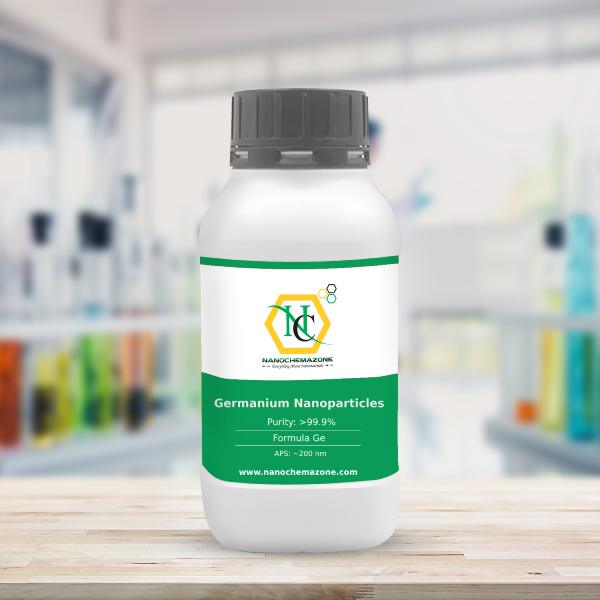
Germanium Nanoparticles/Nanopowder ( Ge, 200nm)

Price range: $260.00 through $906.00
Select options This product has multiple variants. The options may be chosen on the product page
$260/25g $906/100g

Product 

Germanium Nanoparticles/Nanopowder ( Ge, 200nm)

CAS No.

7440-56-4

Appearance

Powder

Purity

≥99%,  ≥99.9%,  ≥95%

(Other purities are also available)

APS

~200 nm (microns) (Size Can be customized), Ask for other available size ranges.

Ingredient

N/A

Molecular Weight

72.63 g/mol

Melting Point

937.4 °C

Boiling Point

2833 °C

Density

~5.32 g/cm³

Product Codes

NCZ-1047K

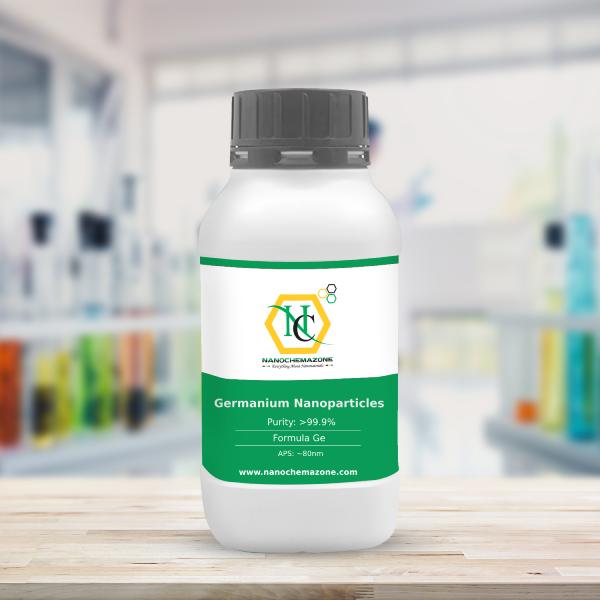
Germanium Nanoparticles/Nanopowder ( Ge, 50~80nm)

Price range: $405.00 through $1,130.00
Select options This product has multiple variants. The options may be chosen on the product page
$450/5g $1130/25g

Product 

Germanium Nanoparticles/Nanopowder ( Ge, 50~80nm)

CAS No.

7440-56-4

Appearance

Powder

Purity

≥99%,  ≥99.9%,  ≥95%

(Other purities are also available)

APS

~80nm (microns) (Size Can be customized), Ask for other available size ranges.

Ingredient

N/A

Molecular Weight

72.63 g/mol

Melting Point

937.4 °C

Boiling Point

2833 °C

Density

~5.32 g/cm³

Product Codes

NCZ-1047K