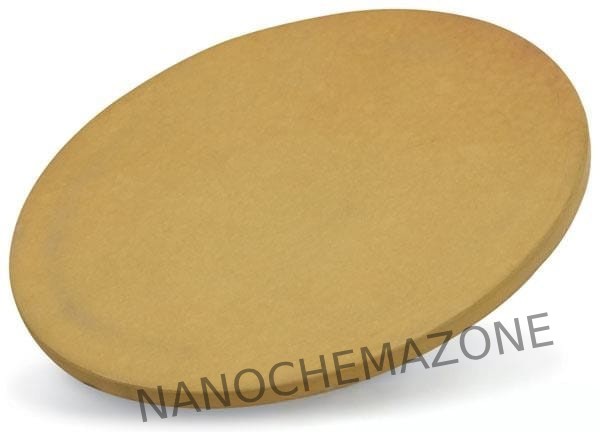
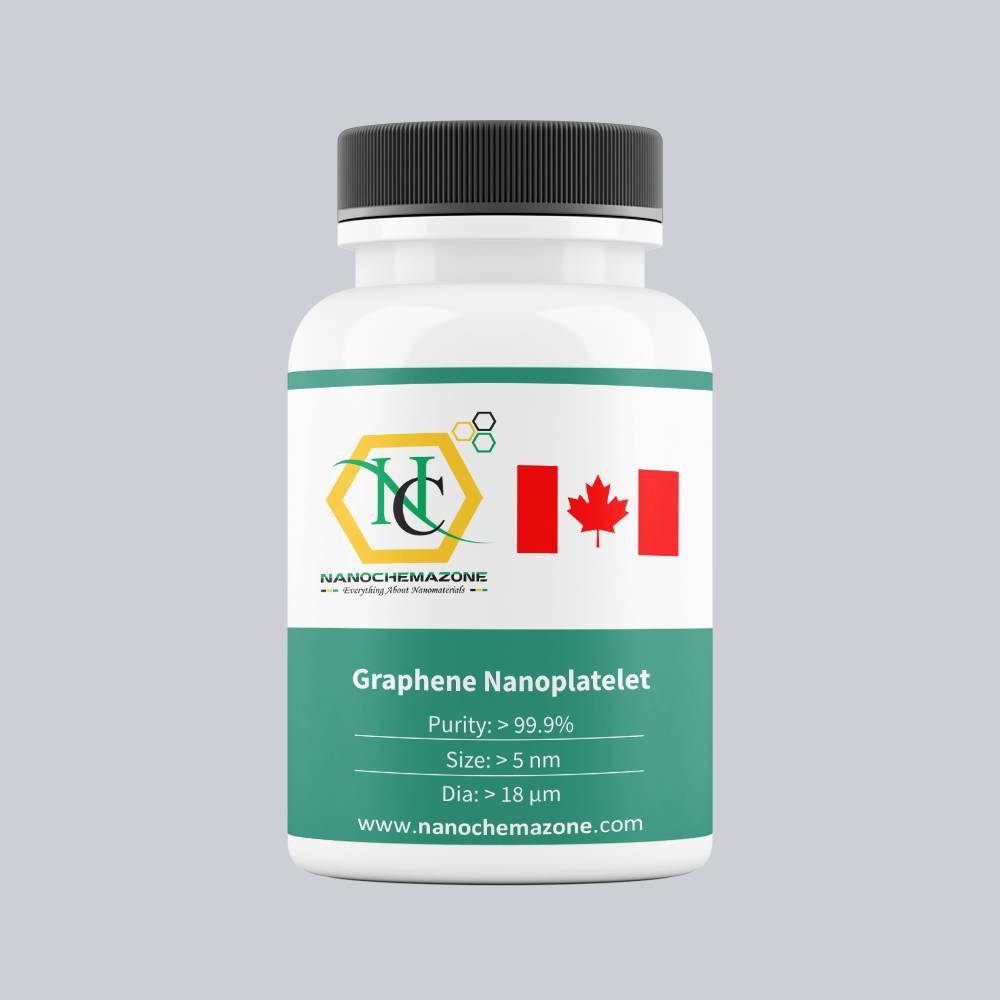
Strontium Titanate (SrTiO3) Sputtering Targets, Purity: 99.9%, Size: 8”, Thickness: 0.250”

$969.00

Applications of Sputtering Targets;

Film deposition is accomplished using sputtering targets. A technique for sputtering thin films is called "deposition made by sputter targets," which entails eroding material from a "target" source onto a "substrate" like a silicon wafer. Etching of the target is done using semiconductor sputtering targets. When selectivity is not an issue and a high degree of etching anisotropy is required, sputter etching is the method of choice. By removing the target material through etching, sputter targets are also utilized for investigation. In secondary ion spectroscopy (SIMS), one example is when the target material is sputtered at a steady pace. Mass spectrometry is used to quantify the concentration and identity of spewed atoms as the target is sputtered.

The target material's composition may be ascertained and even very low concentrations of contaminants can be found with the aid of the sputtering target.

There is also an application area for sputtering targets in space. One type of space weathering that alters the chemical and physical characteristics of airless worlds like the Moon and asteroids is sputtering.

Lanthanum Nickel Oxide (LaNiO3) Sputtering Targets, Purity: 99.9%, Size: 2”, Thickness: 0.125”

$969.00

Applications of Sputtering Targets;

  • Sputtering targets is used for film deposition. The deposition made by sputter targets is a method of depositing thin films by sputtering that involves eroding material from a "target" source onto a "substrate" such as  a silicon wafer.
  • Semiconductor sputtering targets is used to etch the target. Sputter etching is chosen in cases where a high degree of etching anisotropy is needed and selectivity is not a concern.
  • Sputter targets is also used for analysis by etching away the target material.
One of the example occurs in secondary ion spectroscopy (SIMS), where the target sample is sputtered at a constant rate. As the target is sputtered, the concentration and identity of sputtered atoms are measured using mass spectrometry. By helping of the sputtering target, the composition of the target material can be determined and even extremely low concentrations of impurities are detected. Sputtering target has also application area in space. Sputtering is one of the forms of space weathering, a process that changes the physical and chemical properties of airless bodies, such as asteroids and the Moon. Lanthanum nickel oxide with the chemical formula of LaNiO3 is an important perovskite-type oxide with metallic conductivity. Lanthanum nickel oxide is a ternary compound with unique chemical and physical properties. It shows an extended range of oxygen-deficient compositions, an uncommon intrinsic n-type metallic conductance, a perovskite crystal structure and thermal and chemical stability. These characteristics make LNO a technologically important perovskite oxide electrode in many potential applications such as ferroelectric thin film capacitors, solid oxide fuel cells, nonvolatile ferroelectric random access memories and multilayer actuators. Furthermore, LNO films have potential to be used as oxygen pressure and ethanol active sensing layers. Also, the reduced La–Ni mixed oxides are reported to be good catalyst precursors to synthesized organic compounds and to grow large amounts of regular diameter distribution controlled carbon nanotubes. Different chemical and physical thin film deposition techniques have been used to prepare LNO on various substrates. Chemical methods such as chemical vapor deposition, metallo-organic chemical vapor deposition and chemical solution deposition have been used to prepare LNO films. Physical methods such as sputtering, pulsed laser deposition and mist plasma evaporation have also been reported. Wet chemical solution deposition techniques provide simple and versatile alternative methods for thin film preparation.

Lanthanum Nickel Oxide (LaNiO3) Sputtering Targets, Purity: 99.9%, Size: 7”, Thickness: 0.125”

$968.00

Applications of Sputtering Targets;

  • Sputtering targets is used for film deposition. The deposition made by sputter targets is a method of depositing thin films by sputtering that involves eroding material from a "target" source onto a "substrate" such as  a silicon wafer.
  • Semiconductor sputtering targets is used to etch the target. Sputter etching is chosen in cases where a high degree of etching anisotropy is needed and selectivity is not a concern.
  • Sputter targets is also used for analysis by etching away the target material.
One of the example occurs in secondary ion spectroscopy (SIMS), where the target sample is sputtered at a constant rate. As the target is sputtered, the concentration and identity of sputtered atoms are measured using mass spectrometry. By helping of the sputtering target, the composition of the target material can be determined and even extremely low concentrations of impurities are detected. Sputtering target has also application area in space. Sputtering is one of the forms of space weathering, a process that changes the physical and chemical properties of airless bodies, such as asteroids and the Moon. Lanthanum nickel oxide with the chemical formula of LaNiO3 is an important perovskite-type oxide with metallic conductivity. Lanthanum nickel oxide is a ternary compound with unique chemical and physical properties. It shows an extended range of oxygen-deficient compositions, an uncommon intrinsic n-type metallic conductance, a perovskite crystal structure and thermal and chemical stability. These characteristics make LNO a technologically important perovskite oxide electrode in many potential applications such as ferroelectric thin film capacitors, solid oxide fuel cells, nonvolatile ferroelectric random access memories and multilayer actuators. Furthermore, LNO films have potential to be used as oxygen pressure and ethanol active sensing layers. Also, the reduced La–Ni mixed oxides are reported to be good catalyst precursors to synthesized organic compounds and to grow large amounts of regular diameter distribution controlled carbon nanotubes. Different chemical and physical thin film deposition techniques have been used to prepare LNO on various substrates. Chemical methods such as chemical vapor deposition, metallo-organic chemical vapor deposition and chemical solution deposition have been used to prepare LNO films. Physical methods such as sputtering, pulsed laser deposition and mist plasma evaporation have also been reported. Wet chemical solution deposition techniques provide simple and versatile alternative methods for thin film preparation.

Graphene Nanoplatelet, Purity: 99.9+%, Size: 5 nm, S.A: 170 m2/g, Dia: 30 μm

Price range: $12.00 through $968.00
Select options This product has multiple variants. The options may be chosen on the product page

Applications of Graphene Nanoplatelet

  • Use as a high performance additive for composites with PPO, POM ,PPS, PC, ABS, PP, PE, PS, Nylon and rubbers.
  • Can improve composites tensile strength, stiffness, corrosion resistance, abrasion resistance and anti-static electricity and lubricant properties.
  • For all mechanical properties modifications, typical amounts are about 2-6 wt%.
  • For conductivity modification, typical amounts are about 2-8 wt%.

Dummy CZ-Si Wafer, Size: 8”, Orientation: (100), Boron Doped, Resistivity: 0.001 – 1000 (ohm.cm), 1-Side Polished, Thickness: 725 ± 50 μm

Price range: $68.00 through $968.00
Select options This product has multiple variants. The options may be chosen on the product page
1 piece/61 € 5 pieces/205 € 25 pieces/865 €   Please ask for amount of stock before placing an order on Wafer Products Please contact us for quotes on larger quantities !!!

Dummy CZ-Si Wafer

Size: 8”, Orientation: (100), Boron Doped, 1-Side Polished, Thickness: 725 ± 50 μm

Technical Properties:

Quality Dummy
Materials CZ-Si
Size (inch) 8”
Orientation (100)
Coating  
Thickness (μm) 725 ± 50 μm
Doping Boron
Resistivity (ohm.cm) 0.001 - 1000
Polished One Side
Dummy is a grade of wafers, which is also referred as “test wafer” a grade lower than prime. Dummy CZ Si wafers are often doped with arsenic. Test grade wafers are high quality but have less stringent properties than prime grade wafers, usually failing for one or more of the Semiconductor Equipment and Materials International (SEMI) standards. Test grade wafers are often used in applications that require a large quantity of wafers for equipment and fabrication testing. Even if you are doing very high end R&D work it is much more cost effective to develop a process using test wafers and then do the final checks using Prime or Epi-Prime wafers.

Graphene Nanoplatelet, Purity: 99.9+%, Size: 5 nm, S.A: 170 m2/g, Dia: 30 μm

Price range: $12.00 through $968.00
Select options This product has multiple variants. The options may be chosen on the product page
1 gram: 12 € 5 grams: 43 € 25 grams: 152 € 100 grams: 321 € 500 grams: 517 € 1000 grams: 968 € Contact us for tailored quotes on

Yttrium Sputtering Target Y

Price range: $189.00 through $967.00
Select options This product has multiple variants. The options may be chosen on the product page
Product Yttrium Sputtering Target Y
CAS No. 7440-65-5
Appearance Silvery White, Metallic
Purity ≥99%,  ≥99.9%,  ≥95% (Other purities are also available)
APS N/A
Ingredient Y
Molecular Weight 88.91 g/mol
Melting Point 1,522 °C
Boiling Point N/A
Density N/A
Product Codes NCZ-148H
 

Lithium Titanate (Li2TiO3) Sputtering Targets, Purity: 99.95%, Size: 4”, Thickness: 0.250”

$966.00

Product 

Lithium Titanate (Li2TiO3) Sputtering Targets, Purity: 99.95%, Size: 4'', Thickness: 0.250''

CAS No.

12031-82-2

Appearance

Powder

Purity

≥99%,  ≥99.9%,  ≥95%

(Other purities are also available)

APS

 N/A (Size Can be customized), Ask for other available size ranges.

Ingredient

N/A

Molecular Weight

109.75 g/mol

Melting Point

Decomposes before melting (~1,200 °C)

Boiling Point

N/A

Density

~3.41 g/cm³

Product Codes

NCZ-2010K

Prime Si+SiO2 Wafer (wet), Size: 3”, Orientation: (111), Boron Doped, Resistivity: 1 -10 (ohm.cm), 1-Side Polished, Thickness: 381 ± 25 μm, Coating 500 nm

Price range: $73.00 through $966.00
Select options This product has multiple variants. The options may be chosen on the product page
Prime Si+SiO2 Wafer (wet) Size: 3”, Orientation: (111), Boron Doped, 1-Side Polished, Thickness: 381 ± 25 μm, Coating 500 nm

Vanadium Oxide (V2O5) Sputtering Target

Price range: $446.00 through $965.00
Select options This product has multiple variants. The options may be chosen on the product page

Product 

Vanadium Oxide (V2O5) Sputtering Target

CAS No.

 1314-62-1

Appearance

Powder

Purity

≥99%,  ≥99.9%,  ≥95%

(Other purities are also available)

APS

 NA (Size Can be customized), Ask for other available size ranges.

Ingredient

N/A

Molecular Weight

181.88 g/mol

Melting Point

~690 °C

Boiling Point

~1,750 °C

Density

~3.36 g/cm³

Product Codes

NCZ-1329K

Lanthanum (La) Sputtering Target

Price range: $375.00 through $965.00
Select options This product has multiple variants. The options may be chosen on the product page

Product 

Lanthanum (La) Sputtering Target

CAS No.

7439-91-0

Appearance

Powder

Purity

≥99%,  ≥99.9%,  ≥95%

(Other purities are also available)

APS

 NA (Size Can be customized), Ask for other available size ranges.

Ingredient

N/A

Molecular Weight

138.91 g/mol

Melting Point

920 °C

Boiling Point

3,464 °C

Density

6.16 g/cm³

Product Codes

NCZ-1294K

Lead Zirconium Titanate/PZT (O5PbTiZr) Sputtering Targets, Purity: 99.9%, Size: 1”, Thickness: 0.125”

$962.00

Product 

Lead Zirconium Titanate/PZT (O5PbTiZr) Sputtering Targets, Purity: 99.9%, Size: 1'', Thickness: 0.125''

CAS No.

12626-81-2

Appearance

Powder

Purity

≥99%,  ≥99.9%,  ≥95%

(Other purities are also available)

APS

 N/A (Size Can be customized), Ask for other available size ranges.

Ingredient

N/A

Molecular Weight

~303.1 g/mol

Melting Point

 ~1,250°C – 1,350°C

Boiling Point

N/A

Density

 ~7.75–8.0 g/cm³

Product Codes

NCZ-2070K

Antimony (Sb) Micron Powder, Purity: 99.99 %, Size: 325 mesh

Price range: $28.00 through $962.00
Select options This product has multiple variants. The options may be chosen on the product page
1 gram/25 € 5 grams/82 € 25 grams/288 € 100 grams/850 €
Please contact us for quotes on larger quantities !!!

Antimony (Sb) Micron Powder

Purity: 99.99 %, Size: 325 mesh

Lithium Cobalt Oxide (LiCoO2) Sputtering Targets, Purity: 99.9%, Size: 4”, Thickness: 0.125”

$961.00

Product 

Lithium Cobalt Oxide (LiCoO2) Sputtering Targets, Purity: 99.9%, Size: 4'', Thickness: 0.125''

CAS No.

12190‑79‑3

Appearance

Powder

Purity

≥99%,  ≥99.9%,  ≥95%

(Other purities are also available)

APS

 N/A (Size Can be customized), Ask for other available size ranges.

Ingredient

N/A

Molecular Weight

97.87 g/mol

Melting Point

~1,130 °C (no clean melting point)

Boiling Point

N/A

Density

~4.80–4.95 g/cm³

Product Codes

NCZ-2049K

Reduced Graphene Oxide Water Dispersion, Purity: 99.5%, rGO: 2,0 wt%

Price range: $168.00 through $961.00
Select options This product has multiple variants. The options may be chosen on the product page

Applications of Reduced Graphene Oxide Water Dispersion

  • Energy Storage
  • Biomedical Applications
  • Biosensors
  • Use as a high performance additive for composites with PPO, POM ,PPS, PC, ABS, PP, PE, PS, Nylon and rubbers.
  • Can improve composites tensile strength, stiffness, corrosion resistance, abrasion resistance and anti-static.
  • Electricity and lubricant properties.
  • For all mechanical properties modifications, typical amounts are about 2-6 wt%
  • For conductivity modification, typical amounts are about 2-8 wt%

Aluminum (Al) Nanopowder/Nanoparticles, Purity: 99.995%, Size: 18 nm, Laser Synthesized

Price range: $372.00 through $961.00
Select options This product has multiple variants. The options may be chosen on the product page

Aluminum (Al) Nanopowder/Nanoparticles

Purity: 99.995%, Size: 18 nm, Laser Synthesized

Technical Properties:

Bulk Density (g/cm3) 0,1-0,2
True Density (g/cm3) 2,7
Color black
Shape spherical
Crystal Structure cubic
Average Particle Size (nm) 18
Specific Surface Area (m2/g) 60-80
Elemental Analysis Al Cu Ca Mn
99.995 0.008 0.005 0.003

Applications:

Aluminum nanoparticles are highly reactive and flammable, therefore it should be handled with care and rapid moves, vibrations should be avoided. Nanopowder should be kept away from sunlight, any kind of heating, moisture and impacts. Coagulation of the particles is a serious problem, so, nanopowder should be sealed under vacuum and should be kept in cool and dry conditions. Air contact should be avoided. Aluminum nanopowder can be used in catalysis applications as well as biomedical research. It can be added to heat transfer fluids, composite materials, package materials, transparent conductive fluids and wear resistant parts in order to strengthen their properties.  

Titanium Nitride (TiN) Sputtering Targets, Purity: 99.5%, Size: 4”, Thickness: 0.250”

$960.00

Applications of Sputtering Targets;

Film deposition is accomplished using sputtering targets. A technique for sputtering thin films is called "deposition made by sputter targets," which entails eroding material from a "target" source onto a "substrate" like a silicon wafer. Etching of the target is done using semiconductor sputtering targets. When selectivity is not an issue and a high degree of etching anisotropy is required, sputter etching is the method of choice. By removing the target material through etching, sputter targets are also utilized for investigation. In secondary ion spectroscopy (SIMS), one example is when the target material is sputtered at a steady pace. Mass spectrometry is used to quantify the concentration and identity of spewed atoms as the target is sputtered.

The target material's composition may be ascertained and even very low concentrations of contaminants can be found with the aid of the sputtering target.

There is also an application area for sputtering targets in space. One type of space weathering that alters the chemical and physical characteristics of airless worlds like the Moon and asteroids is sputtering.

Lanthanum Manganate (LaMnO3) Sputtering Targets, Purity: 99.9%, Size: 6”, Thickness: 0.125”

$960.00

Applications of Sputtering Targets;

For film deposition, sputtering targets are employed. Using a "target" source to erode material onto a "substrate" like a silicon wafer, sputter targets are a technique for depositing thin layers. Targets are etched using semiconductor sputtering targets. When etching anisotropy is required to a great degree and selectivity is not an issue, sputter etching is the method of choice. By etching away the target material, sputter targets are also utilized for investigation. In one instance, the target sample is sputtered at a steady pace in secondary ion spectroscopy (SIMS). Using mass spectrometry, the concentration and identity of the spewed atoms are determined when the target is sputtered.

The target material's composition may be ascertained and even very low concentrations of contaminants can be found with the aid of the sputtering target.

There is also an application area for sputtering targets in space. One type of space weathering that alters the chemical and physical characteristics of airless worlds like the Moon and asteroids is sputtering.

Aluminum Oxide (Al2O3) Sputtering Targets, Purity: 99.999%, Size: 6”, Thickness: 0.125”

$960.00

Applications of Sputtering Targets;

Film deposition is accomplished using sputtering targets. A technique for sputtering thin films is called "deposition made by sputter targets," which entails eroding material from a "target" source onto a "substrate" like a silicon wafer. Etching of the target is done using semiconductor sputtering targets. When selectivity is not an issue and a high degree of etching anisotropy is required, sputter etching is the method of choice. By removing the target material through etching, sputter targets are also utilized for investigation. In secondary ion spectroscopy (SIMS), one example is when the target material is sputtered at a steady pace. Mass spectrometry is used to quantify the concentration and identity of spewed atoms as the target is sputtered. With the sputtering target's assistance, the

It is possible to identify the target material and even detect incredibly tiny impurity amounts.

There is also an application area for sputtering targets in space. One type of space weathering that alters the chemical and physical characteristics of airless worlds like the Moon and asteroids is sputtering.

With the chemical formula Al2O3, aluminum oxide is a compound made of aluminum and oxygen. Because of its high melting point, Al2O3 is useful as a refractory material and as an abrasive due to its hardness, as well as for the production of aluminum metal. Because of their superior properties, aluminum oxide thin films, which can be produced via aluminum oxide sputtering targets, are extensively employed in several mechanical, optical, and microelectronic applications.

Aluminum Oxide (Al2O3) Sputtering Targets, Purity: 99.99%, Size: 6”, Thickness: 0.250”

$960.00

Applications of Sputtering Targets;

Film deposition is accomplished using sputtering targets. A technique for sputtering thin films is called "deposition made by sputter targets," which entails eroding material from a "target" source onto a "substrate" like a silicon wafer. Etching of the target is done using semiconductor sputtering targets. When etching anisotropy is high, sputter etching is the preferred method.

is required, and selectivity is unimportant. By removing the target material through etching, sputter targets are also utilized for investigation. In secondary ion spectroscopy (SIMS), one example is when the target material is sputtered at a steady pace. Mass spectrometry is used to quantify the concentration and identity of spewed atoms as the target is sputtered. With the sputtering target's assistance, the

There is also an application area for sputtering targets in space. One type of space weathering that alters the chemical and physical characteristics of airless worlds like the Moon and asteroids is sputtering.

With the chemical formula Al2O3, aluminum oxide is a compound made of aluminum and oxygen. Because of its high melting point, Al2O3 is useful as a refractory material and as an abrasive due to its hardness, as well as for the production of aluminum metal. The excellent properties of aluminum oxide thin films, including high resistance to abrasion and corrosion, transparency, mechanical strength and hardness, and insulating and optical qualities, make them highly valuable in a variety of mechanical, optical, and microelectronic applications. These films can be produced by aluminum oxide sputtering targets. Every one of these The sputtering system's various characteristics, including the sputtering rate, the distance between the target and substrate, the pressure of reactive gases, and others, influence the qualities of the aluminum oxide film.

Aluminum Oxide (Al2O3) Sputtering Targets, Purity: 99.999%, Size: 6”, Thickness: 0.250”

$960.00
Film deposition is accomplished using sputtering targets. A technique for sputtering thin films is called "deposition made by sputter targets," which entails eroding material from a "target" source onto a "substrate" like a silicon wafer. Etching of the target is done using semiconductor sputtering targets. When selectivity is not an issue and a high degree of etching anisotropy is required, sputter etching is the method of choice. By removing the target material through etching, sputter targets are also utilized for investigation. In secondary ion spectroscopy (SIMS), one example is when the target material is sputtered at a steady pace. When the target shatters, Mass spectrometry measures the concentration and identity of sputtered atoms. The target material's composition may be ascertained and even very low concentrations of contaminants can be found with the aid of the sputtering target. There is also an application area for sputtering targets in space. One type of space weathering that alters the chemical and physical characteristics of airless worlds like the Moon and asteroids is sputtering. With the chemical formula Al2O3, aluminum oxide is a compound made of aluminum and oxygen. Because of its high melting point, Al2O3 is useful as a refractory material and as an abrasive due to its hardness, as well as for the production of aluminum metal.

Lanthanum Manganate (LaMnO3) Sputtering Targets, Purity: 99.9%, Size: 6”, Thickness: 0.125”

$960.00
Select options This product has multiple variants. The options may be chosen on the product page

Applications of Sputtering Targets;

  • Sputtering targets is used for film deposition. The deposition made by sputter targets is a method of depositing thin films by sputtering that involves eroding material from a "target" source onto a "substrate" such as  a silicon wafer.
  • Semiconductor sputtering targets is used to etch the target. Sputter etching is chosen in cases where a high degree of etching anisotropy is needed and selectivity is not a concern.
  • Sputter targets is also used for analysis by etching away the target material.
One of the example occurs in secondary ion spectroscopy (SIMS), where the target sample is sputtered at a constant rate. As the target is sputtered, the concentration and identity of sputtered atoms are measured using mass spectrometry. By helping of the sputtering target, the composition of the target material can be determined and even extremely low concentrations of impurities are detected. Sputtering target has also application area in space. Sputtering is one of the forms of space weathering, a process that changes the physical and chemical properties of airless bodies, such as asteroids and the Moon.

Prime Si+SiO2 Wafer (wet), Size: 3”, Orientation: (111), Boron Doped, Resistivity: 1 -10 (ohm.cm), 1-Side Polished, Thickness: 381 ± 25 μm, Coating 500 nm

Price range: $67.00 through $960.00
Select options This product has multiple variants. The options may be chosen on the product page
1 piece/61 € 5 pieces/205 € 25 pieces/865 € Please contact us for quotes on larger quantities !!!

Prime Si+SiO2 Wafer (wet)

Size: 3”, Orientation: (111), Boron Doped, 1-Side Polished, Thickness: 381 ± 25 μm, Coating 500 nm

Technical Properties:

Quality Prime
Materials Si + SiO2 (wet)
Size (inch) 3”
Orientation (111)
Coating 500 nm
Thickness (μm) 581 ± 25
Doping Boron
Resistivity (ohm.cm) 1-10
Polished One  Side
Silicon dioxide wafer – also referred as thermal oxide wafer- is produced at elevated temperatures. Thermal oxide is normally grown in a horizontal tube furnace, at temperature range from 900°C ~ 1200°C. Thermal oxide is a kind of "grown" oxide layer , compared to CVD deposited oxide layer , it has a higher uniformity, and higher dielectric strength , it is an excellent dielectric layer as an insulator. In most silicon-based devices, thermal oxide layer plays an important role to pacify the silicon surface to act as doping barriers and as surface dielectrics. It allows a very good thickness uniformity and purity. Therefore, this is the preferred way to produce high quality thin silicon oxide layers. Thicker oxide layers are typically produced by wet oxidation where the growth rate is significantly increased.

Lanthanum Aluminate (LaAlO3) Sputtering Targets, indium, Purity: 99.9%, Size: 2”, Thickness: 0.125”

$959.00

Product 

Lanthanum Aluminate (LaAlO3) Sputtering Targets, indium, Purity: 99.9%, Size: 2'', Thickness: 0.125''

CAS No.

 12003‑65‑5

Appearance

Powder

Purity

≥99%,  ≥99.9%,  ≥95%

(Other purities are also available)

APS

 N/A (Size Can be customized), Ask for other available size ranges.

Ingredient

N/A

Molecular Weight

~213.89 g/mol

Melting Point

~2,080 °C

Boiling Point

N/A

Density

 ~6.52 g/cm³

Product Codes

NCZ-2159K

Tungsten Carbide (WC) Sputtering Target

Price range: $388.00 through $959.00
Select options This product has multiple variants. The options may be chosen on the product page

Product 

Tungsten Carbide (WC) Sputtering Target

CAS No.

12070-12-1

Appearance

Powder

Purity

≥99%,  ≥99.9%,  ≥95%

(Other purities are also available)

APS

 NA (Size Can be customized), Ask for other available size ranges.

Ingredient

N/A

Molecular Weight

 195.85 g/mol

Melting Point

~2,870 °C

Boiling Point

 ~6,000 °C

Density

 ~15.6 g/cm³

Product Codes

NCZ-1337K

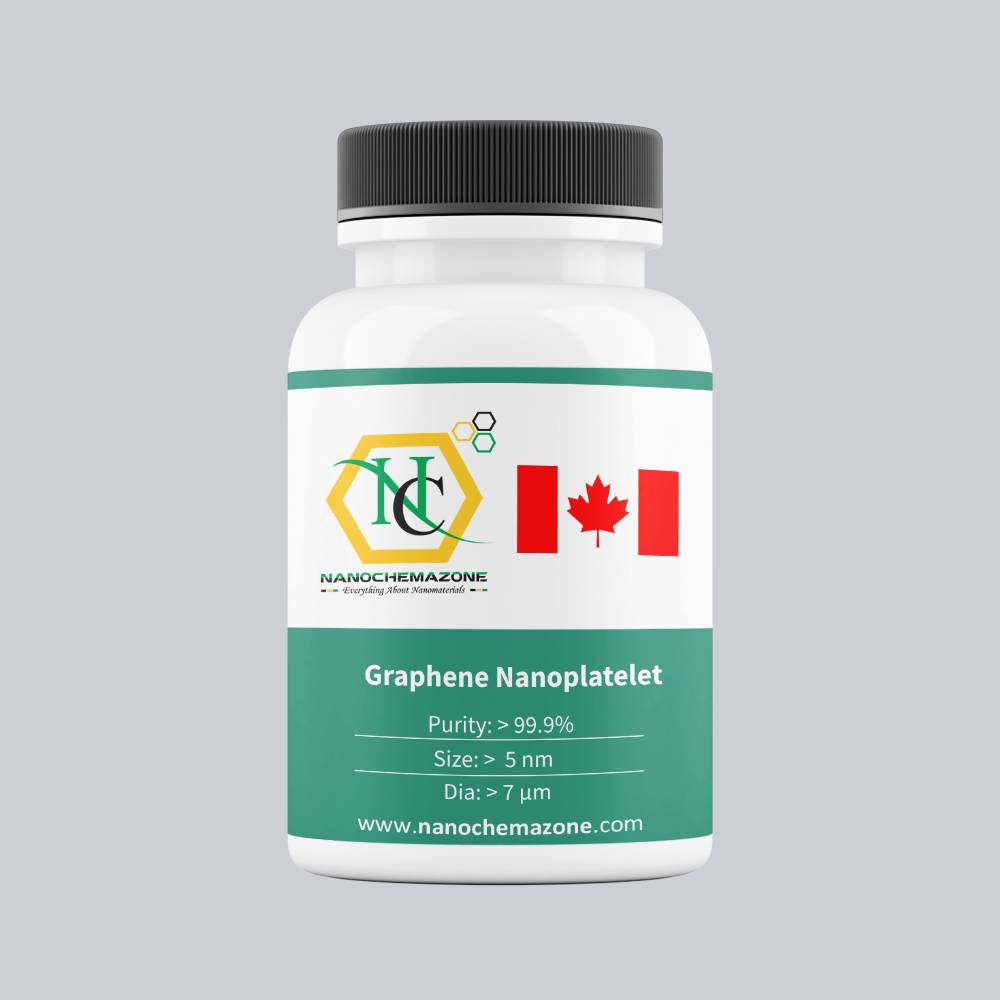
Graphene Nanoplatelet, Purity: 99.9+%, Size: 5 nm, S.A: 135 m2/g, Dia: 7 μm

Price range: $7.00 through $958.00
Select options This product has multiple variants. The options may be chosen on the product page
Graphene Nanoplatelets are nanoparticles consisting of short stacks of platalet-shaped graphene sheets that are in a planar form. Graphene nanoplatelets are excellent electrical and thermal conductors as a result of their pure graphitic composition. Graphene nanoplatelets help increase thermal, electrical conductivity and stability and improve barrier properties. Unique features of graphene nanoplatelets benefit it greatly to gain a place in the market. Nanografi supplies Graphene Nanoplatelet with high quantity and more types for different applications.
Titanium Dioxide (TiO2) Sputtering Targets, indium, Purity: 99.99%, Size: 1”, Thickness: 0.125”, Beige to White

$957.00

Product 

Titanium Dioxide (TiO2) Sputtering Targets, indium, Purity: 99.99%, Size: 1'', Thickness: 0.125'', Beige to White

CAS No.

13463‑67‑7

Appearance

Powder

Purity

≥99%,  ≥99.9%,  ≥95%

(Other purities are also available)

APS

TiO₂ (black granules) (Size Can be customized), Ask for other available size ranges.

Ingredient

N/A

Molecular Weight

79.94 g/mol

Melting Point

~1,843 °C

Boiling Point

~2,972 °C

Density

~4.23 g/cm³

Product Codes

NCZ-1420K

Lithium Phosphate (Li3PO4) Sputtering Targets, elastomer, Purity: 99.95%, Size: 3”, Thickness: 0.125”

$957.00

Applications of Sputtering Targets;

Film deposition is accomplished using sputtering targets. A technique for sputtering thin films is called "deposition made by sputter targets," which entails eroding material from a "target" source onto a "substrate" like a silicon wafer. Etching of the target is done using semiconductor sputtering targets. When selectivity is not an issue and a high degree of etching anisotropy is required, sputter etching is the method of choice. By removing the target material through etching, sputter targets are also utilized for investigation. In secondary ion spectroscopy (SIMS), one example is when the target material is sputtered at a steady pace. Mass spectrometry is used to quantify the concentration and identity of spewed atoms as the target is sputtered.

By helping of the sputtering target, the composition of the target material may be evaluated and even extremely tiny amounts of contaminants are recognized.

There is also an application area for sputtering targets in space. One type of space weathering that alters the chemical and physical characteristics of airless worlds like the Moon and asteroids is sputtering.

Barium Titanate (BaTiO3) Sputtering Targets, Purity: 99.99%, Size: 4”, Thickness: 0.125”

$957.00

Applications of Sputtering Targets;

Film deposition is accomplished using sputtering targets. A technique for sputtering thin films is called "deposition made by sputter targets," which entails eroding material from a "target" source onto a "substrate" like a silicon wafer. Etching of the target is done using semiconductor sputtering targets. When selectivity is not an issue and a high degree of etching anisotropy is required, sputter etching is the method of choice. By removing the target material through etching, sputter targets are also utilized for investigation. In secondary ion spectroscopy (SIMS), one example is when the target material is sputtered at a steady pace. When the target shatters,

Mass spectrometry measures the concentration and identity of sputtered atoms. The target material's composition may be ascertained and even very low concentrations of contaminants can be found with the aid of the sputtering target.

There is also an application area for sputtering targets in space. One type of space weathering that alters the chemical and physical characteristics of airless worlds like the Moon and asteroids is sputtering.

Formulated as BaTiO3, barium titanate is an inorganic substance. When formed as big crystals, barium titanate is clear and has a white powdery appearance. It is a ferroelectric ceramic material with piezoelectric and photorefractive characteristics. Titanate of barium sputtering Agents have various applications. For instance, barium titanate films, which are produced by sputtering targets, can be employed in particular electronic ceramics. Barium titanate can be utilized in the building of electrical devices such as sensors, capacitors, and detectors.

Manganese (Mn) Sputtering Target

Price range: $210.00 through $956.00
Select options This product has multiple variants. The options may be chosen on the product page

Product 

Manganese (Mn) Sputtering Target

CAS No.

7439-96-5

Appearance

Powder

Purity

≥99%,  ≥99.9%,  ≥95%

(Other purities are also available)

APS

 NA (Size Can be customized), Ask for other available size ranges.

Ingredient

N/A

Molecular Weight

54.938 g/mol

Melting Point

1,246 °C

Boiling Point

2,061 °C

Density

1.738 g/cm³

Product Codes

NCZ-1297K

Zinc Manganese Iron Oxide (Zn0.5Mn0.5Fe2O4) Nanopowder/Nanoparticles, Purity: 99.995%, Size:28-58 nm

Price range: $58.00 through $956.00
Select options This product has multiple variants. The options may be chosen on the product page
1 gram/52 € 5 grams/124 € 25 grams/296 € 100 grams/845 €                      
Please contact us for quotes on larger quantities !!!

Zinc Manganese Iron Oxide (Zn0.5Mn0.5Fe2O4) Nanopowder/Nanoparticles

Purity: 99.995%, Size:28-58 nm

Applications:

Zinc Iron Oxide nanoparticles are used as anti-microbial, anti-fungal, and anti-biotic agents. It is used to enhance electrical, magnetic, and optical properties of the composites. It is used in coating, plastics, alloy, and textiles. It is also used in catalysis.

Hemicellulose(from Eucalyptus) (553510)

$955.00
Select options This product has multiple variants. The options may be chosen on the product page

Product 

Hemicellulose(from Eucalyptus) (553510)

CAS No.

No match for "553510"; no CAS found specific to eucalyptus hemicellulose

Appearance

Powder

Purity

≥99%,  ≥99.9%,  ≥95%

(Other purities are also available)

APS

  N/A(Size Can be customized), Ask for other available size ranges.

Ingredient

N/A

Molecular Weight

 ~36 kDa (from E. globulus xylan) ~20.5–56.7 kDa via NaOH extraction

Melting Point

N/A

Boiling Point

N/A

Density

N/A

Product Codes

NCZ-2653K

Alkali extraction, Molecular weight 9000-20000g/mol, Ash ≤0.05%, Lignin ≤0.8%

$955.00
Select options This product has multiple variants. The options may be chosen on the product page

Product 

Alkali extraction, Molecular weight 9000-20000g/mol, Ash ≤0.05%, Lignin ≤0.8%

CAS No.

 Generic for cellulose: 9004-34-6

Appearance

Powder

Purity

≥99%,  ≥99.9%,  ≥95%

(Other purities are also available)

APS

 ~10 – 50 nm (Size Can be customized), Ask for other available size ranges.

Ingredient

N/A

Molecular Weight

 8,000 – 20,000 g/mol

Melting Point

N/A

Boiling Point

N/A

Density

~1.5 – 1.6 g/cm³

Product Codes

NCZ-2601K

Cerium Oxide (CeO2) Sputtering Targets, Purity: 99.99%, Size: 1”, Thickness: 0.125”

$954.00

Product 

Cerium Oxide (CeO2) Sputtering Targets, Purity: 99.99%, Size: 1'', Thickness: 0.125''

CAS No.

 1306-38-3

Appearance

Powder

Purity

≥99%,  ≥99.9%,  ≥95%

(Other purities are also available)

APS

 N/A (Size Can be customized), Ask for other available size ranges.

Ingredient

N/A

Molecular Weight

 172.11 g/mol

Melting Point

2,400–2,600 °C

Boiling Point

Sublimes above 3,000 °C

Density

 7.13 g/cm³

Product Codes

NCZ-2334K

Bismuth Ferrite (BiFeO3) Sputtering Targets, indium, Purity: 99.9%, Size: 2”, Thickness: 0.125”

$954.00

Applications of Sputtering Targets;

Film deposition is accomplished using sputtering targets. A technique for sputtering thin films is called "deposition made by sputter targets," which entails eroding material from a "target" source onto a "substrate" like a silicon wafer. Etching of the target is done using semiconductor sputtering targets. When selectivity is not an issue and a high degree of etching anisotropy is required, sputter etching is the method of choice. By removing the target material through etching, sputter targets are also utilized for investigation. In secondary ion spectroscopy (SIMS), one example is when the target material is sputtered at a steady pace. Mass spectrometry is used to quantify the concentration and identity of spewed atoms as the target is sputtered.

It is possible to identify the target material and even detect incredibly tiny impurity amounts.

There is also an application area for sputtering targets in space. One type of space weathering that alters the chemical and physical characteristics of airless worlds like the Moon and asteroids is sputtering.

One of the most promising multiferroic materials is bismuth ferrite, an inorganic chemical compound with a perovskite structure and the chemical formula BiFeO3. In order to create a one-phase material called bismuth ferrite (BiFeO3), a bismuth ferrite sputtering target is often manufactured by high temperature sinttering or recrystallizing the mixture of the oxide compound of Bi and Fe. For targets that are sputtering bismuth ferrite, indium bonding is advised.

3N (99.9%) Erbium (Er) Pieces Evaporation Materials

Price range: $271.00 through $953.00
Select options This product has multiple variants. The options may be chosen on the product page
Product 3N (99.9%) Erbium (Er) Pieces Evaporation Materials
CAS No. 7440-52-0
Appearance Silvery White, Metallic
Purity ≥99%,  ≥99.9%,  ≥95%(Other purities are also available)
APS 1–15mm (Size Can be customized),  Ask for other available size range.
Ingredient Er
Molecular Weight N/A
Melting Point 1,529 °C
Boiling Point N/A
Density 9.07 g/cm3
Product Codes NCZ-162E

Cellulose Nanofiber (Cellulose Nanofibril, Nanofibrillated Cellulose, CNFs)

Price range: $36.00 through $953.00
Select options This product has multiple variants. The options may be chosen on the product page

Applications:

1.Body Armor Applications

Crystal structure of nanocellulose is consisting from packed array of needle-like crystals. These crystal structures are incredibly tough and their strength value is nearly eight times higher than stainless steel. Therefore, nanocellulose can be perfect building material for the future body armor studies. 2.Flexible Batteries Generally, separator parts inside batteries made up from thick and stiff material which cannot be used for bendable applications. Instead of these materials, flexible and thin nanocellulose combined with graphene material, flexible battery as the one of the big dream in electrical industry can be produced.

3.Flexible Screens

Nanocellulose is bendable, transparent, light and strong material therefore it can easily take place of the plastic or glass. In the future, nanocellulose will be one of the best material for bendable screen studies.

4.Filters

Nanocellulose can be used to filter and purify many types of liquids such as purifying saltwater to be drinkable, trapping dangerous chemicals in cigarette and filtering out blood cell during transfusion.

5.Absorbent Aerogels

When the nanocellulose are mixed with the aerogel foam, incredibly porous and adsorbent material can be obtained that could make strong and light wound-dressing and tampons.

6.Fuel Efficient Cars

Nanocellulose can be obtained by algae and actually, this is quite cheap production method. Therefore, it will be possible to use it in serious bulk materials. In the cars, components from stuff to interior trim will be produced from the light composites reinforced with nanocellulose. By this way, decrease in the weight of the components will save the fuel consumption of the cars.

7.Biofuel

During the production of nanocellulose by algae, it is possible to obtain biofuel at the same time by changing the DNA of the helpful bugs. Result of these process actually will not produce real nanocellulose material, but it will bring into useful byproduct.

Silver (Ag) Nanopowder/Nanoparticles Water Dispersion, Size: 2 nm, Colorless & Transparent, 2.200 ppm

Price range: $65.00 through $952.00
Select options This product has multiple variants. The options may be chosen on the product page
Silver (Ag) Nanopowder/Nanoparticles Water Dispersion Size: 2 nm, Colorless & Transparent, 2.200 ppm The silver water dispersion is a colorless

Magnesium Oxide (MgO) Sputtering Targets, Purity: 99.95%, Size: 7”, Thickness: 0.250”

$951.00

Applications of Sputtering Targets;

Film deposition is accomplished using sputtering targets. A technique for sputtering thin films is called "deposition made by sputter targets," which entails eroding material from a "target" source onto a "substrate" like a silicon wafer. Etching of the target is done using semiconductor sputtering targets. When selectivity is not an issue and a high degree of etching anisotropy is required, sputter etching is the method of choice. By removing the target material through etching, sputter targets are also utilized for investigation. In secondary ion spectroscopy (SIMS), one example is when the target material is sputtered at a steady pace. Mass spectrometry is used to quantify the concentration and identity of spewed atoms as the target is sputtered.

By helping of the sputtering target, the composition of the target material may be evaluated and even extremely tiny amounts of contaminants are recognized.

There is also an application area for sputtering targets in space. One type of space weathering that alters the chemical and physical characteristics of airless worlds like the Moon and asteroids is sputtering.

Lithium Cobalt Oxide (LiCoO2) Sputtering Targets, Purity: 99.9%, Size: 4”, Thickness: 0.250”

$951.00

Applications of Sputtering Targets;

Film deposition is accomplished using sputtering targets. A technique for sputtering thin films is called "deposition made by sputter targets," which entails eroding material from a "target" source onto a "substrate" like a silicon wafer. Etching of the target is done using semiconductor sputtering targets. When selectivity is not an issue and a high degree of etching anisotropy is required, sputter etching is the method of choice. By removing the target material through etching, sputter targets are also utilized for investigation. In secondary ion spectroscopy (SIMS), one example is when the target material is sputtered at a steady pace. Mass spectrometry is used to quantify the concentration and identity of spewed atoms as the target is sputtered.

The target material's composition may be ascertained and even very low concentrations of contaminants can be found with the aid of the sputtering target.

There is also an application area for sputtering targets in space. One type of space weathering that alters the chemical and physical characteristics of airless worlds like the Moon and asteroids is sputtering.

Formula LiCoO2 represents the chemical compound lithium cobalt oxide. A crystalline solid that is dark blue or bluish-gray in color, lithium cobalt oxide is frequently utilized in the positive electrodes of lithium-ion batteries.

Graphene Nanoplatelet, Purity: 99.9+%, Size: 5 nm, S.A: 135 m2/g, Dia: 30 μm

Price range: $9.00 through $951.00
Select options This product has multiple variants. The options may be chosen on the product page

Applications of Graphene Nanoplatelet

  • Use as a high performance additive for composites with PPO, POM ,PPS, PC, ABS, PP, PE, PS, Nylon and rubbers.
  • Can improve composites tensile strength, stiffness, corrosion resistance, abrasion resistance and anti-static electricity and lubricant properties.
  • For all mechanical properties modifications, typical amounts are about 2-6wt%
  • For conductivity modification, typical amounts are about 2-8wt%

Test CZ-Si Wafer, Size: 4”, Orientation: (100), Boron Doped, Resistivity: 0,001-0,005 (ohm.cm), 2-Side Polished, Thickness: 200 ± 10 μm

Price range: $51.00 through $951.00
Select options This product has multiple variants. The options may be chosen on the product page
1 piece/46 € 5 pieces/190 € 25 pieces/850 € Please contact us for quotes on larger quantities !!!

Test CZ-Si Wafer

Size: 4”, Orientation: (100), Boron Doped, 2-Side Polished 

Technical Properties:

Quality Test
Materials CZ-Si
Size (inch) 4”
Orientation (100)
Coating
Thickness (μm) 525 ± 25
Doping Boron
Resistivity (ohm.cm) 0,001-0,005
Polished Double Side
Dummy is a grade of wafers, which is also referred as “test wafer” a grade lower than prime. Dummy CZ Si wafers are often doped with arsenic. Test grade wafers are high quality but have less stringent properties than prime grade wafers, usually failing for one or more of the Semiconductor Equipment and Materials International (SEMI) standards. Test grade wafers are often used in applications that require a large quantity of wafers for equipment and fabrication testing. Even if you are doing very high end R&D work it is much more cost effective to develop a process using test wafers and then do the final checks using Prime or Epi-Prime wafers.

Iron Oxide (Fe3O4) Sputtering Targets, Purity: 99.9%, Size: 5”, Thickness: 0.125”

$950.00

Product 

Iron Oxide (Fe3O4) Sputtering Targets, Purity: 99.9%, Size: 5'', Thickness: 0.125''

CAS No.

1317‑61‑9

Appearance

Powder

Purity

≥99%,  ≥99.9%,  ≥95%

(Other purities are also available)

APS

 N/A (Size Can be customized), Ask for other available size ranges.

Ingredient

N/A

Molecular Weight

 231.6 g/mol

Melting Point

~1,597 °C

Boiling Point

 ~2,623 °C (material may decompose before boiling)

Density

 ~5.17 g/cm³ (sintered target)

Product Codes

NCZ-2169K

Indium Zinc Oxide/IZO (InZnO) Sputtering Targets, indium, Purity: 99.99%, Size: 3”, Thickness: 0.125”

$950.00

Applications of Sputtering Targets;

Film deposition is accomplished using sputtering targets. A technique for sputtering thin films is called "deposition made by sputter targets," which entails eroding material from a "target" source onto a "substrate" like a silicon wafer. Etching of the target is done using semiconductor sputtering targets. When selectivity is not an issue and a high degree of etching anisotropy is required, sputter etching is the method of choice. By removing the target material through etching, sputter targets are also utilized for investigation. In secondary ion spectroscopy (SIMS), one example is when the target material is sputtered at a steady pace. Mass spectrometry is used to quantify the concentration and identity of spewed atoms as the target is sputtered.

The target material's composition may be ascertained and even very low concentrations of contaminants can be found with the aid of the sputtering target.

There is also an application area for sputtering targets in space. One type of space weathering that alters the chemical and physical characteristics of airless worlds like the Moon and asteroids is sputtering.

Lanthanum Titanate (LaTiO3) Sputtering Targets, Purity: 99.9%, Size: 7”, Thickness: 0.125”

$950.00

Applications of Sputtering Targets;

  • Sputtering targets is used for film deposition. The deposition made by sputter targets is a method of depositing thin films by sputtering that involves eroding material from a "target" source onto a "substrate" such as  a silicon wafer.
  • Semiconductor sputtering targets is used to etch the target. Sputter etching is chosen in cases where a high degree of etching anisotropy is needed and selectivity is not a concern.
  • Sputter targets is also used for analysis by etching away the target material.
One of the example occurs in secondary ion spectroscopy (SIMS), where the target sample is sputtered at a constant rate. As the target is sputtered, the concentration and identity of sputtered atoms are measured using mass spectrometry. By helping of the sputtering target, the composition of the target material can be determined and even extremely low concentrations of impurities are detected. Sputtering target has also application area in space. Sputtering is one of the forms of space weathering, a process that changes the physical and chemical properties of airless bodies, such as asteroids and the Moon.

Barium Titanate (BaTiO3) Sputtering Targets, elastomer, Purity: 99.99%, Size: 3”, Thickness: 0.125”

$949.00

Applications of Sputtering Targets;

Film deposition is accomplished using sputtering targets. A technique for sputtering thin films is called "deposition made by sputter targets," which entails eroding material from a "target" source onto a "substrate" like a silicon wafer. Etching of the target is done using semiconductor sputtering targets. When selectivity is not an issue and a high degree of etching anisotropy is required, sputter etching is the method of choice. By removing the target material through etching, sputter targets are also utilized for investigation. In secondary ion spectroscopy (SIMS), one example is when the target material is sputtered at a steady pace. Mass spectrometry is used to quantify the concentration and identity of spewed atoms as the target is sputtered. With the sputtering target's assistance, the

It is possible to identify the target material and even detect incredibly tiny impurity amounts.

There is also an application area for sputtering targets in space. One type of space weathering that alters the chemical and physical characteristics of airless worlds like the Moon and asteroids is sputtering.

Formulated as BaTiO3, barium titanate is an inorganic substance. When formed as big crystals, barium titanate is clear and has a white powdery appearance. It is a ferroelectric ceramic material with piezoelectric and photorefractive characteristics. Titanate of barium sputtering

Aluminum Oxide (Al2O3) Sputtering Targets, Purity: 99.999%, Size: 4”, Thickness: 0.250”

$949.00

Applications of Sputtering Targets;

Film deposition is accomplished using sputtering targets. A technique for sputtering thin films is called "deposition made by sputter targets," which entails eroding material from a "target" source onto a "substrate" like a silicon wafer. Etching of the target is done using semiconductor sputtering targets. When selectivity is not an issue and a high degree of etching anisotropy is required, sputter etching is the method of choice. By removing the target material through etching, sputter targets are also utilized for investigation. In secondary ion spectroscopy (SIMS), one example is when the target material is sputtered at a steady pace. When the target shatters,

Mass spectrometry measures the concentration and identity of sputtered atoms. The target material's composition may be ascertained and even very low concentrations of contaminants can be found with the aid of the sputtering target.

There is also an application area for sputtering targets in space. One type of space weathering that alters the chemical and physical characteristics of airless worlds like the Moon and asteroids is sputtering.

With the chemical formula Al2O3, aluminum oxide is a compound made of aluminum and oxygen.

Yttrium Oxide (Y2O3) Sputtering Target

Price range: $420.00 through $948.00
Select options This product has multiple variants. The options may be chosen on the product page

Product 

Yttrium Oxide (Y2O3) Sputtering Target

CAS No.

 1314-36-9

Appearance

Powder

Purity

≥99%,  ≥99.9%,  ≥95%

(Other purities are also available)

APS

 NA (Size Can be customized), Ask for other available size ranges.

Ingredient

N/A

Molecular Weight

225.81 g/mol

Melting Point

~2,430 °C

Boiling Point

~4,300 °C

Density

~5.01 g/cm³

Product Codes

NCZ-1330K

Graphene Nanoplatelet, Purity: 99.9+%, Size: 5 nm, S.A: 170 m2/g, Dia: 18 μm

Price range: $10.00 through $948.00
Select options This product has multiple variants. The options may be chosen on the product page

Applications of Graphene Nanoplatelet

  • Use as a high performance additive for composites with PPO, POM ,PPS, PC, ABS, PP, PE, PS, Nylon and rubbers.
  • Can improve composites tensile strength, stiffness, corrosion resistance, abrasion resistance and anti-static electricity and lubricant properties.
  • For all mechanical properties modifications, typical amounts are about 2-6 wt%
  • For conductivity modification, typical amounts are about 2-8 wt%

Graphene Nanoplatelet, Purity: 99.9+%, Size: 5 nm, S.A: 170 m2/g, Dia: 18 μm

Price range: $10.00 through $948.00
Select options This product has multiple variants. The options may be chosen on the product page
1 gram: 10 € 5 grams: 17 € 25 grams: 48 € 100 grams: 147 € 500 grams: 497 € 1000 grams: 948 € Contact us for tailored quotes on larger quantities

Titanium Sputtering Target Ti

Price range: $152.00 through $947.00
Select options This product has multiple variants. The options may be chosen on the product page
Product Titanium Sputtering Target Ti
CAS No. 7440-32-6
Appearance Silvery metallic
Purity ≥99%,  ≥99.9%,  ≥95%(Other purities are also available)
APS N/A
Ingredient Ti
Molecular Weight 47.867 g/mol
Melting Point N/A
Boiling Point N/A
Density 4.5 g/cm³
Product Codes NCZ-144H

Titanium Carbide (TiC) Sputtering Targets, Purity: 99.5%, Size: 4”, Thickness: 0.250”

$946.00

Product 

Titanium Carbide (TiC) Sputtering Targets, Purity: 99.5%, Size: 4'', Thickness: 0.250''

CAS No.

 12070-08-5

Appearance

Powder

Purity

≥99%,  ≥99.9%,  ≥95%

(Other purities are also available)

APS

N/A  (Size Can be customized), Ask for other available size ranges.

Ingredient

N/A

Molecular Weight

59.89 g/mol

Melting Point

 ~3160 °C

Boiling Point

N/A

Density

4.93 g/cm³

Product Codes

NCZ-1607K

500mg High Purity (>99.998%) Black Phosphorus Crystal 2D Material

$946.00
Product 500mg High Purity (>99.998%) Black Phosphorus Crystal 2D Material
CAS No. 7723-14-0
Appearance Black, flaky solid
Purity ≥99%,  ≥99.9%,  ≥95%(Other purities are also available)
APS 1-10mm (Size Can be customized),  Ask for other available size range.
Ingredient P
Molecular Weight 30.97 g/mol
Melting Point N/A
Boiling Point N/A
Density 2.69 g/cm³
Product Codes NCZ-187I

Graphene Nanoplatelet, Purity: 99.9+%, Size: 5 nm, S.A: 135 m2/g, Dia: 18 μm

Price range: $10.00 through $946.00
Select options This product has multiple variants. The options may be chosen on the product page

Applications of Graphene Nanoplatelet

  • Use as a high performance additive for composites with PPO, POM ,PPS, PC, ABS, PP, PE, PS, Nylon and rubbers.
  • Can improve composites tensile strength, stiffness, corrosion resistance, abrasion resistance and anti-static electricity and lubricant properties.
  • For all mechanical properties modifications, typical amounts are about 2-6 wt%
  • For conductivity modification, typical amounts are about 2-8 wt%

Industrial Grade Graphene (97%, <10nm)

Price range: $175.00 through $945.00
Select options This product has multiple variants. The options may be chosen on the product page
$175/5g $415/25g $945/100g
Product Industrial Grade Graphene (97%, <10nm)
CAS No. 7782-42-5
Appearance Dark grey to black powder
Purity ≥99%,  ≥99.9%,  ≥95%(Other purities are also available)
APS 10nm (Size Can be customized),  Ask for other available size range.
Ingredient N/A
Molecular Weight N/A
Melting Point 3697 °C
Boiling Point 4830 °C
Density 2.267 g/cm³
Product Codes NCZ-105G
 

Iron Oxide (Fe3O4) Sputtering Targets, Purity: 99.9%, Size: 6”, Thickness: 0.250”

$945.00

Applications of Sputtering Targets;

Film deposition is accomplished using sputtering targets. A technique for sputtering thin films is called "deposition made by sputter targets," which entails eroding material from a "target" source onto a "substrate" like a silicon wafer. Etching of the target is done using semiconductor sputtering targets. When selectivity is not an issue and a high degree of etching anisotropy is required, sputter etching is the method of choice. By removing the target material through etching, sputter targets are also utilized for investigation. In secondary ion spectroscopy (SIMS), one example is when the target material is sputtered at a steady pace. Mass spectrometry is used to quantify the concentration and identity of spewed atoms as the target is sputtered.

The target material's composition may be ascertained and even very low concentrations of contaminants can be found with the aid of the sputtering target.

There is also an application area for sputtering targets in space. One type of space weathering that alters the chemical and physical characteristics of airless worlds like the Moon and asteroids is sputtering.

Antimony Telluride (Sb2Te3) Sputtering Targets, Purity: 99.99%, Size: 3”, Thickness: 0.125”

$945.00

Applications of Sputtering Targets;

Film deposition is accomplished using sputtering targets. A technique for sputtering thin films is called "deposition made by sputter targets," which entails eroding material from a "target" source onto a "substrate" like a silicon wafer. Etching of the target is done using semiconductor sputtering targets. When selectivity is not an issue and a high degree of etching anisotropy is required, sputter etching is the method of choice. By removing the target material through etching, sputter targets are also utilized for investigation. In secondary ion spectroscopy (SIMS), one example is when the target material is sputtered at a steady pace. When the target shatters,

Mass spectrometry measures the concentration and identity of sputtered atoms. The target material's composition may be ascertained and even very low concentrations of contaminants can be found with the aid of the sputtering target.

There is also an application area for sputtering targets in space. One type of space weathering that alters the chemical and physical characteristics of airless worlds like the Moon and asteroids is sputtering.

The chemical formula for antimony telluride, an inorganic molecule, is Sb2Te3. It has a layered structure and is a grey crystalline solid. Layers are made of of

Weak van der Waals forces hold the two antimony atomic sheets and the three tellurium atomic sheets together.

Let's now examine the regions in which antimony telluride sputtering targets are used. Since thermoelectric devices can directly convert heat into electric energy, they have garnered a lot of interest for use as power generators, coolers, and thermal sensors or detectors. The power factor or the dimensionless figure of merit (ZT) of the materials are used to assess thermoelectric device performance. Tellurium antimony (Sb2Te3)

Antimony Telluride (Sb2Te3) Sputtering Targets, Purity: 99.999%, Size: 3”, Thickness: 0.125”

$945.00

Applications of Sputtering Targets;

Film deposition is accomplished using sputtering targets. A technique for sputtering thin films is called "deposition made by sputter targets," which entails eroding material from a "target" source onto a "substrate" like a silicon wafer. Etching of the target is done using semiconductor sputtering targets. When selectivity is not an issue and a high degree of etching anisotropy is required, sputter etching is the method of choice. By removing the target material through etching, sputter targets are also utilized for investigation. In secondary ion spectroscopy (SIMS), one example is when the target material is sputtered at a steady pace. Mass spectrometry is used to quantify the concentration and identity of spewed atoms as the target is sputtered. With the sputtering target's assistance, the

It is possible to identify the target material and even detect incredibly tiny impurity amounts.

There is also an application area for sputtering targets in space. One type of space weathering that alters the chemical and physical characteristics of airless worlds like the Moon and asteroids is sputtering.

The chemical formula for antimony telluride, an inorganic molecule, is Sb2Te3. It has a layered structure and is a grey crystalline solid. Weak van der Waals forces hold the layers together. They are made up of three atomic sheets of tellurium and two atomic sheets of antimony.

Let's now examine the regions in which antimony telluride sputtering targets are used. As far as we are aware, thermoelectric devices have garnered significant interest due to Because they can directly convert heat into electric energy, they can be used as power generators, coolers, and thermal sensors or detectors. The power factor or the dimensionless figure of merit (ZT) of the materials are used to assess thermoelectric device performance. Tellurium antimony (Sb2Te3).

Aluminum Oxide (Al2O3) Sputtering Targets, Purity: 99.99%, Size: 6”, Thickness: 0.125”

$945.00

Applications of Sputtering Targets;

Film deposition is accomplished using sputtering targets. A technique for sputtering thin films is called "deposition made by sputter targets," which entails eroding material from a "target" source onto a "substrate" like a silicon wafer. Etching of the target is done using semiconductor sputtering targets. When selectivity is not an issue and a high degree of etching anisotropy is required, sputter etching is the method of choice. By removing the target material through etching, sputter targets are also utilized for investigation. In secondary ion spectroscopy (SIMS), one example is when the target material is sputtered at a steady pace. When the target shatters,

Mass spectrometry measures the concentration and identity of sputtered atoms. The target material's composition may be ascertained and even very low concentrations of contaminants can be found with the aid of the sputtering target.

There is also an application area for sputtering targets in space. One type of space weathering that alters the chemical and physical characteristics of airless worlds like the Moon and asteroids is sputtering.

With the chemical formula Al2O3, aluminum oxide is a compound made of aluminum and oxygen. Because of its high melting point, Al2O3 is useful as a refractory material and as an abrasive due to its hardness, as well as for the production of aluminum metal. Thin coatings of aluminum oxide that can be acquired using aluminum oxide Because of their exceptional qualities, including great resistance to abrasion and corrosion, transparency, mechanical strength and hardness, as well as insulating and optical qualities, sputtering targets are widely employed in a variety of mechanical, optical, and microelectronic applications. All of these characteristics of aluminum oxide film are dependent on several sputtering system parameters, including sputtering rate, target-to-substrate distance, reactive gas pressures, etc.