Platinum Foil, Purity 99.95%, Thickness: 0.5mm, 1×1 cm

Price range: $228.00 through $1,079.00
Select options This product has multiple variants. The options may be chosen on the product page

Applications

  • Dental veneers
  • Fabrication of electrochemically stable microelectrode arrays
  • A counter electrode for the fabrication of supercapacitors
  • An enzyme electrode probe for potential usage in biosensors
  • Arc-casting, hot-pressing, machining, vacuum-arc melting, casting, custom-alloying, extruding, rolling, cutting, vacuum-sealing, and bonding.
  • Electronics industry for electrical contacts which might be subject to high temperatures
  • Make weights and measure standards

Zinc Sulfide (ZnS) Sputtering Targets, indium, Purity: 99.99%, Size: 3”, Thickness: 0.125”

$1,078.00

Applications of Sputtering Targets;

Film deposition is accomplished using sputtering targets. A technique for sputtering thin films is called "deposition made by sputter targets," which entails eroding material from a "target" source onto a "substrate" like a silicon wafer. Etching of the target is done using semiconductor sputtering targets. When selectivity is not an issue and a high degree of etching anisotropy is required, sputter etching is the method of choice. By removing the target material through etching, sputter targets are also utilized for investigation. In secondary ion spectroscopy (SIMS), one example is when the target material is sputtered at a steady pace. Mass spectrometry is used to quantify the concentration and identity of spewed atoms as the target is sputtered.

The target material's composition may be ascertained and even very low concentrations of contaminants can be found with the aid of the sputtering target.

There is also an application area for sputtering targets in space. One type of space weathering that alters the chemical and physical characteristics of airless worlds like the Moon and asteroids is sputtering.

Silicon Carbide (SiC) Sputtering Targets, indium, Purity: 99.5%, Size: 4”, Thickness: 0.125”

$1,078.00

Applications of Sputtering Targets;

Film deposition is accomplished using sputtering targets. A technique for sputtering thin films is called "deposition made by sputter targets," which entails eroding material from a "target" source onto a "substrate" like a silicon wafer. Etching of the target is done using semiconductor sputtering targets. When selectivity is not an issue and a high degree of etching anisotropy is required, sputter etching is the method of choice. By removing the target material through etching, sputter targets are also utilized for investigation. In secondary ion spectroscopy (SIMS), one example is when the target material is sputtered at a steady pace. Mass spectrometry is used to quantify the concentration and identity of spewed atoms as the target is sputtered.

The target material's composition may be ascertained and even very low concentrations of contaminants can be found with the aid of the sputtering target.

There is also an application area for sputtering targets in space. One type of space weathering that alters the chemical and physical characteristics of airless worlds like the Moon and asteroids is sputtering.

Bismuth Ferrite (BiFeO3) Sputtering Targets, Purity: 99.9%, Size: 2”, Thickness: 0.250”

$1,076.00

Product 

Bismuth Ferrite (BiFeO3) Sputtering Targets, Purity: 99.9%, Size: 2'', Thickness: 0.250''

CAS No.

 12010‑42‑3

Appearance

Powder

Purity

≥99%,  ≥99.9%,  ≥95%

(Other purities are also available)

APS

 0.5–2 µm (Size Can be customized), Ask for other available size ranges.

Ingredient

N/A

Molecular Weight

~312.82 g/mol

Melting Point

 ~1255 °C (bulk material)

Boiling Point

N/A

Density

~8.22 g/cm³

Product Codes

NCZ-2428K

Titanium Nitride (TiN) Sputtering Targets, Purity: 99.5%, Size: 4”, Thickness: 0.125”

$1,076.00

Product 

Titanium Nitride (TiN) Sputtering Targets, Purity: 99.5%, Size: 4'', Thickness: 0.125''

CAS No.

25583-20-4

Appearance

Powder

Purity

≥99%,  ≥99.9%,  ≥95%

(Other purities are also available)

APS

N/A  (Size Can be customized), Ask for other available size ranges.

Ingredient

N/A

Molecular Weight

61.88 g/mol

Melting Point

 ~2950 °C

Boiling Point

~4300 °C

Density

5.22 g/cm³

Product Codes

NCZ-1601K

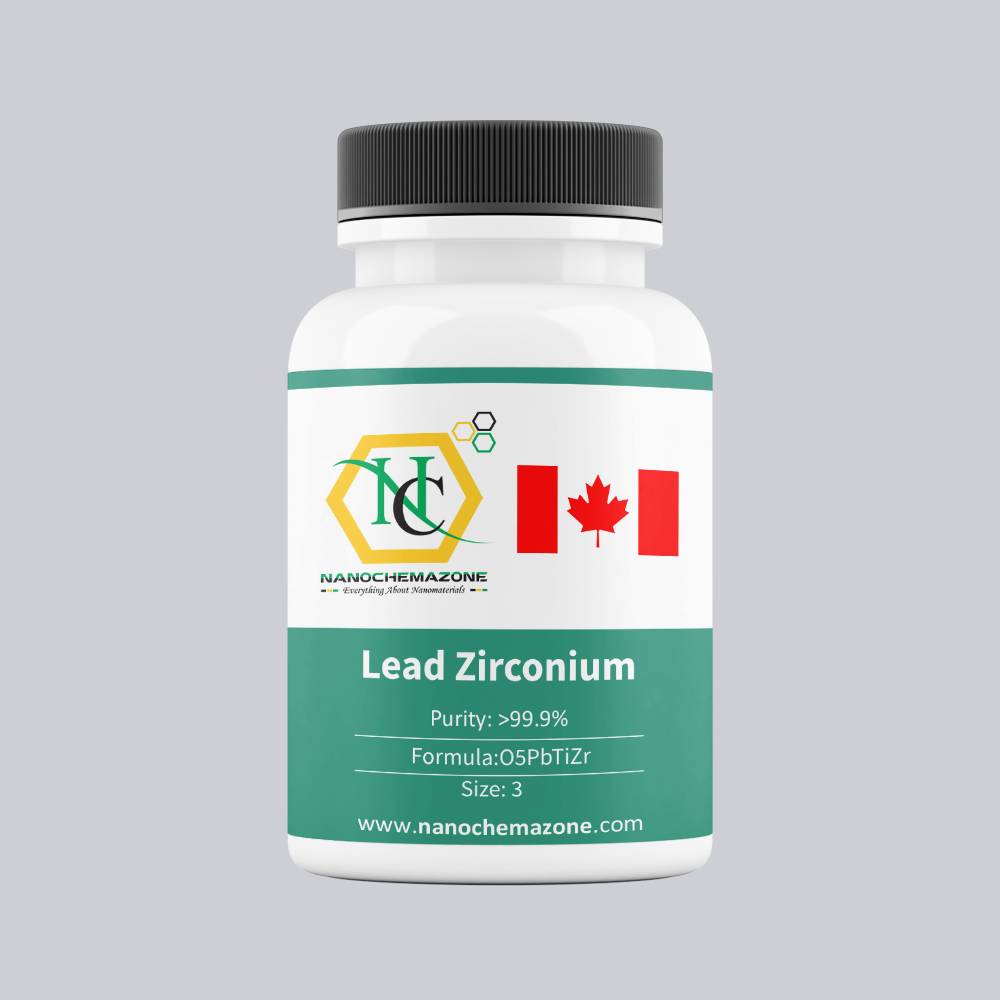
Lead Zirconium Titanate/PZT (O5PbTiZr) Sputtering Targets, Purity: 99.9%, Size: 2”, Thickness: 0.125”

$1,073.00

Product 

Lead Zirconium Titanate/PZT (O5PbTiZr) Sputtering Targets, Purity: 99.9%, Size: 2'', Thickness: 0.125''

CAS No.

12626-81-2

Appearance

Powder

Purity

≥99%,  ≥99.9%,  ≥95%

(Other purities are also available)

APS

 N/A (Size Can be customized), Ask for other available size ranges.

Ingredient

N/A

Molecular Weight

~303.1 g/mol

Melting Point

 ~1,250°C – 1,350°C

Boiling Point

N/A

Density

 ~7.75–8.0 g/cm³

Product Codes

NCZ-2068K

Barium Titanate (BaTiO3) Sputtering Targets, Purity: 99.99%, Size: 4”, Thickness: 0.250”

$1,073.00

Applications of Sputtering Targets;

Film deposition is accomplished using sputtering targets. A technique for sputtering thin films is called "deposition made by sputter targets," which entails eroding material from a "target" source onto a "substrate" like a silicon wafer. Etching of the target is done using semiconductor sputtering targets. When selectivity is not an issue and a high degree of etching anisotropy is required, sputter etching is the method of choice. By removing the target material through etching, sputter targets are also utilized for investigation. In secondary ion spectroscopy (SIMS), one example is when the target material is sputtered at a steady pace. When the target shatters,

Mass spectrometry measures the concentration and identity of sputtered atoms. The target material's composition may be ascertained and even very low concentrations of contaminants can be found with the aid of the sputtering target.

There is also an application area for sputtering targets in space. One type of space weathering that alters the chemical and physical characteristics of airless worlds like the Moon and asteroids is sputtering.

Formulated as BaTiO3, barium titanate is an inorganic substance. When formed as big crystals, barium titanate is clear and has a white powdery appearance. It is a ferroelectric ceramic material with piezoelectric and photorefractive characteristics. Titanate of barium sputtering Agents have various applications. For instance, barium titanate films, which are produced by sputtering targets, can be employed in particular electronic ceramics. Barium titanate can be utilized in the building of electrical devices such as sensors, capacitors, and detectors.

Iron (II,III) Oxide (Fe3O4) Nanopowder/Nanoparticles Water Dispersion, Size: 13-18 nm, 22 wt%

Price range: $61.00 through $1,073.00
Select options This product has multiple variants. The options may be chosen on the product page
25 ml/54 € 50 ml/98 € 100 ml/180 € 500 ml/580 € 1000 ml/945 €            
Please contact us for quotes on larger quantities !!!

Iron (II,III) Oxide (Fe3O4) Nanopowder/Nanoparticles Water Dispersion

Size: 13-18 nm, 22 wt%

Iron Oxide Water Dispersion has excellent properties like high transparency, color strength and strong absorption of UV, high durability and weather fastness. Under favour of its impressive features, iron oxide water dispersion has a wide application areas such as automotive paints and wood finishes, printing ink, industrial coatings and plastic applications. You can find Iron Oxide Water Dispersion in our catalog with affordable prices and high purity.

Prime Si+SiO2 Wafer (dry), Size: 3”, Orientation: (100), Boron Doped, Resistivity: 1 -10 (ohm.cm), 1-Side Polished, Thickness: 380 ± 25 μm, Coating 100 nm

Price range: $57.75 through $1,071.00
Select options This product has multiple variants. The options may be chosen on the product page
Prime Si+SiO2 Wafer (dry) Size: 3”, Orientation: (100), Boron Doped, 1-Side Polished, Thickness: 380 ± 25 μm, Coating 100 nm

Prime FZ-Si Wafer, Size: 4”, Orientation: (100), Boron Doped, Resistivity: 2000 – 4000 (ohm.cm), 1-Side Polished, Thickness: 300 ± 10 μm

Price range: $71.00 through $1,071.00
Select options This product has multiple variants. The options may be chosen on the product page
1 piece/64 € 5 pieces/225 € 25 pieces/965 € Please contact us for quotes on larger quantities !!!

Prime FZ-Si Wafer

Size: 4”, Orientation: (100), Boron Doped, 1-Side Polished, Thickness: 300 ± 10 μm

Technical Properties:

Quality Prime
Materials FZ-Si
Size (inch) 4”
Orientation (100)
Coating
Thickness (μm) 300 ± 10
Doping Boron
Resistivity (ohm.cm) 2000 - 4000
Polished One Side
Float zone is referred as a very pure silicon that is produced by vertical zone melting. Compared to Czochralski method, crystals of FZ Silicon have higher purities. Light impurities in FZ Si wafers provides a chance to control some of the defects and increase the mechanical strength. Flat zone silicons have very high resistivity distribution so they are specially used in detectors. There are some other properties that are needed to prevent detector noises. Some of these properties are minority carrier lifetime and bulk generation current. However, these two properties weigh less than the crstalline structure and purity of the wafer. Additionally multiple zone refining can be performed on a rod to further reduce the impurity concentrations.

Prime Si+SiO2 Wafer (dry), Size: 4”, Orientation: (100), Boron Doped, Resistivity: 1 -10 (ohm.cm), 1-Side Polished, Thickness: 525 ± 25 μm, Coating 100 nm

Price range: $71.00 through $1,071.00
Select options This product has multiple variants. The options may be chosen on the product page
1 piece/64 € 5 pieces/225 € 25 pieces/965 € Please contact us for quotes on larger quantities !!!

Prime Si+SiO2 Wafer (dry)

Size: 4”, Orientation: (100), Boron Doped, 1-Side Polished, Thickness: 525 ± 25 μm, Coating 100 nm

Technical Properties:

Quality Prime
Materials Si + SiO2 (dry)
Size (inch) 4”
Orientation (100)
Coating 100 nm
Thickness (μm) 525 ± 25
Doping Boron
Resistivity (ohm.cm) 1-10
Polished One  Side
Silicon dioxide wafer – also referred as thermal oxide wafer- is produced at elevated temperatures. Thermal oxide is normally grown in a horizontal tube furnace, at temperature range from 900°C ~ 1200°C. Thermal oxide is a kind of "grown" oxide layer , compared to CVD deposited oxide layer , it has a higher uniformity, and higher dielectric strength , it is an excellent dielectric layer as an insulator. In most silicon-based devices, thermal oxide layer plays an important role to pacify the silicon surface to act as doping barriers and as surface dielectrics. It allows a very good thickness uniformity and purity. Therefore, this is the preferred way to produce high quality thin silicon oxide layers. Thicker oxide layers are typically produced by wet oxidation where the growth rate is significantly increased.

Prime Si+SiO2 Wafer (wet), Size: 4”, Orientation: (100), Boron Doped, Resistivity: 0.001 – 0.01 (ohm.cm), 1-Side Polished, Thickness: 525 ± 25 μm, Coating 500 nm

Price range: $71.00 through $1,071.00
Select options This product has multiple variants. The options may be chosen on the product page
1 piece/64 € 5 pieces/265 € 25 pieces/965 € Please contact us for quotes on larger quantities !!!

Prime Si+SiO2 Wafer (wet)

Size: 4”, Orientation: (100), Boron Doped, 1-Side Polished, Thickness: 525 ± 25 μm, Coating 500 nm

Technical Properties:

Quality Prime
Materials Si + SiO2 (wet)
Size (inch) 4”
Orientation (100)
Coating 500 nm
Thickness (μm) 525 ± 25
Doping Boron
Resistivity (ohm.cm) 0.001 - 0.01
Polished One  Side
Silicon dioxide wafer – also referred as thermal oxide wafer- is produced at elevated temperatures. Thermal oxide is normally grown in a horizontal tube furnace, at temperature range from 900°C ~ 1200°C. Thermal oxide is a kind of "grown" oxide layer , compared to CVD deposited oxide layer , it has a higher uniformity, and higher dielectric strength , it is an excellent dielectric layer as an insulator. In most silicon-based devices, thermal oxide layer plays an important role to pacify the silicon surface to act as doping barriers and as surface dielectrics. It allows a very good thickness uniformity and purity. Therefore, this is the preferred way to produce high quality thin silicon oxide layers. Thicker oxide layers are typically produced by wet oxidation where the growth rate is significantly increased.

Tungsten Oxide (WO3) Sputtering Target

Price range: $519.00 through $1,070.00
Select options This product has multiple variants. The options may be chosen on the product page

Product 

Tungsten Oxide (WO3) Sputtering Target

CAS No.

1314-35-8

Appearance

Powder

Purity

≥99%,  ≥99.9%,  ≥95%

(Other purities are also available)

APS

 NA (Size Can be customized), Ask for other available size ranges.

Ingredient

N/A

Molecular Weight

231.84 g/mol

Melting Point

~1,473 °C

Boiling Point

~1,700–1,830 °C

Density

~7.16 g/cm³

Product Codes

NCZ-1328K

Lead Zirconium Titanate/PZT (O5PbTiZr) Sputtering Targets, Purity: 99.9%, Size: 3”, Thickness: 0.125”

$1,070.00

Applications of Sputtering Targets;

Film deposition is accomplished using sputtering targets. A technique for sputtering thin films is called "deposition made by sputter targets," which entails eroding material from a "target" source onto a "substrate" like a silicon wafer. Etching of the target is done using semiconductor sputtering targets. When selectivity is not an issue and a high degree of etching anisotropy is required, sputter etching is the method of choice. By removing the target material through etching, sputter targets are also utilized for investigation. In secondary ion spectroscopy (SIMS), one example is when the target material is sputtered at a steady pace. Mass spectrometry is used to quantify the concentration and identity of spewed atoms as the target is sputtered.

By helping of the sputtering target, the composition of the target material may be evaluated and even extremely tiny amounts of contaminants are recognized.

There is also an application area for sputtering targets in space. One type of space weathering that alters the chemical and physical characteristics of airless worlds like the Moon and asteroids is sputtering.

An inorganic substance is lead zirconium titanate. This ceramic perovskite material has a strong piezoelectric effect, which means that when an electric field is applied, the compound changes shape. Lead zirconium titanate is employed in a number of practical applications such as ultrasonic transducers and piezoelectric resonators.

Antimony (Sb) Micron Powder, Purity: 99.99 %, Size: 200 mesh

Price range: $43.00 through $1,070.00
Select options This product has multiple variants. The options may be chosen on the product page
1 gram/38 € 5 grams/96 € 25 grams/295 € 100 grams/945 €  
Please contact us for quotes on larger quantities !!!

Antimony (Sb) Micron Powder

Purity: 99.99 %, Size: 200 mesh

Lanthanum Nickel Oxide (LaNiO3) Sputtering Targets, Purity: 99.9%, Size: 7”, Thickness: 0.250”

$1,069.00

Applications of Sputtering Targets;

  • Sputtering targets is used for film deposition. The deposition made by sputter targets is a method of depositing thin films by sputtering that involves eroding material from a "target" source onto a "substrate" such as  a silicon wafer.
  • Semiconductor sputtering targets is used to etch the target. Sputter etching is chosen in cases where a high degree of etching anisotropy is needed and selectivity is not a concern.
  • Sputter targets is also used for analysis by etching away the target material.
One of the example occurs in secondary ion spectroscopy (SIMS), where the target sample is sputtered at a constant rate. As the target is sputtered, the concentration and identity of sputtered atoms are measured using mass spectrometry. By helping of the sputtering target, the composition of the target material can be determined and even extremely low concentrations of impurities are detected. Sputtering target has also application area in space. Sputtering is one of the forms of space weathering, a process that changes the physical and chemical properties of airless bodies, such as asteroids and the Moon. Lanthanum nickel oxide with the chemical formula of LaNiO3 is an important perovskite-type oxide with metallic conductivity. Lanthanum nickel oxide is a ternary compound with unique chemical and physical properties. It shows an extended range of oxygen-deficient compositions, an uncommon intrinsic n-type metallic conductance, a perovskite crystal structure and thermal and chemical stability. These characteristics make LNO a technologically important perovskite oxide electrode in many potential applications such as ferroelectric thin film capacitors, solid oxide fuel cells, nonvolatile ferroelectric random access memories and multilayer actuators. Furthermore, LNO films have potential to be used as oxygen pressure and ethanol active sensing layers. Also, the reduced La–Ni mixed oxides are reported to be good catalyst precursors to synthesized organic compounds and to grow large amounts of regular diameter distribution controlled carbon nanotubes. Different chemical and physical thin film deposition techniques have been used to prepare LNO on various substrates. Chemical methods such as chemical vapor deposition, metallo-organic chemical vapor deposition and chemical solution deposition have been used to prepare LNO films. Physical methods such as sputtering, pulsed laser deposition and mist plasma evaporation have also been reported. Wet chemical solution deposition techniques provide simple and versatile alternative methods for thin film preparation.

Multi Walled Carbon Nanotubes Water Dispersion, 4 wt%, Purity: > 96%, OD: 3-13 nm, Length: 45 µm

Price range: $95.00 through $1,069.00
Select options This product has multiple variants. The options may be chosen on the product page
Multi Walled Carbon Nanotubes Water Dispersion 4 wt%, Purity: > 96+ %, OD: 3-13 nm, Length: 45 µm Technical Properties: Purity

Ultralight Graphene Aerogel, Diameter: 2±0.4 cm, Height: 2±0.4 cm

Price range: $267.00 through $1,069.00
Select options This product has multiple variants. The options may be chosen on the product page
Please contact us for quotes for larger quantities !   Graphene aerogels are materials which have elasticity and they can easily gain their original form after some compression. In addition, the low density of graphene aerogels enables them to be very absorbent. This material can absorb more than 850 times of its own weight. This property means that it could be useful for environmental clean-ups like oil spills, and the aerogels only need to be picked up later after absorbing the spilled material. Graphene aerogel may also have some applications in both the storage and the transfer of energy by enabling the creation of lighter, higher-energy-density batteries and vigorous research is being done on the matter.

Magnesium Oxide (MgO) Sputtering Targets, Purity: 99.95%, Size: 3”, Thickness: 0.250”

$1,068.00

Product 

Magnesium Oxide (MgO) Sputtering Targets, Purity: 99.95%, Size: 3'', Thickness: 0.250''

CAS No.

1309-48-4

Appearance

Powder

Purity

≥99%,  ≥99.9%,  ≥95%

(Other purities are also available)

APS

 N/A (Size Can be customized), Ask for other available size ranges.

Ingredient

N/A

Molecular Weight

40.30 g/mol

Melting Point

 ~2852 °C

Boiling Point

~3600 °C

Density

 ~3.58 g/cm³

Product Codes

NCZ-1971K

Nickel Oxide (NiO) Sputtering Targets, indium, Purity: 99.98%, Size: 2”, Thickness: 0.125”

$1,068.00

Applications of Sputtering Targets;

Film deposition is accomplished using sputtering targets. A technique for sputtering thin films is called "deposition made by sputter targets," which entails eroding material from a "target" source onto a "substrate" like a silicon wafer. Etching of the target is done using semiconductor sputtering targets. When selectivity is not an issue and a high degree of etching anisotropy is required, sputter etching is the method of choice. By removing the target material through etching, sputter targets are also utilized for investigation. In secondary ion spectroscopy (SIMS), one example is when the target material is sputtered at a steady pace. Mass spectrometry is used to quantify the concentration and identity of spewed atoms as the target is sputtered.

The target material's composition may be ascertained and even very low concentrations of contaminants can be found with the aid of the sputtering target.

There is also an application area for sputtering targets in space. One type of space weathering that alters the chemical and physical characteristics of airless worlds like the Moon and asteroids is sputtering.

Lanthanum Nickel Oxide (LaNiO3) Sputtering Targets, Purity: 99.9%, Size: 6”, Thickness: 0.250”

$1,068.00

Applications of Sputtering Targets;

  • Sputtering targets is used for film deposition. The deposition made by sputter targets is a method of depositing thin films by sputtering that involves eroding material from a "target" source onto a "substrate" such as  a silicon wafer.
  • Semiconductor sputtering targets is used to etch the target. Sputter etching is chosen in cases where a high degree of etching anisotropy is needed and selectivity is not a concern.
  • Sputter targets is also used for analysis by etching away the target material.
One of the example occurs in secondary ion spectroscopy (SIMS), where the target sample is sputtered at a constant rate. As the target is sputtered, the concentration and identity of sputtered atoms are measured using mass spectrometry. By helping of the sputtering target, the composition of the target material can be determined and even extremely low concentrations of impurities are detected. Sputtering target has also application area in space. Sputtering is one of the forms of space weathering, a process that changes the physical and chemical properties of airless bodies, such as asteroids and the Moon. Lanthanum nickel oxide with the chemical formula of LaNiO3 is an important perovskite-type oxide with metallic conductivity. Lanthanum nickel oxide is a ternary compound with unique chemical and physical properties. It shows an extended range of oxygen-deficient compositions, an uncommon intrinsic n-type metallic conductance, a perovskite crystal structure and thermal and chemical stability. These characteristics make LNO a technologically important perovskite oxide electrode in many potential applications such as ferroelectric thin film capacitors, solid oxide fuel cells, nonvolatile ferroelectric random access memories and multilayer actuators. Furthermore, LNO films have potential to be used as oxygen pressure and ethanol active sensing layers. Also, the reduced La–Ni mixed oxides are reported to be good catalyst precursors to synthesized organic compounds and to grow large amounts of regular diameter distribution controlled carbon nanotubes. Different chemical and physical thin film deposition techniques have been used to prepare LNO on various substrates. Chemical methods such as chemical vapor deposition, metallo-organic chemical vapor deposition and chemical solution deposition have been used to prepare LNO films. Physical methods such as sputtering, pulsed laser deposition and mist plasma evaporation have also been reported. Wet chemical solution deposition techniques provide simple and versatile alternative methods for thin film preparation.

Prime Si+SiO2 Wafer (dry), Size: 4”, Orientation: (100), Boron Doped, Resistivity: 1 -10 (ohm.cm), 1-Side Polished, Thickness: 525 ± 25 μm, Coating 200 nm

Price range: $75.00 through $1,068.00
Select options This product has multiple variants. The options may be chosen on the product page
Prime Si+SiO2 Wafer (dry) Size: 4”, Orientation: (100), Boron Doped, 1-Side Polished, Thickness: 525 ± 25 μm, Coating 200 nm

Prime Si+SiO2 Wafer (wet), Size: 4”, Orientation: (100), Boron Doped, Resistivity: 1 – 10 (ohm.cm), 1-Side Polished, Thickness: 525 ± 25 μm, Coating 400 nm

Price range: $75.00 through $1,068.00
Select options This product has multiple variants. The options may be chosen on the product page
Prime Si+SiO2 Wafer (wet) Size: 4”, Orientation: (100), Boron Doped, 1-Side Polished, Thickness: 525 ± 25 μm, Coating 400 nm

High Purity (>99.998%) Black Phosphorus Powder 2D Material

Price range: $583.00 through $1,067.00
Select options This product has multiple variants. The options may be chosen on the product page
Product High Purity (>99.998%) Black Phosphorus Powder 2D Material
CAS No. 7723-14-0
Appearance Black to dark gray fine
Purity ≥99%,  ≥99.9%,  ≥95%(Other purities are also available)
APS 5µm (Size Can be customized),  Ask for other available size range.
Ingredient P
Molecular Weight 30.97 g/mol
Melting Point N/A
Boiling Point N/A
Density 2.69 g/cm³
Product Codes NCZ-395I

Praseodymium Calcium Manganate (Pr0.7Ca0.3MnO3) Sputtering Targets, Purity: 99.9%, Size: 3”, Thickness: 0.250”

$1,067.00

Applications of Sputtering Targets;

Film deposition is accomplished using sputtering targets. A technique for sputtering thin films is called "deposition made by sputter targets," which entails eroding material from a "target" source onto a "substrate" like a silicon wafer. Etching of the target is done using semiconductor sputtering targets. When selectivity is not an issue and a high degree of etching anisotropy is required, sputter etching is the method of choice. By removing the target material through etching, sputter targets are also utilized for investigation. In secondary ion spectroscopy (SIMS), one example is when the target material is sputtered at a steady pace. Mass spectrometry is used to quantify the concentration and identity of spewed atoms as the target is sputtered.

The target material's composition may be ascertained and even very low concentrations of contaminants can be found with the aid of the sputtering target.

There is also an application area for sputtering targets in space. One type of space weathering that alters the chemical and physical characteristics of airless worlds like the Moon and asteroids is sputtering.

Praseodymium Calcium Manganate (Pr0.7Ca0.3MnO3) Sputtering Targets, Purity: 99.9%, Size: 3”, Thickness: 0.250”

$1,067.00

Applications of Sputtering Targets;

  • Sputtering targets is used for film deposition. The deposition made by sputter targets is a method of depositing thin films by sputtering that involves eroding material from a "target" source onto a "substrate" such as  a silicon wafer.
  • Semiconductor sputtering targets is used to etch the target. Sputter etching is chosen in cases where a high degree of etching anisotropy is needed and selectivity is not a concern.
  • Sputter targets is also used for analysis by etching away the target material.
One of the example occurs in secondary ion spectroscopy (SIMS), where the target sample is sputtered at a constant rate. As the target is sputtered, the concentration and identity of sputtered atoms are measured using mass spectrometry. By helping of the sputtering target, the composition of the target material can be determined and even extremely low concentrations of impurities are detected. Sputtering target has also application area in space. Sputtering is one of the forms of space weathering, a process that changes the physical and chemical properties of airless bodies, such as asteroids and the Moon.

Silicon Carbide (SiC) Sputtering Targets, indium, Purity: 99.5%, Size: 3”, Thickness: 0.125”

$1,063.00

Applications of Sputtering Targets;

Film deposition is accomplished using sputtering targets. A technique for sputtering thin films is called "deposition made by sputter targets," which entails eroding material from a "target" source onto a "substrate" like a silicon wafer. Etching of the target is done using semiconductor sputtering targets. When selectivity is not an issue and a high degree of etching anisotropy is required, sputter etching is the method of choice. By removing the target material through etching, sputter targets are also utilized for investigation. In secondary ion spectroscopy (SIMS), one example is when the target material is sputtered at a steady pace. Mass spectrometry is used to quantify the concentration and identity of spewed atoms as the target is sputtered.

The target material's composition may be ascertained and even very low concentrations of contaminants can be found with the aid of the sputtering target.

There is also an application area for sputtering targets in space. One type of space weathering that alters the chemical and physical characteristics of airless worlds like the Moon and asteroids is sputtering.

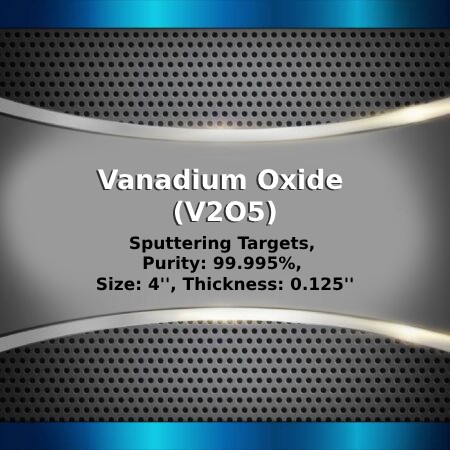
Vanadium Oxide (V2O5) Sputtering Targets, elastomer, Purity: 99.9%, Size: 4”, Thickness: 0.125”

$1,061.00

Product 

Vanadium Oxide (V2O5) Sputtering Targets, elastomer, Purity: 99.9%, Size: 4'', Thickness: 0.125''

CAS No.

1314‑62‑1

Appearance

Powder

Purity

≥99%,  ≥99.9%,  ≥95%

(Other purities are also available)

APS

N/A  (Size Can be customized), Ask for other available size ranges.

Ingredient

N/A

Molecular Weight

181.88 g/mol

Melting Point

690 °C

Boiling Point

~1750 °C

Density

~3.35 g/cm³

Product Codes

NCZ-1531K

Iron Oxide (Fe3O4) Sputtering Targets, Purity: 99.9%, Size: 6”, Thickness: 0.125”

$1,060.00

Product 

Iron Oxide (Fe3O4) Sputtering Targets, Purity: 99.9%, Size: 6'', Thickness: 0.125''

CAS No.

1317‑61‑9

Appearance

Powder

Purity

≥99%,  ≥99.9%,  ≥95%

(Other purities are also available)

APS

 N/A (Size Can be customized), Ask for other available size ranges.

Ingredient

N/A

Molecular Weight

 231.6 g/mol

Melting Point

~1,597 °C

Boiling Point

 ~2,623 °C (material may decompose before boiling)

Density

 ~5.17 g/cm³ (sintered target)

Product Codes

NCZ-2167K

Cobalt Iron Oxide (CoFe2O4) Nanopowder, 30nm, ≥99.9% (3N) Purity

Price range: $275.00 through $1,060.00
Select options This product has multiple variants. The options may be chosen on the product page
Product Cobalt Iron Oxide (CoFe2O4) Nanopowder, 30nm, ≥99.9% (3N) Purity
CAS No. 12052-28-7
Appearance Black or brownish-black fine
Purity ≥99%,  ≥99.9%,  ≥95%(Other purities are also available)
APS 30nm (Size Can be customized),  Ask for other available size range.
Ingredient CoFe2O4
Molecular Weight 234.63 g/mol
Melting Point N/A
Boiling Point N/A
Density 5.3 g/cm³
Product Codes NCZ-321I

Lanthanum Titanate (LaTiO3) Sputtering Targets, Purity: 99.9%, Size: 8”, Thickness: 0.250

$1,060.00

Applications of Sputtering Targets;

  • Sputtering targets is used for film deposition. The deposition made by sputter targets is a method of depositing thin films by sputtering that involves eroding material from a "target" source onto a "substrate" such as  a silicon wafer.
  • Semiconductor sputtering targets is used to etch the target. Sputter etching is chosen in cases where a high degree of etching anisotropy is needed and selectivity is not a concern.
  • Sputter targets is also used for analysis by etching away the target material.
One of the example occurs in secondary ion spectroscopy (SIMS), where the target sample is sputtered at a constant rate. As the target is sputtered, the concentration and identity of sputtered atoms are measured using mass spectrometry. By helping of the sputtering target, the composition of the target material can be determined and even extremely low concentrations of impurities are detected. Sputtering target has also application area in space. Sputtering is one of the forms of space weathering, a process that changes the physical and chemical properties of airless bodies, such as asteroids and the Moon.

Lithium Cobalt Oxide (LiCoO2) Sputtering Targets, indium, Purity: 99.9%, Size: 3”, Thickness: 0.125”

$1,058.00

Applications of Sputtering Targets;

Film deposition is accomplished using sputtering targets. A technique for sputtering thin films is called "deposition made by sputter targets," which entails eroding material from a "target" source onto a "substrate" like a silicon wafer. Etching of the target is done using semiconductor sputtering targets. When selectivity is not an issue and a high degree of etching anisotropy is required, sputter etching is the method of choice. By removing the target material through etching, sputter targets are also utilized for investigation. In secondary ion spectroscopy (SIMS), one example is when the target material is sputtered at a steady pace. Mass spectrometry is used to quantify the concentration and identity of spewed atoms as the target is sputtered.

The target material's composition may be ascertained and even very low concentrations of contaminants can be found with the aid of the sputtering target.

There is also an application area for sputtering targets in space. One type of space weathering that alters the chemical and physical characteristics of airless worlds like the Moon and asteroids is sputtering.

Formula LiCoO2 represents the chemical compound lithium cobalt oxide. A crystalline solid that is dark blue or bluish-gray in color, lithium cobalt oxide is frequently utilized in the positive electrodes of lithium-ion batteries.

Titanium Dioxide (TiO2) Sputtering Targets, indium, Purity: 99.95%, Size: 4”, Thickness: 0.125” , Grey to Black

$1,057.00

Product 

Titanium Dioxide (TiO2) Sputtering Targets, indium, Purity: 99.95%, Size: 4'', Thickness: 0.125'' , Grey to Black

CAS No.

13463‑67‑7

Appearance

Powder

Purity

≥99%,  ≥99.9%,  ≥95%

(Other purities are also available)

APS

TiO₂ (black granules) (Size Can be customized), Ask for other available size ranges.

Ingredient

N/A

Molecular Weight

79.94 g/mol

Melting Point

~1,843 °C

Boiling Point

~2,972 °C

Density

~4.23 g/cm³

Product Codes

NCZ-1421K

18650 Nickel Strip for Battery Tab, Width: 4 mm, Thickness: 0.1 mm, 1 Roll: 1 kg

Price range: $244.00 through $1,057.00
Select options This product has multiple variants. The options may be chosen on the product page

Applications:

Nickel Strip for Battery Tab is widely used in electric apparatus, chemical machinery, rechargeable batteries, computers, cellular phone, power tools, camcorders and so on.

Barium Zirconate (BaZrO3) Sputtering Targets, Purity: 99.99%, Size: 3”, Thickness: 0.125”

$1,056.00

Product 

Barium Zirconate (BaZrO3) Sputtering Targets, Purity: 99.99%, Size: 3'', Thickness: 0.125''

CAS No.

12009‑21‑1

Appearance

Powder

Purity

≥99%,  ≥99.9%,  ≥95%

(Other purities are also available)

APS

1 – 5 µm (Size Can be customized), Ask for other available size ranges.

Ingredient

N/A

Molecular Weight

276.55 g/mol

Melting Point

N/A

Boiling Point

N/A

Density

~5.52 g/cm³ (theoretical)

Product Codes

NCZ-2444K

Molybdenum Oxide (MoO3) Sputtering Target

Price range: $578.00 through $1,056.00
Select options This product has multiple variants. The options may be chosen on the product page

Product 

Molybdenum Oxide (MoO3) Sputtering Target

CAS No.

 1313-27-5

Appearance

Powder

Purity

≥99%,  ≥99.9%,  ≥95%

(Other purities are also available)

APS

 NA (Size Can be customized), Ask for other available size ranges.

Ingredient

N/A

Molecular Weight

143.94 g/mol

Melting Point

 795–802 °C

Boiling Point

1,155 °C

Density

4.69 – 4.70 g/cm³

Product Codes

NCZ-1375K

Silicon Dioxide (SiO2) Nanopowder/Nanoparticles Dispersion in Ethylene Glycol, Size: 22 nm, Amorphous, 15 wt%

Price range: $54.00 through $1,055.00
Select options This product has multiple variants. The options may be chosen on the product page
Silicon Dioxide (SiO2) Nanopowder/Nanoparticles Dispersion in Ethylene Glycol Size: 22 nm, Amorphous, 15 wt%

Fused Silica Wafer, Size: 4”, 2-Side Polished, Thickness: 1000 ± 25 μm

Price range: $54.00 through $1,054.00
Select options This product has multiple variants. The options may be chosen on the product page
1 piece/49 € 5 pieces/210 € 25 pieces/950 € Please contact us for quotes on larger quantities !!!

Fused Silica Wafer

Size: 4”, 2-Side Polished, Thickness: 1000 ± 25 μm

Technical Properties:

Quality Prime
Materials Fused Silica
Size(inch) 4”
Orientation
Coating
Thickness (μm) 1000 ± 25
Doping
Resistivity(ohm.cm)
Polished Double Side
Fused silica – also referred as fused quartz- is an amorphous phase of silica. Compared to borosilicate wafers, fused silica has no additives. Is almost chemically inactive. Has a very high thermal resistance. Has an improved optical transmission in deep UV (ultraviolet). Silica dust particles are deposited on the substrate first, solidification of these molten particles creates a pure fused phase on the surface with the help of flame hydrolysis.

Strontium Titanate (SrTiO3) Sputtering Targets, elastomer, Purity: 99.9%, Size: 2”, Thickness: 0.125”

$1,052.00

Product 

Strontium Titanate (SrTiO3) Sputtering Targets, elastomer, Purity: 99.9%, Size: 2'', Thickness: 0.125''

CAS No.

12060-08-1

Appearance

Powder

Purity

≥99%,  ≥99.9%,  ≥95%

(Other purities are also available)

APS

N/A  (Size Can be customized), Ask for other available size ranges.

Ingredient

N/A

Molecular Weight

183.49 g/mol

Melting Point

 ~2080 °C

Boiling Point

N/A

Density

~5.12 g/cm³

Product Codes

NCZ-1668K

Fullerene-C70, Purity: 99%

Price range: $217.00 through $1,052.00
Select options This product has multiple variants. The options may be chosen on the product page
1 gram/194 € 5 grams/940 €                           
Please contact us for quotes on larger quantities !!!

Fullerene-C70

Purity: 99% 

Technical Properties:

Fullerene Compound Formula C70
Fullerene  Molecular Weight 840.77 g/mol
Fullerene  Purity 99%
Fullerene  Melting Point >280 °C
Fullerene  Appearance Black Powder
Fullerene  CAS 115383-22-7

Applications:

1. Pharmaceutical: Diagnostic reagents, super drugs, cosmetics, nuclear magnetic resonance (NMR) with the developer. DNA affinity 2. Energy: Solar battery, fuel cell, secondary battery. 3. Industry: Wear resistant material, flame retardant materials, lubricants, polymer additives, high-performance membrane, catalyst, artificial diamond, hard alloy, electric viscous fluid, ink filters, high-performance coatings, fire retardant coatings, manufacturing bioactive materials , memory materials, embedded molecular and other characteristics, composite materials etc. 4. Information industry: Semiconductor record medium, magnetic materials, printing ink, toner, ink, paper special purposes. 5. Electronic parts: Superconducting semiconductor, diodes, transistors, inductor.  , 6. Optical materials, electronic camera, fluorescence display tube, nonlinear optical materials. 7. Environment: Gas adsorption, gas storage.

Bismuth Ferrite (BiFeO3) Sputtering Targets, Purity: 99.9%, Size: 5”, Thickness: 0.125”

$1,050.00

Applications of Sputtering Targets;

Film deposition is accomplished using sputtering targets. A technique for sputtering thin films is called "deposition made by sputter targets," which entails eroding material from a "target" source onto a "substrate" like a silicon wafer. Etching of the target is done using semiconductor sputtering targets. When selectivity is not an issue and a high degree of etching anisotropy is required, sputter etching is the method of choice. By removing the target material through etching, sputter targets are also utilized for investigation. In secondary ion spectroscopy (SIMS), one example is when the target material is sputtered at a steady pace. Mass spectrometry is used to quantify the concentration and identity of spewed atoms as the target is sputtered. With the sputtering target's assistance, the

There is also an application area for sputtering targets in space. One type of space weathering that alters the chemical and physical characteristics of airless worlds like the Moon and asteroids is sputtering.

One of the most promising multiferroic materials is bismuth ferrite, an inorganic chemical compound with a perovskite structure and the chemical formula BiFeO3. In order to create a one-phase material called bismuth ferrite (BiFeO3), a bismuth ferrite sputtering target is often manufactured by high temperature sinttering or recrystallizing the mixture of the oxide compound of Bi and Fe. For targets that are sputtering bismuth ferrite, indium bonding is advised.

Bismuth Ferrite (BiFeO3) Sputtering Targets, Purity: 99.9%, Size: 3”, Thickness: 0.250”

$1,050.00

Applications of Sputtering Targets;

Film deposition is accomplished using sputtering targets. A technique for sputtering thin films is called "deposition made by sputter targets," which entails eroding material from a "target" source onto a "substrate" like a silicon wafer. Etching of the target is done using semiconductor sputtering targets. When selectivity is not an issue and a high degree of etching anisotropy is required, sputter etching is the method of choice. By removing the target material through etching, sputter targets are also utilized for investigation. In secondary ion spectroscopy (SIMS), one example is when the target material is sputtered at a steady pace. Mass spectrometry is used to quantify the concentration and identity of spewed atoms as the target is sputtered. With the sputtering target's assistance, the

There is also an application area for sputtering targets in space. One type of space weathering that alters the chemical and physical characteristics of airless worlds like the Moon and asteroids is sputtering.

One of the most promising multiferroic materials is bismuth ferrite, an inorganic chemical compound with a perovskite structure and the chemical formula BiFeO3. In order to create a one-phase material called bismuth ferrite (BiFeO3), a bismuth ferrite sputtering target is often manufactured by high temperature sinttering or recrystallizing the mixture of the oxide compound of Bi and Fe. For targets that are sputtering bismuth ferrite, indium bonding is advised.

Titanium Dioxide (TiO2) Nanopowder/Nanoparticles Dispersion in Ethylene Glycol, Size: 12 nm, Anatase, 22 wt %

Price range: $43.00 through $1,050.00
Select options This product has multiple variants. The options may be chosen on the product page

Prime CZ-Si Wafer, Size: 6”, Orientation: (100), Boron Doped, Resistivity: 1-10 (ohm.cm), 1-Side Polished, Thickness: 525±25um

Price range: $53.00 through $1,050.00
Select options This product has multiple variants. The options may be chosen on the product page
Prime CZ-Si Wafer Size: 6”, Orientation: (100), Boron Doped, 1-Side Polished, Thickness: 525±25um Technical Properties: Quality Prime Materials CZ-Si Size (inch)

Fullerene-C70, Purity: 98%

Price range: $218.00 through $1,050.00
Select options This product has multiple variants. The options may be chosen on the product page

Applications:

1. Pharmaceutical: Diagnostic reagents, super drugs, cosmetics, nuclear magnetic resonance (NMR) with the developer. DNA affinity 2. Energy: Solar battery, fuel cell, secondary battery. 3. Industry: Wear resistant material, flame retardant materials, lubricants, polymer additives, high-performance membrane, catalyst, artificial diamond, hard alloy, electric viscous fluid, ink filters, high-performance coatings, fire retardant coatings, manufacturing bioactive materials , memory materials, embedded molecular and other characteristics, composite materials etc. 4. Information industry: Semiconductor record medium, magnetic materials, printing ink, toner, ink, paper special purposes. 5. Electronic parts: Superconducting semiconductor, diodes, transistors, inductor.  , 6. Optical materials, electronic camera, fluorescence display tube, nonlinear optical materials. 7. Environment: Gas adsorption, gas storage.

Lanthanum Manganate (LaMnO3) Sputtering Targets, Purity: 99.9%, Size: 5”, Thickness: 0.250”

$1,048.00

Product 

Lanthanum Manganate (LaMnO3) Sputtering Targets, Purity: 99.9%, Size: 5'', Thickness: 0.250''

CAS No.

13538-87-7

Appearance

Powder

Purity

≥99%,  ≥99.9%,  ≥95%

(Other purities are also available)

APS

 ~1–5 µm (Size Can be customized), Ask for other available size ranges.

Ingredient

N/A

Molecular Weight

240.83 g/mol

Melting Point

 ~2300 °C

Boiling Point

N/A

Density

~6.3 – 6.8 g/cm³

Product Codes

NCZ-2134K

Poly(DL-lactide-co-glycolide)(PLGA85/15) (631989)

Price range: $200.00 through $1,045.00
Select options This product has multiple variants. The options may be chosen on the product page
Poly(DL-lactide-co-glycolide)(PLGA85/15) (631989)
Grade Inherent viscosity (dL/g) Weight average molecular weight (x10000)
PLGA85/15-02 0.1-0.2 0.7-2
PLGA85/15-04 0.204 2-5
PLGA85/15-06 0.4-0.6 5-7
PLGA85/15-08 0.6-0.8 7-10
PLGA85/15-10 0.8-1 0 10-13
PLGA85/15-12 1.0-1.2 13-20
PLGA85/15-15 1.2 1 5 20-30
Product Codes- NCZ-2637K

10mL Fe3O4 Nanoparticle Water Dispersion, 1mg/mL

Price range: $583.00 through $1,045.00
Select options This product has multiple variants. The options may be chosen on the product page
Product 10mL Fe3O4 Nanoparticle Water Dispersion, 1mg/mL
CAS No. 1317-61-9
Appearance Brown liquid
Purity ≥99%,  ≥99.9%,  ≥95%(Other purities are also available)
APS N/A
Ingredient FeO·Fe₂O₃
Molecular Weight 231.53 g/mol
Melting Point N/A
Boiling Point N/A
Density 4.8–5.1 g/cm³
Product Codes NCZ-124I

Tungsten Disulfide Nanopowder/ Nanoparticles ( WS2, 99.9%, <100nm)

Price range: $195.00 through $1,045.00
Select options This product has multiple variants. The options may be chosen on the product page
$195/25g
$475/100g
$1045/500g

Product 

Tungsten Disulfide Nanopowder/ Nanoparticles ( WS2, 99.9%, <100nm)

CAS No.

12138-09-9

Appearance

Powder

Purity

≥99%,  ≥99.9%,  ≥95%

(Other purities are also available)

APS


<100nm (Size Can be customized), Ask for other available size ranges.

Ingredient

N/A

Molecular Weight

247.97 g/mol

Melting Point

~1,250 °C

Boiling Point

 ~2,295 °C

Density

 ~7.5 g/cm³

Product Codes

NCZ-1204K

Titanium Nitride (TiN) Sputtering Targets, indium, Purity: 99.5%, Size: 3”, Thickness: 0.125”

$1,044.00

Applications of Sputtering Targets;

Film deposition is accomplished using sputtering targets. A technique for sputtering thin films is called "deposition made by sputter targets," which entails eroding material from a "target" source onto a "substrate" like a silicon wafer. Etching of the target is done using semiconductor sputtering targets. When selectivity is not an issue and a high degree of etching anisotropy is required, sputter etching is the method of choice. By removing the target material through etching, sputter targets are also utilized for investigation. In secondary ion spectroscopy (SIMS), one example is when the target material is sputtered at a steady pace. Mass spectrometry is used to quantify the concentration and identity of spewed atoms as the target is sputtered.

The target material's composition may be ascertained and even very low concentrations of contaminants can be found with the aid of the sputtering target.

There is also an application area for sputtering targets in space. One type of space weathering that alters the chemical and physical characteristics of airless worlds like the Moon and asteroids is sputtering.

Iron (II,III) Oxide (Fe3O4) Nanopowder/Nanoparticles Water Dispersion, Size: 13-18 nm, 22 wt%

Price range: $59.00 through $1,042.00
Select options This product has multiple variants. The options may be chosen on the product page
25 ml/54 € 50 ml/98 € 100 ml/180 € 500 ml/580 € 1000 ml/945 €            
Please contact us for quotes on larger quantities !!!

Iron (II,III) Oxide (Fe3O4) Nanopowder/Nanoparticles Water Dispersion

Size: 13-18 nm, 22 wt%

Iron Oxide Water Dispersion has excellent properties like high transparency, color strength and strong absorption of UV, high durability and weather fastness. Under favour of its impressive features, iron oxide water dispersion has a wide application areas such as automotive paints and wood finishes, printing ink, industrial coatings and plastic applications. You can find Iron Oxide Water Dispersion in our catalog with affordable prices and high purity.

Praseodymium (Pr) Sputtering Targets, Purity: 99.9%, Size: 8”, Thickness: 0.250”

$1,040.00

Applications of Sputtering Targets;

Film deposition is accomplished using sputtering targets. A technique for sputtering thin films is called "deposition made by sputter targets," which entails eroding material from a "target" source onto a "substrate" like a silicon wafer. Etching of the target is done using semiconductor sputtering targets. When selectivity is not an issue and a high degree of etching anisotropy is required, sputter etching is the method of choice. By removing the target material through etching, sputter targets are also utilized for investigation. In secondary ion spectroscopy (SIMS), one example is when the target material is sputtered at a steady pace. Mass spectrometry is used to quantify the concentration and identity of spewed atoms as the target is sputtered.

The target material's composition may be ascertained and even very low concentrations of contaminants can be found with the aid of the sputtering target.

There is also an application area for sputtering targets in space. One type of space weathering that alters the chemical and physical characteristics of airless worlds like the Moon and asteroids is sputtering.

Praseodymium (Pr) Sputtering Targets, Purity: 99.9%, Size: 8”, Thickness: 0.250”

$1,040.00

Applications of Sputtering Targets;

  • Sputtering targets is used for film deposition. The deposition made by sputter targets is a method of depositing thin films by sputtering that involves eroding material from a "target" source onto a "substrate" such as  a silicon wafer.
  • Semiconductor sputtering targets is used to etch the target. Sputter etching is chosen in cases where a high degree of etching anisotropy is needed and selectivity is not a concern.
  • Sputter targets is also used for analysis by etching away the target material.
One of the example occurs in secondary ion spectroscopy (SIMS), where the target sample is sputtered at a constant rate. As the target is sputtered, the concentration and identity of sputtered atoms are measured using mass spectrometry. By helping of the sputtering target, the composition of the target material can be determined and even extremely low concentrations of impurities are detected. Sputtering target has also application area in space. Sputtering is one of the forms of space weathering, a process that changes the physical and chemical properties of airless bodies, such as asteroids and the Moon.

(-COOH) Functionalized Multi Walled Carbon Nanotubes, Purity: > 96%, Outside Diameter: 18-28 nm

Price range: $39.00 through $1,040.00
Select options This product has multiple variants. The options may be chosen on the product page

Applications:

Multi Walled Carbon Nanotubes have a wide range of possible uses in several industries. These applications span a variety of fields, including energy, chemistry, mechanics, and electric-electronics. It can be used for a number of things, including medication administration, biosensors, CNT composites, catalysis, nanoprobes, and hydrogen storage. 7, lithium-ion batteries, eight gas discharge tubes nine flat-panel screens, ten supercapacitors, and eleven transistors a dozen solar cells, 14 templates, 13 photoluminescence

(-COOH) Functionalized Multi Walled Carbon Nanotubes, Purity: > 96%, Outside Diameter: 8-18 nm

Price range: $29.00 through $1,040.00
Select options This product has multiple variants. The options may be chosen on the product page

Applications:

Multi-walled carbon nanotubes have numerous potential uses in various industries. Medicine, mechanics, electric-electronics, chemistry, energy, and other fields are among these uses. Drug delivery, biosensors, CNT composites, catalysis, nanoprobes, hydrogen storage, flat panel displays, supercapacitors, transistors, solar cells, photoluminescence, and templates are just a few areas where it can be used.

Lanthanum Titanate (LaTiO3) Sputtering Targets, Purity: 99.9%, Size: 3”, Thickness: 0.250

$1,039.00

Applications of Sputtering Targets;

  • Sputtering targets is used for film deposition. The deposition made by sputter targets is a method of depositing thin films by sputtering that involves eroding material from a "target" source onto a "substrate" such as  a silicon wafer.
  • Semiconductor sputtering targets is used to etch the target. Sputter etching is chosen in cases where a high degree of etching anisotropy is needed and selectivity is not a concern.
  • Sputter targets is also used for analysis by etching away the target material.
One of the example occurs in secondary ion spectroscopy (SIMS), where the target sample is sputtered at a constant rate. As the target is sputtered, the concentration and identity of sputtered atoms are measured using mass spectrometry. By helping of the sputtering target, the composition of the target material can be determined and even extremely low concentrations of impurities are detected. Sputtering target has also application area in space. Sputtering is one of the forms of space weathering, a process that changes the physical and chemical properties of airless bodies, such as asteroids and the Moon.
Ultralight Graphene Aerogel, Diameter: 2±0.4 cm, Height: 2±0.4 cm

Price range: $260.00 through $1,039.00
Select options This product has multiple variants. The options may be chosen on the product page
1 piece/ 260 € 5 pieces/ 1039 €  Contact us for tailored quotes on larger quantities & experience exceptional solutions from our experts.

Tungsten Oxide (WO3) Sputtering Targets, Purity: 99.9%, Size: 2”, Thickness: 0.125”

$1,038.00

Applications of Sputtering Targets;

Film deposition is accomplished using sputtering targets. A technique for sputtering thin films is called "deposition made by sputter targets," which entails eroding material from a "target" source onto a "substrate" like a silicon wafer. Etching of the target is done using semiconductor sputtering targets. When selectivity is not an issue and a high degree of etching anisotropy is required, sputter etching is the method of choice. By removing the target material through etching, sputter targets are also utilized for investigation. In secondary ion spectroscopy (SIMS), one example is when the target material is sputtered at a steady pace. Mass spectrometry is used to quantify the concentration and identity of spewed atoms as the target is sputtered.

Iron Oxide (Fe3O4) Sputtering Targets, Purity: 99.9%, Size: 7”, Thickness: 0.250”

$1,038.00

Applications of Sputtering Targets;

Film deposition is accomplished using sputtering targets. A technique for sputtering thin films is called "deposition made by sputter targets," which entails eroding material from a "target" source onto a "substrate" like a silicon wafer. Etching of the target is done using semiconductor sputtering targets. When selectivity is not an issue and a high degree of etching anisotropy is required, sputter etching is the method of choice. By removing the target material through etching, sputter targets are also utilized for investigation. In secondary ion spectroscopy (SIMS), one example is when the target material is sputtered at a steady pace. Mass spectrometry is used to quantify the concentration and identity of spewed atoms as the target is sputtered.

The target material's composition may be ascertained and even very low concentrations of contaminants can be found with the aid of the sputtering target.

There is also an application area for sputtering targets in space. One type of space weathering that alters the chemical and physical characteristics of airless worlds like the Moon and asteroids is sputtering.

Iron Oxide (Fe3O4) Sputtering Targets, Purity: 99.9%, Size: 5”, Thickness: 0.250”

$1,036.00

Product 

Iron Oxide (Fe3O4) Sputtering Targets, Purity: 99.9%, Size: 5'', Thickness: 0.250''

CAS No.

1317‑61‑9

Appearance

Powder

Purity

≥99%,  ≥99.9%,  ≥95%

(Other purities are also available)

APS

 N/A (Size Can be customized), Ask for other available size ranges.

Ingredient

N/A

Molecular Weight

 231.6 g/mol

Melting Point

~1,597 °C

Boiling Point

 ~2,623 °C (material may decompose before boiling)

Density

 ~5.17 g/cm³ (sintered target)

Product Codes

NCZ-2168K