Aluminum (Al) Sputtering Targets, Purity: 99.99%, Size: 2”, Thickness: 0.125”

$107.00

Product 

Aluminum (Al) Sputtering Targets, Purity: 99.99%, Size: 2'', Thickness: 0.125''

CAS No.

 7429-90-5

Appearance

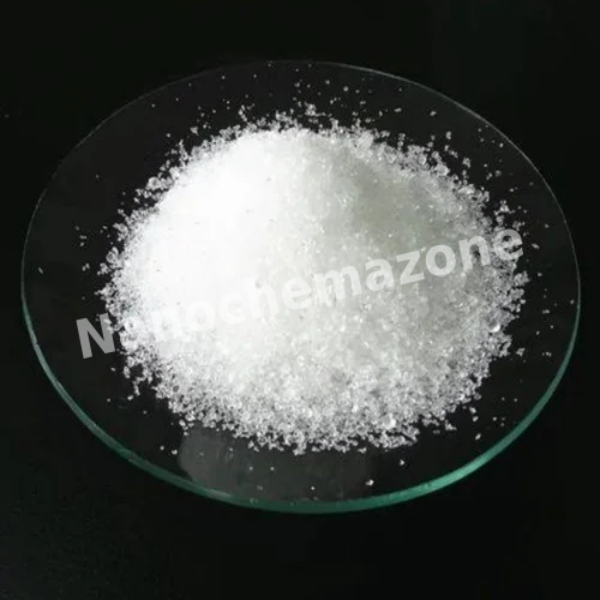
Powder

Purity

≥99%,  ≥99.9%,  ≥95%

(Other purities are also available)

APS

N/A (Size Can be customized), Ask for other available size ranges.

Ingredient

N/A

Molecular Weight

 26.98 g/mol

Melting Point

 660.3 °C

Boiling Point

 2519 °C

Density

 2.70 g/cm³

Product Codes

NCZ-2581K

Tin (Sn) Sputtering Targets, Purity: 99.99%, Size: 1”, Thickness: 0.125”

$107.00

Product 

Tin (Sn) Sputtering Targets, Purity: 99.99%, Size: 1'', Thickness: 0.125''

CAS No.

7440-31-5

Appearance

Powder

Purity

≥99%,  ≥99.9%,  ≥95%

(Other purities are also available)

APS

N/A  (Size Can be customized), Ask for other available size ranges.

Ingredient

N/A

Molecular Weight

118.71 g/mol

Melting Point

231.93 °C

Boiling Point

2602 °C

Density

~7.31 g/cm³

Product Codes

NCZ-1646K

Graphene Nanopowder (C, 99.5+%, 1-5 nm)

$107.00
Select options This product has multiple variants. The options may be chosen on the product page
$107/25g
Product Graphene Nanopowder (C, 99.5+%, 1-5 nm)
CAS No. 7782-42-5
Appearance Black powder
Purity ≥99%,  ≥99.9%,  ≥95%(Other purities are also available)
APS 1-5nm (Size Can be customized),  Ask for other available size range.
Ingredient C
Molecular Weight 12.01 g/mol
Melting Point 3697 °C
Boiling Point 4830 °C
Density 2.2 g/cm³
Product Codes NCZ-108G
 

Calcium Carbonate Nanoparticles / Nanopowder, surface modified for adhesives ( 98.5%, 15~40nm)

Price range: $55.00 through $107.00
Select options This product has multiple variants. The options may be chosen on the product page
$55/100g
$107/kg

Product 

Calcium Carbonate Nanoparticles / Nanopowder, surface modified for adhesives ( 98.5%, 15~40nm)

CAS No.

471-34-1

Appearance

Powder

Purity

≥99%,  ≥99.9%,  ≥95%

(Other purities are also available)

APS

15~40nm(Size Can be customized), Ask for other available size ranges.

Ingredient

N/A

Molecular Weight

100.09 g/mol

Melting Point

 Decomposes at ~825 °C

Boiling Point

N/A

Density

~2.71 g/cm³

Product Codes

NCZ-1115K

Calcium Carbonate Nanoparticles / Nanopowder, surface modified for rubber

Price range: $55.00 through $107.00
Select options This product has multiple variants. The options may be chosen on the product page
$55/100g
$107/kg

Product 

Calcium Carbonate Nanoparticles / Nanopowder, surface modified for rubber

CAS No.

471-34-1

Appearance

Powder

Purity

≥99%,  ≥99.9%,  ≥95%

(Other purities are also available)

APS

15-40nm(Size Can be customized), Ask for other available size ranges.

Ingredient

N/A

Molecular Weight

100.09 g/mol

Melting Point

 Decomposes at ~825 °C

Boiling Point

N/A

Density

~2.71 g/cm³

Product Codes

NCZ-1113K

Calcium Carbonate Nanoparticles, surface modified for printing inks

$107.00
Select options This product has multiple variants. The options may be chosen on the product page
$55/100g
$107/kg

Product 

Calcium Carbonate Nanoparticles, surface modified for printing inks

CAS No.

471-34-1

Appearance

Powder

Purity

≥99%,  ≥99.9%,  ≥95%

(Other purities are also available)

APS

15-40nm(Size Can be customized), Ask for other available size ranges.

Ingredient

N/A

Molecular Weight

100.09 g/mol

Melting Point

 Decomposes at ~825 °C

Boiling Point

N/A

Density

~2.71 g/cm³

Product Codes

NCZ-1112K

Calcium Carbonate Nanoparticles / nanopowder, surface modified for plastic, PE/PP

Price range: $55.00 through $107.00
Select options This product has multiple variants. The options may be chosen on the product page
$55/100g
$107/kg

Product 

Calcium Carbonate Nanoparticles / nanopowder, surface modified for plastic, PE/PP

CAS No.

471-34-1

Appearance

Powder

Purity

≥99%,  ≥99.9%,  ≥95%

(Other purities are also available)

APS

15-40nm(Size Can be customized), Ask for other available size ranges.

Ingredient

N/A

Molecular Weight

100.09 g/mol

Melting Point

 Decomposes at ~825 °C

Boiling Point

N/A

Density

~2.71 g/cm³

Product Codes

NCZ-1110K

Calcium Carbonate Nanoparticles / Nanopowder, surface modified for water-based latex paint

Price range: $67.00 through $107.00
Select options This product has multiple variants. The options may be chosen on the product page
$67/500g
$107/kg

Product 

Calcium Carbonate Nanoparticles / Nanopowder, surface modified for water-based latex paint

CAS No.

471-34-1

Appearance

Powder

Purity

≥99%,  ≥99.9%,  ≥95%

(Other purities are also available)

APS

15-40nm(Size Can be customized), Ask for other available size ranges.

Ingredient

N/A

Molecular Weight

100.09 g/mol

Melting Point

 Decomposes at ~825 °C

Boiling Point

N/A

Density

~2.71 g/cm³

Product Codes

NCZ-1109K

Graphene Nanopowder (C, 99.5+%, 1-5 nm)

$107.00
$107/25g

Product 

Graphene Nanopowder (C, 99.5+%, 1-5 nm)

CAS No.

1034343-98-0

Appearance

Powder

Purity

≥99%,  ≥99.9%,  ≥95%

(Other purities are also available)

APS

1-5 nm (Size Can be customized), Ask for other available size ranges.

Ingredient

AlN

Molecular Weight

12.01 g/mol

Melting Point

~ 3,900 °C

Boiling Point

~3,900 °C

Density

~ 2.2 g/cm³

Product Codes

NCZ-1026K

Silicon Dioxide (SiO2) Sputtering Targets, Fused Quartz, Purity: 99.995%, Size: 2” , Thickness: 0.250”

$107.00

Applications of Sputtering Targets;

Film deposition is accomplished using sputtering targets. A technique for sputtering thin films is called "deposition made by sputter targets," which entails eroding material from a "target" source onto a "substrate" like a silicon wafer. Etching of the target is done using semiconductor sputtering targets. When selectivity is not an issue and a high degree of etching anisotropy is required, sputter etching is the method of choice. By removing the target material through etching, sputter targets are also utilized for investigation. In secondary ion spectroscopy (SIMS), one example is when the target material is sputtered at a steady pace. Mass spectrometry is used to quantify the concentration and identity of spewed atoms as the target is sputtered.

The target material's composition may be ascertained and even very low concentrations of contaminants can be found with the aid of the sputtering target.

There is also an application area for sputtering targets in space. One type of space weathering that alters the chemical and physical characteristics of airless worlds like the Moon and asteroids is sputtering.

Copper (Cu) Sputtering Targets, Purity: 99.99%, Size: 4”, Thickness: 0.125”

$107.00

Applications of Sputtering Targets;

Film deposition is accomplished using sputtering targets. A technique for sputtering thin films is called "deposition made by sputter targets," which entails eroding material from a "target" source onto a "substrate" like a silicon wafer. Etching of the target is done using semiconductor sputtering targets. When selectivity is not an issue and a high degree of etching anisotropy is required, sputter etching is the method of choice. By removing the target material through etching, sputter targets are also utilized for investigation. In secondary ion spectroscopy (SIMS), one example is when the target material is sputtered at a steady pace. Mass spectrometry is used to quantify the concentration and identity of spewed atoms as the target is sputtered.

The target material's composition may be ascertained and even very low concentrations of contaminants can be found with the aid of the sputtering target.

There is also an application area for sputtering targets in space. One type of space weathering that alters the chemical and physical characteristics of airless worlds like the Moon and asteroids is sputtering.

Aluminum (Al) Sputtering Targets, Purity: 99.999%, Size: 2”, Thickness: 0.125”

$107.00

Applications of Sputtering Targets;

  • Sputtering targets is used for film deposition. The deposition made by sputter targets is a method of depositing thin films by sputtering that involves eroding material from a "target" source onto a "substrate" such as  a silicon wafer.
  • Semiconductor sputtering targets is used to etch the target. Sputter etching is chosen in cases where a high degree of etching anisotropy is needed and selectivity is not a concern.
  • Sputter targets is also used for analysis by etching away the target material.
One of the example occurs in secondary ion spectroscopy (SIMS), where the target sample is sputtered at a constant rate. As the target is sputtered, the concentration and identity of sputtered atoms are measured using mass spectrometry. By helping of the sputtering target, the composition of the target material can be determined and even extremely low concentrations of impurities are detected. Sputtering target has also application area in space. Sputtering is one of the forms of space weathering, a process that changes the physical and chemical properties of airless bodies, such as asteroids and the Moon. Aluminum which has the chemical symbol of Al, is a silvery white, soft, ductile metal that is the third most abundant element. Aluminum is notable due to for its light weight, strength, durability and for its ability to resist corrosion. Aluminum forms an extremely thin but very strong layer of oxide film. Aluminum has also high thermal and electrical conductivity. Aluminum sputtering targets have a particularly fine-grained microstructure. This property of Aluminum sputtering targets ensures that you benefit from uniform erosion and a low susceptibility to particle formation throughout the sputtering process.

Aluminum Silicon Copper (AlSiCu) Sputtering Targets, Purity: 99.999%, Size: 4”, Thickness: 0.125”

$106.00

Product 

Aluminum Silicon Copper (AlSiCu) Sputtering Targets, Purity: 99.999%, Size: 4'', Thickness: 0.125''

CAS No.

Aluminum: 7429-90-5 Silicon: 7440-21-3 Copper: 7440-50-8

Appearance

Powder

Purity

≥99%,  ≥99.9%,  ≥95%

(Other purities are also available)

APS

N/A (Size Can be customized), Ask for other available size ranges.

Ingredient

N/A

Molecular Weight

Weighted average depending on composition (example below)

Melting Point

 Approx. 570–660 °C

Boiling Point

 Approx. 2500–2650 °C

Density

~2.7 to 2.9 g/cm³

Product Codes

NCZ-2521K

Titanium Nitride (TiN) Nanopowder/Nanoparticles, Purity: 99.2+%, Size: 20 nm, Cubic

Price range: $35.00 through $106.00
Select options This product has multiple variants. The options may be chosen on the product page
5 grams/31 € 25 grams/46 € 100 grams/94 €
Please contact us for quotes on larger quantities !!!

Titanium Nitride (TiN) Nanopowder/Nanoparticles

Purity: 99.2+%, Size: 20 nm, Cubic

Storage Condition:

Titanium nitride nanoparticles should be sealed in vacuum and stored in cool and dry room. It should not be exposure to air and avoid stress.

Applications:

Titanium nitride nanoparticles has high hardness, high-temperature chemical stability and excellent thermal conductivity properties. It is used in biological materials cutting tools, prostheses, artificial limbs, wearresistant coatings, plastic molds, and barrier layer in contact and interconnect metallization. It is also used in electronics such as gate electrode in metal oxide semiconductor transistors, and low barrier Schottky diode

Spherical Alumina(5μm) (105559)

$105.00
Select options This product has multiple variants. The options may be chosen on the product page
Spherical Alumina(5μm) (105559)  
Typical Physical Data
Items Unit Typical value Test Method
Particle Size Distribution D10 μm 2.4 Layer analyzer
D50 μm 5.9
D90 μm 19.3
Specific Surface Area m2/g 0.6 BET method
Specific Gravity g/cm3 3.6 pycnometer method
Electrical Conductivity μS/cm 24.3 Conductivity Meter
pH - 6.8 pH Meter
Circularity % 95.0 Particle Image Analyzer
 
Typical Chemical data
Test Items Unit Typical value Test Method
Chemical Analysis Al2O3 % 99.6 ICP
Na2O ppm 120.0 ICP
SiO2 ppm 85.0 ICP
Fe2O3 ppm 100.0 ICP
Ionic  Impurities Na+ ppm 35.0 Atomic Absorption Spectrometer
Cl- ppm 1.1 Auto Electric Potential Titrator
Fe++ ppm 15.0 IC
Product Codes- NCZ-2678K

Cobalt (Co) Sputtering Targets, Purity: 99.95%, Size: 1”, Thickness: 0.125”

$105.00

Product 

Cobalt (Co) Sputtering Targets, Purity: 99.95%, Size: 1'', Thickness: 0.125''

CAS No.

7440‑48‑4

Appearance

Powder

Purity

≥99%,  ≥99.9%,  ≥95%

(Other purities are also available)

APS

 N/A (Size Can be customized), Ask for other available size ranges.

Ingredient

N/A

Molecular Weight

58.93 g/mol (cobalt atomic weight)

Melting Point

~1,495 °C

Boiling Point

~2,870–2,927 °C

Density

~8.9 g/cm³

Product Codes

NCZ-2295K

Silicon Dioxide (SiO2) Nanopowder/Nanoparticles Dispersion in Water, Amorphous, Size: 8-33 nm, 26 wt%

Price range: $47.00 through $105.00
Select options This product has multiple variants. The options may be chosen on the product page
120 ml/42 € 500 ml/61 € 1000 ml/93 €      
Please contact us for quotes on larger quantities !!!

Silicon Dioxide (SiO2) Nanopowder/Nanoparticles Dispersion in Water

Amorphous, Size: 8-33 nm, 26 wt%

Nickel Iron Oxide (NiFe2O4) Nanopowder/Nanoparticles, Purity: 98.99%, Size: 25 nm

Price range: $19.00 through $105.00
Select options This product has multiple variants. The options may be chosen on the product page
1 gram/17 € 5 grams/26 € 25 grams/46 € 100 grams/93 €                      
Please contact us for quotes on larger quantities !!!

Nickel Iron Oxide (NiFe2O4) Nanopowder/Nanoparticles

Purity: 98.99%, Size: 25 nm

Applications:

Nickel Iron oxide nanoparticles show good megnatic properties. It can be used in high density magnetic recording media. It can be used in magnetic liquids. It is a micrwave absorber and can be used in shielding. It has also applications in the field of catalysis.

Iron (Fe) Sputtering Targets, Purity: 99.9%, Size: 2”, Thickness: 0.125”

$104.00

Applications of Sputtering Targets;

Film deposition is accomplished using sputtering targets. A technique for sputtering thin films is called "deposition made by sputter targets," which entails eroding material from a "target" source onto a "substrate" like a silicon wafer. Etching of the target is done using semiconductor sputtering targets. When selectivity is not an issue and a high degree of etching anisotropy is required, sputter etching is the method of choice. By removing the target material through etching, sputter targets are also utilized for investigation. In secondary ion spectroscopy (SIMS), one example is when the target material is sputtered at a steady pace. Mass spectrometry is used to quantify the concentration and identity of spewed atoms as the target is sputtered.

The target material's composition may be ascertained and even very low concentrations of contaminants can be found with the aid of the sputtering target.

There is also an application area for sputtering targets in space. One type of space weathering that alters the chemical and physical characteristics of airless worlds like the Moon and asteroids is sputtering.

Iron (Fe) Sputtering Targets, Purity: 99.95%, Size: 2”, Thickness: 0.250”

$104.00

Applications of Sputtering Targets;

Film deposition is accomplished using sputtering targets. A technique for sputtering thin films is called "deposition made by sputter targets," which entails eroding material from a "target" source onto a "substrate" like a silicon wafer. Etching of the target is done using semiconductor sputtering targets. When selectivity is not an issue and a high degree of etching anisotropy is required, sputter etching is the method of choice. By removing the target material through etching, sputter targets are also utilized for investigation. In secondary ion spectroscopy (SIMS), one example is when the target material is sputtered at a steady pace. Mass spectrometry is used to quantify the concentration and identity of spewed atoms as the target is sputtered.

The target material's composition may be ascertained and even very low concentrations of contaminants can be found with the aid of the sputtering target.

There is also an application area for sputtering targets in space. One type of space weathering that alters the chemical and physical characteristics of airless worlds like the Moon and asteroids is sputtering.

Silicon Dioxide (SiO2) Nanopowder/Nanoparticles Dispersion in Water, Amorphous, Size: 28 nm, 26 wt%

Price range: $38.00 through $104.00
Select options This product has multiple variants. The options may be chosen on the product page
120 ml/34 € 500 ml/62 € 1000 ml/92 €     
Please contact us for quotes on larger quantities !!!

Silicon Dioxide (SiO2) Nanopowder/Nanoparticles Dispersion in Water

Amorphous, Size: 28 nm, 26 wt%

Tin (Sn) Sputtering Targets, Purity: 99.99%, Size: 1”, Thickness: 0.250”

$103.00

Applications of Sputtering Targets;

Film deposition is accomplished using sputtering targets. A technique for sputtering thin films is called "deposition made by sputter targets," which entails eroding material from a "target" source onto a "substrate" like a silicon wafer. Etching of the target is done using semiconductor sputtering targets. When selectivity is not an issue and a high degree of etching anisotropy is required, sputter etching is the method of choice. By removing the target material through etching, sputter targets are also utilized for investigation. In secondary ion spectroscopy (SIMS), one example is when the target material is sputtered at a steady pace. Mass spectrometry is used to quantify the concentration and identity of spewed atoms as the target is sputtered.

The target material's composition may be ascertained and even very low concentrations of contaminants can be found with the aid of the sputtering target.

There is also an application area for sputtering targets in space. One type of space weathering that alters the chemical and physical characteristics of airless worlds like the Moon and asteroids is sputtering.

Silicon (Si) Sputtering Targets, undoped, Purity: 99.999%, Size: 1”, Thickness: 0.250”

$103.00

Applications of Sputtering Targets;

Film deposition is accomplished using sputtering targets. A technique for sputtering thin films is called "deposition made by sputter targets," which entails eroding material from a "target" source onto a "substrate" like a silicon wafer. Etching of the target is done using semiconductor sputtering targets. When selectivity is not an issue and a high degree of etching anisotropy is required, sputter etching is the method of choice. By removing the target material through etching, sputter targets are also utilized for investigation. In secondary ion spectroscopy (SIMS), one example is when the target material is sputtered at a steady pace. Mass spectrometry is used to quantify the concentration and identity of spewed atoms as the target is sputtered.

The target material's composition may be ascertained and even very low concentrations of contaminants can be found with the aid of the sputtering target.

There is also an application area for sputtering targets in space. One type of space weathering that alters the chemical and physical characteristics of airless worlds like the Moon and asteroids is sputtering.

Tungsten Titanium (TiW) Sputtering Targets, Purity: 99.99%, Size: 1”, Thickness: 0.125”

$102.00

Applications of Sputtering Targets;

Film deposition is accomplished using sputtering targets. A technique for sputtering thin films is called "deposition made by sputter targets," which entails eroding material from a "target" source onto a "substrate" like a silicon wafer. Etching of the target is done using semiconductor sputtering targets. When selectivity is not an issue and a high degree of etching anisotropy is required, sputter etching is the method of choice. By removing the target material through etching, sputter targets are also utilized for investigation. In secondary ion spectroscopy (SIMS), one example is when the target material is sputtered at a steady pace. Mass spectrometry is used to quantify the concentration and identity of spewed atoms as the target is sputtered.

The target material's composition may be ascertained and even very low concentrations of contaminants can be found with the aid of the sputtering target.

There is also an application area for sputtering targets in space. One type of space weathering that alters the chemical and physical characteristics of airless worlds like the Moon and asteroids is sputtering.

Cobalt (Co) Sputtering Targets, Purity: 99.95%, Size: 1”, Thickness: 0.250”

$102.00

Applications of Sputtering Targets;

Film deposition is accomplished using sputtering targets. A technique for sputtering thin films is called "deposition made by sputter targets," which entails eroding material from a "target" source onto a "substrate" like a silicon wafer. Etching of the target is done using semiconductor sputtering targets. When etching anisotropy is high, sputter etching is the preferred method.

is required, and selectivity is unimportant. By removing the target material through etching, sputter targets are also utilized for investigation. In secondary ion spectroscopy (SIMS), one example is when the target material is sputtered at a steady pace. Mass spectrometry is used to quantify the concentration and identity of spewed atoms as the target is sputtered.

The target material's composition may be ascertained and even very low concentrations of contaminants can be found with the aid of the sputtering target.

There is also an application area for sputtering targets in space. One type of space weathering that alters the chemical and physical characteristics of airless worlds like the Moon and asteroids is sputtering.

The chemical element cobalt has the atomic number 27 and the symbol Co. Cobalt is a silver-gray, hard, and shiny metal. Because it is one of only three room temperature ferromagnets with unaxial symmetry and hence suitability for digital recording, cobalt is employed in the production of high-strength, wear-resistant alloys as well as magnetic recording.

Aluminum Silicon Copper (AlSiCu) Sputtering Targets, Purity: 99.999%, Size: 3” , Thickness: 0.250”

$101.00

Product 

Aluminum Silicon Copper (AlSiCu) Sputtering Targets, Purity: 99.999%, Size: 3'' , Thickness: 0.250''

CAS No.

Aluminum: 7429-90-5 Silicon: 7440-21-3 Copper: 7440-50-8

Appearance

Powder

Purity

≥99%,  ≥99.9%,  ≥95%

(Other purities are also available)

APS

N/A (Size Can be customized), Ask for other available size ranges.

Ingredient

N/A

Molecular Weight

Weighted average depending on composition (example below)

Melting Point

 Approx. 570–660 °C

Boiling Point

 Approx. 2500–2650 °C

Density

~2.7 to 2.9 g/cm³

Product Codes

NCZ-2522K

Spherical Alumina(70μm) (170559)

$100.00
Select options This product has multiple variants. The options may be chosen on the product page
Spherical Alumina(70μm) (170559)
Typical Physical Data
Items Unit Typical value Test Method
Particle Size Distribution D10 μm 47.3 Layer analyzer
D50 μm 77.7
D90 μm 125.6
Specific Surface Area m2/g 0.2 BET method
Specific Gravity g/cm3 3.8 pycnometer method
Electrical Conductivity μS/cm 17.0 Conductivity Meter
pH - 7.0 pH Meter
Circularity % 93.0 Particle Image Analyzer
 
Typical Chemical data
Test Items Unit Typical value Test Method
Chemical Analysis Al2O3 % 99.6 ICP
Na2O ppm 101.0 ICP
SiO2 ppm 82.0 ICP
Fe2O3 ppm 103.0 ICP
Ionic  Impurities Na+ ppm 45.7 Atomic Absorption Spectrometer
Cl- ppm 1.2 Auto Electric Potential Titrator
Fe++ ppm 19.2 IC
  Product Codes- NCZ-2680K

Spherical Alumina(45μm) (145559)

$100.00
Select options This product has multiple variants. The options may be chosen on the product page
Spherical Alumina(45μm) (145559)
Typical Physical Data
Items Unit Typical value Test Method
Particle Size Distribution D10 μm 22.47 Layer analyzer
D50 μm 48.9
D90 μm 90.6
Specific Surface Area m2/g 0.2 BET method
Specific Gravity g/cm3 3.7 pycnometer method
Electrical Conductivity μS/cm 24.3 Conductivity Meter
pH - 6.8 pH Meter
Circularity % 94.0 Particle Image Analyzer
 
Typical Chemical data
Test Items Unit Typical value Test Method
Chemical Analysis Al2O3 % 99.6 ICP
Na2O ppm 95.0 ICP
SiO2 ppm 83.0 ICP
Fe2O3 ppm 109.0 ICP
Ionic  Impurities Na+ ppm 45.0 Atomic Absorption Spectrometer
Cl- ppm 1.9 Auto Electric Potential Titrator
Fe++ ppm 12.3 IC
    Product Codes- NCZ-2679K

Aluminum Silicon Copper (AlSiCu) Sputtering Targets, Purity: 99.999%, Size: 4”, Thickness: 0.250”

$100.00

Product 

Aluminum Silicon Copper (AlSiCu) Sputtering Targets, Purity: 99.999%, Size: 4'', Thickness: 0.250''

CAS No.

Aluminum: 7429-90-5 Silicon: 7440-21-3 Copper: 7440-50-8

Appearance

Powder

Purity

≥99%,  ≥99.9%,  ≥95%

(Other purities are also available)

APS

N/A (Size Can be customized), Ask for other available size ranges.

Ingredient

N/A

Molecular Weight

Weighted average depending on composition (example below)

Melting Point

 Approx. 570–660 °C

Boiling Point

 Approx. 2500–2650 °C

Density

~2.7 to 2.9 g/cm³

Product Codes

NCZ-2520K

Nickel (Ni) Sputtering Targets, Purity: 99.9%, Size: 2”, Thickness: 0.125”

$100.00

Product 

Nickel (Ni) Sputtering Targets, Purity: 99.9%, Size: 2'', Thickness: 0.125''

CAS No.

7440-02-0

Appearance

Powder

Purity

≥99%,  ≥99.9%,  ≥95%

(Other purities are also available)

APS

 N/A (Size Can be customized), Ask for other available size ranges.

Ingredient

N/A

Molecular Weight

 58.69 g/mol

Melting Point

~1,453 °C

Boiling Point

~2,913 °C

Density

 8.90 g/cm³

Product Codes

NCZ-1892K

Niobium (Nb) Sputtering Targets, Purity: 99.95% pure Ex Ta, Size: 4”, Thickness: 0.250”

$100.00

Applications of Sputtering Targets;

Film deposition is accomplished using sputtering targets. A technique for sputtering thin films is called "deposition made by sputter targets," which entails eroding material from a "target" source onto a "substrate" like a silicon wafer. Etching of the target is done using semiconductor sputtering targets. When selectivity is not an issue and a high degree of etching anisotropy is required, sputter etching is the method of choice. By removing the target material through etching, sputter targets are also utilized for investigation. In secondary ion spectroscopy (SIMS), one example is when the target material is sputtered at a steady pace. Mass spectrometry is used to quantify the concentration and identity of spewed atoms as the target is sputtered.

The target material's composition may be ascertained and even very low concentrations of contaminants can be found with the aid of the sputtering target.

There is also an application area for sputtering targets in space. One type of space weathering that alters the chemical and physical characteristics of airless worlds like the Moon and asteroids is sputtering.

Carbon (C) (Graphite) Sputtering Targets, Purity: 99.999%, Size: 1”, Thickness: 0.250”

$100.00

Applications of Sputtering Targets;

Film deposition is accomplished using sputtering targets. A technique for sputtering thin films is called "deposition made by sputter targets," which entails eroding material from a "target" source onto a "substrate" like a silicon wafer. Etching of the target is done using semiconductor sputtering targets. When selectivity is not an issue and a high degree of etching anisotropy is required, sputter etching is the method of choice. By removing the target material through etching, sputter targets are also utilized for investigation. In secondary ion spectroscopy (SIMS), one example is when the target material is sputtered at a steady pace. Mass spectrometry is used to quantify the concentration and identity of spewed atoms as the target is sputtered.

The target material's composition may be ascertained and even very low concentrations of contaminants can be found with the aid of the sputtering target.

There is also an application area for sputtering targets in space. One type of space weathering that alters the chemical and physical characteristics of airless worlds like the Moon and asteroids is sputtering.

Copper (Cu) Sputtering Targets, Purity: 99.999%, Size: 1”, Thickness: 0.250”

$99.00

Product 

Copper (Cu) Sputtering Targets, Purity: 99.999%, Size: 1'', Thickness: 0.250''

CAS No.

7440-50-8

Appearance

Powder

Purity

≥99%,  ≥99.9%,  ≥95%

(Other purities are also available)

APS

 N/A (Size Can be customized), Ask for other available size ranges.

Ingredient

N/A

Molecular Weight

63.55 g/mol

Melting Point

1,084 °C

Boiling Point

 2,562 °C

Density

8.96 g/cm³

Product Codes

NCZ-2271K

Magnesium (Mg) Sputtering Targets, Purity: 99.95%, Size: 1”, Thickness: 0.125”

$99.00

Product 

Magnesium (Mg) Sputtering Targets, Purity: 99.95%, Size: 1'', Thickness: 0.125''

CAS No.

7439-95-4

Appearance

Powder

Purity

≥99%,  ≥99.9%,  ≥95%

(Other purities are also available)

APS

 N/A (Size Can be customized), Ask for other available size ranges.

Ingredient

N/A

Molecular Weight

 24.305 g/mol

Melting Point

 650 °C

Boiling Point

 1,090 °C

Density

1.738 g/cm³

Product Codes

NCZ-2007K

Tungsten Titanium (TiW) Sputtering Targets, Purity: 99.99%, Size: 1”, Thickness: 0.250”

$99.00

Applications of Sputtering Targets;

Film deposition is accomplished using sputtering targets. A technique for sputtering thin films is called "deposition made by sputter targets," which entails eroding material from a "target" source onto a "substrate" like a silicon wafer. Etching of the target is done using semiconductor sputtering targets. When selectivity is not an issue and a high degree of etching anisotropy is required, sputter etching is the method of choice. By removing the target material through etching, sputter targets are also utilized for investigation. In secondary ion spectroscopy (SIMS), one example is when the target material is sputtered at a steady pace. Mass spectrometry is used to quantify the concentration and identity of spewed atoms as the target is sputtered.

The target material's composition may be ascertained and even very low concentrations of contaminants can be found with the aid of the sputtering target.

There is also an application area for sputtering targets in space. One type of space weathering that alters the chemical and physical characteristics of airless worlds like the Moon and asteroids is sputtering.

Aqueous Suspension of Nanocrystalline Cellulose (NCC), 6%wt

Price range: $29.00 through $99.00
Select options This product has multiple variants. The options may be chosen on the product page
Please contact us for quotes on larger quantities !   Application Areas Aqueous suspensions of cellulose nanocrystals (CNC) and its related products in dilute aqueous suspensions may have tremendous importance for many emerging application areas. This product can be used in coatings both in paper manufacturing and UV shielding, cosmetics, flow modifications, food packaging film preparation, as food additive, in medicine in drug delivery mechanisms and as stabilizers, printed electronics and most recently in printing as photoelectric ink-jet and in 3d printing. Please Click for TDS   Technical Properties:  
Product form

Aqueous gel, 6 wt%

Color

White

Bulk density

0.68 g/cm3

Molecular formula

[(C6O5H10)22-28 SO3 Na]4-6

Specific surface area

420 m2/g

Molecular weight

14,700-27,850

Particle size (powder)

1-45 µm

Particle diameter (crystallite)

2.4-4.6 nm (by AFM)

Crystalline fraction

0.89 (by XRD)

Crystallite density

1.54 g/cm3

Sulfur content

0.84 %

Sulfate content

246-260 mmol/kg

pH (dispersed in water)

6-7

Hydrodynamic diameter

68 nm (byDLS)

Ionic strength

232-272 mmol/kg

Zeta potential

-38 mV

Zinc (Zn) Sputtering Targets, Purity: 99.99%, Size: 2”, Thickness: 0.125”

$98.00

Applications of Sputtering Targets;

Film deposition is accomplished using sputtering targets. A technique for sputtering thin films is called "deposition made by sputter targets," which entails eroding material from a "target" source onto a "substrate" like a silicon wafer. Etching of the target is done using semiconductor sputtering targets. When selectivity is not an issue and a high degree of etching anisotropy is required, sputter etching is the method of choice. By removing the target material through etching, sputter targets are also utilized for investigation. In secondary ion spectroscopy (SIMS), one example is when the target material is sputtered at a steady pace. Mass spectrometry is used to quantify the concentration and identity of spewed atoms as the target is sputtered.

The target material's composition may be ascertained and even very low concentrations of contaminants can be found with the aid of the sputtering target.

There is also an application area for sputtering targets in space. One type of space weathering that alters the chemical and physical characteristics of airless worlds like the Moon and asteroids is sputtering.

Iron (Fe) Sputtering Targets, Purity: 99.9%, Size: 3”, Thickness: 0.125”

$98.00

Applications of Sputtering Targets;

Film deposition is accomplished using sputtering targets. A technique for sputtering thin films is called "deposition made by sputter targets," which entails eroding material from a "target" source onto a "substrate" like a silicon wafer. Etching of the target is done using semiconductor sputtering targets. When selectivity is not an issue and a high degree of etching anisotropy is required, sputter etching is the method of choice. By removing the target material through etching, sputter targets are also utilized for investigation. In secondary ion spectroscopy (SIMS), one example is when the target material is sputtered at a steady pace. Mass spectrometry is used to quantify the concentration and identity of spewed atoms as the target is sputtered.

The target material's composition may be ascertained and even very low concentrations of contaminants can be found with the aid of the sputtering target.

There is also an application area for sputtering targets in space. One type of space weathering that alters the chemical and physical characteristics of airless worlds like the Moon and asteroids is sputtering.

Copper (Cu) Sputtering Targets, Purity: 99.99%, Size: 3”, Thickness: 0.250”

$98.00

Applications of Sputtering Targets;

Film deposition is accomplished using sputtering targets. A technique for sputtering thin films is called "deposition made by sputter targets," which entails eroding material from a "target" source onto a "substrate" like a silicon wafer. Etching of the target is done using semiconductor sputtering targets. When selectivity is not an issue and a high degree of etching anisotropy is required, sputter etching is the method of choice. By removing the target material through etching, sputter targets are also utilized for investigation. In secondary ion spectroscopy (SIMS), one example is when the target material is sputtered at a steady pace. Mass spectrometry is used to quantify the concentration and identity of spewed atoms as the target is sputtered.

The target material's composition may be ascertained and even very low concentrations of contaminants can be found with the aid of the sputtering target.

There is also an application area for sputtering targets in space. One type of space weathering that alters the chemical and physical characteristics of airless worlds like the Moon and asteroids is sputtering.

Aluminum Oxide (Al2O3) Nanopowder/Nanoparticles, Alpha, Purity: 99.5+%, Size: 78 nm, Hydrophilic

Price range: $10.00 through $98.00
Select options This product has multiple variants. The options may be chosen on the product page
5 grams/9 € 25 grams/20 € 100 grams/37 € 500 grams/87 € Please contact us for quotes on larger quantities !!!

Aluminum Oxide (Al2O3) Nanopowder/Nanoparticles

Alpha, Purity: 99.5+%, Size: 78 nm, Hydrophilic

Applications:

Aluminum oxide nanoparticles show high hardness and high dimensional stability. It is used to improve toughness, wear resistance, thermal fatigue resistance, and ceramic density for rubber, plastics, and ceramics. It is used in high strength aluminum oxide ceramic, high purity crucibles, furnace tubes, and cutting tools. It is added to metal products, semiconductors, tapes, polishing materials, and glass products. Aluminum oxide nanoparticles have excellent properties for far infrared emission. It is used in fiber fabric products and high pressure sodium lamp as far-infrared emission and thermal insulation materials. In addition it is used in the field of catalysis as catalyst or catalyst carrier.

Iron (Fe) Sputtering Targets, Purity: 99.95%, Size: 1”, Thickness: 0.250”

$97.00

Product 

Iron (Fe) Sputtering Targets, Purity: 99.95%, Size: 1'', Thickness: 0.250''

CAS No.

 7439-89-6

Appearance

Powder

Purity

≥99%,  ≥99.9%,  ≥95%

(Other purities are also available)

APS

 N/A (Size Can be customized), Ask for other available size ranges.

Ingredient

N/A

Molecular Weight

 55.85 g/mol

Melting Point

 1538 °C

Boiling Point

 2862 °C

Density

 7.87 g/cm³

Product Codes

NCZ-2190K

Tin (Sn) Sputtering Targets, Purity: 99.99%, Size: 1”, Thickness: 0.125”

$97.00

Applications of Sputtering Targets;

Film deposition is accomplished using sputtering targets. A technique for sputtering thin films is called "deposition made by sputter targets," which entails eroding material from a "target" source onto a "substrate" like a silicon wafer. Etching of the target is done using semiconductor sputtering targets. When selectivity is not an issue and a high degree of etching anisotropy is required, sputter etching is the method of choice. By removing the target material through etching, sputter targets are also utilized for investigation. In secondary ion spectroscopy (SIMS), one example is when the target material is sputtered at a steady pace. Mass spectrometry is used to quantify the concentration and identity of spewed atoms as the target is sputtered.

The target material's composition may be ascertained and even very low concentrations of contaminants can be found with the aid of the sputtering target.

There is also an application area for sputtering targets in space. One type of space weathering that alters the chemical and physical characteristics of airless worlds like the Moon and asteroids is sputtering.

Tin (Sn) Sputtering Targets, Purity: 99.99%, Size: 1”, Thickness: 0.125”

$97.00

Applications of Sputtering Targets;

Film deposition is accomplished using sputtering targets. A technique for sputtering thin films is called "deposition made by sputter targets," which entails eroding material from a "target" source onto a "substrate" like a silicon wafer. Etching of the target is done using semiconductor sputtering targets. When selectivity is not an issue and a high degree of etching anisotropy is required, sputter etching is the method of choice. By removing the target material through etching, sputter targets are also utilized for investigation. In secondary ion spectroscopy (SIMS), one example is when the target material is sputtered at a steady pace. Mass spectrometry is used to quantify the concentration and identity of spewed atoms as the target is sputtered.

The target material's composition may be ascertained and even very low concentrations of contaminants can be found with the aid of the sputtering target.

There is also an application area for sputtering targets in space. One type of space weathering that alters the chemical and physical characteristics of airless worlds like the Moon and asteroids is sputtering.

Aluminum (Al) Sputtering Targets, Purity: 99.99%, Size: 1”, Thickness: 0.250”

$97.00

 Applications of Sputtering Targets;

  • Sputtering targets is used for film deposition. The deposition made by sputter targets is a method of depositing thin films by sputtering that involves eroding material from a "target" source onto a "substrate" such as  a silicon wafer.
  • Semiconductor sputtering targets is used to etch the target. Sputter etching is chosen in cases where a high degree of etching anisotropy is needed and selectivity is not a concern.
  • Sputter targets is also used for analysis by etching away the target material.
One of the example occurs in secondary ion spectroscopy (SIMS), where the target sample is sputtered at a constant rate. As the target is sputtered, the concentration and identity of sputtered atoms are measured using mass spectrometry. By helping of the sputtering target, the composition of the target material can be determined and even extremely low concentrations of impurities are detected. Sputtering target has also application area in space. Sputtering is one of the forms of space weathering, a process that changes the physical and chemical properties of airless bodies, such as asteroids and the Moon. Aluminum which has the chemical symbol of Al, is a silvery white, soft, ductile metal that is the third most abundant element. Aluminum is notable due to for its light weight, strength, durability and for its ability to resist corrosion. Aluminum forms an extremely thin but very strong layer of oxide film. Aluminum has also high thermal and electrical conductivity. Aluminum sputtering targets have a particularly fine-grained microstructure. This property of Aluminum sputtering targets ensures that you benefit from uniform erosion and a low susceptibility to particle formation throughout the sputtering process.

Zinc (Zn) Sputtering Targets, Purity: 99.99%, Size: 1”, Thickness: 0.250”

$96.00

Product 

Zinc (Zn) Sputtering Targets, Purity: 99.99%, Size: 1'', Thickness: 0.250''

CAS No.

7440‑66‑6

Appearance

Powder

Purity

≥99%,  ≥99.9%,  ≥95%

(Other purities are also available)

APS

Zn (black granules) (Size Can be customized), Ask for other available size ranges.

Ingredient

N/A

Molecular Weight

65.38 g/mol

Melting Point

419.5 °C

Boiling Point

 907 °C

Density

7.14 g/cm³

Product Codes

NCZ-1477K

Aluminum (Al) Sputtering Targets, Purity: 99.99%, Size: 2”, Thickness: 0.125”

$96.00

Applications of Sputtering Targets;

  • Sputtering targets is used for film deposition. The deposition made by sputter targets is a method of depositing thin films by sputtering that involves eroding material from a "target" source onto a "substrate" such as  a silicon wafer.
  • Semiconductor sputtering targets is used to etch the target. Sputter etching is chosen in cases where a high degree of etching anisotropy is needed and selectivity is not a concern.
  • Sputter targets is also used for analysis by etching away the target material.
One of the example occurs in secondary ion spectroscopy (SIMS), where the target sample is sputtered at a constant rate. As the target is sputtered, the concentration and identity of sputtered atoms are measured using mass spectrometry. By helping of the sputtering target, the composition of the target material can be determined and even extremely low concentrations of impurities are detected. Sputtering target has also application area in space. Sputtering is one of the forms of space weathering, a process that changes the physical and chemical properties of airless bodies, such as asteroids and the Moon. Aluminum which has the chemical symbol of Al, is a silvery white, soft, ductile metal that is the third most abundant element. Aluminum is notable due to for its light weight, strength, durability and for its ability to resist corrosion. Aluminum forms an extremely thin but very strong layer of oxide film. Aluminum has also high thermal and electrical conductivity. Aluminum sputtering targets have a particularly fine-grained microstructure. This property of Aluminum sputtering targets ensures that you benefit from uniform erosion and a low susceptibility to particle formation throughout the sputtering process.

Sodium Hypophosphite Monohydrate, 99%

$95.00
Select options This product has multiple variants. The options may be chosen on the product page
Product Sodium Hypophosphite Monohydrate, 99%
CAS No. 10039-56-2
Appearance White crystalline
Purity ≥99%,  ≥99.9%,  ≥95%(Other purities are also available)
APS 1–10µm (Size Can be customized),  Ask for other available size range.
Ingredient NaH₂PO₂·H₂O
Molecular Weight 137.99 g/mol
Melting Point 150 °C
Boiling Point N/A
Density 1.96 g/cm³
Product Codes NCZ-529I

Multi Walled Carbon Nanotubes Water Dispersion, 4 wt%, Purity: > 96%, OD: 3-13 nm, Length: 45 µm

$95.00

Applications:

MWCNTs offer a wide range of possible uses in various industries. Medical, mechanical, electrical, chemical, and energy applications are among them. Drug delivery, biosensors, CNT composites, catalysis, nanoprobes, hydrogen storage, lithium batteries, gas discharge tubes, and seven other applications are among the eight that it can be used in. nine-panel flat screen, Supercapacitor 10 eleven transistors twelve solar cells 13-luminescence and 14-model  

Nickel (Ni) Sputtering Targets, Purity: 99.9%, Size: 1”, Thickness: 0.125”

$93.00

Product 

Nickel (Ni) Sputtering Targets, Purity: 99.9%, Size: 1'', Thickness: 0.125''

CAS No.

7440-02-0

Appearance

Powder

Purity

≥99%,  ≥99.9%,  ≥95%

(Other purities are also available)

APS

 N/A (Size Can be customized), Ask for other available size ranges.

Ingredient

N/A

Molecular Weight

~58.69 g/mol

Melting Point

~1,455 °C

Boiling Point

~2,913 °C

Density

~8.91 g/cm³

Product Codes

NCZ-1895K

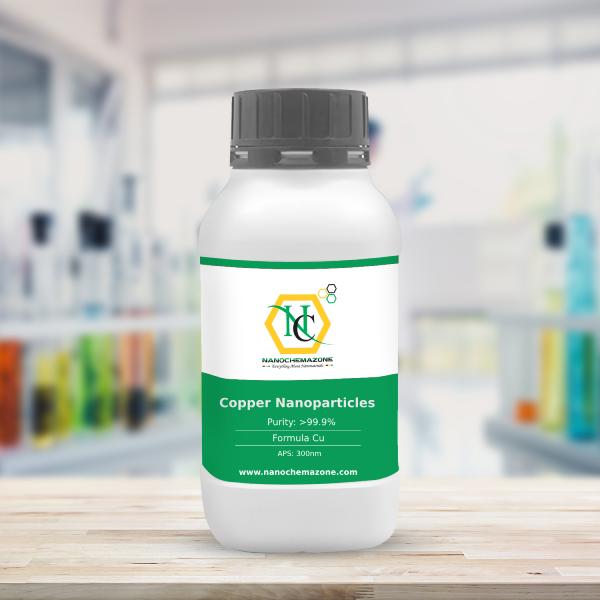
Copper Nanoparticles/Nanopowder (Cu, 99.5%, 300nm)

Price range: $50.00 through $92.00
Select options This product has multiple variants. The options may be chosen on the product page
$50/25g $92/100g

Product 

Copper Nanoparticles/Nanopowder (Cu, 99.5%, 300nm)

CAS No.

7440-50-8

Appearance

Powder

Purity

≥99%,  ≥99.9%,  ≥95%

(Other purities are also available)

APS

300nm (Size Can be customized), Ask for other available size ranges.

Ingredient

AlN

Molecular Weight

63.55 g/mol

Melting Point

1084.62 °C

Boiling Point

2562 °C

Density

8.96 g/cm³

Product Codes

NCZ-1035K

Tungsten Disulfide Nanopowder/ Nanoparticles ( WS2, 99.9%, 0.8um)

$91.00
Select options This product has multiple variants. The options may be chosen on the product page
$91/100g

Product 

Tungsten Disulfide Nanopowder/ Nanoparticles ( WS2, 99.9%, 0.8um)

CAS No.

12138-09-9

Appearance

Powder

Purity

≥99%,  ≥99.9%,  ≥95%

(Other purities are also available)

APS


 0.8um (Size Can be customized), Ask for other available size ranges.

Ingredient

N/A

Molecular Weight

247.97 g/mol

Melting Point

~1,250 °C

Boiling Point

 ~2,295 °C

Density

 ~7.5 g/cm³

Product Codes

NCZ-1203K

Nickel (Ni) Sputtering Targets, Purity: 99.9%, Size: 2”, Thickness: 0.125”

$91.00

Applications of Sputtering Targets;

Film deposition is accomplished using sputtering targets. A technique for sputtering thin films is called "deposition made by sputter targets," which entails eroding material from a "target" source onto a "substrate" like a silicon wafer. Etching of the target is done using semiconductor sputtering targets. When selectivity is not an issue and a high degree of etching anisotropy is required, sputter etching is the method of choice. By removing the target material through etching, sputter targets are also utilized for investigation. In secondary ion spectroscopy (SIMS), one example is when the target material is sputtered at a steady pace. Mass spectrometry is used to quantify the concentration and identity of spewed atoms as the target is sputtered.

By helping of the sputtering target, the composition of the target material may be evaluated and even extremely tiny amounts of contaminants are recognized.

There is also an application area for sputtering targets in space. One type of space weathering that alters the chemical and physical characteristics of airless worlds like the Moon and asteroids is sputtering.

Cobalt (Co) Sputtering Targets, Purity: 99.95%, Size: 1”, Thickness: 0.125”

$91.00

Applications of Sputtering Targets;

Film deposition is accomplished using sputtering targets. A technique for sputtering thin films is called "deposition made by sputter targets," which entails eroding material from a "target" source onto a "substrate" like a silicon wafer. Etching of the target is done using semiconductor sputtering targets. When selectivity is not an issue and a high degree of etching anisotropy is required, sputter etching is the method of choice. By removing the target material through etching, sputter targets are also utilized for investigation. In secondary ion spectroscopy (SIMS), one example is when the target material is sputtered at a steady pace. Mass spectrometry is used to quantify the concentration and identity of spewed atoms as the target is sputtered.

The target material's composition may be ascertained and even very low concentrations of contaminants can be found with the aid of the sputtering target.

There is also an application area for sputtering targets in space. One type of space weathering that alters the chemical and physical characteristics of airless worlds like the Moon and asteroids is sputtering.

The chemical element cobalt has the atomic number 27 and the symbol Co. Cobalt is a silver-gray, hard, and shiny metal. Because it is one of only three room temperature ferromagnets with unaxial symmetry and hence suitability for digital recording, cobalt is employed in the production of high-strength, wear-resistant alloys as well as magnetic recording.

Zinc (Zn) Sputtering Targets, Purity: 99.99%, Size: 1”, Thickness: 0.125”

$90.00

Product 

Zinc (Zn) Sputtering Targets, Purity: 99.99%, Size: 1'', Thickness: 0.125''

CAS No.

7440‑66‑6

Appearance

Powder

Purity

≥99%,  ≥99.9%,  ≥95%

(Other purities are also available)

APS

Zn (black granules) (Size Can be customized), Ask for other available size ranges.

Ingredient

N/A

Molecular Weight

65.38 g/mol

Melting Point

419.5 °C

Boiling Point

 907 °C

Density

7.14 g/cm³

Product Codes

NCZ-1479K

Silicon Carbide Nanoparticles/ Nanopowder (SiC, 99.0+%, 40nm, beta)

Price range: $55.00 through $90.00
Select options This product has multiple variants. The options may be chosen on the product page
$55/25g
$90/100g

Product 

Silicon Carbide Nanoparticles/ Nanopowder (SiC, 99.0+%, 40nm, beta)

CAS No.

409-21-2

Appearance

Powder

Purity

≥99%,  ≥99.9%,  ≥95%

(Other purities are also available)

APS

  40nm (Size Can be customized), Ask for other available size ranges.

Ingredient

N/A

Molecular Weight

40.10 g/mol

Melting Point

~2,730 °C

Boiling Point

~3,100 °C

Density

~3.21 g/cm³

Product Codes

NCZ-1174K

Magnesium (Mg) Sputtering Targets, Purity: 99.95%, Size: 1”, Thickness: 0.125”

$90.00

Applications of Sputtering Targets;

Film deposition is accomplished using sputtering targets. A technique for sputtering thin films is called "deposition made by sputter targets," which entails eroding material from a "target" source onto a "substrate" like a silicon wafer. Etching of the target is done using semiconductor sputtering targets. When selectivity is not an issue and a high degree of etching anisotropy is required, sputter etching is the method of choice. By removing the target material through etching, sputter targets are also utilized for investigation. In secondary ion spectroscopy (SIMS), one example is when the target material is sputtered at a steady pace. Mass spectrometry is used to quantify the concentration and identity of spewed atoms as the target is sputtered.

By helping of the sputtering target, the composition of the target material may be evaluated and even extremely tiny amounts of contaminants are recognized.

There is also an application area for sputtering targets in space. One type of space weathering that alters the chemical and physical characteristics of airless worlds like the Moon and asteroids is sputtering.

Copper (Cu) Sputtering Targets, Purity: 99.999%, Size: 1”, Thickness: 0.250”

$90.00

Applications of Sputtering Targets;

Film deposition is accomplished using sputtering targets. A technique for sputtering thin films is called "deposition made by sputter targets," which entails eroding material from a "target" source onto a "substrate" like a silicon wafer. Etching of the target is done using semiconductor sputtering targets. When selectivity is not an issue and a high degree of etching anisotropy is required, sputter etching is the method of choice. By removing the target material through etching, sputter targets are also utilized for investigation. In secondary ion spectroscopy (SIMS), one example is when the target material is sputtered at a steady pace. Mass spectrometry is used to quantify the concentration and identity of spewed atoms as the target is sputtered.

The target material's composition may be ascertained and even very low concentrations of contaminants can be found with the aid of the sputtering target.

There is also an application area for sputtering targets in space. One type of space weathering that alters the chemical and physical characteristics of airless worlds like the Moon and asteroids is sputtering.

Titanium (Ti) Nanopowder/Nanoparticles, Purity: 99.95%, Size: 65 nm, Metal Basis

$89.67
Select options This product has multiple variants. The options may be chosen on the product page
Titanium (Ti) Nanopowder/Nanoparticles Purity: 99.95%, Size: 65 nm, Metal Basis Technical Properties: True Density (g/cm3) 4,5 Shape spherical Average Particle

Copper (Cu) Sputtering Targets, Purity: 99.99%, Size: 2”, Thickness: 0.250”

$89.00

Product 

Copper (Cu) Sputtering Targets, Purity: 99.99%, Size: 2'', Thickness: 0.250''

CAS No.

7440-50-8

Appearance

Powder

Purity

≥99%,  ≥99.9%,  ≥95%

(Other purities are also available)

APS

 N/A (Size Can be customized), Ask for other available size ranges.

Ingredient

N/A

Molecular Weight

63.55 g/mol

Melting Point

1,084 °C

Boiling Point

 2,562 °C

Density

8.96 g/cm³

Product Codes

NCZ-2268K

Copper (Cu) Sputtering Targets, Purity: 99.99%, Size: 3”, Thickness: 0.125”

$89.00

Product 

Copper (Cu) Sputtering Targets, Purity: 99.99%, Size: 3'', Thickness: 0.125''

CAS No.

7440-50-8

Appearance

Powder

Purity

≥99%,  ≥99.9%,  ≥95%

(Other purities are also available)

APS

 N/A (Size Can be customized), Ask for other available size ranges.

Ingredient

N/A

Molecular Weight

63.55 g/mol

Melting Point

1,084 °C

Boiling Point

 2,562 °C

Density

8.96 g/cm³

Product Codes

NCZ-2266K