Aluminum Silicon (AlSi) Sputtering Targets, Purity: 99.999%, Size: 1”, Thickness: 0.250”

$150.00

Applications of Sputtering Targets;

Film deposition is accomplished using sputtering targets. A technique for sputtering thin films is called "deposition made by sputter targets," which entails eroding material from a "target" source onto a "substrate" like a silicon wafer. Etching of the target is done using semiconductor sputtering targets. When selectivity is not an issue and a high degree of etching anisotropy is required, sputter etching is the method of choice. By removing the target material through etching, sputter targets are also utilized for investigation. In secondary ion spectroscopy (SIMS), one example is when the target material is sputtered at a steady pace. When the target shatters,

Mass spectrometry measures the concentration and identity of sputtered atoms. The target material's composition may be ascertained and even very low concentrations of contaminants can be found with the aid of the sputtering target.

There is also an application area for sputtering targets in space. One type of space weathering that alters the chemical and physical characteristics of airless worlds like the Moon and asteroids is sputtering.

Erbium Oxide (Er2O3) Sputtering Targets, Purity: 99.99%, Size: 1”, Thickness: 0.125”

$150.00
Select options This product has multiple variants. The options may be chosen on the product page

Applications of Sputtering Targets;

  • Sputtering targets is used for film deposition. The deposition made by sputter targets is a method of depositing thin films by sputtering that involves eroding material from a "target" source onto a "substrate" such as  a silicon wafer.
  • Semiconductor sputtering targets is used to etch the target. Sputter etching is chosen in cases where a high degree of etching anisotropy is needed and selectivity is not a concern.
  • Sputter targets is also used for analysis by etching away the target material.
One of the example occurs in secondary ion spectroscopy (SIMS), where the target sample is sputtered at a constant rate. As the target is sputtered, the concentration and identity of sputtered atoms are measured using mass spectrometry. By helping of the sputtering target, the composition of the target material can be determined and even extremely low concentrations of impurities are detected. Sputtering target has also application area in space. Sputtering is one of the forms of space weathering, a process that changes the physical and chemical properties of airless bodies, such as asteroids and the Moon. Erbium oxide with a chemical formula of Er2Ois an oxide of erbium metal. The applications of erbium oxide are varied due to their electrical, optical and photoluminescence properties. Nanoscale materials doped with Er+3 are of much interest because they have special particle-size-dependent optical and electrical properties. Erbium oxide doped nanoparticle materials can be dispersed in glass or plastic for display purposes, such as display monitors. The spectroscopy of Er+3 electronic transitions in host crystals lattices of nanoparticles combined with ultrasonically formed geometries in aqueous solution of carbon nanotubes is of great interest for synthesis of photoluminescence nanoparticles in ‘green’ chemistry. Erbium oxide is among the most important rare earth metals used in biomedicine. Erbium oxides are also used as gate dielectrics in semiconductor devices since it has a high dielectric constant (10-14) and a large band gap. Erbium is sometimes used as a coloring for glasses and erbium oxide can also be used as a burnable neutron poison for nuclear fuel. Erbium oxide films obtained by sputtering can be used for their photoluminescence effect.

Magnesium (Mg) Sputtering Targets, Purity: 99.98%, Size: 1”, Thickness: 0.125”

$149.00

Product 

Magnesium (Mg) Sputtering Targets, Purity: 99.98%, Size: 1'', Thickness: 0.125''

CAS No.

7439-95-4

Appearance

Powder

Purity

≥99%,  ≥99.9%,  ≥95%

(Other purities are also available)

APS

 N/A (Size Can be customized), Ask for other available size ranges.

Ingredient

N/A

Molecular Weight

 24.305 g/mol

Melting Point

 650 °C

Boiling Point

 1,090 °C

Density

1.738 g/cm³

Product Codes

NCZ-2006K

Copper (Cu) Sputtering Targets, Purity: 99.999%, Size: 2”, Thickness: 0.250”

$149.00

Applications of Sputtering Targets;

Film deposition is accomplished using sputtering targets. A technique for sputtering thin films is called "deposition made by sputter targets," which entails eroding material from a "target" source onto a "substrate" like a silicon wafer. Etching of the target is done using semiconductor sputtering targets. When selectivity is not an issue and a high degree of etching anisotropy is required, sputter etching is the method of choice. By removing the target material through etching, sputter targets are also utilized for investigation. In secondary ion spectroscopy (SIMS), one example is when the target material is sputtered at a steady pace. Mass spectrometry is used to quantify the concentration and identity of spewed atoms as the target is sputtered.

The target material's composition may be ascertained and even very low concentrations of contaminants can be found with the aid of the sputtering target.

There is also an application area for sputtering targets in space. One type of space weathering that alters the chemical and physical characteristics of airless worlds like the Moon and asteroids is sputtering.

Yttrium (Y) Sputtering Targets, Purity: 99.9%, Size: 1”, Thickness: 0.125”

$149.00

Applications of Sputtering Targets;

  • Sputtering targets is used for film deposition. The deposition made by sputter targets is a method of depositing thin films by sputtering that involves eroding material from a "target" source onto a "substrate" such as  a silicon wafer.
  • Semiconductor sputtering targets is used to etch the target. Sputter etching is chosen in cases where a high degree of etching anisotropy is needed and selectivity is not a concern.
  • Sputter targets is also used for analysis by etching away the target material.
One of the example occurs in secondary ion spectroscopy (SIMS), where the target sample is sputtered at a constant rate. As the target is sputtered, the concentration and identity of sputtered atoms are measured using mass spectrometry. By helping of the sputtering target, the composition of the target material can be determined and even extremely low concentrations of impurities are detected. Sputtering target has also application area in space. Sputtering is one of the forms of space weathering, a process that changes the physical and chemical properties of airless bodies, such as asteroids and the Moon.

Gadolinium Oxide (Gd2O3) Micron Powder, Purity: 99.99%, Size: 325 mesh

Price range: $23.00 through $149.00
Select options This product has multiple variants. The options may be chosen on the product page

Applications:

Gadolinium oxide is used in different fluorescent, luminescence and electric devices. It is used in lectroluminescent devices, cathode-ray tube, field emission displays, ferroelectric memory, plasma display panals, ultraviolet detectors, and high resolution x-ray medical imaging.

5N (99.999%) Perovskite Grade Lead (II) Bromide (PbBr2), 5g

$148.00
Product 5N (99.999%) Perovskite Grade Lead (II) Bromide (PbBr2), 5g
CAS No. 10031-22-8
Appearance White 
Purity ≥99%,  ≥99.9%,  ≥95%(Other purities are also available)
APS 100nm-10µm (Size Can be customized), Ask for other available size range.
Ingredient PbBr2
Molecular Weight 367.01 g/mol
Melting Point 371 °C
Boiling Point 892 °C
Density 6.66 g/cm³
Product Codes NCZ-101I
 

Multi Walled Nanotubes (MWNTs, 95%, 30-50nm)

Price range: $48.00 through $148.00
Select options This product has multiple variants. The options may be chosen on the product page
$47/5g
$81/25g
$148/100g

Product 

Multi Walled Nanotubes (MWNTs, 95%, 30-50nm)

CAS No.

7727-54-0

Appearance

Powder

Purity

≥99%,  ≥99.9%,  ≥95%

(Other purities are also available)

APS

30-50nm (Size Can be customized), Ask for other available size ranges.

Ingredient

N/A

Molecular Weight

228.20 g/mol

Melting Point

 120 °C

Boiling Point

N/A

Density

 1.98 g/cm³

Product Codes

NCZ-1234K

Multi Walled Nanotubes (MWNTs, 95%, 20-30 nm)

Price range: $42.00 through $148.00
Select options This product has multiple variants. The options may be chosen on the product page
$42/5g
$81/25g
$148/100g
 

Product 

Multi Walled Nanotubes (MWNTs, 95%, 20-30 nm)

CAS No.

7727-54-0

Appearance

Powder

Purity

≥99%,  ≥99.9%,  ≥95%

(Other purities are also available)

APS

20-30 nm (Size Can be customized), Ask for other available size ranges.

Ingredient

N/A

Molecular Weight

228.20 g/mol

Melting Point

120 °C

Boiling Point

N/A

Density

 1.98 g/cm³

Product Codes

NCZ-1233K

Tungsten Titanium (TiW) Sputtering Targets, Purity: 99.995%, Size: 1”, Thickness: 0.250”

$148.00

Applications of Sputtering Targets;

Film deposition is accomplished using sputtering targets. A technique for sputtering thin films is called "deposition made by sputter targets," which entails eroding material from a "target" source onto a "substrate" like a silicon wafer. Etching of the target is done using semiconductor sputtering targets. When selectivity is not an issue and a high degree of etching anisotropy is required, sputter etching is the method of choice. By removing the target material through etching, sputter targets are also utilized for investigation. In secondary ion spectroscopy (SIMS), one example is when the target material is sputtered at a steady pace. Mass spectrometry is used to quantify the concentration and identity of spewed atoms as the target is sputtered.

The target material's composition may be ascertained and even very low concentrations of contaminants can be found with the aid of the sputtering target.

There is also an application area for sputtering targets in space. One type of space weathering that alters the chemical and physical characteristics of airless worlds like the Moon and asteroids is sputtering.

Molybdenum (Mo) Sputtering Targets, Purity: 99.95%, Size: 2”, Thickness: 0.125”

$148.00

Applications of Sputtering Targets;

Film deposition is accomplished using sputtering targets. A technique for sputtering thin films is called "deposition made by sputter targets," which entails eroding material from a "target" source onto a "substrate" like a silicon wafer. Etching of the target is done using semiconductor sputtering targets. When selectivity is not an issue and a high degree of etching anisotropy is required, sputter etching is the method of choice. By removing the target material through etching, sputter targets are also utilized for investigation. In secondary ion spectroscopy (SIMS), one example is when the target material is sputtered at a steady pace. Mass spectrometry is used to quantify the concentration and identity of spewed atoms as the target is sputtered.

By helping of the sputtering target, the composition of the target material may be evaluated and even extremely tiny amounts of contaminants are recognized.

There is also an application area for sputtering targets in space. One type of space weathering that alters the chemical and physical characteristics of airless worlds like the Moon and asteroids is sputtering.

Aluminum Silicon (AlSi) Sputtering Targets, Purity: 99.999%, Size: 2”, Thickness: 0.125”

$147.00

Product 

Aluminum Silicon (AlSi) Sputtering Targets, Purity: 99.999%, Size: 2'', Thickness: 0.125''

CAS No.

Aluminum: 7429-90-5 Silicon: 7440-21-3

Appearance

Powder

Purity

≥99%,  ≥99.9%,  ≥95%

(Other purities are also available)

APS

N/A (Size Can be customized), Ask for other available size ranges.

Ingredient

N/A

Molecular Weight

 Al: 26.98 g/mol Si: 28.09 g/mol

Melting Point

 ~577–660 °C (depends on Si content)

Boiling Point

~2519 °C (approx.)

Density

~2.6–2.7 g/cm³

Product Codes

NCZ-2517K

MWNTs -COOH Functionalized 95% 30-50 nm

Price range: $50.00 through $147.00
Select options This product has multiple variants. The options may be chosen on the product page
$50/5g
$82/25g
$147/100g

Product 

MWNTs -COOH Functionalized 95% 30-50 nm

CAS No.

7727-54-0

Appearance

Powder

Purity

≥99%,  ≥99.9%,  ≥95%

(Other purities are also available)

APS

30-50 nm (Size Can be customized), Ask for other available size ranges.

Ingredient

N/A

Molecular Weight

228.20 g/mol

Melting Point

~120 °C

Boiling Point

NA

Density

 1.98 g/cm³

Product Codes

NCZ-1273K

MWNTs -OH Functionalized

Price range: $50.00 through $147.00
Select options This product has multiple variants. The options may be chosen on the product page
$50/5g
$82/25g
$147/100g

Product 

MWNTs -OH Functionalized

CAS No.

7727-54-0

Appearance

Powder

Purity

≥99%,  ≥99.9%,  ≥95%

(Other purities are also available)

APS

8–50 nm (Size Can be customized), Ask for other available size ranges.

Ingredient

N/A

Molecular Weight

228.20 g/mol

Melting Point

~120 °C

Boiling Point

N/A

Density

1.98 g/cm³

Product Codes

NCZ-1254K

Carbonyl Nickel Powder (Ni, 4-7 um, spherical)

Price range: $61.00 through $147.00
Select options This product has multiple variants. The options may be chosen on the product page
$61/100g
$147/500g

Product 

Carbonyl Nickel Powder (Ni, 4-7 um, spherical)

CAS No.

7440-02-0

Appearance

Powder

Purity

≥99%,  ≥99.9%,  ≥95%

(Other purities are also available)

APS

4-7 um (Size Can be customized), Ask for other available size ranges.

Ingredient

N/A

Molecular Weight

58.69 g/mol

Melting Point

1455 °C

Boiling Point

2913 °C

Density

8.90 g/cm³

Product Codes

NCZ-1059K

Carbonyl Nickel Powder ( Ni, 2-3 microns)

Price range: $61.00 through $147.00
Select options This product has multiple variants. The options may be chosen on the product page
$61/100g
$147/500g

Product 

Carbonyl Nickel Powder ( Ni, 2-3 microns)

CAS No.

7440-02-0

Appearance

Powder

Purity

≥99%,  ≥99.9%,  ≥95%

(Other purities are also available)

APS

2-3 microns (Size Can be customized), Ask for other available size ranges.

Ingredient

N/A

Molecular Weight

58.69 g/mol

Melting Point

1455 °C

Boiling Point

2913 °C

Density

8.90 g/cm³

Product Codes

NCZ-1059K

Dysprosium Oxide (Dy2O3) Nanopowder/Nanoparticles, High Purity: 99.95+%, Size: 28 nm

Price range: $29.00 through $147.00
Select options This product has multiple variants. The options may be chosen on the product page
1 gram/26 € 5 grams/58 € 25 grams/130 €
Please contact us for quotes on larger quantities !!!

Dysprosium Oxide (Dy2O3) Nanopowder/Nanoparticles

High Purity: 99.95+%, Size: 28 nm

Applications:

Dysprosium oxide nanoparticles show good magnetic and optical properties. these properties are applied in magneto-optical recording materials and in luminescence. It is a neutron absorbent and used in the measurement of neutron energy-spectrum and in nuclear reaction control rods. It is used as glass material in laser-based and optical devices with a Faraday Rotation affect.

Iron (Fe) Sputtering Targets, Purity: 99.99%, Size: 2”, Thickness: 0.125”

$146.00

Product 

Iron (Fe) Sputtering Targets, Purity: 99.99%, Size: 2'', Thickness: 0.125''

CAS No.

 7439-89-6

Appearance

Powder

Purity

≥99%,  ≥99.9%,  ≥95%

(Other purities are also available)

APS

 N/A (Size Can be customized), Ask for other available size ranges.

Ingredient

N/A

Molecular Weight

 55.85 g/mol

Melting Point

 1538 °C

Boiling Point

 2862 °C

Density

 7.87 g/cm³

Product Codes

NCZ-2187K

Niobium Oxide (Nb2O5) Sputtering Targets, Purity: 99.5%, Size: 1”, Thickness: 0.250”

$146.00

Applications of Sputtering Targets;

Film deposition is accomplished using sputtering targets. A technique for sputtering thin films is called "deposition made by sputter targets," which entails eroding material from a "target" source onto a "substrate" like a silicon wafer. Etching of the target is done using semiconductor sputtering targets. When selectivity is not an issue and a high degree of etching anisotropy is required, sputter etching is the method of choice. By removing the target material through etching, sputter targets are also utilized for investigation. In secondary ion spectroscopy (SIMS), one example is when the target material is sputtered at a steady pace. Mass spectrometry is used to quantify the concentration and identity of spewed atoms as the target is sputtered.

The target material's composition may be ascertained and even very low concentrations of contaminants can be found with the aid of the sputtering target.

There is also an application area for sputtering targets in space. One type of space weathering that alters the chemical and physical characteristics of airless worlds like the Moon and asteroids is sputtering.

Silicon Dioxide (SiO2) Sputtering Targets, Fused Quartz, Purity: 99.995%, Size: 3”, Thickness: 0.125”

$145.00

Product 

Silicon Dioxide (SiO2) Sputtering Targets, Fused Quartz, Purity: 99.995%, Size: 3'', Thickness: 0.125''

CAS No.

7631-86-9

Appearance

Powder

Purity

≥99%,  ≥99.9%,  ≥95%

(Other purities are also available)

APS

N/A  (Size Can be customized), Ask for other available size ranges.

Ingredient

N/A

Molecular Weight

60.08 g/mol

Melting Point

~1710°C

Boiling Point

 ~2,950 °C

Density

~2.20 g/cm³

Product Codes

NCZ-1716K

Zinc (Zn) Sputtering Targets, Purity: 99.95%, Size: 2”, Thickness: 0.125”

$145.00

Product 

Zinc (Zn) Sputtering Targets, Purity: 99.95%, Size: 2'', Thickness: 0.125''

CAS No.

7440‑66‑6

Appearance

Powder

Purity

≥99%,  ≥99.9%,  ≥95%

(Other purities are also available)

APS

Zn (black granules) (Size Can be customized), Ask for other available size ranges.

Ingredient

N/A

Molecular Weight

65.38 g/mol

Melting Point

419.5 °C

Boiling Point

 907 °C

Density

7.14 g/cm³

Product Codes

NCZ-1474K

Nickel Iron (Ni-Fe) Sputtering Targets, Purity: 99.95%, Size: 1”, Thickness: 0.250”

$145.00

Applications of Sputtering Targets;

Film deposition is accomplished using sputtering targets. A technique for sputtering thin films is called "deposition made by sputter targets," which entails eroding material from a "target" source onto a "substrate" like a silicon wafer. Etching of the target is done using semiconductor sputtering targets. When selectivity is not an issue and a high degree of etching anisotropy is required, sputter etching is the method of choice. By removing the target material through etching, sputter targets are also utilized for investigation. In secondary ion spectroscopy (SIMS), one example is when the target material is sputtered at a steady pace. Mass spectrometry is used to quantify the concentration and identity of spewed atoms as the target is sputtered.

The target material's composition may be ascertained and even very low concentrations of contaminants can be found with the aid of the sputtering target.

There is also an application area for sputtering targets in space. One type of space weathering that alters the chemical and physical characteristics of airless worlds like the Moon and asteroids is sputtering.

Cobalt (Co) Sputtering Targets, Purity: 99.95%, Size: 3”, Thickness: 0.125”

$145.00

Applications of Sputtering Targets;

Film deposition is accomplished using sputtering targets. A technique for sputtering thin films is called "deposition made by sputter targets," which entails eroding material from a "target" source onto a "substrate" like a silicon wafer. Etching of the target is done using semiconductor sputtering targets. When selectivity is not an issue and a high degree of etching anisotropy is required, sputter etching is the method of choice. By removing the target material through etching, sputter targets are also utilized for investigation. In secondary ion spectroscopy (SIMS), one example is when the target material is sputtered at a steady pace. Mass spectrometry is used to quantify the concentration and identity of spewed atoms as the target is sputtered.

The target material's composition may be ascertained and even very low concentrations of contaminants can be found with the aid of the sputtering target.

There is also an application area for sputtering targets in space. One type of space weathering that alters the chemical and physical characteristics of airless worlds like the Moon and asteroids is sputtering.

The chemical element cobalt has the atomic number 27 and the symbol Co. Cobalt is a silver-gray, hard, and shiny metal. Because it is one of only three room temperature ferromagnets with unaxial symmetry and hence suitability for digital recording, cobalt is employed in the production of high-strength, wear-resistant alloys as well as magnetic recording.

Silicon Dioxide (SiO2) Nanopowder/Nanoparticles Dispersion in Water, Amorphous, Size: 8-33 nm, 26 wt%

Price range: $67.00 through $145.00
Select options This product has multiple variants. The options may be chosen on the product page
Silicon Dioxide (SiO2) Nanopowder/Nanoparticles Dispersion in Water Amorphous, Size: 8-33 nm, 26 wt%

Aluminum (Al) Sputtering Targets, Purity: 99.999%, Size: 1”, Thickness: 0.250”

$144.00

Product 

Aluminum (Al) Sputtering Targets, Purity: 99.999%, Size: 1'', Thickness: 0.250''

CAS No.

 7429-90-5

Appearance

Powder

Purity

≥99%,  ≥99.9%,  ≥95%

(Other purities are also available)

APS

N/A (Size Can be customized), Ask for other available size ranges.

Ingredient

N/A

Molecular Weight

 26.98 g/mol

Melting Point

 660.3 °C

Boiling Point

 2519 °C

Density

 2.70 g/cm³

Product Codes

NCZ-2580K

Nickel (Ni) Sputtering Targets, Purity: 99.9%, Size: 2”, Thickness: 0.250”

$144.00

Applications of Sputtering Targets;

Film deposition is accomplished using sputtering targets. A technique for sputtering thin films is called "deposition made by sputter targets," which entails eroding material from a "target" source onto a "substrate" like a silicon wafer. Etching of the target is done using semiconductor sputtering targets. When selectivity is not an issue and a high degree of etching anisotropy is required, sputter etching is the method of choice. By removing the target material through etching, sputter targets are also utilized for investigation. In secondary ion spectroscopy (SIMS), one example is when the target material is sputtered at a steady pace. Mass spectrometry is used to quantify the concentration and identity of spewed atoms as the target is sputtered.

The target material's composition may be ascertained and even very low concentrations of contaminants can be found with the aid of the sputtering target.

There is also an application area for sputtering targets in space. One type of space weathering that alters the chemical and physical characteristics of airless worlds like the Moon and asteroids is sputtering.

Carbon (C) (Graphite) Sputtering Targets, Purity: 99.999%, Size: 2”, Thickness: 0.250”

$144.00

Applications of Sputtering Targets;

Film deposition is accomplished using sputtering targets. A technique for sputtering thin films is called "deposition made by sputter targets," which entails eroding material from a "target" source onto a "substrate" like a silicon wafer. Etching of the target is done using semiconductor sputtering targets. When selectivity is not an issue and a high degree of etching anisotropy is required, sputter etching is the method of choice. By removing the target material through etching, sputter targets are also utilized for investigation. In secondary ion spectroscopy (SIMS), one example is when the target material is sputtered at a steady pace. Mass spectrometry is used to quantify the concentration and identity of spewed atoms as the target is sputtered.

The target material's composition may be ascertained and even very low concentrations of contaminants can be found with the aid of the sputtering target.

There is also an application area for sputtering targets in space. One type of space weathering that alters the chemical and physical characteristics of airless worlds like the Moon and asteroids is sputtering.
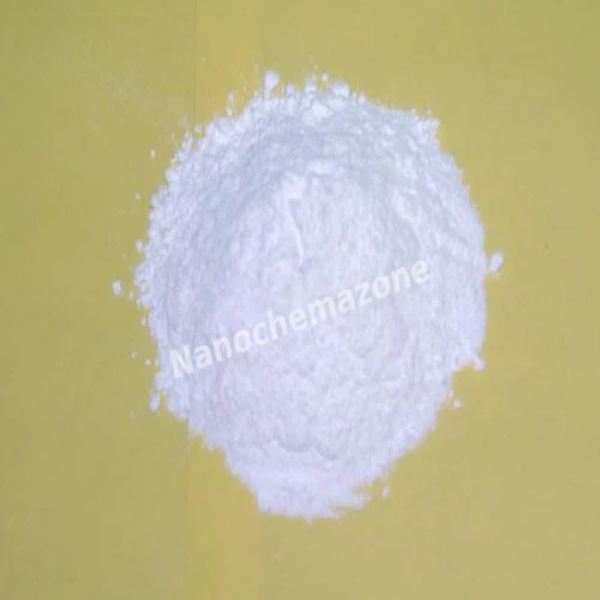
Nickel Tabs, Width: 3 mm

Price range: $47.00 through $144.00
Select options This product has multiple variants. The options may be chosen on the product page

Applications:

Nickel Tabs for use as the Negative Terminal of Polymer Li-ion Batteries

Nickel Tabs, Width: 3 mm

Price range: $47.00 through $144.00
Select options This product has multiple variants. The options may be chosen on the product page

Applications:

Nickel Tabs for use as the Negative Terminal of Polymer Li-ion Batteries

Aluminum Oxide (Al2O3) Nanopowder/Nanoparticles, Alpha, High Purity: 99.95%, Size: 290 nm, Hydrophilic

Price range: $21.00 through $144.00
Select options This product has multiple variants. The options may be chosen on the product page
5 grams/19 € 25 grams/34 € 100 grams/53 € 500 grams/87 € 1000 grams/127 €            
Please contact us for quotes on larger quantities !!! 

Aluminum Oxide (Al2O3) Nanopowder/Nanoparticles

Alpha, High Purity: 99.95%, Size: 290 nm, Hydrophilic

Applications:

Aluminum oxide nanoparticles show high hardness and high dimensional stability. It is used to improve toughness, wear resistance, thermal fatigue resistance, and ceramic density for rubber, plastics, and ceramics. It is used in high strength aluminum oxide ceramic, high purity crucibles, furnace tubes, and cutting tools. It is added to metal products, semiconductors, tapes, polishing materials, and glass products. Aluminum oxide nanoparticles have excellent properties for far infrared emission. It is used in fiber fabric products and high pressure sodium lamp as far-infrared emission and thermal insulation materials. In addition it is used in the field of catalysis as catalyst or catalyst carrier.

Zinc Ferrite (ZnFe2O4) Nanoparticle/Nanopowder, Zinc Iron Oxide Nanopowder, -200 mesh, 99.9%

Price range: $27.00 through $144.00
Select options This product has multiple variants. The options may be chosen on the product page
Zinc Ferrite (ZnFe2O4) Nanopowder/Nanopowder, Zinc Iron Oxide Nanopowder, -200 mesh, 99.9% 25 grams/24 € 100 grams/45 €  500 grams/94€ 1 kg/128€ Application Areas It has good dispersibility, high weather fastness and good opacity. It can be combined with organic pigments to obtain greens, reds and brown colors. This powder is recommended for Plastics, Powder Coatings, Coil Coatings and Stoving Paints.

Carbon Nanotube Sponges, Size: 10 mm x 10 mm, Thickness: 1-2 mm

$144.00
Carbon Nanotube Sponges, Size: 10 mm x 10 mm, Thickness: 1-2 mm The carbon nanotube sponge structure is uniform and they possess good mechanical strength, good flexibility, high porosity and low density. They can be used as a purifying agent in order to absorb pollutants. These pollutants can be fertilizers, pesticides or pharmaceuticals found in water, energy storage materials, catalyst carriers or in high-efficiency composite materials.

Strontium Fluoride (SrF2) 99%, 1kg

$143.00
Select options This product has multiple variants. The options may be chosen on the product page
Product Strontium Fluoride (SrF2) 99%, 1kg
CAS No. 7783-48-4
Appearance White crystalline
Purity ≥99%,  ≥99.9%,  ≥95%(Other purities are also available)
APS 10µm (Size Can be customized),  Ask for other available size range.
Ingredient SrF2
Molecular Weight 125.62 g/mol
Melting Point 1477 °C
Boiling Point N/A
Density 4.24 g/cm³
Product Codes NCZ-541I
 

Praseodymium (Pr) Sputtering Targets, Purity: 99.9%, Size: 2”, Thickness: 0.125”

$143.00

Product 

Praseodymium (Pr) Sputtering Targets, Purity: 99.9%, Size: 2'', Thickness: 0.125''

CAS No.

7440-10-0

Appearance

Powder

Purity

≥99%,  ≥99.9%,  ≥95%

(Other purities are also available)

APS

N/A (Size Can be customized), Ask for other available size ranges.

Ingredient

N/A

Molecular Weight

 140.91 g/mol

Melting Point

931 °C

Boiling Point

 3520 °C

Density

 6.77 g/cm³

Product Codes

NCZ-1793K

Barium Titanate Nanoparticles/Nanopowder (BaTiO3) 99.9%, 100nm, Cubic)

Price range: $25.00 through $143.00
Select options This product has multiple variants. The options may be chosen on the product page
$25/25g
$74/100g
$143/500g

Product 

Barium Titanate Nanoparticles/Nanopowder (BaTiO3) 99.9%, 100nm, Cubic)

CAS No.

12047-27-7

Appearance

Powder

Purity

≥99%,  ≥99.9%,  ≥95%

(Other purities are also available)

APS

100nm (Size Can be customized), Ask for other available size ranges.

Ingredient

N/A

Molecular Weight

233.19 g/mol

Melting Point

~1,625 °C

Boiling Point

 N/A

Density

~6.02 g/cm³

Product Codes

NCZ-1098K

Nickel (Ni) Sputtering Targets, Purity: 99.9%, Size: 3”, Thickness: 0.125”

$142.00

Product 

Nickel (Ni) Sputtering Targets, Purity: 99.9%, Size: 3'', Thickness: 0.125''

CAS No.

7440-02-0

Appearance

Powder

Purity

≥99%,  ≥99.9%,  ≥95%

(Other purities are also available)

APS

 N/A (Size Can be customized), Ask for other available size ranges.

Ingredient

N/A

Molecular Weight

 58.69 g/mol

Melting Point

~1,453 °C

Boiling Point

~2,913 °C

Density

 8.90 g/cm³

Product Codes

NCZ-1886K

Aluminum Silicon (AlSi) Sputtering Targets, Purity: 99.999%, Size: 1”, Thickness: 0.125”

$141.00

Product 

Aluminum Silicon (AlSi) Sputtering Targets, Purity: 99.999%, Size: 1'', Thickness: 0.125''

CAS No.

Aluminum: 7429-90-5 Silicon: 7440-21-3

Appearance

Powder

Purity

≥99%,  ≥99.9%,  ≥95%

(Other purities are also available)

APS

N/A (Size Can be customized), Ask for other available size ranges.

Ingredient

N/A

Molecular Weight

 Al: 26.98 g/mol Si: 28.09 g/mol

Melting Point

 ~577–660 °C (depends on Si content)

Boiling Point

~2519 °C (approx.)

Density

~2.6–2.7 g/cm³

Product Codes

NCZ-2519K

Molybdenum (Mo) Sputtering Targets, Purity: 99.95%, Size: 1”, Thickness: 0.125”

$141.00

Product 

Molybdenum (Mo) Sputtering Targets, Purity: 99.95%, Size: 1'', Thickness: 0.125''

CAS No.

 7439-98-7

Appearance

Powder

Purity

≥99%,  ≥99.9%,  ≥95%

(Other purities are also available)

APS

 N/A (Size Can be customized), Ask for other available size ranges.

Ingredient

N/A

Molecular Weight

95.95 g/mol

Melting Point

 2623 °C

Boiling Point

 4639 °C

Density

10.28 g/cm³

Product Codes

NCZ-1941K

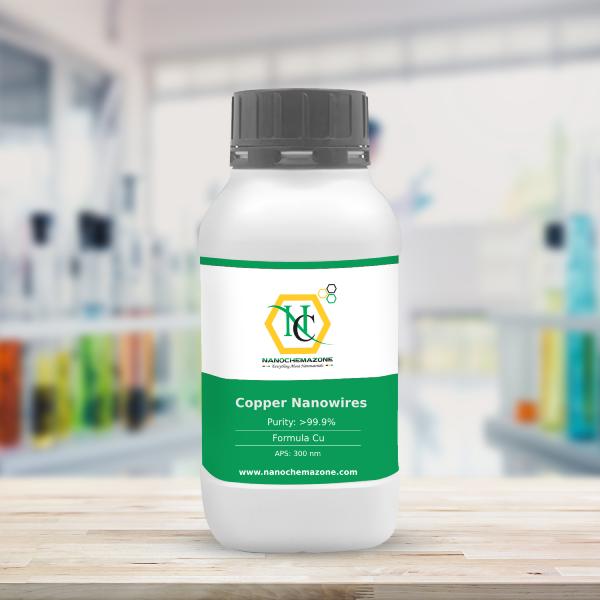
Copper Nanowires/ Cu Nanowires

$141.00
Select options This product has multiple variants. The options may be chosen on the product page
$141/5g

Product 

Copper Nanowires/ Cu Nanowires

CAS No.

7440-50-8

Appearance

Powder

Purity

≥99%,  ≥99.9%,  ≥95%

(Other purities are also available)

APS

150 nm (Size Can be customized), Ask for other available size ranges.

Ingredient

AlN

Molecular Weight

63.55 g/mol

Melting Point

1084.62 °C

Boiling Point

2562 °C

Density

8.96 g/cm³

Product Codes

NCZ-1039K

Nickel (Ni) Sputtering Targets, Purity: 99.99%, Size: 2”, Thickness: 0.125”

$141.00

Applications of Sputtering Targets;

Film deposition is accomplished using sputtering targets. A technique for sputtering thin films is called "deposition made by sputter targets," which entails eroding material from a "target" source onto a "substrate" like a silicon wafer. Etching of the target is done using semiconductor sputtering targets. When selectivity is not an issue and a high degree of etching anisotropy is required, sputter etching is the method of choice. By removing the target material through etching, sputter targets are also utilized for investigation. In secondary ion spectroscopy (SIMS), one example is when the target material is sputtered at a steady pace. Mass spectrometry is used to quantify the concentration and identity of spewed atoms as the target is sputtered. Film deposition is accomplished using sputtering targets. A technique for sputtering thin films is called "deposition made by sputter targets," which entails eroding material from a "target" source onto a "substrate" like a silicon wafer. Etching of the target is done using semiconductor sputtering targets. When selectivity is not an issue and a high degree of etching anisotropy is required, sputter etching is the method of choice. By removing the target material through etching, sputter targets are also utilized for investigation. In secondary ion spectroscopy (SIMS), one example is when the target material is sputtered at a steady pace. Mass spectrometry is used to quantify the concentration and identity of spewed atoms as the target is sputtered.

Iron (Fe) Sputtering Targets, Purity: 99.9%, Size: 4”, Thickness: 0.125”

$141.00

Applications of Sputtering Targets;

Film deposition is accomplished using sputtering targets. A technique for sputtering thin films is called "deposition made by sputter targets," which entails eroding material from a "target" source onto a "substrate" like a silicon wafer. Etching of the target is done using semiconductor sputtering targets. When selectivity is not an issue and a high degree of etching anisotropy is required, sputter etching is the method of choice. By removing the target material through etching, sputter targets are also utilized for investigation. In secondary ion spectroscopy (SIMS), one example is when the target material is sputtered at a steady pace. Mass spectrometry is used to quantify the concentration and identity of spewed atoms as the target is sputtered.

The target material's composition may be ascertained and even very low concentrations of contaminants can be found with the aid of the sputtering target.

There is also an application area for sputtering targets in space. One type of space weathering that alters the chemical and physical characteristics of airless worlds like the Moon and asteroids is sputtering.
Titanium Nitride Nanoparticles/ Nanopowder (TiN, 97%, 20nm)

Price range: $50.00 through $140.00
Select options This product has multiple variants. The options may be chosen on the product page
  $50/5g $71/25g
$140/100g

Product 

Titanium Nitride Nanoparticles/ Nanopowder (TiN, 97%, 20nm)

CAS No.

25583-20-4

Appearance

Powder

Purity

≥99%,  ≥99.9%,  ≥95%

(Other purities are also available)

APS

  20nm (Size Can be customized), Ask for other available size ranges.

Ingredient

N/A

Molecular Weight

61.88 g/mol

Melting Point

~2,950 °C

Boiling Point

~3,260 °C

Density

 ~5.43 g/cm³

Product Codes

NCZ-1201K

Aluminum Oxide (Al2O3) Nanopowder/Nanoparticles Dispersion in Water, Gamma, Size: 8 nm, 22 wt%

Price range: $51.00 through $140.00
Select options This product has multiple variants. The options may be chosen on the product page
120 ml/45 € 500 ml/85 € 1000 ml/124 €      
Please contact us for quotes on larger quantities !!!

Aluminum Oxide (Al2O3) Nanopowder/Nanoparticles Dispersion in Water

Gamma, Size: 8 nm, 22 wt%

Iron (Fe) Sputtering Targets, Purity: 99.95%, Size: 2”, Thickness: 0.125”

$139.00

Product 

Iron (Fe) Sputtering Targets, Purity: 99.95%, Size: 2'', Thickness: 0.125''

CAS No.

 7439-89-6

Appearance

Powder

Purity

≥99%,  ≥99.9%,  ≥95%

(Other purities are also available)

APS

 N/A (Size Can be customized), Ask for other available size ranges.

Ingredient

N/A

Molecular Weight

 55.85 g/mol

Melting Point

 1538 °C

Boiling Point

 2862 °C

Density

 7.87 g/cm³

Product Codes

NCZ-2188K

88-90% 25-50 nm Titanium Dioxide TiO2 Nanoparticles, 500g

$139.00
Product 88-90% 25-50 nm Titanium Dioxide TiO2 Nanoparticles, 500g
CAS No. 13463-67-7
Appearance Fine white
Purity ≥99%,  ≥99.9%,  ≥95%(Other purities are also available)
APS 25-50nm (Size Can be customized),  Ask for other available size range.
Ingredient TiO2
Molecular Weight 79.87 g/mol
Melting Point N/A
Boiling Point N/A
Density 4.23 g/cm³
Product Codes NCZ-206I
 

Magnesium (Mg) Sputtering Targets, Purity: 99.98%, Size: 1”, Thickness: 0.250”

$139.00

Applications of Sputtering Targets;

Film deposition is accomplished using sputtering targets. A technique for sputtering thin films is called "deposition made by sputter targets," which entails eroding material from a "target" source onto a "substrate" like a silicon wafer. Etching of the target is done using semiconductor sputtering targets. When selectivity is not an issue and a high degree of etching anisotropy is required, sputter etching is the method of choice. By removing the target material through etching, sputter targets are also utilized for investigation. In secondary ion spectroscopy (SIMS), one example is when the target material is sputtered at a steady pace. Mass spectrometry is used to quantify the concentration and identity of spewed atoms as the target is sputtered.

By helping of the sputtering target, the composition of the target material may be evaluated and even extremely tiny amounts of contaminants are recognized.

There is also an application area for sputtering targets in space. One type of space weathering that alters the chemical and physical characteristics of airless worlds like the Moon and asteroids is sputtering.

Aluminum (Al) Sputtering Targets, Purity: 99.999%, Size: 2”, Thickness: 0.250”

$138.00

Product 

Aluminum (Al) Sputtering Targets, Purity: 99.999%, Size: 2'', Thickness: 0.250''

CAS No.

 7429-90-5

Appearance

Powder

Purity

≥99%,  ≥99.9%,  ≥95%

(Other purities are also available)

APS

N/A (Size Can be customized), Ask for other available size ranges.

Ingredient

N/A

Molecular Weight

 26.98 g/mol

Melting Point

 660.3 °C

Boiling Point

 2519 °C

Density

 2.70 g/cm³

Product Codes

NCZ-2578K

Cobalt (Co) Sputtering Targets, Purity: 99.95%, Size: 2”, Thickness: 0.125”

$138.00

Product 

Cobalt (Co) Sputtering Targets, Purity: 99.95%, Size: 2'', Thickness: 0.125''

CAS No.

7440‑48‑4

Appearance

Powder

Purity

≥99%,  ≥99.9%,  ≥95%

(Other purities are also available)

APS

 N/A (Size Can be customized), Ask for other available size ranges.

Ingredient

N/A

Molecular Weight

58.93 g/mol (cobalt atomic weight)

Melting Point

~1,495 °C

Boiling Point

~2,870–2,927 °C

Density

~8.9 g/cm³

Product Codes

NCZ-2293K

Tin (Sn) Sputtering Targets, Purity: 99.99%, Size: 2”, Thickness: 0.125”

$138.00

Applications of Sputtering Targets;

Film deposition is accomplished using sputtering targets. A technique for sputtering thin films is called "deposition made by sputter targets," which entails eroding material from a "target" source onto a "substrate" like a silicon wafer. Etching of the target is done using semiconductor sputtering targets. When selectivity is not an issue and a high degree of etching anisotropy is required, sputter etching is the method of choice. By removing the target material through etching, sputter targets are also utilized for investigation. In secondary ion spectroscopy (SIMS), one example is when the target material is sputtered at a steady pace. Mass spectrometry is used to quantify the concentration and identity of spewed atoms as the target is sputtered.

The target material's composition may be ascertained and even very low concentrations of contaminants can be found with the aid of the sputtering target.

There is also an application area for sputtering targets in space. One type of space weathering that alters the chemical and physical characteristics of airless worlds like the Moon and asteroids is sputtering.

Nickel Iron (Ni-Fe) Sputtering Targets, Purity: 99.95%, Size: 1”, Thickness: 0.125”

$138.00

Applications of Sputtering Targets;

Film deposition is accomplished using sputtering targets. A technique for sputtering thin films is called "deposition made by sputter targets," which entails eroding material from a "target" source onto a "substrate" like a silicon wafer. Etching of the target is done using semiconductor sputtering targets. When selectivity is not an issue and a high degree of etching anisotropy is required, sputter etching is the method of choice. By removing the target material through etching, sputter targets are also utilized for investigation. In secondary ion spectroscopy (SIMS), one example is when the target material is sputtered at a steady pace. Mass spectrometry is used to quantify the concentration and identity of spewed atoms as the target is sputtered.

The target material's composition may be ascertained and even very low concentrations of contaminants can be found with the aid of the sputtering target.

There is also an application area for sputtering targets in space. One type of space weathering that alters the chemical and physical characteristics of airless worlds like the Moon and asteroids is sputtering.

Nickel Chromium (Ni-Cr) Sputtering Targets, Purity: 99.9%, Size: 1”, Thickness: 0.250”

$138.00

Applications of Sputtering Targets;

Film deposition is accomplished using sputtering targets. A technique for sputtering thin films is called "deposition made by sputter targets," which entails eroding material from a "target" source onto a "substrate" like a silicon wafer. Etching of the target is done using semiconductor sputtering targets. When selectivity is not an issue and a high degree of etching anisotropy is required, sputter etching is the method of choice. By removing the target material through etching, sputter targets are also utilized for investigation. In secondary ion spectroscopy (SIMS), one example is when the target material is sputtered at a steady pace. Mass spectrometry is used to quantify the concentration and identity of spewed atoms as the target is sputtered.

The target material's composition may be ascertained and even very low concentrations of contaminants can be found with the aid of the sputtering target.

There is also an application area for sputtering targets in space. One type of space weathering that alters the chemical and physical characteristics of airless worlds like the Moon and asteroids is sputtering.

Nickel (Ni) Sputtering Targets, Purity: 99.9%, Size: 3”, Thickness: 0.250”

$138.00

Applications of Sputtering Targets;

Film deposition is accomplished using sputtering targets. A technique for sputtering thin films is called "deposition made by sputter targets," which entails eroding material from a "target" source onto a "substrate" like a silicon wafer. Etching of the target is done using semiconductor sputtering targets. When selectivity is not an issue and a high degree of etching anisotropy is required, sputter etching is the method of choice. By removing the target material through etching, sputter targets are also utilized for investigation. In secondary ion spectroscopy (SIMS), one example is when the target material is sputtered at a steady pace. Mass spectrometry is used to quantify the concentration and identity of spewed atoms as the target is sputtered.

By helping of the sputtering target, the composition of the target material may be evaluated and even extremely tiny amounts of contaminants are recognized.

There is also an application area for sputtering targets in space. One type of space weathering that alters the chemical and physical characteristics of airless worlds like the Moon and asteroids is sputtering.

Iron (Fe) Sputtering Targets, Purity: 99.9%, Size: 2”, Thickness: 0.250”

$138.00

Applications of Sputtering Targets;

Film deposition is accomplished using sputtering targets. A technique for sputtering thin films is called "deposition made by sputter targets," which entails eroding material from a "target" source onto a "substrate" like a silicon wafer. Etching of the target is done using semiconductor sputtering targets. When selectivity is not an issue and a high degree of etching anisotropy is required, sputter etching is the method of choice. By removing the target material through etching, sputter targets are also utilized for investigation. In secondary ion spectroscopy (SIMS), one example is when the target material is sputtered at a steady pace. Mass spectrometry is used to quantify the concentration and identity of spewed atoms as the target is sputtered.

The target material's composition may be ascertained and even very low concentrations of contaminants can be found with the aid of the sputtering target.

There is also an application area for sputtering targets in space. One type of space weathering that alters the chemical and physical characteristics of airless worlds like the Moon and asteroids is sputtering.

Germanium (Ge) Sputtering Targets, Purity: 99.999%, Size: 1”, Thickness: 0.250”

$138.00

Applications of Sputtering Targets;

Film deposition is accomplished using sputtering targets. A technique for sputtering thin films is called "deposition made by sputter targets," which entails eroding material from a "target" source onto a "substrate" like a silicon wafer. Etching of the target is done using semiconductor sputtering targets. When selectivity is not an issue and a high degree of etching anisotropy is required, sputter etching is the method of choice. By removing the target material through etching, sputter targets are also utilized for investigation. In secondary ion spectroscopy (SIMS), one example is when the target material is sputtered at a steady pace. Mass spectrometry is used to quantify the concentration and identity of spewed atoms as the target is sputtered.

The target material's composition may be ascertained and even very low concentrations of contaminants can be found with the aid of the sputtering target.

There is also an application area for sputtering targets in space. One type of space weathering that alters the chemical and physical characteristics of airless worlds like the Moon and asteroids is sputtering.

Erbium Oxide (Er2O3) Sputtering Targets, Purity: 99.99%, Size: 2”, Thickness:0.125”

$138.00

Applications of Sputtering Targets;

Film deposition is accomplished using sputtering targets. A technique for sputtering thin films is called "deposition made by sputter targets," which entails eroding material from a "target" source onto a "substrate" like a silicon wafer. Etching of the target is done using semiconductor sputtering targets. When selectivity is not an issue and a high degree of etching anisotropy is required, sputter etching is the method of choice. By removing the target material through etching, sputter targets are also utilized for investigation. In secondary ion spectroscopy (SIMS), one example is when the target material is sputtered at a steady pace. Mass spectrometry is used to quantify the concentration and identity of spewed atoms as the target is sputtered.

The target material's composition may be ascertained and even very low concentrations of contaminants can be found with the aid of the sputtering target.

There is also an application area for sputtering targets in space. One type of space weathering that alters the chemical and physical characteristics of airless worlds like the Moon and asteroids is sputtering.

Aluminum (Al) Sputtering Targets, Purity: 99.99%, Size: 3”, Thickness: 0.250”

$138.00

Applications of Sputtering Targets;

  • Sputtering targets is used for film deposition. The deposition made by sputter targets is a method of depositing thin films by sputtering that involves eroding material from a "target" source onto a "substrate" such as  a silicon wafer.
  • Semiconductor sputtering targets is used to etch the target. Sputter etching is chosen in cases where a high degree of etching anisotropy is needed and selectivity is not a concern.
  • Sputter targets is also used for analysis by etching away the target material.
One of the example occurs in secondary ion spectroscopy (SIMS), where the target sample is sputtered at a constant rate. As the target is sputtered, the concentration and identity of sputtered atoms are measured using mass spectrometry. By helping of the sputtering target, the composition of the target material can be determined and even extremely low concentrations of impurities are detected. Sputtering target has also application area in space. Sputtering is one of the forms of space weathering, a process that changes the physical and chemical properties of airless bodies, such as asteroids and the Moon. Aluminum which has the chemical symbol of Al, is a silvery white, soft, ductile metal that is the third most abundant element. Aluminum is notable due to for its light weight, strength, durability and for its ability to resist corrosion. Aluminum forms an extremely thin but very strong layer of oxide film. Aluminum has also high thermal and electrical conductivity. Aluminum sputtering targets have a particularly fine-grained microstructure. This property of Aluminum sputtering targets ensures that you benefit from uniform erosion and a low susceptibility to particle formation throughout the sputtering process.

Erbium Oxide (Er2O3) Sputtering Targets, Purity: 99.99%, Size: 2”, Thickness:0.125”

$138.00
Select options This product has multiple variants. The options may be chosen on the product page

Applications of Sputtering Targets;

  • Sputtering targets is used for film deposition. The deposition made by sputter targets is a method of depositing thin films by sputtering that involves eroding material from a "target" source onto a "substrate" such as  a silicon wafer.
  • Semiconductor sputtering targets is used to etch the target. Sputter etching is chosen in cases where a high degree of etching anisotropy is needed and selectivity is not a concern.
  • Sputter targets is also used for analysis by etching away the target material.
One of the example occurs in secondary ion spectroscopy (SIMS), where the target sample is sputtered at a constant rate. As the target is sputtered, the concentration and identity of sputtered atoms are measured using mass spectrometry. By helping of the sputtering target, the composition of the target material can be determined and even extremely low concentrations of impurities are detected. Sputtering target has also application area in space. Sputtering is one of the forms of space weathering, a process that changes the physical and chemical properties of airless bodies, such as asteroids and the Moon. Erbium oxide with a chemical formula of Er2Ois an oxide of erbium metal. The applications of erbium oxide are varied due to their electrical, optical and photoluminescence properties. Nanoscale materials doped with Er+3 are of much interest because they have special particle-size-dependent optical and electrical properties. Erbium oxide doped nanoparticle materials can be dispersed in glass or plastic for display purposes, such as display monitors. The spectroscopy of Er+3 electronic transitions in host crystals lattices of nanoparticles combined with ultrasonically formed geometries in aqueous solution of carbon nanotubes is of great interest for synthesis of photoluminescence nanoparticles in ‘green’ chemistry. Erbium oxide is among the most important rare earth metals used in biomedicine. Erbium oxides are also used as gate dielectrics in semiconductor devices since it has a high dielectric constant (10-14) and a large band gap. Erbium is sometimes used as a coloring for glasses and erbium oxide can also be used as a burnable neutron poison for nuclear fuel. Erbium oxide films obtained by sputtering can be used for their photoluminescence effect.

Conductive Acetylene Black for Li-ion Battery Anode/Cathode

Price range: $75.00 through $138.00
Select options This product has multiple variants. The options may be chosen on the product page

Applications:

Conductive Acetylene Black for Li-ion Battery Anode/Cathode is used for preparing Li-ion battery electrode material and conducting material, for example: Cathode: Cathode Active+Acetylene Black (Conductive)+PVDF+NMP Anode: Anode Active+Acetylene Black (Conductive)+PVDF+NMP (or SBR+CMC)

Conductive Acetylene Black for Li-ion Battery Anode/Cathode

Price range: $75.00 through $138.00
Select options This product has multiple variants. The options may be chosen on the product page

Applications:

Conductive Acetylene Black for Li-ion Battery Anode/Cathode is used for preparing Li-ion battery electrode material and conducting material, for example: Cathode: Cathode Active+Acetylene Black (Conductive)+PVDF+NMP Anode: Anode Active+Acetylene Black (Conductive)+PVDF+NMP (or SBR+CMC)  

Conductive Acetylene Black for Li-ion Battery Anode/Cathode

Price range: $75.00 through $138.00
Select options This product has multiple variants. The options may be chosen on the product page

Applications:

Conductive Acetylene Black for Li-ion Battery Anode/Cathode is used for preparing Li-ion battery electrode material and conducting material, for example: Cathode: Cathode Active+Acetylene Black (Conductive)+PVDF+NMP Anode: Anode Active+Acetylene Black (Conductive)+PVDF+NMP (or SBR+CMC)