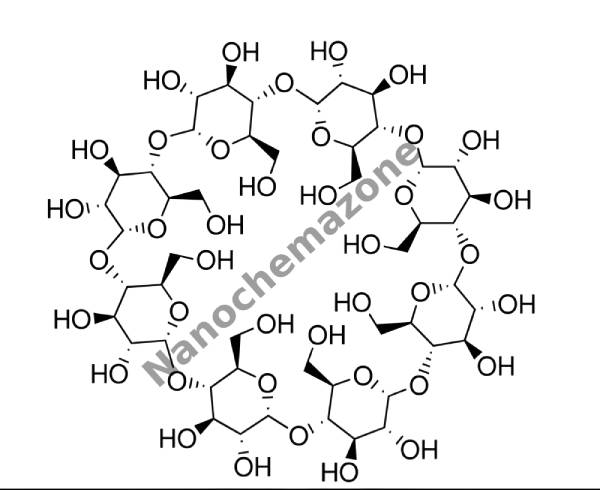
γ-Cyclodextrin (238605)

$189.00
Select options This product has multiple variants. The options may be chosen on the product page
γ-Cyclodextrin (238605)

Feature:

gamma-Cyclodextrin is a ring-shaped molecule made up of eight glucose units linked by alpha-1,4-bonds. The solubility degree of gamma-cyclodextrin in water is 23.2 g/100ml @ 25°C, which is higher than alpha-cyclodextrin and beta-cyclodextrin, and it is used to allow formation of inclusion complexes with bigger molecules.

CAS : 17465-86-0

Molecular Formula: C48H80O40

Molecular Weight: 1297.12

Specifications:  
Items Index
Appearance White powder, Odorless, Minor sweet
Assay ≥ 98.0%
Moisture content ≤11.0%
Residue on ignition ≤0.1%
Specific rotation +172°~+180°
Color and clarity of solution Clear and colorless
Reductive sugar ≤0.2%
Chloride ≤0.018%
Heavy metal ≤0.0002%
As ≤0.00013%
Total bacteria count ≤1000pcs/g
Moulds and yeasts ≤200pcs/g
Escherichia coli Negative
Product Codes- NCZ-2762K

Zinc (Zn) Sputtering Targets, Purity: 99.99%, Size: 4”, Thickness: 0.125”

$189.00

Applications of Sputtering Targets;

Film deposition is accomplished using sputtering targets. A technique for sputtering thin films is called "deposition made by sputter targets," which entails eroding material from a "target" source onto a "substrate" like a silicon wafer. Etching of the target is done using semiconductor sputtering targets. When selectivity is not an issue and a high degree of etching anisotropy is required, sputter etching is the method of choice. By removing the target material through etching, sputter targets are also utilized for investigation. In secondary ion spectroscopy (SIMS), one example is when the target material is sputtered at a steady pace. Mass spectrometry is used to quantify the concentration and identity of spewed atoms as the target is sputtered.

The target material's composition may be ascertained and even very low concentrations of contaminants can be found with the aid of the sputtering target.

There is also an application area for sputtering targets in space. One type of space weathering that alters the chemical and physical characteristics of airless worlds like the Moon and asteroids is sputtering.

Zinc (Zn) Sputtering Targets, Purity: 99.95%, Size: 3”, Thickness: 0.250”

$189.00

Applications of Sputtering Targets;

Film deposition is accomplished using sputtering targets. A technique for sputtering thin films is called "deposition made by sputter targets," which entails eroding material from a "target" source onto a "substrate" like a silicon wafer. Etching of the target is done using semiconductor sputtering targets. When selectivity is not an issue and a high degree of etching anisotropy is required, sputter etching is the method of choice. By removing the target material through etching, sputter targets are also utilized for investigation. In secondary ion spectroscopy (SIMS), one example is when the target material is sputtered at a steady pace. Mass spectrometry is used to quantify the concentration and identity of spewed atoms as the target is sputtered.

The target material's composition may be ascertained and even very low concentrations of contaminants can be found with the aid of the sputtering target.

There is also an application area for sputtering targets in space. One type of space weathering that alters the chemical and physical characteristics of airless worlds like the Moon and asteroids is sputtering.

Silicon (Si) Sputtering Targets, undoped, Purity: 99.999%, Size: 2”, Thickness: 0.250”

$189.00

Applications of Sputtering Targets;

Film deposition is accomplished using sputtering targets. A technique for sputtering thin films is called "deposition made by sputter targets," which entails eroding material from a "target" source onto a "substrate" like a silicon wafer. Etching of the target is done using semiconductor sputtering targets. When selectivity is not an issue and a high degree of etching anisotropy is required, sputter etching is the method of choice. By removing the target material through etching, sputter targets are also utilized for investigation. In secondary ion spectroscopy (SIMS), one example is when the target material is sputtered at a steady pace. Mass spectrometry is used to quantify the concentration and identity of spewed atoms as the target is sputtered.

The target material's composition may be ascertained and even very low concentrations of contaminants can be found with the aid of the sputtering target.

There is also an application area for sputtering targets in space. One type of space weathering that alters the chemical and physical characteristics of airless worlds like the Moon and asteroids is sputtering.

Nickel Vanadium (NiV) Sputtering Targets, Purity: 99.95%, Size: 1”, Thickness: 0.250”

$189.00

Applications of Sputtering Targets;

Film deposition is accomplished using sputtering targets. A technique for sputtering thin films is called "deposition made by sputter targets," which entails eroding material from a "target" source onto a "substrate" like a silicon wafer. Etching of the target is done using semiconductor sputtering targets. When selectivity is not an issue and a high degree of etching anisotropy is required, sputter etching is the method of choice. By removing the target material through etching, sputter targets are also utilized for investigation. In secondary ion spectroscopy (SIMS), one example is when the target material is sputtered at a steady pace. Mass spectrometry is used to quantify the concentration and identity of spewed atoms as the target is sputtered.

The target material's composition may be ascertained and even very low concentrations of contaminants can be found with the aid of the sputtering target.

There is also an application area for sputtering targets in space. One type of space weathering that alters the chemical and physical characteristics of airless worlds like the Moon and asteroids is sputtering.

Erbium Oxide (Er2O3) Sputtering Targets, Purity: 99.99%, Size: 4”, Thickness: 0.250”

$189.00

Applications of Sputtering Targets;

Film deposition is accomplished using sputtering targets. A technique for sputtering thin films is called "deposition made by sputter targets," which entails eroding material from a "target" source onto a "substrate" like a silicon wafer. Etching of the target is done using semiconductor sputtering targets. When selectivity is not an issue and a high degree of etching anisotropy is required, sputter etching is the method of choice. By removing the target material through etching, sputter targets are also utilized for investigation. In secondary ion spectroscopy (SIMS), one example is when the target material is sputtered at a steady pace. Mass spectrometry is used to quantify the concentration and identity of spewed atoms as the target is sputtered.

The target material's composition may be ascertained and even very low concentrations of contaminants can be found with the aid of the sputtering target.

There is also an application area for sputtering targets in space. One type of space weathering that alters the chemical and physical characteristics of airless worlds like the Moon and asteroids is sputtering.

Erbium Oxide (Er2O3) Sputtering Targets, Purity: 99.99%, Size: 4”, Thickness: 0.250”

$189.00
Select options This product has multiple variants. The options may be chosen on the product page
 

Applications of Sputtering Targets;

  • Sputtering targets is used for film deposition. The deposition made by sputter targets is a method of depositing thin films by sputtering that involves eroding material from a "target" source onto a "substrate" such as  a silicon wafer.
  • Semiconductor sputtering targets is used to etch the target. Sputter etching is chosen in cases where a high degree of etching anisotropy is needed and selectivity is not a concern.
  • Sputter targets is also used for analysis by etching away the target material.
One of the example occurs in secondary ion spectroscopy (SIMS), where the target sample is sputtered at a constant rate. As the target is sputtered, the concentration and identity of sputtered atoms are measured using mass spectrometry. By helping of the sputtering target, the composition of the target material can be determined and even extremely low concentrations of impurities are detected. Sputtering target has also application area in space. Sputtering is one of the forms of space weathering, a process that changes the physical and chemical properties of airless bodies, such as asteroids and the Moon. Erbium oxide with a chemical formula of Er2Ois an oxide of erbium metal. The applications of erbium oxide are varied due to their electrical, optical and photoluminescence properties. Nanoscale materials doped with Er+3 are of much interest because they have special particle-size-dependent optical and electrical properties. Erbium oxide doped nanoparticle materials can be dispersed in glass or plastic for display purposes, such as display monitors. The spectroscopy of Er+3 electronic transitions in host crystals lattices of nanoparticles combined with ultrasonically formed geometries in aqueous solution of carbon nanotubes is of great interest for synthesis of photoluminescence nanoparticles in ‘green’ chemistry. Erbium oxide is among the most important rare earth metals used in biomedicine. Erbium oxides are also used as gate dielectrics in semiconductor devices since it has a high dielectric constant (10-14) and a large band gap. Erbium is sometimes used as a coloring for glasses and erbium oxide can also be used as a burnable neutron poison for nuclear fuel. Erbium oxide films obtained by sputtering can be used for their photoluminescence effect.

Silicon Dioxide (SiO2) Sputtering Targets, Fused Quartz, Purity: 99.995%, Size: 4”, Thickness: 0.125”

$188.00

Applications of Sputtering Targets;

Film deposition is accomplished using sputtering targets. A technique for sputtering thin films is called "deposition made by sputter targets," which entails eroding material from a "target" source onto a "substrate" like a silicon wafer. Etching of the target is done using semiconductor sputtering targets. When selectivity is not an issue and a high degree of etching anisotropy is required, sputter etching is the method of choice. By removing the target material through etching, sputter targets are also utilized for investigation. In secondary ion spectroscopy (SIMS), one example is when the target material is sputtered at a steady pace. Mass spectrometry is used to quantify the concentration and identity of spewed atoms as the target is sputtered.

The target material's composition may be ascertained and even very low concentrations of contaminants can be found with the aid of the sputtering target.

There is also an application area for sputtering targets in space. One type of space weathering that alters the chemical and physical characteristics of airless worlds like the Moon and asteroids is sputtering.

Nickel Chromium (Ni-Cr) Sputtering Targets, Purity: 99.9%, Size: 2”, Thickness: 0.125”

$188.00

Applications of Sputtering Targets;

Film deposition is accomplished using sputtering targets. A technique for sputtering thin films is called "deposition made by sputter targets," which entails eroding material from a "target" source onto a "substrate" like a silicon wafer. Etching of the target is done using semiconductor sputtering targets. When selectivity is not an issue and a high degree of etching anisotropy is required, sputter etching is the method of choice. By removing the target material through etching, sputter targets are also utilized for investigation. In secondary ion spectroscopy (SIMS), one example is when the target material is sputtered at a steady pace. Mass spectrometry is used to quantify the concentration and identity of spewed atoms as the target is sputtered.

The target material's composition may be ascertained and even very low concentrations of contaminants can be found with the aid of the sputtering target.

There is also an application area for sputtering targets in space. One type of space weathering that alters the chemical and physical characteristics of airless worlds like the Moon and asteroids is sputtering.

Aluminum (Al) Sputtering Targets, Purity: 99.99%, Size: 3”, Thickness: 0.125”

$187.00

Product 

Aluminum (Al) Sputtering Targets, Purity: 99.99%, Size: 3'', Thickness: 0.125''

CAS No.

 7429-90-5

Appearance

Powder

Purity

≥99%,  ≥99.9%,  ≥95%

(Other purities are also available)

APS

N/A (Size Can be customized), Ask for other available size ranges.

Ingredient

N/A

Molecular Weight

 26.98 g/mol

Melting Point

 660.3 °C

Boiling Point

 2519 °C

Density

 2.70 g/cm³

Product Codes

NCZ-2577K

Aluminum (Al) Sputtering Targets, Purity: 99.999%, Size: 3”, Thickness: 0.125”

$187.00

Product 

Aluminum (Al) Sputtering Targets, Purity: 99.999%, Size: 3'', Thickness: 0.125''

CAS No.

 7429-90-5

Appearance

Powder

Purity

≥99%,  ≥99.9%,  ≥95%

(Other purities are also available)

APS

N/A (Size Can be customized), Ask for other available size ranges.

Ingredient

N/A

Molecular Weight

 26.98 g/mol

Melting Point

 660.3 °C

Boiling Point

 2519 °C

Density

 2.70 g/cm³

Product Codes

NCZ-2576K

Molybdenum (Mo) Sputtering Targets, Purity: 99.95%, Size: 2”, Thickness: 0.250”

$187.00

Product 

Molybdenum (Mo) Sputtering Targets, Purity: 99.95%, Size: 2'', Thickness: 0.250''

CAS No.

 7439-98-7

Appearance

Powder

Purity

≥99%,  ≥99.9%,  ≥95%

(Other purities are also available)

APS

 N/A (Size Can be customized), Ask for other available size ranges.

Ingredient

N/A

Molecular Weight

95.95 g/mol

Melting Point

 2623 °C

Boiling Point

 4639 °C

Density

10.28 g/cm³

Product Codes

NCZ-1938K

Niobium (Nb) Sputtering Targets, Purity: 99.95% pure Ex Ta, Size: 2”, Thickness: 0.125”

$187.00

Product 

Niobium (Nb) Sputtering Targets, Purity: 99.95% pure Ex Ta, Size: 2'', Thickness: 0.125''

CAS No.

7440-03-1

Appearance

Powder

Purity

≥99%,  ≥99.9%,  ≥95%

(Other purities are also available)

APS

N/A (Size Can be customized), Ask for other available size ranges.

Ingredient

N/A

Molecular Weight

92.906 g/mol

Melting Point

 2,468 °C

Boiling Point

 4,744 °C

Density

 8.57 g/cm³

Product Codes

NCZ-1818K

99.8% 80-100 nm Titanium Dioxide TiO2 Rutile Nanoparticles, 500g

$187.00
Product 99.8% 80-100 nm Titanium Dioxide TiO2 Rutile Nanoparticles, 500g
CAS No. 1317-80-2
Appearance White
Purity ≥99%,  ≥99.9%,  ≥95%(Other purities are also available)
APS 80-100nm (Size Can be customized),  Ask for other available size range.
Ingredient TiO2
Molecular Weight N/A
Melting Point 1843 °C
Boiling Point N/A
Density 4.23 g/cm³
Product Codes NCZ-226I

99.8% 50-60 nm Rutile Titanium Dioxide TiO2 Nanoparticles, 500g

$187.00
Product 99.8% 50-60 nm Rutile Titanium Dioxide TiO2 Nanoparticles, 500g
CAS No. 1317-80-2
Appearance White
Purity ≥99%,  ≥99.9%,  ≥95%(Other purities are also available)
APS 50-60nm (Size Can be customized),  Ask for other available size range.
Ingredient TiO2
Molecular Weight N/A
Melting Point 1843 °C
Boiling Point N/A
Density 4.23 g/cm³
Product Codes NCZ-224I

99.8% 30-50 nm Rutile Titanium Dioxide TiO2 Nanoparticles, 500g

$187.00
Product 99.8% 30-50 nm Rutile Titanium Dioxide TiO2 Nanoparticles, 500g
CAS No. 1317-80-2
Appearance White
Purity ≥99%,  ≥99.9%,  ≥95%(Other purities are also available)
APS 30-50nm (Size Can be customized),  Ask for other available size range.
Ingredient TiO2
Molecular Weight N/A
Melting Point 1843 °C
Boiling Point N/A
Density 4.23 g/cm³
Product Codes NCZ-223I

99.8% 15-20 nm Rutile Titanium Dioxide TiO2 Nanoparticles, 500g

$187.00
Product 99.8% 15-20 nm Rutile Titanium Dioxide TiO2 Nanoparticles, 500g
CAS No. 1317-80-2
Appearance White
Purity ≥99%,  ≥99.9%,  ≥95%(Other purities are also available)
APS 15-20nm (Size Can be customized),  Ask for other available size range.
Ingredient TiO2
Molecular Weight N/A
Melting Point 1843 °C
Boiling Point N/A
Density 4.23 g/cm³
Product Codes NCZ-222I

Silicon Oxide Nanoparticles/ Nanopowder treated with silane coupling agents (SiO2, 99%,)

Price range: $67.00 through $187.00
Select options This product has multiple variants. The options may be chosen on the product page
$67/25g
$132/100g
$187/500g

Product 

Silicon Oxide Nanoparticles/ Nanopowder treated with silane coupling agents (SiO2, 99%,)

CAS No.

7631-86-9

Appearance

Powder

Purity

≥99%,  ≥99.9%,  ≥95%

(Other purities are also available)

APS

 10-20nm (Size Can be customized), Ask for other available size ranges.

Ingredient

N/A

Molecular Weight

60.08 g/mol

Melting Point

~1,710 °C (core SiO₂)

Boiling Point

~2,230 °C

Density

~2.1 – 2.2 g/cm³

Product Codes

NCZ-1166K

Aluminum (Al) Sputtering Targets, Purity: 99.99%, Size: 4”, Thickness: 0.250”

$187.00

Applications of Sputtering Targets;

  • Sputtering targets is used for film deposition. The deposition made by sputter targets is a method of depositing thin films by sputtering that involves eroding material from a "target" source onto a "substrate" such as  a silicon wafer.
  • Semiconductor sputtering targets is used to etch the target. Sputter etching is chosen in cases where a high degree of etching anisotropy is needed and selectivity is not a concern.
  • Sputter targets is also used for analysis by etching away the target material.
One of the example occurs in secondary ion spectroscopy (SIMS), where the target sample is sputtered at a constant rate. As the target is sputtered, the concentration and identity of sputtered atoms are measured using mass spectrometry. By helping of the sputtering target, the composition of the target material can be determined and even extremely low concentrations of impurities are detected. Sputtering target has also application area in space. Sputtering is one of the forms of space weathering, a process that changes the physical and chemical properties of airless bodies, such as asteroids and the Moon. Aluminum which has the chemical symbol of Al, is a silvery white, soft, ductile metal that is the third most abundant element. Aluminum is notable due to for its light weight, strength, durability and for its ability to resist corrosion. Aluminum forms an extremely thin but very strong layer of oxide film. Aluminum has also high thermal and electrical conductivity. Aluminum sputtering targets have a particularly fine-grained microstructure. This property of Aluminum sputtering targets ensures that you benefit from uniform erosion and a low susceptibility to particle formation throughout the sputtering process.

Niobium (Nb) Sputtering Targets, Purity: 99.95% pure Ex Ta, Size: 3”, Thickness: 0.250”

$186.00

Applications of Sputtering Targets;

Film deposition is accomplished using sputtering targets. A technique for sputtering thin films is called "deposition made by sputter targets," which entails eroding material from a "target" source onto a "substrate" like a silicon wafer. Etching of the target is done using semiconductor sputtering targets. When selectivity is not an issue and a high degree of etching anisotropy is required, sputter etching is the method of choice. By removing the target material through etching, sputter targets are also utilized for investigation. In secondary ion spectroscopy (SIMS), one example is when the target material is sputtered at a steady pace. Mass spectrometry is used to quantify the concentration and identity of spewed atoms as the target is sputtered.

The target material's composition may be ascertained and even very low concentrations of contaminants can be found with the aid of the sputtering target.

There is also an application area for sputtering targets in space. One type of space weathering that alters the chemical and physical characteristics of airless worlds like the Moon and asteroids is sputtering.

Erbium Oxide (Er2O3) Sputtering Targets, Purity: 99.99%, Size: 3”, Thickness: 0.250”

$186.00

Applications of Sputtering Targets;

Film deposition is accomplished using sputtering targets. A technique for sputtering thin films is called "deposition made by sputter targets," which entails eroding material from a "target" source onto a "substrate" like a silicon wafer. Etching of the target is done using semiconductor sputtering targets. When selectivity is not an issue and a high degree of etching anisotropy is required, sputter etching is the method of choice. By removing the target material through etching, sputter targets are also utilized for investigation. In secondary ion spectroscopy (SIMS), one example is when the target material is sputtered at a steady pace. Mass spectrometry is used to quantify the concentration and identity of spewed atoms as the target is sputtered.

The target material's composition may be ascertained and even very low concentrations of contaminants can be found with the aid of the sputtering target.

There is also an application area for sputtering targets in space. One type of space weathering that alters the chemical and physical characteristics of airless worlds like the Moon and asteroids is sputtering.

Erbium Oxide (Er2O3) Sputtering Targets, Purity: 99.99%, Size: 3”, Thickness: 0.250”

$186.00

Applications of Sputtering Targets;

Film deposition is accomplished using sputtering targets. A technique for sputtering thin films is called "deposition made by sputter targets," which entails eroding material from a "target" source onto a "substrate" like a silicon wafer. Etching of the target is done using semiconductor sputtering targets. When selectivity is not an issue and a high degree of etching anisotropy is required, sputter etching is the method of choice. By removing the target material through etching, sputter targets are also utilized for investigation. In secondary ion spectroscopy (SIMS), one example is when the target material is sputtered at a steady pace. Mass spectrometry is used to quantify the concentration and identity of spewed atoms as the target is sputtered.

The target material's composition may be ascertained and even very low concentrations of contaminants can be found with the aid of the sputtering target.

There is also an application area for sputtering targets in space. One type of space weathering that alters the chemical and physical characteristics of airless worlds like the Moon and asteroids is sputtering.

Erbium Oxide (Er2O3) Sputtering Targets, Purity: 99.99%, Size: 3”, Thickness: 0.250”

$186.00
Select options This product has multiple variants. The options may be chosen on the product page

Applications of Sputtering Targets;

  • Sputtering targets is used for film deposition. The deposition made by sputter targets is a method of depositing thin films by sputtering that involves eroding material from a "target" source onto a "substrate" such as  a silicon wafer.
  • Semiconductor sputtering targets is used to etch the target. Sputter etching is chosen in cases where a high degree of etching anisotropy is needed and selectivity is not a concern.
  • Sputter targets is also used for analysis by etching away the target material.
One of the example occurs in secondary ion spectroscopy (SIMS), where the target sample is sputtered at a constant rate. As the target is sputtered, the concentration and identity of sputtered atoms are measured using mass spectrometry. By helping of the sputtering target, the composition of the target material can be determined and even extremely low concentrations of impurities are detected. Sputtering target has also application area in space. Sputtering is one of the forms of space weathering, a process that changes the physical and chemical properties of airless bodies, such as asteroids and the Moon. Erbium oxide with a chemical formula of Er2Ois an oxide of erbium metal. The applications of erbium oxide are varied due to their electrical, optical and photoluminescence properties. Nanoscale materials doped with Er+3 are of much interest because they have special particle-size-dependent optical and electrical properties. Erbium oxide doped nanoparticle materials can be dispersed in glass or plastic for display purposes, such as display monitors. The spectroscopy of Er+3 electronic transitions in host crystals lattices of nanoparticles combined with ultrasonically formed geometries in aqueous solution of carbon nanotubes is of great interest for synthesis of photoluminescence nanoparticles in ‘green’ chemistry. Erbium oxide is among the most important rare earth metals used in biomedicine. Erbium oxides are also used as gate dielectrics in semiconductor devices since it has a high dielectric constant (10-14) and a large band gap. Erbium is sometimes used as a coloring for glasses and erbium oxide can also be used as a burnable neutron poison for nuclear fuel. Erbium oxide films obtained by sputtering can be used for their photoluminescence effect.

Zinc Oxide (ZnO) Nanopowder/Nanoparticles Water Dispersion, Size: 25-35 nm, 22 wt%

Price range: $27.00 through $186.00
Select options This product has multiple variants. The options may be chosen on the product page
30 ml/25 € 60 ml/42 € 120 ml/66 € 500 ml/117 € 1000 ml/169 €     
Please contact us for quotes on larger quantities !!!

Zinc Oxide (ZnO) Nanopowder/Nanoparticles Water Dispersion

Size: 25-35 nm, 22 wt%


Cerium Oxide Nanopowder/ Nanoparticles (CeO2, 100~1000nm, 99.9%)

Price range: $97.00 through $185.00
Select options This product has multiple variants. The options may be chosen on the product page
$97/100g $185/500g $271/kg
Product Cerium Oxide Nanopowder/ Nanoparticles (CeO2, 100~1000nm, 99.9%)
CAS No. 1306-38-3
Appearance Pale yellow to white powder
Purity ≥99%,  ≥99.9%,  ≥95%(Other purities are also available)
APS 100 - 1000 nm (Size Can be customized),  Ask for other available size range.
Ingredient CeO2
Molecular Weight 172.11g/mol
Melting Point 2400°C
Boiling Point 3500°C
Density N/A
Product Codes NCZ-101R
 

Erbium Oxide Powder ( Er2O3 Powder, 99.5%, -200 mesh)

$185.00
Select options This product has multiple variants. The options may be chosen on the product page
$185/500g

Product 

Erbium Oxide Powder ( Er2O3 Powder, 99.5%, -200 mesh)

CAS No.

12061-16-4

Appearance

Powder

Purity

≥99%,  ≥99.9%,  ≥95%

(Other purities are also available)

APS

-200 mesh (Size Can be customized), Ask for other available size ranges.

Ingredient

N/A

Molecular Weight

382.52 g/mol

Melting Point

~2,340 °C

Boiling Point

~3,800 °C

Density

~8.64 g/cm³

Product Codes

NCZ-1132K

Dysprosium Oxide Nanopowder

Price range: $80.00 through $185.00
Select options This product has multiple variants. The options may be chosen on the product page
$80/5g $185/25g

Product 

Dysprosium Oxide Nanopowder

CAS No.

1308-87-8

Appearance

Powder

Purity

≥99%,  ≥99.9%,  ≥95%

(Other purities are also available)

APS

<100nm (Size Can be customized), Ask for other available size ranges.

Ingredient

N/A

Molecular Weight

 373.00 g/mol

Melting Point

 ~2,340 °C

Boiling Point

~3,900 °C

Density

~7.81 g/cm³

Product Codes

NCZ-1129K

Prime CZ-Si Wafer, Size: 2”, Orientation: (100), Boron Doped, Resistivity: 1-10 (ohm.cm), 2-Side Polished, Thickness: 2000 ± 50 μm

Price range: $57.00 through $185.00
Select options This product has multiple variants. The options may be chosen on the product page
Prime CZ-Si Wafer Size: 2”, Orientation: (100), Boron Doped, 2-Side Polished Technical Properties: Quality Prime Materials CZ-Si Size (inch) 2”

Nickel Tab with Adhesive Polymer Tape as Negative Terminal for Pouch Cell, Width: 4 mm

Price range: $48.00 through $185.00
Select options This product has multiple variants. The options may be chosen on the product page
100 pcs/44 € 250 pcs/89 € 500 pcs/168 € Please contact us for quotes on larger quantities !!!

Nickel Tab with Adhesive Polymer Tape as Negative Terminal for Pouch Cell

Width: 4 mm

Technical Properties:

Material Nickel 99.99%, Adhesive Polymer Tape on the tab allows for immediate hot sealing
Length 57 mm
Width 4 mm
Thickness 0.09 mm
Max. Loading Current 3A
Net Weight 160 mg/pcs
Application 1. Connect to cathode current collector as polymer battery positive terminal 2. Suggested Sealing Method: (parameter below may vary from case to case) - Soft type heat-sealing blade (Blade with rubber) - 180-200 °C for upper blade - 160-180 °C for lower blade - 40 PSI (0.3 Mpa) - 3 seconds heating time 

Applications:

4 mm Wide Nickel Tabs for use as the Negative Terminal of Polymer Li-ion Batteries

Multi Walled Carbon Nanotubes Water Dispersion, 4 wt%, Purity: > 96%, OD: 45-75 nm, Length: 8-18 µm

Price range: $44.00 through $185.00
Select options This product has multiple variants. The options may be chosen on the product page

Applications:

MWCNTs have a variety of potential applications in different fields. These applications include midicine, mechanical, electric, chemical, energy and others. It can be applied in, 1-drug dilevery, 2-biosensors, 3-CNT composites, 4-catalysis, 5-nanoprobes, 6-hydrogen storage, 7-lithium battaries, 8-gas-discharge tubes, 9-flat panel display, 10-supercapacitor, 11-transistors, 12-solar cells, 13-photoluminescence, 14-template  

Nickel (Ni) Sputtering Targets, Purity: 99.99%, Size: 2”, Thickness: 0.250”

$184.00

Product 

Nickel (Ni) Sputtering Targets, Purity: 99.99%, Size: 2'', Thickness: 0.250''

CAS No.

7440-02-0

Appearance

Powder

Purity

≥99%,  ≥99.9%,  ≥95%

(Other purities are also available)

APS

 N/A (Size Can be customized), Ask for other available size ranges.

Ingredient

N/A

Molecular Weight

 58.69 g/mol

Melting Point

~1,453 °C

Boiling Point

~2,913 °C

Density

 8.90 g/cm³

Product Codes

NCZ-1888K

Nickel (Ni) Sputtering Targets, Purity: 99.99%, Size: 4”, Thickness: 0.125”

$184.00

Product 

Nickel (Ni) Sputtering Targets, Purity: 99.99%, Size: 4'', Thickness: 0.125''

CAS No.

7440-02-0

Appearance

Powder

Purity

≥99%,  ≥99.9%,  ≥95%

(Other purities are also available)

APS

 N/A (Size Can be customized), Ask for other available size ranges.

Ingredient

N/A

Molecular Weight

 58.69 g/mol

Melting Point

 1,455 °C

Boiling Point

 2,732 °C

Density

 8.90 g/cm³

Product Codes

NCZ-1879K

Zinc (Zn) Sputtering Targets, Purity: 99.95%, Size: 3”, Thickness: 0.125”

$184.00

Applications of Sputtering Targets;

Film deposition is accomplished using sputtering targets. A technique for sputtering thin films is called "deposition made by sputter targets," which entails eroding material from a "target" source onto a "substrate" like a silicon wafer. Etching of the target is done using semiconductor sputtering targets. When selectivity is not an issue and a high degree of etching anisotropy is required, sputter etching is the method of choice. By removing the target material through etching, sputter targets are also utilized for investigation. In secondary ion spectroscopy (SIMS), one example is when the target material is sputtered at a steady pace. Mass spectrometry is used to quantify the concentration and identity of spewed atoms as the target is sputtered.

The target material's composition may be ascertained and even very low concentrations of contaminants can be found with the aid of the sputtering target.

There is also an application area for sputtering targets in space. One type of space weathering that alters the chemical and physical characteristics of airless worlds like the Moon and asteroids is sputtering.

Zinc (Zn) Sputtering Targets, Purity: 99.95%, Size: 3”, Thickness: 0.125”

$184.00

Applications of Sputtering Targets;

Film deposition is accomplished using sputtering targets. A technique for sputtering thin films is called "deposition made by sputter targets," which entails eroding material from a "target" source onto a "substrate" like a silicon wafer. Etching of the target is done using semiconductor sputtering targets. When selectivity is not an issue and a high degree of etching anisotropy is required, sputter etching is the method of choice. By removing the target material through etching, sputter targets are also utilized for investigation. In secondary ion spectroscopy (SIMS), one example is when the target material is sputtered at a steady pace. Mass spectrometry is used to quantify the concentration and identity of spewed atoms as the target is sputtered.

The target material's composition may be ascertained and even very low concentrations of contaminants can be found with the aid of the sputtering target.

There is also an application area for sputtering targets in space. One type of space weathering that alters the chemical and physical characteristics of airless worlds like the Moon and asteroids is sputtering.

Zinc (Zn) Sputtering Targets, Purity: 99.99%, Size: 3”, Thickness: 0.250”

$184.00

Applications of Sputtering Targets;

Film deposition is accomplished using sputtering targets. A technique for sputtering thin films is called "deposition made by sputter targets," which entails eroding material from a "target" source onto a "substrate" like a silicon wafer. Etching of the target is done using semiconductor sputtering targets. When selectivity is not an issue and a high degree of etching anisotropy is required, sputter etching is the method of choice. By removing the target material through etching, sputter targets are also utilized for investigation. In secondary ion spectroscopy (SIMS), one example is when the target material is sputtered at a steady pace. Mass spectrometry is used to quantify the concentration and identity of spewed atoms as the target is sputtered.

The target material's composition may be ascertained and even very low concentrations of contaminants can be found with the aid of the sputtering target.

There is also an application area for sputtering targets in space. One type of space weathering that alters the chemical and physical characteristics of airless worlds like the Moon and asteroids is sputtering.

Vanadium (V) Sputtering Targets, Purity: 99.5%, Size: 2”, Thickness: 0.125”

$184.00

Applications of Sputtering Targets;

Film deposition is accomplished using sputtering targets. A technique for sputtering thin films is called "deposition made by sputter targets," which entails eroding material from a "target" source onto a "substrate" like a silicon wafer. Etching of the target is done using semiconductor sputtering targets. When selectivity is not an issue and a high degree of etching anisotropy is required, sputter etching is the method of choice. By removing the target material through etching, sputter targets are also utilized for investigation. In secondary ion spectroscopy (SIMS), one example is when the target material is sputtered at a steady pace. Mass spectrometry is used to quantify the concentration and identity of spewed atoms as the target is sputtered.

The target material's composition may be ascertained and even very low concentrations of contaminants can be found with the aid of the sputtering target.

There is also an application area for sputtering targets in space. One type of space weathering that alters the chemical and physical characteristics of airless worlds like the Moon and asteroids is sputtering.

Niobium (Nb) Sputtering Targets, Purity: 99.95% pure Ex Ta, Size: 4”, Thickness: 0.125”

$184.00

Applications of Sputtering Targets;

Film deposition is accomplished using sputtering targets. A technique for sputtering thin films is called "deposition made by sputter targets," which entails eroding material from a "target" source onto a "substrate" like a silicon wafer. Etching of the target is done using semiconductor sputtering targets. When selectivity is not an issue and a high degree of etching anisotropy is required, sputter etching is the method of choice. By removing the target material through etching, sputter targets are also utilized for investigation. In secondary ion spectroscopy (SIMS), one example is when the target material is sputtered at a steady pace. Mass spectrometry is used to quantify the concentration and identity of spewed atoms as the target is sputtered.

The target material's composition may be ascertained and even very low concentrations of contaminants can be found with the aid of the sputtering target.

There is also an application area for sputtering targets in space. One type of space weathering that alters the chemical and physical characteristics of airless worlds like the Moon and asteroids is sputtering.

Niobium (Nb) Sputtering Targets, Purity: 99.95% pure Ex Ta, Size: 3”, Thickness: 0.125”

$184.00

Applications of Sputtering Targets;

Film deposition is accomplished using sputtering targets. A technique for sputtering thin films is called "deposition made by sputter targets," which entails eroding material from a "target" source onto a "substrate" like a silicon wafer. Etching of the target is done using semiconductor sputtering targets. When selectivity is not an issue and a high degree of etching anisotropy is required, sputter etching is the method of choice. By removing the target material through etching, sputter targets are also utilized for investigation. In secondary ion spectroscopy (SIMS), one example is when the target material is sputtered at a steady pace. Mass spectrometry is used to quantify the concentration and identity of spewed atoms as the target is sputtered.

The target material's composition may be ascertained and even very low concentrations of contaminants can be found with the aid of the sputtering target.

There is also an application area for sputtering targets in space. One type of space weathering that alters the chemical and physical characteristics of airless worlds like the Moon and asteroids is sputtering.

Nickel Iron (Ni-Fe) Sputtering Targets, Purity: 99.5%, Size: 2”, Thickness: 0.125”

$184.00

Applications of Sputtering Targets;

Film deposition is accomplished using sputtering targets. A technique for sputtering thin films is called "deposition made by sputter targets," which entails eroding material from a "target" source onto a "substrate" like a silicon wafer. Etching of the target is done using semiconductor sputtering targets. When selectivity is not an issue and a high degree of etching anisotropy is required, sputter etching is the method of choice. By removing the target material through etching, sputter targets are also utilized for investigation. In secondary ion spectroscopy (SIMS), one example is when the target material is sputtered at a steady pace. Mass spectrometry is used to quantify the concentration and identity of spewed atoms as the target is sputtered.

The target material's composition may be ascertained and even very low concentrations of contaminants can be found with the aid of the sputtering target.

There is also an application area for sputtering targets in space. One type of space weathering that alters the chemical and physical characteristics of airless worlds like the Moon and asteroids is sputtering.

Aluminum Silicon (AlSi) Sputtering Targets, Purity: 99.999%, Size: 2”, Thickness: 0.250”

$184.00

Applications of Sputtering Targets;

Film deposition is accomplished using sputtering targets. A technique for sputtering thin films is called "deposition made by sputter targets," which entails eroding material from a "target" source onto a "substrate" like a silicon wafer. Etching of the target is done using semiconductor sputtering targets. When selectivity is not an issue and a high degree of etching anisotropy is required, sputter etching is the method of choice. By removing the target material through etching, sputter targets are also utilized for investigation. In secondary ion spectroscopy (SIMS), one example is when the target material is sputtered at a steady pace. When the target shatters,

Mass spectrometry measures the concentration and identity of sputtered atoms. The target material's composition may be ascertained and even very low concentrations of contaminants can be found with the aid of the sputtering target.

There is also an application area for sputtering targets in space. One type of space weathering that alters the chemical and physical characteristics of airless worlds like the Moon and asteroids is sputtering.

Lithium Manganese Oxide (LiMn2O4) Powder for Li-ion Battery Cathode Application

Price range: $38.00 through $184.00
Select options This product has multiple variants. The options may be chosen on the product page
100 grams/35 €                    
500 grams/98 €                  
1000 grams/167 €
Please contact us for quotes on larger quantities !!!

Lithium Manganese Oxide (LiMn2O4) Powder for Li-ion Battery Cathode Application

  Chemical Composition

Ni

%

≤0.01

Fe

%

≤0.01

Na

%

≤0.5

Cu

%

≤0.002

Metal Impurity

ppb

≤25

Particle Distribution

D03

μm

>5

D50

μm

23-27

D97

μm

<27

  Dmax

μm

≤90

Moisture

%

≤0.2

Specific Area

m2/g

0.4~1.0

Tap Density

g/cm3

4-5 @ 20 °C

Specific Capacity

mAh/g

   ~105 mAh/g

Melting Point

C

400

Water Solubility

 Insoluble

Titanium Dioxide (TiO2) Nanopowder/Nanoparticles Dispersion in Water, Rutile, Size: 3-13 nm, 16 wt% (No reviews yet)

Price range: $74.00 through $184.00
Select options This product has multiple variants. The options may be chosen on the product page
Titanium Dioxide (TiO2) Nanopowder/Nanoparticles Dispersion in Water Rutile, Size: 3-13 nm, 16 wt%

Tin (IV) Sulfide, SnS2, 99.5% Powder, 100g

$183.00
Product Tin (IV) Sulfide, SnS2, 99.5% Powder, 100g
CAS No. 1315-01-1
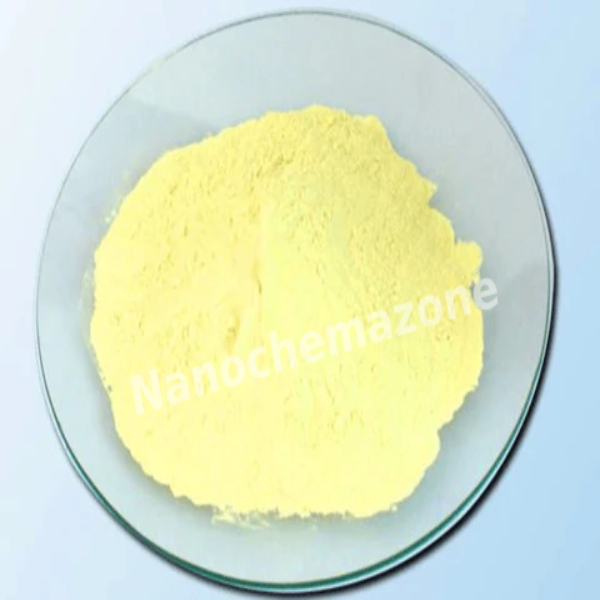
Appearance Gold-yellow
Purity ≥99%,  ≥99.9%,  ≥95%(Other purities are also available)
APS N/A
Ingredient SnS2
Molecular Weight N/A
Melting Point 600 °C
Boiling Point N/A
Density 4.5 g/cm³
Product Codes NCZ-564I
 

Lithium Titanate (Li2TiO3) Sputtering Targets, Purity: 99.95%, Size: 1”, Thickness: 0.125”

$183.00

Product 

Lithium Titanate (Li2TiO3) Sputtering Targets, Purity: 99.95%, Size: 1'', Thickness: 0.125''

CAS No.

12031-82-2

Appearance

Powder

Purity

≥99%,  ≥99.9%,  ≥95%

(Other purities are also available)

APS

 N/A (Size Can be customized), Ask for other available size ranges.

Ingredient

N/A

Molecular Weight

109.75 g/mol

Melting Point

Decomposes before melting (~1,200 °C)

Boiling Point

N/A

Density

~3.41 g/cm³

Product Codes

NCZ-2015K

Erbium Chloride Hexahydrate (ErCl3 · 6H2O) 99.5% 2N5

$183.00
Select options This product has multiple variants. The options may be chosen on the product page
Product Erbium Chloride Hexahydrate (ErCl3 · 6H2O) 99.5% 2N5
CAS No. 10025-75-9
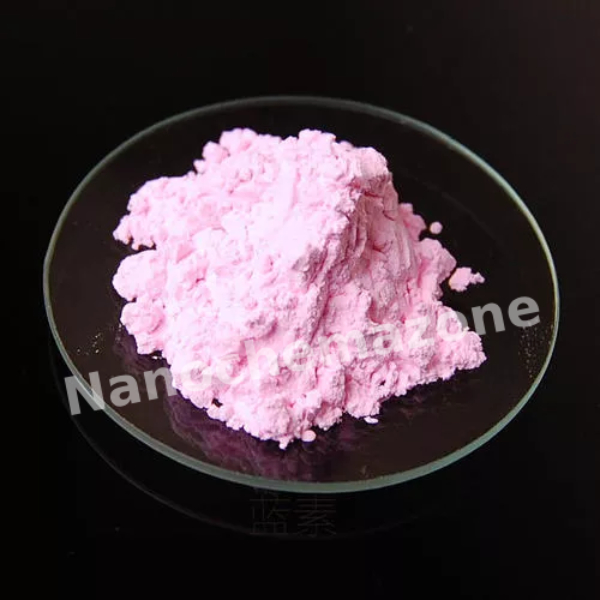
Appearance Pink crystalline
Purity ≥99%,  ≥99.9%,  ≥95%(Other purities are also available)
APS 50–100µm (Size Can be customized),  Ask for other available size range.
Ingredient ErCl3·6H2O
Molecular Weight 381.71 g/mol
Melting Point N/A
Boiling Point N/A
Density N/A
Product Codes NCZ-341I

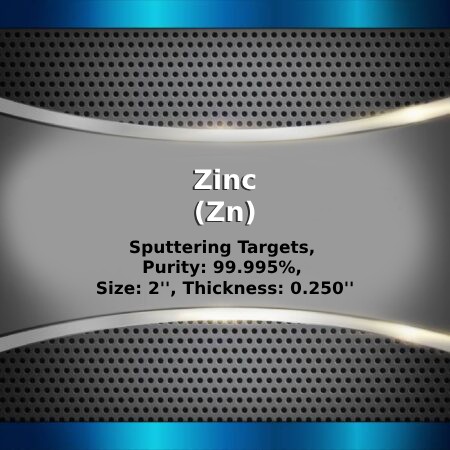
Zinc (Zn) Sputtering Targets, Purity: 99.95%, Size: 2”, Thickness: 0.250”

$183.00

Product 

Zinc (Zn) Sputtering Targets, Purity: 99.95%, Size: 2'', Thickness: 0.250''

CAS No.

7440‑66‑6

Appearance

Powder

Purity

≥99%,  ≥99.9%,  ≥95%

(Other purities are also available)

APS

Zn (black granules) (Size Can be customized), Ask for other available size ranges.

Ingredient

N/A

Molecular Weight

65.38 g/mol

Melting Point

419.5 °C

Boiling Point

 907 °C

Density

7.14 g/cm³

Product Codes

NCZ-1472K

4N (99.99%) Silicon Dioxide (SiO2) Pieces Evaporation Materials

Price range: $97.00 through $183.00
Select options This product has multiple variants. The options may be chosen on the product page
Product 4N (99.99%) Silicon Dioxide (SiO2) Pieces Evaporation Materials
CAS No. 14808-60-7
Appearance White, Crystalline Solid 
Purity ≥99%,  ≥99.9%,  ≥95%(Other purities are also available)
APS 1–10mm (Size Can be customized),  Ask for other available size range.
Ingredient SiO2
Molecular Weight 60.084 g/mol
Melting Point 1,713°C
Boiling Point 2,230°C
Density 2.196 g/cm³
Product Codes NCZ-109E
 

Manganese Oxide Micronpowder ( MnO2, 99%, ~5um)

Price range: $61.00 through $183.00
Select options This product has multiple variants. The options may be chosen on the product page
$61/100g
$113/500g
$183/1kg

Product 

Manganese Oxide Micronpowder ( MnO2, 99%, ~5um)

CAS No.

  1313-13-9

Appearance

Powder

Purity

≥99%,  ≥99.9%,  ≥95%

(Other purities are also available)

APS

~5um (Size Can be customized), Ask for other available size ranges.

Ingredient

N/A

Molecular Weight

 86.94 g/mol

Melting Point

Decomposes at ~535 °C (releases O₂)

Boiling Point

N/A

Density

 ~5.03 g/cm³

Product Codes

NCZ-1153K

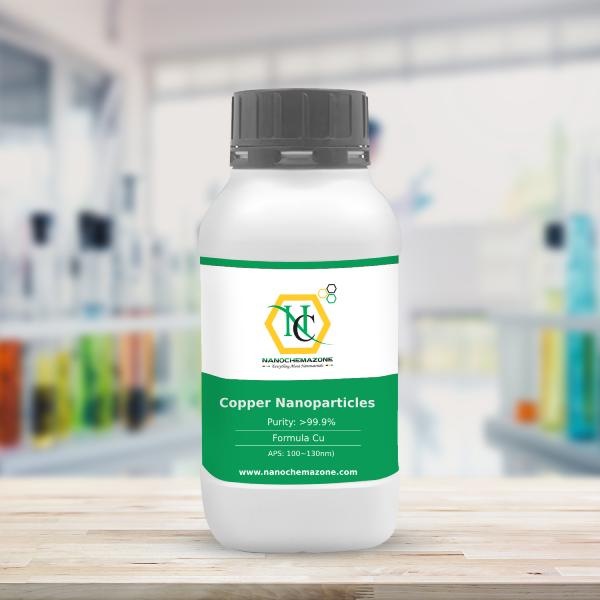
Copper Nanoparticles/Nanopowder (Cu, 99.9% 100~130nm)

Price range: $65.00 through $183.00
Select options This product has multiple variants. The options may be chosen on the product page
$65/25g
$183/100g

Product 

Copper Nanoparticles/Nanopowder (Cu, 99.9% 100~130nm)

CAS No.

7440-50-8

Appearance

Powder

Purity

≥99%,  ≥99.9%,  ≥95%

(Other purities are also available)

APS

100-130 nm (Size Can be customized), Ask for other available size ranges.

Ingredient

AlN

Molecular Weight

63.55 g/mol

Melting Point

1084.62 °C

Boiling Point

2562 °C

Density

8.96 g/cm³

Product Codes

NCZ-1034K

Lithium Manganese Oxide (LiMn2O4) Powder for Li-ion Battery Cathode Application

Price range: $38.00 through $183.00
Select options This product has multiple variants. The options may be chosen on the product page
100 grams/35 €                    
500 grams/98 €                  
1000 grams/167 €
Please contact us for quotes on larger quantities !!!

Lithium Manganese Oxide (LiMn2O4) Powder for Li-ion Battery Cathode Application

  Chemical Composition

Ni

%

≤0.01

Fe

%

≤0.01

Na

%

≤0.5

Cu

%

≤0.002

Metal Impurity

ppb

≤25

Particle Distribution

D03

μm

>5

D50

μm

23-27

D97

μm

<27

  Dmax

μm

≤90

Moisture

%

≤0.2

Specific Area

m2/g

0.4~1.0

Tap Density

g/cm3

4-5 @ 20 °C

Specific Capacity

mAh/g

   ~105 mAh/g

Melting Point

C

400

Water Solubility

 Insoluble


Magnesium Oxide (MgO) Nanopowder/Nanoparticles Water Dispersion, Size: 45 nm, 22 wt%

Price range: $41.00 through $183.00
Select options This product has multiple variants. The options may be chosen on the product page
30 ml/38 € 60 ml/64 € 120 ml/98 € 500 ml/166 € 1000 ml/251 €      
Please contact us for quotes on larger quantities !!!

Magnesium Oxide (MgO) Nanopowder/Nanoparticles Water Dispersion

Size: 45 nm, 22 wt%

Zinc (Zn) Nanopowder/Nanoparticles, High purity: 99.995+%, Size: 90-110 nm

Price range: $57.89 through $182.74
Select options This product has multiple variants. The options may be chosen on the product page
Zinc (Zn) Nanopowder/Nanoparticles High purity: 99.995+%, Size: 90-110 nm Technical Properties: True Density (g/cm3) 7,1 Bulk Density (g/cm3) 0,9 Color

Antimony (Sb) Sputtering Targets, Purity: 99.95%, Size: 2”, Thickness: 0.250”

$182.00

Applications of Sputtering Targets;

Film deposition is accomplished using sputtering targets. A technique for sputtering thin films is called "deposition made by sputter targets," which entails eroding material from a "target" source onto a "substrate" like a silicon wafer. Etching of the target is done using semiconductor sputtering targets. When selectivity is not an issue and a high degree of etching anisotropy is required, sputter etching is the method of choice. By removing the target material through etching, sputter targets are also utilized for investigation. In secondary ion spectroscopy (SIMS), one example is when the target material is sputtered at a steady pace. When the target shatters,

Mass spectrometry measures the concentration and identity of sputtered atoms. The target material's composition may be ascertained and even very low concentrations of contaminants can be found with the aid of the sputtering target.

There is also an application area for sputtering targets in space. One type of space weathering that alters the chemical and physical characteristics of airless worlds like the Moon and asteroids is sputtering.

Group 15 of the periodic table contains antimony (Sb), which shares an atomic number of 51 with bismuth and arsenic. It gleams with a metallic sheen. bluish-white in color. Despite not having the same reputation as a poison, antimony shares many of the same chemical characteristics as arsenic. Its average natural abundance in the earth's crust is 0.2 to 0.5 parts per million. Antimony sputtering targets can be utilized to create fire-retardant coatings since antimony has excellent fire retardance properties. Antimony sputtering targets can also be utilized for optoelectronic devices such as solar cells, laser diodes, photodiodes, and LEDs.

Nickel (Ni) Nanopowder/Nanoparticles, Purity: 99.95%, Size: 65 nm, Metal Basis

Price range: $59.00 through $182.00
Select options This product has multiple variants. The options may be chosen on the product page
Nickel (Ni) Nanopowder/Nanoparticles

Purity: 99.95%, Size: 65 nm, Metal Basis

Technical Properties:

True Density (g/cm3) 8,9
Shape spherical
Color black
Average Particle Size (nm) 65
Specific Surface Area (m2/g) 10,0-16,0
Elemental Analysis Ni Si Mg Fe Others
99.95 0.1 0.1 0.1 0.05

Properties, Storage and Cautions:

Nickel nanoparticles are highly reactive and flammable, therefore it should be handled with care and rapid moves, vibrations should be avoided. Nanopowder should be kept away from sunlight, any kind of heating, moisture and impacts. Coagulation of the particles is a serious problem, so, nanopowder should be sealed under vacuum and should be kept in cool and dry conditions. Air contact should be avoided.

Ammonium fluoride, 99.999%

Price range: $41.00 through $181.00
Select options This product has multiple variants. The options may be chosen on the product page
Product Ammonium fluoride, 99.999%
CAS No. 12125-01-8
Appearance White crystalline
Purity ≥99%,  ≥99.9%,  ≥95%(Other purities are also available)
APS N/A
Ingredient NH₄F
Molecular Weight N/A
Melting Point N/A
Boiling Point N/A
Density 1.98 g/cm³
Product Codes NCZ-107R
 

Zirconium Oxide Micron Powder (ZrO2, 99.9%, 1~3um)

Price range: $53.00 through $181.00
Select options This product has multiple variants. The options may be chosen on the product page
$53/100g
$117/500g
$181/kg

Product 

Zirconium Oxide Micron Powder (ZrO2, 99.9%, 1~3um)

CAS No.

1314-23-4

Appearance

Powder

Purity

≥99%,  ≥99.9%,  ≥95%

(Other purities are also available)

APS

~10–50 nm(Size Can be customized), Ask for other available size ranges.

Ingredient

N/A

Molecular Weight

123.22 g/mol

Melting Point

~2,715 °C

Boiling Point

~4,300 °C

Density

~5.68 g/cm³

Product Codes

NCZ-1224K

Samarium Oxide Micronpowder( Sm2O3, 99.9%, 3~5um)

Price range: $75.00 through $181.00
Select options This product has multiple variants. The options may be chosen on the product page
$75/25g $115/100g $181/500g
Product Samarium Oxide Micronpowder( Sm2O3, 99.9%, 3~5um)
CAS No. 12060-58-1
Appearance Pale yellow or off-white powder
Purity ≥99%,  ≥99.9%,  ≥95%(Other purities are also available)
APS 3-5um (Size Can be customized),  Ask for other available size range.
Ingredient Sm₂O₃
Molecular Weight 348.72 g/mol
Melting Point 2335° C
Boiling Point 4118° C
Density 8.347g/cm3
Product Codes NCZ-119R
 

Samarium Oxide Micronpowder( Sm2O3, 99.9%, 3~5um)

Price range: $75.00 through $181.00
Select options This product has multiple variants. The options may be chosen on the product page
$75/25g
$115/100g
$181/500g

Product 

Samarium Oxide Micronpowder( Sm2O3, 99.9%, 3~5um)

CAS No.

12060-58-1

Appearance

Powder

Purity

≥99%,  ≥99.9%,  ≥95%

(Other purities are also available)

APS

3~5um (Size Can be customized), Ask for other available size ranges.

Ingredient

N/A

Molecular Weight

348.72 g/mol

Melting Point

~2,336 °C

Boiling Point

~4,000 °C

Density

8.35 g/cm³

Product Codes

NCZ-1178K

Magnesium (Mg) Sputtering Targets, Purity: 99.98%, Size: 2”, Thickness: 0.125”

$181.00

Applications of Sputtering Targets;

Film deposition is accomplished using sputtering targets. A technique for sputtering thin films is called "deposition made by sputter targets," which entails eroding material from a "target" source onto a "substrate" like a silicon wafer. Etching of the target is done using semiconductor sputtering targets. When selectivity is not an issue and a high degree of etching anisotropy is required, sputter etching is the method of choice. By removing the target material through etching, sputter targets are also utilized for investigation. In secondary ion spectroscopy (SIMS), one example is when the target material is sputtered at a steady pace. Mass spectrometry is used to quantify the concentration and identity of spewed atoms as the target is sputtered.

By helping of the sputtering target, the composition of the target material may be evaluated and even extremely tiny amounts of contaminants are recognized.

There is also an application area for sputtering targets in space. One type of space weathering that alters the chemical and physical characteristics of airless worlds like the Moon and asteroids is sputtering.

Chitosan(Food grade) (332668)

$180.00
Select options This product has multiple variants. The options may be chosen on the product page
Chitosan(Food grade) (332668)
Item
Food grade
Appearance
White powder
Degree of deacetylation
90%, 95%
pH
7.0-8.0
Loss on drying
<10.0%
Residue on ignition
<1.5%
Insoluble
<1.0%
Heavy metal (measured by Pb)
≤10ppm
As
≤0.5ppm
Total bacterial count
≤1000cfu/g
Viscosity 50-800mpa·s
Granularity 80mesh, 100mesh
Product Codes- NCZ-2654K