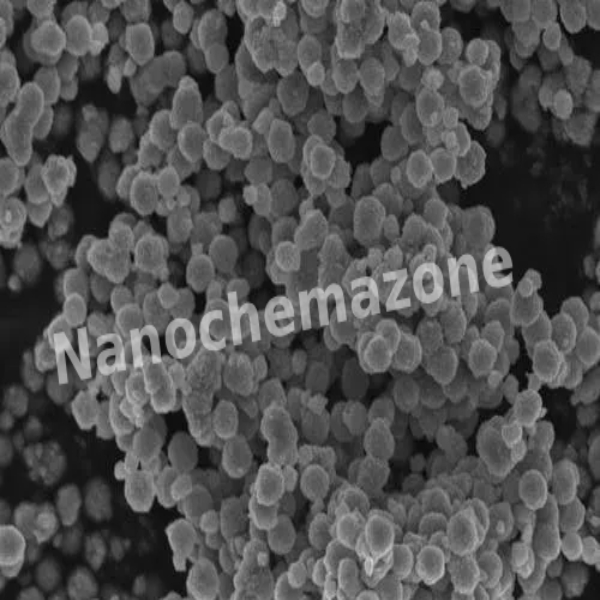
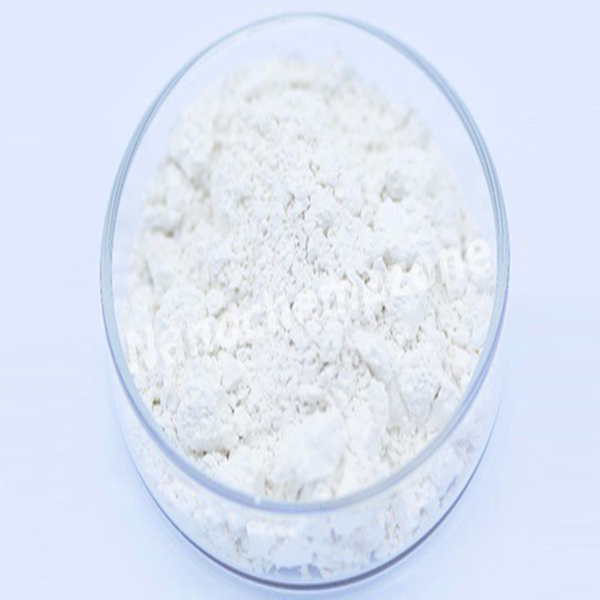
Titanium Dioxide (TiO2) B Phase Nanofibers, 1g/bottle

$550.00
Product Titanium Dioxide (TiO2) B Phase Nanofibers, 1g/bottle
Appearance White, fibrous
Purity ≥99%,  ≥99.9%,  ≥95%(Other purities are also available)
APS 10nm (Size Can be customized),  Ask for other available size range.
Ingredient TiO2
Molecular Weight N/A
Melting Point N/A
Boiling Point N/A
Density N/A
Product Codes NCZ-578I
 

Titanium Dioxide (TiO2) AB Mixed Phase Nanofibers, 1g/bottle

$550.00
Product Titanium Dioxide (TiO2) AB Mixed Phase Nanofibers, 1g/bottle
CAS No. 13463-67-7
Appearance White to off-white
Purity ≥99%,  ≥99.9%,  ≥95%(Other purities are also available)
APS 100–200nm (Size Can be customized),  Ask for other available size range.
Ingredient TiO2
Molecular Weight 79.87 g/mol
Melting Point N/A
Boiling Point N/A
Density N/A
Product Codes NCZ-576I
 

Lithium Phosphate (Li3PO4) Sputtering Targets, Purity: 99.95%, Size: 2”, Thickness: 0.250”

$550.00

Product 

Lithium Phosphate (Li3PO4) Sputtering Targets, Purity: 99.95%, Size: 2'', Thickness: 0.250''

CAS No.

10377-52-3

Appearance

Powder

Purity

≥99%,  ≥99.9%,  ≥95%

(Other purities are also available)

APS

 N/A (Size Can be customized), Ask for other available size ranges.

Ingredient

N/A

Molecular Weight

 115.79 g/mol

Melting Point

 ~837 °C

Boiling Point

~158 °C (likely decomposition)

Density

 ~2.53 g/cm³

Product Codes

NCZ-2032K

Germanium Oxide (GeO2) Powder 99.999% 5N, High Purity Grade

$550.00
Select options This product has multiple variants. The options may be chosen on the product page
Product Germanium Oxide (GeO2) Powder 99.999% 5N, High Purity Grade
CAS No. 1310-53-8
Appearance White or colorless crystals
Purity ≥99%,  ≥99.9%,  ≥95%(Other purities are also available)
APS 150µm (Size Can be customized),  Ask for other available size range.
Ingredient GeO2
Molecular Weight 104.64 g/mol
Melting Point 1,115 °C
Boiling Point 1,200 °C
Density 4.228 g/cm³
Product Codes NCZ-353I

Silicon Carbide (SiC) Sputtering Targets, Purity: 99.5%, Size: 2”, Thickness: 0.125”

$550.00

Product 

Silicon Carbide (SiC) Sputtering Targets, Purity: 99.5%, Size: 2'', Thickness: 0.125''

CAS No.

 409-21-2

Appearance

Powder

Purity

≥99%,  ≥99.9%,  ≥95%

(Other purities are also available)

APS

N/A  (Size Can be customized), Ask for other available size ranges.

Ingredient

N/A

Molecular Weight

 40.10 g/mol

Melting Point

~2,700 °C

Boiling Point

N/A

Density

~3.21 g/cm³

Product Codes

NCZ-1728K

99wt% Hollow Mesoporous Silica Powder

Price range: $297.00 through $550.00
Select options This product has multiple variants. The options may be chosen on the product page
Product 99wt% Hollow Mesoporous Silica Powder
CAS No. 7631-86-9
Appearance White or off-white fine
Purity ≥99%,  ≥99.9%,  ≥95%(Other purities are also available)
APS 100-500nm (Size Can be customized),  Ask for other available size range.
Ingredient SiO₂
Molecular Weight 60.08 g/mol
Melting Point N/A
Boiling Point N/A
Density 2.0–2.2 g/cm³
Product Codes NCZ-272I

Titanium Dioxide (TiO2) Sputtering Targets, Purity: 99.9%, Size: 3”, Thickness: 0.125”, Grey to Black

$550.00

Product 

Titanium Dioxide (TiO2) Sputtering Targets, Purity: 99.9%, Size: 3'', Thickness: 0.125'', Grey to Black

CAS No.

13463‑67‑7

Appearance

Powder

Purity

≥99%,  ≥99.9%,  ≥95%

(Other purities are also available)

APS

TiO₂ (black granules) (Size Can be customized), Ask for other available size ranges.

Ingredient

N/A

Molecular Weight

79.94 g/mol

Melting Point

~1,843 °C

Boiling Point

~2,972 °C

Density

~4.23 g/cm³

Product Codes

NCZ-1437K

Titanium Nitride (TiN) Sputtering Targets, Purity: 99.5%, Size: 2”, Thickness: 0.250”

$550.00

Product 

Titanium Nitride (TiN) Sputtering Targets, Purity: 99.5%, Size: 2'', Thickness: 0.250''

CAS No.

25583‑20‑4

Appearance

Powder

Purity

≥99%,  ≥99.9%,  ≥95%

(Other purities are also available)

APS

TiN (Size Can be customized), Ask for other available size ranges.

Ingredient

N/A

Molecular Weight

61.87 g/mol

Melting Point

~2,930 °C

Boiling Point

~2,913 °C¹

Density

~5.4 g/cm³

Product Codes

NCZ-1405K

Zinc Oxide (ZnO) Sputtering Targets, Purity: 99.9%, Size: 2”, Thickness: 0.125”

$550.00

Product 

Zinc Oxide (ZnO) Sputtering Targets, Purity: 99.9%, Size: 2'', Thickness: 0.125''

CAS No.

1314‑13‑2

Appearance

Powder

Purity

≥99%,  ≥99.9%,  ≥95%

(Other purities are also available)

APS

ZnO (Size Can be customized), Ask for other available size ranges.

Ingredient

N/A

Molecular Weight

81.37 g/mol

Melting Point

1975 °C

Boiling Point

2360 °C

Density

~5.60 g/cm³

Product Codes

NCZ-1404K

Tantalum Oxide (Ta2O5) Sputtering Targets, Purity: 99.99%, Size: 3”, Thickness: 0.125”

$550.00

Applications of Sputtering Targets;

Film deposition is accomplished using sputtering targets. A technique for sputtering thin films is called "deposition made by sputter targets," which entails eroding material from a "target" source onto a "substrate" like a silicon wafer. Etching of the target is done using semiconductor sputtering targets. When selectivity is not an issue and a high degree of etching anisotropy is required, sputter etching is the method of choice. By removing the target material through etching, sputter targets are also utilized for investigation. In secondary ion spectroscopy (SIMS), one example is when the target material is sputtered at a steady pace. Mass spectrometry is used to quantify the concentration and identity of spewed atoms as the target is sputtered.

The target material's composition may be ascertained and even very low concentrations of contaminants can be found with the aid of the sputtering target.

There is also an application area for sputtering targets in space. One type of space weathering that alters the chemical and physical characteristics of airless worlds like the Moon and asteroids is sputtering.

Boron Carbide (B4C) Sputtering Targets, Purity: 99.5%, Size: 6”, Thickness: 0.250”

$550.00

Applications of Sputtering Targets;

Film deposition is accomplished using sputtering targets. A technique for sputtering thin films is called "deposition made by sputter targets," which entails eroding material from a "target" source onto a "substrate" like a silicon wafer. Etching of the target is done using semiconductor sputtering targets. When selectivity is not an issue and a high degree of etching anisotropy is required, sputter etching is the method of choice. By removing the target material through etching, sputter targets are also utilized for investigation. In secondary ion spectroscopy (SIMS), one example is when the target material is sputtered at a steady pace. Mass spectrometry is used to quantify the concentration and identity of spewed atoms as the target is sputtered.

The target material's composition may be ascertained and even very low concentrations of contaminants can be found with the aid of the sputtering target.

There is also an application area for sputtering targets in space. One type of space weathering that alters the chemical and physical characteristics of airless worlds like the Moon and asteroids is sputtering.

Carbon Nanotube-TiO2 Prepared by Electrostatic Adsorption, CNTs: 25 wt%, TiO2-rutile: 75 wt%

Price range: $120.00 through $550.00
Select options This product has multiple variants. The options may be chosen on the product page
5 grams/109 € 25 grams/219 € 100 grams/499 €                                  
Please contact us for quotes on larger quantities !!!

Carbon Nanotube-TiO2 Prepared by Electrostatic Adsorption

CNTs: 25 wt%, TiO2-rutile: 75 wt%

Technical Properties:

Carbon Nanotubes
Purity > 95 wt%
Outside Diameter (nm) >50
Inside Diameter (nm) 5.0-15.0
Length (μm) 5.0-20.0
Manufacturing Method CVD
Color black
TiO2 (Rutile) Nanoparticles
Average Particle Size (nm) 100-300
Shape spherical
CNTs 20 wt%, TiO2-rutile 80 wt%
Specific Surface Area (m2/g) 18,5
Volume Resistivity (Ω.cm) <2

Applications:

Carbon Nanotube-TiO2 is prepared by electrostatic interactions. Carbon nanotubes are treated by cationic surfactant (Cetyl trimethyl ammonium bromide). TiO2 rutile and CNTs self-assemble to form a uniform and stable complex. It is easy to disperse and has good static conductive properties. It also show excellent mechanical and corrosion resistance properties. It can be used in petrochemical industry, coal industry and many coating fields.  

Tungsten Carbide (WC) Nanopowder/Nanoparticles, Purity: 99.99%, Size: 55 nm

Price range: $29.00 through $550.00
Select options This product has multiple variants. The options may be chosen on the product page
5 grams/26 € 25 grams/47 € 100 grams/128 € 500 grams/296 € 1000 grams/485 €
Please contact us for quotes on larger quantities !!!

Tungsten Carbide (WC) Nanopowder/Nanoparticles

Purity: 99.99%, Size: 55 nm

Storage Condition:

Tungsten carbide nanoparticles should be sealed in vacuum and stored in cool and dry room. It should not be exposure to air and avoid stress.

Applications:

Tungsten carbide nanoparticles is a hard material, corrosion resistant, and waer resistant material. It is used in cutting tools, mining tolls, and chipless forming tools. It is also used in coatings such as corrosion-resistant coatings, wear-resistance coatings, and erosion-resistant coatings. In order to enhance hardness, strength, and wear resistance tungsten carbide nanoparticles is used in nano-compsites. It is used in producing super fine horniness alloy and high capability nano-crystalline. It is also used as in catalysis as petrochemical cracking catalyst.

Molybdenum Oxide (MoO3) Sputtering Targets, Purity: 99.9%, Size: 4”, Thickness: 0.250”

$549.00

Product 

Molybdenum Oxide (MoO3) Sputtering Targets, Purity: 99.9%, Size: 4'', Thickness: 0.250''

CAS No.

1313-27-5

Appearance

Powder

Purity

≥99%,  ≥99.9%,  ≥95%

(Other purities are also available)

APS

 N/A (Size Can be customized), Ask for other available size ranges.

Ingredient

N/A

Molecular Weight

 143.94 g/mol

Melting Point

 ~795°C

Boiling Point

 ~1155°C

Density

 ~4.7 g/cm³

Product Codes

NCZ-1898K

Silicon Nitride (Si3N4) Sputtering Targets, Purity: 99.9%, Size: 2”, Thickness: 0.250”, White to Gray

$549.00

Product 

Silicon Nitride (Si3N4) Sputtering Targets, Purity: 99.9%, Size: 2'', Thickness: 0.250'', White to Gray

CAS No.

 12033-89-5

Appearance

Powder

Purity

≥99%,  ≥99.9%,  ≥95%

(Other purities are also available)

APS

N/A  (Size Can be customized), Ask for other available size ranges.

Ingredient

N/A

Molecular Weight

 140.28 g/mol

Melting Point

 ~1900 °C

Boiling Point

N/A

Density

~3.2 g/cm³

Product Codes

NCZ-1698K

Indium Zinc Oxide/IZO (InZnO) Sputtering Targets, Purity: 99.99%, Size: 3”, Thickness: 0.250”

$549.00

Applications of Sputtering Targets;

Film deposition is accomplished using sputtering targets. A technique for sputtering thin films is called "deposition made by sputter targets," which entails eroding material from a "target" source onto a "substrate" like a silicon wafer. Etching of the target is done using semiconductor sputtering targets. When selectivity is not an issue and a high degree of etching anisotropy is required, sputter etching is the method of choice. By removing the target material through etching, sputter targets are also utilized for investigation. In secondary ion spectroscopy (SIMS), one example is when the target material is sputtered at a steady pace. Mass spectrometry is used to quantify the concentration and identity of spewed atoms as the target is sputtered.

The target material's composition may be ascertained and even very low concentrations of contaminants can be found with the aid of the sputtering target.

There is also an application area for sputtering targets in space. One type of space weathering that alters the chemical and physical characteristics of airless worlds like the Moon and asteroids is sputtering.

Barium Titanate (BaTiO3) Sputtering Targets, Purity: 99.99%, Size: 2”, Thickness: 0.125”

$549.00

Applications of Sputtering Targets;

Film deposition is accomplished using sputtering targets. A technique for sputtering thin films is called "deposition made by sputter targets," which entails eroding material from a "target" source onto a "substrate" like a silicon wafer. Etching of the target is done using semiconductor sputtering targets. When selectivity is not an issue and a high degree of etching anisotropy is required, sputter etching is the method of choice. By removing the target material through etching, sputter targets are also utilized for investigation. In secondary ion spectroscopy (SIMS), one example is when the target material is sputtered at a steady pace. Mass spectrometry is used to quantify the concentration and identity of spewed atoms as the target is sputtered. With the sputtering target's assistance, the

It is possible to identify the target material and even detect incredibly tiny impurity amounts.

There is also an application area for sputtering targets in space. One type of space weathering that alters the chemical and physical characteristics of airless worlds like the Moon and asteroids is sputtering.

Formulated as BaTiO3, barium titanate is an inorganic substance. When formed as big crystals, barium titanate is clear and has a white powdery appearance. It is a ferroelectric ceramic material with piezoelectric and photorefractive characteristics. Titanate of barium sputtering.

Carbon Nanotube-TiO2 Prepared by Electrostatic Adsorption, CNTs: 15 wt%, TiO2-rutile: 85 wt%

Price range: $91.00 through $549.00
Select options This product has multiple variants. The options may be chosen on the product page
5 grams/83 € 25 grams/168 € 100 grams/498 €                                 
Please contact us for quotes on larger quantities !!!

Carbon Nanotube-TiO2 Prepared by Electrostatic Adsorption

CNTs: 15 wt%, TiO2-rutile: 85 wt%

Technical Properties:

Carbon Nanotubes
Purity > 95 wt%
Outside Diameter (nm) > 50
Inside Diameter (nm) 5.0-15.0
Length (μm) 5.0-20.0
Manufacturing Method CVD
Color black
TiO2 (Rutile) Nanoparticles
Average Particle Size (nm) 100-300
Shape spherical
CNTs 10 wt%, TiO2-rutile 90 wt%
Specific Surface Area (m2/g) 15,5
Volume Resistivity (Ω.cm) <5

Applications:

Carbon Nanotube-TiO2 is prepared by electrostatic interactions. Carbon nanotubes are treated by cationic surfactant (Cetyl trimethyl ammonium bromide). TiO2 rutile and CNTs self-assemble to form a uniform and stable complex. It is easy to disperse and has good static conductive properties. It also show excellent mechanical and corrosion resistance properties. It can be used in petrochemical industry, coal industry and many coating fields.  

Vanadium Sputtering Target V

Price range: $88.00 through $548.00
Select options This product has multiple variants. The options may be chosen on the product page
Product Vanadium Sputtering Target V
CAS No. 7440-62-2
Appearance Bluish-silver metal
Purity ≥99%,  ≥99.9%,  ≥95%(Other purities are also available)
APS N/A
Ingredient V
Molecular Weight 50.94 g/mol
Melting Point N/A
Boiling Point N/A
Density 6.11 g/cm³
Product Codes NCZ-147H

Tantalum Oxide (Ta2O5) Sputtering Targets, Purity: 99.99%, Size: 4”, Thickness: 0.125”

$548.00

Applications of Sputtering Targets;

Film deposition is accomplished using sputtering targets. A technique for sputtering thin films is called "deposition made by sputter targets," which entails eroding material from a "target" source onto a "substrate" like a silicon wafer. Etching of the target is done using semiconductor sputtering targets. When selectivity is not an issue and a high degree of etching anisotropy is required, sputter etching is the method of choice. By removing the target material through etching, sputter targets are also utilized for investigation. In secondary ion spectroscopy (SIMS), one example is when the target material is sputtered at a steady pace. Mass spectrometry is used to quantify the concentration and identity of spewed atoms as the target is sputtered.

The target material's composition may be ascertained and even very low concentrations of contaminants can be found with the aid of the sputtering target.

There is also an application area for sputtering targets in space. One type of space weathering that alters the chemical and physical characteristics of airless worlds like the Moon and asteroids is sputtering.

Carbon Nanotube-TiO2 Prepared by Electrostatic Adsorption, CNTs: 15 wt%, TiO2-rutile: 85 wt%

Price range: $92.00 through $548.00
Select options This product has multiple variants. The options may be chosen on the product page
Carbon Nanotube-Mica Prepared by Electrostatic Adsorption CNTs: 15 wt%; Mica: 85 wt% Technical Properties: Carbon Nanotubes Purity >95 wt% Outside

Prime CZ-Si Wafer, Size: 2”, Orientation: (100), Boron Doped, Resistivity: 1-10 (ohm.cm), 2-Side Polished, Thickness: 279 ± 20 μm

Price range: $58.00 through $548.00
Select options This product has multiple variants. The options may be chosen on the product page
1 piece/51 € 5 pieces/135 € 25 pieces/490 € Please contact us for quotes on larger quantities !!!

Prime CZ-Si Wafer

Size: 2”, Orientation: (100), Boron Doped, 2-Side Polished

Technical Properties:

Quality Prime
Materials CZ-Si
Size (inch) 2”
Orientation (100)
Coating  
Thickness (μm) 279 ± 20
Doping Boron
Resistivity (ohm.cm) 1-10
Polished Double Side
    Silicon is one of the most common elements on earths crust. Main usage of Silicon wafers is electronics and technology. Silicon wafers have very flat and mirror like surfaces. It is produced by Czochralski method to obtain the highest purity. Depending on the usage area, silicon wafers can be doped with different materials to tailor its purity accordingly. The amount and type of dopants highly affect the electronic properties. Galium, indium, boron and nitrogen are some of the dopants that can be used in production process. Silicon wafers are used in semiconductors, microchips, integrated circuits, smartphones, computers etc. Silicon is the key platform for semiconductor gadgets. A wafer is just but a thin slice of the semiconductor material that acts as a substratum for microelectronic devices fitted in and above the wafer.

Yttrium Oxyfluoride (YOF) Nanopowder, Purity: 99.9%, APS: < 50 nm

Price range: $53.00 through $548.00
Select options This product has multiple variants. The options may be chosen on the product page
25 grams: 47 €  
100 grams: 96 € 500 grams: 295  € 1000 grams: 484 €
Please contact us for quotes on larger quantities !!! Yttrium Oxyfluoride (YOF) Nanopowder Purity: 99.9%, APS: < 50 nm Linear Formula: YOF

Vanadium (V) Sputtering Target

Price range: $133.00 through $547.00
Select options This product has multiple variants. The options may be chosen on the product page

Product 

Vanadium (V) Sputtering Target

CAS No.

7440-62-2

Appearance

Powder

Purity

≥99%,  ≥99.9%,  ≥95%

(Other purities are also available)

APS

 NA (Size Can be customized), Ask for other available size ranges.

Ingredient

N/A

Molecular Weight

50.9415 g/mol

Melting Point

1,910 °C

Boiling Point

3,407 °C

Density

 6.11 g/cm³

Product Codes

NCZ-1308K

Tin Oxide (SnO2) Sputtering Targets, Purity: 99.99%, Size: 4”, Thickness: 0.125”

$547.00

Applications of Sputtering Targets;

Film deposition is accomplished using sputtering targets. A technique for sputtering thin films is called "deposition made by sputter targets," which entails eroding material from a "target" source onto a "substrate" like a silicon wafer. Etching of the target is done using semiconductor sputtering targets. When selectivity is not an issue and a high degree of etching anisotropy is required, sputter etching is the method of choice. By removing the target material through etching, sputter targets are also utilized for investigation. In secondary ion spectroscopy (SIMS), one example is when the target material is sputtered at a steady pace. Mass spectrometry is used to quantify the concentration and identity of spewed atoms as the target is sputtered.

The target material's composition may be ascertained and even very low concentrations of contaminants can be found with the aid of the sputtering target.

There is also an application area for sputtering targets in space. One type of space weathering that alters the chemical and physical characteristics of airless worlds like the Moon and asteroids is sputtering.

Cobalt Iron Boron (Co-Fe-B) Sputtering Targets, Purity: 99.9%, Size: 3”, Thickness: 0.250”

$547.00

Applications of Sputtering Targets;

Film deposition is accomplished using sputtering targets. A technique for sputtering thin films is called "deposition made by sputter targets," which entails eroding material from a "target" source onto a "substrate" like a silicon wafer. Etching of the target is done using semiconductor sputtering targets. When selectivity is not an issue and a high degree of etching anisotropy is required, sputter etching is the method of choice. By removing the target material through etching, sputter targets are also utilized for investigation. In secondary ion spectroscopy (SIMS), one example is when the target material is sputtered at a steady pace. Mass spectrometry is used to quantify the concentration and identity of spewed atoms as the target is sputtered.

The target material's composition may be ascertained and even very low concentrations of contaminants can be found with the aid of the sputtering target.

There is also an application area for sputtering targets in space. One type of space weathering that alters the chemical and physical characteristics of airless worlds like the Moon and asteroids is sputtering.

An alloy consisting of cobalt, iron, and boron can be utilized as a sputtering target. Let's examine the possible uses for cobalt, iron, and boron alloys.

Bismuth Telluride (Bi2Te3) Sputtering Targets, Purity: 99.999%, Size: 1”, Thickness: 0.125”

$547.00

Applications of Sputtering Targets;

Film deposition is accomplished using sputtering targets. A technique for sputtering thin films is called "deposition made by sputter targets," which entails eroding material from a "target" source onto a "substrate" like a silicon wafer. Etching of the target is done using semiconductor sputtering targets. When selectivity is not an issue and a high degree of etching anisotropy is required, sputter etching is the method of choice. By removing the target material through etching, sputter targets are also utilized for investigation. In secondary ion spectroscopy (SIMS), one example is when the target material is sputtered at a steady pace. Mass spectrometry is used to quantify the concentration and identity of spewed atoms as the target is sputtered.

The target material's composition may be ascertained and even very low concentrations of contaminants can be found with the aid of the sputtering target.

There is also an application area for sputtering targets in space. One type of space weathering that alters the chemical and physical characteristics of airless worlds like the Moon and asteroids is sputtering.

Bi2Te3, or bismuth telluride, is a gray powder that is a combination of bismuth and tellurium. It is a semiconductor that becomes an effective thermoelectric material for refrigeration or portable power generation when alloyed with antimony or selenium. Since Bi2Te3 is a topological insulator, its physical characteristics depend on its thickness.

Bismuth Telluride (Bi2Te3) Sputtering Targets, Purity: 99.999%, Size: 1”, Thickness: 0.125”

$547.00

Applications of Sputtering Targets;

Film deposition is accomplished using sputtering targets. A technique for sputtering thin films is called "deposition made by sputter targets," which entails eroding material from a "target" source onto a "substrate" like a silicon wafer. Etching of the target is done using semiconductor sputtering targets. When selectivity is not an issue and a high degree of etching anisotropy is required, sputter etching is the method of choice. By removing the target material through etching, sputter targets are also utilized for investigation. In secondary ion spectroscopy (SIMS), one example is when the target material is sputtered at a steady pace. Mass spectrometry is used to quantify the concentration and identity of spewed atoms as the target is sputtered.

The target material's composition may be ascertained and even very low concentrations of contaminants can be found with the aid of the sputtering target.

There is also an application area for sputtering targets in space. One type of space weathering that alters the chemical and physical characteristics of airless worlds like the Moon and asteroids is sputtering.

Bi2Te3, or bismuth telluride, is a gray powder that is a combination of bismuth and tellurium. It is a semiconductor that becomes an effective thermoelectric material for refrigeration or portable power generation when alloyed with antimony or selenium. Since Bi2Te3 is a topological insulator, its physical characteristics depend on its thickness.

Bismuth Telluride (Bi2Te3) Sputtering Targets, Purity: 99.999%, Size: 1”, Thickness: 0.250”

$547.00

Applications of Sputtering Targets;

Film deposition is accomplished using sputtering targets. A technique for sputtering thin films is called "deposition made by sputter targets," which entails eroding material from a "target" source onto a "substrate" like a silicon wafer. Etching of the target is done using semiconductor sputtering targets. When selectivity is not an issue and a high degree of etching anisotropy is required, sputter etching is the method of choice. By removing the target material through etching, sputter targets are also utilized for investigation. In secondary ion spectroscopy (SIMS), one example is when the target material is sputtered at a steady pace. Mass spectrometry is used to quantify the concentration and identity of spewed atoms as the target is sputtered.

Antimony Telluride (Sb2Te3) Sputtering Targets, Purity: 99.999%, Size: 1”, Thickness: 0.125”

$547.00

Applications of Sputtering Targets;

Film deposition is accomplished using sputtering targets. A technique for sputtering thin films is called "deposition made by sputter targets," which entails eroding material from a "target" source onto a "substrate" like a silicon wafer. Etching of the target is done using semiconductor sputtering targets. When selectivity is not an issue and a high degree of etching anisotropy is required, sputter etching is the method of choice. By removing the target material through etching, sputter targets are also utilized for investigation. In secondary ion spectroscopy (SIMS), one example is when the target material is sputtered at a steady pace. When the target shatters,

Mass spectrometry measures the concentration and identity of sputtered atoms. The target material's composition may be ascertained and even very low concentrations of contaminants can be found with the aid of the sputtering target.

There is also an application area for sputtering targets in space. One type of space weathering that alters the chemical and physical characteristics of airless worlds like the Moon and asteroids is sputtering.

The chemical formula for antimony telluride, an inorganic molecule, is Sb2Te3. It has a layered structure and is a grey crystalline solid. Layers are made of of

Weak van der Waals forces hold the two antimony atomic sheets and the three tellurium atomic sheets together.

Let's now examine the regions in which antimony telluride sputtering targets are used. Since thermoelectric devices can directly convert heat into electric energy, they have garnered a lot of interest for use as power generators, coolers, and thermal sensors or detectors. The power factor or the dimensionless figure of merit (ZT) of the materials are used to assess thermoelectric device performance. Tellurium antimony (Sb2Te3)

Niobium Aluminum Carbide (Nb4AlC3) MAX Phase Micron-Powder
Price range: $146.00 through $546.00
Select options This product has multiple variants. The options may be chosen on the product page
Product Niobium Aluminum Carbide (Nb4AlC3) MAX Phase Micron-Powder
CAS No. 1015077-01-6
Appearance Gray-black
Purity ≥99%,  ≥99.9%,  ≥95%(Other purities are also available)
APS  10–40µm (Size Can be customized),  Ask for other available size range.
Ingredient Nb4AlC3
Molecular Weight 434.63 g/mol
Melting Point N/A
Boiling Point N/A
Density 7.06 g/cm³
Product Codes NCZ-480I
 

Tungsten Disulfide (WS2) Sputtering Targets, Purity: 99.9%, Size: 4”, Thickness: 0.250”

$546.00

Applications of Sputtering Targets;

Film deposition is accomplished using sputtering targets. A technique for sputtering thin films is called "deposition made by sputter targets," which entails eroding material from a "target" source onto a "substrate" like a silicon wafer. Etching of the target is done using semiconductor sputtering targets. When selectivity is not an issue and a high degree of etching anisotropy is required, sputter etching is the method of choice. By removing the target material through etching, sputter targets are also utilized for investigation. In secondary ion spectroscopy (SIMS), one example is when the target material is sputtered at a steady pace. Mass spectrometry is used to quantify the concentration and identity of spewed atoms as the target is sputtered.

The target material's composition may be ascertained and even very low concentrations of contaminants can be found with the aid of the sputtering target.

There is also an application area for sputtering targets in space. One type of space weathering that alters the chemical and physical characteristics of airless worlds like the Moon and asteroids is sputtering.

Tungsten Disulfide (WS2) Sputtering Targets, indium, Purity: 99.9%, Size: 2”, Thickness: 0.125”

$546.00

Applications of Sputtering Targets;

Film deposition is accomplished using sputtering targets. A technique for sputtering thin films is called "deposition made by sputter targets," which entails eroding material from a "target" source onto a "substrate" like a silicon wafer. Etching of the target is done using semiconductor sputtering targets. When selectivity is not an issue and a high degree of etching anisotropy is required, sputter etching is the method of choice. By removing the target material through etching, sputter targets are also utilized for investigation. In secondary ion spectroscopy (SIMS), one example is when the target material is sputtered at a steady pace. Mass spectrometry is used to quantify the concentration and identity of spewed atoms as the target is sputtered.

The target material's composition may be ascertained and even very low concentrations of contaminants can be found with the aid of the sputtering target.

There is also an application area for sputtering targets in space. One type of space weathering that alters the chemical and physical characteristics of airless worlds like the Moon and asteroids is sputtering.

Tin (Sn) Sputtering Targets, Purity: 99.99%, Size: 4”, Thickness: 0.250”

$546.00

Applications of Sputtering Targets;

Film deposition is accomplished using sputtering targets. A technique for sputtering thin films is called "deposition made by sputter targets," which entails eroding material from a "target" source onto a "substrate" like a silicon wafer. Etching of the target is done using semiconductor sputtering targets. When selectivity is not an issue and a high degree of etching anisotropy is required, sputter etching is the method of choice. By removing the target material through etching, sputter targets are also utilized for investigation. In secondary ion spectroscopy (SIMS), one example is when the target material is sputtered at a steady pace. Mass spectrometry is used to quantify the concentration and identity of spewed atoms as the target is sputtered.

The target material's composition may be ascertained and even very low concentrations of contaminants can be found with the aid of the sputtering target.

There is also an application area for sputtering targets in space. One type of space weathering that alters the chemical and physical characteristics of airless worlds like the Moon and asteroids is sputtering.

Magnesium Oxide (MgO) Sputtering Targets, Purity: 99.95%, Size: 5”, Thickness: 0.250”

$546.00

Applications of Sputtering Targets;

Film deposition is accomplished using sputtering targets. A technique for sputtering thin films is called "deposition made by sputter targets," which entails eroding material from a "target" source onto a "substrate" like a silicon wafer. Etching of the target is done using semiconductor sputtering targets. When selectivity is not an issue and a high degree of etching anisotropy is required, sputter etching is the method of choice. By removing the target material through etching, sputter targets are also utilized for investigation. In secondary ion spectroscopy (SIMS), one example is when the target material is sputtered at a steady pace. Mass spectrometry is used to quantify the concentration and identity of spewed atoms as the target is sputtered.

By helping of the sputtering target, the composition of the target material may be evaluated and even extremely tiny amounts of contaminants are recognized.

There is also an application area for sputtering targets in space. One type of space weathering that alters the chemical and physical characteristics of airless worlds like the Moon and asteroids is sputtering.

Magnesium (Mg) Sputtering Targets, Purity: 99.98%, Size: 8”, Thickness: 0.250”

$546.00

Applications of Sputtering Targets;

Film deposition is accomplished using sputtering targets. A technique for sputtering thin films is called "deposition made by sputter targets," which entails eroding material from a "target" source onto a "substrate" like a silicon wafer. Etching of the target is done using semiconductor sputtering targets. When etching anisotropy is high, sputter etching is the preferred method.

is required, and selectivity is unimportant. By removing the target material through etching, sputter targets are also utilized for investigation. In secondary ion spectroscopy (SIMS), one example is when the target material is sputtered at a steady pace. Mass spectrometry is used to quantify the concentration and identity of spewed atoms as the target is sputtered.

By helping of the sputtering target, the composition of the target material may be evaluated and even extremely tiny amounts of contaminants are recognized.

There is also an application area for sputtering targets in space. One type of space weathering that alters the chemical and physical characteristics of airless worlds like the Moon and asteroids is sputtering.

Kish Graphite(85%) (368667)

$545.00
Select options This product has multiple variants. The options may be chosen on the product page
Kish Graphite(industrial grade, 80-90%) (371667)
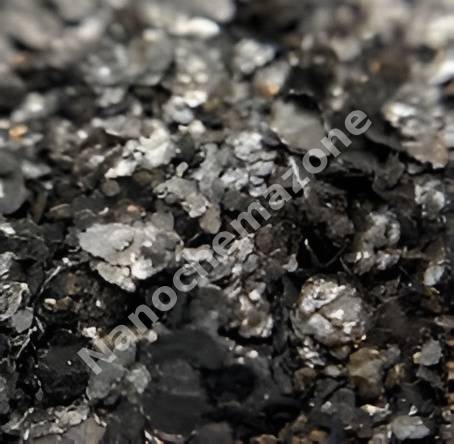
  Kish Graphite is a byproduct of steel-making. The more modern steel-making processes do not result in the generation of Kish graphite, but in earlier times it was produced during the cooling of molten steel. It is obtained when carbon crystallizes from molten steel during the steel manufacturing process. It is used by hundreds of research groups to make graphene by mechanical exfoliation.  With preparation methods, the size of kish graphite is from mm to cm. As it is obtained by high temperature, the main applications include: as raw materials to synthesis the graphene, graphite intercalation compounds, and the fundamental research works such as the properties of graphite, large size graphite layer compounds.
Product Codes- NCZ-2717K

Aluminum Foam(Open Micropore, 1.6mm) (537636)

$545.00
Select options This product has multiple variants. The options may be chosen on the product page
Aluminum Foam(Open Micropore, 1.6mm) (537636)
  Primary Pore Size: 1.6mm Porosity: 85-90% Through Hole Rate: 50% Volume Density: 0.7g/cm3 Dimensions: per customer request   Product Codes- NCZ-2670K

N,O-Carboxymethyl Chitosan(from Mushroom, Water soluble) (336555)

$545.00
Select options This product has multiple variants. The options may be chosen on the product page
N,O-Carboxymethyl Chitosan(from Mushroom, Water soluble) (336555)
ANALYSIS SPECIFICATION
Characters/appearance White to light yellow powder
pH 7-8
Degree of Substitution 80%
Viscosity in 1% Acetic acid 10-80 cps
Mesh size/sieve analysis 100% pass 80 mesh
Loss on drying ≤8%
Total ash ≤ 2%
Heavy Metals As Pb Cd Hg Sum ≤ 2.0 ppm ≤ 1.0 ppm ≤ 0.5 ppm ≤ 0.5 ppm ≤ 20.0 ppm
Microbiological quality Total Plate Count Yeast & Mold E.Coli. Salmonella . <1000 cfu/g <100 cfu/g Negative Negative
    Product Codes- NCZ-2666K  

Cellulose nanofiber(CNF) (252567) Powder TEMPO oxidized CNF

$545.00
Select options This product has multiple variants. The options may be chosen on the product page
Cellulose nanofiber(CNF) (252567) Powder TEMPO oxidized CNF
TEMPO oxidized CNF Grade Carboxyl group(mmol/g) Length (µm) Diameter (nm) Appearance Concentration (w/w %) Price($)
TO-CNF-PL2-Powder 1.0-1.3 0.8-5 <10 Powder >92 545/10g
TO-CNF-PL10-Powder 1.3-1.6 5-10 <15
TO-CNF-PL20-Powder 1.6-2.2 10-20 <20
Product Codes- NCZ-2649K

Silk Fibroin (363619)

$545.00
Select options This product has multiple variants. The options may be chosen on the product page
Silk Fibroin (363619)
Items Specifications
Appearance White or grayish yellow powder
Total Nitrogen (%) ≥14.5
Weight loss on drying (%) ≤6.0
Residue on ignition (%) ≤4.0
pH value 5.0-7.0
   
Grade Particle diameter(µm) Price($/kg)
363619-1 40 445
363619-2 10 445
363619-3 5 445
363619-4 2 445
  Product Codes- NCZ-2629K

Original CNF (without modification)

$545.00
Select options This product has multiple variants. The options may be chosen on the product page

Product 

Original CNF (without modification)

CAS No.

 9004-34-6

Appearance

Powder

Purity

≥99%,  ≥99.9%,  ≥95%

(Other purities are also available)

APS

 ~5–20 nm diameter, length: 0.5–10 μm(Size Can be customized), Ask for other available size ranges.

Ingredient

N/A

Molecular Weight

Not fixed – polymer; per glucose unit: 162.14 g/mol

Melting Point

N/A

Boiling Point

N/A

Density

~1.3 – 1.6 g/cm³ (depends on crystallinity and form: gel, powder, film)

Product Codes

NCZ-2596K

Original CNF (without modification) UM-CNF-PL30-Paste

$545.00
Select options This product has multiple variants. The options may be chosen on the product page

Product 

Original CNF (without modification) UM-CNF-PL30-Paste

CAS No.

 9004-34-6 (same as cellulose)

Appearance

Powder

Purity

≥99%,  ≥99.9%,  ≥95%

(Other purities are also available)

APS

 5–20 nm diameter, length: 0.5–10 μm(Size Can be customized), Ask for other available size ranges.

Ingredient

N/A

Molecular Weight

 Not fixed (polymer) – repeat unit: 162.14 g/mol

Melting Point

 ❌ Nonethermal degradation starts ~240–260 °C

Boiling Point

N/A

Density

 ~1.3 – 1.6 g/cm³ (crystalline cellulose ~1.54 g/cm³)

Product Codes

NCZ-2595K

Cellulose nanofiber(CNF) (252567) Paste Original CNF (without modification)

$545.00
Select options This product has multiple variants. The options may be chosen on the product page
Cellulose nanofiber(CNF) (252567) Paste Original CNF (without modification)
Original CNF (without modification) Grade Length (µm) Diameter (nm) Appearance Concentration (w/w %) Price($)
UM-CNF-PL10-Paste 1-10 <10 White paste 1.0 545/500ml
UM-CNF-PL30-Paste 10-30 <15 2.0 545/500ml
Product Codes- NCZ-2594K  

Cellulose nanofiber(CNF) (252567) Gel Cationic modified CNF

$545.00
Select options This product has multiple variants. The options may be chosen on the product page
Cellulose nanofiber(CNF) (252567) Gel Cationic modified CNF
Cationic modified CNF Grade Charge density(mmol/g) Length (µm) Diameter (nm) Appearance Concentration (w/w %) Price($)
C-CNF-PL5-Gel 1.3-1.6 1-10 <10 Transparent or semitransparent Hydrogel 1 545/500ml
C-CNF-PL10-Gel 1.0-1.3 10-20 <20
C-CNF-PL20-Gel 0.7-1.0 20-30 <30
Product Codes- NCZ-2593K

Cellulose nanofiber(CNF) (252567) Gel TEMPO oxidized CNF

$545.00
Select options This product has multiple variants. The options may be chosen on the product page
Cellulose nanofiber(CNF) (252567) Gel TEMPO oxidized CNF
TEMPO oxidized CNF Grade Carboxyl group(mmol/g) Length (µm) Diameter (nm) Appearance Concentration (w/w %) Price($)
TO-CNF-PL2-Gel 1.0-1.3 0.8-5 <10 Transparent or semitransparent Hydrogel 1 545/500ml
TO-CNF-PL10-Gel 1.3-1.6 5-10 <15
TO-CNF-PL20-Gel 1.6-2.2 10-20 <20
Product Codes- NCZ-2592K

TEMPO oxidized CNF

$545.00
Select options This product has multiple variants. The options may be chosen on the product page

Product 

TEMPO oxidized CNF

CAS No.

9004-34-6

Appearance

Powder

Purity

≥99%,  ≥99.9%,  ≥95%

(Other purities are also available)

APS

~3–10 nm (Size Can be customized), Ask for other available size ranges.

Ingredient

N/A

Molecular Weight

 Undefined – it's a polymer (but ~162.14 g/mol per glucose unit)

Melting Point

N/A

Boiling Point

N/A

Density

~1.3–1.5 g/cm³ (bulk powder form)

Product Codes

NCZ-2591K

Aluminum dihydrogen tripolyphosphate(AlH2P3O10·2H2O) (157885)

$545.00
Select options This product has multiple variants. The options may be chosen on the product page
Aluminum dihydrogen tripolyphosphate(AlH2P3O10·2H2O) (157885)

 CAS  17375-35-8

Project Guaranteed Values Examination result
Color White White powder
The PH value 3-5 5
Moisture % ≤2 1.5
Residue on sieve( 45um)                ≤0.5% 0.4
P2O5   % 60-70 61.5
Al2O3  % 20-30 26
AS ≤100ppm 90
Cd ≤100ppm 20
Cr ≤100ppm 15
Hg ≤10ppm 0.0005
Pb ≤200ppm 80
Product Codes- NCZ-2590K

Large Pore Diameter Dendritic Mesoporous Silica Solution/Powder

$545.00
Select options This product has multiple variants. The options may be chosen on the product page
Product Large Pore Diameter Dendritic Mesoporous Silica Solution/Powder
CAS No. 7631-86-9
Appearance Fine white to off-white
Purity ≥99%,  ≥99.9%,  ≥95%(Other purities are also available)
APS 100nm (Size Can be customized),  Ask for other available size range.
Ingredient SiO₂
Molecular Weight N/A
Melting Point N/A
Boiling Point N/A
Density N/A
Product Codes NCZ-441I
 

Carboxyl Modified Dendritic Large Pore Diameter Mesoporous Silica

$545.00
Select options This product has multiple variants. The options may be chosen on the product page
Product Carboxyl Modified Dendritic Large Pore Diameter Mesoporous Silica
CAS No. 7440-21-3
Appearance White to off white
Purity ≥99%,  ≥99.9%,  ≥95%(Other purities are also available)
APS 100nm (Size Can be customized),  Ask for other available size range.
Ingredient SiO₂
Molecular Weight N/A
Melting Point N/A
Boiling Point N/A
Density 0.3–0.6 g/cm³
Product Codes NCZ-306I
 

Amino Modified Dendritic Large Pore Diameter Mesoporous Silica Solution/Powder

$545.00
Select options This product has multiple variants. The options may be chosen on the product page
Product Amino Modified Dendritic Large Pore Diameter Mesoporous Silica Solution/Powder
CAS No. 919-30-2
Appearance Clear to pale yellow
Purity ≥99%,  ≥99.9%,  ≥95%(Other purities are also available)
APS N/A
Ingredient C₉H₂₃NO₃Si
Molecular Weight 221.37 g/mol
Melting Point N/A
Boiling Point N/A
Density 2.0 g/cm³.
Product Codes NCZ-287I
 

Industrial Grade Graphene Oxides (97%, <2nm, diameter: 3~10um)

$545.00
Select options This product has multiple variants. The options may be chosen on the product page
$115/g $545/5g
Product Industrial Grade Graphene Oxides (97%, <2nm, diameter: 3~10um)
CAS No. 7782-42-5
Appearance Black powder
Purity ≥99%,  ≥99.9%,  ≥95%(Other purities are also available)
APS 3-10um (Size Can be customized),  Ask for other available size range.
Ingredient (CₓOyHz)
Molecular Weight 1106.96 g/mol
Melting Point N/A
Boiling Point N/A
Density 1.36 g/cm³
Product Codes NCZ-118G

Silver Nanoparticles/ Nanopowder (Ag, 99.95%, 20~30nm, PVP coated)

Price range: $60.00 through $545.00
Select options This product has multiple variants. The options may be chosen on the product page
$60/5g
$115/10g $210/25g $545/100g
 

Product 

Silver Nanoparticles/ Nanopowder (Ag, 99.95%, 20~30nm, PVP coated)

CAS No.

24304-00-5

Appearance

Powder

Purity

≥99%,  ≥99.9%,  ≥95%

(Other purities are also available)

APS

20~30nm (Size Can be customized), Ask for other available size ranges.

Ingredient

AlN

Molecular Weight

40.982 g/mol

Melting Point

2200 °C

Boiling Point

2517 °C

Density

3.3 g/cm³

Product Codes

NCZ-1003K

Silver Ag Nanoparticles/Nanopowder (Ag, 99.95%, 20~30nm)

Price range: $60.00 through $545.00
Select options This product has multiple variants. The options may be chosen on the product page
$60/5g
$115/10g $210/25g $545/100g
 

Product 

Silver Ag Nanoparticles/Nanopowder (Ag, 99.95%, 20~30nm)

CAS No.

24304-00-5

Appearance

Powder

Purity

≥99%,  ≥99.9%,  ≥95%

(Other purities are also available)

APS

20~30nm (Size Can be customized), Ask for other available size ranges.

Ingredient

AlN

Molecular Weight

40.982 g/mol

Melting Point

2200 °C

Boiling Point

2517 °C

Density

3.3 g/cm³

Product Codes

NCZ-1002K

Calcium Manganate (CaMnO3) Sputtering Targets, Purity: 99.9%, Size: 4”, Thickness: 0.125”

$545.00

Applications of Sputtering Targets;

Film deposition is accomplished using sputtering targets. A technique for sputtering thin films is called "deposition made by sputter targets," which entails eroding material from a "target" source onto a "substrate" like a silicon wafer. Etching of the target is done using semiconductor sputtering targets. When selectivity is not an issue and a high degree of etching anisotropy is required, sputter etching is the method of choice. By removing the target material through etching, sputter targets are also utilized for investigation. In secondary ion spectroscopy (SIMS), one example is when the target material is sputtered at a steady pace. Mass spectrometry is used to quantify the concentration and identity of spewed atoms as the target is sputtered.

The target material's composition may be ascertained and even very low concentrations of contaminants can be found with the aid of the sputtering target.

There is also an application area for sputtering targets in space. One type of space weathering that alters the chemical and physical characteristics of airless worlds like the Moon and asteroids is sputtering.

Calcium Manganate (CaMnO3) Sputtering Targets, Purity: 99.9%, Size: 2”, Thickness: 0.125”

$544.00

Product 

Calcium Manganate (CaMnO3) Sputtering Targets, Purity: 99.9%, Size: 2'', Thickness: 0.125''

CAS No.

12058-85-6

Appearance

Powder

Purity

≥99%,  ≥99.9%,  ≥95%

(Other purities are also available)

APS

 N/A (Size Can be customized), Ask for other available size ranges.

Ingredient

N/A

Molecular Weight

157.87 g/mol

Melting Point

 Approx. 1400 °C (decomposes)

Boiling Point

N/A

Density

 ~4.7 g/cm³

Product Codes

NCZ-2361K

Lanthanum Calcium Manganate (La0.7Ca0.3MnO3) Sputtering Targets, Purity: 99.9%, Size: 1”, Thickness: 0.125”

$544.00

Product 

Lanthanum Calcium Manganate (La0.7Ca0.3MnO3) Sputtering Targets, Purity: 99.9%, Size: 1'', Thickness: 0.125''

CAS No.

123273‑09‑6

Appearance

Powder

Purity

≥99%,  ≥99.9%,  ≥95%

(Other purities are also available)

APS

N/A (Size Can be customized), Ask for other available size ranges.

Ingredient

N/A

Molecular Weight

 ~313.9 g/mol

Melting Point

 ~1,550 °C (approximate; ceramic decomposition likely above)

Boiling Point

N/A

Density

 ~5.3 g/cm³ @ room temp

Product Codes

NCZ-2158K

Molybdenum Disulfide (MoS2) Sputtering Targets, Purity: 99.9%, Size: 2”, Thickness: 0.250”

$544.00

Product 

Molybdenum Disulfide (MoS2) Sputtering Targets, Purity: 99.9%, Size: 2'', Thickness: 0.250''

CAS No.

 1317-33-5

Appearance

Powder

Purity

≥99%,  ≥99.9%,  ≥95%

(Other purities are also available)

APS

 N/A (Size Can be customized), Ask for other available size ranges.

Ingredient

N/A

Molecular Weight

 160.07 g/mol

Melting Point

 ~1185 °C

Boiling Point

 ~4500 °C

Density

 ~5.06 g/cm³

Product Codes

NCZ-1916K

Ytterbium Oxide (Yb2O3) Sputtering Targets, Purity: 99.9%, Size: 3”, Thickness: 0.125”

$544.00

Applications of Sputtering Targets;

  • Sputtering targets is used for film deposition. The deposition made by sputter targets is a method of depositing thin films by sputtering that involves eroding material from a "target" source onto a "substrate" such as  a silicon wafer.
  • Semiconductor sputtering targets is used to etch the target. Sputter etching is chosen in cases where a high degree of etching anisotropy is needed and selectivity is not a concern.
  • Sputter targets is also used for analysis by etching away the target material.
One of the example occurs in secondary ion spectroscopy (SIMS), where the target sample is sputtered at a constant rate. As the target is sputtered, the concentration and identity of sputtered atoms are measured using mass spectrometry. By helping of the sputtering target, the composition of the target material can be determined and even extremely low concentrations of impurities are detected. Sputtering target has also application area in space. Sputtering is one of the forms of space weathering, a process that changes the physical and chemical properties of airless bodies, such as asteroids and the Moon.

CR2032 Coin Cell Cases with 304SS, Diameter: 20 mm, Height: 3.2 mm

Price range: $155.00 through $544.00
Select options This product has multiple variants. The options may be chosen on the product page

Applications:

CR2032 Coin Cell Cases with SS304 is excellent for developing new rechargeable battery and battery electrodes