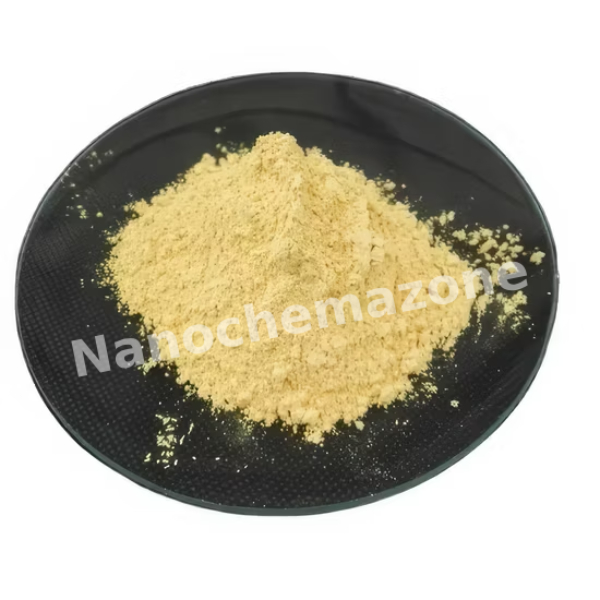
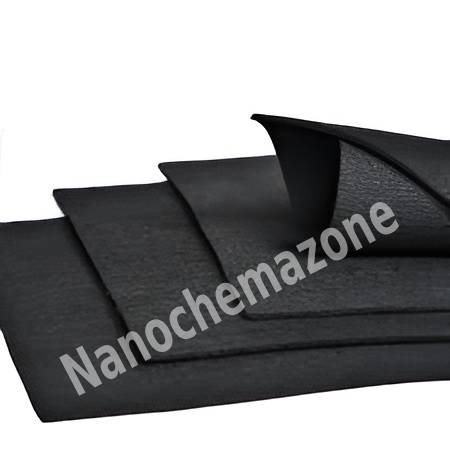
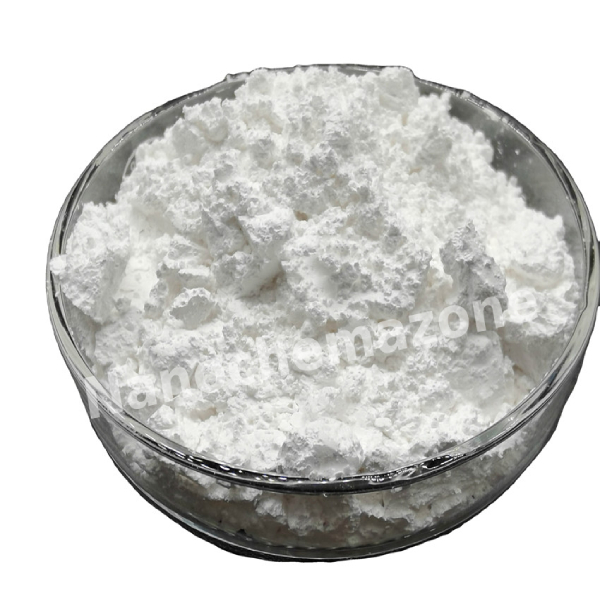
Lead Zirconium Titanate/PZT (O5PbTiZr) Sputtering Targets, Purity: 99.9%, Size: 5”, Thickness: 0.125”

$1,381.00

Product 

Lead Zirconium Titanate/PZT (O5PbTiZr) Sputtering Targets, Purity: 99.9%, Size: 5'', Thickness: 0.125''

CAS No.

12626-81-2

Appearance

Powder

Purity

≥99%,  ≥99.9%,  ≥95%

(Other purities are also available)

APS

 N/A (Size Can be customized), Ask for other available size ranges.

Ingredient

N/A

Molecular Weight

~303.1 g/mol

Melting Point

 ~1,250°C – 1,350°C

Boiling Point

N/A

Density

 ~7.75–8.0 g/cm³

Product Codes

NCZ-2062K

Cerium Oxide (CeO2) Sputtering Targets, Purity: 99.99%, Size: 7”, Thickness: 0.250”

$1,380.00

Applications of Sputtering Targets;

Film deposition is accomplished using sputtering targets. A technique for sputtering thin films is called "deposition made by sputter targets," which entails eroding material from a "target" source onto a "substrate" like a silicon wafer. Etching of the target is done using semiconductor sputtering targets. When selectivity is not an issue and a high degree of etching anisotropy is required, sputter etching is the method of choice. By removing the target material through etching, sputter targets are also utilized for investigation. In secondary ion spectroscopy (SIMS), one example is when the target material is sputtered at a steady pace. Mass spectrometry is used to quantify the concentration and identity of spewed atoms as the target is sputtered.

The target material's composition may be ascertained and even very low concentrations of contaminants can be found with the aid of the sputtering target.

There is also an application area for sputtering targets in space. One type of space weathering that alters the chemical and physical characteristics of airless worlds like the Moon and asteroids is sputtering.

The most prevalent rare-earth element in the crust of the earth is cerium, a metal that belongs to the lanthanide series. Cerium oxide's high refractive index and dielectric constant make it suitable for a wide range of optical and electrical applications. Additionally, cerium oxide can be used for corrosion protection coatings rather than coatings based on chromate.

Barium Fluoride (BaF2) Sputtering Targets, Purity: 99.99%, Size: 4”, Thickness: 0.125”

$1,380.00

Applications of Sputtering Targets;

Film deposition is accomplished using sputtering targets. A technique for sputtering thin films is called "deposition made by sputter targets," which entails eroding material from a "target" source onto a "substrate" like a silicon wafer. Etching of the target is done using semiconductor sputtering targets. When selectivity is not an issue and a high degree of etching anisotropy is required, sputter etching is the method of choice. By removing the target material through etching, sputter targets are also utilized for investigation. In secondary ion spectroscopy (SIMS), one example is when the target material is sputtered at a steady pace. Mass spectrometry is used to quantify the concentration and identity of spewed atoms as the target is sputtered. With the sputtering target's assistance, the

It is possible to identify the target material and even detect incredibly tiny impurity amounts.

There is also an application area for sputtering targets in space. One type of space weathering that alters the chemical and physical characteristics of airless worlds like the Moon and asteroids is sputtering.

A chemical compound consisting of barium and fluorine, barium fluoride (BaF2) is a salt. It is a solid that has the potential to be a clear crystal. One chemical compound for the 10–20 µm wavelength infrared area is barium fluoride. Enamel, glazing frits, and aluminum metallurgy all use barium fluoride.

Barium Fluoride (BaF2) Sputtering Targets, Purity: 99.99%, Size: 4”, Thickness: 0.250”

$1,380.00

Applications of Sputtering Targets;

Film deposition is accomplished using sputtering targets. A technique for sputtering thin films is called "deposition made by sputter targets," which entails eroding material from a "target" source onto a "substrate" like a silicon wafer. Etching of the target is done using semiconductor sputtering targets. When selectivity is not an issue and a high degree of etching anisotropy is required, sputter etching is the method of choice. By removing the target material through etching, sputter targets are also utilized for investigation. In secondary ion spectroscopy (SIMS), one example is when the target material is sputtered at a steady pace. When the target shatters,

Mass spectrometry measures the concentration and identity of sputtered atoms. The target material's composition may be ascertained and even very low concentrations of contaminants can be found with the aid of the sputtering target.

There is also an application area for sputtering targets in space. One type of space weathering that alters the chemical and physical characteristics of airless worlds like the Moon and asteroids is sputtering.

A chemical compound consisting of barium and fluorine, barium fluoride (BaF2) is a salt. It is a solid that has the potential to be a clear crystal. A is barium fluoride.

Antimony Telluride (Sb2Te3) Sputtering Targets, Purity: 99.999%, Size: 4”, Thickness: 0.125”

$1,380.00

Applications of Sputtering Targets;

Film deposition is accomplished using sputtering targets. One technique for sputtering thin films is the deposition produced by sputter targets. It entails transferring material onto a "substrate," like a silicon wafer, from a "target" source. Etching of the target is done using semiconductor sputtering targets. When etching anisotropy is high, sputter etching is the preferred method. is required, and selectivity is unimportant. By removing the target material through etching, sputter targets are also utilized for investigation. In secondary ion spectroscopy (SIMS), one example is when the target material is sputtered at a steady pace. When the target shatters, Mass spectrometry measures the concentration and identity of sputtered atoms. With the sputtering target's assistance, the It is possible to identify the target material and even detect incredibly tiny impurity amounts. There is also an application area for sputtering targets in space. One type of space weathering that alters the chemical and physical characteristics of airless worlds like the Moon and asteroids is sputtering. The chemical formula for antimony telluride, an inorganic molecule, is Sb2Te3. It has a layered structure and is a grey crystalline solid. Weak van der Waals forces hold the layers together. They are made up of three atomic sheets of tellurium and two atomic sheets of antimony.

Antimony Telluride (Sb2Te3) Sputtering Targets, Purity: 99.999%, Size: 4”, Thickness: 0.250”

$1,380.00

Applications of Sputtering Targets;

Film deposition is accomplished using sputtering targets. A technique for sputtering thin films is called "deposition made by sputter targets," which entails eroding material from a "target" source onto a "substrate" like a silicon wafer. Etching of the target is done using semiconductor sputtering targets. When selectivity is not an issue and a high degree of etching anisotropy is required, sputter etching is the method of choice. By removing the target material through etching, sputter targets are also utilized for investigation. In secondary ion spectroscopy (SIMS), one example is when the target material is sputtered at a steady pace. Mass spectrometry is used to quantify the concentration and identity of spewed atoms as the target is sputtered. With the sputtering target's assistance, the

It is possible to identify the target material and even detect incredibly tiny impurity amounts.

There is also an application area for sputtering targets in space. One type of space weathering that alters the chemical and physical characteristics of airless worlds like the Moon and asteroids is sputtering.

The chemical formula for antimony telluride, an inorganic molecule, is Sb2Te3. It has a layered structure and is a grey crystalline solid. Layers are kept together by weak van der Waals forces and are composed of two antimony atomic sheets and three tellurium atomic sheets.

Let's now examine the regions in which antimony telluride sputtering targets are used. As far as we are aware, thermoelectric devices have garnered significant interest due toBecause they can directly convert heat into electric energy, they can be used as power generators, coolers, and thermal sensors or detectors. The power factor or the dimensionless figure of merit (ZT) of the materials are used to assess thermoelectric device performance. Tellurium antimony (Sb2Te3)

Holey Graphene

Price range: $285.00 through $1,380.00
Select options This product has multiple variants. The options may be chosen on the product page

Applications of Holey Graphene

Holey Super Graphene's exceptional properties — including ultra-high conductivity, expansive surface area, and superior electrochemical performance — position it as an adaptable material ideal for a broad spectrum of applications, from energy storage to environmental sensing. Its high conductivity will benefit energy storage by providing fast charge-discharge processes and long life advantages in battery and supercapacitor technologies. It will also find use in many different fields, from membranes to electronic devices, fuel cells to gas sensors, water treatment systems to hydrogen storage and biological research. You can find a summary list below.
  • Electronics: Enhances energy storage in supercapacitors and batteries due to its large surface area and ultra-high conductivity, leading to faster charge-discharge cycles and extended battery life.
  • Sensing Technology: Utilized in sensors for detecting gases and other molecular interactions, increasing sensitivity and response time in environmental monitoring and medical diagnostics.
  • Photonics and Optoelectronics: Applied in photodetectors and light-emitting devices, improving efficiency with its unique electronic and optical properties.
  • Clean Energy: Supports fuel cells and hydrogen storage, leveraging its high surface area to improve efficiency in energy conversion and storage, contributing to cleaner energy solutions.
  • Water Purification: Filters and purifies water at the nanoscale, enabling effective desalination and removal of impurities.
  • Environmental and Safety: Acts as a sensitive material in gas sensors for environmental monitoring and industrial safety, aiding in the detection of pollutants and hazardous gases.
  • Material Enhancement: Incorporated into nanocomposite materials to boost mechanical, electrical, and thermal properties for use in aerospace, automotive, and construction.

Lanthanum Nickel Oxide (LaNiO3) Sputtering Targets, Purity: 99.9%, Size: 3”, Thickness: 0.125”

$1,377.00

Product 

Lanthanum Nickel Oxide (LaNiO3) Sputtering Targets, Purity: 99.9%, Size: 3'', Thickness: 0.125''

CAS No.

12031‑18‑4

Appearance

Powder

Purity

≥99%,  ≥99.9%,  ≥95%

(Other purities are also available)

APS

 ~1–5 µm (Size Can be customized), Ask for other available size ranges.

Ingredient

N/A

Molecular Weight

 ~245.6 g/mol

Melting Point

Decomposes at ~1300–1500 °C

Boiling Point

N/A

Density

 ~6.5–7.0 g/cm³

Product Codes

NCZ-2123K

Lanthanum Nickel Oxide (LaNiO3) Sputtering Targets, indium, Purity: 99.9%, Size: 2”, Thickness: 0.125”

$1,377.00

Product 

Lanthanum Nickel Oxide (LaNiO3) Sputtering Targets, indium, Purity: 99.9%, Size: 2'', Thickness: 0.125''

CAS No.

12031‑18‑4

Appearance

Powder

Purity

≥99%,  ≥99.9%,  ≥95%

(Other purities are also available)

APS

 ~1–5 µm (Size Can be customized), Ask for other available size ranges.

Ingredient

N/A

Molecular Weight

~245.6 g/mol

Melting Point

N/A

Boiling Point

N/A

Density

~6.25–7.0 g/cm³

Product Codes

NCZ-2110K

Cadmium Telluride (CdTe) Sputtering Target

Price range: $464.00 through $1,375.00
Select options This product has multiple variants. The options may be chosen on the product page

Product 

Cadmium Telluride (CdTe) Sputtering Target

CAS No.

1306-25-8

Appearance

Powder

Purity

≥99%,  ≥99.9%,  ≥95%

(Other purities are also available)

APS

 NA (Size Can be customized), Ask for other available size ranges.

Ingredient

N/A

Molecular Weight

 240.01 g/mol

Melting Point

~1,041 °C

Boiling Point

~1,050 °C

Density

~6.2 g/cm³

Product Codes

NCZ-1344K

Tantalum Nitride (TaN) Sputtering Target

Price range: $622.00 through $1,375.00
Select options This product has multiple variants. The options may be chosen on the product page

Product 

Tantalum Nitride (TaN) Sputtering Target

CAS No.

12033-62-4

Appearance

Powder

Purity

≥99%,  ≥99.9%,  ≥95%

(Other purities are also available)

APS

 NA (Size Can be customized), Ask for other available size ranges.

Ingredient

N/A

Molecular Weight

 194.96 g/mol

Melting Point

~3,090 °C

Boiling Point

 ~5,000 °C

Density

~14.3 g/cm³

Product Codes

NCZ-1334K

Carbon Quantum Dots (CQD) 505 nm

Price range: $780.00 through $1,375.00
Select options This product has multiple variants. The options may be chosen on the product page
APPLICATIONS Carbon quantum dots are employed in the following because of their optical, electrical, and biological characteristics:
  • Bioimaging,
  • Photovoltaics,
  • Photocatalysis,
  • Drug delivery,
  • Sensors,
  • Optronics.

Cerium Oxide (CeO2) Sputtering Targets, Purity: 99.99%, Size: 4”, Thickness: 0.250”

$1,374.00

Product 

Cerium Oxide (CeO2) Sputtering Targets, Purity: 99.99%, Size: 4'', Thickness: 0.250''

CAS No.

 1306-38-3

Appearance

Powder

Purity

≥99%,  ≥99.9%,  ≥95%

(Other purities are also available)

APS

 N/A (Size Can be customized), Ask for other available size ranges.

Ingredient

N/A

Molecular Weight

 172.11 g/mol

Melting Point

2,400–2,600 °C

Boiling Point

Sublimes above 3,000 °C

Density

 7.13 g/cm³

Product Codes

NCZ-2327K

Titanium Dioxide (TiO2) Sputtering Targets, Purity: 99.99%, Size: 3”, Thickness: 0.250”, Beige to White

$1,369.00

Product 

Titanium Dioxide (TiO2) Sputtering Targets, Purity: 99.99%, Size: 3'', Thickness: 0.250'', Beige to White

CAS No.

13463‑67‑7

Appearance

Powder

Purity

≥99%,  ≥99.9%,  ≥95%

(Other purities are also available)

APS

TiO₂ (black granules) (Size Can be customized), Ask for other available size ranges.

Ingredient

N/A

Molecular Weight

79.94 g/mol

Melting Point

~1,843 °C

Boiling Point

~2,972 °C

Density

~4.23 g/cm³

Product Codes

NCZ-1434K

Monolayer Graphene on SiO2/Si Substrate, Size: 3″

Price range: $324.00 through $1,369.00
Select options This product has multiple variants. The options may be chosen on the product page

Applications

Graphene research; Supercapacitors; Catalyst; Solar energy; Graphene optoelectronics, plasmonics and nanophotonics; Graphene semiconductor chips; Conductive graphene film; Graphene computer memory; Biomaterials and Bioelectronics.

Aluminum Nitride (AlN) Sputtering Targets, Purity: 99.8%, Size: 4”, Thickness: 0.125”

$1,366.00

Product 

Aluminum Nitride (AlN) Sputtering Targets, Purity: 99.8%, Size: 4'', Thickness: 0.125''

CAS No.

 24304-00-5

Appearance

Powder

Purity

≥99%,  ≥99.9%,  ≥95%

(Other purities are also available)

APS

N/A (Size Can be customized), Ask for other available size ranges.

Ingredient

N/A

Molecular Weight

40.99 g/mol

Melting Point

 ~2200 °C

Boiling Point

 N/A

Density

 ~3.26 g/cm³

Product Codes

NCZ-2555K

99.994% (4N4) Potassium Carbonate (K2CO3) Powder

Price range: $260.00 through $1,366.00
Select options This product has multiple variants. The options may be chosen on the product page
Product 99.994% (4N4) Potassium Carbonate (K2CO3) Powder
CAS No. 584-08-7
Appearance White crystalline
Purity ≥99%,  ≥99.9%,  ≥95%(Other purities are also available)
APS 10µm (Size Can be customized),  Ask for other available size range.
Ingredient K2CO3
Molecular Weight 138.205 g/mol
Melting Point N/A
Boiling Point N/A
Density 2.43 g/cm³
Product Codes NCZ-252I
 

Barium Strontium Titanate (BaO4SrTi) Sputtering Targets, elastomer, Purity: 99.99%, Size: 4”, Thickness: 0.125”

$1,366.00

Applications of Sputtering Targets;

Film deposition is accomplished using sputtering targets. A technique for sputtering thin films is called "deposition made by sputter targets," which entails eroding material from a "target" source onto a "substrate" like a silicon wafer. Etching of the target is done using semiconductor sputtering targets. When selectivity is not an issue and a high degree of etching anisotropy is required, sputter etching is the method of choice. By removing the target material through etching, sputter targets are also utilized for investigation. In secondary ion spectroscopy (SIMS), one example is when the target material is sputtered at a steady pace. When the target shatters,

Mass spectrometry measures the concentration and identity of sputtered atoms. The target material's composition may be ascertained and even very low concentrations of contaminants can be found with the aid of the sputtering target.

There is also an application area for sputtering targets in space. One type of space weathering that alters the chemical and physical characteristics of airless worlds like the Moon and asteroids is sputtering.

A solid mixture of barium titanate (BaTiO3) and strontium titanate (SrTiO3) is called barium strontium titanate (BST). Sputtering techniques yield thin coatings of barium strontium titanate (BST), which confers exceptional dielectric characteristics to materials. As a result, over the past ten years, barium strontium titanate (BST) based ferroelectric thin film devices have gained popularity because of its

phase shifters, varactors, and resonators.

Thin films of barium strontium titanate show great promise because of their low dielectric loss, high dielectric constant, and tunability. There have been reports on the dielectric-tunable properties of barium strontium titanate films produced by various deposition processes. These properties investigate the impacts of several parameters, including grain size, Ba/Sr ratio, oxygen vacancies, and film thickness. To get more tunability and less loss, researchers have also looked at doping concentrations, high temperature annealing, and multilayer architectures.

Cerium Oxide (CeO2) Sputtering Targets, Purity: 99.99%, Size: 5”, Thickness: 0.250”

$1,365.00

Product 

Cerium Oxide (CeO2) Sputtering Targets, Purity: 99.99%, Size: 5'', Thickness: 0.250''

CAS No.

 1306-38-3

Appearance

Powder

Purity

≥99%,  ≥99.9%,  ≥95%

(Other purities are also available)

APS

 N/A (Size Can be customized), Ask for other available size ranges.

Ingredient

N/A

Molecular Weight

 172.11 g/mol

Melting Point

2,400–2,600 °C

Boiling Point

Sublimes above 3,000 °C

Density

 7.13 g/cm³

Product Codes

NCZ-2325K

Multi Walled Carbon Nanotubes Ethanol Dispersion, 4 wt%, Purity: > 96%, OD: 3-13 nm, Length: 45 µm

Price range: $299.00 through $1,365.00
Select options This product has multiple variants. The options may be chosen on the product page

Applications:

MWCNTs have numerous potential uses in various industries. Medical, mechanical, electric, chemical, energy, and other uses are among these. It can be used in the delivery of one medication, biosensors, CNT composites, catalysts, nanoprobes, hydrogen storage, nanomaterials for catalysis, eight gas discharge tubes, seven lithium batteries, nine-panel flat display, 11 transistors, 10 supercapacitors, twelve solar cells Photoluminescence 13 and template 14

Bismuth Ferrite (BiFeO3) Sputtering Targets, Purity: 99.9%, Size: 5”, Thickness: 0.250”

$1,364.00

Product 

Bismuth Ferrite (BiFeO3) Sputtering Targets, Purity: 99.9%, Size: 5'', Thickness: 0.250''

CAS No.

 12010‑42‑3

Appearance

Powder

Purity

≥99%,  ≥99.9%,  ≥95%

(Other purities are also available)

APS

 0.5–2 µm (Size Can be customized), Ask for other available size ranges.

Ingredient

N/A

Molecular Weight

~312.82 g/mol

Melting Point

 ~1255 °C (bulk material)

Boiling Point

N/A

Density

~8.22 g/cm³

Product Codes

NCZ-2422K

Lead Zirconium Titanate/PZT (O5PbTiZr) Sputtering Targets, Purity: 99.9%, Size: 3”, Thickness: 0.250”

$1,364.00

Product 

Lead Zirconium Titanate/PZT (O5PbTiZr) Sputtering Targets, Purity: 99.9%, Size: 3'', Thickness: 0.250''

CAS No.

12626-81-2

Appearance

Powder

Purity

≥99%,  ≥99.9%,  ≥95%

(Other purities are also available)

APS

 N/A (Size Can be customized), Ask for other available size ranges.

Ingredient

N/A

Molecular Weight

~303.1 g/mol

Melting Point

 ~1,250°C – 1,350°C

Boiling Point

N/A

Density

 ~7.75–8.0 g/cm³

Product Codes

NCZ-2065K

>99% Violet Phosphorus Crystal, 200mg

$1,364.00
Product >99% Violet Phosphorus Crystal, 200mg
CAS No. 7723-14-0
Appearance Crystal with metallic luster
Purity ≥99%,  ≥99.9%,  ≥95%(Other purities are also available)
APS 50–500µm (Size Can be customized),  Ask for other available size range.
Ingredient P
Molecular Weight 30.97 g/mol
Melting Point 610 °C
Boiling Point N/A
Density 2.36 g/cm³
Product Codes NCZ-274I

Praseodymium Calcium Manganate (Pr0.7Ca0.3MnO3) Sputtering Targets, indium, Purity: 99.9%, Size: 2”, Thickness: 0.125”

$1,363.00

Product 

Praseodymium Calcium Manganate (Pr0.7Ca0.3MnO3) Sputtering Targets, indium, Purity: 99.9%, Size: 2'', Thickness: 0.125''

CAS No.

N/A

Appearance

Powder

Purity

≥99%,  ≥99.9%,  ≥95%

(Other purities are also available)

APS

1–5 μm (Size Can be customized), Ask for other available size ranges.

Ingredient

N/A

Molecular Weight

237.66 g/mol

Melting Point

N/A

Boiling Point

N/A

Density

~6.4–6.8 g/cm³

Product Codes

NCZ-1775K

Tungsten Oxide (WO3) Sputtering Targets, Purity: 99.9%, Size: 3”, Thickness: 0.250”

$1,359.00

Product 

Tungsten Oxide (WO3) Sputtering Targets, Purity: 99.9%, Size: 3'', Thickness: 0.250''

CAS No.

1314-35-8

Appearance

Powder

Purity

≥99%,  ≥99.9%,  ≥95%

(Other purities are also available)

APS

N/A  (Size Can be customized), Ask for other available size ranges.

Ingredient

N/A

Molecular Weight

231.84 g/mol

Melting Point

1,473 °C

Boiling Point

1,700–1,850 °C

Density

7.16 g/cm³

Product Codes

NCZ-1569K

Lanthanum Manganate (LaMnO3) Sputtering Targets, Purity: 99.9%, Size: 3”, Thickness: 0.125”

$1,357.00

Product 

Lanthanum Manganate (LaMnO3) Sputtering Targets, Purity: 99.9%, Size: 3'', Thickness: 0.125''

CAS No.

13538-87-7

Appearance

Powder

Purity

≥99%,  ≥99.9%,  ≥95%

(Other purities are also available)

APS

 ~1–5 µm (Size Can be customized), Ask for other available size ranges.

Ingredient

N/A

Molecular Weight

240.83 g/mol

Melting Point

N/A

Boiling Point

N/A

Density

~6.3 – 6.8 g/cm³

Product Codes

NCZ-2139K

Bismuth Ferrite (BiFeO3) Sputtering Targets, indium, Purity: 99.9%, Size: 3”, Thickness: 0.125”

$1,357.00

Applications of Sputtering Targets;

Film deposition is accomplished using sputtering targets. A technique for sputtering thin films is called "deposition made by sputter targets," which entails eroding material from a "target" source onto a "substrate" like a silicon wafer. Etching of the target is done using semiconductor sputtering targets. When selectivity is not an issue and a high degree of etching anisotropy is required, sputter etching is the method of choice. By removing the target material through etching, sputter targets are also utilized for investigation. In secondary ion spectroscopy (SIMS), one example is when the target material is sputtered at a steady pace. Mass spectrometry is used to quantify the concentration and identity of spewed atoms as the target is sputtered.

The target material's composition may be ascertained and even very low concentrations of contaminants can be found with the aid of the sputtering target.

There is also an application area for sputtering targets in space. One type of space weathering that alters the chemical and physical characteristics of airless worlds like the Moon and asteroids is sputtering.

One of the most promising multiferroic materials is bismuth ferrite, an inorganic chemical compound with a perovskite structure and the chemical formula BiFeO3. In order to create a one-phase material called bismuth ferrite (BiFeO3), a bismuth ferrite sputtering target is often manufactured by high temperature sinttering or recrystallizing the mixture of the oxide compound of Bi and Fe. For targets that are sputtering bismuth ferrite, indium bonding is advised.

Bismuth Ferrite (BiFeO3) Sputtering Targets, indium, Purity: 99.9%, Size: 1”, Thickness: 0.125”

$1,357.00

Applications of Sputtering Targets;

Film deposition is accomplished using sputtering targets. A technique for sputtering thin films is called "deposition made by sputter targets," which entails eroding material from a "target" source onto a "substrate" like a silicon wafer. Etching of the target is done using semiconductor sputtering targets. When selectivity is not an issue and a high degree of etching anisotropy is required, sputter etching is the method of choice. By removing the target material through etching, sputter targets are also utilized for investigation. In secondary ion spectroscopy (SIMS), one example is when the target material is sputtered at a steady pace. Mass spectrometry is used to quantify the concentration and identity of spewed atoms as the target is sputtered.

The target material's composition may be ascertained and even very low concentrations of contaminants can be found with the aid of the sputtering target.

There is also an application area for sputtering targets in space. One type of space weathering that alters the chemical and physical characteristics of airless worlds like the Moon and asteroids is sputtering.

One of the most promising multiferroic materials is bismuth ferrite, an inorganic chemical compound with a perovskite structure and the chemical formula BiFeO3. In order to create a one-phase material called bismuth ferrite (BiFeO3), a bismuth ferrite sputtering target is often manufactured by high temperature sinttering or recrystallizing the mixture of the oxide compound of Bi and Fe. For targets that are sputtering bismuth ferrite, indium bonding is advised.

Magnesium Oxide (MgO) Sputtering Targets, Purity: 99.95%, Size: 8”, Thickness: 0.250”

$1,356.00

Product 

Magnesium Oxide (MgO) Sputtering Targets, Purity: 99.95%, Size: 8'', Thickness: 0.250''

CAS No.

1309-48-4

Appearance

Powder

Purity

≥99%,  ≥99.9%,  ≥95%

(Other purities are also available)

APS

 N/A (Size Can be customized), Ask for other available size ranges.

Ingredient

N/A

Molecular Weight

40.30 g/mol

Melting Point

 ~2852 °C

Boiling Point

~3600 °C

Density

 ~3.58 g/cm³

Product Codes

NCZ-1961K

Aluminum Oxide (Al2O3) Sputtering Targets, Purity: 99.99%, Size: 8”, Thickness: 0.125”

$1,355.00

Product 

Aluminum Oxide (Al2O3) Sputtering Targets, Purity: 99.99%, Size: 8'', Thickness: 0.125''

CAS No.

 1344-28-1

Appearance

Powder

Purity

≥99%,  ≥99.9%,  ≥95%

(Other purities are also available)

APS

N/A (Size Can be customized), Ask for other available size ranges.

Ingredient

N/A

Molecular Weight

101.96 g/mol

Melting Point

~2,072 °C

Boiling Point

~2,977 °C

Density

~3.97–3.98 g/cm³

Product Codes

NCZ-2529K

Aluminum Oxide (Al2O3) Sputtering Targets, Purity: 99.99%, Size: 8”, Thickness: 0.250”

$1,355.00

Product 

Aluminum Oxide (Al2O3) Sputtering Targets, Purity: 99.99%, Size: 8'', Thickness: 0.250''

CAS No.

 1344-28-1

Appearance

Powder

Purity

≥99%,  ≥99.9%,  ≥95%

(Other purities are also available)

APS

N/A (Size Can be customized), Ask for other available size ranges.

Ingredient

N/A

Molecular Weight

101.96 g/mol

Melting Point

~2,072 °C

Boiling Point

~2,977 °C

Density

~3.97–3.98 g/cm³

Product Codes

NCZ-2528K

Nickel Oxide (NiO) Sputtering Targets, indium, Purity: 99.95%, Size: 3”, Thickness: 0.125”

$1,355.00

Product 

Nickel Oxide (NiO) Sputtering Targets, indium, Purity: 99.95%, Size: 3'', Thickness: 0.125''

CAS No.

1313-99-1

Appearance

Powder

Purity

≥99%,  ≥99.9%,  ≥95%

(Other purities are also available)

APS

 ~3–5 µm (Size Can be customized), Ask for other available size ranges.

Ingredient

N/A

Molecular Weight

74.69 g/mol

Melting Point

1,950 °C

Boiling Point

 2,730 °C

Density

 6.67 g/cm³

Product Codes

NCZ-1831K

Cerium Oxide (CeO2) Sputtering Targets, Purity: 99.99%, Size: 7”, Thickness: 0.125”

$1,355.00

Applications of Sputtering Targets;

Film deposition is accomplished using sputtering targets. A technique for sputtering thin films is called "deposition made by sputter targets," which entails eroding material from a "target" source onto a "substrate" like a silicon wafer. Etching of the target is done using semiconductor sputtering targets. When selectivity is not an issue and a high degree of etching anisotropy is required, sputter etching is the method of choice. By removing the target material through etching, sputter targets are also utilized for investigation. In secondary ion spectroscopy (SIMS), one example is when the target material is sputtered at a steady pace. Mass spectrometry is used to quantify the concentration and identity of spewed atoms as the target is sputtered.

The target material's composition may be ascertained and even very low concentrations of contaminants can be found with the aid of the sputtering target.

There is also an application area for sputtering targets in space. One type of space weathering that alters the chemical and physical characteristics of airless worlds like the Moon and asteroids is sputtering.

The most prevalent rare-earth element in the crust of the earth is cerium, a metal that belongs to the lanthanide series. Cerium oxide's high refractive index and dielectric constant make it suitable for a wide range of optical and electrical applications. Additionally, cerium oxide can be used for corrosion protection coatings rather than coatings based on chromate.

Multi Walled Carbon Nanotubes Water Dispersion, 4 wt%, Purity: > 96%, OD: 18-28 nm, Length: 8-35 µm

Price range: $80.00 through $1,355.00
Select options This product has multiple variants. The options may be chosen on the product page

Applications:

MWCNTs have numerous potential uses in various industries. Medical, mechanical, electric, chemical, energy, and other uses are among these. It can be used in a variety of applications, including drug delivery, biosensors, CNT composites, catalysis, nanoprobes, hydrogen storage, flat panel displays, supercapacitors, transistors, solar cells, photoluminescence, and templates.

Carbon Quantum Dots (CQD) 515 nm

Price range: $770.00 through $1,355.00
Select options This product has multiple variants. The options may be chosen on the product page
APPLICATIONS Carbon quantum dots are employed in the following because of their optical, electrical, and biological characteristics:
  • Bioimaging,
  • Photovoltaics,
  • Photocatalysis,
  • Drug delivery,
  • Sensors,
  • Optronics.

Multilayer Molybdenum Titanium Carbide (Mo2Ti2C3) MXene Material

Price range: $514.00 through $1,354.00
Select options This product has multiple variants. The options may be chosen on the product page
Product Multilayer Molybdenum Titanium Carbide (Mo2Ti2C3) MXene Material
CAS No. N/A
Appearance Dark gray to black
Purity ≥99%,  ≥99.9%,  ≥95%(Other purities are also available)
APS 100nm ( (Size Can be customized),  Ask for other available size range.
Ingredient Mo2Ti2C3
Molecular Weight N/A
Melting Point N/A
Boiling Point N/A
Density 6.5 – 7.5 g/cm³
Product Codes NCZ-464I

Cerium Oxide (CeO2) Sputtering Targets, indium, Purity: 99.99%, Size: 3”, Thickness: 0.125”

$1,353.00

Applications of Sputtering Targets;

Film deposition is accomplished using sputtering targets. A technique for sputtering thin films is called "deposition made by sputter targets," which entails eroding material from a "target" source onto a "substrate" like a silicon wafer. Etching of the target is done using semiconductor sputtering targets. When selectivity is not an issue and a high degree of etching anisotropy is required, sputter etching is the method of choice. By removing the target material through etching, sputter targets are also utilized for investigation. In secondary ion spectroscopy (SIMS), one example is when the target material is sputtered at a steady pace. Mass spectrometry is used to quantify the concentration and identity of spewed atoms as the target is sputtered.

The target material's composition may be ascertained and even very low concentrations of contaminants can be found with the aid of the sputtering target.

There is also an application area for sputtering targets in space. One type of space weathering that alters the chemical and physical characteristics of airless worlds like the Moon and asteroids is sputtering.

The most prevalent rare-earth element in the crust of the earth is cerium, a metal that belongs to the lanthanide series. Cerium oxide's high refractive index and dielectric constant make it suitable for a wide range of optical and electrical applications. Additionally, cerium oxide can be used for corrosion protection coatings rather than coatings based on chromate.

Indium Tin Oxide/ITO (In203:Sn02) Sputtering Targets, Purity: 99.99%, Size: 8”, Thickness: 0.250”

$1,350.00

Applications of Sputtering Targets;

Film deposition is accomplished using sputtering targets. A technique for sputtering thin films is called "deposition made by sputter targets," which entails eroding material from a "target" source onto a "substrate" like a silicon wafer. Etching of the target is done using semiconductor sputtering targets. When selectivity is not an issue and a high degree of etching anisotropy is required, sputter etching is the method of choice. By removing the target material through etching, sputter targets are also utilized for investigation. In secondary ion spectroscopy (SIMS), one example is when the target material is sputtered at a steady pace. Mass spectrometry is used to quantify the concentration and identity of spewed atoms as the target is sputtered.

The target material's composition may be ascertained and even very low concentrations of contaminants can be found with the aid of the sputtering target.

There is also an application area for sputtering targets in space. One type of space weathering that alters the chemical and physical characteristics of airless worlds like the Moon and asteroids is sputtering.

Cerium Oxide (CeO2) Sputtering Targets, Purity: 99.99%, Size: 6”, Thickness: 0.250”

$1,350.00

Applications of Sputtering Targets;

Film deposition is accomplished using sputtering targets. A technique for sputtering thin films is called "deposition made by sputter targets," which entails eroding material from a "target" source onto a "substrate" like a silicon wafer. Etching of the target is done using semiconductor sputtering targets. When selectivity is not an issue and a high degree of etching anisotropy is required, sputter etching is the method of choice. By removing the target material through etching, sputter targets are also utilized for investigation. In secondary ion spectroscopy (SIMS), one example is when the target material is sputtered at a steady pace. Mass spectrometry is used to quantify the concentration and identity of spewed atoms as the target is sputtered.

The target material's composition may be ascertained and even very low concentrations of contaminants can be found with the aid of the sputtering target.

There is also an application area for sputtering targets in space. One type of space weathering that alters the chemical and physical characteristics of airless worlds like the Moon and asteroids is sputtering.

The most prevalent rare-earth element in the crust of the earth is cerium, a metal that belongs to the lanthanide series. Cerium oxide's high refractive index and dielectric constant make it suitable for a wide range of optical and electrical applications. Additionally, cerium oxide can be used for corrosion protection coatings rather than coatings based on chromate.

Bismuth Ferrite (BiFeO3) Sputtering Targets, Purity: 99.9%, Size: 8”, Thickness: 0.250”

$1,350.00

Applications of Sputtering Targets;

Film deposition is accomplished using sputtering targets. One technique for sputtering thin films is the deposition produced by sputter targets. It entails transferring material onto a "substrate," like a silicon wafer, from a "target" source. Etching of the target is done using semiconductor sputtering targets. When etching anisotropy is high, sputter etching is the preferred method. is required, and selectivity is unimportant. By removing the target material through etching, sputter targets are also utilized for investigation. In secondary ion spectroscopy (SIMS), one example is when the target material is sputtered at a steady pace. When the target shatters, Mass spectrometry measures the concentration and identity of sputtered atoms.

Lanthanum Nickel Oxide (LaNiO3) Sputtering Targets, Purity: 99.9%, Size: 4”, Thickness: 0.125”

$1,350.00

Applications of Sputtering Targets;

  • Sputtering targets is used for film deposition. The deposition made by sputter targets is a method of depositing thin films by sputtering that involves eroding material from a "target" source onto a "substrate" such as  a silicon wafer.
  • Semiconductor sputtering targets is used to etch the target. Sputter etching is chosen in cases where a high degree of etching anisotropy is needed and selectivity is not a concern.
  • Sputter targets is also used for analysis by etching away the target material.
One of the example occurs in secondary ion spectroscopy (SIMS), where the target sample is sputtered at a constant rate. As the target is sputtered, the concentration and identity of sputtered atoms are measured using mass spectrometry. By helping of the sputtering target, the composition of the target material can be determined and even extremely low concentrations of impurities are detected. Sputtering target has also application area in space. Sputtering is one of the forms of space weathering, a process that changes the physical and chemical properties of airless bodies, such as asteroids and the Moon. Lanthanum nickel oxide with the chemical formula of LaNiO3 is an important perovskite-type oxide with metallic conductivity. Lanthanum nickel oxide is a ternary compound with unique chemical and physical properties. It shows an extended range of oxygen-deficient compositions, an uncommon intrinsic n-type metallic conductance, a perovskite crystal structure and thermal and chemical stability. These characteristics make LNO a technologically important perovskite oxide electrode in many potential applications such as ferroelectric thin film capacitors, solid oxide fuel cells, nonvolatile ferroelectric random access memories and multilayer actuators. Furthermore, LNO films have potential to be used as oxygen pressure and ethanol active sensing layers. Also, the reduced La–Ni mixed oxides are reported to be good catalyst precursors to synthesized organic compounds and to grow large amounts of regular diameter distribution controlled carbon nanotubes. Different chemical and physical thin film deposition techniques have been used to prepare LNO on various substrates. Chemical methods such as chemical vapor deposition, metallo-organic chemical vapor deposition and chemical solution deposition have been used to prepare LNO films. Physical methods such as sputtering, pulsed laser deposition and mist plasma evaporation have also been reported. Wet chemical solution deposition techniques provide simple and versatile alternative methods for thin film preparation.

Multi Walled Carbon Nanotubes Isopropanol Dispersion, 4wt%, Purity: > 96%, OD: 4-12 nm, Length: 55 µm

Price range: $315.00 through $1,350.00
Select options This product has multiple variants. The options may be chosen on the product page
Multi Walled Carbon Nanotubes Isopropanol Dispersion 4 wt%, Purity: > 96+ %, OD: 4-12 nm, Length: 55 µm Technical Properties: Purity

Prime Si+Si3N4 Wafer, Size: 4”, Orientation: (100), Boron Doped, Resistivity: 1-10 (ohm.cm), 2 Side Polished, Thickness: 380± 15 μm, Coating 150 nm

Price range: $66.00 through $1,350.00
Select options This product has multiple variants. The options may be chosen on the product page
Prime Si+Si3N4 Wafer Size: 4”, Orientation: (100), Boron Doped, Thickness: 380± 15 μm, Coating 150 nm Technical Properties: Quality Prime

Lanthanum Hexaboride (LaB6) Micron Powder, High Purity: 99.95+%, Size: 200 mesh (No reviews yet)

Price range: $105.00 through $1,350.00
Select options This product has multiple variants. The options may be chosen on the product page

Applications:

Lanthanum hexaboride powder main application is in hot cathodes. It is used as a single crystal ar as a coating in hot cathods. It is also used in electronics, radar aerospace, and infrared application. It has application in X-ray powder diffraction instrument as size/strain standard for the calibration of the instrument.

Prime Si+Si3N4 Wafer, Size: 4”, Orientation: (100), Boron Doped, Resistivity: 1-10 (ohm.cm), 2 Side Polished, Thickness: 525± 25 μm, Coating 70 nm

Price range: $68.00 through $1,350.00
Select options This product has multiple variants. The options may be chosen on the product page
V 1 piece/62 € 5 pieces/270 € 25 pieces/1225 € Please contact us for quotes on larger quantities !!! 

Prime Si+Si3N4 Wafer

Size: 4”, Orientation: (100), Boron Doped, Thickness: 525± 25 μm, Coating 70 nm

Technical Properties:

Quality Prime
Materials Si+Si3N4
Size (inch) 4”
Orientation (100)
Coating 70 nm
Thickness (μm) 525± 25
Doping Boron
Resistivity (ohm.cm) 1-10
Polished Double Side
Silicon nitride (Si3N4,SiN) offers excellent mechanical and thermal stability. It is commonly used for hard masks, as a dielectric material, or as a passivation layer. Silicon nitride is very hard by nature and has good thermal shock resistance and oxidation resistance. Silicon Nitride has good high temperature strength, creep resistance and oxidation resistance. Silicon Nitride's low thermal expansion coefficient gives good thermal shock resistance.

Barium Fluoride (BaF2) Sputtering Targets, Purity: 99.99%, Size: 3”, Thickness: 0.125”

$1,348.00

Product 

Barium Fluoride (BaF2) Sputtering Targets, Purity: 99.99%, Size: 3'', Thickness: 0.125''

CAS No.

 7787-32-8

Appearance

Powder

Purity

≥99%,  ≥99.9%,  ≥95%

(Other purities are also available)

APS

< 5 µm (Size Can be customized), Ask for other available size ranges.

Ingredient

N/A

Molecular Weight

175.32 g/mol

Melting Point

 1,368 °C

Boiling Point

2,260 °C

Density

 4.89 g/cm³

Product Codes

NCZ-2485K

Barium Fluoride (BaF2) Sputtering Targets, Purity: 99.99%, Size: 3”, Thickness: 0.250”

$1,348.00

Product 

Barium Fluoride (BaF2) Sputtering Targets, Purity: 99.99%, Size: 3'', Thickness: 0.250''

CAS No.

 7787-32-8

Appearance

Powder

Purity

≥99%,  ≥99.9%,  ≥95%

(Other purities are also available)

APS

< 5 µm (Size Can be customized), Ask for other available size ranges.

Ingredient

N/A

Molecular Weight

175.32 g/mol

Melting Point

 1,368 °C

Boiling Point

2,260 °C

Density

 4.89 g/cm³

Product Codes

NCZ-2484K

Impending Self-Help Transfer Nickel Graphene Foam, Thickness: 1±0.1 mm, Size: 2×2 cm

Price range: $292.00 through $1,348.00
Select options This product has multiple variants. The options may be chosen on the product page
1 piece/ 292 € 5 pieces/ 1348 €  Contact us for tailored quotes on larger quantities & experience exceptional solutions from our

Lead (II) Oxide (PbO) 99.999% 5N Powder, 500g

$1,347.00
Product Lead (II) Oxide (PbO) 99.999% 5N Powder, 500g
CAS No. 1317-36-8
Appearance Yellow to red or orange
Purity ≥99%,  ≥99.9%,  ≥95%(Other purities are also available)
APS 1-10nm (Size Can be customized),  Ask for other available size range.
Ingredient PbO
Molecular Weight 223.20 g/mol
Melting Point 888 °C
Boiling Point N/A
Density 9.53 g/cm³
Product Codes NCZ-442I
 

Activated carbon fiber Felt(Rayon based, high surface area) (264584)

Price range: $820.00 through $1,345.00
Select options This product has multiple variants. The options may be chosen on the product page
Activated carbon fiber Felt(Rayon based, high surface area) (264584)
Grade Surface area(m2/g) Weight(g/m2) Width(m) Thickness(mm) Price($/kg)
1800 1800 250 1 3-3.5 820
2000 2000 250 1 3-3.5 1345
Product Codes- NCZ-2689K

Graphene on Quartz substrate (794508)

Price range: $161.00 through $1,345.00
Select options This product has multiple variants. The options may be chosen on the product page
Graphene on Quartz substrate (794508) Quartz parameter Thickness:1mm/2mm Transparent rate of quartz: >93% Graphene parameter and price
 
Substrate Layers Size Sheet Resistance(Ω/sq) Notes Price($/pc)
Quartz monolayer 10mm×10mm 300-500 monolayer coverage ≥95% 161
monolayer 15mm×15mm 300-500 monolayer coverage ≥95% 295
monolayer 20mm×20mm 300-500 monolayer coverage ≥95% 461
monolayer 50mm×50mm 300-500 monolayer coverage ≥95% 795
monolayer 100mm×100mm 300-500 monolayer coverage ≥95% 1175
double layer 10mm×10mm 200-300 225
double layer 15mm×15mm 200-300 461
double layer 20mm×20mm 200-300 645
double layer 50mm×50mm 200-300 1011
double layer 100mm×100mm 200-300 1345
Product Codes- NCZ-2588K  

Bismuth Ferrite (BiFeO3) Sputtering Targets, Purity: 99.9%, Size: 4”, Thickness: 0.250”

$1,341.00

Product 

Bismuth Ferrite (BiFeO3) Sputtering Targets, Purity: 99.9%, Size: 4'', Thickness: 0.250''

CAS No.

 12010‑42‑3

Appearance

Powder

Purity

≥99%,  ≥99.9%,  ≥95%

(Other purities are also available)

APS

 0.5–2 µm (Size Can be customized), Ask for other available size ranges.

Ingredient

N/A

Molecular Weight

~312.82 g/mol

Melting Point

 ~1255 °C (bulk material)

Boiling Point

N/A

Density

~8.22 g/cm³

Product Codes

NCZ-2424K

Manganese (Mn) Sputtering Targets, indium, Purity: 99.95%, Size: 3”, Thickness: 0.125”

$1,341.00

Product 

Manganese (Mn) Sputtering Targets, indium, Purity: 99.95%, Size: 3'', Thickness: 0.125''

CAS No.

 7439-96-5

Appearance

Powder

Purity

≥99%,  ≥99.9%,  ≥95%

(Other purities are also available)

APS

 N/A (Size Can be customized), Ask for other available size ranges.

Ingredient

N/A

Molecular Weight

54.94 g/mol

Melting Point

 1,246 °C

Boiling Point

 2,061 °C

Density

 7.21 g/cm³

Product Codes

NCZ-1942K

Cerium Carbonate (Ce2(CO3)3) 99.95% 3N5

Price range: $185.00 through $1,340.00
Select options This product has multiple variants. The options may be chosen on the product page
Product Cerium Carbonate (Ce2(CO3)3) 99.95% 3N5
CAS No. 51341-60-7
Appearance White to off-white
Purity ≥99%,  ≥99.9%,  ≥95%(Other purities are also available)
APS N/A
Ingredient Ce2(CO3)3
Molecular Weight 460.23 g/mol
Melting Point N/A
Boiling Point N/A
Density 5.13 g/cm³
Product Codes NCZ-313I

Multi Walled Carbon Nanotubes N-butanol Dispersion, 4 wt%, Purity: > 95%, OD: 8-16 nm, Length: 45 µm

Price range: $275.00 through $1,339.00
Select options This product has multiple variants. The options may be chosen on the product page
15 ml/250 € 30 ml/420 €  60 ml/720 € 120 ml/1215 €
Please contact us for quotes on larger quantities !!!

Multi Walled Carbon Nanotubes N-butanol Dispersion

4 wt%, Purity: > 95+ %, OD: 8-16 nm, Length: 45 µm

Technical Properties:

Purity > 95+ %
Color black
Average Outside Diameter (nm) 8-16
Average Inside Diameter (nm) 3.0-5.0
Length (µm) 45
Tap Density (g/cm3) 0.30
True Density (g/cm3) 2.4
Specific Surface Area (m2/g) 240
Ash < 1.5 wt%
Electrical Conductivity (S/cm) > 98
Manufacturing Method CVD

Applications:

MWCNTs have a variety of potential applications in different fields. These applications include medicine, mechanical, electric, chemical, energy and others. It can be applied in, 1-drug delivery, 2-biosensors, 3-CNT composites, 4-catalysis, 5-nanoprobes, 6-hydrogen storage, 7-lithium batteries, 8-gas-discharge tubes, 9-flat panel display, 10-supercapacitor, 11-transistors, 12-solar cells, 13-photoluminescence, 14-template

Molybdenum Disulfide (MoS2) Sputtering Targets, Purity: 99.9%, Size: 8”, Thickness: 0.125”

$1,338.00

Applications of Sputtering Targets;

Film deposition is accomplished using sputtering targets. A technique for sputtering thin films is called "deposition made by sputter targets," which entails eroding material from a "target" source onto a "substrate" like a silicon wafer. Etching of the target is done using semiconductor sputtering targets. When selectivity is not an issue and a high degree of etching anisotropy is required, sputter etching is the method of choice. By removing the target material through etching, sputter targets are also utilized for investigation. In secondary ion spectroscopy (SIMS), one example is when the target material is sputtered at a steady pace. Mass spectrometry is used to quantify the concentration and identity of spewed atoms as the target is sputtered.

The target material's composition may be ascertained and even very low concentrations of contaminants can be found with the aid of the sputtering target.

There is also an application area for sputtering targets in space. One type of space weathering that alters the chemical and physical characteristics of airless worlds like the Moon and asteroids is sputtering.

Prime Si+SiO2 Wafer (wet), Size: 4”, Orientation: (100), Boron Doped, Resistivity: 1 – 10 (ohm.cm), 1-Side Polished, Thickness: 525 ± 25 μm, Coating 1500 nm

Price range: $85.00 through $1,338.00
Select options This product has multiple variants. The options may be chosen on the product page
Prime Si+SiO2 Wafer (wet) Size: 4”, Orientation: (100), Boron Doped, 1-Side Polished, Thickness: 525 ± 25 μm, Coating 1500 nm

Lanthanum Manganate (LaMnO3) Sputtering Targets, Purity: 99.9%, Size: 8”, Thickness: 0.250”

$1,335.00

Product 

Lanthanum Manganate (LaMnO3) Sputtering Targets, Purity: 99.9%, Size: 8'', Thickness: 0.250''

CAS No.

13538-87-7

Appearance

Powder

Purity

≥99%,  ≥99.9%,  ≥95%

(Other purities are also available)

APS

 ~1–5 µm (Size Can be customized), Ask for other available size ranges.

Ingredient

N/A

Molecular Weight

240.83 g/mol

Melting Point

 ~2300 °C

Boiling Point

N/A

Density

~6.3 – 6.8 g/cm³

Product Codes

NCZ-2128K

Graphene Ethanol Dispersion, Purity: 99.5%, Graphene: 2 wt%

Price range: $96.00 through $1,335.00
Select options This product has multiple variants. The options may be chosen on the product page
Graphene Ethanol Dispersion, Purity: 99.5%,  Graphene: 2 wt%
Graphene Purity (%) 99,5
Graphene Thickness (nm) 0,6-1,2
Diameter (µm) 2,0-12,0
Appearance Black Liquid
Concentration (wt%) 2 (mg/ml)
Specific Surface Area (m2/g) 600-1200
Elemental Analysis (%) C            O 99,6    <0,4
Surfactant                                                                                                           YES

Lanthanum Nickel Oxide (LaNiO3) Sputtering Targets, Purity: 99.9%, Size: 5”, Thickness: 0.125”

$1,333.00

Product 

Lanthanum Nickel Oxide (LaNiO3) Sputtering Targets, Purity: 99.9%, Size: 5'', Thickness: 0.125''

CAS No.

12031‑18‑4

Appearance

Powder

Purity

≥99%,  ≥99.9%,  ≥95%

(Other purities are also available)

APS

 ~1–5 µm (Size Can be customized), Ask for other available size ranges.

Ingredient

N/A

Molecular Weight

 ~245.6 g/mol

Melting Point

Decomposes at ~1300–1500 °C

Boiling Point

N/A

Density

 ~6.5–7.0 g/cm³

Product Codes

NCZ-2119K