Bismuth Telluride (Bi2Te3) Sputtering Targets, Purity: 99.999%, Size: 1”, Thickness: 0.125”

$547.00

Applications of Sputtering Targets;

Film deposition is accomplished using sputtering targets. A technique for sputtering thin films is called "deposition made by sputter targets," which entails eroding material from a "target" source onto a "substrate" like a silicon wafer. Etching of the target is done using semiconductor sputtering targets. When selectivity is not an issue and a high degree of etching anisotropy is required, sputter etching is the method of choice. By removing the target material through etching, sputter targets are also utilized for investigation. In secondary ion spectroscopy (SIMS), one example is when the target material is sputtered at a steady pace. Mass spectrometry is used to quantify the concentration and identity of spewed atoms as the target is sputtered.

The target material's composition may be ascertained and even very low concentrations of contaminants can be found with the aid of the sputtering target.

There is also an application area for sputtering targets in space. One type of space weathering that alters the chemical and physical characteristics of airless worlds like the Moon and asteroids is sputtering.

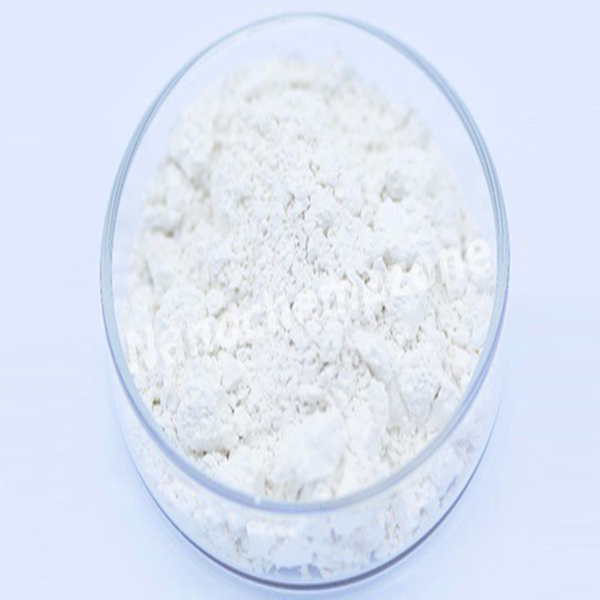
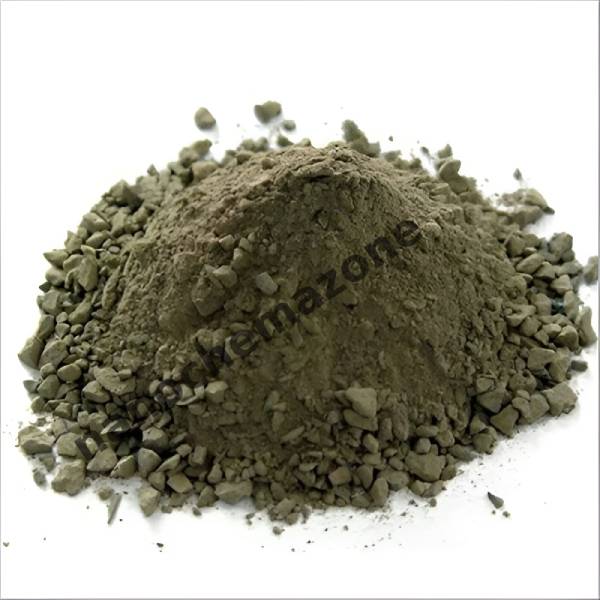
Bi2Te3, or bismuth telluride, is a gray powder that is a combination of bismuth and tellurium. It is a semiconductor that becomes an effective thermoelectric material for refrigeration or portable power generation when alloyed with antimony or selenium. Since Bi2Te3 is a topological insulator, its physical characteristics depend on its thickness.

Bismuth Telluride (Bi2Te3) Sputtering Targets, Purity: 99.999%, Size: 1”, Thickness: 0.125”

$547.00

Applications of Sputtering Targets;

Film deposition is accomplished using sputtering targets. A technique for sputtering thin films is called "deposition made by sputter targets," which entails eroding material from a "target" source onto a "substrate" like a silicon wafer. Etching of the target is done using semiconductor sputtering targets. When selectivity is not an issue and a high degree of etching anisotropy is required, sputter etching is the method of choice. By removing the target material through etching, sputter targets are also utilized for investigation. In secondary ion spectroscopy (SIMS), one example is when the target material is sputtered at a steady pace. Mass spectrometry is used to quantify the concentration and identity of spewed atoms as the target is sputtered.

The target material's composition may be ascertained and even very low concentrations of contaminants can be found with the aid of the sputtering target.

There is also an application area for sputtering targets in space. One type of space weathering that alters the chemical and physical characteristics of airless worlds like the Moon and asteroids is sputtering.

Bi2Te3, or bismuth telluride, is a gray powder that is a combination of bismuth and tellurium. It is a semiconductor that becomes an effective thermoelectric material for refrigeration or portable power generation when alloyed with antimony or selenium. Since Bi2Te3 is a topological insulator, its physical characteristics depend on its thickness.

Cobalt Iron Boron (Co-Fe-B) Sputtering Targets, Purity: 99.9%, Size: 3”, Thickness: 0.250”

$547.00

Applications of Sputtering Targets;

Film deposition is accomplished using sputtering targets. A technique for sputtering thin films is called "deposition made by sputter targets," which entails eroding material from a "target" source onto a "substrate" like a silicon wafer. Etching of the target is done using semiconductor sputtering targets. When selectivity is not an issue and a high degree of etching anisotropy is required, sputter etching is the method of choice. By removing the target material through etching, sputter targets are also utilized for investigation. In secondary ion spectroscopy (SIMS), one example is when the target material is sputtered at a steady pace. Mass spectrometry is used to quantify the concentration and identity of spewed atoms as the target is sputtered.

The target material's composition may be ascertained and even very low concentrations of contaminants can be found with the aid of the sputtering target.

There is also an application area for sputtering targets in space. One type of space weathering that alters the chemical and physical characteristics of airless worlds like the Moon and asteroids is sputtering.

An alloy consisting of cobalt, iron, and boron can be utilized as a sputtering target. Let's examine the possible uses for cobalt, iron, and boron alloys.

Tin Oxide (SnO2) Sputtering Targets, Purity: 99.99%, Size: 4”, Thickness: 0.125”

$547.00

Applications of Sputtering Targets;

Film deposition is accomplished using sputtering targets. A technique for sputtering thin films is called "deposition made by sputter targets," which entails eroding material from a "target" source onto a "substrate" like a silicon wafer. Etching of the target is done using semiconductor sputtering targets. When selectivity is not an issue and a high degree of etching anisotropy is required, sputter etching is the method of choice. By removing the target material through etching, sputter targets are also utilized for investigation. In secondary ion spectroscopy (SIMS), one example is when the target material is sputtered at a steady pace. Mass spectrometry is used to quantify the concentration and identity of spewed atoms as the target is sputtered.

The target material's composition may be ascertained and even very low concentrations of contaminants can be found with the aid of the sputtering target.

There is also an application area for sputtering targets in space. One type of space weathering that alters the chemical and physical characteristics of airless worlds like the Moon and asteroids is sputtering.

Lithium Niobate (LiNbO3) Sputtering Target

Price range: $547.00 through $993.00
Select options This product has multiple variants. The options may be chosen on the product page

Product 

Lithium Niobate (LiNbO3) Sputtering Target

CAS No.

 12031-63-9

Appearance

Powder

Purity

≥99%,  ≥99.9%,  ≥95%

(Other purities are also available)

APS

 NA (Size Can be customized), Ask for other available size ranges.

Ingredient

N/A

Molecular Weight

147.85 g/mol

Melting Point

~1,250 °C

Boiling Point

NA

Density

~4.65 g/cm³

Product Codes

NCZ-1319K

Tantalum Oxide (Ta2O5) Sputtering Targets, Purity: 99.99%, Size: 4”, Thickness: 0.125”

$548.00

Applications of Sputtering Targets;

Film deposition is accomplished using sputtering targets. A technique for sputtering thin films is called "deposition made by sputter targets," which entails eroding material from a "target" source onto a "substrate" like a silicon wafer. Etching of the target is done using semiconductor sputtering targets. When selectivity is not an issue and a high degree of etching anisotropy is required, sputter etching is the method of choice. By removing the target material through etching, sputter targets are also utilized for investigation. In secondary ion spectroscopy (SIMS), one example is when the target material is sputtered at a steady pace. Mass spectrometry is used to quantify the concentration and identity of spewed atoms as the target is sputtered.

The target material's composition may be ascertained and even very low concentrations of contaminants can be found with the aid of the sputtering target.

There is also an application area for sputtering targets in space. One type of space weathering that alters the chemical and physical characteristics of airless worlds like the Moon and asteroids is sputtering.

Gallium Antimonide (GaSb) Wafers, Size: 2”, Thickness: 500± 25 μm, Orientation: 111, EPI-Ready

Price range: $549.00 through $2,542.00
Select options This product has multiple variants. The options may be chosen on the product page
1 piece/495  5 pieces/2290                            Please contact us for quotes on larger quantities !!!

Gallium Antimonide (GaSb) Wafers

Size: 2”, Thickness: 500± 25 μm, Orientation: 111

Technical Properties:

Quality  EPI-Ready
Size (inch)  2”
Thickness (μm)  500± 25
Polished  Single Side
Dopant  Tellurium ( N type )
Orientation  111
Mobility  2000-3500
EPD  ≤2000
Growth method  VGF
OF Length  16±2
IF Length   8±1

Fields of Application for Gallium Antimonide (GaSb)

The intermetallic compound of gallium antimonide (GaSb) was first prepared in 1926 by Victor Goldschmidt. Gallium antimonide (GaSb) is a semiconductor made of gallium and antimony of the group III-V compounds. Gallium antimonide (GaSb) is supplied in polished wafer form. Gallium antimonide (GaSb) wafers are produced from polycrystalline ingots with using Czochralski method to obtain a single crystal with perfect purity. Supplied in polished wafer form, gallium antimonide has a very high accuracy of orientation. Thickness and orientation of these wafers can be modified with additives. Czochralski method is used to provide the growh of pure gallium and antimonide elements. The natural low-defect structure of GaSb makes it a perfect material for epitaxial growth. They are supplied in polished 1 side or 2 sides and cut forms.
  • Gallium antimonide (GaSb) is used for infrared detectors.
  • Gallium antimonide (GaSb) is used for infrared LEDs.
  • Gallium antimonide (GaSb) is used for transistors.
  • Gallium antimonide (GaSb) is used for lasers.
  • Gallium antimonide (GaSb) is used for thermophotovoltaic systems.

Gallium Antimonide (GaSb) Wafers, Size: 2”, Thickness: 500± 25 μm, Orientation: 100, EPI-Ready

Price range: $549.00 through $2,542.00
Select options This product has multiple variants. The options may be chosen on the product page
  1 piece/495  5 pieces/2290                          Please contact us for quotes on larger quantities !!!

Gallium Antimonide (GaSb) Wafers

Size: 2”, Thickness: 500± 25 μm, Orientation: 100

Technical Properties:

Quality  EPI-Ready
Size (inch)  2”
Thickness (μm)  500± 25
Polished  Single Side
Dopant  Tellurium (N type)
Orientation  100
Mobility  2000-3500
EPD  ≤2000
Growth method  VGF
OF Length  16±2
IF Length   8±1

Fields of Application for Gallium Antimonide (GaSb)

The intermetallic compound of gallium antimonide (GaSb) was first prepared in 1926 by Victor Goldschmidt. Gallium antimonide (GaSb) is a semiconductor made of gallium and antimony of the group III-V compounds. Gallium antimonide (GaSb) is supplied in polished wafer form. Gallium antimonide (GaSb) wafers are produced from polycrystalline ingots with using Czochralski method to obtain a single crystal with perfect purity. Supplied in polished wafer form, gallium antimonide has a very high accuracy of orientation. Thickness and orientation of these wafers can be modified with additives. Czochralski method is used to provide the growh of pure gallium and antimonide elements. The natural low-defect structure of GaSb makes it a perfect material for epitaxial growth. They are supplied in polished 1 side or 2 sides and cut forms.
  • Gallium antimonide (GaSb) is used for infrared detectors.
  • Gallium antimonide (GaSb) is used for infrared LEDs.
  • Gallium antimonide (GaSb) is used for transistors.
  • Gallium antimonide (GaSb) is used for lasers.
  • Gallium antimonide (GaSb) is used for thermophotovoltaic systems.

Barium Titanate (BaTiO3) Sputtering Targets, Purity: 99.99%, Size: 2”, Thickness: 0.125”

$549.00

Applications of Sputtering Targets;

Film deposition is accomplished using sputtering targets. A technique for sputtering thin films is called "deposition made by sputter targets," which entails eroding material from a "target" source onto a "substrate" like a silicon wafer. Etching of the target is done using semiconductor sputtering targets. When selectivity is not an issue and a high degree of etching anisotropy is required, sputter etching is the method of choice. By removing the target material through etching, sputter targets are also utilized for investigation. In secondary ion spectroscopy (SIMS), one example is when the target material is sputtered at a steady pace. Mass spectrometry is used to quantify the concentration and identity of spewed atoms as the target is sputtered. With the sputtering target's assistance, the

It is possible to identify the target material and even detect incredibly tiny impurity amounts.

There is also an application area for sputtering targets in space. One type of space weathering that alters the chemical and physical characteristics of airless worlds like the Moon and asteroids is sputtering.

Formulated as BaTiO3, barium titanate is an inorganic substance. When formed as big crystals, barium titanate is clear and has a white powdery appearance. It is a ferroelectric ceramic material with piezoelectric and photorefractive characteristics. Titanate of barium sputtering.

Indium Zinc Oxide/IZO (InZnO) Sputtering Targets, Purity: 99.99%, Size: 3”, Thickness: 0.250”

$549.00

Applications of Sputtering Targets;

Film deposition is accomplished using sputtering targets. A technique for sputtering thin films is called "deposition made by sputter targets," which entails eroding material from a "target" source onto a "substrate" like a silicon wafer. Etching of the target is done using semiconductor sputtering targets. When selectivity is not an issue and a high degree of etching anisotropy is required, sputter etching is the method of choice. By removing the target material through etching, sputter targets are also utilized for investigation. In secondary ion spectroscopy (SIMS), one example is when the target material is sputtered at a steady pace. Mass spectrometry is used to quantify the concentration and identity of spewed atoms as the target is sputtered.

The target material's composition may be ascertained and even very low concentrations of contaminants can be found with the aid of the sputtering target.

There is also an application area for sputtering targets in space. One type of space weathering that alters the chemical and physical characteristics of airless worlds like the Moon and asteroids is sputtering.

Silicon Nitride (Si3N4) Sputtering Targets, Purity: 99.9%, Size: 2”, Thickness: 0.250”, White to Gray

$549.00

Product 

Silicon Nitride (Si3N4) Sputtering Targets, Purity: 99.9%, Size: 2'', Thickness: 0.250'', White to Gray

CAS No.

 12033-89-5

Appearance

Powder

Purity

≥99%,  ≥99.9%,  ≥95%

(Other purities are also available)

APS

N/A  (Size Can be customized), Ask for other available size ranges.

Ingredient

N/A

Molecular Weight

 140.28 g/mol

Melting Point

 ~1900 °C

Boiling Point

N/A

Density

~3.2 g/cm³

Product Codes

NCZ-1698K

Molybdenum Oxide (MoO3) Sputtering Targets, Purity: 99.9%, Size: 4”, Thickness: 0.250”

$549.00

Product 

Molybdenum Oxide (MoO3) Sputtering Targets, Purity: 99.9%, Size: 4'', Thickness: 0.250''

CAS No.

1313-27-5

Appearance

Powder

Purity

≥99%,  ≥99.9%,  ≥95%

(Other purities are also available)

APS

 N/A (Size Can be customized), Ask for other available size ranges.

Ingredient

N/A

Molecular Weight

 143.94 g/mol

Melting Point

 ~795°C

Boiling Point

 ~1155°C

Density

 ~4.7 g/cm³

Product Codes

NCZ-1898K

Indium (III) Oxide ( In2O3) 99.99% 4N Powder

Price range: $549.00 through $2,089.00
Select options This product has multiple variants. The options may be chosen on the product page
Product Indium (III) Oxide ( In2O3) 99.99% 4N Powder
CAS No. 1312-43-8
Appearance White to pale yellow
Purity ≥99%,  ≥99.9%,  ≥95%(Other purities are also available)
APS 1–5µm (Size Can be customized),  Ask for other available size range.
Ingredient In2O3
Molecular Weight N/A
Melting Point N/A
Boiling Point N/A
Density 7.18 g/cm³
Product Codes NCZ-424I

Boron Carbide (B4C) Sputtering Targets, Purity: 99.5%, Size: 6”, Thickness: 0.250”

$550.00

Applications of Sputtering Targets;

Film deposition is accomplished using sputtering targets. A technique for sputtering thin films is called "deposition made by sputter targets," which entails eroding material from a "target" source onto a "substrate" like a silicon wafer. Etching of the target is done using semiconductor sputtering targets. When selectivity is not an issue and a high degree of etching anisotropy is required, sputter etching is the method of choice. By removing the target material through etching, sputter targets are also utilized for investigation. In secondary ion spectroscopy (SIMS), one example is when the target material is sputtered at a steady pace. Mass spectrometry is used to quantify the concentration and identity of spewed atoms as the target is sputtered.

The target material's composition may be ascertained and even very low concentrations of contaminants can be found with the aid of the sputtering target.

There is also an application area for sputtering targets in space. One type of space weathering that alters the chemical and physical characteristics of airless worlds like the Moon and asteroids is sputtering.

Tantalum Oxide (Ta2O5) Sputtering Targets, Purity: 99.99%, Size: 3”, Thickness: 0.125”

$550.00

Applications of Sputtering Targets;

Film deposition is accomplished using sputtering targets. A technique for sputtering thin films is called "deposition made by sputter targets," which entails eroding material from a "target" source onto a "substrate" like a silicon wafer. Etching of the target is done using semiconductor sputtering targets. When selectivity is not an issue and a high degree of etching anisotropy is required, sputter etching is the method of choice. By removing the target material through etching, sputter targets are also utilized for investigation. In secondary ion spectroscopy (SIMS), one example is when the target material is sputtered at a steady pace. Mass spectrometry is used to quantify the concentration and identity of spewed atoms as the target is sputtered.

The target material's composition may be ascertained and even very low concentrations of contaminants can be found with the aid of the sputtering target.

There is also an application area for sputtering targets in space. One type of space weathering that alters the chemical and physical characteristics of airless worlds like the Moon and asteroids is sputtering.

Zinc Oxide (ZnO) Sputtering Targets, Purity: 99.9%, Size: 2”, Thickness: 0.125”

$550.00

Product 

Zinc Oxide (ZnO) Sputtering Targets, Purity: 99.9%, Size: 2'', Thickness: 0.125''

CAS No.

1314‑13‑2

Appearance

Powder

Purity

≥99%,  ≥99.9%,  ≥95%

(Other purities are also available)

APS

ZnO (Size Can be customized), Ask for other available size ranges.

Ingredient

N/A

Molecular Weight

81.37 g/mol

Melting Point

1975 °C

Boiling Point

2360 °C

Density

~5.60 g/cm³

Product Codes

NCZ-1404K

Titanium Nitride (TiN) Sputtering Targets, Purity: 99.5%, Size: 2”, Thickness: 0.250”

$550.00

Product 

Titanium Nitride (TiN) Sputtering Targets, Purity: 99.5%, Size: 2'', Thickness: 0.250''

CAS No.

25583‑20‑4

Appearance

Powder

Purity

≥99%,  ≥99.9%,  ≥95%

(Other purities are also available)

APS

TiN (Size Can be customized), Ask for other available size ranges.

Ingredient

N/A

Molecular Weight

61.87 g/mol

Melting Point

~2,930 °C

Boiling Point

~2,913 °C¹

Density

~5.4 g/cm³

Product Codes

NCZ-1405K

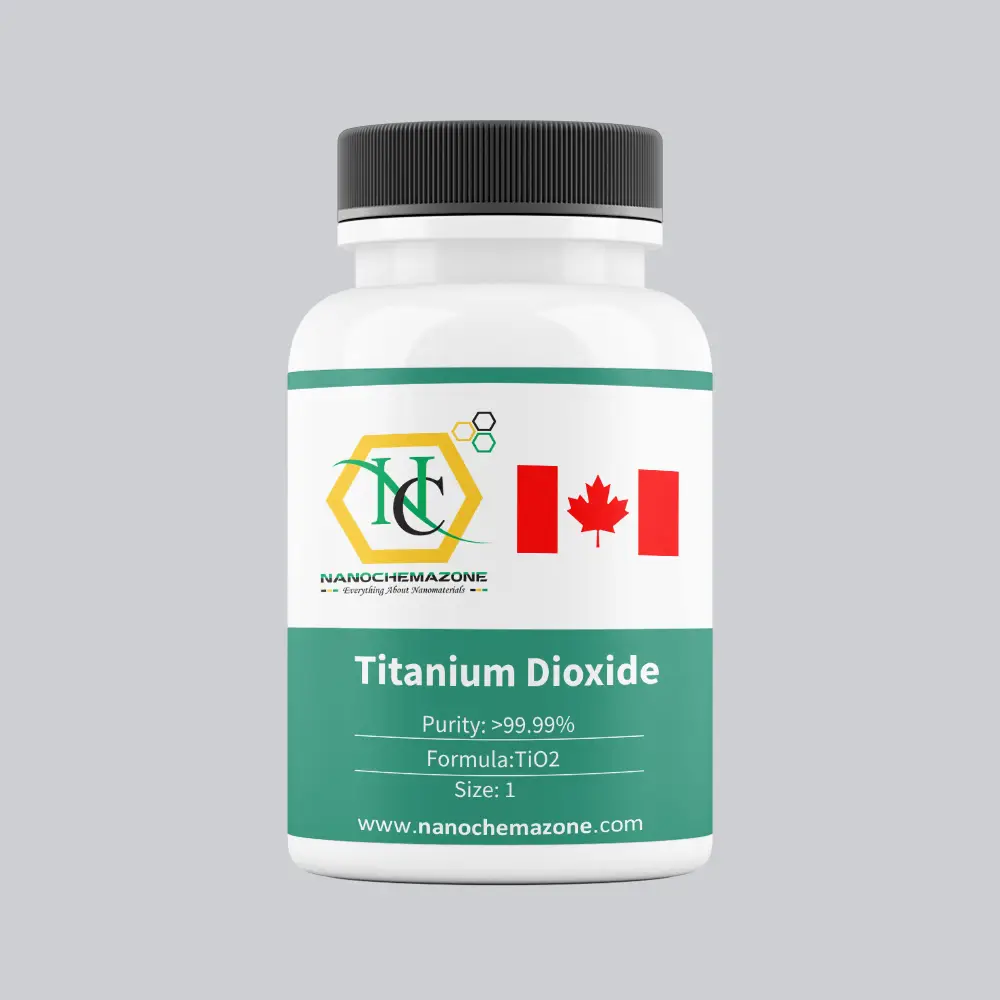
Titanium Dioxide (TiO2) Sputtering Targets, Purity: 99.9%, Size: 3”, Thickness: 0.125”, Grey to Black

$550.00

Product 

Titanium Dioxide (TiO2) Sputtering Targets, Purity: 99.9%, Size: 3'', Thickness: 0.125'', Grey to Black

CAS No.

13463‑67‑7

Appearance

Powder

Purity

≥99%,  ≥99.9%,  ≥95%

(Other purities are also available)

APS

TiO₂ (black granules) (Size Can be customized), Ask for other available size ranges.

Ingredient

N/A

Molecular Weight

79.94 g/mol

Melting Point

~1,843 °C

Boiling Point

~2,972 °C

Density

~4.23 g/cm³

Product Codes

NCZ-1437K

Silicon Carbide (SiC) Sputtering Targets, Purity: 99.5%, Size: 2”, Thickness: 0.125”

$550.00

Product 

Silicon Carbide (SiC) Sputtering Targets, Purity: 99.5%, Size: 2'', Thickness: 0.125''

CAS No.

 409-21-2

Appearance

Powder

Purity

≥99%,  ≥99.9%,  ≥95%

(Other purities are also available)

APS

N/A  (Size Can be customized), Ask for other available size ranges.

Ingredient

N/A

Molecular Weight

 40.10 g/mol

Melting Point

~2,700 °C

Boiling Point

N/A

Density

~3.21 g/cm³

Product Codes

NCZ-1728K

Germanium Oxide (GeO2) Powder 99.999% 5N, High Purity Grade

$550.00
Select options This product has multiple variants. The options may be chosen on the product page
Product Germanium Oxide (GeO2) Powder 99.999% 5N, High Purity Grade
CAS No. 1310-53-8
Appearance White or colorless crystals
Purity ≥99%,  ≥99.9%,  ≥95%(Other purities are also available)
APS 150µm (Size Can be customized),  Ask for other available size range.
Ingredient GeO2
Molecular Weight 104.64 g/mol
Melting Point 1,115 °C
Boiling Point 1,200 °C
Density 4.228 g/cm³
Product Codes NCZ-353I

Lithium Phosphate (Li3PO4) Sputtering Targets, Purity: 99.95%, Size: 2”, Thickness: 0.250”

$550.00

Product 

Lithium Phosphate (Li3PO4) Sputtering Targets, Purity: 99.95%, Size: 2'', Thickness: 0.250''

CAS No.

10377-52-3

Appearance

Powder

Purity

≥99%,  ≥99.9%,  ≥95%

(Other purities are also available)

APS

 N/A (Size Can be customized), Ask for other available size ranges.

Ingredient

N/A

Molecular Weight

 115.79 g/mol

Melting Point

 ~837 °C

Boiling Point

~158 °C (likely decomposition)

Density

 ~2.53 g/cm³

Product Codes

NCZ-2032K

Titanium Dioxide (TiO2) AB Mixed Phase Nanofibers, 1g/bottle

$550.00
Product Titanium Dioxide (TiO2) AB Mixed Phase Nanofibers, 1g/bottle
CAS No. 13463-67-7
Appearance White to off-white
Purity ≥99%,  ≥99.9%,  ≥95%(Other purities are also available)
APS 100–200nm (Size Can be customized),  Ask for other available size range.
Ingredient TiO2
Molecular Weight 79.87 g/mol
Melting Point N/A
Boiling Point N/A
Density N/A
Product Codes NCZ-576I
 

Titanium Dioxide (TiO2) B Phase Nanofibers, 1g/bottle

$550.00
Product Titanium Dioxide (TiO2) B Phase Nanofibers, 1g/bottle
Appearance White, fibrous
Purity ≥99%,  ≥99.9%,  ≥95%(Other purities are also available)
APS 10nm (Size Can be customized),  Ask for other available size range.
Ingredient TiO2
Molecular Weight N/A
Melting Point N/A
Boiling Point N/A
Density N/A
Product Codes NCZ-578I
 

Carbon Nanotube Fibres, Fiber Diameter: 5-12 µm, Tensile Strength 1000-1200 MPa, Electrical conductivity 5×10^4~7×10^4 S/m

Price range: $552.00 through $2,373.00
Select options This product has multiple variants. The options may be chosen on the product page
Carbon Nanotube Fibres, Fiber Diameter: 5-12 µm, Tensile Strength 1000-1200 MPa, Electrical conductivity 5×10⁴~7×10⁴ S/m Carbon nanotube fibers have moderate to high strengths. Also, they possess good electrical conductivity and very low density. Due to these properties, carbon nanotube fibers can be integrated into fabrics and composites. Their area of usage involves their use as stand-alone or embedded sensors. Moreover, their high strength, stiffness, thermal and electrical conductivity enable their use as functional reinforcements in composite materials, in active heating/cooling systems, electrical conductivity/EMI shielding mechanisms such as CNT/epoxy composites and in atmospheric anti-threat detection in UAVs.

Niobium Oxide (Nb2O5) Sputtering Targets, Purity: 99.5%, Size: 4”, Thickness: 0.250”

$552.00

Applications of Sputtering Targets;

Film deposition is accomplished using sputtering targets. A technique for sputtering thin films is called "deposition made by sputter targets," which entails eroding material from a "target" source onto a "substrate" like a silicon wafer. Etching of the target is done using semiconductor sputtering targets. When selectivity is not an issue and a high degree of etching anisotropy is required, sputter etching is the method of choice. By removing the target material through etching, sputter targets are also utilized for investigation. In secondary ion spectroscopy (SIMS), one example is when the target material is sputtered at a steady pace. Mass spectrometry is used to quantify the concentration and identity of spewed atoms as the target is sputtered.

The target material's composition may be ascertained and even very low concentrations of contaminants can be found with the aid of the sputtering target.

There is also an application area for sputtering targets in space. One type of space weathering that alters the chemical and physical characteristics of airless worlds like the Moon and asteroids is sputtering.

Boron Carbide (B4C) Sputtering Targets, Purity: 99.5%, Size: 4”, Thickness: 0.125”

$553.00

Applications of Sputtering Targets;

Film deposition is accomplished using sputtering targets. A technique for sputtering thin films is called "deposition made by sputter targets," which entails eroding material from a "target" source onto a "substrate" like a silicon wafer. Etching of the target is done using semiconductor sputtering targets. When selectivity is not an issue and a high degree of etching anisotropy is required, sputter etching is the method of choice. By removing the target material through etching, sputter targets are also utilized for investigation. In secondary ion spectroscopy (SIMS), one example is when the target material is sputtered at a steady pace. Mass spectrometry is used to quantify the concentration and identity of spewed atoms as the target is sputtered.

The target material's composition may be ascertained and even very low concentrations of contaminants can be found with the aid of the sputtering target.

There is also an application area for sputtering targets in space. One type of space weathering that alters the chemical and physical characteristics of airless worlds like the Moon and asteroids is sputtering.

Tin (Sn) Sputtering Targets, Purity: 99.99%, Size: 4”, Thickness: 0.125”

$553.00

Product 

Tin (Sn) Sputtering Targets, Purity: 99.99%, Size: 4'', Thickness: 0.125''

CAS No.

7440-31-5

Appearance

Powder

Purity

≥99%,  ≥99.9%,  ≥95%

(Other purities are also available)

APS

N/A  (Size Can be customized), Ask for other available size ranges.

Ingredient

N/A

Molecular Weight

118.71 g/mol

Melting Point

231.93 °C

Boiling Point

2602 °C

Density

~7.31 g/cm³

Product Codes

NCZ-1639K

Silicon (Si) Sputtering Targets, P-type, indium, Purity: 99.999%, Size: 2”, Thickness: 0.125”

$553.00

Product 

Silicon (Si) Sputtering Targets, P-type, indium, Purity: 99.999%, Size: 2'', Thickness: 0.125''

CAS No.

7440-21-3

Appearance

Powder

Purity

≥99%,  ≥99.9%,  ≥95%

(Other purities are also available)

APS

N/A  (Size Can be customized), Ask for other available size ranges.

Ingredient

N/A

Molecular Weight

28.0855 g/mol

Melting Point

 1,414 °C

Boiling Point

3,265 °C

Density

 2.33 g/cm³

Product Codes

NCZ-1740K

Silicon (Si) Sputtering Targets, P-type, Purity: 99.999%, Size: 6”, Thickness: 0.125”

$553.00

Product 

Silicon (Si) Sputtering Targets, P-type, Purity: 99.999%, Size: 6'', Thickness: 0.125''

CAS No.

7440-21-3

Appearance

Powder

Purity

≥99%,  ≥99.9%,  ≥95%

(Other purities are also available)

APS

N/A  (Size Can be customized), Ask for other available size ranges.

Ingredient

N/A

Molecular Weight

28.0855 g/mol

Melting Point

 1,414 °C

Boiling Point

3,265 °C

Density

 2.33 g/cm³

Product Codes

NCZ-1745K

Tricalcium aluminate(Ca3Al2O6) (303982)

$553.00
Select options This product has multiple variants. The options may be chosen on the product page

Product 

Tricalcium aluminate(Ca3Al2O6) (303982)

CAS No.

12042‑78‑3

Appearance

Powder

Purity

≥99%,  ≥99.9%,  ≥95%

(Other purities are also available)

APS

  <80um (Size Can be customized), Ask for other available size ranges.

Ingredient

N/A

Molecular Weight

~270.19 g/mol

Melting Point

~1542 °C

Boiling Point

N/A

Density

 ~3.06 g/cm³

Product Codes

NCZ-2609K

Silicon hexaboride(SiB6, 99%-99.9%, 100mesh) (751530 )

Price range: $553.00 through $751.00
Select options This product has multiple variants. The options may be chosen on the product page
Silicon hexaboride(SiB6, 99%-99.9%, 100mesh) (751530 )
Product Codes- NCZ-2695K

Silicon Carbide Wafer (SiC-4H) – 4H, Size: 3”, Thickness: 350 μm, Testing Grade, 4H Area: 95%

Price range: $554.00 through $2,476.00
Select options This product has multiple variants. The options may be chosen on the product page
Silicon Carbide Wafer (SiC-4H) – 4H Size: 3”, Thickness: 350 μm, 4H Area: 95% Technical Properties: Quality  Testing Grade Size (inch)  3”

Molybdenum Disulfide (MoS2) Sputtering Targets, Purity: 99.9%, Size: 3”, Thickness: 0.125”

$554.00

Applications of Sputtering Targets;

Film deposition is accomplished using sputtering targets. A technique for sputtering thin films is called "deposition made by sputter targets," which entails eroding material from a "target" source onto a "substrate" like a silicon wafer. Etching of the target is done using semiconductor sputtering targets. When selectivity is not an issue and a high degree of etching anisotropy is required, sputter etching is the method of choice. By removing the target material through etching, sputter targets are also utilized for investigation. In secondary ion spectroscopy (SIMS), one example is when the target material is sputtered at a steady pace. Mass spectrometry is used to quantify the concentration and identity of spewed atoms as the target is sputtered.

By helping of the sputtering target, the composition of the target material may be evaluated and even extremely tiny amounts of contaminants are recognized.

There is also an application area for sputtering targets in space. One type of space weathering that alters the chemical and physical characteristics of airless worlds like the Moon and asteroids is sputtering.

Cobalt Iron Boron (Co-Fe-B) Sputtering Targets, Purity: 99.9%, Size: 2”, Thickness: 0.125”

$554.00

Product 

Cobalt Iron Boron (Co-Fe-B) Sputtering Targets, Purity: 99.9%, Size: 2'', Thickness: 0.125''

CAS No.

N/A

Appearance

Powder

Purity

≥99%,  ≥99.9%,  ≥95%

(Other purities are also available)

APS

 N/A (Size Can be customized), Ask for other available size ranges.

Ingredient

N/A

Molecular Weight

 ~135.943 g/mol

Melting Point

N/A

Boiling Point

N/A

Density

0.986 g/cm³ (SAM — verify via COA due to low value)

Product Codes

NCZ-2279K

Indium Phosphide Quantum Dots (InP/ZnS QD) 560 nm

Price range: $555.00 through $1,290.00
Select options This product has multiple variants. The options may be chosen on the product page
APPLICATIONS InPQDs are employed in because of their electrical and optical characteristics in:
  • Light emitting diodes (LEDs),
  • Biomedical applications like bioimaging,
  • Electronic devices,
  • Solar cells.

Calcium hexaboride(CaB6, 95%, -100 mesh) (054857)

$555.00
Select options This product has multiple variants. The options may be chosen on the product page
Calcium hexaboride(CaB6, 95%, -100 mesh) (054857)

Introduction: Formula CaB6 CAS 12007-99-7 Hardness 9 Specific gravity 2.33 Melting point 2,200°C Gray black powder or bulk. It is stable at high temperatures in air and not soluble in HCl, Hydrofluoric acid and dilute H2SO4. It can not react with water, but can be etched by strong oxidant such as Cl, F, HNO3 and H2O2. The reaction with alkali is slow.

Typical applications: As deoxidizer in high conductivity copper As oxidation resistance in MgO-C refractory As neutron protected material in nuclear industry As advanced semiconductor material As raw material to produce high purity borides, cubic boron nitride and boron alloy  

Purity

Moisture

Size

95% min

1.00 % max

Bulk, 100 mesh or per customer requests

Product Codes- NCZ-2692K

Lithium Phosphate (Li3PO4) Sputtering Targets, Purity: 99.95%, Size: 1”, Thickness: 0.125”

$556.00

Applications of Sputtering Targets;

Film deposition is accomplished using sputtering targets. A technique for sputtering thin films is called "deposition made by sputter targets," which entails eroding material from a "target" source onto a "substrate" like a silicon wafer. Etching of the target is done using semiconductor sputtering targets. When selectivity is not an issue and a high degree of etching anisotropy is required, sputter etching is the method of choice. By removing the target material through etching, sputter targets are also utilized for investigation. In secondary ion spectroscopy (SIMS), one example is when the target material is sputtered at a steady pace. Mass spectrometry is used to quantify the concentration and identity of spewed atoms as the target is sputtered.

By helping of the sputtering target, the composition of the target material may be evaluated and even extremely tiny amounts of contaminants are recognized.

There is also an application area for sputtering targets in space. One type of space weathering that alters the chemical and physical characteristics of airless worlds like the Moon and asteroids is sputtering.

Titanium Dioxide (TiO2) Sputtering Targets, Purity: 99.99%, Size: 1”, Thickness: 0.125”, Beige to White

$556.00

Applications of Sputtering Targets;

Film deposition is accomplished using sputtering targets. A technique for sputtering thin films is called "deposition made by sputter targets," which entails eroding material from a "target" source onto a "substrate" like a silicon wafer. Etching of the target is done using semiconductor sputtering targets. When selectivity is not an issue and a high degree of etching anisotropy is required, sputter etching is the method of choice. By removing the target material through etching, sputter targets are also utilized for investigation. In secondary ion spectroscopy (SIMS), one example is when the target material is sputtered at a steady pace. Mass spectrometry is used to quantify the concentration and identity of spewed atoms as the target is sputtered.

The target material's composition may be ascertained and even very low concentrations of contaminants can be found with the aid of the sputtering target.

There is also an application area for sputtering targets in space. One type of space weathering that alters the chemical and physical characteristics of airless worlds like the Moon and asteroids is sputtering.

Zinc Oxide (ZnO) Sputtering Targets, Purity: 99.9%, Size: 3”, Thickness: 0.125”

$556.00

Product 

Zinc Oxide (ZnO) Sputtering Targets, Purity: 99.9%, Size: 3'', Thickness: 0.125''

CAS No.

1314‑13‑2

Appearance

Powder

Purity

≥99%,  ≥99.9%,  ≥95%

(Other purities are also available)

APS

ZnO (black granules) (Size Can be customized), Ask for other available size ranges.

Ingredient

N/A

Molecular Weight

81.38 g/mol

Melting Point

~1975 °C

Boiling Point

~2360 °C

Density

 ~5.61 g/cm³

Product Codes

NCZ-1450K

Boron Nitride (BN) Sputtering Targets, Purity: 99.5%, Size: 3”, Thickness: 0.125”

$556.00

Product 

Boron Nitride (BN) Sputtering Targets, Purity: 99.5%, Size: 3'', Thickness: 0.125''

CAS No.

 10043-11-5

Appearance

Powder

Purity

≥99%,  ≥99.9%,  ≥95%

(Other purities are also available)

APS

 N/A (Size Can be customized), Ask for other available size ranges.

Ingredient

N/A

Molecular Weight

24.82 g/mol

Melting Point

~2973 °C

Boiling Point

N/A

Density

~2.1 g/cm³

Product Codes

NCZ-2371K

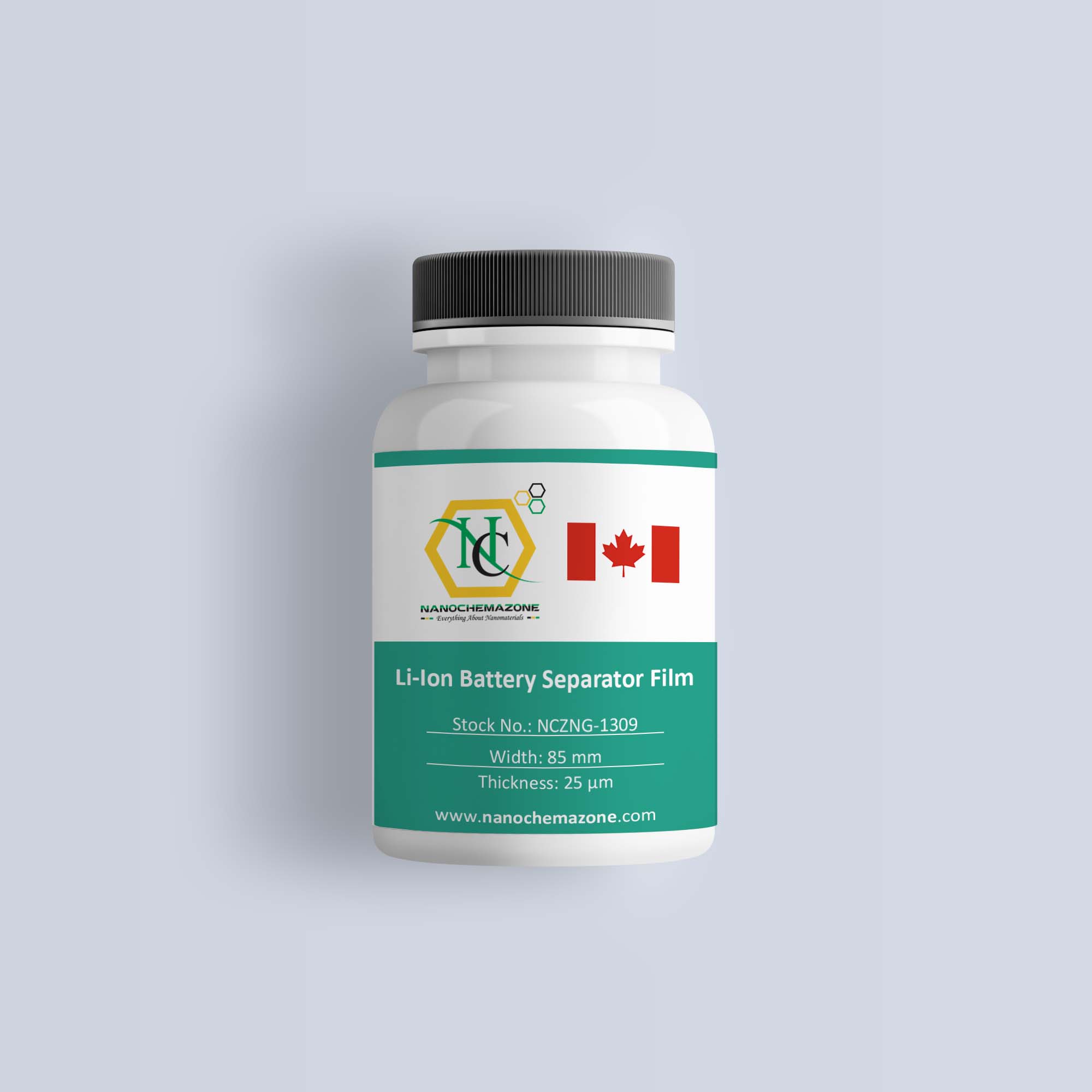
Li-Ion Battery Separator Film, Length: 800 m, Width: 85 mm, Thickness: 25 μm

Price range: $557.00 through $8,025.00
Select options This product has multiple variants. The options may be chosen on the product page

Applications:

It can be used as li-ion battery separator in battery R&D. The need for electric energy storage systems are in increasing demand. Lithium-ion batteries represent the best option for many applications such as hybrid and electric vehicles which require high energy density, cycle durability and charge/discharge efficiency. Li-ion batteries have been used in many electronic devices since their production in 1990. The components of the cell are primarily the positive and negative electrodes and the electrolyte. The positive electrode is a metal oxide, negative electrode is made of carbon and the electrolyte is a lithium salt in organic solvent. The improvement in the performance of the battery can be done by the introduction of new materials with superb properties. Graphene which is one of the best materials discovered by humans has opened new possibilities in the field of lithium ion battery materials due to its light weight, high electrical conductivity, superior mechanical flexibility, and chemical stability. Graphene can be used in both positive and negative electrodes of the battery. In the positive electrode, the cathode, it is used as a lithium metal oxide-graphene composites which enhance the electrochemical properties of the battery by increasing the diffusion kinetics of the lithium ion and improve the stability across a wide voltage range in crystalline oxide-graphene composites. In the negative electrode, the anode, the addition of graphene to anode materials has led to superior electrical conductivity, high surface area (2620 m2/g), high surface-to-volume ratio, and ultra-thin thickness. These excellent properties can shorten the diffusion distance of ions, structural flexibility, thermal and chemical stability which guarantee its durability in harsh environments1.

Stainless Steel Two-Electrode Split Test Cell

Price range: $557.00 through $2,475.00
Select options This product has multiple variants. The options may be chosen on the product page
APPLICATIONS
  • Suitable for experiments such as battery charging and discharging AC impedance
  • Can be used for two-electrode or gel experiments
  • It is beneficial to the analysis of electrode materials, with less solution, constant pressure and good reproducibility
  • Fully sealed device, easy to disassemble and clean

Lanthanum Strontium Manganate (La0.9Sr0.1MnO3) Sputtering Targets, Purity: 99.9%, Size: 2”, Thickness: 0.250”

$558.00

Applications of Sputtering Targets;

  • Sputtering targets is used for film deposition. The deposition made by sputter targets is a method of depositing thin films by sputtering that involves eroding material from a "target" source onto a "substrate" such as  a silicon wafer.
  • Semiconductor sputtering targets is used to etch the target. Sputter etching is chosen in cases where a high degree of etching anisotropy is needed and selectivity is not a concern.
  • Sputter targets is also used for analysis by etching away the target material.
One of the example occurs in secondary ion spectroscopy (SIMS), where the target sample is sputtered at a constant rate. As the target is sputtered, the concentration and identity of sputtered atoms are measured using mass spectrometry. By helping of the sputtering target, the composition of the target material can be determined and even extremely low concentrations of impurities are detected. Sputtering target has also application area in space. Sputtering is one of the forms of space weathering, a process that changes the physical and chemical properties of airless bodies, such as asteroids and the Moon.

Tin (Sn) Sputtering Targets, Purity: 99.99%, Size: 6”, Thickness: 0.125”

$558.00

Applications of Sputtering Targets;

Film deposition is accomplished using sputtering targets. A technique for sputtering thin films is called "deposition made by sputter targets," which entails eroding material from a "target" source onto a "substrate" like a silicon wafer. Etching of the target is done using semiconductor sputtering targets. When selectivity is not an issue and a high degree of etching anisotropy is required, sputter etching is the method of choice. By removing the target material through etching, sputter targets are also utilized for investigation. In secondary ion spectroscopy (SIMS), one example is when the target material is sputtered at a steady pace. Mass spectrometry is used to quantify the concentration and identity of spewed atoms as the target is sputtered.

The target material's composition may be ascertained and even very low concentrations of contaminants can be found with the aid of the sputtering target.

There is also an application area for sputtering targets in space. One type of space weathering that alters the chemical and physical characteristics of airless worlds like the Moon and asteroids is sputtering.

Samarium (Sm) Micron Powder Purity: 99.5 %, Size: 325 mesh

$559.00
Select options This product has multiple variants. The options may be chosen on the product page
100 grams/496 €     

Epicatechin(EC) (515568)

Price range: $559.00 through $763.00
Select options This product has multiple variants. The options may be chosen on the product page
Epicatechin(EC) (515568) Synonym: 2-(3,4-dihydroxyphenyl)-2,3,4-trihydro-3,5,7-trihydroxychromene

CAS NO.: 490-46-0

Appearance: White powder Specification(HPLC):
Parameter Unit Specification
Appearance White powder
Taste Characteristic
EC 295,
Caffeine so. 1
Moisture S5.o
Ash so.5
Particle Size 100% pass 60 mesh
Tapped Density g/cm3 0.50-0.60
pH 4-6
Heavy Metal (2b) ppm S5.O
Heavy Metal (As) ppm S2.o
Heavy Metal (Hg) ppm so.5
Total Plate Count colony/g SIOOO
Yeast & Mold colony/g Sloo
Salmonella colony/g Negative
E. coli colony/g Negative
Product Codes- NCZ-2630K

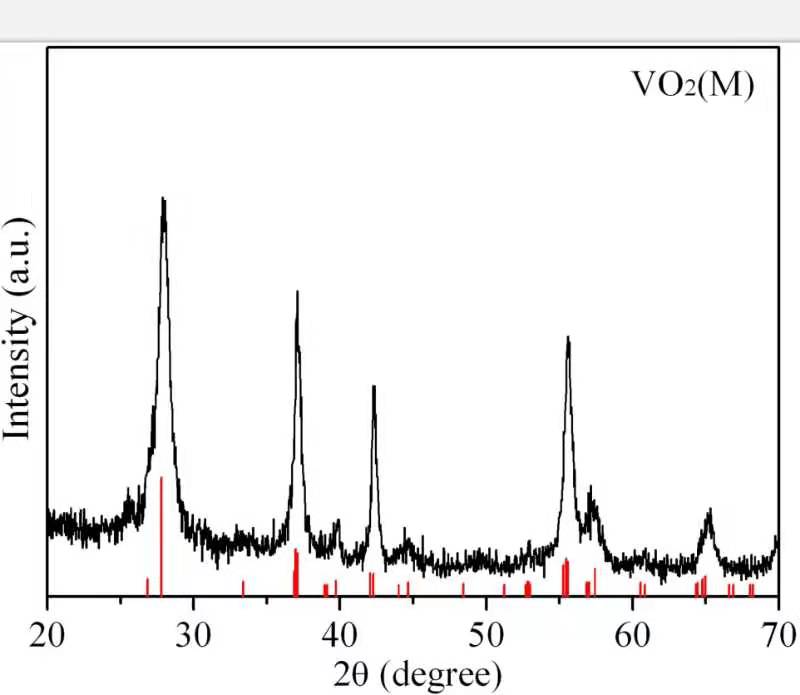
Vanadium Oxide (VO2) Nanopowder/Nanoparticles, Purity: 99.5+%, Size: 30-60 nm

Price range: $560.00 through $3,330.00
Select options This product has multiple variants. The options may be chosen on the product page
5 grams/495 € 25 grams/1380 €                      
100 grams/2940 €                    
Please contact us for quotes on larger quantities !!!

Vanadium Oxide (VO2) Nanopowder/Nanoparticles

Purity: 99.9+%, Size: 30-60 nm

Appearance Black Powder
Purity >99.90 %
Particle Size 30-60 nm
Al <0.05%
Fe <0.05%
Bi <0.05%
Zn <0.01%
Ti <0.01%
Ca <0.01%
Na <0.01%
Pb <0.0002%
Sn <0.0002%
    48e5f88cf63f9e9c9f58adb9ec44fd98.png     7d72df9b5c490cc252e9993995ede6ab.jpg

Indium Phosphide Quantum Dots (InP/ZnS QD) 525 nm

Price range: $560.00 through $1,300.00
Select options This product has multiple variants. The options may be chosen on the product page
APPLICATIONS InPQDs are employed in because of their electrical and optical characteristics in:
  • Light emitting diodes (LEDs),
  • Biomedical applications like bioimaging,
  • Electronic devices,
  • Solar cells.

Lanthanum Calcium Manganate (La0.7Ca0.3MnO3) Sputtering Targets, Purity: 99.9%, Size: 2”, Thickness: 0.250”

$560.00
Select options This product has multiple variants. The options may be chosen on the product page

Applications of Sputtering Targets;

  • Sputtering targets is used for film deposition. The deposition made by sputter targets is a method of depositing thin films by sputtering that involves eroding material from a "target" source onto a "substrate" such as  a silicon wafer.
  • Semiconductor sputtering targets is used to etch the target. Sputter etching is chosen in cases where a high degree of etching anisotropy is needed and selectivity is not a concern.
  • Sputter targets is also used for analysis by etching away the target material.
One of the example occurs in secondary ion spectroscopy (SIMS), where the target sample is sputtered at a constant rate. As the target is sputtered, the concentration and identity of sputtered atoms are measured using mass spectrometry. By helping of the sputtering target, the composition of the target material can be determined and even extremely low concentrations of impurities are detected. Sputtering target has also application area in space. Sputtering is one of the forms of space weathering, a process that changes the physical and chemical properties of airless bodies, such as asteroids and the Moon.

Boron Nitride (BN) Sputtering Targets, Purity: 99.5%, Size: 4”, Thickness: 0.250”

$560.00

Applications of Sputtering Targets;

Film deposition is accomplished using sputtering targets. A technique for sputtering thin films is called "deposition made by sputter targets," which entails eroding material from a "target" source onto a "substrate" like a silicon wafer. Etching of the target is done using semiconductor sputtering targets. When selectivity is not an issue and a high degree of etching anisotropy is required, sputter etching is the method of choice. By removing the target material through etching, sputter targets are also utilized for investigation. In secondary ion spectroscopy (SIMS), one example is when the target material is sputtered at a steady pace. Mass spectrometry is used to quantify the concentration and identity of spewed atoms as the target is sputtered.

The target material's composition may be ascertained and even very low concentrations of contaminants can be found with the aid of the sputtering target.

There is also an application area for sputtering targets in space. One type of space weathering that alters the chemical and physical characteristics of airless worlds like the Moon and asteroids is sputtering.

Lanthanum Calcium Manganate (La0.7Ca0.3MnO3) Sputtering Targets, Purity: 99.9%, Size: 2”, Thickness: 0.250”

$560.00

Applications of Sputtering Targets;

Film deposition is accomplished using sputtering targets. A technique for sputtering thin films is called "deposition made by sputter targets," which entails eroding material from a "target" source onto a "substrate" like a silicon wafer. Etching of the target is done using semiconductor sputtering targets. When selectivity is not an issue and a high degree of etching anisotropy is required, sputter etching is the method of choice. By removing the target material through etching, sputter targets are also utilized for investigation. In secondary ion spectroscopy (SIMS), one example is when the target material is sputtered at a steady pace. Mass spectrometry is used to quantify the concentration and identity of spewed atoms as the target is sputtered.

The target material's composition may be ascertained and even very low concentrations of contaminants can be found with the aid of the sputtering target.

There is also an application area for sputtering targets in space. One type of space weathering that alters the chemical and physical characteristics of airless worlds like the Moon and asteroids is sputtering.

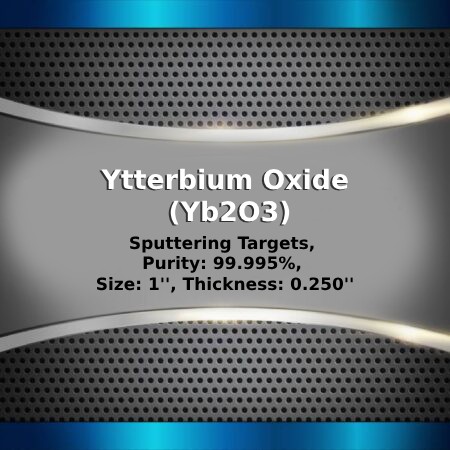
Ytterbium Oxide (Yb2O3) Sputtering Targets, Purity: 99.99%, Size: 1”, Thickness: 0.250”

$560.00

Product 

Ytterbium Oxide (Yb2O3) Sputtering Targets, Purity: 99.99%, Size: 1'', Thickness: 0.250''

CAS No.

1314-37-0

Appearance

Powder

Purity

≥99%,  ≥99.9%,  ≥95%

(Other purities are also available)

APS

N/A  (Size Can be customized), Ask for other available size ranges.

Ingredient

N/A

Molecular Weight

394.08 g/mol

Melting Point

2346 °C

Boiling Point

4127 °C

Density

 9.17 g/cm³

Product Codes

NCZ-1528K

Magnesium Fluoride (MgF2) Sputtering Targets, Purity: 99.9%, Size: 4”, Thickness: 0.250”

$560.00

Product 

Magnesium Fluoride (MgF2) Sputtering Targets, Purity: 99.9%, Size: 4'', Thickness: 0.250''

CAS No.

7783-40-6

Appearance

Powder

Purity

≥99%,  ≥99.9%,  ≥95%

(Other purities are also available)

APS

 N/A (Size Can be customized), Ask for other available size ranges.

Ingredient

N/A

Molecular Weight

 62.30 g/mol

Melting Point

~1263 °C

Boiling Point

~2260 °C

Density

 3.18 g/cm³

Product Codes

NCZ-1979K

Silicon Carbide Wafer (SiC-4H) – 4H, Size: 3”, Thickness: 350 μm, Dummy Grade, 4H Area: 95%

Price range: $561.00 through $2,577.00
Select options This product has multiple variants. The options may be chosen on the product page

Lithium Titanate (Li2TiO3) Sputtering Targets, indium, Purity: 99.95%, Size: 3”, Thickness: 0.125”

$561.00

Applications of Sputtering Targets;

Film deposition is accomplished using sputtering targets. A technique for sputtering thin films is called "deposition made by sputter targets," which entails eroding material from a "target" source onto a "substrate" like a silicon wafer. Etching of the target is done using semiconductor sputtering targets. When selectivity is not an issue and a high degree of etching anisotropy is required, sputter etching is the method of choice. By removing the target material through etching, sputter targets are also utilized for investigation. In secondary ion spectroscopy (SIMS), one example is when the target material is sputtered at a steady pace. Mass spectrometry is used to quantify the concentration and identity of spewed atoms as the target is sputtered.

Monolayer Molybdenum Disulfide (MoS2) Quantum Dots Nano Powder

Price range: $561.00 through $1,287.00
Select options This product has multiple variants. The options may be chosen on the product page
Product Monolayer Molybdenum Disulfide (MoS2) Quantum Dots Nano Powder
CAS No. 1317-33-5
Appearance Light gray to yellow-green
Purity ≥99%,  ≥99.9%,  ≥95%(Other purities are also available)
APS 10nm ( (Size Can be customized),  Ask for other available size range.
Ingredient MoS2
Molecular Weight 160.07 g/mol
Melting Point N/A
Boiling Point N/A
Density 5.06 g/cm³
Product Codes NCZ-459I
 

Aluminum Oxide (Al2O3) Sputtering Targets, Purity: 99.999%, Size: 2”, Thickness: 0.125”

$562.00

Applications of Sputtering Targets;

Film deposition is accomplished using sputtering targets. A technique for sputtering thin films is called "deposition made by sputter targets," which entails eroding material from a "target" source onto a "substrate" like a silicon wafer. Etching of the target is done using semiconductor sputtering targets. When selectivity is not an issue and a high degree of etching anisotropy is required, sputter etching is the method of choice. By removing the target material through etching, sputter targets are also utilized for investigation. In secondary ion spectroscopy (SIMS), one example is when the target material is sputtered at a steady pace. When the target shatters,

Mass spectrometry measures the concentration and identity of sputtered atoms. The target material's composition may be ascertained and even very low concentrations of contaminants can be found with the aid of the sputtering target.

There is also an application area for sputtering targets in space. One type of space weathering that alters the chemical and physical characteristics of airless worlds like the Moon and asteroids is sputtering.

With the chemical formula Al2O3, aluminum oxide is a compound made of aluminum and oxygen. Because of its high melting point, Al2O3 is useful as a refractory material and as an abrasive due to its hardness, as well as for the production of aluminum metal. Thin coatings of aluminum oxide that can be acquired using aluminum oxide Because of their exceptional qualities, including great resistance to abrasion and corrosion, transparency, mechanical strength and hardness, as well as insulating and optical qualities, sputtering targets are widely employed in a variety of mechanical, optical, and microelectronic applications. All of these characteristics of aluminum oxide film are dependent on several sputtering system parameters, including sputtering rate, target-to-substrate distance, reactive gas pressures, etc.

Tungsten Disulfide (WS2) Sputtering Targets, Purity: 99.9%, Size: 4”, Thickness: 0.125”

$562.00

Applications of Sputtering Targets;

Film deposition is accomplished using sputtering targets. A technique for sputtering thin films is called "deposition made by sputter targets," which entails eroding material from a "target" source onto a "substrate" like a silicon wafer. Etching of the target is done using semiconductor sputtering targets. When selectivity is not an issue and a high degree of etching anisotropy is required, sputter etching is the method of choice. By removing the target material through etching, sputter targets are also utilized for investigation. In secondary ion spectroscopy (SIMS), one example is when the target material is sputtered at a steady pace. Mass spectrometry is used to quantify the concentration and identity of spewed atoms as the target is sputtered.

The target material's composition may be ascertained and even very low concentrations of contaminants can be found with the aid of the sputtering target.

There is also an application area for sputtering targets in space. One type of space weathering that alters the chemical and physical characteristics of airless worlds like the Moon and asteroids is sputtering.

Lanthanum Titanate (LaTiO3) Sputtering Targets, Purity: 99.9%, Size: 1”, Thickness: 0.250”

$562.00

Product 

Lanthanum Titanate (LaTiO3) Sputtering Targets, Purity: 99.9%, Size: 1'', Thickness: 0.250''

CAS No.

12031‑47‑9 (specific to size) or 12201‑04‑6 (general LaTiO₃)

Appearance

Powder

Purity

≥99%,  ≥99.9%,  ≥95%

(Other purities are also available)

APS

<5 µm (Size Can be customized), Ask for other available size ranges.

Ingredient

N/A

Molecular Weight

 234.77 g/mol (exact ~234.839 g/mol)

Melting Point

 Approx. 2,200 °C

Boiling Point

N/A

Density

N/A

Product Codes

NCZ-2093K

Indium Phosphide Quantum Dots (InP/ZnS QD) 480 nm

Price range: $565.00 through $1,315.00
Select options This product has multiple variants. The options may be chosen on the product page
APPLICATIONS InPQDs are employed in because of their electrical and optical characteristics in:
  • Light emitting diodes (LEDs),
  • Biomedical applications like bioimaging,
  • Electronic devices,
  • Solar cells.