CHOOSE OPTIONS COMPARE QUICK VIEW Lanthanum Strontium Manganate (La0.9Sr0.1MnO3) Sputtering Targets, Purity: 99.9%, Size: 1”, Thickness: 0.125”

$303.00
but allow experts a large degree of control over the growth and microstructure of the area.

Applications of Sputtering Targets;

  • Sputtering targets is used for film deposition. The deposition made by sputter targets is a method of depositing thin films by sputtering that involves eroding material from a "target" source onto a "substrate" such as  a silicon wafer.
  • Semiconductor sputtering targets is used to etch the target. Sputter etching is chosen in cases where a high degree of etching anisotropy is needed and selectivity is not a concern.
  • Sputter targets is also used for analysis by etching away the target material.
One of the example occurs in secondary ion spectroscopy (SIMS), where the target sample is sputtered at a constant rate. As the target is sputtered, the concentration and identity of sputtered atoms are measured using mass spectrometry. By helping of the sputtering target, the composition of the target material can be determined and even extremely low concentrations of impurities are detected. Sputtering target has also application area in space. Sputtering is one of the forms of space weathering, a process that changes the physical and chemical properties of airless bodies, such as asteroids and the Moon.

Indium (In) Sputtering Targets, Purity: 99.999%, Size: 1”, Thickness: 0.250”

$302.00

Product 

Indium (In) Sputtering Targets, Purity: 99.999%, Size: 1'', Thickness: 0.250''

CAS No.

 7440-74-6

Appearance

Powder

Purity

≥99%,  ≥99.9%,  ≥95%

(Other purities are also available)

APS

 N/A (Size Can be customized), Ask for other available size ranges.

Ingredient

N/A

Molecular Weight

114.82 g/mol

Melting Point

 156.6 °C

Boiling Point

 2,072 °C

Density

 7.31 g/cm³

Product Codes

NCZ-2232K

Aluminum (Al) Sputtering Targets, Purity: 99.999%, Size: 6”, Thickness: 0.125”

$301.00

Product 

Aluminum (Al) Sputtering Targets, Purity: 99.999%, Size: 6'', Thickness: 0.125''

CAS No.

 7429-90-5

Appearance

Powder

Purity

≥99%,  ≥99.9%,  ≥95%

(Other purities are also available)

APS

N/A (Size Can be customized), Ask for other available size ranges.

Ingredient

N/A

Molecular Weight

 26.98 g/mol

Melting Point

 660.3 °C

Boiling Point

 2519 °C

Density

 2.70 g/cm³

Product Codes

NCZ-2568K

Silicon (Si) Sputtering Targets, P-type, Purity: 99.999%, Size: 3”, Thickness: 0.125”

$301.00

Product 

Silicon (Si) Sputtering Targets, P-type, Purity: 99.999%, Size: 3'', Thickness: 0.125''

CAS No.

7440-21-3

Appearance

Powder

Purity

≥99%,  ≥99.9%,  ≥95%

(Other purities are also available)

APS

N/A  (Size Can be customized), Ask for other available size ranges.

Ingredient

N/A

Molecular Weight

28.0855 g/mol

Melting Point

 1,414 °C

Boiling Point

3,265 °C

Density

 2.33 g/cm³

Product Codes

NCZ-1749K

Zinc Oxide (ZnO) with Alumina Sputtering Targets, Purity: 99.95%, Size: 3”, Thickness: 0

$301.00

Applications of Sputtering Targets;

Film deposition is accomplished using sputtering targets. A technique for sputtering thin films is called "deposition made by sputter targets," which entails eroding material from a "target" source onto a "substrate" like a silicon wafer. Etching of the target is done using semiconductor sputtering targets. When selectivity is not an issue and a high degree of etching anisotropy is required, sputter etching is the method of choice. By removing the target material through etching, sputter targets are also utilized for investigation. In secondary ion spectroscopy (SIMS), one example is when the target material is sputtered at a steady pace. Mass spectrometry is used to quantify the concentration and identity of spewed atoms as the target is sputtered.

The target material's composition may be ascertained and even very low concentrations of contaminants can be found with the aid of the sputtering target.

There is also an application area for sputtering targets in space. One type of space weathering that alters the chemical and physical characteristics of airless worlds like the Moon and asteroids is sputtering.

Tin (Sn) Sputtering Targets, Purity: 99.99%, Size: 3”, Thickness: 0.250”

$301.00

Applications of Sputtering Targets;

Film deposition is accomplished using sputtering targets. A technique for sputtering thin films is called "deposition made by sputter targets," which entails eroding material from a "target" source onto a "substrate" like a silicon wafer. Etching of the target is done using semiconductor sputtering targets. When selectivity is not an issue and a high degree of etching anisotropy is required, sputter etching is the method of choice. By removing the target material through etching, sputter targets are also utilized for investigation. In secondary ion spectroscopy (SIMS), one example is when the target material is sputtered at a steady pace. Mass spectrometry is used to quantify the concentration and identity of spewed atoms as the target is sputtered.

The target material's composition may be ascertained and even very low concentrations of contaminants can be found with the aid of the sputtering target.

There is also an application area for sputtering targets in space. One type of space weathering that alters the chemical and physical characteristics of airless worlds like the Moon and asteroids is sputtering.

Nickel (Ni) Sputtering Targets, Purity: 99.99%, Size: 6”, Thickness: 0.125”

$300.00

Applications of Sputtering Targets;

Film deposition is accomplished using sputtering targets. A technique for sputtering thin films is called "deposition made by sputter targets," which entails eroding material from a "target" source onto a "substrate" like a silicon wafer. Etching of the target is done using semiconductor sputtering targets. When selectivity is not an issue and a high degree of etching anisotropy is required, sputter etching is the method of choice. By removing the target material through etching, sputter targets are also utilized for investigation. In secondary ion spectroscopy (SIMS), one example is when the target material is sputtered at a steady pace. Mass spectrometry is used to quantify the concentration and identity of spewed atoms as the target is sputtered.

The target material's composition may be ascertained and even very low concentrations of contaminants can be found with the aid of the sputtering target.

There is also an application area for sputtering targets in space. One type of space weathering that alters the chemical and physical characteristics of airless worlds like the Moon and asteroids is sputtering.

Molybdenum (Mo) Sputtering Targets, Purity: 99.95%, Size: 6”, Thickness: 0.125”

$300.00

Applications of Sputtering Targets;

Film deposition is accomplished using sputtering targets. A technique for sputtering thin films is called "deposition made by sputter targets," which entails eroding material from a "target" source onto a "substrate" like a silicon wafer. Etching of the target is done using semiconductor sputtering targets. When selectivity is not an issue and a high degree of etching anisotropy is required, sputter etching is the method of choice. By removing the target material through etching, sputter targets are also utilized for investigation. In secondary ion spectroscopy (SIMS), one example is when the target material is sputtered at a steady pace. Mass spectrometry is used to quantify the concentration and identity of spewed atoms as the target is sputtered.

By helping of the sputtering target, the composition of the target material may be evaluated and even extremely tiny amounts of contaminants are recognized.

There is also an application area for sputtering targets in space. One type of space weathering that alters the chemical and physical characteristics of airless worlds like the Moon and asteroids is sputtering.

Indium Tin Oxide/ITO (In203:Sn02) Sputtering Targets, Purity: 99.99%, Size: 2”, Thickness: 0.125”

$300.00

Applications of Sputtering Targets;

Film deposition is accomplished using sputtering targets. A technique for sputtering thin films is called "deposition made by sputter targets," which entails eroding material from a "target" source onto a "substrate" like a silicon wafer. Etching of the target is done using semiconductor sputtering targets. When selectivity is not an issue and a high degree of etching anisotropy is required, sputter etching is the method of choice. By removing the target material through etching, sputter targets are also utilized for investigation. In secondary ion spectroscopy (SIMS), one example is when the target material is sputtered at a steady pace. Mass spectrometry is used to quantify the concentration and identity of spewed atoms as the target is sputtered.

The target material's composition may be ascertained and even very low concentrations of contaminants can be found with the aid of the sputtering target.

There is also an application area for sputtering targets in space. One type of space weathering that alters the chemical and physical characteristics of airless worlds like the Moon and asteroids is sputtering.

Bismuth Oxide (Bi2O3) Sputtering Targets, Purity: 99.9%, Size: 1”, Thickness: 0.250”

$300.00

Applications of Sputtering Targets;

Film deposition is accomplished using sputtering targets. A technique for sputtering thin films is called "deposition made by sputter targets," which entails eroding material from a "target" source onto a "substrate" like a silicon wafer. Etching of the target is done using semiconductor sputtering targets. When selectivity is not an issue and a high degree of etching anisotropy is required, sputter etching is the method of choice. By removing the target material through etching, sputter targets are also utilized for investigation. In secondary ion spectroscopy (SIMS), one example is when the target material is sputtered at a steady pace. Mass spectrometry is used to quantify the concentration and identity of spewed atoms as the target is sputtered.

The target material's composition may be ascertained and even very low concentrations of contaminants can be found with the aid of the sputtering target.

There is also an application area for sputtering targets in space. One type of space weathering that alters the chemical and physical characteristics of airless worlds like the Moon and asteroids is sputtering.

Europium Oxide (Eu2O3) Nanopowder/Nanoparticles, Purity: 99.995%, Size: 8-90 nm, Cubic (No reviews yet)Write

Price range: $44.00 through $300.00
Select options This product has multiple variants. The options may be chosen on the product page

Applications:

Europium oxide nanoparticles show high efficiency as a luminescent material. It is used in flat-panel displays, fluorescent lamps, red powder activation of color TV, and high pressure mercury lump. It is also used as an agent for manufacturing fluorescence glass

Silicon Dioxide (SiO2) Nanopowder/Nanoparticles Dispersion in Water, Amorphous, Size: 28 nm, 26 wt%

Price range: $54.00 through $300.00
Select options This product has multiple variants. The options may be chosen on the product page
Silicon Dioxide (SiO2) Nanopowder/Nanoparticles Dispersion in Water Amorphous, Size: 28 nm, 26 wt%

Aluminum (Al) Sputtering Targets, Purity: 99.999%, Size: 8”, Thickness: 0.250”

$299.00

Product 

Aluminum (Al) Sputtering Targets, Purity: 99.999%, Size: 8'', Thickness: 0.250''

CAS No.

 7429-90-5

Appearance

Powder

Purity

≥99%,  ≥99.9%,  ≥95%

(Other purities are also available)

APS

N/A (Size Can be customized), Ask for other available size ranges.

Ingredient

N/A

Molecular Weight

 26.98 g/mol

Melting Point

 660.3 °C

Boiling Point

 2519 °C

Density

 2.70 g/cm³

Product Codes

NCZ-2562K

Bismuth (Bi) Sputtering Targets, Purity: 99.999%, Size: 2”, Thickness: 0.250”

$299.00

Product 

Bismuth (Bi) Sputtering Targets, Purity: 99.999%, Size: 2'', Thickness: 0.250''

CAS No.

7440‑69‑9

Appearance

Powder

Purity

≥99%,  ≥99.9%,  ≥95%

(Other purities are also available)

APS

1 – 5 µm (Size Can be customized), Ask for other available size ranges.

Ingredient

N/A

Molecular Weight

~208.98 g/mol

Melting Point

 271.4 °C

Boiling Point

~1560 °C

Density

 ~9.78–9.80 g/cm³

Product Codes

NCZ-2437K

Indium (In) Sputtering Targets, Purity: 99.99%, Size: 2”, Thickness: 0.250”

$299.00

Product 

Indium (In) Sputtering Targets, Purity: 99.99%, Size: 2'', Thickness: 0.250''

CAS No.

 7440-74-6

Appearance

Powder

Purity

≥99%,  ≥99.9%,  ≥95%

(Other purities are also available)

APS

 N/A (Size Can be customized), Ask for other available size ranges.

Ingredient

N/A

Molecular Weight

114.82 g/mol

Melting Point

 156.6 °C

Boiling Point

 2,072 °C

Density

 7.31 g/cm³

Product Codes

NCZ-2229K

Aluminum (Al) Micron Powder, Purity: 99.9+ %, Size: 9 µm

Price range: $21.00 through $299.00
Select options This product has multiple variants. The options may be chosen on the product page
25 grams/19 € 100 grams/57 € 500 grams/153 € 1000 grams/264 € 
Please contact us for quotes on larger quantities !!!

Aluminum (Al) Micron Powder

Purity: 99.9+ %, Size: 9 µm

Natural Graphite (C) Nanopowder/Nanoparticles, Purity: 99.9% Size: 380 nm-1.2 um

Price range: $7.00 through $298.00
Select options This product has multiple variants. The options may be chosen on the product page

Natural Graphite (C) Nanopowder/Nanoparticles

Purity: 99.9% Size: 380 nm-1.2 µm

Technical Properties:

Color black
Shape flaky
Ash Content (%) <0,5
pH 6,5
Impurities quartz, mica and H2O <0,2%
Water Interaction hydrophobic
Average Particle Size (µm) 0,38-1,2
Elemental Analysis C H N O Al Fe Others
87,5 (55,0 % diamond) 2,32 3,54 4,72 0,35 0,23 ≤0.10

Applications:

Natural graphite is generally used in lubricants, steel industry, automobile brakes, pencils, batteries, engine parts (as Al-graphite composites). It can be alloyed with silver or copper for electrical industry applications. It can be added to polymer composites for conductive polymers, metal matrix composites for low friction and wear resistance. It can also be used as a carbon source for graphene synthesis.  

Samarium Chloride Hexahydrate (SmCl3 · 6H2O) 99.9% 3N

$297.00
Select options This product has multiple variants. The options may be chosen on the product page
Product Samarium Chloride Hexahydrate (SmCl3 · 6H2O) 99.9% 3N
CAS No. 13465-64-0
Appearance Light yellow to white crystalline
Purity ≥99%,  ≥99.9%,  ≥95%(Other purities are also available)
APS 100–500µm (Size Can be customized),  Ask for other available size range.
Ingredient SmCl3·6H2O
Molecular Weight 364.79 g/mol
Melting Point 2345 °C
Boiling Point N/A
Density 2.16 g/cm³
Product Codes NCZ-508I
 

Lithium Titanate (Li2TiO3) Sputtering Targets, Purity: 99.95%, Size: 2”, Thickness: 0.125”

$297.00

Product 

Lithium Titanate (Li2TiO3) Sputtering Targets, Purity: 99.95%, Size: 2'', Thickness: 0.125''

CAS No.

12031-82-2

Appearance

Powder

Purity

≥99%,  ≥99.9%,  ≥95%

(Other purities are also available)

APS

 N/A (Size Can be customized), Ask for other available size ranges.

Ingredient

N/A

Molecular Weight

109.75 g/mol

Melting Point

Decomposes before melting (~1,200 °C)

Boiling Point

N/A

Density

~3.41 g/cm³

Product Codes

NCZ-2013K

Nickel Chromium (Ni-Cr) Sputtering Targets, Purity: 99.9%, Size: 4”, Thickness: 0.125”

$297.00

Applications of Sputtering Targets;

Film deposition is accomplished using sputtering targets. A technique for sputtering thin films is called "deposition made by sputter targets," which entails eroding material from a "target" source onto a "substrate" like a silicon wafer. Etching of the target is done using semiconductor sputtering targets. When selectivity is not an issue and a high degree of etching anisotropy is required, sputter etching is the method of choice. By removing the target material through etching, sputter targets are also utilized for investigation. In secondary ion spectroscopy (SIMS), one example is when the target material is sputtered at a steady pace. Mass spectrometry is used to quantify the concentration and identity of spewed atoms as the target is sputtered.

The target material's composition may be ascertained and even very low concentrations of contaminants can be found with the aid of the sputtering target.

There is also an application area for sputtering targets in space. One type of space weathering that alters the chemical and physical characteristics of airless worlds like the Moon and asteroids is sputtering.

Nickel Chromium (Ni-Cr) Sputtering Targets, Purity: 99.9%, Size: 3”, Thickness: 0.250”

$297.00

Applications of Sputtering Targets;

Film deposition is accomplished using sputtering targets. A technique for sputtering thin films is called "deposition made by sputter targets," which entails eroding material from a "target" source onto a "substrate" like a silicon wafer. Etching of the target is done using semiconductor sputtering targets. When selectivity is not an issue and a high degree of etching anisotropy is required, sputter etching is the method of choice. By removing the target material through etching, sputter targets are also utilized for investigation. In secondary ion spectroscopy (SIMS), one example is when the target mater

The target material's composition may be ascertained and even very low concentrations of contaminants can be found with the aid of the sputtering target.

There is also an application area for sputtering targets in space. One type of space weathering that alters the chemical and physical characteristics of airless worlds like the Moon and asteroids is sputtering.

ial is sputtered at a steady pace. Mass spectrometry is used to quantify the concentration and identity of spewed atoms as the target is sputtered.

Nickel (II) Hydroxide (Ni(OH)2) Nanopowder/Nanoparticles, High Purity: 99.99%, Size: 18 nm, Beta

Price range: $35.00 through $297.00
Select options This product has multiple variants. The options may be chosen on the product page
1 gram/31 € 5 grams/85 € 
25 grams/262 €
Please contact us for quotes on larger quantities !!! 

Nickel (II) Hydroxide (Ni(OH)2) Nanopowder/Nanoparticles

High Purity: 99.99%, Size: 18 nm, Beta

Technical Properties:

Purity (%) 99.99
Color green
Average Particle Size (nm) 18
Specific Surface Area (m2/g)    >75
Tap Density (g/cm3) 1.00
True Density (g/cm3) 4,2
Elemental Analysis (%) Cd Pb Co Mg Si Hg
0.001 0.001 0.002 0.001 0.001 0.001

Applications:

Nickel hydroxide nanoparticles main application is in nickel cadmium battery, nickel metal hydride battery, and in rechargeable battery electrodes.

Cuprous Oxide (Cu2O) Nanopowder/Nanoparticles, Purity: 99.95%, Size: 16 nm

Price range: $65.00 through $297.00
Select options This product has multiple variants. The options may be chosen on the product page
5 grams/58 € 25 grams/126 € 100 grams/262 €                     
Please contact us for quotes on larger quantities !!!

Cuprous Oxide (Cu2O) Nanopowder/Nanoparticles

Purity: 99.95%, Size: 16 nm

Technical Properties:

Purity (%) 99.95
Color red-brown
Average Particle Size (nm) 16.0
Specific Surface Area (m2/g) 55.0
Melting Point (°C) 1240.0
Boiling Point (°C) 1800.0
Elemental Analysis (%) Fe Zn Mn Ni Ag
0.001 0.0005 0.0003 0.001 0.0002

Storage and Cautions:

Cuprous oxide nanoparticles are very unstable when exposed to air. It should be sealed in vacuum and stored in cool and dry room. It should also be avoided under stress.

Applications:

Cuprous oxide nanoparticles are commonly used in marine paints. It is added as pigment, fungicide, and anti fouling agent.

Zinc Sulfide (ZnS) Sputtering Targets, Purity: 99.99%, Size: 1”, Thickness: 0.250”

$296.00

Applications of Sputtering Targets;

Film deposition is accomplished using sputtering targets. A technique for sputtering thin films is called "deposition made by sputter targets," which entails eroding material from a "target" source onto a "substrate" like a silicon wafer. Etching of the target is done using semiconductor sputtering targets. When selectivity is not an issue and a high degree of etching anisotropy is required, sputter etching is the method of choice. By removing the target material through etching, sputter targets are also utilized for investigation. In secondary ion spectroscopy (SIMS), one example is when the target material is sputtered at a steady pace. Mass spectrometry is used to quantify the concentration and identity of spewed atoms as the target is sputtered.

The target material's composition may be ascertained and even very low concentrations of contaminants can be found with the aid of the sputtering target.

There is also an application area for sputtering targets in space. One type of space weathering that alters the chemical and physical characteristics of airless worlds like the Moon and asteroids is sputtering.

Molybdenum Disilicide (MoSi2) Sputtering Targets, Purity: 99.95%, Size: 1”, Thickness: 0.250”

$296.00

Applications of Sputtering Targets;

Film deposition is accomplished using sputtering targets. A technique for sputtering thin films is called "deposition made by sputter targets," which entails eroding material from a "target" source onto a "substrate" like a silicon wafer. Etching of the target is done using semiconductor sputtering targets. When selectivity is not an issue and a high degree of etching anisotropy is required, sputter etching is the method of choice. By removing the target material through etching, sputter targets are also utilized for investigation. In secondary ion spectroscopy (SIMS), one example is when the target material is sputtered at a steady pace. Mass spectrometry is used to quantify the concentration and identity of spewed atoms as the target is sputtered.

By helping of the sputtering target, the composition of the target material may be evaluated and even extremely tiny amounts of contaminants are recognized.

There is also an application area for sputtering targets in space. One type of space weathering that alters the chemical and physical characteristics of airless worlds like the Moon and asteroids is sputtering.

Nickel Chromium (Ni-Cr) Sputtering Targets, Purity: 99.95%, Size: 3”, Thickness: 0.125”

$294.00

Product 

Nickel Chromium (Ni-Cr) Sputtering Targets, Purity: 99.95%, Size: 3'', Thickness: 0.125''

CAS No.

 11106-97-1

Appearance

Powder

Purity

≥99%,  ≥99.9%,  ≥95%

(Other purities are also available)

APS

 N/A (Size Can be customized), Ask for other available size ranges.

Ingredient

N/A

Molecular Weight

 ~110.69 g/mol

Melting Point

 ~1,400 °C

Boiling Point

 ~2,730–2,750 °C

Density

 ~8.4 – 8.5 g/cm³

Product Codes

NCZ-1856K

Nickel Iron (Ni-Fe) Sputtering Targets, Purity: 99.5%, Size: 3”, Thickness: 0.125”

$294.00

Product 

Nickel Iron (Ni-Fe) Sputtering Targets, Purity: 99.5%, Size: 3'', Thickness: 0.125''

CAS No.

N/A

Appearance

Powder

Purity

≥99%,  ≥99.9%,  ≥95%

(Other purities are also available)

APS

 N/A (Size Can be customized), Ask for other available size ranges.

Ingredient

N/A

Molecular Weight

 ~57.5 g/mol

Melting Point

~1,430–1,480 °C

Boiling Point

N/A

Density

 ~8.1–8.7 g/cm³ (≈8.7 typical for ~80/20 alloy)

Product Codes

NCZ-1844K

Silicon (Si) Sputtering Targets, P-type, Purity: 99.999%, Size: 2”, Thickness: 0.250”

$294.00

Product 

Silicon (Si) Sputtering Targets, P-type, Purity: 99.999%, Size: 2'', Thickness: 0.250''

CAS No.

7440-21-3

Appearance

Powder

Purity

≥99%,  ≥99.9%,  ≥95%

(Other purities are also available)

APS

N/A  (Size Can be customized), Ask for other available size ranges.

Ingredient

N/A

Molecular Weight

28.0855 g/mol

Melting Point

 1,414 °C

Boiling Point

3,265 °C

Density

 2.33 g/cm³

Product Codes

NCZ-1750K

Zinc Oxide (ZnO) with Alumina Sputtering Targets, Purity: 99.99%, Size: 2”, Thickness: 0.125”

$294.00

Applications of Sputtering Targets;

Film deposition is accomplished using sputtering targets. A technique for sputtering thin films is called "deposition made by sputter targets," which entails eroding material from a "target" source onto a "substrate" like a silicon wafer. Etching of the target is done using semiconductor sputtering targets. When selectivity is not an issue and a high degree of etching anisotropy is required, sputter etching is the method of choice. By removing the target material through etching, sputter targets are also utilized for investigation. In secondary ion spectroscopy (SIMS), one example is when the target material is sputtered at a steady pace. Mass spectrometry is used to quantify the concentration and identity of spewed atoms as the target is sputtered.

The target material's composition may be ascertained and even very low concentrations of contaminants can be found with the aid of the sputtering target.

There is also an application area for sputtering targets in space. One type of space weathering that alters the chemical and physical characteristics of airless worlds like the Moon and asteroids is sputtering.

Zinc Oxide (ZnO) with Alumina Sputtering Targets, Purity: 99.99%, Size: 2”, Thickness: 0.125”

$294.00

Applications of Sputtering Targets;

Film deposition is accomplished using sputtering targets. A technique for sputtering thin films is called "deposition made by sputter targets," which entails eroding material from a "target" source onto a "substrate" like a silicon wafer. Etching of the target is done using semiconductor sputtering targets. When selectivity is not an issue and a high degree of etching anisotropy is required, sputter etching is the method of choice. By removing the target material through etching, sputter targets are also utilized for investigation. In secondary ion spectroscopy (SIMS), one example is when the target material is sputtered at a steady pace. Mass spectrometry is used to quantify the concentration and identity of spewed atoms as the target is sputtered.

The target material's composition may be ascertained and even very low concentrations of contaminants can be found with the aid of the sputtering target.

There is also an application area for sputtering targets in space. One type of space weathering that alters the chemical and physical characteristics of airless worlds like the Moon and asteroids is sputtering.

Permalloy (Ni-Fe-Mo) Sputtering Targets, Size: 3”, Thickness: 0.250”

$294.00

Applications of Sputtering Targets;

Film deposition is accomplished using sputtering targets. A technique for sputtering thin films is called "deposition made by sputter targets," which entails eroding material from a "target" source onto a "substrate" like a silicon wafer. Etching of the target is done using semiconductor sputtering targets. When selectivity is not an issue and a high degree of etching anisotropy is required, sputter etching is the method of choice. By removing the target material through etching, sputter targets are also utilized for investigation. In secondary ion spectroscopy (SIMS), one example is when the target material is sputtered at a steady pace. Mass spectrometry is used to quantify the concentration and identity of spewed atoms as the target is sputtered.

The target material's composition may be ascertained and even very low concentrations of contaminants can be found with the aid of the sputtering target.

There is also an application area for sputtering targets in space. One type of space weathering that alters the chemical and physical characteristics of airless worlds like the Moon and asteroids is sputtering.

Chromium Oxide (Cr2O3) Sputtering Targets, Purity: 99.8%-99.9%, Size: 1”, Thickness: 0.125”

$294.00

Applications of Sputtering Targets;

Film deposition is accomplished using sputtering targets. A technique for sputtering thin films is called "deposition made by sputter targets," which entails eroding material from a "target" source onto a "substrate" like a silicon wafer. Etching of the target is done using semiconductor sputtering targets. When selectivity is not an issue and a high degree of etching anisotropy is required, sputter etching is the method of choice. By removing the target material through etching, sputter targets are also utilized for investigation. In secondary ion spectroscopy (SIMS), one example is when the target material is sputtered at a steady pace. Mass spectrometry is used to quantify the concentration and identity of spewed atoms as the target is sputtered.

The target material's composition may be ascertained and even very low concentrations of contaminants can be found with the aid of the sputtering target.

There is also an application area for sputtering targets in space. One type of space weathering that alters the chemical and physical characteristics of airless worlds like the Moon and asteroids is sputtering.

The inorganic chemical with the formula Cr2O3 is chromium oxide. Applications for chromium oxide sputtering targets are numerous. Let's examine a few instances where chromium oxide sputtering targets are employed instead. Low friction coefficients and high hardness values are displayed by Cr2O3 thin films. Because of these qualities, chromium oxide is a strong contender to take the place of Al2O3 or transition metal nitrides in certain applications.

PPL Inside Chamber for Hydrothermal Synthesis Autoclave Reactors

Price range: $97.50 through $293.75
Select options This product has multiple variants. The options may be chosen on the product page
50ml   97,5€ 100ml  106,25€ 500ml  293,75€ Product Information Product Name PPL Inside Chamber for Hydrothermal Synthesis Autoclave Reactors Size

Aluminum (Al) Sputtering Targets, Purity: 99.999%, Size: 8”, Thickness: 0.125”

$293.00

Product 

Aluminum (Al) Sputtering Targets, Purity: 99.999%, Size: 8'', Thickness: 0.125''

CAS No.

 7429-90-5

Appearance

Powder

Purity

≥99%,  ≥99.9%,  ≥95%

(Other purities are also available)

APS

N/A (Size Can be customized), Ask for other available size ranges.

Ingredient

N/A

Molecular Weight

 26.98 g/mol

Melting Point

 660.3 °C

Boiling Point

 2519 °C

Density

 2.70 g/cm³

Product Codes

NCZ-2564K

Aluminum Oxide (Al2O3) Sputtering Targets, Purity: 99.99%, Size: 1”, Thickness: 0.250”

$293.00

Product 

Aluminum Oxide (Al2O3) Sputtering Targets, Purity: 99.99%, Size: 1'', Thickness: 0.250''

CAS No.

 1344-28-1

Appearance

Powder

Purity

≥99%,  ≥99.9%,  ≥95%

(Other purities are also available)

APS

N/A (Size Can be customized), Ask for other available size ranges.

Ingredient

N/A

Molecular Weight

101.96 g/mol

Melting Point

~2,072 °C

Boiling Point

~2,977 °C

Density

~3.97–3.98 g/cm³

Product Codes

NCZ-2548K

Bismuth (Bi) Sputtering Targets, Purity: 99.999%, Size: 2”, Thickness: 0.125”

$293.00

Product 

Bismuth (Bi) Sputtering Targets, Purity: 99.999%, Size: 2'', Thickness: 0.125''

CAS No.

7440‑69‑9

Appearance

Powder

Purity

≥99%,  ≥99.9%,  ≥95%

(Other purities are also available)

APS

1 – 5 µm (Size Can be customized), Ask for other available size ranges.

Ingredient

N/A

Molecular Weight

~208.98 g/mol

Melting Point

 271.4 °C

Boiling Point

~1560 °C

Density

 ~9.78–9.80 g/cm³

Product Codes

NCZ-2438K

Ytterbium Oxide (Yb2O3) Nanoparticles, 40nm, >99.9% Purity, 25g

$293.00
Product Ytterbium Oxide (Yb2O3) Nanoparticles, 40nm, >99.9% Purity, 25g
CAS No. 1314-37-0
Appearance White
Purity ≥99%,  ≥99.9%,  ≥95%(Other purities are also available)
APS 40nm (Size Can be customized),  Ask for other available size range.
Ingredient Yb2O3
Molecular Weight 394.08 g/mol
Melting Point N/A
Boiling Point N/A
Density 9.17 g/cm³
Product Codes NCZ-598I
 

Calcium Fluoride (CaF2) High Purity Powder 99.99%, 1kg

$293.00
Select options This product has multiple variants. The options may be chosen on the product page
Product Calcium Fluoride (CaF2) High Purity Powder 99.99%, 1kg
CAS No. 7789-75-5
Appearance White, crystalline
Purity ≥99%,  ≥99.9%,  ≥95%(Other purities are also available)
APS 1–10µm (Size Can be customized),  Ask for other available size range.
Ingredient CaF₂
Molecular Weight 78.07 g/mol
Melting Point N/A
Boiling Point N/A
Density 3.18 g/cm³
Product Codes NCZ-302I
 

Silicon Dioxide (SiO2) Sputtering Targets, Fused Quartz, Purity: 99.995%, Size: 8”, Thickness: 0.250”

$293.00

Product 

Silicon Dioxide (SiO2) Sputtering Targets, Fused Quartz, Purity: 99.995%, Size: 8'', Thickness: 0.250''

CAS No.

 7631-86-9

Appearance

Powder

Purity

≥99%,  ≥99.9%,  ≥95%

(Other purities are also available)

APS

N/A  (Size Can be customized), Ask for other available size ranges.

Ingredient

N/A

Molecular Weight

60.08 g/mol

Melting Point

 ~1,710 °C

Boiling Point

~2,950 °C

Density

~2.20 g/cm³

Product Codes

NCZ-1710K

2N (99%) Strontium (Sr) Pieces (3-6mm) Evaporation Materials, 50g

$293.00
Select options This product has multiple variants. The options may be chosen on the product page
Product 2N (99%) Strontium (Sr) Pieces (3-6mm) Evaporation Materials, 50g
CAS No. 7440-24-6
Appearance Silvery White, Metallic
Purity ≥99%,  ≥99.9%,  ≥95%(Other purities are also available)
APS 3-6mm (Size Can be customized),  Ask for other available size range.
Ingredient Sr
Molecular Weight 87.62 g/mol
Melting Point N/A
Boiling Point N/A
Density 2.6 g/cm3
Product Codes NCZ-155E

Aluminum Oxide (Al2O3) Sputtering Targets, Purity: 99.99%, Size: 1”, Thickness: 0.125”

$293.00

Applications of Sputtering Targets;

Film deposition is accomplished using sputtering targets. A technique for sputtering thin films is called "deposition made by sputter targets," which entails eroding material from a "target" source onto a "substrate" like a silicon wafer. Etching of the target is done using semiconductor sputtering targets. When selectivity is not an issue and a high degree of etching anisotropy is required, sputter etching is the method of choice. By removing the target material through etching, sputter targets are also utilized for investigation. In secondary ion spectroscopy (SIMS), one example is when the target material is sputtered at a steady pace. When the target shatters,

Mass spectrometry measures the concentration and identity of sputtered atoms. The target material's composition may be ascertained and even very low concentrations of contaminants can be found with the aid of the sputtering target.

There is also an application area for sputtering targets in space. One type of space weathering that alters the chemical and physical characteristics of airless worlds like the Moon and asteroids is sputtering.

With the chemical formula Al2O3, aluminum oxide is a compound made of aluminum and oxygen.

Aluminum (Al) Micron Powder, Purity: 99.95+ %, Size: 14 µm

Price range: $19.00 through $293.00
Select options This product has multiple variants. The options may be chosen on the product page
25 grams/17 € 100 grams/54 €    500 grams/148 €    1000 grams/259 €   
Please contact us for quotes on larger quantities !!!

Aluminum (Al) Micron Powder

Purity: 99.95+ %, Size: 14 µm

Cubic Boron nitride(CBN, micron powder) (323514)

Price range: $252.00 through $292.00
Select options This product has multiple variants. The options may be chosen on the product page
Cubic Boron nitride(CBN, micron powder) (323514)
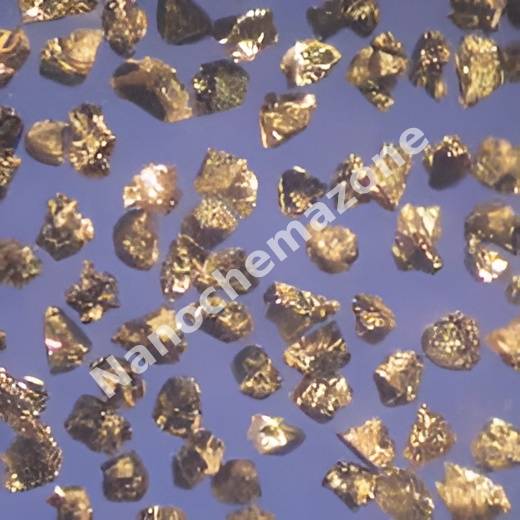
Product Name: CBN-M800
Product Description: Black CBN micro powder, used for grinding and polishing, suitable for resin bond systems.

Product Name:CBN-M850

Product Description: Black CBN micronpowder, designed for honing whetstones and PCBN, also suitable for ferrous lapping and polishing applications.

Product Name:CBN-M990

Product Description: Amber CBN micronpower, designed for honing whetstones and PCBN, also suitable for super precision processing and lapping applications.
Product Codes- NCZ-2770K

Cubic Boron nitride(CBN, mono-crystal) (322514)

$292.00
Cubic Boron nitride(CBN, mono-crystal) (322514)
    • Product Name: CBN-800

    Product Description: Black, low toughness, easily fragile monocrystalline, suited for resin bond systems and grinding in low temperature.
    • Product Name:CBN-810

    Product Description: Black, irregular shape, semi-toughness, angular sharps provide increased grinding efficiency in vitrified and resin bond.
    • Product Name:CBN-850

    Product Description: Black, semi-blocky, semi-toughness, high thermal stability. Optimum balance of fracture strength and break down characteristics to enhance wheel life and grinding efficiency. Most widely used in vitrified bond systems.
    • Product Name:CBN-880

    Product Description: More economic black CBN, semi-blocky,semi-toughness, high thermal stability. Optimum balance of fracture strength and break down characteristics to enhance wheel life and grinding efficiency. Most widely used in rein bond and vitrified bond systems.
    • Product Name:CBN-910

    Product Description: Amber, medium strength, irregular shape and excellent self-sharpen ability. Used for resin bond system.
    • Product Name:CBN-950

    Product Description: Golden, blocky, tough, high thermal stability. Used in vitrified bond, metal bond and long life resin bond systems.

    • Product Name:CBN-980

    Product Description: Dark brown, irregular monocrystalline with sharp edge, tough, high thermal stability. Used in vitrified bond, metal bond and heavy-duty resin bond applications.
 
Product Codes- NCZ-2769K

Chitosan Oligosaccharide(from Mushroom) (238555)

$292.00
Select options This product has multiple variants. The options may be chosen on the product page
Chitosan Oligosaccharide(from Mushroom) (238555)
ANALYSIS SPECIFICATION RUSULT
Deacetylation ≥98% 98.2%
Appearance Light yellow -brown powder Complies
pH 5.5-7 5.7
Mesh size 150mesh 100% pass 150 mesh
Molecular weight ≤5500Da 5100Da
Moisture ≤10% 5.1%
Total ash ≤ 2% 0.45%
Heavy Metals ≤ 10 ppm 6ppm
As ≤ 2.0ppm 1ppm
Pb ≤ 1.0ppm 0.5ppm
Cd ≤ 0.5ppm Negative
Hg ≤ 0.5ppm Negative
Microbiological quality Total Plate Count Yeast & Mold E.Coliform Salmonella . <1000cfu/g <100cfu/g Negative Negative . 200cfu/g 50cfu/g Negative Negative
  Product Codes- NCZ-2663K

Barium (Ba) Sputtering Targets, Purity: 99.5%, Size: 2”, Thickness: 0.125”

$292.00

Applications of Sputtering Targets;

Film deposition is accomplished using sputtering targets. A technique for sputtering thin films is called "deposition made by sputter targets," which entails eroding material from a "target" source onto a "substrate" like a silicon wafer. Etching of the target is done using semiconductor sputtering targets. When selectivity is not an issue and a high degree of etching anisotropy is required, sputter etching is the method of choice. By removing the target material through etching, sputter targets are also utilized for investigation. In secondary ion spectroscopy (SIMS), one example is when the target material is sputtered at a steady pace. Mass spectrometry is used to quantify the concentration and identity of spewed atoms as the target is sputtered. With the sputtering target's assistance, the

It is possible to identify the target material and even detect incredibly tiny impurity amounts.

There is also an application area for sputtering targets in space. One type of space weathering that alters the chemical and physical characteristics of airless worlds like the Moon and asteroids is sputtering.

A Block S, Group 2, Period 6 element with an atomic weight of 137.27, barium has the atomic symbol Ba and atomic number 56. One of the alkaline-earth metals is barium. Electronics can be plated using barium sputtering targets. Barium is beneficial for sputtering applications because of its good electrical characteristics. Barium sputtering targets can be utilized for semiconductors. Barium for flat panel screens

Barium (Ba) Sputtering Targets, Purity: 99.5%, Size: 2”, Thickness: 0.250”

$292.00

Applications of Sputtering Targets;

Film deposition is accomplished using sputtering targets. A technique for sputtering thin films is called "deposition made by sputter targets," which entails eroding material from a "target" source onto a "substrate" like a silicon wafer. Etching of the target is done using semiconductor sputtering targets. When selectivity is not an issue and a high degree of etching anisotropy is required, sputter etching is the method of choice. By removing the target material through etching, sputter targets are also utilized for investigation. In secondary ion spectroscopy (SIMS), one example is when the target material is sputtered at a steady pace. Mass spectrometry is used to quantify the concentration and identity of spewed atoms as the target is sputtered. With the sputtering target's assistance, theFilm deposition is accomplished using sputtering targets. A technique for sputtering thin films is called "deposition made by sputter targets," which entails eroding material from a "target" source onto a "substrate" like a silicon wafer. Etching of the target is done using semiconductor sputtering targets. When selectivity is not an issue and a high degree of etching anisotropy is required, sputter etching is the method of choice. By removing the target material through etching, sputter targets are also utilized for investigation. In secondary ion spectroscopy (SIMS), one example is when the target material is sputtered at a steady pace. Mass spectrometry is used to quantify the concentration and identity of spewed atoms as the target is sputtered. With the sputtering target's assistance, theFilm deposition is accomplished using sputtering targets. A technique for sputtering thin films is called "deposition made by sputter targets," which entails eroding material from a "target" source onto a "substrate" like a silicon wafer. Etching of the target is done using semiconductor sputtering targets. When selectivity is not an issue and a high degree of etching anisotropy is required, sputter etching is the method of choice. By removing the target material through etching, sputter targets are also utilized for investigation. In secondary ion spectroscopy (SIMS), one example is when the target material is sputtered at a steady pace. Mass spectrometry is used to quantify the concentration and identity of spewed atoms as the target is sputtered. With the sputtering target's assistance, theFilm deposition is accomplished using sputtering targets. A technique for sputtering thin films is called "deposition made by sputter targets," which entails eroding material from a "target" source onto a "substrate" like a silicon wafer. Etching of the target is done using semiconductor sputtering targets. When selectivity is not an issue and a high degree of etching anisotropy is required, sputter etching is the method of choice. By removing the target material through etching, sputter targets are also utilized for investigation. In secondary ion spectroscopy (SIMS), one example is when the target material is sputtered at a steady pace. Mass spectrometry is used to quantify the concentration and identity of spewed atoms as the target is sputtered. With the sputtering target's assistance, theFilm deposition is accomplished using sputtering targets. A technique for sputtering thin films is called "deposition made by sputter targets," which entails eroding material from a "target" source onto a "substrate" like a silicon wafer. Etching of the target is done using semiconductor sputtering targets. When selectivity is not an issue and a high degree of etching anisotropy is required, sputter etching is the method of choice. By removing the target material through etching, sputter targets are also utilized for investigation. In secondary ion spectroscopy (SIMS), one example is when the target material is sputtered at a steady pace. Mass spectrometry is used to quantify the concentration and identity of spewed atoms as the target is sputtered. With the sputtering target's assistance, theFilm deposition is accomplished using sputtering targets. A technique for sputtering thin films is called "deposition made by sputter targets," which entails eroding material from a "target" source onto a "substrate" like a silicon wafer. Etching of the target is done using semiconductor sputtering targets. When selectivity is not an issue and a high degree of etching anisotropy is required, sputter etching is the method of choice. By removing the target material through etching, sputter targets are also utilized for investigation. In secondary ion spectroscopy (SIMS), one example is when the target material is sputtered at a steady pace. Mass spectrometry is used to quantify the concentration and identity of spewed atoms as the target is sputtered. With the sputtering target's assistance, theFilm deposition is accomplished using sputtering targets. A technique for sputtering thin films is called "deposition made by sputter targets," which entails eroding material from a "target" source onto a "substrate" like a silicon wafer. Etching of the target is done using semiconductor sputtering targets. When selectivity is not an issue and a high degree of etching anisotropy is required, sputter etching is the method of choice. By removing the target material through etching, sputter targets are also utilized for investigation. In secondary ion spectroscopy (SIMS), one example is when the target material is sputtered at a steady pace. Mass spectrometry is used to quantify the concentration and identity of spewed atoms as the target is sputtered. With the sputtering target's assistance, theFilm deposition is accomplished using sputtering targets. A technique for sputtering thin films is called "deposition made by sputter targets," which entails eroding material from a "target" source onto a "substrate" like a silicon wafer. Etching of the target is done using semiconductor sputtering targets. When selectivity is not an issue and a high degree of etching anisotropy is required, sputter etching is the method of choice. By removing the target material through etching, sputter targets are also utilized for investigation. In secondary ion spectroscopy (SIMS), one example is when the target material is sputtered at a steady pace. Mass spectrometry is used to quantify the concentration and identity of spewed atoms as the target is sputtered. With the sputtering target's assistance, theFilm deposition is accomplished using sputtering targets. A technique for sputtering thin films is called "deposition made by sputter targets," which entails eroding material from a "target" source onto a "substrate" like a silicon wafer. Etching of the target is done using semiconductor sputtering targets. When selectivity is not an issue and a high degree of etching anisotropy is required, sputter etching is the method of choice. By removing the target material through etching, sputter targets are also utilized for investigation. In secondary ion spectroscopy (SIMS), one example is when the target material is sputtered at a steady pace. Mass spectrometry is used to quantify the concentration and identity of spewed atoms as the target is sputtered. With the sputtering target's assistance, theFilm deposition is accomplished using sputtering targets. A technique for sputtering thin films is called "deposition made by sputter targets," which entails eroding material from a "target" source onto a "substrate" like a silicon wafer. Etching of the target is done using semiconductor sputtering targets. When selectivity is not an issue and a high degree of etching anisotropy is required, sputter etching is the method of choice. By removing the target material through etching, sputter targets are also utilized for investigation. In secondary ion spectroscopy (SIMS), one example is when the target material is sputtered at a steady pace. Mass spectrometry is used to quantify the concentration and identity of spewed atoms as the target is sputtered. With the sputtering target's assistance, theFilm deposition is accomplished using sputtering targets. A technique for sputtering thin films is called "deposition made by sputter targets," which entails eroding material from a "target" source onto a "substrate" like a silicon wafer. Etching of the target is done using semiconductor sputtering targets. When selectivity is not an issue and a high degree of etching anisotropy is required, sputter etching is the method of choice. By removing the target material through etching, sputter targets are also utilized for investigation. In secondary ion spectroscopy (SIMS), one example is when the target material is sputtered at a steady pace. Mass spectrometry is used to quantify the concentration and identity of spewed atoms as the target is sputtered. With the sputtering target's assistance, theFilm deposition is accomplished using sputtering targets. A technique for sputtering thin films is called "deposition made by sputter targets," which entails eroding material from a "target" source onto a "substrate" like a silicon wafer. Etching of the target is done using semiconductor sputtering targets. When selectivity is not an issue and a high degree of etching anisotropy is required, sputter etching is the method of choice. By removing the target material through etching, sputter targets are also utilized for investigation. In secondary ion spectroscopy (SIMS), one example is when the target material is sputtered at a steady pace. Mass spectrometry is used to quantify the concentration and identity of spewed atoms as the target is sputtered. With the sputtering target's assistance, theFilm deposition is accomplished using sputtering targets. A technique for sputtering thin films is called "deposition made by sputter targets," which entails eroding material from a "target" source onto a "substrate" like a silicon wafer. Etching of the target is done using semiconductor sputtering targets. When selectivity is not an issue and a high degree of etching anisotropy is required, sputter etching is the method of choice. By removing the target material through etching, sputter targets are also utilized for investigation. In secondary ion spectroscopy (SIMS), one example is when the target material is sputtered at a steady pace. Mass spectrometry is used to quantify the concentration and identity of spewed atoms as the target is sputtered. With the sputtering target's assistance, the

It is possible to identify the target material and even detect incredibly tiny impurity amounts.

There is also an application area for sputtering targets in space. One type of space weathering that alters the chemical and physical characteristics of airless worlds like the Moon and asteroids is sputtering.

A Block S, Group 2, Period 6 element with an atomic weight of 137.27, barium has the atomic symbol Ba and atomic number 56. One of the alkaline-earth metals is barium. Electronics can be plated using barium sputtering targets. Barium has favorable electrical characteristics.

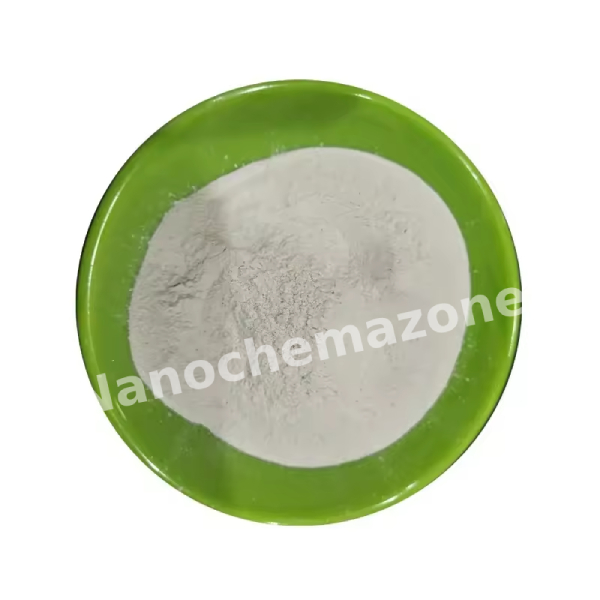
Porous Carbon (C) Nanopowder/Nanoparticles, Size: 18-38 nm, (Plant)

Price range: $9.00 through $292.00
Select options This product has multiple variants. The options may be chosen on the product page
1 gram/8 € 5 grams/28 € 25 grams/85 € 100 grams/258 € Please contact us for quotes on larger quantities !!!

Porous Carbon (C) Nanopowder/Nanoparticles

Size: 18-38 nm, (Plant)

Technical Properties:

True Density (g/cm3) 0,41
Bulk Density (g/cm3) 0,28
Color black
pH 7,5-10,5
Ash/H2O Content (%) <1,8/<4,5
Shape spherical
Average Particle Size (nm) 18-38
Specific Surface Area (m2/g) 1450
Resistivity  (Ω.cm) 0,3
Pore Size (nm)/Pore Volume (cm3/g) 3-45/1,2-1,4

Applications:

Porous Carbon nanopowder (a.k.a. activated coal) has very high surface area which makes it super reactive, therefore it should be handled with care and rapid moves, vibrations should be avoided. Nanopowder should be kept away from sunlight, any kind of heating, moisture and impacts. Coagulation of the particles is a serious problem, so, nanopowder should be sealed under vacuum and should be kept in cool and dry conditions. This nanopowder is all natural, produced from plants and has very high surface area. It can be easily dispersed in various solvents. With its attracting properties, it can be used in food storage, cosmetics and health-care products, medicine and applications that need high adsorption and chemical reactivity.
Sodium Carbonate (Na2CO3) 99.999% 5N High Purity Powder

$291.00
Select options This product has multiple variants. The options may be chosen on the product page
Product Sodium Carbonate (Na2CO3) 99.999% 5N High Purity Powder
CAS No. 497-19-8
Appearance White, odorless crystalline or fine
Purity ≥99%,  ≥99.9%,  ≥95%(Other purities are also available)
APS 1–10µm (Size Can be customized),  Ask for other available size range.
Ingredient Na2CO3
Molecular Weight 105.99 g/mol
Melting Point 851 °C
Boiling Point N/A
Density 2.54 g/cm³
Product Codes NCZ-528I
 

Cerium Chloride Heptahydrate (CeCl3 · 7H2O) 99.9% 3N

$291.00
Select options This product has multiple variants. The options may be chosen on the product page
Product Cerium Chloride Heptahydrate (CeCl3 · 7H2O) 99.9% 3N
CAS No. 7790-91-2
Appearance Pale green to white crystalline
Purity ≥99%,  ≥99.9%,  ≥95%(Other purities are also available)
APS N/A
Ingredient CeCl3·7H2O
Molecular Weight 372.58 g/mol
Melting Point N/A
Boiling Point N/A
Density 1.98 g/cm³
Product Codes NCZ-314I
 

Tantalum (Ta) Sputtering Targets, Purity: 99.95%, Size: 2”, Thickness: 0.250”

$291.00

Product 

Tantalum (Ta) Sputtering Targets, Purity: 99.95%, Size: 2'', Thickness: 0.250''

CAS No.

 7440-25-7

Appearance

Powder

Purity

≥99%,  ≥99.9%,  ≥95%

(Other purities are also available)

APS

N/A  (Size Can be customized), Ask for other available size ranges.

Ingredient

N/A

Molecular Weight

 180.95 g/mol

Melting Point

3017 °C

Boiling Point

 5458 °C

Density

16.65 g/cm³

Product Codes

NCZ-1664K

Vanadium (V) Sputtering Targets, Purity: 99.5%, Size: 3”, Thickness: 0.125”

$291.00

Applications of Sputtering Targets;

Film deposition is accomplished using sputtering targets. A technique for sputtering thin films is called "deposition made by sputter targets," which entails eroding material from a "target" source onto a "substrate" like a silicon wafer. Etching of the target is done using semiconductor sputtering targets. When selectivity is not an issue and a high degree of etching anisotropy is required, sputter etching is the method of choice. By removing the target material through etching, sputter targets are also utilized for investigation. In secondary ion spectroscopy (SIMS), one example is when the target material is sputtered at a steady pace. Mass spectrometry is used to quantify the concentration and identity of spewed atoms as the target is sputtered.

The target material's composition may be ascertained and even very low concentrations of contaminants can be found with the aid of the sputtering target.

There is also an application area for sputtering targets in space. One type of space weathering that alters the chemical and physical characteristics of airless worlds like the Moon and asteroids is sputtering.

Aluminum (Al) Sputtering Targets, Purity: 99.999%, Size: 4”, Thickness: 0.125”

$291.00

Applications of Sputtering Targets;

  • Sputtering targets is used for film deposition. The deposition made by sputter targets is a method of depositing thin films by sputtering that involves eroding material from a "target" source onto a "substrate" such as  a silicon wafer.
  • Semiconductor sputtering targets is used to etch the target. Sputter etching is chosen in cases where a high degree of etching anisotropy is needed and selectivity is not a concern.
  • Sputter targets is also used for analysis by etching away the target material.
One of the example occurs in secondary ion spectroscopy (SIMS), where the target sample is sputtered at a constant rate. As the target is sputtered, the concentration and identity of sputtered atoms are measured using mass spectrometry. By helping of the sputtering target, the composition of the target material can be determined and even extremely low concentrations of impurities are detected. Sputtering target has also application area in space. Sputtering is one of the forms of space weathering, a process that changes the physical and chemical properties of airless bodies, such as asteroids and the Moon. Aluminum which has the chemical symbol of Al, is a silvery white, soft, ductile metal that is the third most abundant element. Aluminum is notable due to for its light weight, strength, durability and for its ability to resist corrosion. Aluminum forms an extremely thin but very strong layer of oxide film. Aluminum has also high thermal and electrical conductivity. Aluminum sputtering targets have a particularly fine-grained microstructure. This property of Aluminum sputtering targets ensures that you benefit from uniform erosion and a low susceptibility to particle formation throughout the sputtering process.

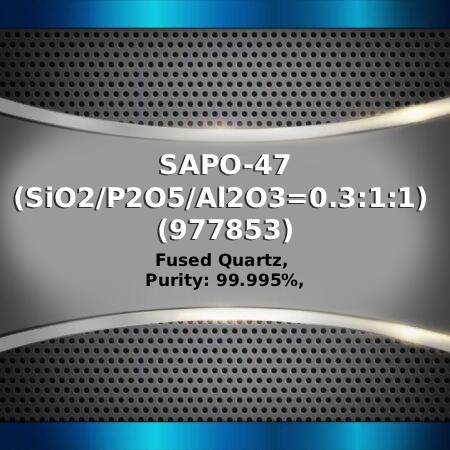
SAPO-47(SiO2/P2O5/Al2O3=0.3:1:1) (977853)

$290.00
Select options This product has multiple variants. The options may be chosen on the product page
SAPO-47(SiO2/P2O5/Al2O3=0.3:1:1) (977853)

Pore Structure CHA SiO2/P2O5/Al2O3 = 0.3 : 1 : 1 Relative Crystallinity(%) >= 95 Na2O weight(%) <= 0.1 Loss on Ignition(%) <= 5 


Product Codes- NCZ-2740K

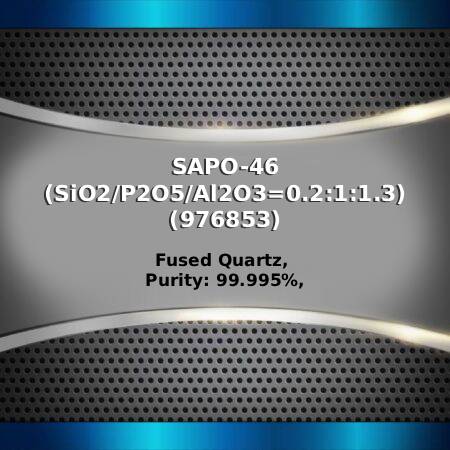
SAPO-46(SiO2/P2O5/Al2O3=0.2:1:1.3) (976853)

$290.00
Select options This product has multiple variants. The options may be chosen on the product page
SAPO-46(SiO2/P2O5/Al2O3=0.2:1:1.3) (976853)

SiO2/P2O5/Al2O3 = 0.2 : 1 : 1.3 Relative Crystallinity(%) >= 95 Na2O weight(%) <= 0.1 Loss on Ignition(%) <= 5 


Product Codes- NCZ-2739K

SAPO-42(SiO2/P2O5/Al2O3=0-0.3:1:1) (355853)

$290.00
Select options This product has multiple variants. The options may be chosen on the product page
SAPO-42(SiO2/P2O5/Al2O3=0-0.3:1:1) (355853)
Framework Type LTA Pore Size(nm) 0.43 SiO2/P2O5/Al2O3 = 0-0.3 : 1 : 1 Relative Crystallinity(%) >= 95 Loss on Ignition(%) <= 5


Product Codes- NCZ-2738K

SAPO-41(SiO2/P2O5/Al2O3=0-0.3:1:1) (557853)

$290.00
Select options This product has multiple variants. The options may be chosen on the product page
SAPO-41(SiO2/P2O5/Al2O3=0-0.3:1:1) (557853)
Framework Type AFO SiO2/P2O5/Al2O3 = 0-0.3 : 1 : 1 Relative Crystallinity(%) >= 95 Loss on Ignition(%) <= 5


Product Codes- NCZ-2736K

SAPO-37(SiO2/P2O5/Al2O3=0-0.3:1:1) (254853)

$290.00
Select options This product has multiple variants. The options may be chosen on the product page
SAPO-37(SiO2/P2O5/Al2O3=0-0.3:1:1) (254853)
Framework Type FAU Pore Size(nm) 0.8 SiO2/P2O5/Al2O3 = 0-0.3 : 1 : 1 Relative Crystallinity(%) >= 95 Loss on Ignition(%) <= 5


Product Codes- NCZ-2735K

SAPO-35 (961853)

$290.00
SAPO-35 (961853)

Pore Structure LEV Pore Size(nm) 0.7 - 1.7

SiO2/Al2O3 0 - 0.3 

SiO2/Al2O3 0.3 - 0.8

SiO2/Al2O3 0.8 - 1.2

Relative Crystallinity(%) >= 95 Na2O weight(%) <= 0.1 Loss on Ignition(%) <= 5


Product Codes- NCZ-2734K

SAPO-34(SiO2/P2O5/Al2O3=0.4:1:1) (963853)

$290.00
Select options This product has multiple variants. The options may be chosen on the product page
SAPO-34(SiO2/P2O5/Al2O3=0.4:1:1) (963853)

Pore Structure CHA SiO2/P2O5/Al2O3 = 0.4 : 1 : 1 Relative Crystallinity(%) >= 95 Na2O weight(%) <= 0.1 Loss on Ignition(%) <= 5    


Product Codes- NCZ-2733K