Bismuth TMHD

Price range: $39.00 through $222.00
Select options This product has multiple variants. The options may be chosen on the product page
Product Bismuth TMHD
CAS No. 142617-53-6
Appearance White to off-white
Purity ≥99%,  ≥99.9%,  ≥95%(Other purities are also available)
APS N/A
Ingredient C₃₃H₅₇BiO₆
Molecular Weight 758.78 g/mol
Melting Point 114–116 °C
Boiling Point N/A
Density N/A
Product Codes NCZ-338R

Boehmite Nanoparticles/ Nanopowder (AlOOHXH2O, 10-20 nm)

Price range: $73.00 through $290.00
Select options This product has multiple variants. The options may be chosen on the product page
$73/25g $123/100g
$290/500g

Product

Boehmite Nanoparticles/ Nanopowder (AlOOHXH2O, 10-20 nm)
CAS No. 1318-23-6

Appearance

Powder

Purity

≥99%,  ≥99.9%,  ≥95%

(Other purities are also available)

APS

10-20 nm (Size Can be customized), Ask for other available size ranges.

Ingredient

N/A

Molecular Weight

59.99 g/mol

Melting Point

320-600°C

Boiling Point

N

Density

 0.4-0.6 g/ml

Product Codes

NCZ-1086K

Boric acid, 99.999%

Price range: $16.00 through $36.00
Select options This product has multiple variants. The options may be chosen on the product page
Product Boric acid, 99.999%
CAS No. 10043-35-3
Appearance White
Purity ≥99%,  ≥99.9%,  ≥95%(Other purities are also available)
APS N/A
Ingredient H₃BO₃
Molecular Weight 61.83 g/mol
Melting Point N/A
Boiling Point N/A
Density 1.435 g/cm³
Product Codes NCZ-133R

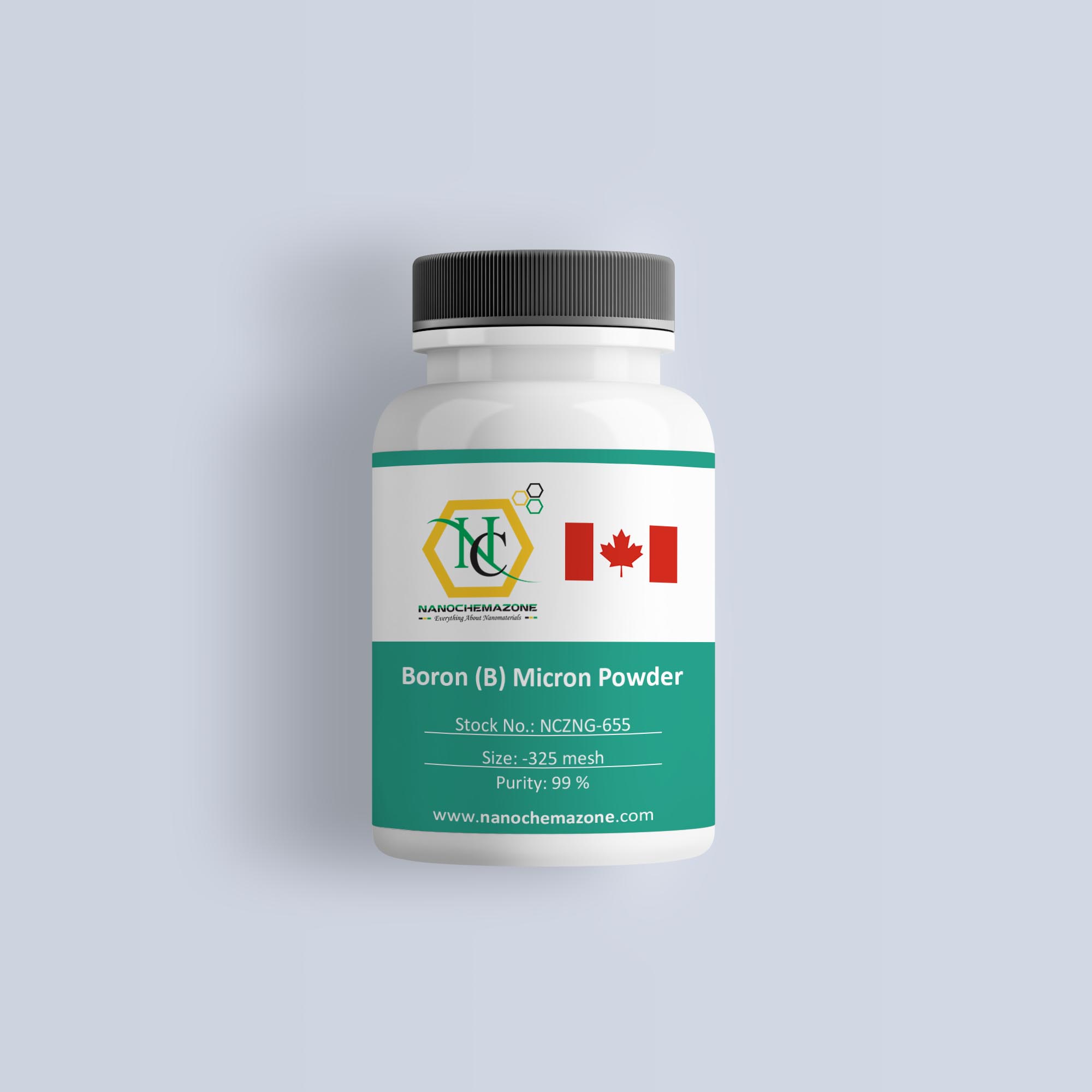
Boron (B) Micron Powder, Purity: 99 %, Size: -325 mesh, Amorphous

Price range: $77.00 through $654.00
Select options This product has multiple variants. The options may be chosen on the product page
  25 grams/68 € 100 grams/134 € 500 grams/323 € 1000 grams/578 €
Please contact us for quotes on larger quantities !!!

Boron (B) Micron Powder

Purity: 99 %, Size: 325 mesh, Amorphous

Technical Properties:

 
PURITY

99%

PARTICLE SIZE

-325 Mesh

CAS

7440-42-8

BOILING POINT

2100 °C

MELTING POINT

2600 °C

ELECTRIC RESISTIVITY

4 x 10 ⁶ microhm-cm

MOHS HARDNESS @ 20ºC

9.3

FORM  

Powder

APPLICATIONS

Aerospace, Ceramics, Fuel Source, Nuclear


Boron (B) Micron Powder, Purity: 99 %, Size: < 1 µm, Amorphous

Price range: $90.00 through $1,087.00
Select options This product has multiple variants. The options may be chosen on the product page
25 grams/80 € 100 grams/150 € 500 grams/670 € 1000 grams/960 €
Please contact us for quotes on larger quantities !!!

Boron (B) Micron Powder

Purity: 99 %, Size: < 1 µm, Amorphous

Technical Properties:

PURITY

 99 %

PARTICLE SIZE

< 1 µm

CAS

7440-42-8

BOILING POINT

2100 °C

MELTING POINT

2600 °C

ELECTRIC RESISTIVITY

4 x 10 ⁶ microhm-cm

MOHS HARDNESS @ 20ºC

9.3

FORM  

Powder

APPLICATIONS

Aerospace, Ceramics, Fuel Source, Nuclear


Boron (B) Micron Powder, Purity: 99 %, Size: 10 µm, Amorphous

Price range: $50.00 through $1,450.00
Select options This product has multiple variants. The options may be chosen on the product page
5 grams/45 € 25 grams/90 € 100 grams/180 € 500 grams/745 € 1000 grams/1280 €
Please contact us for quotes on larger quantities !!!

Boron (B) Micron Powder

Purity: 99 %, Size: 10 µm, Amorphous

Technical Properties:

PURITY

99 %

PARTICLE SIZE

10 µm

CAS

7440-42-8

BOILING POINT

2100 °C

MELTING POINT

2600 °C

ELECTRIC RESISTIVITY

4 x 10 ⁶ microhm-cm

MOHS HARDNESS @ 20ºC

9.3

FORM  

Powder

APPLICATIONS

Aerospace, Ceramics, Fuel Source, Nuclear


Boron (B) Micron Powder, Purity: 99.95+%, Size: 1-2 µm

Price range: $70.00 through $1,189.00
Select options This product has multiple variants. The options may be chosen on the product page
25 grams/62 € 100 grams/168 € 500 grams/720 € 1000 grams/1050 €
Please contact us for quotes on larger quantities !!!

Boron (B) Micron Powder

Purity: 99.95+%, Size: 1-2 µm

Technical Properties:

Bulk Density (g/cm3) 1,7
Color brown-black
Crystal Structure rhombohedral/hexagonal
Hardness 9,5 (Mohs Scale)
Tmelting (oC) 2400
Tboiling (oC) 2700
Average Particle Size (µm) 1,0-2,0
Elemental Analysis B Al Mn Fe Ca Cr Others
99.95 0.11 0.045 0.015 0.01 0.01 0.01
 

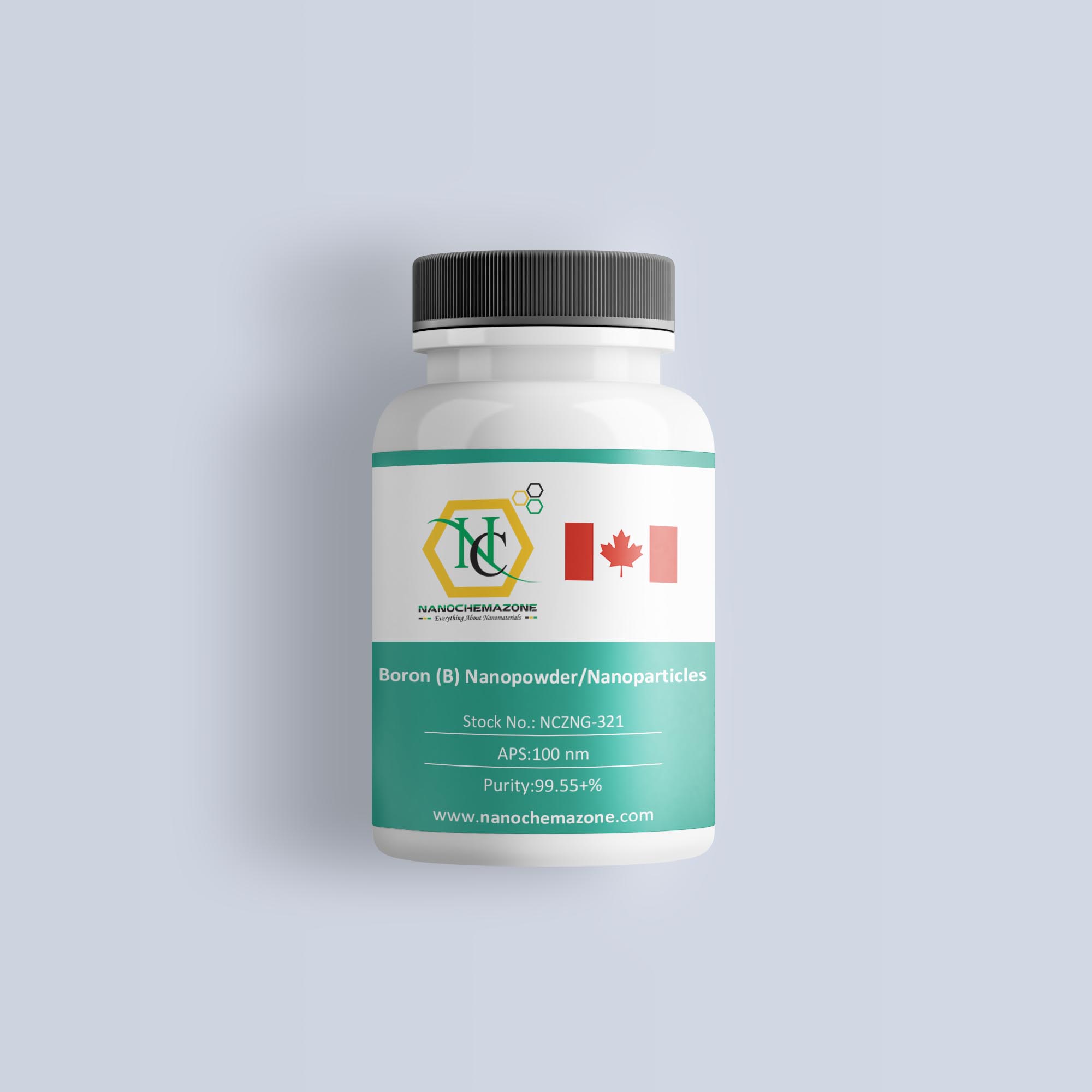
Boron (B) Nanopowder/Nanoparticles , APS:100 nm, Purity:99.55+%

Price range: $38.00 through $443.00
Select options This product has multiple variants. The options may be chosen on the product page
Boron (B) Nanopowder/Nanoparticles , APS:100 nm, Purity:99.55+% PRODUCT PROPERTIES
Boron Nanopowder Value Units
Particle Size 100 nm
Appearance Brown-Black Powder
Density 3.58 g/cm³
Melting Point 2400 °C
Boiling Point 2700 °C
Molecular Weight 10.81
Bulk Density 1.73 g/cm3
True Density 2.46 g/cm3
Crystal Structure Hexagonal
  CERTIFICATE OF ANALYSIS (%)
Al Fe Ca Mg Cu Mn Na Co Ni Si
0.01 0.01 0.01 0.04 0.01 0.01 0.01 0.01 0.01 0.01
Pb K N C S O B
0.01 0.01 0.01 0.04 0.06 0.2 99.55+%
 

Boron (B) Nanopowder/Nanoparticles , APS:100 nm, Purity:99.55+%

Price range: $43.00 through $439.00
Select options This product has multiple variants. The options may be chosen on the product page
APPLICATION
  • A black - brown color powder used primarily for its thermal properties.
  • Corrosion inhibition: Boron compounds produced with boron nanopowders make it useful in anti-freeze, brake fluids, hydrolic systems, and other applications where ferrous materials need protection against corrosion.
  • Abrasive: boron can serve as a rugged, highly abrasive surface for any number of purposes. Combined with its thermal properties, this makes it highly effective for high speed cutting and similar tasks.
  • Photoelectric applications: Boron powder offers unique applications in photography, tanning, electrolytic condensation, fuel cells, and a host of other photoelectric fields.
  • Biocide: Borates in general work to kill a variety of insects and similar pests through simple physical destruction, making them one of the most universally effective pest control options.
  • Ignition: The thermal properties of boron powder make it an excellent ignition aid for any number of applications. This sees it used in charcoal briquettes, fuels, torches, and countless other applications.

Boron (B) Nanopowder/Nanoparticles, Purity: 99.55+%, Size: 450 nm

Price range: $77.00 through $1,132.00
Select options This product has multiple variants. The options may be chosen on the product page

Boron (B) Nanopowder/Nanoparticles

Purity: 99.55+%, Size: 450 nm

Technical Properties:

Color brown-black
Crystal Structure amorphous
Hardness 9,5 (Mohs Scale)
Tmelting (oC) 2400
Tboiling (oC) 2700
Average Particle Size (nm) 450
Elemental Analysis B O S C N Mg Others
99.55 0.2 0.06 0.04 0.04 0.04 0.01

Boron (B) Sputtering Target

Price range: $478.00 through $1,182.00
Select options This product has multiple variants. The options may be chosen on the product page

Product 

Boron (B) Sputtering Target

CAS No.

7440-42-8

Appearance

Powder

Purity

≥99%,  ≥99.9%,  ≥95%

(Other purities are also available)

APS

 NA (Size Can be customized), Ask for other available size ranges.

Ingredient

N/A

Molecular Weight

10.81 g/mol

Melting Point

~2,076 °C

Boiling Point

~4,000 °C

Density

~2.34 g/cm³

Product Codes

NCZ-1348K

Boron (B) Sputtering Targets, elastomer, Purity: 99.9%, Size: 2”, Thickness: 0.125”

$496.00

Applications of Sputtering Targets;

Film deposition is accomplished using sputtering targets. A technique for sputtering thin films is called "deposition made by sputter targets," which entails eroding material from a "target" source onto a "substrate" like a silicon wafer. Etching of the target is done using semiconductor sputtering targets. When selectivity is not an issue and a high degree of etching anisotropy is required, sputter etching is the method of choice. By removing the target material through etching, sputter targets are also utilized for investigation. In secondary ion spectroscopy (SIMS), one example is when the target material is sputtered at a steady pace. Mass spectrometry is used to quantify the concentration and identity of spewed atoms as the target is sputtered.

The target material's composition may be ascertained and even very low concentrations of contaminants can be found with the aid of the sputtering target.

There is also an application area for sputtering targets in space. One type of space weathering that alters the chemical and physical characteristics of airless worlds like the Moon and asteroids is sputtering.

Boron (B) Sputtering Targets, elastomer, Purity: 99.9%, Size: 2”, Thickness: 0.125”

$574.00

Product 

Boron (B) Sputtering Targets, elastomer, Purity: 99.9%, Size: 2'', Thickness: 0.125''

CAS No.

7440-42-8

Appearance

Powder

Purity

≥99%,  ≥99.9%,  ≥95%

(Other purities are also available)

APS

 N/A (Size Can be customized), Ask for other available size ranges.

Ingredient

N/A

Molecular Weight

 10.81 g/mol

Melting Point

~2076 °C

Boiling Point

 ~3927 °C

Density

 ~2.34 g/cm³

Product Codes

NCZ-2389K

Boron (B) Sputtering Targets, indium, Purity: 99.9%, Size: 2”, Thickness: 0.125”

$502.00

Applications of Sputtering Targets;

Film deposition is accomplished using sputtering targets. A technique for sputtering thin films is called "deposition made by sputter targets," which entails eroding material from a "target" source onto a "substrate" like a silicon wafer. Etching of the target is done using semiconductor sputtering targets. When selectivity is not an issue and a high degree of etching anisotropy is required, sputter etching is the method of choice. By removing the target material through etching, sputter targets are also utilized for investigation. In secondary ion spectroscopy (SIMS), one example is when the target material is sputtered at a steady pace. Mass spectrometry is used to quantify the concentration and identity of spewed atoms as the target is sputtered.

The target material's composition may be ascertained and even very low concentrations of contaminants can be found with the aid of the sputtering target.

There is also an application area for sputtering targets in space. One type of space weathering that alters the chemical and physical characteristics of airless worlds like the Moon and asteroids is sputtering.

Boron (B) Sputtering Targets, indium, Purity: 99.9%, Size: 2”, Thickness: 0.125”

$581.00

Product 

Boron (B) Sputtering Targets, indium, Purity: 99.9%, Size: 2'', Thickness: 0.125''

CAS No.

7440-42-8

Appearance

Powder

Purity

≥99%,  ≥99.9%,  ≥95%

(Other purities are also available)

APS

 N/A (Size Can be customized), Ask for other available size ranges.

Ingredient

N/A

Molecular Weight

 10.81 g/mol

Melting Point

~2076 °C

Boiling Point

 ~3927 °C

Density

 ~2.34 g/cm³

Product Codes

NCZ-2390K

Boron (B) Sputtering Targets, indium, Purity: 99.9%, Size: 3”, Thickness: 0.125”

$732.00

Applications of Sputtering Targets;

Film deposition is accomplished using sputtering targets. A technique for sputtering thin films is called "deposition made by sputter targets," which entails eroding material from a "target" source onto a "substrate" like a silicon wafer. Etching of the target is done using semiconductor sputtering targets. When selectivity is not an issue and a high degree of etching anisotropy is required, sputter etching is the method of choice. By removing the target material through etching, sputter targets are also utilized for investigation. In secondary ion spectroscopy (SIMS), one example is when the target material is sputtered at a steady pace. Mass spectrometry is used to quantify the concentration and identity of spewed atoms as the target is sputtered.

The target material's composition may be ascertained and even very low concentrations of contaminants can be found with the aid of the sputtering target.

There is also an application area for sputtering targets in space. One type of space weathering that alters the chemical and physical characteristics of airless worlds like the Moon and asteroids is sputtering.

Boron (B) Sputtering Targets, indium, Purity: 99.9%, Size: 3”, Thickness: 0.125”

$849.00

Product 

Boron (B) Sputtering Targets, indium, Purity: 99.9%, Size: 3'', Thickness: 0.125''

CAS No.

7440-42-8

Appearance

Powder

Purity

≥99%,  ≥99.9%,  ≥95%

(Other purities are also available)

APS

 N/A (Size Can be customized), Ask for other available size ranges.

Ingredient

N/A

Molecular Weight

 10.81 g/mol

Melting Point

~2076 °C

Boiling Point

 ~3927 °C

Density

 ~2.34 g/cm³

Product Codes

NCZ-2388K

Boron (B) Sputtering Targets, indium, Purity: 99.9%, Size: 4”, Thickness: 0.125”

$1,019.00

Applications of Sputtering Targets;

Film deposition is accomplished using sputtering targets. A technique for sputtering thin films is called "deposition made by sputter targets," which entails eroding material from a "target" source onto a "substrate" like a silicon wafer. Etching of the target is done using semiconductor sputtering targets. When selectivity is not an issue and a high degree of etching anisotropy is required, sputter etching is the method of choice. By removing the target material through etching, sputter targets are also utilized for investigation. In secondary ion spectroscopy (SIMS), one example is when the target material is sputtered at a steady pace. Mass spectrometry is used to quantify the concentration and identity of spewed atoms as the target is sputtered.

The target material's composition may be ascertained and even very low concentrations of contaminants can be found with the aid of the sputtering target.

There is also an application area for sputtering targets in space. One type of space weathering that alters the chemical and physical characteristics of airless worlds like the Moon and asteroids is sputtering.

Boron (B) Sputtering Targets, indium, Purity: 99.9%, Size: 4”, Thickness: 0.125”

$1,184.00

Product 

Boron (B) Sputtering Targets, indium, Purity: 99.9%, Size: 4'', Thickness: 0.125''

CAS No.

7440-42-8

Appearance

Powder

Purity

≥99%,  ≥99.9%,  ≥95%

(Other purities are also available)

APS

 N/A (Size Can be customized), Ask for other available size ranges.

Ingredient

N/A

Molecular Weight

 10.81 g/mol

Melting Point

~2076 °C

Boiling Point

 ~3927 °C

Density

 ~2.34 g/cm³

Product Codes

NCZ-2387K

Boron (B) Sputtering Targets, Purity: 99.9%, Size: 2”, Thickness: 0.125”

$273.00

Applications of Sputtering Targets;

Film deposition is accomplished using sputtering targets. A technique for sputtering thin films is called "deposition made by sputter targets," which entails eroding material from a "target" source onto a "substrate" like a silicon wafer. Etching of the target is done using semiconductor sputtering targets. When selectivity is not an issue and a high degree of etching anisotropy is required, sputter etching is the method of choice. By removing the target material through etching, sputter targets are also utilized for investigation. In secondary ion spectroscopy (SIMS), one example is when the target material is sputtered at a steady pace. Mass spectrometry is used to quantify the concentration and identity of spewed atoms as the target is sputtered.

The target material's composition may be ascertained and even very low concentrations of contaminants can be found with the aid of the sputtering target.

There is also an application area for sputtering targets in space. One type of space weathering that alters the chemical and physical characteristics of airless worlds like the Moon and asteroids is sputtering.

Boron (B) Sputtering Targets, Purity: 99.9%, Size: 2”, Thickness: 0.125”

$273.00

Applications of Sputtering Targets;

Film deposition is accomplished using sputtering targets. A technique for sputtering thin films is called "deposition made by sputter targets," which entails eroding material from a "target" source onto a "substrate" like a silicon wafer. Etching of the target is done using semiconductor sputtering targets. When selectivity is not an issue and a high degree of etching anisotropy is required, sputter etching is the method of choice. By removing the target material through etching, sputter targets are also utilized for investigation. In secondary ion spectroscopy (SIMS), one example is when the target material is sputtered at a steady pace. Mass spectrometry is used to quantify the concentration and identity of spewed atoms as the target is sputtered.

The target material's composition may be ascertained and even very low concentrations of contaminants can be found with the aid of the sputtering target.

There is also an application area for sputtering targets in space. One type of space weathering that alters the chemical and physical characteristics of airless worlds like the Moon and asteroids is sputtering.

Boron (B) Sputtering Targets, Purity: 99.9%, Size: 2”, Thickness: 0.125”

$314.00

Product 

Boron (B) Sputtering Targets, Purity: 99.9%, Size: 2'', Thickness: 0.125''

CAS No.

7440-42-8

Appearance

Powder

Purity

≥99%,  ≥99.9%,  ≥95%

(Other purities are also available)

APS

 B (Size Can be customized), Ask for other available size ranges.

Ingredient

N/A

Molecular Weight

10.81 g/mol

Melting Point

~2079 °C

Boiling Point

~2550 °C

Density

 ~2.34 g/cm³

Product Codes

NCZ-1397K

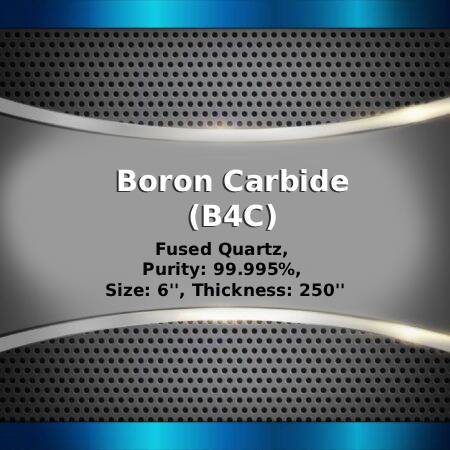
Boron (B) Sputtering Targets, Purity: 99.9%, Size: 2”, Thickness: 0.250”

$328.00

Applications of Sputtering Targets;

Film deposition is accomplished using sputtering targets. A technique for sputtering thin films is called "deposition made by sputter targets," which entails eroding material from a "target" source onto a "substrate" like a silicon wafer. Etching of the target is done using semiconductor sputtering targets. When selectivity is not an issue and a high degree of etching anisotropy is required, sputter etching is the method of choice. By removing the target material through etching, sputter targets are also utilized for investigation. In secondary ion spectroscopy (SIMS), one example is when the target material is sputtered at a steady pace. Mass spectrometry is used to quantify the concentration and identity of spewed atoms as the target is sputtered.
The target material's composition may be ascertained and even very low concentrations of contaminants can be found with the aid of the sputtering target.

There is also an application area for sputtering targets in space. One type of space weathering that alters the chemical and physical characteristics of airless worlds like the Moon and asteroids is sputtering.

Boron (B) Sputtering Targets, Purity: 99.9%, Size: 2”, Thickness: 0.250”

$378.00

Product 

Boron (B) Sputtering Targets, Purity: 99.9%, Size: 2'', Thickness: 0.250''

CAS No.

7440-42-8

Appearance

Powder

Purity

≥99%,  ≥99.9%,  ≥95%

(Other purities are also available)

APS

 N/A (Size Can be customized), Ask for other available size ranges.

Ingredient

N/A

Molecular Weight

 10.81 g/mol

Melting Point

~2076 °C

Boiling Point

 ~3927 °C

Density

 ~2.34 g/cm³

Product Codes

NCZ-2394K

Boron (B) Sputtering Targets, Purity: 99.9%, Size: 3”, Thickness: 0.125”

$358.00

Applications of Sputtering Targets;

Film deposition is accomplished using sputtering targets. A technique for sputtering thin films is called "deposition made by sputter targets," which entails eroding material from a "target" source onto a "substrate" like a silicon wafer. Etching of the target is done using semiconductor sputtering targets. When selectivity is not an issue and a high degree of etching anisotropy is required, sputter etching is the method of choice. By removing the target material through etching, sputter targets are also utilized for investigation. In secondary ion spectroscopy (SIMS), one example is when the target material is sputtered at a steady pace. Mass spectrometry is used to quantify the concentration and identity of spewed atoms as the target is sputtered.

The target material's composition may be ascertained and even very low concentrations of contaminants can be found with the aid of the sputtering target.

There is also an application area for sputtering targets in space. One type of space weathering that alters the chemical and physical characteristics of airless worlds like the Moon and asteroids is sputtering.

Boron (B) Sputtering Targets, Purity: 99.9%, Size: 3”, Thickness: 0.125”

$413.00

Product 

Boron (B) Sputtering Targets, Purity: 99.9%, Size: 3'', Thickness: 0.125''

CAS No.

7440-42-8

Appearance

Powder

Purity

≥99%,  ≥99.9%,  ≥95%

(Other purities are also available)

APS

 N/A (Size Can be customized), Ask for other available size ranges.

Ingredient

N/A

Molecular Weight

 10.81 g/mol

Melting Point

~2076 °C

Boiling Point

 ~3927 °C

Density

 ~2.34 g/cm³

Product Codes

NCZ-2393K

Boron (B) Sputtering Targets, Purity: 99.9%, Size: 3”, Thickness: 0.250”

$491.00

Applications of Sputtering Targets;

Film deposition is accomplished using sputtering targets. A technique for sputtering thin films is called "deposition made by sputter targets," which entails eroding material from a "target" source onto a "substrate" like a silicon wafer. Etching of the target is done using semiconductor sputtering targets. When selectivity is not an issue and a high degree of etching anisotropy is required, sputter etching is the method of choice. By removing the target material through etching, sputter targets are also utilized for investigation. In secondary ion spectroscopy (SIMS), one example is when the target material is sputtered at a steady pace. Mass spectrometry is used to quantify the concentration and identity of spewed atoms as the target is sputtered.

The target material's composition may be ascertained and even very low concentrations of contaminants can be found with the aid of the sputtering target.

There is also an application area for sputtering targets in space. One type of space weathering that alters the chemical and physical characteristics of airless worlds like the Moon and asteroids is sputtering.

Boron (B) Sputtering Targets, Purity: 99.9%, Size: 3”, Thickness: 0.250”

$568.00

Product 

Boron (B) Sputtering Targets, Purity: 99.9%, Size: 3'', Thickness: 0.250''

CAS No.

7440-42-8

Appearance

Powder

Purity

≥99%,  ≥99.9%,  ≥95%

(Other purities are also available)

APS

 N/A (Size Can be customized), Ask for other available size ranges.

Ingredient

N/A

Molecular Weight

 10.81 g/mol

Melting Point

~2076 °C

Boiling Point

 ~3927 °C

Density

 ~2.34 g/cm³

Product Codes

NCZ-2392K

Boron (B) Sputtering Targets, Purity: 99.9%, Size: 4”, Thickness: 0.125”

$637.00

Applications of Sputtering Targets;

Film deposition is accomplished using sputtering targets. A technique for sputtering thin films is called "deposition made by sputter targets," which entails eroding material from a "target" source onto a "substrate" like a silicon wafer. Etching of the target is done using semiconductor sputtering targets. When selectivity is not an issue and a high degree of etching anisotropy is required, sputter etching is the method of choice. By removing the target material through etching, sputter targets are also utilized for investigation. In secondary ion spectroscopy (SIMS), one example is when the target material is sputtered at a steady pace. Mass spectrometry is used to quantify the concentration and identity of spewed atoms as the target is sputtered.

The target material's composition may be ascertained and even very low concentrations of contaminants can be found with the aid of the sputtering target.

There is also an application area for sputtering targets in space. One type of space weathering that alters the chemical and physical characteristics of airless worlds like the Moon and asteroids is sputtering.

Boron (B) Sputtering Targets, Purity: 99.9%, Size: 4”, Thickness: 0.125”

$738.00

Product 

Boron (B) Sputtering Targets, Purity: 99.9%, Size: 4'', Thickness: 0.125''

CAS No.

7440-42-8

Appearance

Powder

Purity

≥99%,  ≥99.9%,  ≥95%

(Other purities are also available)

APS

 N/A (Size Can be customized), Ask for other available size ranges.

Ingredient

N/A

Molecular Weight

 10.81 g/mol

Melting Point

~2076 °C

Boiling Point

 ~3927 °C

Density

 ~2.34 g/cm³

Product Codes

NCZ-2391K

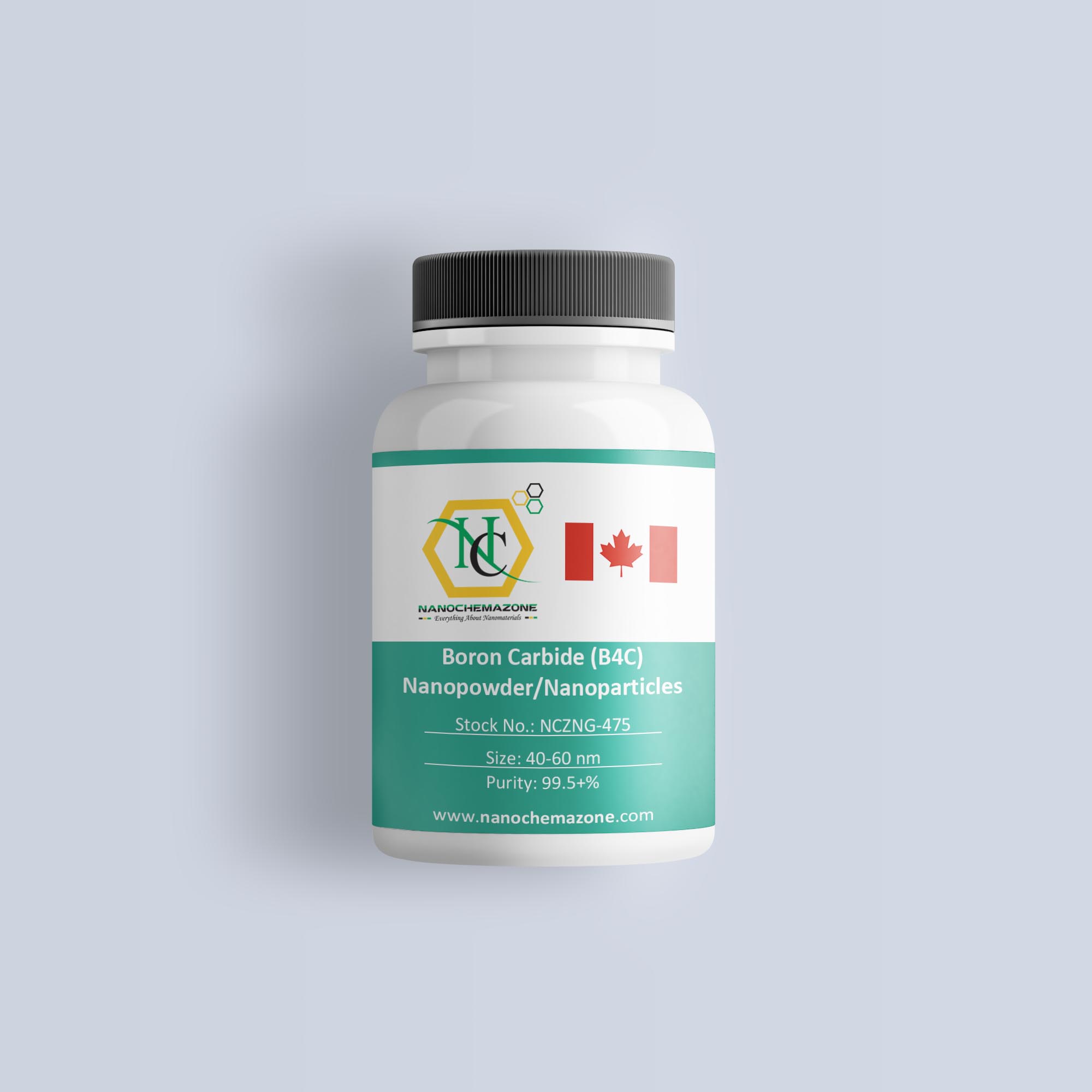
Boron Carbide (B4C) Nanopowder/Nanoparticles, Purity: 99.5+%, Size: 40-60 nm, Hexagonal

Price range: $37.00 through $538.00
Select options This product has multiple variants. The options may be chosen on the product page
1 gram/33 € 5 grams/101 € 25 grams/180 € 100 grams/475 €      
Please contact us for quotes on larger quantities !!!

Storage Condition:

Boron nitride nanoparticles should be sealed in vacuum and stored in cool and dry room. It should not be exposure to air and avoid stress.

Applications:

Boron carbide nanoparticles is one of the most stable and hard materials. It does not react with acid or alkali solutions. It is used as an abrasive in polishing and lapping applications, and also as a loose abrasive in cutting applications such as water jet cutting. Boron carbide has ability of absorbing neutrons without forming long lives radiations. It is used in nuclear applications for shielding, and in control rod, and shut down pellets.  

Boron Carbide (B4C) Sputtering Targets, indium, Purity: 99.5%, Size: 1”, Thickness: 0.125”

$578.00

Applications of Sputtering Targets;

Film deposition is accomplished using sputtering targets. A technique for sputtering thin films is called "deposition made by sputter targets," which entails eroding material from a "target" source onto a "substrate" like a silicon wafer. Etching of the target is done using semiconductor sputtering targets. When selectivity is not an issue and a high degree of etching anisotropy is required, sputter etching is the method of choice. By removing the target material through etching, sputter targets are also utilized for investigation.

In secondary ion spectroscopy (SIMS), one example is when the target material is sputtered at a steady pace. Mass spectrometry is used to quantify the concentration and identity of spewed atoms as the target is sputtered. The target material's composition may be ascertained and even very low concentrations of contaminants can be found with the aid of the sputtering target.

There is also an application area for sputtering targets in space. One type of space weathering that alters the chemical and physical characteristics of airless worlds like the Moon and asteroids is sputtering.

Boron Carbide (B4C) Sputtering Targets, indium, Purity: 99.5%, Size: 1”, Thickness: 0.125”

$669.00

Product 

Boron Carbide (B4C) Sputtering Targets, indium, Purity: 99.5%, Size: 1'', Thickness: 0.125''

CAS No.

12069‑32‑8

Appearance

Powder

Purity

≥99%,  ≥99.9%,  ≥95%

(Other purities are also available)

APS

 N/A (Size Can be customized), Ask for other available size ranges.

Ingredient

N/A

Molecular Weight

 ~55.26 g/mol

Melting Point

~2350 °C

Boiling Point

> 3500 °C (decomposes above ~2800 °C)

Density

 ~2.37 g/cm³ (theoretical)

Product Codes

NCZ-2379K

Boron Carbide (B4C) Sputtering Targets, indium, Purity: 99.5%, Size: 2”, Thickness: 0.125”

$634.00

Applications of Sputtering Targets;

Film deposition is accomplished using sputtering targets. A technique for sputtering thin films is called "deposition made by sputter targets," which entails eroding material from a "target" source onto a "substrate" like a silicon wafer. Etching of the target is done using semiconductor sputtering targets. When selectivity is not an issue and a high degree of etching anisotropy is required, sputter etching is the method of choice. By removing the target material through etching, sputter targets are also utilized for investigation. In secondary ion spectroscopy (SIMS), one example is when the target material is sputtered at a steady pace. Mass spectrometry is used to quantify the concentration and identity of spewed atoms as the target is sputtered.

The target material's composition may be ascertained and even very low concentrations of contaminants can be found with the aid of the sputtering target.

There is also an application area for sputtering targets in space. One type of space weathering that alters the chemical and physical characteristics of airless worlds like the Moon and asteroids is sputtering.

Boron Carbide (B4C) Sputtering Targets, indium, Purity: 99.5%, Size: 2”, Thickness: 0.125”

$735.00

Product 

Boron Carbide (B4C) Sputtering Targets, indium, Purity: 99.5%, Size: 2'', Thickness: 0.125''

CAS No.

12069‑32‑8

Appearance

Powder

Purity

≥99%,  ≥99.9%,  ≥95%

(Other purities are also available)

APS

 N/A (Size Can be customized), Ask for other available size ranges.

Ingredient

N/A

Molecular Weight

 ~55.26 g/mol

Melting Point

~2350 °C

Boiling Point

> 3500 °C (decomposes above ~2800 °C)

Density

 ~2.37 g/cm³ (theoretical)

Product Codes

NCZ-2378K

Boron Carbide (B4C) Sputtering Targets, indium, Purity: 99.5%, Size: 3”, Thickness: 0.125”

$864.00

Applications of Sputtering Targets;

Film deposition is accomplished using sputtering targets. A technique for sputtering thin films is called "deposition made by sputter targets," which entails eroding material from a "target" source onto a "substrate" like a silicon wafer. Etching of the target is done using semiconductor sputtering targets. When selectivity is not an issue and a high degree of etching anisotropy is required, sputter etching is the method of choice. By removing the target material through etching, sputter targets are also utilized for investigation. In secondary ion spectroscopy (SIMS), one example is when the target material is sputtered at a steady pace. Mass spectrometry is used to quantify the concentration and identity of spewed atoms as the target is sputtered.
The target material's composition may be ascertained and even very low concentrations of contaminants can be found with the aid of the sputtering target.

There is also an application area for sputtering targets in space. One type of space weathering that alters the chemical and physical characteristics of airless worlds like the Moon and asteroids is sputtering.

Boron Carbide (B4C) Sputtering Targets, indium, Purity: 99.5%, Size: 3”, Thickness: 0.125”

$1,003.00

Product 

Boron Carbide (B4C) Sputtering Targets, indium, Purity: 99.5%, Size: 3'', Thickness: 0.125''

CAS No.

12069‑32‑8

Appearance

Powder

Purity

≥99%,  ≥99.9%,  ≥95%

(Other purities are also available)

APS

 N/A (Size Can be customized), Ask for other available size ranges.

Ingredient

N/A

Molecular Weight

 ~55.26 g/mol

Melting Point

~2350 °C

Boiling Point

> 3500 °C (decomposes above ~2800 °C)

Density

 ~2.37 g/cm³ (theoretical)

Product Codes

NCZ-2377K

Boron Carbide (B4C) Sputtering Targets, indium, Purity: 99.5%, Size: 4”, Thickness: 0.125”

$937.00

Applications of Sputtering Targets;

Film deposition is accomplished using sputtering targets. A technique for sputtering thin films is called "deposition made by sputter targets," which entails eroding material from a "target" source onto a "substrate" like a silicon wafer. Etching of the target is done using semiconductor sputtering targets. When selectivity is not an issue and a high degree of etching anisotropy is required, sputter etching is the method of choice. By removing the target material through etching, sputter targets are also utilized for investigation. In secondary ion spectroscopy (SIMS), one example is when the target material is sputtered at a steady pace. Mass spectrometry is used to quantify the concentration and identity of spewed atoms as the target is sputtered.
The target material's composition may be ascertained and even very low concentrations of contaminants can be found with the aid of the sputtering target.

There is also an application area for sputtering targets in space. One type of space weathering that alters the chemical and physical characteristics of airless worlds like the Moon and asteroids is sputtering.

Boron Carbide (B4C) Sputtering Targets, indium, Purity: 99.5%, Size: 4”, Thickness: 0.125”

$1,089.00

Product 

Boron Carbide (B4C) Sputtering Targets, indium, Purity: 99.5%, Size: 4'', Thickness: 0.125''

CAS No.

12069‑32‑8

Appearance

Powder

Purity

≥99%,  ≥99.9%,  ≥95%

(Other purities are also available)

APS

 N/A (Size Can be customized), Ask for other available size ranges.

Ingredient

N/A

Molecular Weight

 ≈ 55.26 g/mol

Melting Point

~2350 °C

Boiling Point

 > 3500 °C (decomposes and volatilizes quickly above ~2800 °C)

Density

approximately ~2.5 g/cm³ for typical solid form

Product Codes

NCZ-2376K

Boron Carbide (B4C) Sputtering Targets, Purity: 99.5, Size: 8”, Thickness: 0.250”

$575.00

Applications of Sputtering Targets;

Film deposition is accomplished using sputtering targets. A technique for sputtering thin films is called "deposition made by sputter targets," which entails eroding material from a "target" source onto a "substrate" like a silicon wafer. Etching of the target is done using semiconductor sputtering targets. When selectivity is not an issue and a high degree of etching anisotropy is required, sputter etching is the method of choice. By removing the target material through etching, sputter targets are also utilized for investigation. In secondary ion spectroscopy (SIMS), one example is when the target material is sputtered at a steady pace. Mass spectrometry is used to quantify the concentration and identity of spewed atoms as the target is sputtered.
The target material's composition may be ascertained and even very low concentrations of contaminants can be found with the aid of the sputtering target.

There is also an application area for sputtering targets in space. One type of space weathering that alters the chemical and physical characteristics of airless worlds like the Moon and asteroids is sputtering.

Boron Carbide (B4C) Sputtering Targets, Purity: 99.5, Size: 8”, Thickness: 0.250”

$575.00

Applications of Sputtering Targets;

Film deposition is accomplished using sputtering targets. A technique for sputtering thin films is called "deposition made by sputter targets," which entails eroding material from a "target" source onto a "substrate" like a silicon wafer. Etching of the target is done using semiconductor sputtering targets. When selectivity is not an issue and a high degree of etching anisotropy is required, sputter etching is the method of choice. By removing the target material through etching, sputter targets are also utilized for investigation. In secondary ion spectroscopy (SIMS), one example is when the target material is sputtered at a steady pace. Mass spectrometry is used to quantify the concentration and identity of spewed atoms as the target is sputtered.

The target material's composition may be ascertained and even very low concentrations of contaminants can be found with the aid of the sputtering target.

There is also an application area for sputtering targets in space. One type of space weathering that alters the chemical and physical characteristics of airless worlds like the Moon and asteroids is sputtering.

Boron Carbide (B4C) Sputtering Targets, Purity: 99.5, Size: 8”, Thickness: 0.250”

$1,536.00

Product 

Boron Carbide (B4C) Sputtering Targets, Purity: 99.5, Size: 8'', Thickness: 0.250''

CAS No.

12069‑32‑8

Appearance

Powder

Purity

≥99%,  ≥99.9%,  ≥95%

(Other purities are also available)

APS

 N/A (Size Can be customized), Ask for other available size ranges.

Ingredient

N/A

Molecular Weight

 ~55.26 g/mol

Melting Point

~2350 °C

Boiling Point

> 3500 °C (decomposes above ~2800 °C)

Density

 ~2.37 g/cm³ (theoretical)

Product Codes

NCZ-2380K

Boron Carbide (B4C) Sputtering Targets, Purity: 99.5%, Size: 3”, Thickness: 0.250”

$502.00

Applications of Sputtering Targets;

Film deposition is accomplished using sputtering targets. A technique for sputtering thin films is called "deposition made by sputter targets," which entails eroding material from a "target" source onto a "substrate" like a silicon wafer. Etching of the target is done using semiconductor sputtering targets. When selectivity is not an issue and a high degree of etching anisotropy is required, sputter etching is the method of choice. By removing the target material through etching, sputter targets are also utilized for investigation. In secondary ion spectroscopy (SIMS), one example is when the targ

The target material's composition may be ascertained and even very low concentrations of contaminants can be found with the aid of the sputtering target.

There is also an application area for sputtering targets in space. One type of space weathering that alters the chemical and physical characteristics of airless worlds like the Moon and asteroids is sputtering.

et material is sputtered at a steady pace. Mass spectrometry is used to quantify the concentration and identity of spewed atoms as the target is sputtered.

Boron Carbide (B4C) Sputtering Targets, Purity: 99.5%, Size: 3”, Thickness: 0.250”

$581.00

Product 

Boron Carbide (B4C) Sputtering Targets, Purity: 99.5%, Size: 3'', Thickness: 0.250''

CAS No.

12069‑32‑8

Appearance

Powder

Purity

≥99%,  ≥99.9%,  ≥95%

(Other purities are also available)

APS

 N/A (Size Can be customized), Ask for other available size ranges.

Ingredient

N/A

Molecular Weight

 ~55.26 g/mol

Melting Point

~2350 °C

Boiling Point

> 3500 °C (decomposes above ~2800 °C)

Density

 ~2.37 g/cm³ (theoretical)

Product Codes

NCZ-2386K

Boron Carbide (B4C) Sputtering Targets, Purity: 99.5%, Size: 4”, Thickness: 0.125”

$553.00

Applications of Sputtering Targets;

Film deposition is accomplished using sputtering targets. A technique for sputtering thin films is called "deposition made by sputter targets," which entails eroding material from a "target" source onto a "substrate" like a silicon wafer. Etching of the target is done using semiconductor sputtering targets. When selectivity is not an issue and a high degree of etching anisotropy is required, sputter etching is the method of choice. By removing the target material through etching, sputter targets are also utilized for investigation. In secondary ion spectroscopy (SIMS), one example is when the target material is sputtered at a steady pace. Mass spectrometry is used to quantify the concentration and identity of spewed atoms as the target is sputtered.
The target material's composition may be ascertained and even very low concentrations of contaminants can be found with the aid of the sputtering target.

There is also an application area for sputtering targets in space. One type of space weathering that alters the chemical and physical characteristics of airless worlds like the Moon and asteroids is sputtering.

Boron Carbide (B4C) Sputtering Targets, Purity: 99.5%, Size: 4”, Thickness: 0.125”

$640.00

Product 

Boron Carbide (B4C) Sputtering Targets, Purity: 99.5%, Size: 4'', Thickness: 0.125''

CAS No.

12069‑32‑8

Appearance

Powder

Purity

≥99%,  ≥99.9%,  ≥95%

(Other purities are also available)

APS

 N/A (Size Can be customized), Ask for other available size ranges.

Ingredient

N/A

Molecular Weight

 ~55.26 g/mol

Melting Point

~2350 °C

Boiling Point

> 3500 °C (decomposes above ~2800 °C)

Density

 ~2.37 g/cm³ (theoretical)

Product Codes

NCZ-2385K

Boron Carbide (B4C) Sputtering Targets, Purity: 99.5%, Size: 4”, Thickness: 0.250”

$566.00

Applications of Sputtering Targets;

Film deposition is accomplished using sputtering targets. A technique for sputtering thin films is called "deposition made by sputter targets," which entails eroding material from a "target" source onto a "substrate" like a silicon wafer. Etching of the target is done using semiconductor sputtering targets. When selectivity is not an issue and a high degree of etching anisotropy is required, sputter etching is the method of choice. By removing the target material through etching, sputter targets are also utilized for investigation. In secondary ion spectroscopy (SIMS), one example is when the target material is sputtered at a steady pace. Mass spectrometry is used to quantify the concentration and identity of spewed atoms as the target is sputtered.

Boron Carbide (B4C) Sputtering Targets, Purity: 99.5%, Size: 4”, Thickness: 0.250”

$655.00

Product 

Boron Carbide (B4C) Sputtering Targets, Purity: 99.5%, Size: 4'', Thickness: 0.250''

CAS No.

12069‑32‑8

Appearance

Powder

Purity

≥99%,  ≥99.9%,  ≥95%

(Other purities are also available)

APS

 N/A (Size Can be customized), Ask for other available size ranges.

Ingredient

N/A

Molecular Weight

 ~55.26 g/mol

Melting Point

~2350 °C

Boiling Point

> 3500 °C (decomposes above ~2800 °C)

Density

 ~2.37 g/cm³ (theoretical)

Product Codes

NCZ-2384K

Boron Carbide (B4C) Sputtering Targets, Purity: 99.5%, Size: 6”, Thickness: 0.125”

$570.00

Applications of Sputtering Targets;

Film deposition is accomplished using sputtering targets. A technique for sputtering thin films is called "deposition made by sputter targets," which entails eroding material from a "target" source onto a "substrate" like a silicon wafer. Etching of the target is done using semiconductor sputtering targets. When selectivity is not an issue and a high degree of etching anisotropy is required, sputter etching is the method of choice. By removing the target material through etching, sputter targets are also utilized for investigation. In secondary ion spectroscopy (SIMS), one example is when the target material is sputtered at a steady pace. Mass spectrometry is used to quantify the concentration and identity of spewed atoms as the target is sputtered.

The target material's composition may be ascertained and even very low concentrations of contaminants can be found with the aid of the sputtering target.

There is also an application area for sputtering targets in space. One type of space weathering that alters the chemical and physical characteristics of airless worlds like the Moon and asteroids is sputtering.

Boron Carbide (B4C) Sputtering Targets, Purity: 99.5%, Size: 6”, Thickness: 0.125”

$660.00

Product 

Boron Carbide (B4C) Sputtering Targets, Purity: 99.5%, Size: 6'', Thickness: 0.125''

CAS No.

12069‑32‑8

Appearance

Powder

Purity

≥99%,  ≥99.9%,  ≥95%

(Other purities are also available)

APS

 N/A (Size Can be customized), Ask for other available size ranges.

Ingredient

N/A

Molecular Weight

 ~55.26 g/mol

Melting Point

~2350 °C

Boiling Point

> 3500 °C (decomposes above ~2800 °C)

Density

 ~2.37 g/cm³ (theoretical)

Product Codes

NCZ-2383K

Boron Carbide (B4C) Sputtering Targets, Purity: 99.5%, Size: 6”, Thickness: 0.250”

$550.00

Applications of Sputtering Targets;

Film deposition is accomplished using sputtering targets. A technique for sputtering thin films is called "deposition made by sputter targets," which entails eroding material from a "target" source onto a "substrate" like a silicon wafer. Etching of the target is done using semiconductor sputtering targets. When selectivity is not an issue and a high degree of etching anisotropy is required, sputter etching is the method of choice. By removing the target material through etching, sputter targets are also utilized for investigation. In secondary ion spectroscopy (SIMS), one example is when the target material is sputtered at a steady pace. Mass spectrometry is used to quantify the concentration and identity of spewed atoms as the target is sputtered.

The target material's composition may be ascertained and even very low concentrations of contaminants can be found with the aid of the sputtering target.

There is also an application area for sputtering targets in space. One type of space weathering that alters the chemical and physical characteristics of airless worlds like the Moon and asteroids is sputtering.

Boron Carbide (B4C) Sputtering Targets, Purity: 99.5%, Size: 6”, Thickness: 0.250”

$637.00

Product 

Boron Carbide (B4C) Sputtering Targets, Purity: 99.5%, Size: 6'', Thickness: 0.250''

CAS No.

12069‑32‑8

Appearance

Powder

Purity

≥99%,  ≥99.9%,  ≥95%

(Other purities are also available)

APS

 N/A (Size Can be customized), Ask for other available size ranges.

Ingredient

N/A

Molecular Weight

 ~55.26 g/mol

Melting Point

~2350 °C

Boiling Point

> 3500 °C (decomposes above ~2800 °C)

Density

 ~2.37 g/cm³ (theoretical)

Product Codes

NCZ-2382K

Boron Carbide (B4C) Sputtering Targets, Purity: 99.5%, Size: 8”, Thickness: 0.125”

$536.00

Applications of Sputtering Targets;

Film deposition is accomplished using sputtering targets. A technique for sputtering thin films is called "deposition made by sputter targets," which entails eroding material from a "target" source onto a "substrate" like a silicon wafer. Etching of the target is done using semiconductor sputtering targets. When selectivity is not an issue and a high degree of etching anisotropy is required, sputter etching is the method of choice. By removing the target material through etching, sputter targets are also utilized for investigation. In secondary ion spectroscopy (SIMS), one example is when the target material is sputtered at a steady pace. Mass spectrometry is used to quantify the concentration and identity of spewed atoms as the target is sputtered.

The target material's composition may be ascertained and even very low concentrations of contaminants can be found with the aid of the sputtering target.

There is also an application area for sputtering targets in space. One type of space weathering that alters the chemical and physical characteristics of airless worlds like the Moon and asteroids is sputtering.

Boron Carbide (B4C) Sputtering Targets, Purity: 99.5%, Size: 8”, Thickness: 0.125”

$536.00

Applications of Sputtering Targets;

Film deposition is accomplished using sputtering targets. A technique for sputtering thin films is called "deposition made by sputter targets," which entails eroding material from a "target" source onto a "substrate" like a silicon wafer. Etching of the target is done using semiconductor sputtering targets. When selectivity is not an issue and a high degree of etching anisotropy is required, sputter etching is the method of choice. By removing the target material through etching, sputter targets are also utilized for investigation. In secondary ion spectroscopy (SIMS), one example is when the target material is sputtered at a steady pace. Mass spectrometry is used to quantify the concentration and identity of spewed atoms as the target is sputtered.
The target material's composition may be ascertained and even very low concentrations of contaminants can be found with the aid of the sputtering target.

There is also an application area for sputtering targets in space. One type of space weathering that alters the chemical and physical characteristics of airless worlds like the Moon and asteroids is sputtering.

Boron Carbide (B4C) Sputtering Targets, Purity: 99.5%, Size: 8”, Thickness: 0.125”

$620.00

Product 

Boron Carbide (B4C) Sputtering Targets, Purity: 99.5%, Size: 8'', Thickness: 0.125''

CAS No.

12069‑32‑8

Appearance

Powder

Purity

≥99%,  ≥99.9%,  ≥95%

(Other purities are also available)

APS

 N/A (Size Can be customized), Ask for other available size ranges.

Ingredient

N/A

Molecular Weight

 ~55.26 g/mol

Melting Point

~2350 °C

Boiling Point

> 3500 °C (decomposes above ~2800 °C)

Density

 ~2.37 g/cm³ (theoretical)

Product Codes

NCZ-2381K

Boron Carbide nanoparticles

$0.00

Boron carbide nanoparticles

Boron carbide nanopowder

Nano Boron carbide Powder

MF B4C
Chemical Name Boron carbide nanoparticles
Purity > 99.99%
APS 80 nm (Size Customization possible)
Form Nanopowder
Product Number #NCZ901
CAS Number 12069-32-8
Note: We supply Boron Nanoparticles in different size such as microparticles and Nanoparticles Size range powder according to the client’s requirements and customization.

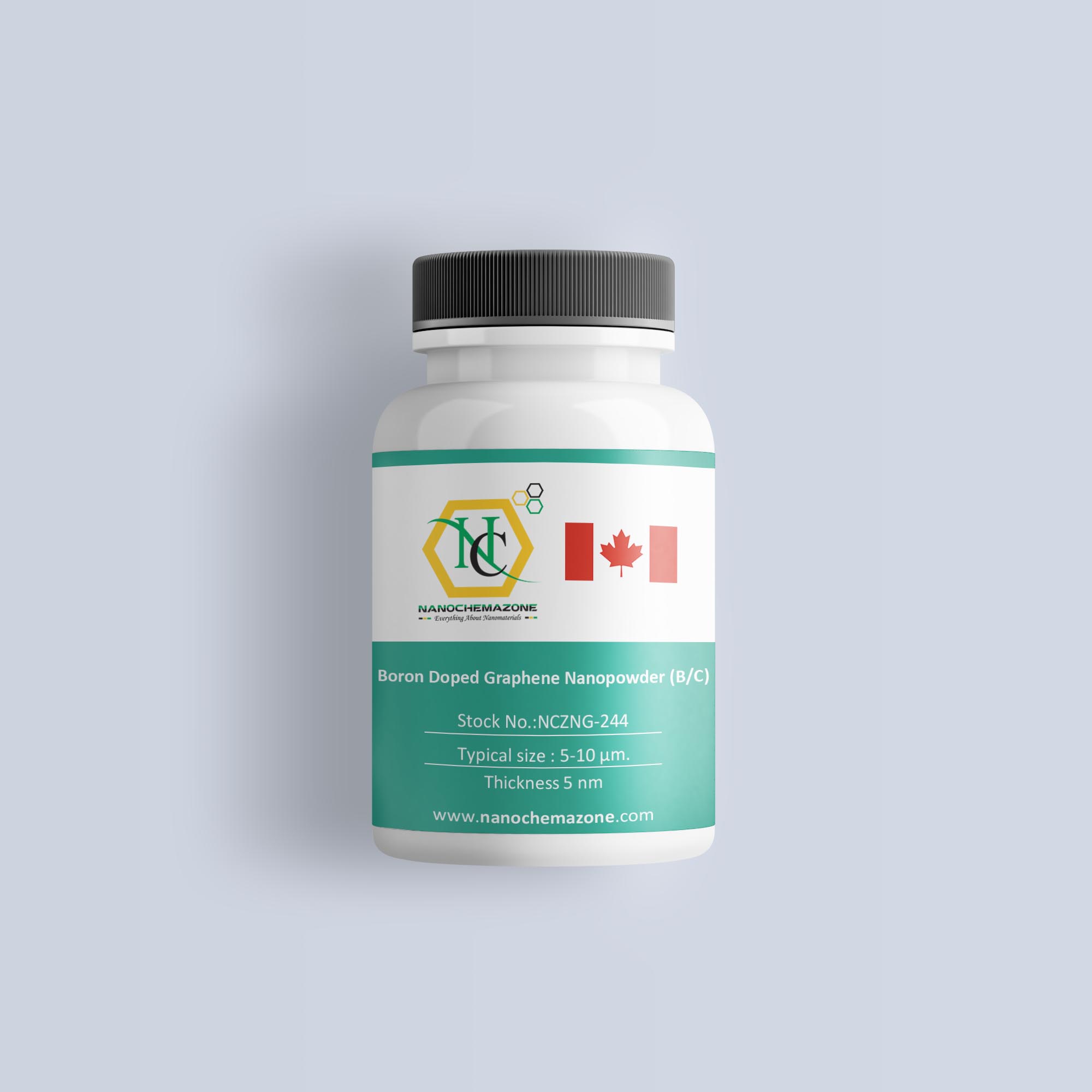
Boron Doped Graphene Nanopowder (B/C)

Price range: $223.00 through $1,461.00
Select options This product has multiple variants. The options may be chosen on the product page

Boron Doped Graphene

Boron-doped Graphene (BG) is a novel nanomaterial based on graphene, a single sheet of carbon atoms in a hexagonal lattice. The addition of boron atom impurities into pure graphene increases the activation region on its surface, enhances its catalytic ability, accelerates redox reactions, and opens the band gap, giving it numerous applications in fuel cell chemistry, semiconductor devices, ultracapacitors, sensors, and other technologies. Nanografi also manufactures nitrogen-doped graphene and boron/nitrogen co-doped graphene. Please request a quote above to receive pricing information based on your specifications.

Boron Doped Graphene Nanopowder (B/C)

Price range: $215.00 through $1,413.00
Select options This product has multiple variants. The options may be chosen on the product page

1 gram: 196€

5 grams: 785 €

10 grams: 1284 €

Contact us for larger quantities and other inquires

Boron Doped Graphene

Boron-doped Graphene (BG) is a novel nanomaterial based on graphene, a single sheet of carbon atoms in a hexagonal lattice. The addition of boron atom impurities into pure graphene increases the activation region on its surface, enhances its catalytic ability, accelerates redox reactions, and opens the band gap, giving it numerous applications in fuel cell chemistry, semiconductor devices, ultracapacitors, sensors, and other technologies. Nanografi also manufactures nitrogen-doped graphene and boron/nitrogen co-doped graphene. Please request a quote above to receive pricing information based on your specifications.

DESCRIPTION

  • Typical thickness: <10 layers.
  • Typical size : 5-10 μm.
  • Application
  • Electro catalyst.
  • Field-effect transistors.
  • Sensors.
  • Lithium ion batteries.
  • Supercapacitors.
Compound Formula B/C
Size Range < 10 layers
Average Particle Size 5-10 µm
Morphology Platelets
Thickness 5 nm

Applications

  • 2D Materials
  • Energy Storage & Batteries
  • Fuel Cells
  • Nanomaterials Research
  • Semiconductors

XRD Analysis

XPS Analysis

             Peaks Peak Position (eV) Atomic Contentration (%)
B1s 195,98 11,1
C1s 293,48 77,52
O1s 540,88 11,38

TEM

SEM

Boron Doped Graphene Nanopowder (B/C)

Price range: $223.00 through $1,461.00
Select options This product has multiple variants. The options may be chosen on the product page

Boron Doped Graphene

Boron-doped Graphene (BG) is a novel nanomaterial based on graphene, a single sheet of carbon atoms in a hexagonal lattice. The addition of boron atom impurities into pure graphene increases the activation region on its surface, enhances its catalytic ability, accelerates redox reactions, and opens the band gap, giving it numerous applications in fuel cell chemistry, semiconductor devices, ultracapacitors, sensors, and other technologies. Nanografi also manufactures nitrogen-doped graphene and boron/nitrogen co-doped graphene. Please request a quote above to receive pricing information based on your specifications.

Boron Doped Graphene Nanopowder (B/G)

Price range: $269.00 through $1,765.00
Select options This product has multiple variants. The options may be chosen on the product page

Applications of Boron Doped Graphene Nanopowder

  • Electro Catalyst
  • Field-effect Transistors
  • Sensors
  • Lithium-ion Batteries
  • Supercapacitors
  • 2D Materials
  • Energy Storage & Batteries
  • Fuel Cells
  • Nanomaterials Research
  • Semiconductors