Bismuth Ferrite (BiFeO3) Sputtering Targets, Purity: 99.9%, Size: 7”, Thickness: 0.125”

$1,190.00

Applications of Sputtering Targets;

Film deposition is accomplished using sputtering targets. A technique for sputtering thin films is called "deposition made by sputter targets," which entails eroding material from a "target" source onto a "substrate" like a silicon wafer. Etching of the target is done using semiconductor sputtering targets. When selectivity is not an issue and a high degree of etching anisotropy is required, sputter etching is the method of choice. By removing the target material through etching, sputter targets are also utilized for investigation. In secondary ion spectroscopy (SIMS), one example is when the target material is sputtered at a steady pace. Mass spectrometry is used to quantify the concentration and identity of spewed atoms as the target is sputtered. With the sputtering target's assistance, the

Using mass spectrometry, the identification and concentration of spewed atoms are determined. The target material's composition may be ascertained and even very low concentrations of contaminants can be found with the aid of the sputtering target.

There is also an application area for sputtering targets in space. One type of space weathering that alters the chemical and physical characteristics of airless worlds like the Moon and asteroids is sputtering.

One of the most promising inorganic chemical compounds is bismuth ferrite, or BiFeO3, an inorganic compound having a perovskite structure.

Bismuth Ferrite (BiFeO3) Sputtering Targets, Purity: 99.9%, Size: 7”, Thickness: 0.125”

$1,190.00

Applications of Sputtering Targets;

Film deposition is accomplished using sputtering targets. A technique for sputtering thin films is called "deposition made by sputter targets," which entails eroding material from a "target" source onto a "substrate" like a silicon wafer. Etching of the target is done using semiconductor sputtering targets. When selectivity is not an issue and a high degree of etching anisotropy is required, sputter etching is the method of choice. By removing the target material through etching, sputter targets are also utilized for investigation.
In secondary ion spectroscopy (SIMS), one example is when the target material is sputtered at a steady pace. Mass spectrometry is used to quantify the concentration and identity of spewed atoms as the target is sputtered. The target material's composition may be ascertained and even very low concentrations of contaminants can be found with the aid of the sputtering target.

There is also an application area for sputtering targets in space. One type of space weathering that alters the chemical and physical characteristics of airless worlds like the Moon and asteroids is sputtering. One of the most promising multiferroic materials is bismuth ferrite, an inorganic chemical compound with a perovskite structure and the chemical formula BiFeO3. In order to create a one-phase material called bismuth ferrite (BiFeO3), a bismuth ferrite sputtering target is often manufactured by high temperature sinttering or recrystallizing the mixture of the oxide compound of Bi and Fe. For targets that are sputtering bismuth ferrite, indium bonding is advised.

Bismuth Ferrite (BiFeO3) Sputtering Targets, Purity: 99.9%, Size: 7”, Thickness: 0.250”

$1,458.00

Product 

Bismuth Ferrite (BiFeO3) Sputtering Targets, Purity: 99.9%, Size: 7'', Thickness: 0.250''

CAS No.

 12010‑42‑3

Appearance

Powder

Purity

≥99%,  ≥99.9%,  ≥95%

(Other purities are also available)

APS

 0.5–2 µm (Size Can be customized), Ask for other available size ranges.

Ingredient

N/A

Molecular Weight

~312.82 g/mol

Melting Point

 ~1255 °C (bulk material)

Boiling Point

N/A

Density

~8.22 g/cm³

Product Codes

NCZ-2418K

Bismuth Ferrite (BiFeO3) Sputtering Targets, Purity: 99.9%, Size: 7”, Thickness: 0.250”

$1,250.00

Applications of Sputtering Targets;

Film deposition is accomplished using sputtering targets. A technique for sputtering thin films is called "deposition made by sputter targets," which entails eroding material from a "target" source onto a "substrate" like a silicon wafer. Etching of the target is done using semiconductor sputtering targets. When selectivity is not an issue and a high degree of etching anisotropy is required, sputter etching is the method of choice. By removing the target material through etching, sputter targets are also utilized for investigation. In secondary ion spectroscopy (SIMS), one example is when the target material is sputtered at a steady pace. Mass spectrometry is used to quantify the concentration and identity of spewed atoms as the target is sputtered. With the sputtering target's assistance, the

Mass spectrometry is used to measure and identify individual atoms. The target material's composition may be ascertained and even very low concentrations of contaminants can be found with the aid of the sputtering target.

There is also an application area for sputtering targets in space. One type of space weathering that alters the chemical and physical characteristics of airless worlds like the Moon and asteroids is sputtering.

Bismuth Ferrite (BiFeO3) Sputtering Targets, Purity: 99.9%, Size: 8”, Thickness: 0.125”

$1,528.00

Product 

Bismuth Ferrite (BiFeO3) Sputtering Targets, Purity: 99.9%, Size: 8'', Thickness: 0.125''

CAS No.

 12010‑42‑3

Appearance

Powder

Purity

≥99%,  ≥99.9%,  ≥95%

(Other purities are also available)

APS

 0.5–2 µm (Size Can be customized), Ask for other available size ranges.

Ingredient

N/A

Molecular Weight

≈ 312.82 g/mol

Melting Point

≈ 960 °C

Boiling Point

N/A

Density

 ≈ 8.34 g/cm³

Product Codes

NCZ-2417K

Bismuth Ferrite (BiFeO3) Sputtering Targets, Purity: 99.9%, Size: 8”, Thickness: 0.125”

$1,310.00

Applications of Sputtering Targets;

Film deposition is accomplished using sputtering targets. A technique for sputtering thin films is called "deposition made by sputter targets," which entails eroding material from a "target" source onto a "substrate" like a silicon wafer. Etching of the target is done using semiconductor sputtering targets. When selectivity is not an issue and a high degree of etching anisotropy is required, sputter etching is the method of choice. By removing the target material through etching, sputter targets are also utilized for investigation.

In secondary ion spectroscopy (SIMS), one example is when the target material is sputtered at a steady pace. Mass spectrometry is used to quantify the concentration and identity of spewed atoms as the target is sputtered. The target material's composition may be ascertained and even very low concentrations of contaminants can be found with the aid of the sputtering target.

There is also an application area for sputtering targets in space. One type of space weathering that alters the chemical and physical characteristics of airless worlds like the Moon and asteroids is sputtering. One of the most promising multiferroic materials is bismuth ferrite, an inorganic chemical compound with a perovskite structure and the chemical formula BiFeO3. In order to create a one-phase material called bismuth ferrite (BiFeO3), a bismuth ferrite sputtering target is often manufactured by high temperature sinttering or recrystallizing the mixture of the oxide compound of Bi and Fe. For targets that are sputtering bismuth ferrite, indium bonding is advised.

Bismuth Ferrite (BiFeO3) Sputtering Targets, Purity: 99.9%, Size: 8”, Thickness: 0.250”

$1,575.00

Product 

Bismuth Ferrite (BiFeO3) Sputtering Targets, Purity: 99.9%, Size: 8'', Thickness: 0.250''

CAS No.

12010‑42‑3

Appearance

Powder

Purity

≥99%,  ≥99.9%,  ≥95%

(Other purities are also available)

APS

0.5–2 µm (Size Can be customized), Ask for other available size ranges.

Ingredient

N/A

Molecular Weight

312.82 g/mol

Melting Point

N/A

Boiling Point

N/A

Density

8.22 g/cm³

Product Codes

NCZ-2416K

Bismuth Ferrite (BiFeO3) Sputtering Targets, Purity: 99.9%, Size: 8”, Thickness: 0.250”

$1,350.00

Applications of Sputtering Targets;

Film deposition is accomplished using sputtering targets. One technique for sputtering thin films is the deposition produced by sputter targets. It entails transferring material onto a "substrate," like a silicon wafer, from a "target" source. Etching of the target is done using semiconductor sputtering targets. When etching anisotropy is high, sputter etching is the preferred method. is required, and selectivity is unimportant. By removing the target material through etching, sputter targets are also utilized for investigation. In secondary ion spectroscopy (SIMS), one example is when the target material is sputtered at a steady pace. When the target shatters, Mass spectrometry measures the concentration and identity of sputtered atoms.

Bismuth Ferrite Sputtering Target BiFeO3

Price range: $758.00 through $1,306.00
Select options This product has multiple variants. The options may be chosen on the product page
Product Bismuth Ferrite Sputtering Target BiFeO3
CAS No. 12022-86-1
Appearance Solid, dark gray to black ceramic
Purity ≥99%,  ≥99.9%,  ≥95%(Other purities are also available)
APS 0.5–2 µm (Size Can be customized),  Ask for other available size range.
Ingredient BiFeO₃
Molecular Weight 240.76 g/mol
Melting Point 960 °C
Boiling Point N/A
Density 8.34 g/cm³
Product Codes NCZ-106H

Bismuth germanate, 99.999%

Price range: $24.00 through $118.00
Select options This product has multiple variants. The options may be chosen on the product page
Product Bismuth germanate, 99.999%
CAS No. 12004-53-2
Appearance Dense, transparent to translucent crystalline
Purity ≥99%,  ≥99.9%,  ≥95%(Other purities are also available)
APS N/A
Ingredient Bi₄Ge₃O₁₂
Molecular Weight 1,037.74 g/mol
Melting Point N/A
Boiling Point N/A
Density 7.13 g/cm³
Product Codes NCZ-130R
 

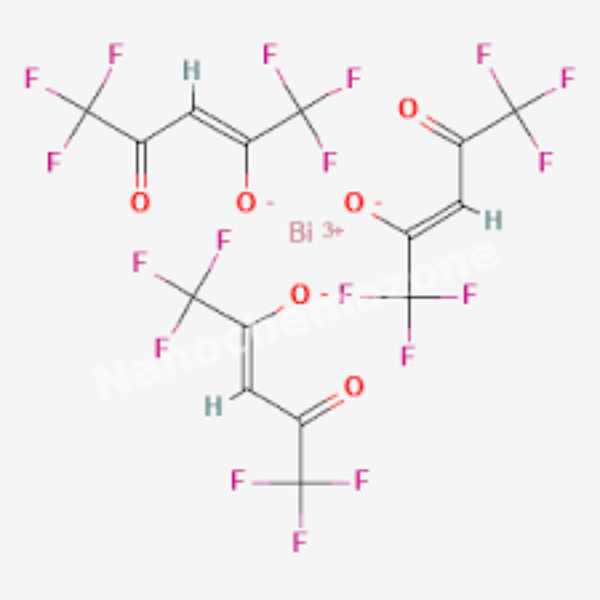
Bismuth HFAC

Price range: $34.00 through $198.00
Select options This product has multiple variants. The options may be chosen on the product page
Product Bismuth HFAC
CAS No. 15876-41-8
Appearance Pale yellow crystalline
Purity ≥99%,  ≥99.9%,  ≥95%(Other purities are also available)
APS N/A
Ingredient C₁₅H₃F₁₈O₆Bi
Molecular Weight N/A
Melting Point N/A
Boiling Point N/A
Density 1.8–2.0 g/cm³
Product Codes NCZ-383R
 

Bismuth Nanopowder

$0.00

Bismuth Nanopowder

Bismuth metal Nanopowder

Bismuth Nanoparticles

Product

Bismuth Nanopowder

Formula Bi
Stock No. NCZNP104-19
CAS 7429-90-5
Purity 99.9%
APS < 100 nm (customization available)
Melting Point 271 ˚C
SSA 20 m2/g
Boiling Point 143.-1560 ˚C
Note: We can supply different size products of microparticles and Nanoparticles Size range powder according to client’s requirements.

Bismuth Nanopowder/ Nanoparticles ( Bi, 99.9%, 100nm)

Price range: $193.00 through $585.00
Select options This product has multiple variants. The options may be chosen on the product page
$193/25g $585/100g

Product 

Bismuth Nanopowder/ Nanoparticles ( Bi, 99.9%, 100nm)

CAS No.

7440-69-9

Appearance

Powder

Purity

≥99%,  ≥99.9%,  ≥95%

(Other purities are also available)

APS

100nm (Size Can be customized), Ask for other available size ranges.

Ingredient

AlN

Molecular Weight

208.98 g/mol

Melting Point

~271.4 °C

Boiling Point

1,564 °C

Density

~9.78 g/cm³

Product Codes

NCZ-1021K

Bismuth nitrate hexahydrate, 99.999%

Price range: $29.00 through $135.00
Select options This product has multiple variants. The options may be chosen on the product page
Product Bismuth nitrate hexahydrate, 99.999%
CAS No. 10035-06-0
Appearance White, crystalline solid
Purity ≥99%,  ≥99.9%,  ≥95%(Other purities are also available)
APS N/A
Ingredient Bi(NO₃)₃·6H₂O
Molecular Weight 485.07 g/mol
Melting Point N/A
Boiling Point N/A
Density 2.83 g/cm³
Product Codes NCZ-131R

Bismuth Oxide (Bi2O3) Nanopowder/Nanoparticles, Purity: 99.99%, Size: 75-195 nm

Price range: $27.00 through $322.00
Select options This product has multiple variants. The options may be chosen on the product page
5 grams/24 € 25 grams/49 € 100 grams/97 € 500 grams/195 € 1000 grams/284 €                 
Please contact us for quotes on larger quantities !!!

Bismuth Oxide (Bi2O3) Nanopowder/Nanoparticles

Purity: 99.99%, Size: 75-195 nm

Applications:

Bismuth Oxide nanoparticles have applications in electronic and in glass and ceramic industry. In electronics it is used in capacitors, pressure-senstive resistors and solid electrolytes. In ceramic it is added to improve the performance of ceramic materials. It also increases the index of refraction when added to glass. It is used as a substitute for lead oxide in glass and it is the best substitute of (Lead Glaze). Bismuth Oxide nanoparticles also are used as a composite in polymers, rubber, fireproofing papers, disinfectant, and magnets. It has also applications in medicine and artificial bone imaging.

Bismuth Oxide (Bi2O3) Sputtering Target

Price range: $284.00 through $762.00
Select options This product has multiple variants. The options may be chosen on the product page

Product 

Bismuth Oxide (Bi2O3) Sputtering Target

CAS No.

1304-76-3

Appearance

Powder

Purity

≥99%,  ≥99.9%,  ≥95%

(Other purities are also available)

APS

 NA (Size Can be customized), Ask for other available size ranges.

Ingredient

N/A

Molecular Weight

465.96 g/mol

Melting Point

 817 °C

Boiling Point

~1,890 °C

Density

 8.9 – 9.3 g/cm³

Product Codes

NCZ-1366K

Bismuth Oxide (Bi2O3) Sputtering Targets, indium, Purity: 99.9%, Size: 2”, Thickness: 0.125”

$802.00

Applications of Sputtering Targets;

Film deposition is accomplished using sputtering targets. A technique for sputtering thin films is called "deposition made by sputter targets," which entails eroding material from a "target" source onto a "substrate" like a silicon wafer. Etching of the target is done using semiconductor sputtering targets. When selectivity is not an issue and a high degree of etching anisotropy is required, sputter etching is the method of choice. By removing the target material through etching, sputter targets are also utilized for investigation. In secondary ion spectroscopy (SIMS), one example is when the target material is sputtered at a steady pace. Mass spectrometry is used to quantify the concentration and identity of spewed atoms as the target is sputtered.

The target material's composition may be ascertained and even very low concentrations of contaminants can be found with the aid of the sputtering target.

There is also an application area for sputtering targets in space. One type of space weathering that alters the chemical and physical characteristics of airless worlds like the Moon and asteroids is sputtering.

Bismuth Oxide (Bi2O3) Sputtering Targets, indium, Purity: 99.9%, Size: 3”, Thickness: 0.125”

$660.00

Applications of Sputtering Targets;

Film deposition is accomplished using sputtering targets. A technique for sputtering thin films is called "deposition made by sputter targets," which entails eroding material from a "target" source onto a "substrate" like a silicon wafer. Etching of the target is done using semiconductor sputtering targets. When selectivity is not an issue and a high degree of etching anisotropy is required, sputter etching is the method of choice. By removing the target material through etching, sputter targets are also utilized for investigation. In secondary ion spectroscopy (SIMS), one example is when the target material is sputtered at a steady pace. Mass spectrometry is used to quantify the concentration and identity of spewed atoms as the target is sputtered.

Bismuth Oxide (Bi2O3) Sputtering Targets, indium, Purity: 99.9%, Size: 3”, Thickness: 0.125”

$765.00

Product 

Bismuth Oxide (Bi2O3) Sputtering Targets, indium, Purity: 99.9%, Size: 3'', Thickness: 0.125''

CAS No.

 1304-76-3

Appearance

Powder

Purity

≥99%,  ≥99.9%,  ≥95%

(Other purities are also available)

APS

 N/A (Size Can be customized), Ask for other available size ranges.

Ingredient

N/A

Molecular Weight

465.96 g/mol

Melting Point

 ~817 °C

Boiling Point

N/A

Density

 ~8.9 g/cm³

Product Codes

NCZ-2404K

Bismuth Oxide (Bi2O3) Sputtering Targets, indium, Purity: 99.9%, Size: 3”, Thickness: 0.125”

$502.00

Product 

Bismuth Oxide (Bi2O3) Sputtering Targets, indium, Purity: 99.9%, Size: 3”, Thickness: 0.125”

CAS No.

 1304-76-3

Appearance

Powder

Purity

≥99%,  ≥99.9%,  ≥95%

(Other purities are also available)

APS

 N/A (Size Can be customized), Ask for other available size ranges.

Ingredient

N/A

Molecular Weight

465.96 g/mol

Melting Point

 ~817 °C

Boiling Point

N/A

Density

 ~8.9 g/cm³

Product Codes

NCZ-2405K

Bismuth Oxide (Bi2O3) Sputtering Targets, Purity: 99.9%, Size: 1”, Thickness: 0.125”

$345.00

Product 

Bismuth Oxide (Bi2O3) Sputtering Targets, Purity: 99.9%, Size: 1'', Thickness: 0.125''

CAS No.

 1304-76-3

Appearance

Powder

Purity

≥99%,  ≥99.9%,  ≥95%

(Other purities are also available)

APS

 N/A (Size Can be customized), Ask for other available size ranges.

Ingredient

N/A

Molecular Weight

465.96 g/mol

Melting Point

 ~817 °C

Boiling Point

N/A

Density

 ~8.9 g/cm³

Product Codes

NCZ-2412K

Bismuth Oxide (Bi2O3) Sputtering Targets, Purity: 99.9%, Size: 1”, Thickness: 0.250”

$300.00

Applications of Sputtering Targets;

Film deposition is accomplished using sputtering targets. A technique for sputtering thin films is called "deposition made by sputter targets," which entails eroding material from a "target" source onto a "substrate" like a silicon wafer. Etching of the target is done using semiconductor sputtering targets. When selectivity is not an issue and a high degree of etching anisotropy is required, sputter etching is the method of choice. By removing the target material through etching, sputter targets are also utilized for investigation. In secondary ion spectroscopy (SIMS), one example is when the target material is sputtered at a steady pace. Mass spectrometry is used to quantify the concentration and identity of spewed atoms as the target is sputtered.

The target material's composition may be ascertained and even very low concentrations of contaminants can be found with the aid of the sputtering target.

There is also an application area for sputtering targets in space. One type of space weathering that alters the chemical and physical characteristics of airless worlds like the Moon and asteroids is sputtering.

Bismuth Oxide (Bi2O3) Sputtering Targets, Purity: 99.9%, Size: 1”, Thickness: 0.250”

$345.00

Product 

Bismuth Oxide (Bi2O3) Sputtering Targets, Purity: 99.9%, Size: 1'', Thickness: 0.250''

CAS No.

 1304-76-3

Appearance

Powder

Purity

≥99%,  ≥99.9%,  ≥95%

(Other purities are also available)

APS

 N/A (Size Can be customized), Ask for other available size ranges.

Ingredient

N/A

Molecular Weight

465.96 g/mol

Melting Point

 ~817 °C

Boiling Point

N/A

Density

 ~8.9 g/cm³

Product Codes

NCZ-2411K

Bismuth Oxide (Bi2O3) Sputtering Targets, Purity: 99.9%, Size: 2”, Thickness: 0.125”

$585.00

Applications of Sputtering Targets;

Film deposition is accomplished using sputtering targets. A technique for sputtering thin films is called "deposition made by sputter targets," which entails eroding material from a "target" source onto a "substrate" like a silicon wafer. Etching of the target is done using semiconductor sputtering targets. When selectivity is not an issue and a high degree of etching anisotropy is required, sputter etching is the method of choice. By removing the target material through etching, sputter targets are also utilized for investigation. In secondary ion spectroscopy (SIMS), one example is when the target material is sputtered at a steady pace. Mass spectrometry is used to quantify the concentration and identity of spewed atoms as the target is sputtered.

The target material's composition may be ascertained and even very low concentrations of contaminants can be found with the aid of the sputtering target.

There is also an application area for sputtering targets in space. One type of space weathering that alters the chemical and physical characteristics of airless worlds like the Moon and asteroids is sputtering.

Bismuth Oxide (Bi2O3) Sputtering Targets, Purity: 99.9%, Size: 2”, Thickness: 0.125”

$678.00

Product 

Bismuth Oxide (Bi2O3) Sputtering Targets, Purity: 99.9%, Size: 2'', Thickness: 0.125''

CAS No.

 1304-76-3

Appearance

Powder

Purity

≥99%,  ≥99.9%,  ≥95%

(Other purities are also available)

APS

 N/A (Size Can be customized), Ask for other available size ranges.

Ingredient

N/A

Molecular Weight

465.96 g/mol

Melting Point

 ~817 °C

Boiling Point

N/A

Density

 ~8.9 g/cm³

Product Codes

NCZ-2410K

Bismuth Oxide (Bi2O3) Sputtering Targets, Purity: 99.9%, Size: 2”, Thickness: 0.250”

$585.00

Applications of Sputtering Targets;

Film deposition is accomplished using sputtering targets. A technique for sputtering thin films is called "deposition made by sputter targets," which entails eroding material from a "target" source onto a "substrate" like a silicon wafer. Etching of the target is done using semiconductor sputtering targets. When selectivity is not an issue and a high degree of etching anisotropy is required, sputter etching is the method of choice. By removing the target material through etching, sputter targets are also utilized for investigation. In secondary ion spectroscopy (SIMS), one example is when the target material is sputtered at a steady pace. Mass spectrometry is used to quantify the concentration and identity of spewed atoms as the target is sputtered.

The target material's composition may be ascertained and even very low concentrations of contaminants can be found with the aid of the sputtering target.

There is also an application area for sputtering targets in space. One type of space weathering that alters the chemical and physical characteristics of airless worlds like the Moon and asteroids is sputtering.

Bismuth Oxide (Bi2O3) Sputtering Targets, Purity: 99.9%, Size: 2”, Thickness: 0.250”

$678.00

Product 

Bismuth Oxide (Bi2O3) Sputtering Targets, Purity: 99.9%, Size: 2'', Thickness: 0.250''

CAS No.

 1304-76-3

Appearance

Powder

Purity

≥99%,  ≥99.9%,  ≥95%

(Other purities are also available)

APS

 N/A (Size Can be customized), Ask for other available size ranges.

Ingredient

N/A

Molecular Weight

465.96 g/mol

Melting Point

 ~817 °C

Boiling Point

N/A

Density

 ~8.9 g/cm³

Product Codes

NCZ-2409K

Bismuth Oxide (Bi2O3) Sputtering Targets, Purity: 99.9%, Size: 3”, Thickness: 0.125”

$675.00

Applications of Sputtering Targets;

Film deposition is accomplished using sputtering targets. A technique for sputtering thin films is called "deposition made by sputter targets," which entails eroding material from a "target" source onto a "substrate" like a silicon wafer. Etching of the target is done using semiconductor sputtering targets. When selectivity is not an issue and a high degree of etching anisotropy is required, sputter etching is the method of choice. By removing the target material through etching, sputter targets are also utilized for investigation. In secondary ion spectroscopy (SIMS), one example is when the target material is sputtered at a steady pace. Mass spectrometry is used to quantify the concentration and identity of spewed atoms as the target is sputtered.

The target material's composition may be ascertained and even very low concentrations of contaminants can be found with the aid of the sputtering target.

There is also an application area for sputtering targets in space. One type of space weathering that alters the chemical and physical characteristics of airless worlds like the Moon and asteroids is sputtering.

Bismuth Oxide (Bi2O3) Sputtering Targets, Purity: 99.9%, Size: 3”, Thickness: 0.125”

$783.00

Product 

Bismuth Oxide (Bi2O3) Sputtering Targets, Purity: 99.9%, Size: 3'', Thickness: 0.125''

CAS No.

 1304-76-3

Appearance

Powder

Purity

≥99%,  ≥99.9%,  ≥95%

(Other purities are also available)

APS

 N/A (Size Can be customized), Ask for other available size ranges.

Ingredient

N/A

Molecular Weight

465.96 g/mol

Melting Point

 ~817 °C

Boiling Point

N/A

Density

 ~8.9 g/cm³

Product Codes

NCZ-2408K

Bismuth Oxide (Bi2O3) Sputtering Targets, Purity: 99.9%, Size: 3”, Thickness: 0.250”

$675.00

Applications of Sputtering Targets;

Film deposition is accomplished using sputtering targets. A technique for sputtering thin films is called "deposition made by sputter targets," which entails eroding material from a "target" source onto a "substrate" like a silicon wafer. Etching of the target is done using semiconductor sputtering targets. When selectivity is not an issue and a high degree of etching anisotropy is required, sputter etching is the method of choice. By removing the target material through etching, sputter targets are also utilized for investigation. In secondary ion spectroscopy (SIMS), one example is when the target material is sputtered at a steady pace. Mass spectrometry is used to quantify the concentration and identity of spewed atoms as the target is sputtered.

The target material's composition may be ascertained and even very low concentrations of contaminants can be found with the aid of the sputtering target.

There is also an application area for sputtering targets in space. One type of space weathering that alters the chemical and physical characteristics of airless worlds like the Moon and asteroids is sputtering.

Bismuth Oxide (Bi2O3) Sputtering Targets, Purity: 99.9%, Size: 3”, Thickness: 0.250”

$783.00

Product 

Bismuth Oxide (Bi2O3) Sputtering Targets, Purity: 99.9%, Size: 3'', Thickness: 0.250''

CAS No.

 1304-76-3

Appearance

Powder

Purity

≥99%,  ≥99.9%,  ≥95%

(Other purities are also available)

APS

 N/A (Size Can be customized), Ask for other available size ranges.

Ingredient

N/A

Molecular Weight

465.96 g/mol

Melting Point

 ~817 °C

Boiling Point

N/A

Density

 ~8.9 g/cm³

Product Codes

NCZ-2407K

Bismuth Oxide (Bi2O3) Sputtering Targets, Purity: 99.9%, Size: 4”, Thickness: 0.125”

$810.00

Applications of Sputtering Targets;

Film deposition is accomplished using sputtering targets. A technique for sputtering thin films is called "deposition made by sputter targets," which entails eroding material from a "target" source onto a "substrate" like a silicon wafer. Etching of the target is done using semiconductor sputtering targets. When selectivity is not an issue and a high degree of etching anisotropy is required, sputter etching is the method of choice. By removing the target material through etching, sputter targets are also utilized for investigation. In secondary ion spectroscopy (SIMS), one example is when the target material is sputtered at a steady pace. Mass spectrometry is used to quantify the concentration and identity of spewed atoms as the target is sputtered.

The target material's composition may be ascertained and even very low concentrations of contaminants can be found with the aid of the sputtering target.

There is also an application area for sputtering targets in space. One type of space weathering that alters the chemical and physical characteristics of airless worlds like the Moon and asteroids is sputtering.

Bismuth Oxide (Bi2O3) Sputtering Targets, Purity: 99.9%, Size: 4”, Thickness: 0.125”

$940.00

Product 

Bismuth Oxide (Bi2O3) Sputtering Targets, Purity: 99.9%, Size: 4'', Thickness: 0.125''

CAS No.

 1304-76-3

Appearance

Powder

Purity

≥99%,  ≥99.9%,  ≥95%

(Other purities are also available)

APS

 N/A (Size Can be customized), Ask for other available size ranges.

Ingredient

N/A

Molecular Weight

465.96 g/mol

Melting Point

 ~817 °C

Boiling Point

N/A

Density

 ~8.9 g/cm³

Product Codes

NCZ-2406K

Bismuth Oxide Nanoparticles / Nanopowder ( Bi2O3, <200nm)

Price range: $44.00 through $210.00
Select options This product has multiple variants. The options may be chosen on the product page
$44/25g
$87/100g
$210/500g

Product 

Bismuth Oxide Nanoparticles / Nanopowder ( Bi2O3, <200nm)

CAS No.

1304-76-3

Appearance

Powder

Purity

≥99%,  ≥99.9%,  ≥95%

(Other purities are also available)

APS

<200nm (Size Can be customized), Ask for other available size ranges.

Ingredient

N/A

Molecular Weight

465.96 g/mol

Melting Point

~817 °C

Boiling Point

N/A

Density

~8.9 g/cm³

Product Codes

NCZ-1105K

Bismuth Oxide Nanopowder

$0.00

Bismuth Oxide Nanopowder

Product Bismuth Oxide Nanoparticles
Formula Bi2O3
Stock No. NCZNP105-19
CAS 1304-76-3
Purity 99.9%
APS 40 nm to 200 nm (customization available)
Morphology Spherical
Density 8.9 g/cm3

Bismuth Oxide Nanopowder

Note: We supply different size products of microparticles and Nanoparticles Size range powder according to the client’s requirements.

Bismuth oxide, 99.999%

Price range: $20.00 through $101.00
Select options This product has multiple variants. The options may be chosen on the product page
Product Bismuth oxide, 99.999%
CAS No. 1304-76-3
Appearance Yellow to light orange
Purity ≥99%,  ≥99.9%,  ≥95%(Other purities are also available)
APS N/A
Ingredient Bi₂O₃
Molecular Weight 465.96 g/mol
Melting Point 1890°C
Boiling Point N/A
Density 8.9–9.2 g/cm³
Product Codes NCZ-132R
 

Bismuth Powder ( Bi, 99.5% -325 mesh)

Price range: $63.00 through $163.00
Select options This product has multiple variants. The options may be chosen on the product page
$63/100g $163/500g

Product 

Bismuth Powder ( Bi, 99.5% -325 mesh)

CAS No.

7440-69-9

Appearance

Powder

Purity

≥99%,  ≥99.9%,  ≥95%

(Other purities are also available)

APS

100nm (Size Can be customized), Ask for other available size ranges.

Ingredient

AlN

Molecular Weight

208.98 g/mol

Melting Point

~271.4 °C

Boiling Point

1,564 °C

Density

~9.78 g/cm³

Product Codes

NCZ-1022K

Bismuth Powder (Bi, 99.0+%, <25 um)

Price range: $155.00 through $255.00
Select options This product has multiple variants. The options may be chosen on the product page
$155/500g
$255/1kg

Product 

Bismuth Powder (Bi, 99.0+%, <25 um)

CAS No.

7440-69-9

Appearance

Powder

Purity

≥99%,  ≥99.9%,  ≥95%

(Other purities are also available)

APS

100nm (Size Can be customized), Ask for other available size ranges.

Ingredient

AlN

Molecular Weight

208.98 g/mol

Melting Point

~271.4 °C

Boiling Point

1,564 °C

Density

~9.78 g/cm³

Product Codes

NCZ-1023K

Bismuth Sputtering Target Bi

Price range: $303.00 through $604.00
Select options This product has multiple variants. The options may be chosen on the product page
Product Bismuth Sputtering Target Bi
CAS No. 7440-69-9
Appearance Solid, silvery-white to pinkish metallic luster
Purity ≥99%,  ≥99.9%,  ≥95%(Other purities are also available)
APS N/A
Ingredient Bi
Molecular Weight 208.98 g/mol
Melting Point N/A
Boiling Point N/A
Density 9.78 g/cm³
Product Codes NCZ-107H
 

Bismuth Telluride (Bi2Te3) Sputtering Targets, Purity: 99.999%, Size: 1”, Thickness: 0.125”

$547.00

Applications of Sputtering Targets;

Film deposition is accomplished using sputtering targets. A technique for sputtering thin films is called "deposition made by sputter targets," which entails eroding material from a "target" source onto a "substrate" like a silicon wafer. Etching of the target is done using semiconductor sputtering targets. When selectivity is not an issue and a high degree of etching anisotropy is required, sputter etching is the method of choice. By removing the target material through etching, sputter targets are also utilized for investigation. In secondary ion spectroscopy (SIMS), one example is when the target material is sputtered at a steady pace. Mass spectrometry is used to quantify the concentration and identity of spewed atoms as the target is sputtered.

The target material's composition may be ascertained and even very low concentrations of contaminants can be found with the aid of the sputtering target.

There is also an application area for sputtering targets in space. One type of space weathering that alters the chemical and physical characteristics of airless worlds like the Moon and asteroids is sputtering.

Bi2Te3, or bismuth telluride, is a gray powder that is a combination of bismuth and tellurium. It is a semiconductor that becomes an effective thermoelectric material for refrigeration or portable power generation when alloyed with antimony or selenium. Since Bi2Te3 is a topological insulator, its physical characteristics depend on its thickness.

Bismuth Telluride (Bi2Te3) Sputtering Targets, Purity: 99.999%, Size: 1”, Thickness: 0.125”

$633.00

Product 

Bismuth Telluride (Bi2Te3) Sputtering Targets, Purity: 99.999%, Size: 1'', Thickness: 0.125''

CAS No.

 1304-82-1

Appearance

Powder

Purity

≥99%,  ≥99.9%,  ≥95%

(Other purities are also available)

APS

 N/A (Size Can be customized), Ask for other available size ranges.

Ingredient

N/A

Molecular Weight

800.55 g/mol

Melting Point

~585 °C

Boiling Point

~987 °C (sublimes)

Density

 ~7.7 g/cm³

Product Codes

NCZ-2403K

Bismuth Telluride (Bi2Te3) Sputtering Targets, Purity: 99.999%, Size: 1”, Thickness: 0.125”

$547.00

Applications of Sputtering Targets;

Film deposition is accomplished using sputtering targets. A technique for sputtering thin films is called "deposition made by sputter targets," which entails eroding material from a "target" source onto a "substrate" like a silicon wafer. Etching of the target is done using semiconductor sputtering targets. When selectivity is not an issue and a high degree of etching anisotropy is required, sputter etching is the method of choice. By removing the target material through etching, sputter targets are also utilized for investigation. In secondary ion spectroscopy (SIMS), one example is when the target material is sputtered at a steady pace. Mass spectrometry is used to quantify the concentration and identity of spewed atoms as the target is sputtered.

The target material's composition may be ascertained and even very low concentrations of contaminants can be found with the aid of the sputtering target.

There is also an application area for sputtering targets in space. One type of space weathering that alters the chemical and physical characteristics of airless worlds like the Moon and asteroids is sputtering.

Bi2Te3, or bismuth telluride, is a gray powder that is a combination of bismuth and tellurium. It is a semiconductor that becomes an effective thermoelectric material for refrigeration or portable power generation when alloyed with antimony or selenium. Since Bi2Te3 is a topological insulator, its physical characteristics depend on its thickness.

Bismuth Telluride (Bi2Te3) Sputtering Targets, Purity: 99.999%, Size: 1”, Thickness: 0.250”

$633.00

Product 

Bismuth Telluride (Bi2Te3) Sputtering Targets, Purity: 99.999%, Size: 1'', Thickness: 0.250''

CAS No.

 1304-82-1

Appearance

Powder

Purity

≥99%,  ≥99.9%,  ≥95%

(Other purities are also available)

APS

 N/A (Size Can be customized), Ask for other available size ranges.

Ingredient

N/A

Molecular Weight

800.55 g/mol

Melting Point

~585 °C

Boiling Point

~987 °C (sublimes)

Density

 ~7.7 g/cm³

Product Codes

NCZ-2402K

Bismuth Telluride (Bi2Te3) Sputtering Targets, Purity: 99.999%, Size: 1”, Thickness: 0.250”

$547.00

Applications of Sputtering Targets;

Film deposition is accomplished using sputtering targets. A technique for sputtering thin films is called "deposition made by sputter targets," which entails eroding material from a "target" source onto a "substrate" like a silicon wafer. Etching of the target is done using semiconductor sputtering targets. When selectivity is not an issue and a high degree of etching anisotropy is required, sputter etching is the method of choice. By removing the target material through etching, sputter targets are also utilized for investigation. In secondary ion spectroscopy (SIMS), one example is when the target material is sputtered at a steady pace. Mass spectrometry is used to quantify the concentration and identity of spewed atoms as the target is sputtered.

Bismuth Telluride (Bi2Te3) Sputtering Targets, Purity: 99.999%, Size: 2”, Thickness: 0.125”

$931.00

Product 

Bismuth Telluride (Bi2Te3) Sputtering Targets, Purity: 99.999%, Size: 2'', Thickness: 0.125''

CAS No.

 1304-82-1

Appearance

Powder

Purity

≥99%,  ≥99.9%,  ≥95%

(Other purities are also available)

APS

 N/A (Size Can be customized), Ask for other available size ranges.

Ingredient

N/A

Molecular Weight

800.55 g/mol

Melting Point

~585 °C

Boiling Point

~987 °C (sublimes)

Density

 ~7.7 g/cm³

Product Codes

NCZ-2401K

Bismuth Telluride (Bi2Te3) Sputtering Targets, Purity: 99.999%, Size: 2”, Thickness: 0.125”

$802.00

Applications of Sputtering Targets;

Film deposition is accomplished using sputtering targets. A technique for sputtering thin films is called "deposition made by sputter targets," which entails eroding material from a "target" source onto a "substrate" like a silicon wafer. Etching of the target is done using semiconductor sputtering targets. When selectivity is not an issue and a high degree of etching anisotropy is required, sputter etching is the method of choice. By removing the target material through etching, sputter targets are also utilized for investigation. In secondary ion spectroscopy (SIMS), one example is when the target material is sputtered at a steady pace. Mass spectrometry is used to quantify the concentration and identity of spewed atoms as the target is sputtered.

The target material's composition may be ascertained and even very low concentrations of contaminants can be found with the aid of the sputtering target.

There is also an application area for sputtering targets in space. One type of space weathering that alters the chemical and physical characteristics of airless worlds like the Moon and asteroids is sputtering.

Bi2Te3, or bismuth telluride, is a gray powder that is a combination of bismuth and tellurium. It is a semiconductor that becomes an effective thermoelectric material for refrigeration or portable power generation when alloyed with antimony or selenium. Since Bi2Te3 is a topological insulator, its physical characteristics depend on its thickness.

Bismuth Telluride (Bi2Te3) Sputtering Targets, Purity: 99.999%, Size: 2”, Thickness: 0.250”

$766.00

Product 

Bismuth Telluride (Bi2Te3) Sputtering Targets, Purity: 99.999%, Size: 2'', Thickness: 0.250''

CAS No.

1304‑82‑1

Appearance

Powder

Purity

≥99%,  ≥99.9%,  ≥95%

(Other purities are also available)

APS

Bi₂Te₃ (Size Can be customized), Ask for other available size ranges.

Ingredient

N/A

Molecular Weight

800.76 g/mol

Melting Point

~585 °C

Boiling Point

N/A

Density

~7.64–7.74 g/cm³

Product Codes

NCZ-1400K

Bismuth Telluride (Bi2Te3) Sputtering Targets, Purity: 99.999%, Size: 2”, Thickness: 0.250”

$660.00

Applications of Sputtering Targets;

Film deposition is accomplished using sputtering targets. A technique for sputtering thin films is called "deposition made by sputter targets," which entails eroding material from a "target" source onto a "substrate" like a silicon wafer. Etching of the target is done using semiconductor sputtering targets. When selectivity is not an issue and a high degree of etching anisotropy is required, sputter etching is the method of choice. By removing the target material through etching, sputter targets are also utilized for investigation. In secondary ion spectroscopy (SIMS), one example is when the target material is sputtered at a steady pace. Mass spectrometry is used to quantify the concentration and identity of spewed atoms as the target is sputtered.

The target material's composition may be ascertained and even very low concentrations of contaminants can be found with the aid of the sputtering target.

There is also an application area for sputtering targets in space. One type of space weathering that alters the chemical and physical characteristics of airless worlds like the Moon and asteroids is sputtering.

Bi2Te3, or bismuth telluride, is a gray powder that is a combination of bismuth and tellurium. It is a semiconductor that becomes an effective thermoelectric material for refrigeration or portable power generation when alloyed with antimony or selenium. Since Bi2Te3 is a topological insulator, its physical characteristics depend on its thickness.

Bismuth Telluride (Bi2Te3) Sputtering Targets, Purity: 99.999%, Size: 3”, Thickness: 0.125”

$1,518.00

Product 

Bismuth Telluride (Bi2Te3) Sputtering Targets, Purity: 99.999%, Size: 3'', Thickness: 0.125''

CAS No.

 1304-82-1

Appearance

Powder

Purity

≥99%,  ≥99.9%,  ≥95%

(Other purities are also available)

APS

 N/A (Size Can be customized), Ask for other available size ranges.

Ingredient

N/A

Molecular Weight

800.55 g/mol

Melting Point

~585 °C

Boiling Point

~987 °C (sublimes)

Density

 ~7.7 g/cm³

Product Codes

NCZ-2400K

Bismuth Telluride (Bi2Te3) Sputtering Targets, Purity: 99.999%, Size: 3”, Thickness: 0.250”

$1,305.00

Applications of Sputtering Targets;

Film deposition is accomplished using sputtering targets. A technique for sputtering thin films is called "deposition made by sputter targets," which entails eroding material from a "target" source onto a "substrate" like a silicon wafer. Etching of the target is done using semiconductor sputtering targets. When selectivity is not an issue and a high degree of etching anisotropy is required, sputter etching is the method of choice. By removing the target material through etching, sputter targets are also utilized for investigation. In secondary ion spectroscopy (SIMS), one example is when the target material is sputtered at a steady pace. Mass spectrometry is used to quantify the concentration and identity of spewed atoms as the target is sputtered.

The target material's composition may be ascertained and even very low concentrations of contaminants can be found with the aid of the sputtering target.

There is also an application area for sputtering targets in space. One type of space weathering that alters the chemical and physical characteristics of airless worlds like the Moon and asteroids is sputtering.

Bi2Te3, or bismuth telluride, is a gray powder that is a combination of bismuth and tellurium. It is a semiconductor that becomes an effective thermoelectric material for refrigeration or portable power generation when alloyed with antimony or selenium. Since Bi2Te3 is a topological insulator, its physical characteristics depend on its thickness.

Bismuth Telluride (Bi2Te3) Sputtering Targets, Purity: 99.999%, Size: 3”, Thickness: 0.250”

$1,518.00

Product 

Bismuth Telluride (Bi2Te3) Sputtering Targets, Purity: 99.999%, Size: 3'', Thickness: 0.250''

CAS No.

 1304-82-1

Appearance

Powder

Purity

≥99%,  ≥99.9%,  ≥95%

(Other purities are also available)

APS

 N/A (Size Can be customized), Ask for other available size ranges.

Ingredient

N/A

Molecular Weight

800.55 g/mol

Melting Point

~585 °C

Boiling Point

~987 °C (sublimes)

Density

 ~7.7 g/cm³

Product Codes

NCZ-2399K

Bismuth Telluride (Bi2Te3) Sputtering Targets, Purity: 99.999%, Size: 4”, Thickness: 0.125”

$1,665.00

Applications of Sputtering Targets;.

Film deposition is accomplished using sputtering targets. A technique for sputtering thin films is called "deposition made by sputter targets," which entails eroding material from a "target" source onto a "substrate" like a silicon wafer. Etching of the target is done using semiconductor sputtering targets. When selectivity is not an issue and a high degree of etching anisotropy is required, sputter etching is the method of choice. By removing the target material through etching, sputter targets are also utilized for investigation. In secondary ion spectroscopy (SIMS), one example is when the target material is sputtered at a steady pace. Mass spectrometry is used to quantify the concentration and identity of spewed atoms as the target is sputtered.

The target material's composition may be ascertained and even very low concentrations of contaminants can be found with the aid of the sputtering target.

There is also an application area for sputtering targets in space. One type of space weathering that alters the chemical and physical characteristics of airless worlds like the Moon and asteroids is sputtering.

Bi2Te3, or bismuth telluride, is a gray powder that is a combination of bismuth and tellurium. It is a semiconductor that becomes an effective thermoelectric material for refrigeration or portable power generation when alloyed with antimony or selenium. Since Bi2Te3 is a topological insulator, its physical characteristics depend on its thickness.

Bismuth Telluride (Bi2Te3) Sputtering Targets, Purity: 99.999%, Size: 4”, Thickness: 0.125”

$1,939.00

Product 

Bismuth Telluride (Bi2Te3) Sputtering Targets, Purity: 99.999%, Size: 4'', Thickness: 0.125''

CAS No.

 1304-82-1

Appearance

Powder

Purity

≥99%,  ≥99.9%,  ≥95%

(Other purities are also available)

APS

 N/A (Size Can be customized), Ask for other available size ranges.

Ingredient

N/A

Molecular Weight

800.55 g/mol

Melting Point

~585 °C

Boiling Point

~987 °C (sublimes)

Density

 ~7.7 g/cm³

Product Codes

NCZ-2398K

Bismuth Telluride (Bi2Te3) Sputtering Targets, Purity: 99.999%, Size: 4”, Thickness: 0.250”

$1,665.00

Applications of Sputtering Targets;

Film deposition is accomplished using sputtering targets. A technique for sputtering thin films is called "deposition made by sputter targets," which entails eroding material from a "target" source onto a "substrate" like a silicon wafer. Etching of the target is done using semiconductor sputtering targets. When selectivity is not an issue and a high degree of etching anisotropy is required, sputter etching is the method of choice. By removing the target material through etching, sputter targets are also utilized for investigation. In secondary ion spectroscopy (SIMS), one example is when the target material is sputtered at a steady pace. Mass spectrometry is used to quantify the concentration and identity of spewed atoms as the target is sputtered.

The target material's composition may be ascertained and even very low concentrations of contaminants can be found with the aid of the sputtering target.

There is also an application area for sputtering targets in space. One type of space weathering that alters the chemical and physical characteristics of airless worlds like the Moon and asteroids is sputtering.

Bi2Te3, or bismuth telluride, is a gray powder that is a combination of bismuth and tellurium. It is a semiconductor that becomes an effective thermoelectric material for refrigeration or portable power generation when alloyed with antimony or selenium. Since Bi2Te3 is a topological insulator, its physical characteristics depend on its thickness.

Bismuth Telluride (Bi2Te3) Sputtering Targets, Purity: 99.999%, Size: 4”, Thickness: 0.250”

$1,939.00

Product 

Bismuth Telluride (Bi2Te3) Sputtering Targets, Purity: 99.999%, Size: 4'', Thickness: 0.250''

CAS No.

 1304-82-1

Appearance

Powder

Purity

≥99%,  ≥99.9%,  ≥95%

(Other purities are also available)

APS

 N/A (Size Can be customized), Ask for other available size ranges.

Ingredient

N/A

Molecular Weight

800.55 g/mol

Melting Point

~585 °C

Boiling Point

~987 °C (sublimes)

Density

 ~7.7 g/cm³

Product Codes

NCZ-2397K

Bismuth Telluride (Bi2Te3) Sputtering Targets, Purity: 99.999%, Size: 6”, Thickness: 0.250”

$1,750.00

Applications of Sputtering Targets;

Film deposition is accomplished using sputtering targets. A technique for sputtering thin films is called "deposition made by sputter targets," which entails eroding material from a "target" source onto a "substrate" like a silicon wafer. Etching of the target is done using semiconductor sputtering targets. When selectivity is not an issue and a high degree of etching anisotropy is required, sputter etching is the method of choice. By removing the target material through etching, sputter targets are also utilized for investigation. In secondary ion spectroscopy (SIMS), one example is when the target material is sputtered at a steady pace. Mass spectrometry is used to quantify the concentration and identity of spewed atoms as the target is sputtered.

The target material's composition may be ascertained and even very low concentrations of contaminants can be found with the aid of the sputtering target.

There is also an application area for sputtering targets in space. One type of space weathering that alters the chemical and physical characteristics of airless worlds like the Moon and asteroids is sputtering.

Bi2Te3, or bismuth telluride, is a gray powder that is a combination of bismuth and tellurium. It is a semiconductor that becomes an effective thermoelectric material for refrigeration or portable power generation when alloyed with antimony or selenium. Since Bi2Te3 is a topological insulator, its physical characteristics depend on its thickness.

Bismuth Telluride (Bi2Te3) Sputtering Targets, Purity: 99.999%, Size: 6”, Thickness: 0.250”

$2,038.00

Product 

Bismuth Telluride (Bi2Te3) Sputtering Targets, Purity: 99.999%, Size: 6'', Thickness: 0.250''

CAS No.

 1304-82-1

Appearance

Powder

Purity

≥99%,  ≥99.9%,  ≥95%

(Other purities are also available)

APS

 N/A (Size Can be customized), Ask for other available size ranges.

Ingredient

N/A

Molecular Weight

800.55 g/mol

Melting Point

~585 °C

Boiling Point

~987 °C (sublimes)

Density

 ~7.7 g/cm³

Product Codes

NCZ-2396K

Bismuth Telluride (Bi2Te3) Sputtering Targets, Purity: 99.999%, Size: 8”, Thickness: 0.250”

$1,810.00

Applications of Sputtering Targets;

Film deposition is accomplished using sputtering targets. A technique for sputtering thin films is called "deposition made by sputter targets," which entails eroding material from a "target" source onto a "substrate" like a silicon wafer. Etching of the target is done using semiconductor sputtering targets. When selectivity is not an issue and a high degree of etching anisotropy is required, sputter etching is the method of choice. By removing the target material through etching, sputter targets are also utilized for investigation. In secondary ion spectroscopy (SIMS), one example is when the target material is sputtered at a steady pace. Mass spectrometry is used to quantify the concentration and identity of spewed atoms as the target is sputtered.

The target material's composition may be ascertained and even very low concentrations of contaminants can be found with the aid of the sputtering target.

There is also an application area for sputtering targets in space. One type of space weathering that alters the chemical and physical characteristics of airless worlds like the Moon and asteroids is sputtering.

Bi2Te3, or bismuth telluride, is a gray powder that is a combination of bismuth and tellurium. It is a semiconductor that becomes an effective thermoelectric material for refrigeration or portable power generation when alloyed with antimony or selenium. Since Bi2Te3 is a topological insulator, its physical characteristics depend on its thickness.

Bismuth Telluride (Bi2Te3) Sputtering Targets, Purity: 99.999%, Size: 8”, Thickness: 0.250”

$2,108.00

Product 

Bismuth Telluride (Bi2Te3) Sputtering Targets, Purity: 99.999%, Size: 8'', Thickness: 0.250''

CAS No.

 1304-82-1

Appearance

Powder

Purity

≥99%,  ≥99.9%,  ≥95%

(Other purities are also available)

APS

 N/A (Size Can be customized), Ask for other available size ranges.

Ingredient

N/A

Molecular Weight

800.55 g/mol

Melting Point

~585 °C

Boiling Point

~987 °C (sublimes)

Density

 ~7.7 g/cm³

Product Codes

NCZ-2395K