Barium Titanate (BaTiO3) Sputtering Targets, Purity: 99.99%, Size: 1”, Thickness: 0.250”

$532.00

Applications of Sputtering Targets;

Film deposition is accomplished using sputtering targets. A technique for sputtering thin films is called "deposition made by sputter targets," which entails eroding material from a "target" source onto a "substrate" like a silicon wafer. Etching of the target is done using semiconductor sputtering targets. When selectivity is not an issue and a high degree of etching anisotropy is required, sputter etching is the method of choice. By removing the target material through etching, sputter targets are also utilized for investigation. In secondary ion spectroscopy (SIMS), one example is when the target material is sputtered at a steady pace. Mass spectrometry is used to quantify the concentration and identity of spewed atoms as the target is sputtered. With the sputtering target's assistance, the

It is possible to identify the target material and even detect incredibly tiny impurity amounts.

There is also an application area for sputtering targets in space. One type of space weathering that alters the chemical and physical characteristics of airless worlds like the Moon and asteroids is sputtering.

Formulated as BaTiO3, barium titanate is an inorganic substance. When formed as big crystals, barium titanate is clear and has a white powdery appearance. It is a ferroelectric ceramic material with piezoelectric and photorefractive characteristics. Titanate of barium sputtering

Barium Titanate (BaTiO3) Sputtering Targets, Purity: 99.99%, Size: 2”, Thickness: 0.125”

$634.00

Product 

Barium Titanate (BaTiO3) Sputtering Targets, Purity: 99.99%, Size: 2'', Thickness: 0.125''

CAS No.

 12047‑27‑7

Appearance

Powder

Purity

≥99%,  ≥99.9%,  ≥95%

(Other purities are also available)

APS

1 – 5 µm (Size Can be customized), Ask for other available size ranges.

Ingredient

N/A

Molecular Weight

233.19 g/mol

Melting Point

~1625 °C

Boiling Point

N/A

Density

 ~6.02 g/cm³

Product Codes

NCZ-2464K

Barium Titanate (BaTiO3) Sputtering Targets, Purity: 99.99%, Size: 2”, Thickness: 0.125”

$549.00

Applications of Sputtering Targets;

Film deposition is accomplished using sputtering targets. A technique for sputtering thin films is called "deposition made by sputter targets," which entails eroding material from a "target" source onto a "substrate" like a silicon wafer. Etching of the target is done using semiconductor sputtering targets. When selectivity is not an issue and a high degree of etching anisotropy is required, sputter etching is the method of choice. By removing the target material through etching, sputter targets are also utilized for investigation. In secondary ion spectroscopy (SIMS), one example is when the target material is sputtered at a steady pace. Mass spectrometry is used to quantify the concentration and identity of spewed atoms as the target is sputtered. With the sputtering target's assistance, the

It is possible to identify the target material and even detect incredibly tiny impurity amounts.

There is also an application area for sputtering targets in space. One type of space weathering that alters the chemical and physical characteristics of airless worlds like the Moon and asteroids is sputtering.

Formulated as BaTiO3, barium titanate is an inorganic substance. When formed as big crystals, barium titanate is clear and has a white powdery appearance. It is a ferroelectric ceramic material with piezoelectric and photorefractive characteristics. Titanate of barium sputtering.

Barium Titanate (BaTiO3) Sputtering Targets, Purity: 99.99%, Size: 2”, Thickness: 0.250”

$669.00

Product 

Barium Titanate (BaTiO3) Sputtering Targets, Purity: 99.99%, Size: 2'', Thickness: 0.250''

CAS No.

 12047‑27‑7

Appearance

Powder

Purity

≥99%,  ≥99.9%,  ≥95%

(Other purities are also available)

APS

1 – 5 µm (Size Can be customized), Ask for other available size ranges.

Ingredient

N/A

Molecular Weight

233.19 g/mol

Melting Point

~1625 °C

Boiling Point

N/A

Density

 ~6.02 g/cm³

Product Codes

NCZ-2463K

Barium Titanate (BaTiO3) Sputtering Targets, Purity: 99.99%, Size: 2”, Thickness: 0.250”

$579.00

Applications of Sputtering Targets;

Film deposition is accomplished using sputtering targets. A technique for sputtering thin films is called "deposition made by sputter targets," which entails eroding material from a "target" source onto a "substrate" like a silicon wafer. Etching of the target is done using semiconductor sputtering targets. When selectivity is not an issue and a high degree of etching anisotropy is required, sputter etching is the method of choice. By removing the target material through etching, sputter targets are also utilized for investigation. In secondary ion spectroscopy (SIMS), one example is when the target material is sputtered at a steady pace. When the target shatters,

Mass spectrometry measures the concentration and identity of sputtered atoms. The target material's composition may be ascertained and even very low concentrations of contaminants can be found with the aid of the sputtering target.

There is also an application area for sputtering targets in space. One type of space weathering that alters the chemical and physical characteristics of airless worlds like the Moon and asteroids is sputtering.

Formulated as BaTiO3, barium titanate is an inorganic substance. When manufactured, barium titanate is transparent and has a white powder appearance.

Barium Titanate (BaTiO3) Sputtering Targets, Purity: 99.99%, Size: 3”, Thickness: 0.125”

$728.00

Product 

Barium Titanate (BaTiO3) Sputtering Targets, Purity: 99.99%, Size: 3'', Thickness: 0.125''

CAS No.

 12047‑27‑7

Appearance

Powder

Purity

≥99%,  ≥99.9%,  ≥95%

(Other purities are also available)

APS

1 – 5 µm (Size Can be customized), Ask for other available size ranges.

Ingredient

N/A

Molecular Weight

~233.19 g/mol

Melting Point

~1625 °C

Boiling Point

N/A

Density

 ~6.02 g/cm³

Product Codes

NCZ-2462K

Barium Titanate (BaTiO3) Sputtering Targets, Purity: 99.99%, Size: 3”, Thickness: 0.125”

$630.00

Applications of Sputtering Targets;

Film deposition is accomplished using sputtering targets. A technique for sputtering thin films is called "deposition made by sputter targets," which entails eroding material from a "target" source onto a "substrate" like a silicon wafer. Etching of the target is done using semiconductor sputtering targets. When selectivity is not an issue and a high degree of etching anisotropy is required, sputter etching is the method of choice. By removing the target material through etching, sputter targets are also utilized for investigation. In secondary ion spectroscopy (SIMS), one example is when the target material is sputtered at a steady pace. Mass spectrometry is used to quantify the concentration and identity of spewed atoms as the target is sputtered. With the sputtering target's assistance, the It is possible to identify the target material and even detect incredibly tiny impurity amounts. There is also an application area for sputtering targets in space. One type of space weathering that alters the chemical and physical characteristics of airless worlds like the Moon and asteroids is sputtering. Formulated as BaTiO3, barium titanate is an inorganic substance. When formed as big crystals, barium titanate is clear and has a white powdery appearance. It is a ferroelectric ceramic material with piezoelectric and photorefractive characteristics. The applications for barium titanate sputtering agents are numerous. For instance, barium titanate films, which are produced by sputtering targets, can be employed in particular electronic ceramics. Regarding the construction of electrical equipment such

Barium Titanate (BaTiO3) Sputtering Targets, Purity: 99.99%, Size: 3”, Thickness: 0.125”

$630.00

Applications of Sputtering Targets;

Film deposition is accomplished using sputtering targets. A technique for sputtering thin films is called "deposition made by sputter targets," which entails eroding material from a "target" source onto a "substrate" like a silicon wafer. Etching of the target is done using semiconductor sputtering targets. When selectivity is not an issue and a high degree of etching anisotropy is required, sputter etching is the method of choice. By removing the target material through etching, sputter targets are also utilized for investigation. In secondary ion spectroscopy (SIMS), one example is when the target material is sputtered at a steady pace. Mass spectrometry is used to quantify the concentration and identity of spewed atoms as the target is sputtered. With the sputtering target's assistance, the

It is possible to identify the target material and even detect incredibly tiny impurity amounts.

There is also an application area for sputtering targets in space. One type of space weathering that alters the chemical and physical characteristics of airless worlds like the Moon and asteroids is sputtering.

Formulated as BaTiO3, barium titanate is an inorganic substance. When formed as big crystals, barium titanate is clear and has a white powdery appearance. It is a ferroelectric ceramic material with piezoelectric and photorefractive characteristics. Titanate of barium sputtering Agents have various applications. For instance, barium titanate films, which are produced by sputtering targets, can be employed in particular electronic ceramics. Barium titanate can be utilized in the building of electrical devices such as sensors, capacitors, and detectors.

Barium Titanate (BaTiO3) Sputtering Targets, Purity: 99.99%, Size: 3”, Thickness: 0.250”

$802.00

Product 

Barium Titanate (BaTiO3) Sputtering Targets, Purity: 99.99%, Size: 3'', Thickness: 0.250''

CAS No.

 12047‑27‑7

Appearance

Powder

Purity

≥99%,  ≥99.9%,  ≥95%

(Other purities are also available)

APS

1 – 5 µm (Size Can be customized), Ask for other available size ranges.

Ingredient

N/A

Molecular Weight

~233.19 g/mol

Melting Point

~1625 °C

Boiling Point

N/A

Density

 ~6.02 g/cm³

Product Codes

NCZ-2461K

Barium Titanate (BaTiO3) Sputtering Targets, Purity: 99.99%, Size: 3”, Thickness: 0.250”

$690.00

Applications of Sputtering Targets;

Film deposition is accomplished using sputtering targets. A technique for sputtering thin films is called "deposition made by sputter targets," which entails eroding material from a "target" source onto a "substrate" like a silicon wafer. Etching of the target is done using semiconductor sputtering targets. When selectivity is not an issue and a high degree of etching anisotropy is required, sputter etching is the method of choice. By removing the target material through etching, sputter targets are also utilized for investigation. In secondary ion spectroscopy (SIMS), one example is when the target material is sputtered at a steady pace. Mass spectrometry is used to quantify the concentration and identity of spewed atoms as the target is sputtered. With the sputtering target's assistance, the

There is also an application area for sputtering targets in space. One type of space weathering that alters the chemical and physical characteristics of airless worlds like the Moon and asteroids is sputtering.

Formulated as BaTiO3, barium titanate is an inorganic substance. When formed as big crystals, barium titanate is clear and has a white powdery appearance. It is a ferroelectric ceramic material with piezoelectric and photorefractive characteristics. The applications for barium titanate sputtering agents are numerous. For instance, barium titanate films, which are produced by sputtering targets, can be employed in particular electronic ceramics. Barium titanate can be utilized in the building of electrical devices such as sensors, capacitors, and detectors.

Barium Titanate (BaTiO3) Sputtering Targets, Purity: 99.99%, Size: 4”, Thickness: 0.125”

$1,115.00

Product 

Barium Titanate (BaTiO3) Sputtering Targets, Purity: 99.99%, Size: 4'', Thickness: 0.125''

CAS No.

 12047‑27‑7

Appearance

Powder

Purity

≥99%,  ≥99.9%,  ≥95%

(Other purities are also available)

APS

1 – 5 µm (Size Can be customized), Ask for other available size ranges.

Ingredient

N/A

Molecular Weight

~233.19 g/mol

Melting Point

~1625 °C

Boiling Point

N/A

Density

 ~6.02 g/cm³

Product Codes

NCZ-2460K

Barium Titanate (BaTiO3) Sputtering Targets, Purity: 99.99%, Size: 4”, Thickness: 0.125”

$957.00

Applications of Sputtering Targets;

Film deposition is accomplished using sputtering targets. A technique for sputtering thin films is called "deposition made by sputter targets," which entails eroding material from a "target" source onto a "substrate" like a silicon wafer. Etching of the target is done using semiconductor sputtering targets. When selectivity is not an issue and a high degree of etching anisotropy is required, sputter etching is the method of choice. By removing the target material through etching, sputter targets are also utilized for investigation. In secondary ion spectroscopy (SIMS), one example is when the target material is sputtered at a steady pace. When the target shatters,

Mass spectrometry measures the concentration and identity of sputtered atoms. The target material's composition may be ascertained and even very low concentrations of contaminants can be found with the aid of the sputtering target.

There is also an application area for sputtering targets in space. One type of space weathering that alters the chemical and physical characteristics of airless worlds like the Moon and asteroids is sputtering.

Formulated as BaTiO3, barium titanate is an inorganic substance. When formed as big crystals, barium titanate is clear and has a white powdery appearance. It is a ferroelectric ceramic material with piezoelectric and photorefractive characteristics. Titanate of barium sputtering Agents have various applications. For instance, barium titanate films, which are produced by sputtering targets, can be employed in particular electronic ceramics. Barium titanate can be utilized in the building of electrical devices such as sensors, capacitors, and detectors.

Barium Titanate (BaTiO3) Sputtering Targets, Purity: 99.99%, Size: 4”, Thickness: 0.250”

$1,250.00

Product 

Barium Titanate (BaTiO3) Sputtering Targets, Purity: 99.99%, Size: 4'', Thickness: 0.250''

CAS No.

 12047‑27‑7

Appearance

Powder

Purity

≥99%,  ≥99.9%,  ≥95%

(Other purities are also available)

APS

1 – 5 µm (Size Can be customized), Ask for other available size ranges.

Ingredient

N/A

Molecular Weight

~233.19 g/mol

Melting Point

~1625 °C

Boiling Point

N/A

Density

 ~6.02 g/cm³

Product Codes

NCZ-2459K

Barium Titanate (BaTiO3) Sputtering Targets, Purity: 99.99%, Size: 4”, Thickness: 0.250”

$1,073.00

Applications of Sputtering Targets;

Film deposition is accomplished using sputtering targets. A technique for sputtering thin films is called "deposition made by sputter targets," which entails eroding material from a "target" source onto a "substrate" like a silicon wafer. Etching of the target is done using semiconductor sputtering targets. When selectivity is not an issue and a high degree of etching anisotropy is required, sputter etching is the method of choice. By removing the target material through etching, sputter targets are also utilized for investigation. In secondary ion spectroscopy (SIMS), one example is when the target material is sputtered at a steady pace. When the target shatters,

Mass spectrometry measures the concentration and identity of sputtered atoms. The target material's composition may be ascertained and even very low concentrations of contaminants can be found with the aid of the sputtering target.

There is also an application area for sputtering targets in space. One type of space weathering that alters the chemical and physical characteristics of airless worlds like the Moon and asteroids is sputtering.

Formulated as BaTiO3, barium titanate is an inorganic substance. When formed as big crystals, barium titanate is clear and has a white powdery appearance. It is a ferroelectric ceramic material with piezoelectric and photorefractive characteristics. Titanate of barium sputtering Agents have various applications. For instance, barium titanate films, which are produced by sputtering targets, can be employed in particular electronic ceramics. Barium titanate can be utilized in the building of electrical devices such as sensors, capacitors, and detectors.
Barium Titanate (BaTiO3) Sputtering Targets, Purity: 99.99%, Size: 5”, Thickness: 0.125”

$1,188.00

Product 

Barium Titanate (BaTiO3) Sputtering Targets, Purity: 99.99%, Size: 5'', Thickness: 0.125''

CAS No.

 12047‑27‑7

Appearance

Powder

Purity

≥99%,  ≥99.9%,  ≥95%

(Other purities are also available)

APS

1 – 5 µm (Size Can be customized), Ask for other available size ranges.

Ingredient

N/A

Molecular Weight

~233.19 g/mol

Melting Point

~1625 °C

Boiling Point

N/A

Density

 ~6.02 g/cm³

Product Codes

NCZ-2458K

Barium Titanate (BaTiO3) Sputtering Targets, Purity: 99.99%, Size: 5”, Thickness: 0.125”

$1,020.00

Applications of Sputtering Targets;

Film deposition is accomplished using sputtering targets. A technique for sputtering thin films is called "deposition made by sputter targets," which entails eroding material from a "target" source onto a "substrate" like a silicon wafer. Etching of the target is done using semiconductor sputtering targets. When selectivity is not an issue and a high degree of etching anisotropy is required, sputter etching is the method of choice. By removing the target material through etching, sputter targets are also utilized for investigation. In secondary ion spectroscopy (SIMS), one example is when the target material is sputtered at a steady pace. When the target shatters,

Mass spectrometry measures the concentration and identity of sputtered atoms. The target material's composition may be ascertained and even very low concentrations of contaminants can be found with the aid of the sputtering target.

There is also an application area for sputtering targets in space. One type of space weathering that alters the chemical and physical characteristics of airless worlds like the Moon and asteroids is sputtering.

Formulated as BaTiO3, barium titanate is an inorganic substance. When formed as big crystals, barium titanate is clear and has a white powdery appearance. It is a ferroelectric ceramic material with piezoelectric and photorefractive characteristics. Titanate of barium sputtering Agents have various applications. For instance, barium titanate films, which are produced by sputtering targets, can be employed in particular electronic ceramics. Barium titanate can be utilized in the building of electrical devices such as sensors, capacitors, and detectors.

Barium Titanate (BaTiO3) Sputtering Targets, Purity: 99.99%, Size: 5”, Thickness: 0.250”

$1,188.00

Product 

Barium Titanate (BaTiO3) Sputtering Targets, Purity: 99.99%, Size: 5'', Thickness: 0.250''

CAS No.

 12047‑27‑7

Appearance

Powder

Purity

≥99%,  ≥99.9%,  ≥95%

(Other purities are also available)

APS

1 – 5 µm (Size Can be customized), Ask for other available size ranges.

Ingredient

N/A

Molecular Weight

~233.19 g/mol

Melting Point

~1625 °C

Boiling Point

N/A

Density

 ~6.02 g/cm³

Product Codes

NCZ-2457K

Barium Titanate (BaTiO3) Sputtering Targets, Purity: 99.99%, Size: 5”, Thickness: 0.250”

$1,020.00

Applications of Sputtering Targets;

Film deposition is accomplished using sputtering targets. A technique for sputtering thin films is called "deposition made by sputter targets," which entails eroding material from a "target" source onto a "substrate" like a silicon wafer. Etching of the target is done using semiconductor sputtering targets. When selectivity is not an issue and a high degree of etching anisotropy is required, sputter etching is the method of choice. By removing the target material through etching, sputter targets are also utilized for investigation. In secondary ion spectroscopy (SIMS), one example is when the target material is sputtered at a steady pace. When the target shatters,

Mass spectrometry measures the concentration and identity of sputtered atoms. The target material's composition may be ascertained and even very low concentrations of contaminants can be found with the aid of the sputtering target.

There is also an application area for sputtering targets in space. One type of space weathering that alters the chemical and physical characteristics of airless worlds like the Moon and asteroids is sputtering.

Formulated as BaTiO3, barium titanate is an inorganic substance. When formed as big crystals, barium titanate is clear and has a white powdery appearance. It is a ferroelectric ceramic material with piezoelectric and photorefractive characteristics. Titanate of barium sputtering Agents have various applications. For instance, barium titanate films, which are produced by sputtering targets, can be employed in particular electronic ceramics. Barium titanate can be utilized in the building of electrical devices such as sensors, capacitors, and detectors.
Barium Titanate (BaTiO3) Sputtering Targets, Purity: 99.99%, Size: 6”, Thickness: 0.125”

$1,908.00

Product 

Barium Titanate (BaTiO3) Sputtering Targets, Purity: 99.99%, Size: 6'', Thickness: 0.125''

CAS No.

 12047‑27‑7

Appearance

Powder

Purity

≥99%,  ≥99.9%,  ≥95%

(Other purities are also available)

APS

1 – 5 µm (Size Can be customized), Ask for other available size ranges.

Ingredient

N/A

Molecular Weight

~233.19 g/mol

Melting Point

~1625 °C

Boiling Point

N/A

Density

 ~6.02 g/cm³

Product Codes

NCZ-2456K

Barium Titanate (BaTiO3) Sputtering Targets, Purity: 99.99%, Size: 6”, Thickness: 0.125”

$1,635.00

Applications of Sputtering Targets;

Film deposition is accomplished using sputtering targets. A technique for sputtering thin films is called "deposition made by sputter targets," which entails eroding material from a "target" source onto a "substrate" like a silicon wafer. Etching of the target is done using semiconductor sputtering targets. When selectivity is not an issue and a high degree of etching anisotropy is required, sputter etching is the method of choice. By removing the target material through etching, sputter targets are also utilized for investigation. In secondary ion spectroscopy (SIMS), one example is when the target material is sputtered at a steady pace. Mass spectrometry is used to quantify the concentration and identity of spewed atoms as the target is sputtered. With the sputtering target's assistance, the

There is also an application area for sputtering targets in space. One type of space weathering that alters the chemical and physical characteristics of airless worlds like the Moon and asteroids is sputtering.

Formulated as BaTiO3, barium titanate is an inorganic substance. When formed as big crystals, barium titanate is clear and has a white powdery appearance. It is a ferroelectric ceramic material with piezoelectric and photorefractive characteristics. The applications for barium titanate sputtering agents are numerous. For instance, barium titanate films, which are produced by sputtering targets, can be employed in particular electronic ceramics. Barium titanate can be utilized in the building of electrical devices such as sensors, capacitors, and detectors.
Barium Titanate (BaTiO3) Sputtering Targets, Purity: 99.99%, Size: 6”, Thickness: 0.250”

$1,908.00

Product 

Barium Titanate (BaTiO3) Sputtering Targets, Purity: 99.99%, Size: 6'', Thickness: 0.250''

CAS No.

 12047‑27‑7

Appearance

Powder

Purity

≥99%,  ≥99.9%,  ≥95%

(Other purities are also available)

APS

1 – 5 µm (Size Can be customized), Ask for other available size ranges.

Ingredient

N/A

Molecular Weight

~233.19 g/mol

Melting Point

~1625 °C

Boiling Point

N/A

Density

 ~6.02 g/cm³

Product Codes

NCZ-2455K

Barium Titanate (BaTiO3) Sputtering Targets, Purity: 99.99%, Size: 6”, Thickness: 0.250”

$1,635.00

Applications of Sputtering Targets;

Film deposition is accomplished using sputtering targets. A technique for sputtering thin films is called "deposition made by sputter targets," which entails eroding material from a "target" source onto a "substrate" like a silicon wafer. Etching of the target is done using semiconductor sputtering targets. When selectivity is not an issue and a high degree of etching anisotropy is required, sputter etching is the method of choice. By removing the target material through etching, sputter targets are also utilized for investigation. In secondary ion spectroscopy (SIMS), one example is when the target material is sputtered at a steady pace. When the target shatters,

Mass spectrometry measures the concentration and identity of sputtered atoms. The target material's composition may be ascertained and even very low concentrations of contaminants can be found with the aid of the sputtering target.

There is also an application area for sputtering targets in space. One type of space weathering that alters the chemical and physical characteristics of airless worlds like the Moon and asteroids is sputtering.

Formulated as BaTiO3, barium titanate is an inorganic substance. When formed as big crystals, barium titanate is clear and has a white powdery appearance. It is a ferroelectric ceramic material with piezoelectric and photorefractive characteristics. Titanate of barium sputtering Agents have various applications. For instance, barium titanate films, which are produced by sputtering targets, can be employed in particular electronic ceramics. Barium titanate can be utilized in the building of electrical devices such as sensors, capacitors, and detectors.

Barium Titanate (BaTiO3) Sputtering Targets, Purity: 99.99%, Size: 8”, Thickness: 0.125”

$2,628.00

Product 

Barium Titanate (BaTiO3) Sputtering Targets, Purity: 99.99%, Size: 8'', Thickness: 0.125''

CAS No.

 12047‑27‑7

Appearance

Powder

Purity

≥99%,  ≥99.9%,  ≥95%

(Other purities are also available)

APS

1 – 5 µm (Size Can be customized), Ask for other available size ranges.

Ingredient

N/A

Molecular Weight

~233.19 g/mol

Melting Point

~1625 °C

Boiling Point

N/A

Density

 ~6.02 g/cm³

Product Codes

NCZ-2454K

Barium Titanate (BaTiO3) Sputtering Targets, Purity: 99.99%, Size: 8”, Thickness: 0.250”

$2,628.00

Product 

Barium Titanate (BaTiO3) Sputtering Targets, Purity: 99.99%, Size: 8'', Thickness: 0.250''

CAS No.

 12047‑27‑7

Appearance

Powder

Purity

≥99%,  ≥99.9%,  ≥95%

(Other purities are also available)

APS

1 – 5 µm (Size Can be customized), Ask for other available size ranges.

Ingredient

N/A

Molecular Weight

~233.19 g/mol

Melting Point

~1625 °C

Boiling Point

N/A

Density

 ~6.02 g/cm³

Product Codes

NCZ-2453K

Barium Titanate (BaTiO3) Sputtering Targets, Purity: 99.99%, Size: 8”, Thickness: 0.250”

$2,250.00

Applications of Sputtering Targets;

Film deposition is accomplished using sputtering targets. A technique for sputtering thin films is called "deposition made by sputter targets," which entails eroding material from a "target" source onto a "substrate" like a silicon wafer. Etching of the target is done using semiconductor sputtering targets. When selectivity is not an issue and a high degree of etching anisotropy is required, sputter etching is the method of choice. By removing the target material through etching, sputter targets are also utilized for investigation. In secondary ion spectroscopy (SIMS), one example is when the target material is sputtered at a steady pace. When the target shatters,

Mass spectrometry measures the concentration and identity of sputtered atoms. The target material's composition may be ascertained and even very low concentrations of contaminants can be found with the aid of the sputtering target.

There is also an application area for sputtering targets in space. One type of space weathering that alters the chemical and physical characteristics of airless worlds like the Moon and asteroids is sputtering.

Formulated as BaTiO3, barium titanate is an inorganic substance. When formed as big crystals, barium titanate is clear and has a white powdery appearance. It is a ferroelectric ceramic material with piezoelectric and photorefractive characteristics. Titanate of barium sputtering Agents have various applications. For instance, barium titanate films, which are produced by sputtering targets, can be employed in particular electronic ceramics. Barium titanate can be utilized in the building of electrical devices such as sensors, capacitors, and detectors.
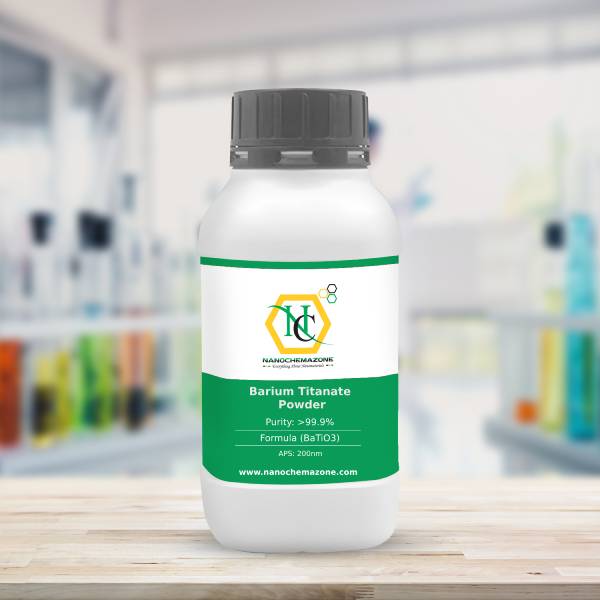
Barium Titanate Nanoparticles/Nanopowder (BaTiO3, 99.9%, 200nm)

Price range: $74.00 through $155.00
Select options This product has multiple variants. The options may be chosen on the product page
$74/100g
$155/500g

Product 

Barium Titanate Nanoparticles/Nanopowder (BaTiO3, 99.9%, 200nm)

CAS No.

12047-27-7

Appearance

Powder

Purity

≥99%,  ≥99.9%,  ≥95%

(Other purities are also available)

APS

200nm (Size Can be customized), Ask for other available size ranges.

Ingredient

N/A

Molecular Weight

233.19 g/mol

Melting Point

~1,625 °C

Boiling Point

 N/A

Density

~6.02 g/cm³

Product Codes

NCZ-1099K

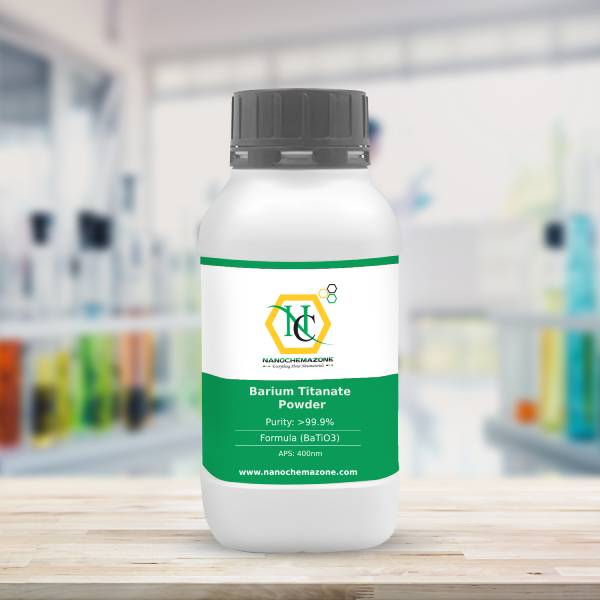
Barium Titanate Nanoparticles/Nanopowder (BaTiO3, 99.9%, 400nm)

Price range: $70.00 through $155.00
Select options This product has multiple variants. The options may be chosen on the product page
$70/100g
$155/500g

Product 

Barium Titanate Nanoparticles/Nanopowder (BaTiO3, 99.9%, 400nm)

CAS No.

12047-27-7

Appearance

Powder

Purity

≥99%,  ≥99.9%,  ≥95%

(Other purities are also available)

APS

400nm (Size Can be customized), Ask for other available size ranges.

Ingredient

N/A

Molecular Weight

233.19 g/mol

Melting Point

~1,625 °C

Boiling Point

 N/A

Density

~6.02 g/cm³

Product Codes

NCZ-1100K

Barium Titanate Nanoparticles/Nanopowder (BaTiO3, 99.9%, 50~70nm, Cubic)

Price range: $105.00 through $193.00
Select options This product has multiple variants. The options may be chosen on the product page
$105/100g
$193/500g

Product 

Barium Titanate Nanoparticles/Nanopowder (BaTiO3, 99.9%, 50~70nm, Cubic)

CAS No.

12047-27-7

Appearance

Powder

Purity

≥99%,  ≥99.9%,  ≥95%

(Other purities are also available)

APS

50~70nm, Cubic (Size Can be customized), Ask for other available size ranges.

Ingredient

N/A

Molecular Weight

233.19 g/mol

Melting Point

~1,625 °C

Boiling Point

 N/A

Density

~6.02 g/cm³

Product Codes

NCZ-1097K

Barium Titanate Nanoparticles/Nanopowder (BaTiO3) 99.9%, 100nm, Cubic)

Price range: $25.00 through $143.00
Select options This product has multiple variants. The options may be chosen on the product page
$25/25g
$74/100g
$143/500g

Product 

Barium Titanate Nanoparticles/Nanopowder (BaTiO3) 99.9%, 100nm, Cubic)

CAS No.

12047-27-7

Appearance

Powder

Purity

≥99%,  ≥99.9%,  ≥95%

(Other purities are also available)

APS

100nm (Size Can be customized), Ask for other available size ranges.

Ingredient

N/A

Molecular Weight

233.19 g/mol

Melting Point

~1,625 °C

Boiling Point

 N/A

Density

~6.02 g/cm³

Product Codes

NCZ-1098K

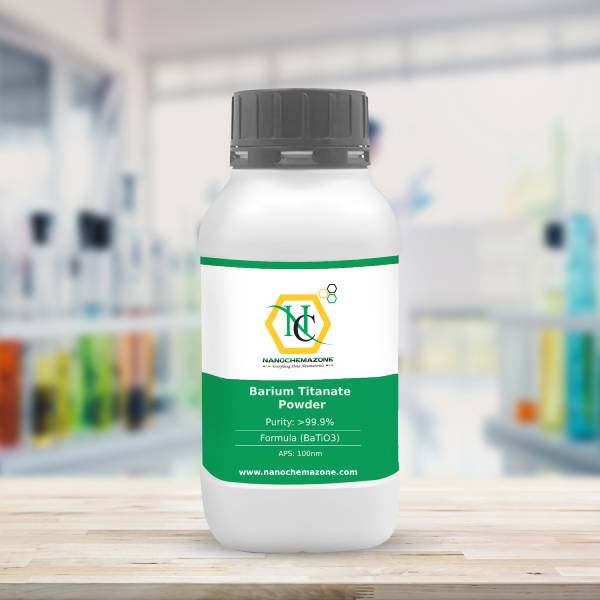
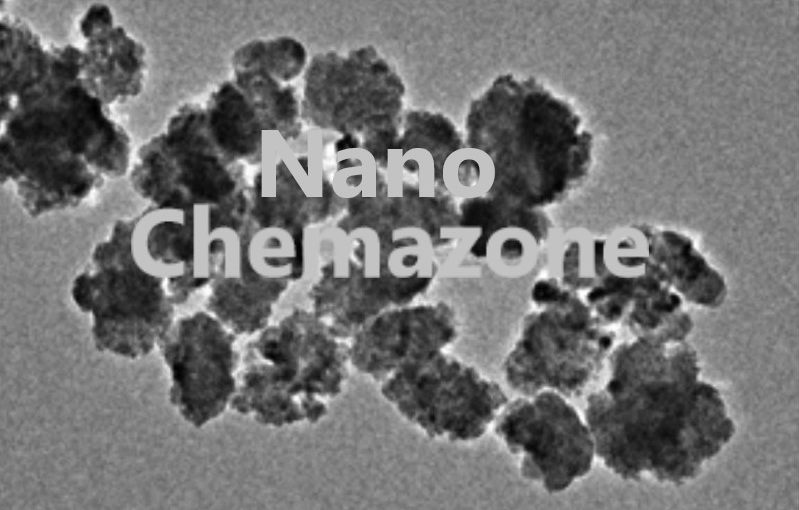
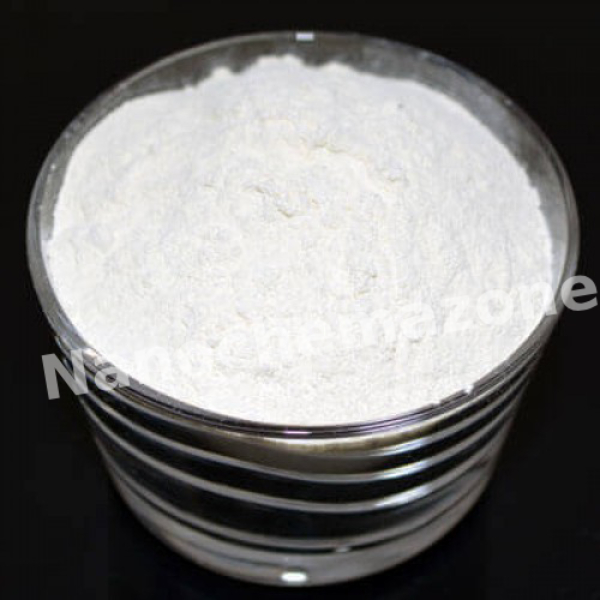
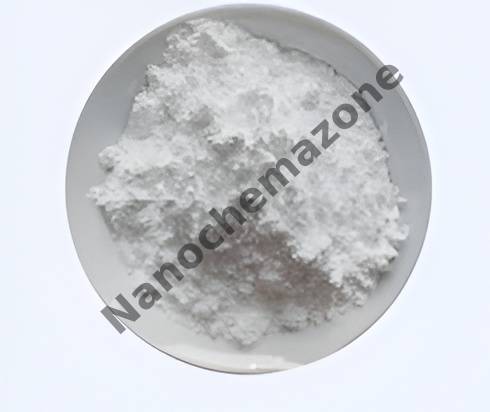
Barium Titanate Nanopowder

$0.00

Barium Titanate Nanopowder

MF: BaTiO3
Chemical Name: Barium Titanate
Purity: > 99.99%
APS: 100 nm (Size Customization possible)
Form: Nanopowder
Product Number: #NCZ801
CAS Number 12047-27-7

Barium Titanate Nanopowder

Note: We can supply different size products of microparticles and Nanoparticles Size range powder according to the client’s requirements.

Barium Titanate Sputtering Target BaTiO3

Price range: $920.00 through $1,110.00
Select options This product has multiple variants. The options may be chosen on the product page
Product Barium Titanate Sputtering Target BaTiO3
CAS No. 12047-27-7
Appearance Solid, white to light gray ceramic
Purity ≥99%,  ≥99.9%,  ≥95%(Other purities are also available)
APS N/A
Ingredient BaTiO3
Molecular Weight 304.98 g/mol
Melting Point 1,625 °C
Boiling Point N/A
Density 6.02 g/cm³
Product Codes NCZ-105H

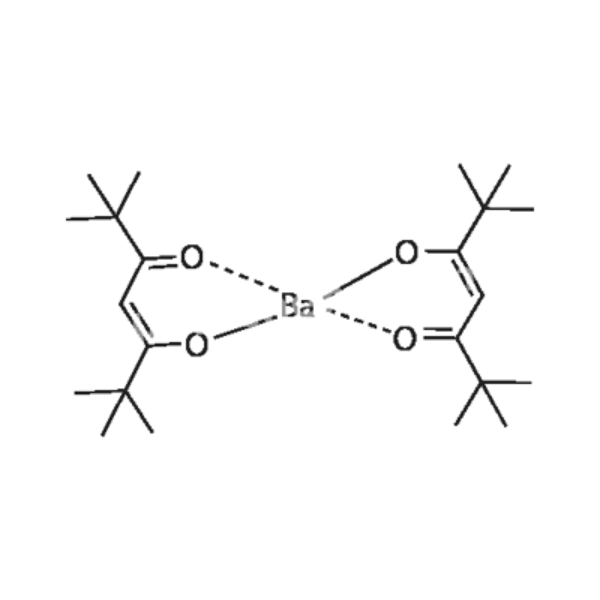
Barium TMHD

Price range: $39.00 through $222.00
Select options This product has multiple variants. The options may be chosen on the product page
Product Barium TMHD
CAS No. 17594-47-7
Appearance White crystalline solid
Purity ≥99%,  ≥99.9%,  ≥95%(Other purities are also available)
APS N/A
Ingredient C₂₂H₃₈BaO₄·xH₂O
Molecular Weight N/A
Melting Point 175–180 °C
Boiling Point N/A
Density 1.088 g/cm³
Product Codes NCZ-337R
 

Barium Zirconate (BaZrO3) Sputtering Targets, Purity: 99.9%, Size: 2”, Thickness: 0.250”

$690.00

Applications of Sputtering Targets;

Film deposition is accomplished using sputtering targets. A technique for sputtering thin films is called "deposition made by sputter targets," which entails eroding material from a "target" source onto a "substrate" like a silicon wafer. Etching of the target is done using semiconductor sputtering targets. When selectivity is not an issue and a high degree of etching anisotropy is required, sputter etching is the method of choice. By removing the target material through etching, sputter targets are also utilized for investigation. In secondary ion spectroscopy (SIMS), one example is when the target material is sputtered at a steady pace. Mass spectrometry is used to quantify the concentration and identity of spewed atoms as the target is sputtered. With the sputtering target's assistance, the

It is possible to identify the target material and even detect incredibly tiny impurity amounts.

There is also an application area for sputtering targets in space. One type of space weathering that alters the chemical and physical characteristics of airless worlds like the Moon and asteroids is sputtering.

The chemical compound barium zirconate has the formula BaZrO3. An electroceramic, or family of ceramic materials principally employed for their electrical qualities, is barium zirconate. Chemical vapor deposition (CVD), physical vapor deposition (PVD), semiconductor, and optical applications can all benefit from the usage of barium zirconate sputtering targets. Barium zirconate sputtering targets can also be employed for ferroelectric applications.

Barium Zirconate (BaZrO3) Sputtering Targets, Purity: 99.9%, Size: 2”, Thickness: 0.250”

$802.00

Product 

Barium Zirconate (BaZrO3) Sputtering Targets, Purity: 99.9%, Size: 2'', Thickness: 0.250''

CAS No.

12009‑21‑1

Appearance

Powder

Purity

≥99%,  ≥99.9%,  ≥95%

(Other purities are also available)

APS

1 – 5 µm (Size Can be customized), Ask for other available size ranges.

Ingredient

N/A

Molecular Weight

276.55 g/mol

Melting Point

N/A

Boiling Point

N/A

Density

~5.52 g/cm³ (theoretical)

Product Codes

NCZ-2445K

Barium Zirconate (BaZrO3) Sputtering Targets, Purity: 99.99%, Size: 1”, Thickness: 0.125”

$679.00

Product 

Barium Zirconate (BaZrO3) Sputtering Targets, Purity: 99.99%, Size: 1'', Thickness: 0.125''

CAS No.

12009‑21‑1

Appearance

Powder

Purity

≥99%,  ≥99.9%,  ≥95%

(Other purities are also available)

APS

1 – 5 µm (Size Can be customized), Ask for other available size ranges.

Ingredient

N/A

Molecular Weight

276.55 g/mol

Melting Point

N/A

Boiling Point

N/A

Density

~5.52 g/cm³ (theoretical)

Product Codes

NCZ-2448K

Barium Zirconate (BaZrO3) Sputtering Targets, Purity: 99.99%, Size: 1”, Thickness: 0.125”

$585.00

Applications of Sputtering Targets;

Film deposition is accomplished using sputtering targets. A technique for sputtering thin films is called "deposition made by sputter targets," which entails eroding material from a "target" source onto a "substrate" like a silicon wafer. Etching of the target is done using semiconductor sputtering targets. When selectivity is not an issue and a high degree of etching anisotropy is required, sputter etching is the method of choice. By removing the target material through etching, sputter targets are also utilized for investigation. In secondary ion spectroscopy (SIMS), one example is when the target material is sputtered at a steady pace. Mass spectrometry is used to quantify the concentration and identity of spewed atoms as the target is sputtered. With the sputtering target's assistance, the

It is possible to identify the target material and even detect incredibly tiny impurity amounts.

There is also an application area for sputtering targets in space. One type of space weathering that alters the chemical and physical characteristics of airless worlds like the Moon and asteroids is sputtering.

The chemical compound barium zirconate has the formula BaZrO3. An electroceramic, or family of ceramic materials principally employed for their electrical capabilities, is what barium zirconate is. In semiconductor, chemical vapor deposition (CVD), physical vapor deposition (PVD), and optical applications, barium zirconate sputtering targets can be employed. Barium zirconate sputtering targets can also be employed for ferroelectric applications.

Barium Zirconate (BaZrO3) Sputtering Targets, Purity: 99.99%, Size: 1”, Thickness: 0.250”

$679.00

Product 

Barium Zirconate (BaZrO3) Sputtering Targets, Purity: 99.99%, Size: 1'', Thickness: 0.250''

CAS No.

12009‑21‑1

Appearance

Powder

Purity

≥99%,  ≥99.9%,  ≥95%

(Other purities are also available)

APS

1 – 5 µm (Size Can be customized), Ask for other available size ranges.

Ingredient

N/A

Molecular Weight

276.55 g/mol

Melting Point

N/A

Boiling Point

N/A

Density

~5.52 g/cm³ (theoretical)

Product Codes

NCZ-2447K

Barium Zirconate (BaZrO3) Sputtering Targets, Purity: 99.99%, Size: 1”, Thickness: 0.250”

$585.00

Applications of Sputtering Targets;

Film deposition is accomplished using sputtering targets. A technique for sputtering thin films is called "deposition made by sputter targets," which entails eroding material from a "target" source onto a "substrate" like a silicon wafer. Etching of the target is done using semiconductor sputtering targets. When selectivity is not an issue and a high degree of etching anisotropy is required, sputter etching is the method of choice. By removing the target material through etching, sputter targets are also utilized for investigation. In secondary ion spectroscopy (SIMS), one example is when the target material is sputtered at a steady pace. When the target shatters,

Mass spectrometry measures the concentration and identity of sputtered atoms. The target material's composition may be ascertained and even very low concentrations of contaminants can be found with the aid of the sputtering target.

There is also an application area for sputtering targets in space. One type of space weathering that alters the chemical and physical characteristics of airless worlds like the Moon and asteroids is sputtering.

The chemical compound barium zirconate has the formula BaZrO3. An electroceramic, or family of ceramic materials principally employed for their electrical capabilities, is what barium zirconate is. You can utilize barium zirconate sputtering target in physical semiconductor deposition (CVD) and optics and vapor deposition (PVD) display applications. Barium zirconate sputtering targets can also be employed for ferroelectric applications.

Barium Zirconate (BaZrO3) Sputtering Targets, Purity: 99.99%, Size: 2”, Thickness: 0.125”

$802.00

Product 

Barium Zirconate (BaZrO3) Sputtering Targets, Purity: 99.99%, Size: 2'', Thickness: 0.125''

CAS No.

12009‑21‑1

Appearance

Powder

Purity

≥99%,  ≥99.9%,  ≥95%

(Other purities are also available)

APS

1 – 5 µm (Size Can be customized), Ask for other available size ranges.

Ingredient

N/A

Molecular Weight

276.55 g/mol

Melting Point

N/A

Boiling Point

N/A

Density

~5.52 g/cm³ (theoretical)

Product Codes

NCZ-2446K

Barium Zirconate (BaZrO3) Sputtering Targets, Purity: 99.99%, Size: 2”, Thickness: 0.125”

$690.00

Applications of Sputtering Targets;

Film deposition is accomplished using sputtering targets. A technique for sputtering thin films is called "deposition made by sputter targets," which entails eroding material from a "target" source onto a "substrate" like a silicon wafer. Etching of the target is done using semiconductor sputtering targets. When selectivity is not an issue and a high degree of etching anisotropy is required, sputter etching is the method of choice. By removing the target material through etching, sputter targets are also utilized for investigation. In secondary ion spectroscopy (SIMS), one example is when the target material is sputtered at a steady pace. Mass spectrometry is used to quantify the concentration and identity of spewed atoms as the target is sputtered. With the sputtering target's assistance, the

It is possible to identify the target material and even detect incredibly tiny impurity amounts.

There is also an application area for sputtering targets in space. One type of space weathering that alters the chemical and physical characteristics of airless worlds like the Moon and asteroids is sputtering.

The chemical compound barium zirconate has the formula BaZrO3. An electroceramic, or family of ceramic materials principally employed for their electrical capabilities, is what barium zirconate is. In semiconductor, chemical vapor deposition (CVD), physical vapor deposition (PVD), and optical applications, barium zirconate sputtering targets can be employed. Barium zirconate sputtering targets can also be employed for ferroelectric applications.

Barium Zirconate (BaZrO3) Sputtering Targets, Purity: 99.99%, Size: 3”, Thickness: 0.125”

$907.00

Applications of Sputtering Targets;

Film deposition is accomplished using sputtering targets. A technique for sputtering thin films is called "deposition made by sputter targets," which entails eroding material from a "target" source onto a "substrate" like a silicon wafer. Etching of the target is done using semiconductor sputtering targets. When selectivity is not an issue and a high degree of etching anisotropy is required, sputter etching is the method of choice. By removing the target material through etching, sputter targets are also utilized for investigation. In secondary ion spectroscopy (SIMS), one example is when the target material is sputtered at a steady pace. Mass spectrometry is used to quantify the concentration and identity of spewed atoms as the target is sputtered. With the sputtering target's assistance, the

It is possible to identify the target material and even detect incredibly tiny impurity amounts.

There is also an application area for sputtering targets in space. One type of space weathering that alters the chemical and physical characteristics of airless worlds like the Moon and asteroids is sputtering.

The chemical compound barium zirconate has the formula BaZrO3. An electroceramic, or family of ceramic materials principally employed for their electrical capabilities, is what barium zirconate is. In semiconductor, chemical vapor deposition (CVD), physical vapor deposition (PVD), and optical applications, barium zirconate sputtering targets can be employed. Barium zirconate sputtering targets can also be employed for ferroelectric applications.

Barium Zirconate (BaZrO3) Sputtering Targets, Purity: 99.99%, Size: 3”, Thickness: 0.125”

$1,056.00

Product 

Barium Zirconate (BaZrO3) Sputtering Targets, Purity: 99.99%, Size: 3'', Thickness: 0.125''

CAS No.

12009‑21‑1

Appearance

Powder

Purity

≥99%,  ≥99.9%,  ≥95%

(Other purities are also available)

APS

1 – 5 µm (Size Can be customized), Ask for other available size ranges.

Ingredient

N/A

Molecular Weight

276.55 g/mol

Melting Point

N/A

Boiling Point

N/A

Density

~5.52 g/cm³ (theoretical)

Product Codes

NCZ-2444K

Barium Zirconate (BaZrO3) Sputtering Targets, Purity: 99.99%, Size: 3”, Thickness: 0.250”

Barium Zirconate (BaZrO3) Sputtering Targets Purity: 99.99%, Size: 3”, Thickness: 0.250” Sputtering is a well-established technique that can deposit thin

Barium Zirconate (BaZrO3) Sputtering Targets, Purity: 99.99%, Size: 3”, Thickness: 0.250”

$1,101.00

Product 

Barium Zirconate (BaZrO3) Sputtering Targets, Purity: 99.99%, Size: 3'', Thickness: 0.250''

CAS No.

12009‑21‑1

Appearance

Powder

Purity

≥99%,  ≥99.9%,  ≥95%

(Other purities are also available)

APS

1 – 5 µm (Size Can be customized), Ask for other available size ranges.

Ingredient

N/A

Molecular Weight

276.55 g/mol

Melting Point

N/A

Boiling Point

N/A

Density

~5.52 g/cm³ (theoretical)

Product Codes

NCZ-2443K

Barium Zirconate (BaZrO3) Sputtering Targets, Purity: 99.99%, Size: 4”, Thickness: 0.125”

$1,200.00

Applications of Sputtering Targets;

Film deposition is accomplished using sputtering targets. A technique for sputtering thin films is called "deposition made by sputter targets," which entails eroding material from a "target" source onto a "substrate" like a silicon wafer. Etching of the target is done using semiconductor sputtering targets. When selectivity is not an issue and a high degree of etching anisotropy is required, sputter etching is the method of choice. By removing the target material through etching, sputter targets are also utilized for investigation. In secondary ion spectroscopy (SIMS), one example is when the target material is sputtered at a steady pace. When the target shatters,

Mass spectrometry measures the concentration and identity of sputtered atoms. The target material's composition may be ascertained and even very low concentrations of contaminants can be found with the aid of the sputtering target.

There is also an application area for sputtering targets in space. One type of space weathering that alters the chemical and physical characteristics of airless worlds like the Moon and asteroids is sputtering.

The chemical compound barium zirconate has the formula BaZrO3. An electroceramic, or class of ceramic materials, includes barium zirconate.

Barium Zirconate (BaZrO3) Sputtering Targets, Purity: 99.99%, Size: 4”, Thickness: 0.125”

$1,399.00

Product 

Barium Zirconate (BaZrO3) Sputtering Targets, Purity: 99.99%, Size: 4'', Thickness: 0.125''

CAS No.

12009‑21‑1

Appearance

Powder

Purity

≥99%,  ≥99.9%,  ≥95%

(Other purities are also available)

APS

1 – 5 µm (Size Can be customized), Ask for other available size ranges.

Ingredient

N/A

Molecular Weight

276.55 g/mol

Melting Point

N/A

Boiling Point

N/A

Density

~5.52 g/cm³ (theoretical)

Product Codes

NCZ-2442K

Barium Zirconate (BaZrO3) Sputtering Targets, Purity: 99.99%, Size: 4”, Thickness: 0.250”

Barium Zirconate (BaZrO3) Sputtering Targets Purity: 99.99%, Size: 4”, Thickness: 0.250” Sputtering is a well-established technique that can deposit thin

Barium Zirconate (BaZrO3) Sputtering Targets, Purity: 99.99%, Size: 4”, Thickness: 0.250”

$1,275.00

Applications of Sputtering Targets;

Film deposition is accomplished using sputtering targets. A technique for sputtering thin films is called "deposition made by sputter targets," which entails eroding material from a "target" source onto a "substrate" like a silicon wafer. Etching of the target is done using semiconductor sputtering targets. When selectivity is not an issue and a high degree of etching anisotropy is required, sputter etching is the method of choice. By removing the target material through etching, sputter targets are also utilized for investigation. In secondary ion spectroscopy (SIMS), one example is when the target material is sputtered at a steady pace. Mass spectrometry is used to quantify the concentration and identity of spewed atoms as the target is sputtered. With the sputtering target's assistance, the

It is possible to identify the target material's composition and even detect incredibly low impurity quantities.

There is also an application area for sputtering targets in space. One type of space weathering that alters the chemical and physical characteristics of airless worlds like the Moon and asteroids is sputtering.

The chemical compound barium zirconate has the formula BaZrO3. An electroceramic, or family of ceramic materials principally employed for their electrical capabilities, is what barium zirconate is. Applications for barium zirconate sputtering targets include semiconductors, photonic, and physical and chemical vapor deposition (PVD) as well as CVD and PVD displays. Barium zirconate sputtering targets can also be employed for ferroelectric applications.

Barium Zirconate (BaZrO3) Sputtering Targets, Purity: 99.99%, Size: 4”, Thickness: 0.250”

$1,487.00

Product 

Barium Zirconate (BaZrO3) Sputtering Targets, Purity: 99.99%, Size: 4'', Thickness: 0.250''

CAS No.

12009‑21‑1

Appearance

Powder

Purity

≥99%,  ≥99.9%,  ≥95%

(Other purities are also available)

APS

1 – 5 µm (Size Can be customized), Ask for other available size ranges.

Ingredient

N/A

Molecular Weight

276.55 g/mol

Melting Point

Decomposes before melting (~2600 °C)

Boiling Point

N/A

Density

~5.52 g/cm³

Product Codes

NCZ-2441K

Beryllium (Be) Micron Powder, Purity: 99.5+%, Size: -100 mesh

Price range: $95.00 through $4,962.00
Select options This product has multiple variants. The options may be chosen on the product page
5 grams/84€                       
25 grams/345€                    
100 grams/984€ 500 grams/ 4380€
Please contact us for quotes on larger quantities !!!

Beryllium (Be) Micron Powder, Purity: 99.5+%, Size: -100 mesh

Applications:

- Beryllium powder, 325 mesh, 99.5+% is the chemical element in the periodic table that has the symbol Be and atomic number 4. It has several unique properties: - Beryllium micron powder is uniquely strong, - Beryllium mesh powder is uniquely light, - Beryllium micron particles is used to make cell phones, missiles and aircrafts, - Beryllium mesh particles is in fact highly toxic and should therefore never be tasted, - Beryllium 99.9+%is one of the lightest metals and has one of the highest melting points among the light metals, - Beryllium powder, 325 mesh is Steel gray in color, - Beryllium's modulus of elasticity is about one-third greater than steel, - Beryllium 325 mesh is nonmagnetic and resistant to concentrated nitric acid, - Beryllium mesh particles 99.9+% is also has superior thermal conductivity and resists oxidation in air in normal temperatures, - Beryllium micron powder 99.9+%  improves many physical properties when added as an alloying element to aluminium, copper (notably the alloy beryllium copper), iron and nickel, - Beryllium micron particles 325 mesh does not form oxides until it reaches very high temperatures, - Beryllium  micron powder 99.9+% is the most common window material for X-ray equipment and components of particle physics experiments, - The high thermal conductivities of beryllium and beryllium oxide have led to their use in thermal management applications.

Beryllium Oxide (BeO) Powder >99.95%

Price range: $910.00 through $5,243.00
Select options This product has multiple variants. The options may be chosen on the product page
Product Beryllium Oxide (BeO) Powder >99.95%
CAS No. 1304-56-9
Appearance Colorless to white
Purity ≥99%,  ≥99.9%,  ≥95%(Other purities are also available)
APS 50µm (Size Can be customized),  Ask for other available size range.
Ingredient BeO
Molecular Weight 25.01 g/mol
Melting Point N/A
Boiling Point N/A
Density 3.01 g/cm³
Product Codes NCZ-298I

beta-Arbutin (439513)

$391.00
Select options This product has multiple variants. The options may be chosen on the product page
beta-Arbutin (439513)
Synonym  Arbutine, arbutin, ursin Chemical name 4-Hydroxyphenyl-beta-D-glucopyranoside CAS# 497-76-7 Physical and chemical properties Appearance: White powder. Infrared signature peak: 1515cm-1 1220cm-1 1050±(5~8)cm-1 Melting point/Melting range:195~199℃. Boiling point/Boiling range: Not available. pH (1% soln/water): 5.0 ~ 7.0 Solubility: Soluble in water, methanol or alcohol. Partially soluble in cold water. Insoluble in aether, chloroform or benzene. Specification Arbutin more than 99.5%. Hydroquinone less than 10 ppm.
Product Codes- NCZ-2707K

Bis(1,2-diphenylphosphino)ethane nickel (II) chloride, 99%

Price range: $143.00 through $568.00
Select options This product has multiple variants. The options may be chosen on the product page
Product Bis(1,2-diphenylphosphino)ethane nickel (II) chloride, 99%
CAS No. 32005-36-0
Appearance Brown to black solid
Purity ≥99%,  ≥99.9%,  ≥95%(Other purities are also available)
APS N/A
Ingredient C₃₄H₂₈O₂Pd
Molecular Weight 575.00 g/mol
Melting Point N/A
Boiling Point N/A
Density 1.5 g/cm³
Product Codes NCZ-199R

Bis(1,3-diphenylphosphino)propane nickel (II) chloride, 99%

Price range: $179.00 through $704.00
Select options This product has multiple variants. The options may be chosen on the product page
Product Bis(1,3-diphenylphosphino)propane nickel (II) chloride, 99%
CAS No. 14201-30-8
Appearance Yellow to orange or brownish
Purity ≥99%,  ≥99.9%,  ≥95%(Other purities are also available)
APS N/A
Ingredient C₃₃H₂₈Cl₂NiP₂
Molecular Weight 583.1 g/mol
Melting Point N/A
Boiling Point N/A
Density N/A
Product Codes NCZ-200R
 

Bis(acetonitrile)palladium (II) chloride

Price range: $55.00 through $296.00
Select options This product has multiple variants. The options may be chosen on the product page
Product Bis(acetonitrile)palladium (II) chloride
CAS No. N/A
Appearance Yellow-brown solid
Purity ≥99%,  ≥99.9%,  ≥95%(Other purities are also available)
APS N/A
Ingredient PdCl₂·(CH₃CN)₂
Molecular Weight 259.43 g/mol
Melting Point 129–131 °C
Boiling Point 63.5 °C
Density N/A
Product Codes NCZ-191R
 

Bis(cyclopentadienyl)hafnium dichloride, 98%

Price range: $19.00 through $126.00
Select options This product has multiple variants. The options may be chosen on the product page
Product Bis(cyclopentadienyl)hafnium dichloride, 98%
CAS No. 12116-66-4
Appearance Off-white to white/beige crystalline
Purity ≥99%,  ≥99.9%,  ≥95%(Other purities are also available)
APS N/A
Ingredient C₁₀H₁₀Cl₂Hf 
Molecular Weight 379.58 g/mol
Melting Point N/A
Boiling Point N/A
Density N/A
Product Codes NCZ-194R

Bis(cyclopentadienyl)iron, 99%

Price range: $16.00 through $75.00
Select options This product has multiple variants. The options may be chosen on the product page
Product Bis(cyclopentadienyl)iron, 99%
CAS No. 31277-98-2
Appearance Light orange
Purity ≥99%,  ≥99.9%,  ≥95%(Other purities are also available)
APS N/A
Ingredient C₁₀H₁₀Fe
Molecular Weight 186.04 g/mol
Melting Point 172.5–174 °C
Boiling Point 249 °C
Density N/A
Product Codes NCZ-196R

Bis(cyclopentadienyl)zirconium dichloride, 99+%

Price range: $40.00 through $177.00
Select options This product has multiple variants. The options may be chosen on the product page
Product Bis(cyclopentadienyl)zirconium dichloride, 99+%
CAS No. N/A
Appearance White to beige crystalline
Purity ≥99%,  ≥99.9%,  ≥95%(Other purities are also available)
APS N/A
Ingredient C₁₀H₁₀Cl₂Zr 
Molecular Weight 292.32 g/mol
Melting Point N/A
Boiling Point N/A
Density N/A
Product Codes NCZ-197R
 

Bis(dibenzylideneacetone)palladium (II) chloride

Price range: $48.00 through $262.00
Select options This product has multiple variants. The options may be chosen on the product page
Product Bis(dibenzylideneacetone)palladium (II) chloride
CAS No. 32005-36-0
Appearance Brown to black or purple-brown solid
Purity ≥99%,  ≥99.9%,  ≥95%(Other purities are also available)
APS N/A
Ingredient C₃₄H₂₈O₂Pd
Molecular Weight N/A
Melting Point 150 °C
Boiling Point N/A
Density N/A
Product Codes NCZ-198R
 

Bis(ethylenediamine)platinum (II) chloride

Price range: $138.00 through $687.00
Select options This product has multiple variants. The options may be chosen on the product page
Product Bis(ethylenediamine)platinum (II) chloride
CAS No. 13294-34-1
Appearance Yellow to orange crystalline
Purity ≥99%,  ≥99.9%,  ≥95%(Other purities are also available)
APS N/A
Ingredient C₄H₁₂Cl₂N₄Pt
Molecular Weight 391.04 g/mol
Melting Point N/A
Boiling Point N/A
Density N/A
Product Codes NCZ-201R