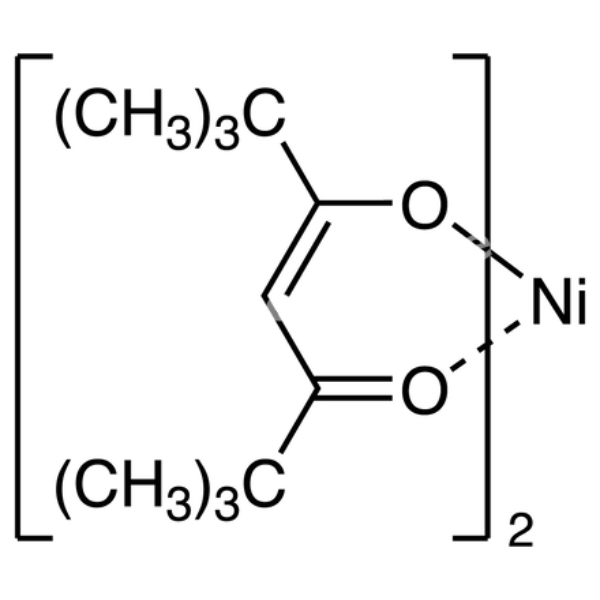
Nickel TMHD

Price range: $39.00 through $222.00
Select options This product has multiple variants. The options may be chosen on the product page
Product Nickel TMHD
CAS No. 14481-08-4
Appearance Purple powder or crystals
Purity ≥99%,  ≥99.9%,  ≥95%(Other purities are also available)
APS N/A
Ingredient C₂₂H₃₈NiO₄
Molecular Weight 425.23 g/mol
Melting Point 219–223 °C
Boiling Point N/A
Density N/A
Product Codes NCZ-357R

Nickel Vanadium (NiV) Sputtering Targets, Purity: 99.95%, Size: 1”, Thickness: 0.125”

$158.00

Applications of Sputtering Targets;

Film deposition is accomplished using sputtering targets. A technique for sputtering thin films is called "deposition made by sputter targets," which entails eroding material from a "target" source onto a "substrate" like a silicon wafer. Etching of the target is done using semiconductor sputtering targets. When selectivity is not an issue and a high degree of etching anisotropy is required, sputter etching is the method of choice. By removing the target material through etching, sputter targets are also utilized for investigation. In secondary ion spectroscopy (SIMS), one example is when the target material is sputtered at a steady pace. Mass spectrometry is used to quantify the concentration and identity of spewed atoms as the target is sputtered.

The target material's composition may be ascertained and even very low concentrations of contaminants can be found with the aid of the sputtering target.

There is also an application area for sputtering targets in space. One type of space weathering that alters the chemical and physical characteristics of airless worlds like the Moon and asteroids is sputtering.

Nickel Vanadium (NiV) Sputtering Targets, Purity: 99.95%, Size: 1”, Thickness: 0.125”

$180.00

Product 

Nickel Vanadium (NiV) Sputtering Targets, Purity: 99.95%, Size: 1'', Thickness: 0.125''

CAS No.

11137-91-4

Appearance

Powder

Purity

≥99%,  ≥99.9%,  ≥95%

(Other purities are also available)

APS

N/A (Size Can be customized), Ask for other available size ranges.

Ingredient

N/A

Molecular Weight

~57.9 g/mol

Melting Point

~1,350–1,450 °C

Boiling Point

N/A

Density

 ~8.5 g/cm³

Product Codes

NCZ-1830K

Nickel Vanadium (NiV) Sputtering Targets, Purity: 99.95%, Size: 1”, Thickness: 0.250”

$189.00

Applications of Sputtering Targets;

Film deposition is accomplished using sputtering targets. A technique for sputtering thin films is called "deposition made by sputter targets," which entails eroding material from a "target" source onto a "substrate" like a silicon wafer. Etching of the target is done using semiconductor sputtering targets. When selectivity is not an issue and a high degree of etching anisotropy is required, sputter etching is the method of choice. By removing the target material through etching, sputter targets are also utilized for investigation. In secondary ion spectroscopy (SIMS), one example is when the target material is sputtered at a steady pace. Mass spectrometry is used to quantify the concentration and identity of spewed atoms as the target is sputtered.

The target material's composition may be ascertained and even very low concentrations of contaminants can be found with the aid of the sputtering target.

There is also an application area for sputtering targets in space. One type of space weathering that alters the chemical and physical characteristics of airless worlds like the Moon and asteroids is sputtering.

Nickel Vanadium (NiV) Sputtering Targets, Purity: 99.95%, Size: 1”, Thickness: 0.250”

$217.00

Product 

Nickel Vanadium (NiV) Sputtering Targets, Purity: 99.95%, Size: 1'', Thickness: 0.250''

CAS No.

11137-91-4

Appearance

Powder

Purity

≥99%,  ≥99.9%,  ≥95%

(Other purities are also available)

APS

N/A (Size Can be customized), Ask for other available size ranges.

Ingredient

N/A

Molecular Weight

~57.9 g/mol

Melting Point

~1,350–1,450 °C

Boiling Point

N/A

Density

 ~8.5 g/cm³

Product Codes

NCZ-1829K

Nickel Vanadium (NiV) Sputtering Targets, Purity: 99.95%, Size: 2”, Thickness: 0.125”

$225.00

Applications of Sputtering Targets;

Film deposition is accomplished using sputtering targets. A technique for sputtering thin films is called "deposition made by sputter targets," which entails eroding material from a "target" source onto a "substrate" like a silicon wafer. Etching of the target is done using semiconductor sputtering targets. When selectivity is not an issue and a high degree of etching anisotropy is required, sputter etching is the method of choice. By removing the target material through etching, sputter targets are also utilized for investigation. In secondary ion spectroscopy (SIMS), one example is when the target material is sputtered at a steady pace. Mass spectrometry is used to quantify the concentration and identity of spewed atoms as the target is sputtered.

The target material's composition may be ascertained and even very low concentrations of contaminants can be found with the aid of the sputtering target.

There is also an application area for sputtering targets in space. One type of space weathering that alters the chemical and physical characteristics of airless worlds like the Moon and asteroids is sputtering.

Nickel Vanadium (NiV) Sputtering Targets, Purity: 99.95%, Size: 2”, Thickness: 0.125”

$259.00

Product 

Nickel Vanadium (NiV) Sputtering Targets, Purity: 99.95%, Size: 2'', Thickness: 0.125''

CAS No.

11137-91-4

Appearance

Powder

Purity

≥99%,  ≥99.9%,  ≥95%

(Other purities are also available)

APS

N/A (Size Can be customized), Ask for other available size ranges.

Ingredient

N/A

Molecular Weight

~57.9 g/mol

Melting Point

~1,350–1,450 °C

Boiling Point

N/A

Density

 ~8.5 g/cm³

Product Codes

NCZ-1828K

Nickel Vanadium (NiV) Sputtering Targets, Purity: 99.95%, Size: 2”, Thickness: 0.250”

$244.00

Applications of Sputtering Targets;

Film deposition is accomplished using sputtering targets. A technique for sputtering thin films is called "deposition made by sputter targets," which entails eroding material from a "target" source onto a "substrate" like a silicon wafer. Etching of the target is done using semiconductor sputtering targets. When selectivity is not an issue and a high degree of etching anisotropy is required, sputter etching is the method of choice. By removing the target material through etching, sputter targets are also utilized for investigation. In secondary ion spectroscopy (SIMS), one example is when the target material is sputtered at a steady pace. Mass spectrometry is used to quantify the concentration and identity of spewed atoms as the target is sputtered.

The target material's composition may be ascertained and even very low concentrations of contaminants can be found with the aid of the sputtering target.

There is also an application area for sputtering targets in space. One type of space weathering that alters the chemical and physical characteristics of airless worlds like the Moon and asteroids is sputtering.

Nickel Vanadium (NiV) Sputtering Targets, Purity: 99.95%, Size: 2”, Thickness: 0.250”

$281.00

Product 

Nickel Vanadium (NiV) Sputtering Targets, Purity: 99.95%, Size: 2'', Thickness: 0.250''

CAS No.

11137-91-4

Appearance

Powder

Purity

≥99%,  ≥99.9%,  ≥95%

(Other purities are also available)

APS

N/A (Size Can be customized), Ask for other available size ranges.

Ingredient

N/A

Molecular Weight

~57.9 g/mol

Melting Point

~1,350–1,450 °C

Boiling Point

N/A

Density

 ~8.5 g/cm³

Product Codes

NCZ-1827K

Nickel Vanadium (NiV) Sputtering Targets, Purity: 99.95%, Size: 3”, Thickness: 0.125”

$265.00

Applications of Sputtering Targets;

Film deposition is accomplished using sputtering targets. A technique for sputtering thin films is called "deposition made by sputter targets," which entails eroding material from a "target" source onto a "substrate" like a silicon wafer. Etching of the target is done using semiconductor sputtering targets. When selectivity is not an issue and a high degree of etching anisotropy is required, sputter etching is the method of choice. By removing the target material through etching, sputter targets are also utilized for investigation. In secondary ion spectroscopy (SIMS), one example is when the target material is sputtered at a steady pace. Mass spectrometry is used to quantify the concentration and identity of spewed atoms as the target is sputtered.

The target material's composition may be ascertained and even very low concentrations of contaminants can be found with the aid of the sputtering target.

There is also an application area for sputtering targets in space. One type of space weathering that alters the chemical and physical characteristics of airless worlds like the Moon and asteroids is sputtering.

Nickel Vanadium (NiV) Sputtering Targets, Purity: 99.95%, Size: 3”, Thickness: 0.125”

$306.00

Product 

Nickel Vanadium (NiV) Sputtering Targets, Purity: 99.95%, Size: 3'', Thickness: 0.125''

CAS No.

11137-91-4

Appearance

Powder

Purity

≥99%,  ≥99.9%,  ≥95%

(Other purities are also available)

APS

N/A (Size Can be customized), Ask for other available size ranges.

Ingredient

N/A

Molecular Weight

~57.9 g/mol

Melting Point

~1,350–1,450 °C

Boiling Point

N/A

Density

 ~8.5 g/cm³

Product Codes

NCZ-1826K

Nickel Vanadium (NiV) Sputtering Targets, Purity: 99.95%, Size: 3”, Thickness: 0.250”

$286.00

Applications of Sputtering Targets;

Film deposition is accomplished using sputtering targets. A technique for sputtering thin films is called "deposition made by sputter targets," which entails eroding material from a "target" source onto a "substrate" like a silicon wafer. Etching of the target is done using semiconductor sputtering targets. When selectivity is not an issue and a high degree of etching anisotropy is required, sputter etching is the method of choice. By removing the target material through etching, sputter targets are also utilized for investigation. In secondary ion spectroscopy (SIMS), one example is when the target material is sputtered at a steady pace. Mass spectrometry is used to quantify the concentration and identity of spewed atoms as the target is sputtered.

The target material's composition may be ascertained and even very low concentrations of contaminants can be found with the aid of the sputtering target.

There is also an application area for sputtering targets in space. One type of space weathering that alters the chemical and physical characteristics of airless worlds like the Moon and asteroids is sputtering.

Nickel Vanadium (NiV) Sputtering Targets, Purity: 99.95%, Size: 3”, Thickness: 0.250”

$331.00

Product 

Nickel Vanadium (NiV) Sputtering Targets, Purity: 99.95%, Size: 3'', Thickness: 0.250''

CAS No.

11137-91-4

Appearance

Powder

Purity

≥99%,  ≥99.9%,  ≥95%

(Other purities are also available)

APS

N/A (Size Can be customized), Ask for other available size ranges.

Ingredient

N/A

Molecular Weight

~57.9 g/mol

Melting Point

~1,350–1,450 °C

Boiling Point

N/A

Density

 ~8.5 g/cm³

Product Codes

NCZ-1825K

Nickel Vanadium (NiV) Sputtering Targets, Purity: 99.95%, Size: 4”, Thickness: 0.125”

$357.00

Applications of Sputtering Targets;

Film deposition is accomplished using sputtering targets. A technique for sputtering thin films is called "deposition made by sputter targets," which entails eroding material from a "target" source onto a "substrate" like a silicon wafer. Etching of the target is done using semiconductor sputtering targets. When selectivity is not an issue and a high degree of etching anisotropy is required, sputter etching is the method of choice. By removing the target material through etching, sputter targets are also utilized for investigation. In secondary ion spectroscopy (SIMS), one example is when the target material is sputtered at a steady pace. Mass spectrometry is used to quantify the concentration and identity of spewed atoms as the target is sputtered.

The target material's composition may be ascertained and even very low concentrations of contaminants can be found with the aid of the sputtering target.

There is also an application area for sputtering targets in space. One type of space weathering that alters the chemical and physical characteristics of airless worlds like the Moon and asteroids is sputtering.

Nickel Vanadium (NiV) Sputtering Targets, Purity: 99.95%, Size: 4”, Thickness: 0.125”

$414.00

Product 

Nickel Vanadium (NiV) Sputtering Targets, Purity: 99.95%, Size: 4'', Thickness: 0.125''

CAS No.

11137-91-4

Appearance

Powder

Purity

≥99%,  ≥99.9%,  ≥95%

(Other purities are also available)

APS

N/A (Size Can be customized), Ask for other available size ranges.

Ingredient

N/A

Molecular Weight

~57.9 g/mol

Melting Point

~1,350–1,450 °C

Boiling Point

N/A

Density

 ~8.5 g/cm³

Product Codes

NCZ-1824K

Nickel Vanadium (NiV) Sputtering Targets, Purity: 99.95%, Size: 4”, Thickness: 0.250”

$378.00

Applications of Sputtering Targets;

Film deposition is accomplished using sputtering targets. A technique for sputtering thin films is called "deposition made by sputter targets," which entails eroding material from a "target" source onto a "substrate" like a silicon wafer. Etching of the target is done using semiconductor sputtering targets. When selectivity is not an issue and a high degree of etching anisotropy is required, sputter etching is the method of choice. By removing the target material through etching, sputter targets are also utilized for investigation. In secondary ion spectroscopy (SIMS), one example is when the target material is sputtered at a steady pace. Mass spectrometry is used to quantify the concentration and identity of spewed atoms as the target is sputtered.

The target material's composition may be ascertained and even very low concentrations of contaminants can be found with the aid of the sputtering target.

There is also an application area for sputtering targets in space. One type of space weathering that alters the chemical and physical characteristics of airless worlds like the Moon and asteroids is sputtering.

Nickel Vanadium (NiV) Sputtering Targets, Purity: 99.95%, Size: 4”, Thickness: 0.250”

$439.00

Product 

Nickel Vanadium (NiV) Sputtering Targets, Purity: 99.95%, Size: 4'', Thickness: 0.250''

CAS No.

11137-91-4

Appearance

Powder

Purity

≥99%,  ≥99.9%,  ≥95%

(Other purities are also available)

APS

N/A (Size Can be customized), Ask for other available size ranges.

Ingredient

N/A

Molecular Weight

~57.9 g/mol

Melting Point

~1,350–1,450 °C

Boiling Point

N/A

Density

 ~8.5 g/cm³

Product Codes

NCZ-1823K

Nickel Vanadium (NiV) Sputtering Targets, Purity: 99.95%, Size: 6”, Thickness: 0.250”

$493.00

Product 

Nickel Vanadium (NiV) Sputtering Targets, Purity: 99.95%, Size: 6'', Thickness: 0.250''

CAS No.

11137-91-4

Appearance

Powder

Purity

≥99%,  ≥99.9%,  ≥95%

(Other purities are also available)

APS

N/A (Size Can be customized), Ask for other available size ranges.

Ingredient

N/A

Molecular Weight

~57.9 g/mol

Melting Point

~1,350–1,450 °C

Boiling Point

N/A

Density

 ~8.5 g/cm³

Product Codes

NCZ-1822K

Nickel Vanadium (NiV) Sputtering Targets, Purity: 99.95%, Size: 6”, Thickness: 0.250”

$424.00

Applications of Sputtering Targets;

Film deposition is accomplished using sputtering targets. A technique for sputtering thin films is called "deposition made by sputter targets," which entails eroding material from a "target" source onto a "substrate" like a silicon wafer. Etching of the target is done using semiconductor sputtering targets. When selectivity is not an issue and a high degree of etching anisotropy is required, sputter etching is the method of choice. By removing the target material through etching, sputter targets are also utilized for investigation. In secondary ion spectroscopy (SIMS), one example is when the target material is sputtered at a steady pace. Mass spectrometry is used to quantify the concentration and identity of spewed atoms as the target is sputtered.

The target material's composition may be ascertained and even very low concentrations of contaminants can be found with the aid of the sputtering target.

There is also an application area for sputtering targets in space. One type of space weathering that alters the chemical and physical characteristics of airless worlds like the Moon and asteroids is sputtering.

Nickel Vanadium (NiV) Sputtering Targets, Purity: 99.95%, Size: 8”, Thickness: 0.250”

$514.00

Product 

Nickel Vanadium (NiV) Sputtering Targets, Purity: 99.95%, Size: 8'', Thickness: 0.250''

CAS No.

11137-91-4

Appearance

Powder

Purity

≥99%,  ≥99.9%,  ≥95%

(Other purities are also available)

APS

N/A (Size Can be customized), Ask for other available size ranges.

Ingredient

N/A

Molecular Weight

 Ni: 58.69 g/molV: 50.94 g/mol

Melting Point

~1,350–1,450 °C

Boiling Point

N/A

Density

 ~8.5 g/cm³

Product Codes

NCZ-1821K

Nickel Vanadium (NiV) Sputtering Targets, Purity: 99.95%, Size: 8”, Thickness: 0.250”

$442.00

Applications of Sputtering Targets;

Film deposition is accomplished using sputtering targets. A technique for sputtering thin films is called "deposition made by sputter targets," which entails eroding material from a "target" source onto a "substrate" like a silicon wafer. Etching of the target is done using semiconductor sputtering targets. When selectivity is not an issue and a high degree of etching anisotropy is required, sputter etching is the method of choice. By removing the target material through etching, sputter targets are also utilized for investigation. In secondary ion spectroscopy (SIMS), one example is when the target material is sputtered at a steady pace. Mass spectrometry is used to quantify the concentration and identity of spewed atoms as the target is sputtered.

The target material's composition may be ascertained and even very low concentrations of contaminants can be found with the aid of the sputtering target.

There is also an application area for sputtering targets in space. One type of space weathering that alters the chemical and physical characteristics of airless worlds like the Moon and asteroids is sputtering.

Nickel Vanadium Sputtering Target NiV

Price range: $148.00 through $421.00
Select options This product has multiple variants. The options may be chosen on the product page
Product Nickel Vanadium Sputtering Target NiV
CAS No. 685830-44-8
Appearance Metallic, silver white sputtering target
Purity ≥99%,  ≥99.9%,  ≥95%(Other purities are also available)
APS 5–20µm (Size Can be customized),  Ask for other available size range.
Ingredient NiV
Molecular Weight 109.63 g/mol
Melting Point 1875 °C
Boiling Point 3407 °C
Density N/A
Product Codes NCZ-133H
 

Nickel-based alloy Nickel 718

Product Nickel-based alloy Nickel 718
CAS No. 67774-46-7
Appearance Silvery-gray metallic solid
Purity ≥99%,  ≥99.9%,  ≥95%(Other purities are also available)
APS 15–45μm (Size Can be customized),  Ask for other available size range.
Ingredient Ni-19Cr-18Fe-5Nb-3Mo-1Ti-0.5Al
Molecular Weight 58.69 g/mol
Melting Point 1260 – 1336 °C
Boiling Point 2730 °C
Density 8.19 g/cm³
Product Codes NCZ-106A

Nickel-based alloy Nickel 718

Nickel chromium superalloys are often used in high-stress, high-temperature aeronautical, petrochemical and auto racing environments. The excellent high temperature strength and creep resistance derive from precipitation hardening of finely dispersed precipitates. Nickel Alloy 718 is a metal that is also highly resistant to the corrosive effects of hydrochloric acid and sulfuric acid. The favorable weldability of Nickel Alloy 718 makes this alloy suitable for additive manufacturing as well. Typical applications are high-quality components designed for thermally challenging environments such as rocket engines, gas-turbine hot sections, and heat exchangers. Powder chemical composition may comply with standards: ASTM B637, ASTM F3055, AMS5596, AMS5662, AMS5664, AMS7006 or equivalent standard

Typical values

PSD D10 D50 D90 Apparent density (ASTM B212) Flow rate (ASTM B213) Application Technology
15-45 µm 22 µm 34 µm 46 µm 4.67 g/cm3 13 s L-PBF
15-53 µm 23 µm 37 µm 51 µm 4.68 g/cm3 13 s L-PBF
45-106 µm 50 µm 67 µm 100 µm 4.75 g/cm3 14 s EB-PBF, L-PBF, DED
45-150 µm 53 µm 90 µm 145 µm 4.79 g/cm3 13 s EB-PBF, L-PBF, DED

Various particle sizes are available upon request

Nickel Alloy 718 powders possess the ideal characteristics for various powder metallurgy technologies, include Additive Manufacturing. The powders are produced using the patented APATM Plasma Atomization process, which was designed specifically for atomization of high-temperature metals, such as Nickel alloys. With a large industrial capacity for Nickel Alloys powder production, Nanochemazone can support high-volume industrial applications.

Nickel-based K403 Powder

Product Nickel-based K403 Powder
CAS No. 7440-02-0
Appearance Gray, spherical powder
Purity ≥99%,  ≥99.9%,  ≥95%(Other purities are also available)
APS 15–45 µm (Size Can be customized),  Ask for other available size range.
Ingredient NiCrAlWCoMoTiFeCZr
Molecular Weight N/A
Melting Point 1260–1338 °C
Boiling Point N/A
Density 8.2 g/cm³
Product Codes NCZ-165M

Nickel-Coated Multi Walled Carbon Nanotubes, Purity: > 96%, Outside Diameter: 8-18 nm

Price range: $82.00 through $505.00
Select options This product has multiple variants. The options may be chosen on the product page

Applications:

Nickel is coated on MWCNTs to have one dimentional magnetic material. Nickel is ferromagnetic material. MWCNTs are used as template for ferromagnetic nickel. Nickel-coated MWCNTs show good magnetic properties. Nickel-coated MWCNTs have a variety of potential applications in different fields. These applications include medicine, mechanics, electric-electronics, chemicals, energy and others. It can be applied in, 1-drug delivery, 2-biosensors, 3-CNT composites, 4-catalysis, 5-nanoprobes, 6-hydrogen storage, 7-lithium batteries, 8-gas-discharge tubes, 9-flat panel displays, 10-supercapacitors, 11-transistors, 12-solar cells, 13-photoluminescence, 14-templates

Nickel-Coated Multi Walled Carbon Nanotubes, Purity: > 96%, Outside Diameter: 8-18 nm

Price range: $75.00 through $469.00
Select options This product has multiple variants. The options may be chosen on the product page

Applications:

MWCNTs are given a nickel coating to create a one-dimensional magnetic material. Ferromagnetic materials include nickel. A template for ferromagnetic nickel is made using MWCNTs. MWCNTs with nickel coating exhibit strong magnetic characteristics. MWCNTs with nickel coatings have numerous potential uses in various industries. Medicine, mechanics, electric-electronics, chemistry, energy, and other fields are among these uses. It can be used in drug delivery, biosensors, CNT composites, and other applications. four, nanoprobes, five, six, and hydrogen storage seven lithium batteries, tubes for 8 gas discharges, the nine flat panel displays, Supercapacitors ten, transistors eleven twelve solar cellstemplates, 13-photoluminescence, and 14

Nickel-Coated Multi Walled Carbon Nanotubes, Purity: > 99%, Outside Diameter: 18-28 nm

Price range: $79.00 through $493.00
Select options This product has multiple variants. The options may be chosen on the product page
Applications:

MWCNTs with a nickel coating provide a one-dimensional magnetic material. A ferromagnetic material is nickel. MWCNTs serve as ferromagnetic nickel templates. MWCNTs coated with nickel exhibit strong magnetic properties. MWCNTs coated with nickel have a wide range of possible uses in various industries. Among these applications are energy, chemistry, medicine, mechanics, and electric and electronic systems. 1. Drug delivery; 2. Biosensors; 3. CNT composites; 4. Catalysis; 5. Nanoprobes ,6-hydrogen holding 7-lithium power cells 8 tubes for gas discharge, 9- flat-panel monitors 10- Supercapacitors 11- transistors , 12-  solar cells 13-The glow of light, 14. Models


Nickel-Coated Multi Walled Carbon Nanotubes, Purity: > 99%, Outside Diameter: 18-28 nm

Price range: $81.00 through $507.00
Select options This product has multiple variants. The options may be chosen on the product page

Applications:

Nickel is coated on MWCNTs to have one dimentional magnetic material. Nickel is ferromagnetic material. MWCNTs are used as template for ferromagnetic nickel. Nickel-coated MWCNTs show good magnetic properties. Nickel-coated MWCNTs have a variety of potential applications in different fields. These applications include medicine, mechanics, electric-electronics, chemicals, energy and others. It can be applied in, 1-drug delivery, 2-biosensors, 3-CNT composites, 4-catalysis, 5-nanoprobes, 6-hydrogen storage, 7-lithium batteries, 8-gas-discharge tubes, 9-flat panel displays, 10-supercapacitors, 11-transistors, 12-solar cells, 13-photoluminescence, 14-templates  

Nickel-Coated Multi Walled Carbon Nanotubes, Purity: > 99%, Outside Diameter: 28-48 nm

Price range: $72.00 through $423.00
Select options This product has multiple variants. The options may be chosen on the product page
Applications:

MWCNTs with a nickel coating provide a one-dimensional magnetic material. A ferromagnetic material is nickel. MWCNTs serve as ferromagnetic nickel templates. MWCNTs coated with nickel exhibit strong magnetic properties. MWCNTs coated with nickel have a wide range of possible uses in various industries. Among these applications are energy, chemistry, medicine, mechanics, and electric and electronic systems. 1. Drug delivery; 2. Biosensors; 3. CNT composites; 4. Catalysis; 5. Nanoprobes , 6-hydrogen holding 7-lithium power cells 8 tubes for gas discharge, 9- flat-panel monitors 10-Supercapacitors 11- transistors , 12- solar cells 13-The glow of light, 14. Models


Nickel-Coated Multi Walled Carbon Nanotubes, Purity: > 99%, Outside Diameter: 28-48 nm

Price range: $73.00 through $434.00
Select options This product has multiple variants. The options may be chosen on the product page

Applications:

Nickel is coated on MWCNTs to have one dimentional magnetic material. Nickel is ferromagnetic material. MWCNTs are used as template for ferromagnetic nickel. Nickel-coated MWCNTs show good magnetic properties. Nickel-coated MWCNTs have a variety of potential applications in different fields. These applications include medicine, mechanics, electric-electronics, chemicals, energy and others. It can be applied in, 1-drug delivery, 2-biosensors, 3-CNT composites, 4-catalysis, 5-nanoprobes, 6-hydrogen storage, 7-lithium batteries, 8-gas-discharge tubes, 9-flat panel displays, 10-supercapacitors, 11-transistors, 12-solar cells, 13-photoluminescence, 14-templates

Nickel-Coated Multi Walled Carbon Nanotubes, Purity: > 99%, Outside Diameter: 4-16 nm

Price range: $90.00 through $611.00
Select options This product has multiple variants. The options may be chosen on the product page

Applications:

Nickel is coated on MWCNTs to have one dimentional magnetic material. Nickel is ferromagnetic material. MWCNTs are used as template for ferromagnetic nickel. Nickel-coated MWCNTs show good magnetic properties. Nickel-coated MWCNTs have a variety of potential applications in different fields. These applications include medicine, mechanics, electric-electronics, chemicals, energy and others. It can be applied in, 1-drug delivery, 2-biosensors, 3-CNT composites, 4-catalysis, 5-nanoprobes, 6-hydrogen storage, 7-lithium batteries, 8-gas-discharge tubes, 9-flat panel displays, 10-supercapacitors, 11-transistors, 12-solar cells, 13-photoluminescence, 14-templates
Nickel-Coated Multi Walled Carbon Nanotubes, Purity: > 99%, Outside Diameter: 4-16 nm

Price range: $88.00 through $615.00
Select options This product has multiple variants. The options may be chosen on the product page
Applications: To provide one-dimensional magnetic material, nickel is plated on MWCNTs. The metal nickel is ferromagnetic. Ferromagnetic nickel is fabricated using MWCNTs as a template. The magnetic characteristics of MWCNTs coated with nickel are good. MWCNTs with a nickel coating have numerous possible uses in various industries. Among these are applications in the fields of energy, chemistry, medicine, mechanics, and electric and electronic devices. It is applicable to: 1-drug delivery; 2-biosensors; 3. CNT blends, 4-nanoprobes, 5-catalysis, 6-hydrogen storage, seven lithium batteries Eight gas discharge tubes nine flat panel screens The ten supercapacitors eleven transformers, 12 solar panels, 13. Pleomorphism, 14 prototypes

Nickel-Coated Multi Walled Carbon Nanotubes, Purity: > 99%, Outside Diameter: 48-78 nm

Price range: $72.00 through $434.00
Select options This product has multiple variants. The options may be chosen on the product page

Applications:

Nickel is coated on MWCNTs to have one dimentional magnetic material. Nickel is ferromagnetic material. MWCNTs are used as template for ferromagnetic nickel. Nickel-coated MWCNTs show good magnetic properties. Nickel-coated MWCNTs have a variety of potential applications in different fields. These applications include medicine, mechanics, electric-electronics, chemicals, energy and others. It can be applied in, 1-drug delivery, 2-biosensors, 3-CNT composites, 4-catalysis, 5-nanoprobes, 6-hydrogen storage, 7-lithium batteries, 8-gas-discharge tubes, 9-flat panel displays, 10-supercapacitors, 11-transistors, 12-solar cells, 13-photoluminescence, 14-templates

Nickel/Chromium (Ni/Cr 80/20 wt.%) Pellets (6mm Diameter x 6mm Length) Evaporation Materials

Price range: $429.00 through $924.00
Select options This product has multiple variants. The options may be chosen on the product page
Product Nickel/Chromium (Ni/Cr 80/20 wt.%) Pellets (6mm Diameter x 6mm Length) Evaporation Materials
CAS No. 1116-97-1
Appearance Silvery-gray, metallic gray
Purity ≥99%,  ≥99.9%,  ≥95%(Other purities are also available)
APS 6mm (Size Can be customized),  Ask for other available size range.
Ingredient Ni/Cr
Molecular Weight 57.35g/mol
Melting Point N/A
Boiling Point N/A
Density 8.4 g/cm3
Product Codes NCZ-169E

Nickel/Iron (Ni/Fe 81/19 wt.%) Pellets Evaporation Materials

Price range: $165.00 through $627.00
Select options This product has multiple variants. The options may be chosen on the product page
Product Nickel/Iron (Ni/Fe 81/19 wt.%) Pellets Evaporation Materials
CAS No. N/A
Appearance Silver-gray to dark gray
Purity ≥99%,  ≥99.9%,  ≥95%(Other purities are also available)
APS N/A
Ingredient Ni/Fe
Molecular Weight 265.81 g/mol
Melting Point N/A
Boiling Point N/A
Density 8.7 g/cm3
Product Codes NCZ-147E

Niobium (Nb) Micron Powder Purity: 99.95 %, Size: 10 µm

Price range: $16.00 through $1,133.00
Select options This product has multiple variants. The options may be chosen on the product page
1 gram/15 € 5 grams/55 € 25 grams/106 € 100 grams/254 € 500 grams/679 € 1000 grams/1005 €

Niobium (Nb) Micron Powder Purity: 99.95 %, Size: 3 µm

Price range: $96.00 through $755.00
Select options This product has multiple variants. The options may be chosen on the product page
25 grams/86 € 100 grams/150 € 500 grams/573 € 1000 grams/870 €  

Niobium (Nb) Micron Powder Purity: 99.95%, Size: 325 mesh

Price range: $107.00 through $1,234.00
Select options This product has multiple variants. The options may be chosen on the product page
25 grams/95 € 100 grams/265 € 500 grams/645 € 1000 grams/1095 €

Niobium (Nb) Micron Powder Purity: 99.95%, Size: 45 µm, Metal Basis

Price range: $16.00 through $1,133.00
Select options This product has multiple variants. The options may be chosen on the product page
1 gram/15 € 5 grams/55 € 25 grams/106 € 100 grams/254 € 500 grams/679 € 1000 grams/1005 €  

Niobium (Nb) Pentaoxide (Nb2O5) Nanoparticles, 100nm, >99.9% Purity, 100g

$286.00
Product Niobium (Nb) Pentaoxide (Nb2O5) Nanoparticles, 100nm, >99.9% Purity, 100g
CAS No. 1313-96-8
Appearance Off-white to very light yellow
Purity ≥99%,  ≥99.9%,  ≥95%(Other purities are also available)
APS 100nm (Size Can be customized),  Ask for other available size range.
Ingredient Nb2O5
Molecular Weight 265.81 g/mol
Melting Point N/A
Boiling Point N/A
Density 4.47–4.60 g/cm³
Product Codes NCZ-477I

Niobium (Nb) Sputtering Target

Price range: $125.00 through $421.00
Select options This product has multiple variants. The options may be chosen on the product page

Product 

Niobium (Nb) Sputtering Target

CAS No.

7440-03-1

Appearance

Powder

Purity

≥99%,  ≥99.9%,  ≥95%

(Other purities are also available)

APS

 NA (Size Can be customized), Ask for other available size ranges.

Ingredient

N/A

Molecular Weight

92.906 g/mol

Melting Point

2,468 °C

Boiling Point

 4,927 °C

Density

 8.57 g/cm³

Product Codes

NCZ-1299K

Niobium (Nb) Sputtering Targets, Purity: 99.95% pure Ex Ta, Size: 1”, Thickness: 0.125”

$121.00

Product 

Niobium (Nb) Sputtering Targets, Purity: 99.95% pure Ex Ta, Size: 1'', Thickness: 0.125''

CAS No.

7440-03-1

Appearance

Powder

Purity

≥99%,  ≥99.9%,  ≥95%

(Other purities are also available)

APS

N/A (Size Can be customized), Ask for other available size ranges.

Ingredient

N/A

Molecular Weight

92.906 g/mol

Melting Point

 2,468 °C

Boiling Point

 4,744 °C

Density

 8.57 g/cm³

Product Codes

NCZ-1820K

Niobium (Nb) Sputtering Targets, Purity: 99.95% pure Ex Ta, Size: 1”, Thickness: 0.125”

$108.00

Applications of Sputtering Targets;

Film deposition is accomplished using sputtering targets. A technique for sputtering thin films is called "deposition made by sputter targets," which entails eroding material from a "target" source onto a "substrate" like a silicon wafer. Etching of the target is done using semiconductor sputtering targets. When selectivity is not an issue and a high degree of etching anisotropy is required, sputter etching is the method of choice. By removing the target material through etching, sputter targets are also utilized for investigation. In secondary ion spectroscopy (SIMS), one example is when the target material is sputtered at a steady pace. Mass spectrometry is used to quantify the concentration and identity of spewed atoms as the target is sputtered.

The target material's composition may be ascertained and even very low concentrations of contaminants can be found with the aid of the sputtering target.

There is also an application area for sputtering targets in space. One type of space weathering that alters the chemical and physical characteristics of airless worlds like the Moon and asteroids is sputtering.

Niobium (Nb) Sputtering Targets, Purity: 99.95% pure Ex Ta, Size: 1”, Thickness: 0.250”

$128.00

Product 

Niobium (Nb) Sputtering Targets, Purity: 99.95% pure Ex Ta, Size: 1'', Thickness: 0.250''

CAS No.

7440-03-1

Appearance

Powder

Purity

≥99%,  ≥99.9%,  ≥95%

(Other purities are also available)

APS

N/A (Size Can be customized), Ask for other available size ranges.

Ingredient

N/A

Molecular Weight

92.906 g/mol

Melting Point

 2,468 °C

Boiling Point

 4,744 °C

Density

 8.57 g/cm³

Product Codes

NCZ-1819K

Niobium (Nb) Sputtering Targets, Purity: 99.95% pure Ex Ta, Size: 1”, Thickness: 0.250”

$114.00

Applications of Sputtering Targets;

Film deposition is accomplished using sputtering targets. A technique for sputtering thin films is called "deposition made by sputter targets," which entails eroding material from a "target" source onto a "substrate" like a silicon wafer. Etching of the target is done using semiconductor sputtering targets. When selectivity is not an issue and a high degree of etching anisotropy is required, sputter etching is the method of choice. By removing the target material through etching, sputter targets are also utilized for investigation. In secondary ion spectroscopy (SIMS), one example is when the target material is sputtered at a steady pace. Mass spectrometry is used to quantify the concentration and identity of spewed atoms as the target is sputtered.

The target material's composition may be ascertained and even very low concentrations of contaminants can be found with the aid of the sputtering target.

There is also an application area for sputtering targets in space. One type of space weathering that alters the chemical and physical characteristics of airless worlds like the Moon and asteroids is sputtering.

Niobium (Nb) Sputtering Targets, Purity: 99.95% pure Ex Ta, Size: 2”, Thickness: 0.125”

$187.00

Product 

Niobium (Nb) Sputtering Targets, Purity: 99.95% pure Ex Ta, Size: 2'', Thickness: 0.125''

CAS No.

7440-03-1

Appearance

Powder

Purity

≥99%,  ≥99.9%,  ≥95%

(Other purities are also available)

APS

N/A (Size Can be customized), Ask for other available size ranges.

Ingredient

N/A

Molecular Weight

92.906 g/mol

Melting Point

 2,468 °C

Boiling Point

 4,744 °C

Density

 8.57 g/cm³

Product Codes

NCZ-1818K

Niobium (Nb) Sputtering Targets, Purity: 99.95% pure Ex Ta, Size: 2”, Thickness: 0.125”

$164.00

Applications of Sputtering Targets;

Film deposition is accomplished using sputtering targets. A technique for sputtering thin films is called "deposition made by sputter targets," which entails eroding material from a "target" source onto a "substrate" like a silicon wafer. Etching of the target is done using semiconductor sputtering targets. When selectivity is not an issue and a high degree of etching anisotropy is required, sputter etching is the method of choice. By removing the target material through etching, sputter targets are also utilized for investigation. In secondary ion spectroscopy (SIMS), one example is when the target material is sputtered at a steady pace. Mass spectrometry is used to quantify the concentration and identity of spewed atoms as the target is sputtered.

The target material's composition may be ascertained and even very low concentrations of contaminants can be found with the aid of the sputtering target.

There is also an application area for sputtering targets in space. One type of space weathering that alters the chemical and physical characteristics of airless worlds like the Moon and asteroids is sputtering.

Niobium (Nb) Sputtering Targets, Purity: 99.95% pure Ex Ta, Size: 2”, Thickness: 0.250”

$204.00

Product 

Niobium (Nb) Sputtering Targets, Purity: 99.95% pure Ex Ta, Size: 2'', Thickness: 0.250''

CAS No.

7440-03-1

Appearance

Powder

Purity

≥99%,  ≥99.9%,  ≥95%

(Other purities are also available)

APS

N/A (Size Can be customized), Ask for other available size ranges.

Ingredient

N/A

Molecular Weight

92.906 g/mol

Melting Point

 2,468 °C

Boiling Point

 4,744 °C

Density

 8.57 g/cm³

Product Codes

NCZ-1817K

Niobium (Nb) Sputtering Targets, Purity: 99.95% pure Ex Ta, Size: 2”, Thickness: 0.250”

$178.00

Applications of Sputtering Targets;

Film deposition is accomplished using sputtering targets. A technique for sputtering thin films is called "deposition made by sputter targets," which entails eroding material from a "target" source onto a "substrate" like a silicon wafer. Etching of the target is done using semiconductor sputtering targets. When selectivity is not an issue and a high degree of etching anisotropy is required, sputter etching is the method of choice. By removing the target material through etching, sputter targets are also utilized for investigation. In secondary ion spectroscopy (SIMS), one example is when the target material is sputtered at a steady pace. Mass spectrometry is used to quantify the concentration and identity of spewed atoms as the target is sputtered.

The target material's composition may be ascertained and even very low concentrations of contaminants can be found with the aid of the sputtering target.

There is also an application area for sputtering targets in space. One type of space weathering that alters the chemical and physical characteristics of airless worlds like the Moon and asteroids is sputtering.

Niobium (Nb) Sputtering Targets, Purity: 99.95% pure Ex Ta, Size: 3”, Thickness: 0.125”

$211.00

Product 

Niobium (Nb) Sputtering Targets, Purity: 99.95% pure Ex Ta, Size: 3'', Thickness: 0.125''

CAS No.

7440-03-1

Appearance

Powder

Purity

≥99%,  ≥99.9%,  ≥95%

(Other purities are also available)

APS

N/A (Size Can be customized), Ask for other available size ranges.

Ingredient

N/A

Molecular Weight

92.906 g/mol

Melting Point

 2,468 °C

Boiling Point

 4,744 °C

Density

 8.57 g/cm³

Product Codes

NCZ-1816K

Niobium (Nb) Sputtering Targets, Purity: 99.95% pure Ex Ta, Size: 3”, Thickness: 0.125”

$184.00

Applications of Sputtering Targets;

Film deposition is accomplished using sputtering targets. A technique for sputtering thin films is called "deposition made by sputter targets," which entails eroding material from a "target" source onto a "substrate" like a silicon wafer. Etching of the target is done using semiconductor sputtering targets. When selectivity is not an issue and a high degree of etching anisotropy is required, sputter etching is the method of choice. By removing the target material through etching, sputter targets are also utilized for investigation. In secondary ion spectroscopy (SIMS), one example is when the target material is sputtered at a steady pace. Mass spectrometry is used to quantify the concentration and identity of spewed atoms as the target is sputtered.

The target material's composition may be ascertained and even very low concentrations of contaminants can be found with the aid of the sputtering target.

There is also an application area for sputtering targets in space. One type of space weathering that alters the chemical and physical characteristics of airless worlds like the Moon and asteroids is sputtering.

Niobium (Nb) Sputtering Targets, Purity: 99.95% pure Ex Ta, Size: 3”, Thickness: 0.250”

$217.00

Product 

Niobium (Nb) Sputtering Targets, Purity: 99.95% pure Ex Ta, Size: 3'', Thickness: 0.250''

CAS No.

7440-03-1

Appearance

Powder

Purity

≥99%,  ≥99.9%,  ≥95%

(Other purities are also available)

APS

N/A (Size Can be customized), Ask for other available size ranges.

Ingredient

N/A

Molecular Weight

92.906 g/mol

Melting Point

 2,468 °C

Boiling Point

 4,744 °C

Density

 8.57 g/cm³

Product Codes

NCZ-1815K

Niobium (Nb) Sputtering Targets, Purity: 99.95% pure Ex Ta, Size: 3”, Thickness: 0.250”

$186.00

Applications of Sputtering Targets;

Film deposition is accomplished using sputtering targets. A technique for sputtering thin films is called "deposition made by sputter targets," which entails eroding material from a "target" source onto a "substrate" like a silicon wafer. Etching of the target is done using semiconductor sputtering targets. When selectivity is not an issue and a high degree of etching anisotropy is required, sputter etching is the method of choice. By removing the target material through etching, sputter targets are also utilized for investigation. In secondary ion spectroscopy (SIMS), one example is when the target material is sputtered at a steady pace. Mass spectrometry is used to quantify the concentration and identity of spewed atoms as the target is sputtered.

The target material's composition may be ascertained and even very low concentrations of contaminants can be found with the aid of the sputtering target.

There is also an application area for sputtering targets in space. One type of space weathering that alters the chemical and physical characteristics of airless worlds like the Moon and asteroids is sputtering.

Niobium (Nb) Sputtering Targets, Purity: 99.95% pure Ex Ta, Size: 4”, Thickness: 0.125”

$184.00

Applications of Sputtering Targets;

Film deposition is accomplished using sputtering targets. A technique for sputtering thin films is called "deposition made by sputter targets," which entails eroding material from a "target" source onto a "substrate" like a silicon wafer. Etching of the target is done using semiconductor sputtering targets. When selectivity is not an issue and a high degree of etching anisotropy is required, sputter etching is the method of choice. By removing the target material through etching, sputter targets are also utilized for investigation. In secondary ion spectroscopy (SIMS), one example is when the target material is sputtered at a steady pace. Mass spectrometry is used to quantify the concentration and identity of spewed atoms as the target is sputtered.

The target material's composition may be ascertained and even very low concentrations of contaminants can be found with the aid of the sputtering target.

There is also an application area for sputtering targets in space. One type of space weathering that alters the chemical and physical characteristics of airless worlds like the Moon and asteroids is sputtering.

Niobium (Nb) Sputtering Targets, Purity: 99.95% pure Ex Ta, Size: 4”, Thickness: 0.125”

$211.00

Product 

Niobium (Nb) Sputtering Targets, Purity: 99.95% pure Ex Ta, Size: 4'', Thickness: 0.125''

CAS No.

7440-03-1

Appearance

Powder

Purity

≥99%,  ≥99.9%,  ≥95%

(Other purities are also available)

APS

N/A (Size Can be customized), Ask for other available size ranges.

Ingredient

N/A

Molecular Weight

92.906 g/mol

Melting Point

 2,468 °C

Boiling Point

 4,744 °C

Density

 8.57 g/cm³

Product Codes

NCZ-1814K

Niobium (Nb) Sputtering Targets, Purity: 99.95% pure Ex Ta, Size: 4”, Thickness: 0.250”

$100.00

Applications of Sputtering Targets;

Film deposition is accomplished using sputtering targets. A technique for sputtering thin films is called "deposition made by sputter targets," which entails eroding material from a "target" source onto a "substrate" like a silicon wafer. Etching of the target is done using semiconductor sputtering targets. When selectivity is not an issue and a high degree of etching anisotropy is required, sputter etching is the method of choice. By removing the target material through etching, sputter targets are also utilized for investigation. In secondary ion spectroscopy (SIMS), one example is when the target material is sputtered at a steady pace. Mass spectrometry is used to quantify the concentration and identity of spewed atoms as the target is sputtered.

The target material's composition may be ascertained and even very low concentrations of contaminants can be found with the aid of the sputtering target.

There is also an application area for sputtering targets in space. One type of space weathering that alters the chemical and physical characteristics of airless worlds like the Moon and asteroids is sputtering.

Niobium (Nb) Sputtering Targets, Purity: 99.95% pure Ex Ta, Size: 4”, Thickness: 0.250”

$112.00

Product 

Niobium (Nb) Sputtering Targets, Purity: 99.95% pure Ex Ta, Size: 4'', Thickness: 0.250''

CAS No.

7440-03-1

Appearance

Powder

Purity

≥99%,  ≥99.9%,  ≥95%

(Other purities are also available)

APS

N/A (Size Can be customized), Ask for other available size ranges.

Ingredient

N/A

Molecular Weight

92.906 g/mol

Melting Point

 2,468 °C

Boiling Point

 4,744 °C

Density

 8.57 g/cm³

Product Codes

NCZ-1813K

Niobium (V) ethoxide, 99.99+%

Price range: $17.00 through $118.00
Select options This product has multiple variants. The options may be chosen on the product page
Product Niobium (V) ethoxide, 99.99+%
CAS No. 3236-82-6
Appearance Colorless to pale yellow
Purity ≥99%,  ≥99.9%,  ≥95%(Other purities are also available)
APS N/A
Ingredient Nb(OCH₂CH₃)(C₁₀H₂₅NbO₅)
Molecular Weight 318.21 g/mol
Melting Point N/A
Boiling Point N/A
Density N/A
Product Codes NCZ-175R

Niobium (V) Pentoxide (Nb2O5) 99.99% 4N Powder

Price range: $128.00 through $865.00
Select options This product has multiple variants. The options may be chosen on the product page
Product Niobium (V) Pentoxide (Nb2O5) 99.99% 4N Powder
CAS No. 1313-96-8
Appearance Off-white to very light yellow
Purity ≥99%,  ≥99.9%,  ≥95%(Other purities are also available)
APS 100nm (Size Can be customized),  Ask for other available size range.
Ingredient Nb2O5
Molecular Weight 265.81 g/mol
Melting Point N/A
Boiling Point N/A
Density 4.47–4.60 g/cm³
Product Codes NCZ-478I
 

Niobium (V) phenoxide, 99.9%

Price range: $16.00 through $37.00
Select options This product has multiple variants. The options may be chosen on the product page
Product Niobium (V) phenoxide, 99.9%
CAS No. 16576-63-9
Appearance White to pale-colored
Purity ≥99%,  ≥99.9%,  ≥95%(Other purities are also available)
APS N/A
Ingredient C₃₀H₂₅NbO₅
Molecular Weight 558.42 g/mol
Melting Point N/A
Boiling Point N/A
Density N/A
Product Codes NCZ-176R