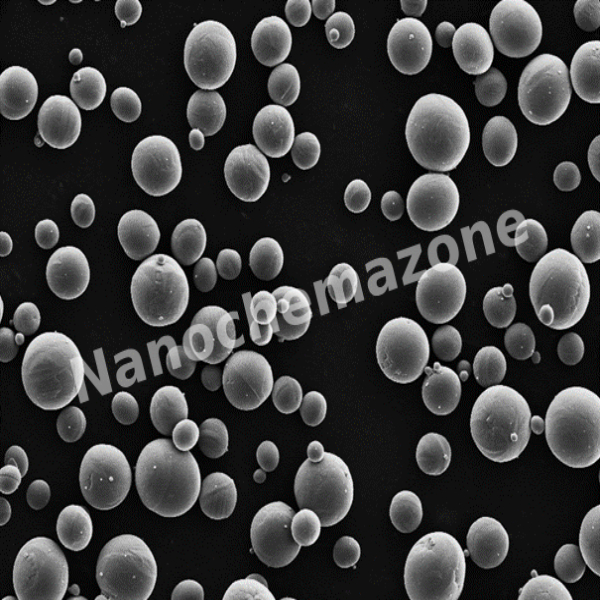
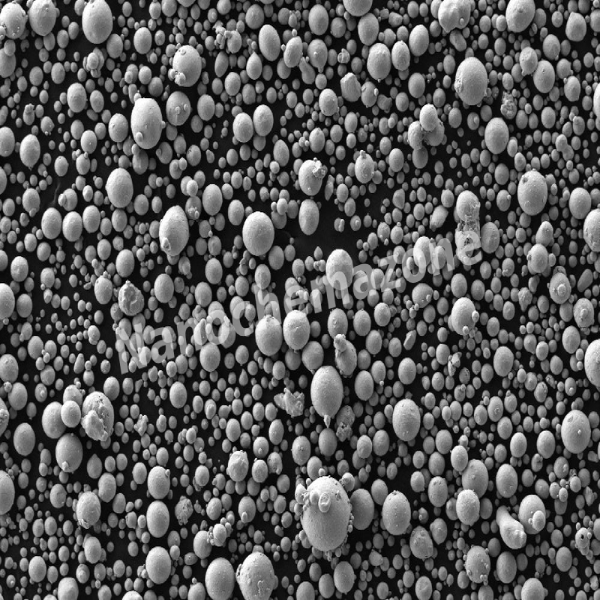
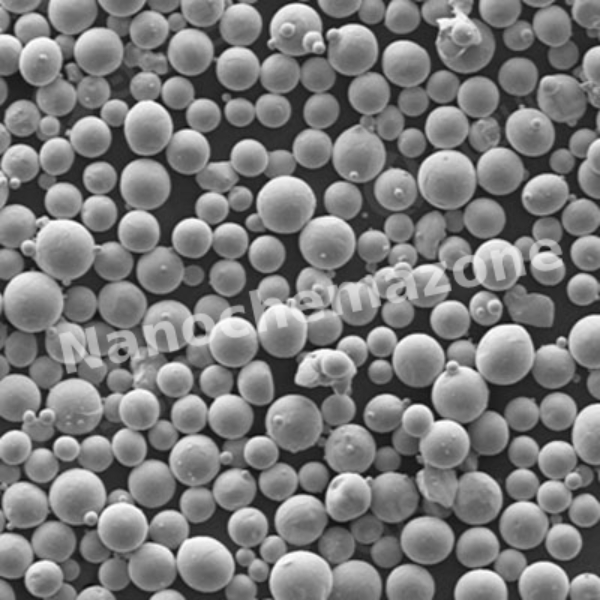
CpTi Grade 1 

Product CpTi Grade 1 
CAS No. 7440-32-6
Appearance Silver-gray metallic solid
Purity ≥99%,  ≥99.9%,  ≥95%(Other purities are also available)
APS 15–45μm (Size Can be customized),  Ask for other available size range.
Ingredient Ti
Molecular Weight 47.867 g/mol
Melting Point 1668 °C
Boiling Point 3287 °C
Density 4.51 g/cm³
Product Codes NCZ-NFG-102A

Commercialy pure titanium Cp-Ti Grade 1

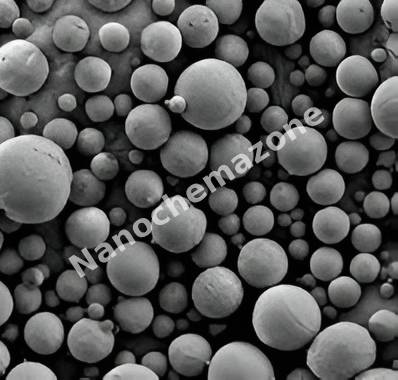
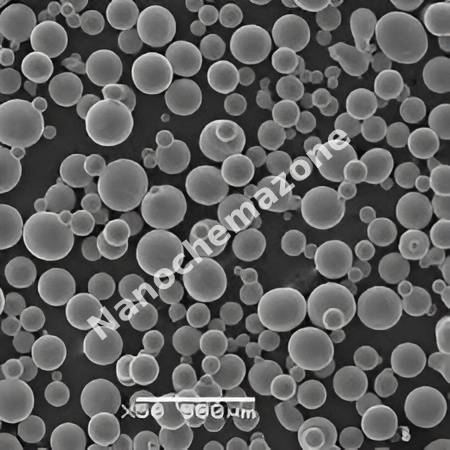
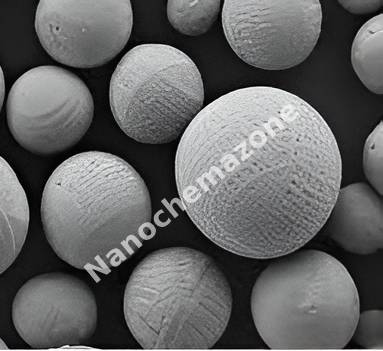
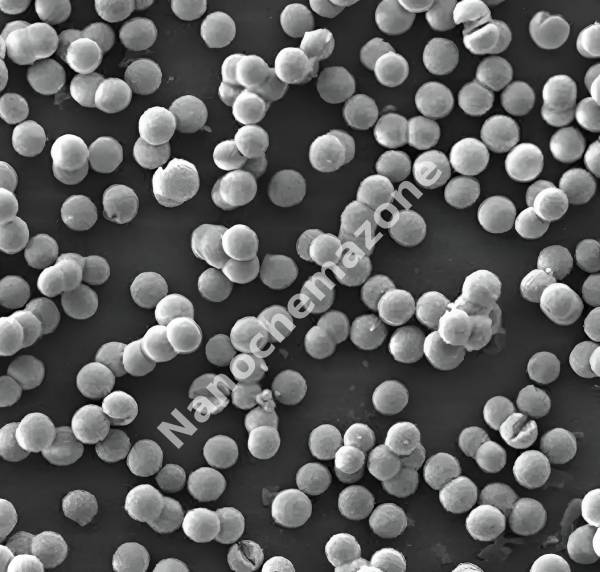
CpTi Grade 1 is a commercially pure titanium. It is the most malleable and corrosion-resistant among all the commercially pure Ti grades, though it has the lowest strength. Common uses for CpTi Grade 1 include medical devices, airframe construction where high formability is essential, and applications requiring corrosion resistance in the chemical and marine industries. Powder chemical composition may comply with standards: ASTM B348, ASTM F67, ASTM F1580 or equivalent standard.

Typical Values

PSD D10 D50 D90 Apparent density (ASTM B212) Flow rate (ASTM B213) Oxygen content Application Technology
15-45 µm 17 µm 32 µm 44 µm 2.55 g/cm3 29 s 0.16 w% L-PBF
15-53 µm 20 µm 41 µm 54 µm 2.60 g/cm3 29 s 0.15 w% L-PBF
20-63 µm 22 µm 43 µm 60 µm 2.56 g/cm3 27 s 0.12 w% L-PBF
45-106 µm 50 µm 74 µm 100 µm 2.61 g/cm3 25 s 0.10 w% EB-PBF, DED

Various particle sizes are available upon request

Pure Titanium powders, commonly known as CpTi (Commercially pure titanium), are used extensively in the medical field due its biocompatibility and lack of potentially harmful alloying elements, is especially useful for medical devices and non-load bearing devices such as medical implants or trauma plates.

CpTi Grade 2

Product CpTi Grade 2
CAS No. 7440-32-6
Appearance Silver-gray metallic solid
Purity ≥99%,  ≥99.9%,  ≥95%(Other purities are also available)
APS 15–45μm (Size Can be customized),  Ask for other available size range.
Ingredient Ti
Molecular Weight 47.867 g/mol
Melting Point 1668 °C
Boiling Point 3287 °C
Density 4.51 g/cm³
Product Codes NCZ-NFG-103A

Commercially pure titanium Cp-Ti Grade 2

CpTi Grade 2 possesses characteristics similar to CpTi Grade 1 but with enhanced strength. It offers a commendable balance between moderate strength and adequate ductility. This grade excels in corrosion resistance. Typical applications for CpTi Grade 2 include medical devices, airframe construction where high formability is essential, and applications requiring corrosion resistance in the chemical and marine industries. Powder chemistry may comply with standards: ASTM B348, ASTM F67, ASTM F1580 or equivalent standard

Typical Values

PSD D10 D50 D90 Apparent density (ASTM B212) Flow rate (ASTM B213) Oxygen content Application technology
0-20 µm 6 µm 12 µm 21 µm 2.7 g/cm3 - 0.21 w% MIM
15-45 µm 17 µm 32 µm 44 µm 2.55 g/cm3 29 s 0.20 w% L-PBF
20-63 µm 19 µm 36 µm 50 µm 2.56 g/cm3 27 s 0.18 w% L-PBF
45-106 µm 50 µm 74 µm 100 µm 2.61 g/cm3 25 s 0.16 w% EB-PBF, DED

Various particle sizes are available upon request

Pure Titanium powders, commonly known as CpTi (Commercially pure titanium), are used extensively in the medical field due its biocompatibility and lack of potentially harmful alloying elements, is especially useful for medical devices and non-load bearing devices such as medical implants or trauma plates.

Hollow glass microsphere (337620)

$200.00
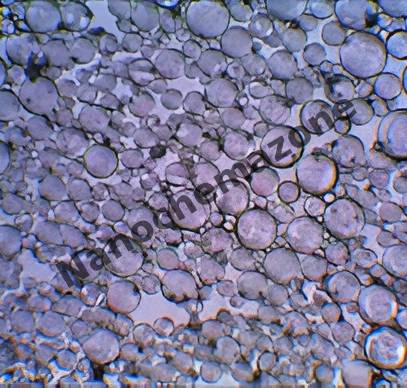
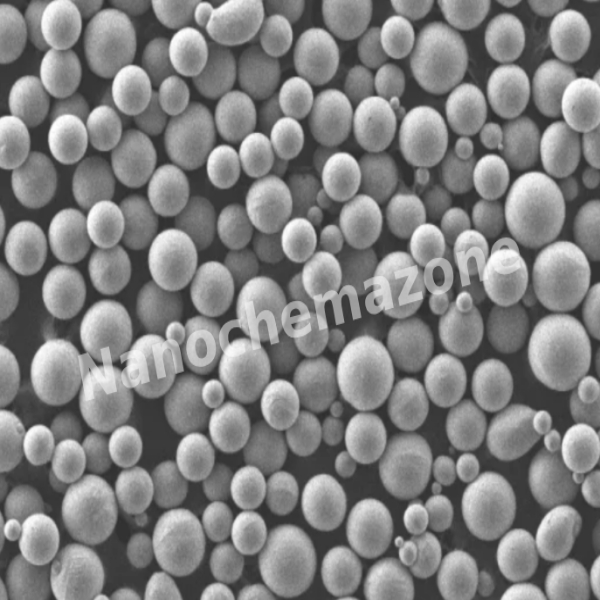
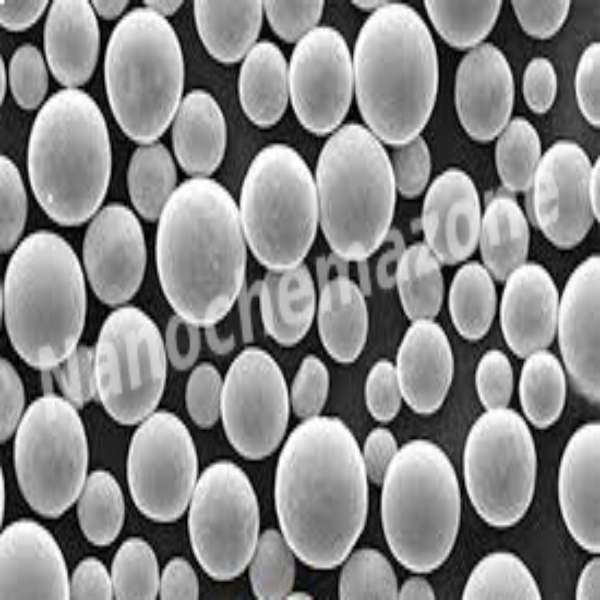
Hollow glass microsphere (337620) Hollow glass microsphere is a kind of ultra-lightweight inorganic non-metallic material with hollow structure, and it is a versatile and high-performance new lightweight material developed in recent years. Its true density is 0.20-0.60g/cm3 with 2-150μm in diameter. It features light weight, large bulky, low thermal conductivity, high compressive strength, smoothly mobility, etc. It can be used in paint and coatings, rubber, plastics, FRP, artificial stone, putty and other products as filler and weight-reducing agent. Because of its high compressive properties, it can be used to produce high-strength, low-density cement slurry and low-density drilling fluid in oil and gas extraction industry.
  1. Chemical composition
Silica(SiO2) 68-75%
Soda(Na2O) 22-30%
Lime(CaO)
Others 2-3%
  1. True Density
 Product Requirement (g/cm3) True Density (g/cm3)
Minimum Maximum
H20 0.20 0.18 0.22
H25 0.25 0.23 0.27
H32 0.32 0.30 0.34
H38H 0.38 0.36 0.40
H40 0.40 0.38 0.42
H46 0.46 0.44 0.48
H60 0.60 0.57 0.63
Y12000 0.60 0.57 0.63
  1. Nitrogen Isostatic Crush Strength
 Product Test Pressure (MPa/Psi) Target  Fractional Survival Minimum Fractional Survival
H20 3.45/500 90% 80%
H25 5/750 90% 80%
H32 14/2000 90% 80%
H38H 38/5500 90% 80%
H40 28/4000 90% 80%
H46 41/6000 90% 80%
H60 55/8000 90% 80%
Y12000 82/12000 90% 80%
  1. Thermal Stability
Appreciable changes in glass microspheres properties may occur above 600°C depending on temperature and duration of exposure.
  1. Chemical Resistance
In general, the chemical properties of hollow glass microspheres resemble those of a soda-lime borosilicate glass.
  1. Thermal Conductivity
 Product Thermal Conductivity (W·m-1·K-1) at 20°C
H20 0.039
H25 0.045
H32 0.050
H38H 0.054
H40 0.056
H46 0.062
H60 0.074
Y12000 0.078
  1. Flotation
 Product  Floaters (% by bulk volume)
Typical Minimum
H20 96% 93%
H25 96% 93%
H32 96% 92%
H38H 95% 92%
H40 95% 92%
H46 95% 92%
H60 95% 92%
Y12000 95% 92%
  1. Oil Absorption
0.45-0.65g oil/cm3 of hollow glass microspheres.
  1. Particle Size
 Product Particle Size(μm, by volume)
10% 50% 90% d50 Size
H20 35 65 120 68 2-150
H25 30 60 115 60 2-150
H32 25 55 105 55 2-130
H38H 22 40 70 40 2-100
H40 25 50 90 48 2-100
H46 25 50 90 46 2-100
H60 25 50 85 43 2-95
Y12000 25 50 85 43 2-95
  1. pH
7-9
  1. Appearance
White.
  1. Flow
Hollow glass microspheres remain free flowing for at least half a year from the date of shipment if stored properly.
  1. Storage and Handling
Storage: Store in dry, well ventilated and out of direct sunlight place. Have Waterproof Functions. Keep away from fire and heat. Store away from acids and mixed storage not allowed. With the suitable material for leakage in storage area. Handling: Airtight operation and local exhaust. The operator should be treated professionally and observe instructions seriously. The operator is suggested to wear self-inhalation filter type dust mask, protective chemical safety glasses, and protective gloves. Avoid producing dust and contacting with acids. Handle gently when loading and unloading to avoid breakage of packages. Equipped with emergency treatment equipment to avoid leakage.
  1. Health and Safety Information
For product Health and Safety Information, refer to product label and Material Safety Data Sheet (MSDS) before using product.   Product Codes- NCZ-2683K

Microsphere(solid, from fly ash) (336621)

$80.00
Microsphere (solid, from fly ash) (336621) Powder shape: perfectly spherical Fineness: 0.3-300μm True density: 2.2-2.6g / cc Bulk density: 0.7-0.9g / cc Water content: ≤0.5% Color: L value = 64 to 69 pH: 3-12
Grade 12µm 24µm 45µm 300µm D(0.9) D(0.5) Price($/kg)
336621-F200 99.5% 7-10µm 80
336621-F400 99.5% 11-16µm 80
336621-F600 99.5% 18-26µm 80
336621-F800 100% 15-45µm 80
  Product Codes- NCZ-2682K

Nickel-based alloy Nickel 718

Product Nickel-based alloy Nickel 718
CAS No. 67774-46-7
Appearance Silvery-gray metallic solid
Purity ≥99%,  ≥99.9%,  ≥95%(Other purities are also available)
APS 15–45μm (Size Can be customized),  Ask for other available size range.
Ingredient Ni-19Cr-18Fe-5Nb-3Mo-1Ti-0.5Al
Molecular Weight 58.69 g/mol
Melting Point 1260 – 1336 °C
Boiling Point 2730 °C
Density 8.19 g/cm³
Product Codes NCZ-106A

Nickel-based alloy Nickel 718

Nickel chromium superalloys are often used in high-stress, high-temperature aeronautical, petrochemical and auto racing environments. The excellent high temperature strength and creep resistance derive from precipitation hardening of finely dispersed precipitates. Nickel Alloy 718 is a metal that is also highly resistant to the corrosive effects of hydrochloric acid and sulfuric acid. The favorable weldability of Nickel Alloy 718 makes this alloy suitable for additive manufacturing as well. Typical applications are high-quality components designed for thermally challenging environments such as rocket engines, gas-turbine hot sections, and heat exchangers. Powder chemical composition may comply with standards: ASTM B637, ASTM F3055, AMS5596, AMS5662, AMS5664, AMS7006 or equivalent standard

Typical values

PSD D10 D50 D90 Apparent density (ASTM B212) Flow rate (ASTM B213) Application Technology
15-45 µm 22 µm 34 µm 46 µm 4.67 g/cm3 13 s L-PBF
15-53 µm 23 µm 37 µm 51 µm 4.68 g/cm3 13 s L-PBF
45-106 µm 50 µm 67 µm 100 µm 4.75 g/cm3 14 s EB-PBF, L-PBF, DED
45-150 µm 53 µm 90 µm 145 µm 4.79 g/cm3 13 s EB-PBF, L-PBF, DED

Various particle sizes are available upon request

Nickel Alloy 718 powders possess the ideal characteristics for various powder metallurgy technologies, include Additive Manufacturing. The powders are produced using the patented APATM Plasma Atomization process, which was designed specifically for atomization of high-temperature metals, such as Nickel alloys. With a large industrial capacity for Nickel Alloys powder production, Nanochemazone can support high-volume industrial applications.

Niobium C-103

Product Niobium C-103
CAS No. 7440-03-1
Appearance Silvery-gray metallic solid
Purity ≥99%,  ≥99.9%,  ≥95%(Other purities are also available)
APS 15–45μm (Size Can be customized),  Ask for other available size range.
Ingredient Nb-10Hf-1Ti-0.1C
Molecular Weight 92.91 g/mol
Melting Point 2468 °C
Boiling Point 4744 °C
Density 8.7 g/cm³
Product Codes NCZ-NFG-107A

Niobium C-103

Niobium C103 is a high-performance, niobium-based alloy that primarily consists of niobium (Nb) with additions of hafnium (Hf) and titanium (Ti). This alloy is well-known for its excellent high-temperature strength and oxidation resistance, making it suitable for extreme environments. Its primary use in the aerospace industry, particularly in rocket engines and spacecraft, underscores its importance in advanced engineering fields. The alloy's unique properties also make it valuable in gas turbines, nuclear reactors, and various high-temperature industrial applications. Powder chemical composition may comply with standards: ASTM B652, AMS7852, AMS7857or equivalent standard

Typical values

PSD D10 D50 D90 Apparent Density (ASTM B212) Flow Rate (ASTM B213) Oxygen Content Application Technology
15-53 µm 24 µm 38 µm 52 µm 4.97 g/cm3 13 s 0.030 w% L-PBF
45-150 µm 62 µm 83 µm 130 µm 5.13 g/cm3 11 s 0.018 w% EB-PBF, L-PBF, DED

Various particle sizes are available upon request

Niobium C103 powders possess the ideal characteristics for various powder metallurgy technologies, include Additive Manufacturing. The powders are produced using the patented APATM Plasma Atomization process, which was designed specifically for atomization of high-temperature metals, such as Niobium alloys. With a large industrial capacity for Niobium Alloys powder production, Nanochemazone can support high-volume industrial applications.

Spherical Alumina(45μm) (145559)

$100.00
Select options This product has multiple variants. The options may be chosen on the product page
Spherical Alumina(45μm) (145559)
Typical Physical Data
Items Unit Typical value Test Method
Particle Size Distribution D10 μm 22.47 Layer analyzer
D50 μm 48.9
D90 μm 90.6
Specific Surface Area m2/g 0.2 BET method
Specific Gravity g/cm3 3.7 pycnometer method
Electrical Conductivity μS/cm 24.3 Conductivity Meter
pH - 6.8 pH Meter
Circularity % 94.0 Particle Image Analyzer
 
Typical Chemical data
Test Items Unit Typical value Test Method
Chemical Analysis Al2O3 % 99.6 ICP
Na2O ppm 95.0 ICP
SiO2 ppm 83.0 ICP
Fe2O3 ppm 109.0 ICP
Ionic  Impurities Na+ ppm 45.0 Atomic Absorption Spectrometer
Cl- ppm 1.9 Auto Electric Potential Titrator
Fe++ ppm 12.3 IC
    Product Codes- NCZ-2679K

Spherical Alumina(5μm) (105559)

$105.00
Select options This product has multiple variants. The options may be chosen on the product page
Spherical Alumina(5μm) (105559)  
Typical Physical Data
Items Unit Typical value Test Method
Particle Size Distribution D10 μm 2.4 Layer analyzer
D50 μm 5.9
D90 μm 19.3
Specific Surface Area m2/g 0.6 BET method
Specific Gravity g/cm3 3.6 pycnometer method
Electrical Conductivity μS/cm 24.3 Conductivity Meter
pH - 6.8 pH Meter
Circularity % 95.0 Particle Image Analyzer
 
Typical Chemical data
Test Items Unit Typical value Test Method
Chemical Analysis Al2O3 % 99.6 ICP
Na2O ppm 120.0 ICP
SiO2 ppm 85.0 ICP
Fe2O3 ppm 100.0 ICP
Ionic  Impurities Na+ ppm 35.0 Atomic Absorption Spectrometer
Cl- ppm 1.1 Auto Electric Potential Titrator
Fe++ ppm 15.0 IC
Product Codes- NCZ-2678K

Spherical Alumina(70μm) (170559)

$100.00
Select options This product has multiple variants. The options may be chosen on the product page
Spherical Alumina(70μm) (170559)
Typical Physical Data
Items Unit Typical value Test Method
Particle Size Distribution D10 μm 47.3 Layer analyzer
D50 μm 77.7
D90 μm 125.6
Specific Surface Area m2/g 0.2 BET method
Specific Gravity g/cm3 3.8 pycnometer method
Electrical Conductivity μS/cm 17.0 Conductivity Meter
pH - 7.0 pH Meter
Circularity % 93.0 Particle Image Analyzer
 
Typical Chemical data
Test Items Unit Typical value Test Method
Chemical Analysis Al2O3 % 99.6 ICP
Na2O ppm 101.0 ICP
SiO2 ppm 82.0 ICP
Fe2O3 ppm 103.0 ICP
Ionic  Impurities Na+ ppm 45.7 Atomic Absorption Spectrometer
Cl- ppm 1.2 Auto Electric Potential Titrator
Fe++ ppm 19.2 IC
  Product Codes- NCZ-2680K

Spherical Magnesium oxide(MgO, 99%) (127665)

$190.00
Select options This product has multiple variants. The options may be chosen on the product page
Spherical Magnesium oxide(MgO, 99%) (127665)
10, 20, 30, 40µmProduct Codes- NCZ-2681K

Ti-6Al-2Sn-4Zr-2Mo-0.08Si

Product Ti-6Al-2Sn-4Zr-2Mo-0.08Si
CAS No. 7440-32-6
Appearance Silver-gray metallic solid
Purity ≥99%,  ≥99.9%,  ≥95%(Other purities are also available)
APS 15–45μm (Size Can be customized),  Ask for other available size range.
Ingredient Ti-6Al-2Sn-4Zr-2Mo-0.08Si
Molecular Weight 47.867 g/mol
Melting Point 1600–1650 °C
Boiling Point 3287 °C
Density 4.65 g/cm³
Product Codes NCZ-NFG-104A

Titanium alloy Ti-6Al-2Sn-4Zr-2Mo-0.08Si

Titanium alloy Ti-6Al-2Sn-4Zr-2Mo-0.08Si (Ti6242) is a near-alpha alloy and combines high mechanical strength, weldability, high temperature stability and creep resistance up to temperatures of 550°C (versus approximately 400 °C for Ti-6Al-4V).Ti-6242 is used to manufacture lightweight production parts where high temperature stability is critical. Examples from the aerospace industry include turbine components, afterburner structures and various applications in the hot zone of the airframe. Powder chemical composition may comply with standards: AMS4919, AMS7014 or equivalent standard.

Typical Values

PSD D10 D50 D90 Apparent Density (ASTM B212 or ASTM B417) Flow Rate (ASTM B213 or ASTM 822) Oxygen Content Application Technology
15-45 µm 20 µm 34 µm 46 µm *2.60 g/cm3 *8 s 0.10 w% L-PBF
15-53 µm 24 µm 39 µm 53 µm *2.62 g/cm3 *7 s 0.09 w% L-PBF
15-63 µm 27 µm 46 µm 62 µm *2.62 g/cm3 *7 s 0.08 w% L-PBF
45-106 µm 51 µm 85 µm 140 µm 2.64 g/cm3 26 s 0.08 w% EB-PBF, L-PBF, DED

Various particle sizes are available upon request

Ti-6Al-2Sn-4Zr-2Mo-Si alloy powders possess the ideal characteristics for various powder metallurgy technologies, include Additive Manufacturing. The powders are produced using the patented APATM Plasma Atomization process, which was designed specifically for atomization of high-temperature metals, such as Titanium alloys. With a large industrial capacity for Titanium powder production, Nanochemazone can support high-volume industrial applications, in addition to supporting smaller scale Research & Development opportunities

Ti-6Al-4V Grade 23

Product Ti-6Al-4V Grade 23
CAS No. 1317-70-0
Appearance Silver-gray metallic solid
Purity ≥99%,  ≥99.9%,  ≥95%(Other purities are also available)
APS 15–45μm (Size Can be customized),  Ask for other available size range.
Ingredient Ti₉₀Al₆V₄
Molecular Weight 47.87 g/mol
Melting Point 1604–1660 °C
Boiling Point 3287 °C
Density 4.43 g/cm³
Product Codes NCZ-NFG-100A

Titanium alloyTi-6Al-4V grade 23

Ti-6Al-4V Grade 23, is renowned for its outstanding strength-to-weight ratio, making it ideal for a wide range of applications in both the medical and aerospace industries. Powder chemical composition may comply with standards: ASTM B348, ASTM F136, ASTM F1472, ASTM F1580, ASTM F3001, ASTM F3302, AMS7017 or equivalent standard.

Typical values

PSD D10 D50 D90 Apparent Density (ASTM B212) Flow Rate (ASTM B213) Oxygen Content Application Technology
15-45 µm 20 µm 34 µm 44 µm 2.49 g/cm3 28 s 0.10 w% L-PBF
15-53 µm 22 µm 39 µm 54 µm 2.52 g/cm3 28 s 0.10 w% L-PBF
20-63 µm 26 µm 46 µm 60 µm 2.57 g/cm3 28 s 0.09 w% L-PBF
15-106 µm 27 µm 54 µm 88 µm 2.61 g/cm3 25 s 0.08 w% L-PBF
45-106 µm 52 µm 71 µm 102 µm 2.47 g/cm3 25 s 0.08 w% EB-PBF, L-PBF, DED
45-150 µm 54 µm 85 µm 141 µm 2.59 g/cm3 25 s 0.08 w% DED

Various particle sizes are available upon request

Ti-6Al-4V grade 23 offers outstanding biocompatibility, making it perfect for medical implants. Its superior corrosion resistance ensures longevity and reliability in demanding environments. This alloy is widely used in the aerospace industry for critical components, in the medical field for durable implants, and in high-performance motorsports for lightweight, robust parts. Its versatile properties make Ti6Al4V Grade 23 a preferred choice across these advanced industries.

Ti-6Al-4V grade 5

Product Ti-6Al-4V grade 5
CAS No. 1317-70-0
Appearance Silver-gray metallic solid
Purity ≥99%,  ≥99.9%,  ≥95%(Other purities are also available)
APS 15–45μm (Size Can be customized),  Ask for other available size range.
Ingredient Ti₉₀Al₆V₄
Molecular Weight 47.87 g/mol
Melting Point 1604–1660 °C
Boiling Point 3287 °C
Density 4.43 g/cm³
Product Codes NCZ-NFG-101A

Titanium alloy Ti-6Al-4V grade 5

Ti-6Al-4V grade 5 is ideal for application needing a higher strength, lower ductility compared to grade 23 across medical and aerospace industries. Powder chemical composition may comply with standards: ASTM B348, ASTM F1472, ASTM F1580, ASTM F2885, ASTM F2924, ASTM F3302, AMS4998, AMS7015 or equivalent standard.

Typical values

PSD D10 D50 D90 Apparent density (ASTM B212) Flow rate (ASTM B213) Oxygen content Application Technology
0-20 µm 6 µm 13 µm 19 µm 2.8 g/cm3* - 0.19 w% MIM
15-45 µm 20 µm 34 µm 44 µm 2.49 g/cm3 28 s 0.16 w% L-PBF
15-53 µm 22 µm 39 µm 54 µm 2.52 g/cm3 28 s 0.16 w% L-PBF
20-63 µm 26 µm 46 µm 60 µm 2.57 g/cm3 28 s 0.15 w% L-PBF
15-106 µm 27 µm 54 µm 88 µm 2.61 g/cm3 25 s 0.13 w% L-PBF
45-106 µm 52 µm 71 µm 102 µm 2.47 g/cm3 25 s 0.13 w% EB-PBF, L-PBF, DED
45-150 µm 54 µm 86 µm 142 µm 2.59 g/cm3 25 s 0.13 w% DED

Various particle sizes are available upon request

Ti-6Al-4V grade 5 offers outstanding biocompatibility, making it perfect for medical implants. Its superior corrosion resistance ensures longevity and reliability in demanding environments. This alloy is widely used in the aerospace industry for critical components, in the medical field for durable implants, and in high-performance motorsports for lightweight, robust parts. Its versatile properties make Ti6Al4V Grade 5 a preferred choice across these advanced industries.

Titanium aluminide TiAl Powder

Product Titanium aluminide TiAl Powder
CAS No. 12536-76-0
Appearance Gray or silvery powder
Purity ≥99%,  ≥99.9%,  ≥95%(Other purities are also available)
APS 15–45μm (Size Can be customized),  Ask for other available size range.
Ingredient TiAl
Molecular Weight 89.79 g/mol
Melting Point 1460–1500 °C 
Boiling Point N/A
Density 3.9–4.2 g/cm³
Product Codes NCZ-NFG-105A

Titanium aluminide: TiAl Ti-48Al-2Cr-2Nb

TiAl is a new class of aerospace alloys that offers an excellent strength-to-weight ratio as well as high chemical and thermal stability. Gamma titanium aluminide alloy has excellent mechanical properties as well as oxidation and corrosion resistance at elevated temperatures (over 600 degrees Celsius). TiAl is the latest class of materials competing with Nickel superalloys for the fabrication of aircraft engine parts such as low-pressure turbine (LPT) blades. Powder chemical composition may comply with standards: AMS7023 or equivalent standard

Typical values

PSD D10 D50 D90 Apparent density (ASTM B212) Flow rate (ASTM B213) Oxygen Content Technology application
45-150 µm 55 µm 83 µm 130 µm 2.20 g/cm3 32 s 0.05 w% EB-PBF

Various particle sizes are available upon request

TiAl powders are created at Nanochemazone using its proprietary plasma atomization process. The plasma atomization process has a high degree of controllability and uses plasma torches to transform the raw material or liquid metal stream into a powder.