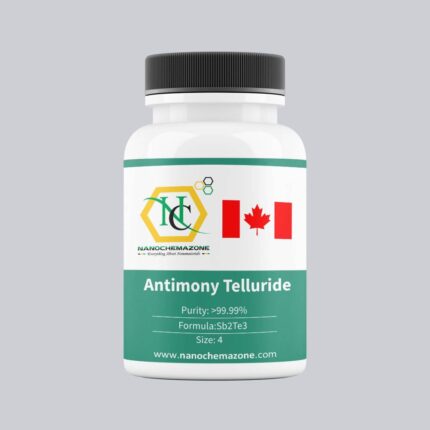
Antimony Telluride (Sb2Te3) Sputtering Targets, Purity: 99.999%, Size: 4”, Thickness: 0.125”

Applications of Sputtering Targets;

Film deposition is accomplished using sputtering targets. One technique for sputtering thin films is the deposition produced by sputter targets.
It entails transferring material onto a “substrate,” like a silicon wafer, from a “target” source.
Etching of the target is done using semiconductor sputtering targets. When etching anisotropy is high, sputter etching is the preferred method.
is required, and selectivity is unimportant.
By removing the target material through etching, sputter targets are also utilized for investigation.
In secondary ion spectroscopy (SIMS), one example is when the target material is sputtered at a steady pace. When the target shatters,
Mass spectrometry measures the concentration and identity of sputtered atoms. With the sputtering target’s assistance, the

It is possible to identify the target material and even detect incredibly tiny impurity amounts.

There is also an application area for sputtering targets in space. One type of space weathering that alters the chemical and physical characteristics of airless worlds like the Moon and asteroids is sputtering.

The chemical formula for antimony telluride, an inorganic molecule, is Sb2Te3. It has a layered structure and is a grey crystalline solid. Weak van der Waals forces hold the layers together. They are made up of three atomic sheets of tellurium and two atomic sheets of antimony.

$1,380.00

Shipping world wide

Across the Globe

24/7 Support.

Your Questions, Answered Anytime.

Description

Antimony Telluride (Sb2Te3) Sputtering Targets

Purity: 99.999%, Size: 4”, Thickness: 0.125”

Sputtering is a well-established technique that can deposit thin films made of a wide range of materials on a variety of shaped and sized substrates.
Sputter targets allow for reproducible processes that can be expanded from small-scale R&D initiatives. Sputter target processes can be modified to suit medium- to large-sized substrate surfaces in manufacturing batches. Depending on the process settings, the chemical reaction may take place on the substrate, in flight, or on the target surface. Sputter deposition is a complicated process due to its numerous characteristics, yet professionals have a great deal of control over the region’s growth and microstructure.

Shipping & Delivery
Shipping world wide Across the Globe

Important Notes

  • Research Use Only: Nanochemazone materials are intended strictly for research and development purposes in laboratory and industrial settings.
  • No Refunds or Exchanges: All sales are final. Nanochemazone does not permit exchanges or offer refunds under any circumstances.
  • Customs & Import Responsibilities: Customs clearance, duties, taxes, and tariffs are the sole responsibility of the consignee/importer. Nanochemazone is not liable for delays, rejections, or any additional costs incurred during the customs process, and such issues will not justify order cancellations or refunds.
  • Order Cancellations: Once an order is placed, it cannot be cancelled. No refunds will be issued for cancelled or undelivered orders.
  • Indemnification: The buyer agrees to indemnify and hold harmless Nanochemazone, its affiliates, and personnel from any claims, damages, liabilities, or expenses arising from the use of its products or services.
  • Terms & Conditions: All orders and communications are subject to Nanochemazone’s standard Terms & Conditions.